Pesticides kill again, now a Sharjah infant

banned pesticides kill child in UAEA newborn baby boy has died and his three-year-old brother is critically ill in hospital after they inhaled a toxic pesticide used in the apartment next door to his family’s home in Sharjah, in the United Arab Emirates (UAE). Police said the neighbour sprayed his flat with the banned bug-killer, which he was given by a friend, then left for a few hours. The boys experienced terrible pain and vomiting after inhaling aluminium phosphide fumes, which likely passed through the apartments though an air conditioning vent. The baby’s death is the latest caused by pesticides.

Sharjah polices arrested the neighbor and charged him with wrongfully causing the death of the child, despite his claims that he did not know the pesticide was a banned substance. They found traces of the chemical inside his apartment,  and dead insects in both units.

Police also found cans of the illegal bug “bomb” outside the building, with children playing nearby. “Those bottles can explode if there is a fire beside them,” said Colonel Abdul Qader Al Ameri, the head of the forensic lab at Sharjah Police. “Only God could have saved those kids.”

“We opened the neighbor’s door and the smell was even stronger and a large amount of insects were lying dead on the ground,” a police official told the National.

Police are still looking for the man who supplied the chemical, which releases a poisonous gas that can cause suffocation.

It is illegal to use aluminium phosphide in residential areas as it creates a gas that quickly can leak to other parts of a building through the air ducts and wall vents, causing lethal poisoning. The chemical was banned from public sale in 2009 and only licensed operators may use it. It is usually sold in tablet form.

“It’s just sad to know more people are dying because of reckless individuals who used this prohibited material,” another police official said, “Some people still use cheap things as pesticides and use unlicensed companies. They don’t care for their neighbors’ lives.”

Last July, a Filipino worker died and five others were hospitalized in Dubai’s Al Nahda area after a neighbor used the powerful pesticide phosphine. Doctors initially thought they were suffering from food poisoning.

In 2010, a pest control company in Ajman exposed triplets to bug-killer, killing two boys, aged 5 months, and critically sickening their sister. A year later, pesticide exposure killed a 33-year-old Dubai man, and in May 2012, 10 people were hospitalized after exposure to the chemical in a residential building in Naif, Dubai.

Lallan Yadav, agriculture engineer at Elite Xpress Cleaning, said that the chemical is meant for warehouse fumigation and should only be handled by professionals. Companies must pass municipality tests before being authorized to handle the fumigant.

Pesticides used in Sharjah must comply with municipality-approved specifications, public health and environmental standards and technical requirements about amounts used and methods of application. In Sharjah and Abu Dhabi, companies must be registered with the Centre for Waste Management and the Department of Economic Development.

Health officials in Dubai have issued warnings about hiring illegal companies, with municipal regulations prohibiting importing, handling and trading of pesticides without permission. This latest fatality may prompt more stringent controls for pest control, and raise public awareness to the tragic consequences of not abiding them

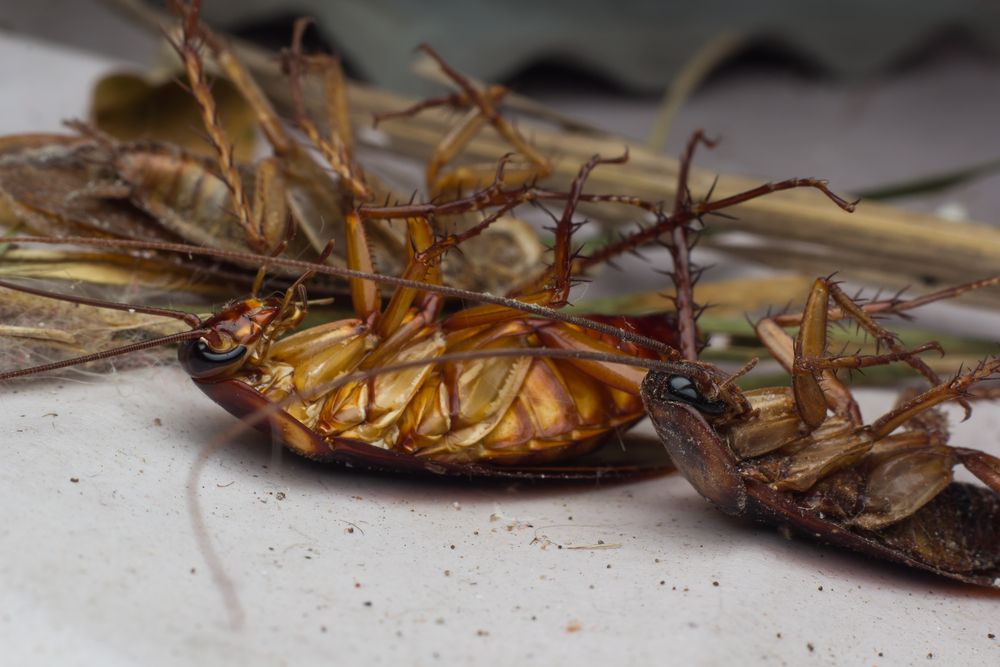
Image of dead cockroaches from Shutterstock

Read More

5 COMMENTS

TRENDING

90% of Americans worry about microplastics

Microplastics are showing up everywhere—from dollar store toys and synthetic clothing to bottled water, toothbrushes and even human sperm. A new Ocean Conservancy survey finds that nearly 9 in 10 Americans are concerned about the health impacts of microplastics, while support is growing for tougher regulations. As scientists uncover plastic particles in the heart, placenta and reproductive organs, the question is no longer whether microplastics are affecting our lives, but how much damage they are already doing.

Understanding Food Production: Karl Studer on the Urban-Rural Knowledge Gap

Karl Studer occupies an unusual position in American business. As President of Quanta Services, he oversees electrical infrastructure operations across the United States, Canada, and Australia, managing thousands of employees and multibillion-dollar projects.

Tigris River oil spill highlights Iraq’s environmental oversight and our addiction to oil

A fresh oil spill in the Tigris River, filmed by an Iraqi university student, has reignited concern over Iraq's polluted waterways. From ancient Mesopotamia to modern Basra, the country's dependence on oil has come at a steep environmental and human cost, with activists warning that unchecked contamination is putting ecosystems and public health at risk.

Doctor-Led Direct Hair Transplant: What Surgeon Involvement Means for Outcomes

Hair restoration technology continues to evolve, but the surgeon behind the procedure remains the most important factor. Doctor-led hair transplants emphasize careful diagnosis, conservative donor management, natural hairline design, and long-term planning rather than simply maximizing graft counts. By treating donor hair as a limited resource and tailoring each procedure to the patient's future hair loss, experienced surgeons can reduce the need for corrective surgery while delivering more natural, sustainable results.

Data centers in Space? Sophia Space and Apex plan on busing them in

Can data centers really be built in space? Pasadena-based Sophia Space is partnering with Apex to test the idea by launching modular AI computing systems into low Earth orbit in 2027. Using radiation-hardened compute TILEs cooled by passive radiative systems and mounted on scalable satellite buses, the companies aim to prove that edge computing can operate reliably in space. While challenges remain, the project represents an important step toward distributed orbital computing networks that could support everything from climate monitoring and pollution tracking to autonomous spacecraft navigation in an increasingly crowded orbital environment.

Yerukim Forms a New Green Economy Where the Money is Really Green

The Yerukim members who pick up the recyclables get to keep the monetary reward, the public earns "green" bills that can be used in shops, and business owners get to be associated with environmentalism.

Choosing Riyadh over Dubai? What Investors Should Know

Saudi Arabia is deploying capital at unmatched scale to catalyze tourism and advanced industry while rewiring its power-and-water backbone. The investable frontier is widening—especially in renewables, grid storage, water efficiency/desal retrofits, and hospitality operating platforms. Prudent investors will insist on phased delivery, enforceable KPIs (energy, water, biodiversity), and RHQ/zone compliance—while pricing political-economy and reputational risks alongside growth upside.

Sell your cooking oil for biodiesel money

Want to make money on old french fry oil? Sell it.

Qatar Alternative Energy Summit Pairs Investors And Innovators

Alternative energy investors and innovators can meet n' greet in Doha, Qatar March 16 and 17.

Here’s How To Implement The Four Pillars Of Employee Engagement

If you throw a party for your work team and they are vegans, don't make it a barbecue. Know the sustainability values of your team to boost moral and retain good people.

Locals From Rishon Fight IKEA

Big Box stores are a pretty new concept in Israel, and thank God that not every Israeli city wants them in their backyard. A word from someone who has see the beautiful farmland around her hometown Newmarket, Ontario stripped and converted into vulgar strip malls of big box shops: they have no place in a healthy and sustainable town or city.

The Jewish National Fund Meets An Inconvenient Truth

According to the JNF, it has transformed thousands of acres of barren land into green forests in Israel. They state that each person emits about 23 tons of carbon per year, estimating that each tree planted can absorb one ton of carbon in its lifetime. That's a whole lot of trees you'd need to be planting. Could so many fit in Israel?

How to quiet noise from construction in your office

Streets need to be resurfaced in New York but the humming and grinding noise is unsettling. Noise is environmental pollution. 

Popular Categories