Powerful scrap sculptures depict life in Beirut’s Shatila refugee camp

Abdulrahman Katanani, Refugee Camp Lebanon, Scrap Sculptures, recycled materials, Palestinian refugees, junk art, metal art

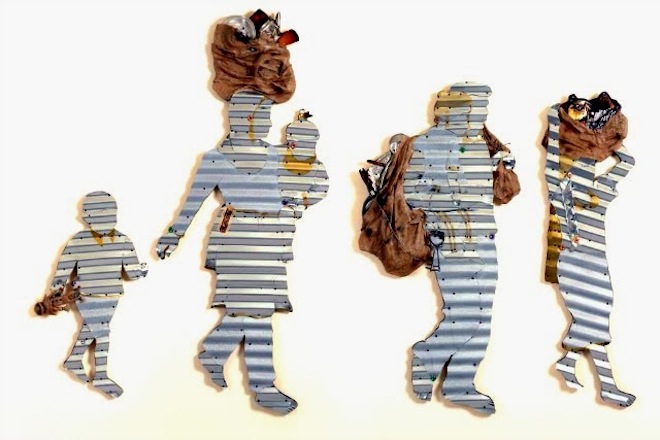
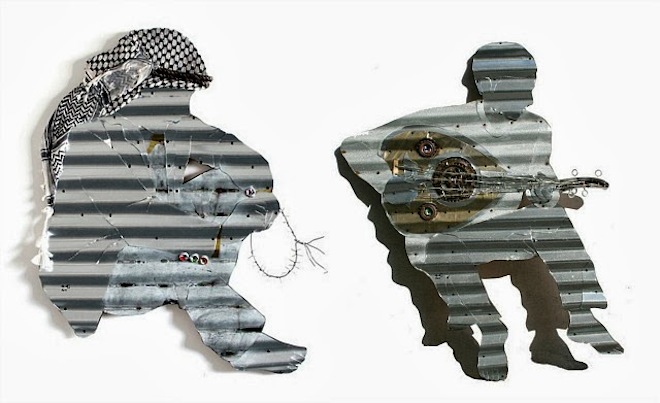
The nearly 10,000 Palestinian refugees packed into southern Beirut’s Shatila camp live in makeshift homes of corrugated tin, and many long to return to their homeland. In order to depict life in the camp, artist Abdulrahman Katanani used the only materials he had available to him – scraps.

Originally displaced from villages near AmkaMajd al-Krum and Yajur in northern Palestine in 1948, the Palestinian refugees settled in the Shatila refugee camp around 1949.
Abdulrahman Katanani, Refugee Camp Lebanon, Scrap Sculptures, recycled materials, Palestinian refugees, junk art, metal art

Since then they have raised families and tried to eke out some kind of dignified existence in an area of just one square kilometer. It’s not easy to get by with very little money, but life does go on.
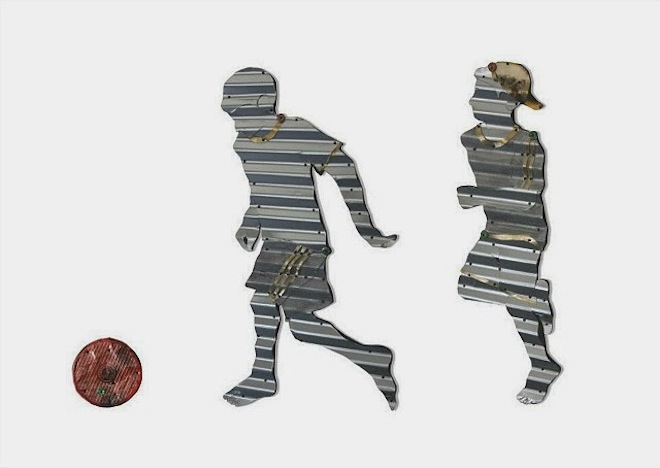
Abdulrahman Katanani, Refugee Camp Lebanon, Scrap Sculptures, recycled materials, Palestinian refugees, junk art, metal art

For those of us who live in warm cozy homes that are cooled in the summer time, it’s hard to envision what it must be like to live this way. Which is what makes Katanani’s sculptures so powerful.

Related: Masafer Yatta – the Palestinian Cave Dwellers of Firing Zone 918
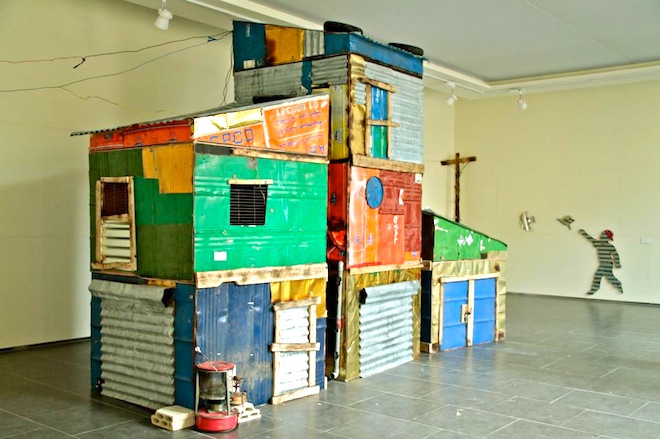
Abdulrahman Katanani, Refugee Camp Lebanon, Scrap Sculptures, recycled materials, Palestinian refugees, junk art, metal art

Using the materials of their existence – corrugated tin roofing, barbed wire and chain link fence – the artist frames nostalgic scenes – children flying patchy kites or playing soccer, men playing traditional music instruments, and families carrying goods on their heads.
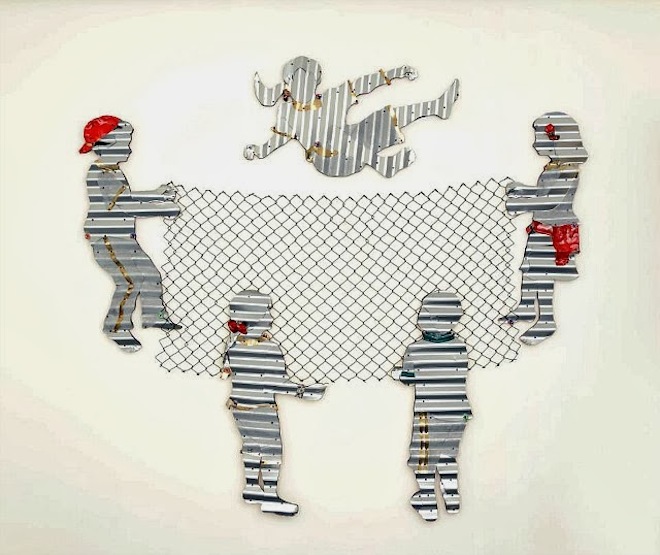
Abdulrahman Katanani, Refugee Camp Lebanon, Scrap Sculptures, recycled materials, Palestinian refugees, junk art, metal art

Considering the medium, the pieces are incredibly detailed. They are borne not only from Katanani’s own experiences but from the rest of his community as well.

“When I started to use sheets of tin, people remembered that they live with this material,” Junk-Culture quotes him as saying.
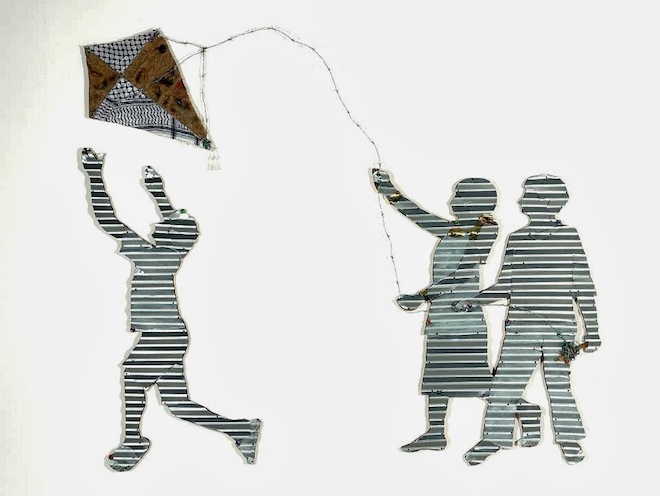
Abdulrahman Katanani, Refugee Camp Lebanon, Scrap Sculptures, recycled materials, Palestinian refugees, junk art, metal art

“The saddest thing is that the people in the camps, are also like my materials, forgotten.”

Katanani works with Gallery Agial: http://www.agialart.com/index.htm and Gallery al markheyya in Qatar. http://www.almarkhiyagallery.
Tafline Laylin
Tafline Laylinhttp://www.greenprophet.com
As a tour leader who led “eco-friendly” camping trips throughout North America, Tafline soon realized that she was instead leaving behind a trail of gas fumes, plastic bottles and Pringles. In fact, wherever she traveled – whether it was Viet Nam or South Africa or England – it became clear how inefficiently the mandate to re-think our consumer culture is reaching the general public. Born in Iran, raised in South Africa and the United States, she currently splits her time between Africa and the Middle East. Tafline can be reached at tafline (at) greenprophet (dot) com.

Read More

TRENDING

Cow dung for biomaterials

Cow dung could be used to create a next generation sustainable material, according to a new report.

Colonel microbrewery built with recycled materials opens in Lebanon

While many Muslims don't drink alcohol, the people of Batroun, Lebanon...

Plastic for kibble – vending machines for stray animals in Istanbul

There are roughly 150,000 stray cats and dogs in...

Turkey’s Designnobis turns plastic bottles into solar-powered lanterns

If you live in the Middle East, surely you...

A shipping container village to rescue “shooting” city

As part of an effort to rescue certain Israeli cities...

Yerukim Forms a New Green Economy Where the Money is Really Green

The Yerukim members who pick up the recyclables get to keep the monetary reward, the public earns "green" bills that can be used in shops, and business owners get to be associated with environmentalism.

Choosing Riyadh over Dubai? What Investors Should Know

Saudi Arabia is deploying capital at unmatched scale to catalyze tourism and advanced industry while rewiring its power-and-water backbone. The investable frontier is widening—especially in renewables, grid storage, water efficiency/desal retrofits, and hospitality operating platforms. Prudent investors will insist on phased delivery, enforceable KPIs (energy, water, biodiversity), and RHQ/zone compliance—while pricing political-economy and reputational risks alongside growth upside.

Sell your cooking oil for biodiesel money

Want to make money on old french fry oil? Sell it.

Qatar Alternative Energy Summit Pairs Investors And Innovators

Alternative energy investors and innovators can meet n' greet in Doha, Qatar March 16 and 17.

Here’s How To Implement The Four Pillars Of Employee Engagement

If you throw a party for your work team and they are vegans, don't make it a barbecue. Know the sustainability values of your team to boost moral and retain good people.

Locals From Rishon Fight IKEA

Big Box stores are a pretty new concept in Israel, and thank God that not every Israeli city wants them in their backyard. A word from someone who has see the beautiful farmland around her hometown Newmarket, Ontario stripped and converted into vulgar strip malls of big box shops: they have no place in a healthy and sustainable town or city.

The Jewish National Fund Meets An Inconvenient Truth

According to the JNF, it has transformed thousands of acres of barren land into green forests in Israel. They state that each person emits about 23 tons of carbon per year, estimating that each tree planted can absorb one ton of carbon in its lifetime. That's a whole lot of trees you'd need to be planting. Could so many fit in Israel?

How to quiet noise from construction in your office

Streets need to be resurfaced in New York but the humming and grinding noise is unsettling. Noise is environmental pollution. 

Popular Categories