A Culture Shock Hangover in Tunisia’s Second City

development, travel, urban planning, Tunisia, Sfax, tourism

After a rough time in Tunis, Tafline pushed past a culture shock hangover to appreciate Tunisia’s second largest city.

When the bus stopped at the station in Sfax, 170 miles from Tunisia’s capital city, I seriously considered getting back on and heading as far south – away from civilization – as I could get. But the adjacent municipal dump was a strong catalyst for quick decision-making, so when a little yellow taxi pulled up just then, I got in. “To the medina!” I said.

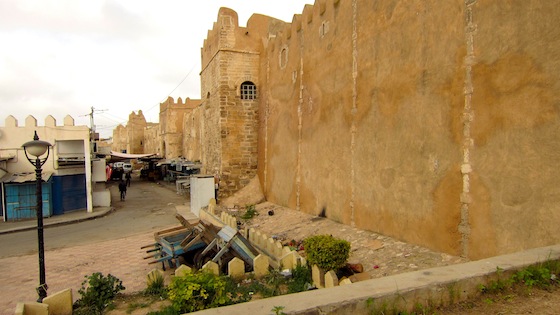
We arrived at the ancient walls via a circuitous route (the driver hadn’t understood my English), as the locals cleared up the market debris. The inside of the medina was dark and deserted. I’ve rarely felt more conspicuous during my travels through the MENA region, nor so depressed. By this stage, I was prepared to pay a cool $5,000 for a room, in which I planned to hide for several days.
development, travel, urban planning, Tunisia, Sfax, tourism

Sfax in a bad mood

Maybe I can’t fault Sfax. I left Tunis in a bad mood after losing thousands of dollars and dealing with over-enthusiastic Tunisian men, but the trash, the staring, the way the buildings are jammed together in no particular order – it all got under my skin, and not in a good way. It was like a rash, coupled with a migraine, that made me want to close the blinds to my room and never leave.

But I made myself go for a walk last night, and to overcome my superficial judgements. I was determined to find the sacred, the holy, some sign of beauty, some reason not to hate Tunisia’s “second city” – so named because it is the country’s second largest after Tunis.

It is also a port on the Gulf of Gabes and a mecca for phosphate production. From a high vantage point – say a rooftop – it’s easy to see plumes of  emissions spewing from industrial plants on the outskirts of the city. While in the city center, traffic creates a similar effect.
development, travel, urban planning, Tunisia, Sfax, tourism

Portal to the west

Even the Carrefour downtown, a French shopping center that is for me a portal to the western world when I’m suffering from culture shock, pulled me further into the doldrums: electrical wires hang freely, the cordoned-off elevator looks like a crime scene, and the baked goods – all covered in ghastly pink meat or shredded tuna – are as dry as the concrete rubble lying outside the store.

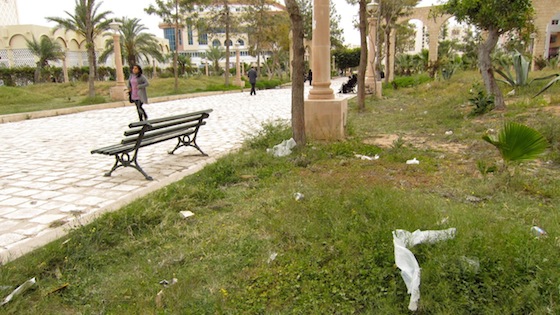
Everywhere I looked the apocalypse stared back at me: so-called green spaces are overgrown and strewn with trash; everywhere buildings are being constructed – badly – with nary a thought for proper planning. In fact, like Dubai but not nearly as snazzy, I wonder if  it’s too late for Sfax? The city seems to be growing like a cancer, devouring everything in its sight.

The Minister of Interior recently appointed a new governor to sort it all out. And the municipality aspires to become a hot spot for cultural tourism, but until they move the bus station away from the dump and open a few decent food establishments, the French and Italians won’t be beating down on the Medina’s doors.
development, travel, urban planning, Tunisia, Sfax, tourism

The beauty of the present

Even so, I know people who have studied at universities in Sfax, and locals who have connected with me on Facebook show pride of their city, so I felt compelled to dig deeper, to push past the limitations of my own imagination. And this morning, when I left my cave to find caffeine and food (in that order), the aha moment finally occurred. When the medina came back to life.

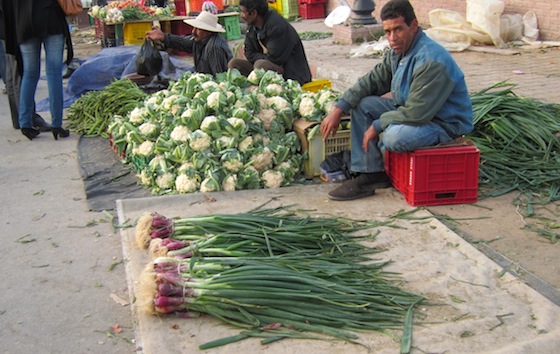
There’s just something about people selling their wares in an ancient marketplace that can cure even the darkest mood. Cobblers fixed shoes the old-fashioned way, small cafe owners squeezed fresh orange juice without electricity, and huge piles of cauliflower, beans, carrots, and other produce lined the entry way.

Of course, it’s impossible to escape the plastics from China or the scary-looking rat poison, but seeing the market go on as it has for hundreds of years, even as the city grows up around it like a massive parasite, helped me to look past the apocalypse, to recognize the beauty of the present. But I’m not going to lie: it was hard to get there.

More Travel News from Tunisia:

An Independent Tunisia at Night (PHOTOS)
5 Things Wikipedia Won’t Tell You About Tunisia

5 Stories for a Freer, Greener Tunisia

Tafline Laylin
Tafline Laylinhttp://www.greenprophet.com
As a tour leader who led “eco-friendly” camping trips throughout North America, Tafline soon realized that she was instead leaving behind a trail of gas fumes, plastic bottles and Pringles. In fact, wherever she traveled – whether it was Viet Nam or South Africa or England – it became clear how inefficiently the mandate to re-think our consumer culture is reaching the general public. Born in Iran, raised in South Africa and the United States, she currently splits her time between Africa and the Middle East. Tafline can be reached at tafline (at) greenprophet (dot) com.

Read More

3 COMMENTS
  1. Hi Tafline, just stumbled on your article on twitter(via a Libyan guy!)
    I live in Sousse since ten years now and is active in an eco-organisation called Tunisie Propre https://www.facebook.com/Tunisie.Propre please check us out
    We do cleaning actions and try to make people aware of the environmental threats in Tunisia 😀

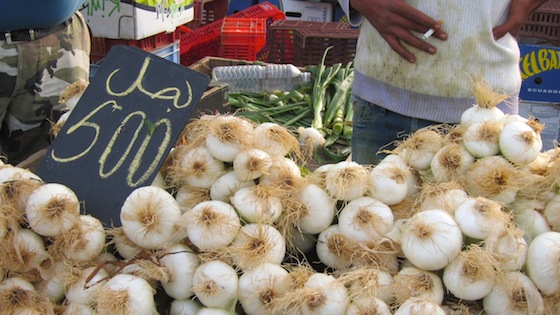
  2. Your travel stories from Tunisia are fascinating and insightful, Tafline. Thanks for letting us see what’s really out there. As a foodie, I did see one lighter side – those fresh garlic bulbs are beautiful!

LEAVE A REPLY

Please enter your comment!
Please enter your name here

TRENDING

Make paper mache with flowers to create stunning vase

There’s something quietly beautiful about what Rebloom Studio is doing, and it starts with waste. At wholesale flower markets, mountains of unsold blooms are tossed out at the end of each cycle. Perfect flowers, just not sold in time. Most of them are burned or dumped. Rebloom takes that moment and turns it into something else.

Everything is better when you spend 5 days in a cave

She spent 5 days in a cave in the dark. See what it did to her body.

What is the Jewish Climate Trust?

Jewish Climate Trust has quickly attracted the attention and support of some of the most influential voices in Jewish philanthropy, drawing backing from prominent family foundations and business leaders connected to the Bronfman and Schusterman philanthropic networks, alongside climate-focused investors and community builders aligned with founding leader Nigel Savage. Together, these donors have committed many millions of dollars to build a serious, long-term climate platform for the Jewish world — not as a symbolic gesture, but as a strategic intervention in one of the defining challenges of this generation.

How Eco-Friendly Playgrounds Are Reshaping Community Green Spaces

An eco-friendly playground goes a long way toward saving the city money. This is obviously also true for schools and churches that want to create new play spaces for the kids. The equipment can come in at a lower cost because the materials have been repurposed.

SPNI’s Eco-Therapy Program Offers Vital Support and Resilience in Post-October 7 Israel

Looking forward, “Nature Heals” does not plan to stop its work after the war is over. It plans only to expand and become a mainstay in eco-therapy. The program provides a compelling blueprint for trauma response and underscores the profound impact that eco-therapy can have on an individual. The goal SPNI set for itself is to engage over 700 students from the West Negev to Northern Israel at no cost. 

How to quiet noise from construction in your office

Streets need to be resurfaced in New York but the humming and grinding noise is unsettling. Noise is environmental pollution. 

EarthX and a blueprint for sustainable investing

Trammell S. Crow, a Dallas-based businessman and father of four, is focusing his efforts on impact investing, and media that focuses on saving the planet through EarthX.

Mining Afghanistan’s Mineral Discoveries Similar to Avatar

Now that American forces in Afghanistan are commemorating the longest period of any war that America has been involved in, including the 1965-73 Vietnam War, the recent discoveries of large and extremely valuable mineral and metal deposits may finally bring to light a reason to continue the presence of US fighting forces in this war torn and backward country.

From Pilot Plant to Global Stage: How Aduro Clean Technologies’ 2026 Expansion Signals a Turning Point for Chemical Recycling Investors Like Yazan Al Homsi

The company's Next Generation Process (NGP) Pilot Plant in London, Ontario, has officially moved into initial operating campaigns, generating the kind of structured, repeatable data that separates laboratory promise from commercial viability.

Nobul’s Regan McGee on Shareholder Value: “Complacency Is the Silent Killer” 

Why the governance framework designed to protect shareholders so...

Should You Invest in the Private Market?

startustartup Unlike public stock exchanges, which offer daily trading, strict...

How to build a 100-year-company

Kongō Gumi is a Japanese construction company, purportedly founded in 578 A.D., making it the world's oldest documented company. What can we learn about building sustainable businesses from them?

How AI Helps SaaS Companies Reduce Repetitive Customer Support Work

SaaS products are designed for large numbers of users with different levels of experience, and also in renewable energy.

Popular Categories