Can the Biolite Stove Generate Clean Cooking for the Middle East?

biolite stove
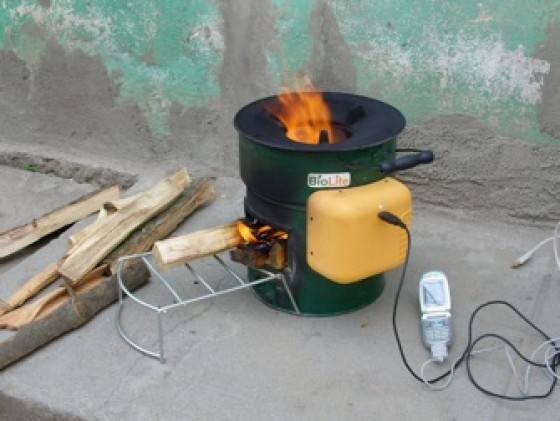
The Biolite stove cooks up dinner for a family of 5 using local wood and no electricity.

Jonathan Cedar and his business partner, Alex Moss, were working on a cooking device for campers when they realized they could use a thermoelectric module to generate electricity from some of the fire’s excess heat. That electricity could operate a fan to increase combustion and make the fire cook food more efficiently. There was even enough electricity left to recharge a cellphone battery.

Open wood fires are inefficient, wasting potential energy and creating toxic smoke due to incomplete combustion. Carefully designed stoves that use fans to blow air into the fire can dramatically improve combustion. However, such stoves require small amounts of electricity to power their fans and most people who cook on wood are without grid or battery access. BioLite stoves solve this problem by converting a fraction of the fire’s thermal energy into electricity to power the combustion improvement system. Excess electricity is made available to users for charging small electronic devices such as Cell phones and LED lights.

Cedar and Moss hope that their invention can work in developing countries, where people in remote areas already burn wood or other vegetation like pine cones for cooking. The Biolite stove also operates on local resources, but transfers excess heat, normally wasted, into free electricity.

Three billion people worldwide rely on wood or solid fuel for preparing food. Much of the Middle East is desert without many trees for burning, but in Yemen and Tunisia, solid fuel is used for 25 to 50 percent of cooking needs. Open fires consume a lot of wood. They also produce smoke and other toxic gases that dangerously pollute the air inside homes. The BioLite stove’s efficient process uses less than 1/2 the wood of an open fire and reduces smoke emissions by more than 95%.

In the sun-drenched Middle East solar cooking is the most efficient option. When it’s not an option, the Biolite stove saves money and resources, and helps make the planet greener.

More Green Posts by Hannah Katsman

Ten Tips for Keeping Your Food Safe this Summer

Breastfeed Your Baby in a Hijab: Public Breastfeeding in the Middle East

Save Water and Energy in Your Washing Machine with Top Tips

Picture and article source: Worldchanging and Biolite

Hannah Katsman
Hannah Katsmanhttps://www.greenprophet.com/
Hannah learned environmentalism from her mother, a conservationist before it was in style. Once a burglar tried to enter their home in Cincinnati after noticing the darkened windows (covered with blankets for insulation) and the snow-covered car in the driveway. Mom always set the thermostat for 62 degrees Fahrenheit (17 Celsius) — 3 degrees lower than recommended by President Nixon — because “the thermostat is in the dining room, but the stove’s pilot light keeps the kitchen warmer.” Her mother would still have preferred today’s gas-saving pilotless stoves. Hannah studied English in college and education in graduate school, and arrived in Petach Tikva in 1990 with her husband and oldest child. Her mother died suddenly six weeks after Hannah arrived and six weeks before the first Gulf War, and Hannah stayed anyway. She has taught English but her passion is parental education and support, especially breastfeeding. She recently began a new blog about energy- and time-efficient meal preparation called CookingManager.Com. You can find her thoughts on parenting, breastfeeding, Israeli living and women in Judaism at A Mother in Israel. Hannah can be reached at hannahk (at) greenprophet (dot) com.

Read More

TRENDING

A Face Swap Tool for Training and Internal Comms

Corporate training videos often require repeated filming, travel, and production resources every time policies or personnel change. AI-powered face swap tools offer a more sustainable approach by extending the life of digital training content, reducing unnecessary reshoots, and helping organizations communicate more efficiently—provided they are used transparently with clear consent and ethical governance.

How a tick bite can lead to a life-threatening meat allergy AFG

Imagine developing a severe allergy to steak after a single tick bite. That's the reality for people with alpha-gal syndrome, a rapidly emerging condition linked to lone star ticks and other tick species. As researchers uncover how tick saliva rewires the immune system, health officials warn that hundreds of thousands of Americans may already be living with this unusual red meat allergy.

Russia’s Arctic superdeep oil drill revives debunked ‘infinite oil’ theory

Russia is reviving the controversial abiotic oil theory with plans to drill superdeep holes in the Arctic. While small amounts of abiotic methane exist deep within the Earth, most geologists reject the idea that commercial oil reserves originate from non-biological processes, raising questions about the environmental cost and scientific value of the project.

Code Red from the Galapagos: human drugs and sunscreen are polluting the sea

Millions of visitors swim in the pristine waters of the Galápagos each year, but new research suggests sunscreen chemicals and other human-made pollutants are reaching even the islands' most protected marine habitats. Scientists are calling for urgent monitoring to safeguard one of Earth's most iconic ecosystems.

AI will crack the codes from the Dead Sea Scrolls

Artificial intelligence is opening a new chapter in Dead Sea Scrolls research. By combining machine learning with chemical analysis, scientists hope to uncover where the ancient manuscripts were produced, identify connections between scribes, and reveal hidden patterns across more than 25,000 fragments that have remained unsolved for decades.

Yerukim Forms a New Green Economy Where the Money is Really Green

The Yerukim members who pick up the recyclables get to keep the monetary reward, the public earns "green" bills that can be used in shops, and business owners get to be associated with environmentalism.

Choosing Riyadh over Dubai? What Investors Should Know

Saudi Arabia is deploying capital at unmatched scale to catalyze tourism and advanced industry while rewiring its power-and-water backbone. The investable frontier is widening—especially in renewables, grid storage, water efficiency/desal retrofits, and hospitality operating platforms. Prudent investors will insist on phased delivery, enforceable KPIs (energy, water, biodiversity), and RHQ/zone compliance—while pricing political-economy and reputational risks alongside growth upside.

Sell your cooking oil for biodiesel money

Want to make money on old french fry oil? Sell it.

Qatar Alternative Energy Summit Pairs Investors And Innovators

Alternative energy investors and innovators can meet n' greet in Doha, Qatar March 16 and 17.

Here’s How To Implement The Four Pillars Of Employee Engagement

If you throw a party for your work team and they are vegans, don't make it a barbecue. Know the sustainability values of your team to boost moral and retain good people.

Locals From Rishon Fight IKEA

Big Box stores are a pretty new concept in Israel, and thank God that not every Israeli city wants them in their backyard. A word from someone who has see the beautiful farmland around her hometown Newmarket, Ontario stripped and converted into vulgar strip malls of big box shops: they have no place in a healthy and sustainable town or city.

The Jewish National Fund Meets An Inconvenient Truth

According to the JNF, it has transformed thousands of acres of barren land into green forests in Israel. They state that each person emits about 23 tons of carbon per year, estimating that each tree planted can absorb one ton of carbon in its lifetime. That's a whole lot of trees you'd need to be planting. Could so many fit in Israel?

How to quiet noise from construction in your office

Streets need to be resurfaced in New York but the humming and grinding noise is unsettling. Noise is environmental pollution. 

Popular Categories