“In the midst of uncertain time, renewable energy remains consistent and steadfast in its expansion,” said Francesco La Camera, IRENA’s Director-General. “A more decentralised energy system, with a growing share of renewables and more market players, is structurally more resilient.”
Health insurance is a regulated financial product. Insurers operate under binding contracts, overseen by state insurance commissioners, that legally obligate them to pay claims meeting policy terms. Policyholders who believe a covered claim was wrongfully denied have legal recourse through state regulatory channels.
The New Zealand Merino Company, now rebranded as Zentera, has quietly removed the phrase “world’s leading ethical wool brand” from its website, a notable change that comes after a disturbing investigation by PETA Asia-Pacific into the company’s ZQ-certified wool supply chain, PETA reports to Green Prophet.
Somehow vegetables with short seasons excite the imagination and appetite more sharply than produce that’s available all year around. Good Middle Eastern cooks have many recipes for delicate fava beans, and this turmeric-fragrant soup is one.
“In the midst of uncertain time, renewable energy remains consistent and steadfast in its expansion,” said Francesco La Camera, IRENA’s Director-General. “A more decentralised energy system, with a growing share of renewables and more market players, is structurally more resilient.”
Health insurance is a regulated financial product. Insurers operate under binding contracts, overseen by state insurance commissioners, that legally obligate them to pay claims meeting policy terms. Policyholders who believe a covered claim was wrongfully denied have legal recourse through state regulatory channels.
The New Zealand Merino Company, now rebranded as Zentera, has quietly removed the phrase “world’s leading ethical wool brand” from its website, a notable change that comes after a disturbing investigation by PETA Asia-Pacific into the company’s ZQ-certified wool supply chain, PETA reports to Green Prophet.
Somehow vegetables with short seasons excite the imagination and appetite more sharply than produce that’s available all year around. Good Middle Eastern cooks have many recipes for delicate fava beans, and this turmeric-fragrant soup is one.
“In the midst of uncertain time, renewable energy remains consistent and steadfast in its expansion,” said Francesco La Camera, IRENA’s Director-General. “A more decentralised energy system, with a growing share of renewables and more market players, is structurally more resilient.”
Health insurance is a regulated financial product. Insurers operate under binding contracts, overseen by state insurance commissioners, that legally obligate them to pay claims meeting policy terms. Policyholders who believe a covered claim was wrongfully denied have legal recourse through state regulatory channels.
The New Zealand Merino Company, now rebranded as Zentera, has quietly removed the phrase “world’s leading ethical wool brand” from its website, a notable change that comes after a disturbing investigation by PETA Asia-Pacific into the company’s ZQ-certified wool supply chain, PETA reports to Green Prophet.
Somehow vegetables with short seasons excite the imagination and appetite more sharply than produce that’s available all year around. Good Middle Eastern cooks have many recipes for delicate fava beans, and this turmeric-fragrant soup is one.
“In the midst of uncertain time, renewable energy remains consistent and steadfast in its expansion,” said Francesco La Camera, IRENA’s Director-General. “A more decentralised energy system, with a growing share of renewables and more market players, is structurally more resilient.”
Health insurance is a regulated financial product. Insurers operate under binding contracts, overseen by state insurance commissioners, that legally obligate them to pay claims meeting policy terms. Policyholders who believe a covered claim was wrongfully denied have legal recourse through state regulatory channels.
The New Zealand Merino Company, now rebranded as Zentera, has quietly removed the phrase “world’s leading ethical wool brand” from its website, a notable change that comes after a disturbing investigation by PETA Asia-Pacific into the company’s ZQ-certified wool supply chain, PETA reports to Green Prophet.
Somehow vegetables with short seasons excite the imagination and appetite more sharply than produce that’s available all year around. Good Middle Eastern cooks have many recipes for delicate fava beans, and this turmeric-fragrant soup is one.
“In the midst of uncertain time, renewable energy remains consistent and steadfast in its expansion,” said Francesco La Camera, IRENA’s Director-General. “A more decentralised energy system, with a growing share of renewables and more market players, is structurally more resilient.”
Health insurance is a regulated financial product. Insurers operate under binding contracts, overseen by state insurance commissioners, that legally obligate them to pay claims meeting policy terms. Policyholders who believe a covered claim was wrongfully denied have legal recourse through state regulatory channels.
The New Zealand Merino Company, now rebranded as Zentera, has quietly removed the phrase “world’s leading ethical wool brand” from its website, a notable change that comes after a disturbing investigation by PETA Asia-Pacific into the company’s ZQ-certified wool supply chain, PETA reports to Green Prophet.
Somehow vegetables with short seasons excite the imagination and appetite more sharply than produce that’s available all year around. Good Middle Eastern cooks have many recipes for delicate fava beans, and this turmeric-fragrant soup is one.
“In the midst of uncertain time, renewable energy remains consistent and steadfast in its expansion,” said Francesco La Camera, IRENA’s Director-General. “A more decentralised energy system, with a growing share of renewables and more market players, is structurally more resilient.”
Health insurance is a regulated financial product. Insurers operate under binding contracts, overseen by state insurance commissioners, that legally obligate them to pay claims meeting policy terms. Policyholders who believe a covered claim was wrongfully denied have legal recourse through state regulatory channels.
The New Zealand Merino Company, now rebranded as Zentera, has quietly removed the phrase “world’s leading ethical wool brand” from its website, a notable change that comes after a disturbing investigation by PETA Asia-Pacific into the company’s ZQ-certified wool supply chain, PETA reports to Green Prophet.
Somehow vegetables with short seasons excite the imagination and appetite more sharply than produce that’s available all year around. Good Middle Eastern cooks have many recipes for delicate fava beans, and this turmeric-fragrant soup is one.
“In the midst of uncertain time, renewable energy remains consistent and steadfast in its expansion,” said Francesco La Camera, IRENA’s Director-General. “A more decentralised energy system, with a growing share of renewables and more market players, is structurally more resilient.”
Health insurance is a regulated financial product. Insurers operate under binding contracts, overseen by state insurance commissioners, that legally obligate them to pay claims meeting policy terms. Policyholders who believe a covered claim was wrongfully denied have legal recourse through state regulatory channels.
The New Zealand Merino Company, now rebranded as Zentera, has quietly removed the phrase “world’s leading ethical wool brand” from its website, a notable change that comes after a disturbing investigation by PETA Asia-Pacific into the company’s ZQ-certified wool supply chain, PETA reports to Green Prophet.
Somehow vegetables with short seasons excite the imagination and appetite more sharply than produce that’s available all year around. Good Middle Eastern cooks have many recipes for delicate fava beans, and this turmeric-fragrant soup is one.
“In the midst of uncertain time, renewable energy remains consistent and steadfast in its expansion,” said Francesco La Camera, IRENA’s Director-General. “A more decentralised energy system, with a growing share of renewables and more market players, is structurally more resilient.”
Health insurance is a regulated financial product. Insurers operate under binding contracts, overseen by state insurance commissioners, that legally obligate them to pay claims meeting policy terms. Policyholders who believe a covered claim was wrongfully denied have legal recourse through state regulatory channels.
The New Zealand Merino Company, now rebranded as Zentera, has quietly removed the phrase “world’s leading ethical wool brand” from its website, a notable change that comes after a disturbing investigation by PETA Asia-Pacific into the company’s ZQ-certified wool supply chain, PETA reports to Green Prophet.
Somehow vegetables with short seasons excite the imagination and appetite more sharply than produce that’s available all year around. Good Middle Eastern cooks have many recipes for delicate fava beans, and this turmeric-fragrant soup is one.
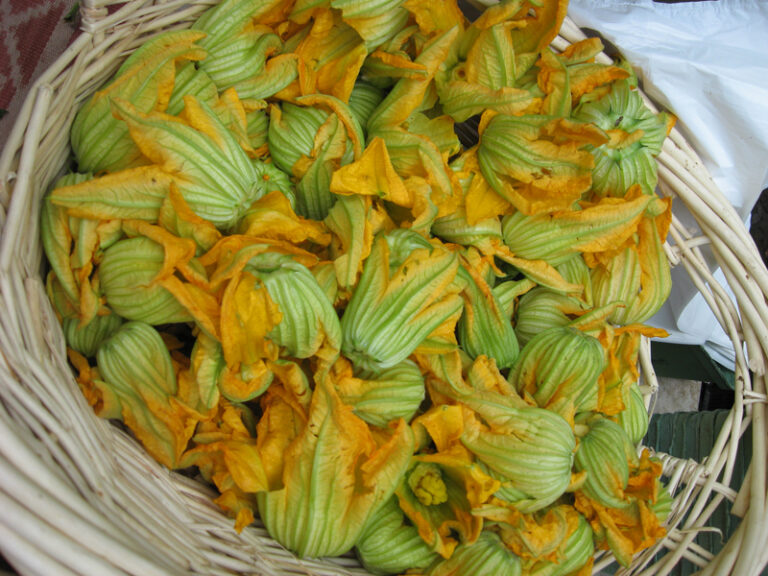
Zucchini flowers, or squash blossoms (for culinary purposes these are interchangeable), are one of those off-the-supermarket-beaten-path ingredients you tend to find only at farmers’ markets or fancy restaurants. (Or Italy, though that doesn’t really help most of us all that much.)
This elusiveness means that if you do come into a supply – either because you’ve lucked into some at the market, or by growing them yourself – it may not be entirely clear just what to do with the darn things.
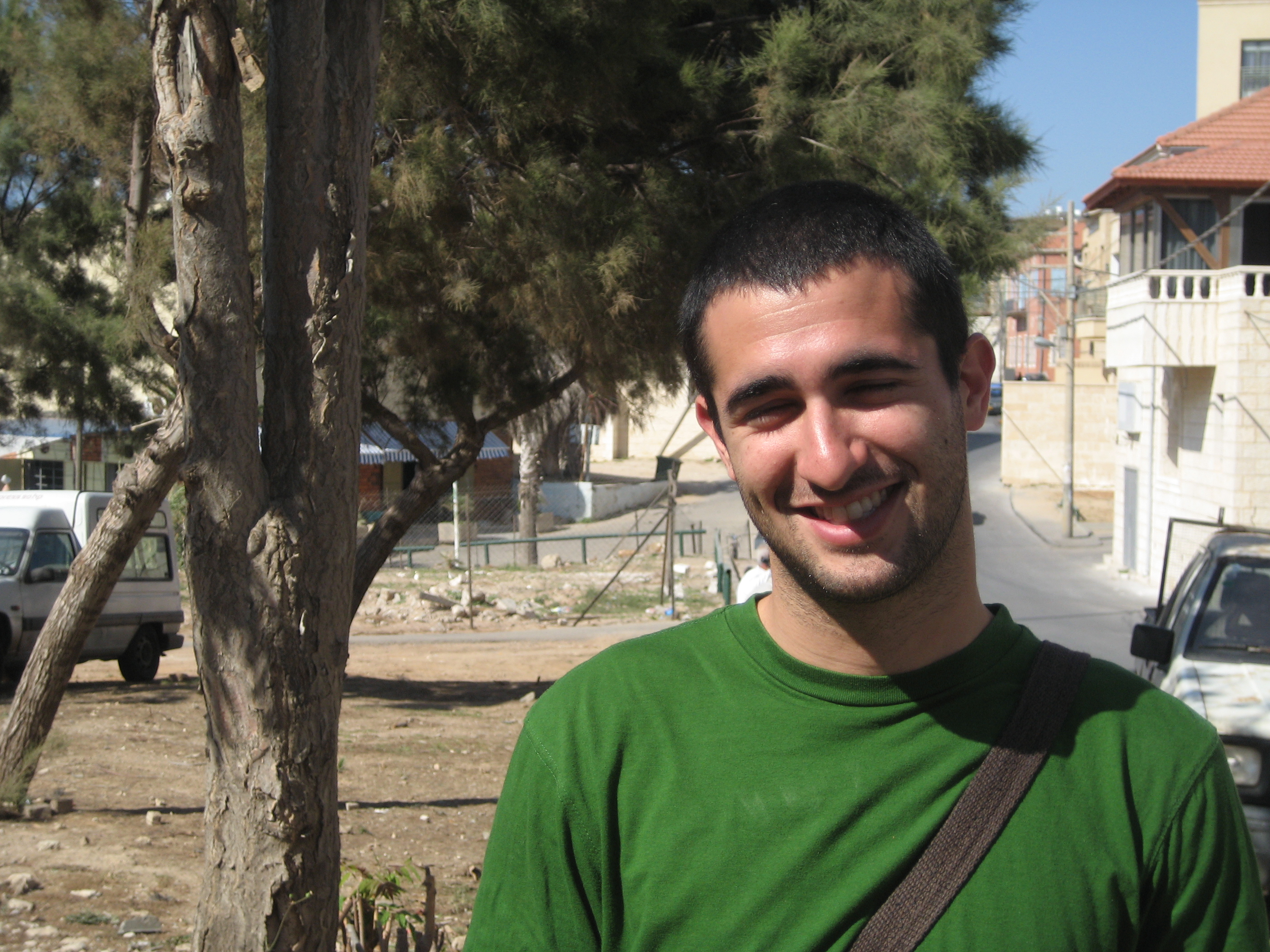
He is also studying urban and regional planning in the Technion Institute in Haifa–and we know he’ll use his powers for green. Jesse speaks about the water crisis, city planning in Israel, and much more.
How would you define yourself environmentally? (ie activist, entrepreneur, artist, educator etc…):
I’ve really been privileged thus far to have been part of the environmental movement in several different capacities – as a student, activist, blogger/journalist and urban planner.
How you get around? (i.e. bike, car, scooter, heel-toe express):
I live in a small apartment in the center of Tel Aviv, so I can pretty much get everywhere in the city by bike. The only exception to this is when it is just too hot or too rainy to bike around, in which case I take the bus. For the past two years, I have been making the long journey up to the Technion in Haifa twice a week, which involves trains and buses.
Can you tell us about your biggest green passion? What fires you up?
What prompted you to start caring about the environment?
I can’t say that I ever had a real “eureka” moment that suddenly made me into an environmentalist.
What do you think is the most important issue the world faces today?
I think the major problem today is that we are facing a convergence of trends. Global climate change, of course, is the major one, and is finally being covered by the mainstream media and even policy-makers as a serious issue that requires serious efforts. But there are others: “peak oil,” or the end of cheap oil, the biofuels issue, corporate takeover of important lands, the water crisis, etc. etc. We have to first of all realize that these trends are parallel and often reinforce each other.
What is the most important issue in the Middle East?
Here in the Middle East, our main environmental problems over the next few years will be related to water, energy and land. If we want to deal with them, I think we will first have to reassess the relationships that we have built with our neighbors in the region. Israel will have to learn to better integrate itself in the region if we want to continue to thrive here. We can’t tackle these problems alone.
What’s the saddest thing you’ve ever seen (enviro related)?
There are a lot of missed opportunities out there. Pretty much every environmental problem, if you look at it the right way, can turn into an opportunity to do something amazing. There are millions of examples out there of situations where serious nuisances were made into something human and intelligent. In my experience, problems and challenges are too often approached in a very square way – let’s just throw money at the problem and hope it goes away – instead of thinking about them creatively.
I think that Israel’s cities are also a terrible missed opportunity at the moment. The potential is there to create cities that are beautiful, pleasant and work well, it wouldn’t be that hard to do, and other cities have already pioneered a lot of great ideas that we could learn from. Things are starting to move in that direction, slowly.
In the meantime, entire neighborhoods sit neglected (southern Tel Aviv and Jaffa, the lower city in Haifa), while the only development that is encouraged are projects that totally alienate themselves from their surroundings.
What’s the most hopeful project/company/event you’ve seen?I think the most hopeful thing in Israel is the quality and commitment of the people on the front lines of the movement. The NGO crowd has always impressed me, with their commitment and drive in the face of sometimes total lack of understanding on the part of the official bodies while working for less than stellar salaries. The green business people are also particularly energetic, always coming up with new ideas and working hard to get them out there. I think that in this sense, Israel is in much better shape than most other countries.
What do you do to play your part in greening the earth?
I try to reduce my ecological footprint as much as possible – I separate my trash, compost, recycle, and reduce my consumption, I don’t own a car, probably the most significant thing in my opinion, and I try to spread the green influence however possible, whether it be through writing about it, talking with people, setting a personal example or through activism.
What are you reading now (green related)?
Right now I’m in the final stretch of a Masters degree, so I don’t have as much time as I would like to keep up with what’s going and read new books. I am working on a review of a book called “Renewable City” by Peter Droege and reading Naomi Klein’s “The Shock Doctrine.”
I read Alon Tal’s book “Pollution in a Promised Land” not too long ago, an excellent history of the environmental movement in Israel by someone who has been deeply involved for years.
Alon Tal founded a number of NGOs, including the Arava Institute in Israel
A few books that shaped the way I think about things: “Small is Beautiful” by E.F. Schumacher, “Ecocities” by Richard Register, “Architecture for the Poor” by Hassan Fathy, “Cradle to Cradle” by McDonough and Braungart, and “Food First” by Lappe.
What’s your favorite post/topic on Green Prophet, and why?
I usually write about urban planning and design. This is one of the subjects which most interests me, and also a very dynamic field where things are always happening and changing. I am also interested in resource use in Israel – how we are going to change our development and consumption patterns as water, land and energy become scarcer.
Who are your environmental heroes?
I really admire guys like William McDonough and firms like Arup and EDAW that are already out there planning the cities of the future in a sustainable way. In Israel, organizations like Friends of the Earth Middle East, Adam and Eve Ecological Farm near Modi’in and Bustan in the Negev that combine environmental activism with hands-on work that brings us closer to real peace and coexistence in the region.
In the Israeli Parliament, The Knesset, there are also several people I admire (believe it or not). First and foremost Dov Hanin, but also Hana Sweid, Ophir Pines-Paz, Michael Melchior and others who are really on the forefront of anchoring environmental action in law and proper governance.
If you could make one green wish (or have one of your prophecies come true) what would it be?
I wish that everyone involved with planning, construction and development of all kinds here would learn to approach their work with more humility. The years of conquering nature are over. I wish that the understanding that we have to work with nature for our survival and prosperity in this country would permeate the consciousness at all levels and filter into the decision-making process.
Want to meet another Green Prophet sustainability writer?
See Karen Chernick
More often than not the bigger package is the better deal. Don’t believe me? Check for yourself. Even in Israel where it is harder to find the “supersavings” in a regular supermarket the bigger package will more likely give you bigger bang for your buck. The eco-benefit is that you’ll be saving on packaging as well as with money.
I’m a little embarrassed to admit it, but I didn’t know that cigarette butts were an environmental issue. I’m also not a smoker, so I never gave it much thought. But Hanan Shteingart – co-founder of “Eretz Lelo Bdalim” (Country Without Cigarette Butts) and anti-cigarette butt activist extraordinaire – recently brought our attention to this important and pervasive issue.
Hanan decided to take action after constantly seeing the beaches full of cigarette butts and was inspired by his sister, who even asks drivers who toss cigarette butts out of their car windows to get out and pick them up.
Anyone who’s visited Israel knows that smoking here isn’t taboo. It’s no New York, where you have to go out onto the street to light up. And unfortunately, a whole lot of garbage comes hand in hand with a whole lot of smokers. Approximately 80% of all cigarette butts aren’t thrown out in the trash, but rather tossed onto streets or beaches.
They’re definitely unsightly, but more significantly – cigarette butts are really bad for the environment. Here’s a brief list of some of their top environmental offenses:
“Jerusalem has virtually the perfect temperature for houses,” explained green architecture consultant, Valentina Nelin when I met her recently. “If your house is oriented correctly, you don’t have the ‘greenhouse effect’ in the summer [causing houses to absorb excess heat and warm-up].”
Sensible, and often simple, design can make the temperature much more bearable, which is good for people and good for the environment, making air conditioners and gas guzzling heaters – which use 75% of the energy in an average household – redundant for most of the year.
“If the Israeli government can ever formulate a binding peace accord with the Palestinians, both entities could have access to enough natural gas reserves to satisfy their energy needs for at least 100 years.”
This statement was made a few years back by a representative of British Gas, one of the world’s largest energy exploration and development companies specializing in finding and developing natural gas fields, including offshore ones in bodies of water such as the Mediterranean Sea.
Buckle your (cyber) seatbelts and prep your imaginary passports, because this week we’re continuing our green journey. After eco touring other Middle Eastern countries – such as Jordan, Lebanon, Iran, Syria, Egypt, and Israel – we’re off to pay a green visit to Yemen.
Yemen, like other countries in the region, has a variety of natural attractions ranging from Red Sea marine life to mountains (Yemen’s Jabal Al-Nabi Shouyab mountain at 3660 meters above sea level is one of the highest peaks in the Arabian Peninsula), to plains and valleys. Yemen’s Environmental Protection Agency is currently working on establishing conservation areas in Yemen that will be especially protected.
In a special guest post, Steve Chase, the founder & director of the Environmental Advocacy & Organising course from Antioch University in New England, shares with Green Prophet his reflections from a University-wide event held this past february in the US that examined climate activism from both Jewish & Christian perspectives.
“This week, Antioch University New England joined with over 1,400 colleges and universities across America that offered a coordinated national teach-in on how to address global warming and move toward meaning climate protection solutions. I was very honored to have been asked by Antioch’s Focus the Nation Organizing Committee to host the week’s final event, which took a close look at climate protection activism through the eyes of the Jewish and Christian faith traditions.
This is more than an academic concern for me. I come to my own work as an activist and as an activist trainer from the faith tradition of Quakers, also known as the Religious Society of Friends. In my faith tradition, we have long tried to follow the call of the Spirit, the early Jewish prophets, and Jesus to do God’s will “on Earth as it is in heaven.” For us, this not only means working hard to support peace and justice among people, but also to live in loving “unity with creation.”
Right at the beginning of my talk, however, I had to acknowledge an elephant in the room. Over the years, there have been many in the field of Environmental Studies, and within the environmental movement itself, who have assumed that devout Jews and Christians either have nothing special to add to the environmental cause, or are actually a big part the problem.
The recent attention given by the news media and this blog concerning our water problems in general, and to the depleting the Kinneret in particular, reminds me of a poster I saw once in a surfing products shop that read: “The Next War in the Middle East Will be Over Water.”
Although the poster really had nothing to do with this subject (it was advertising surfing clothing and accessories), the reality of our water problems is one for everyone’s concern.
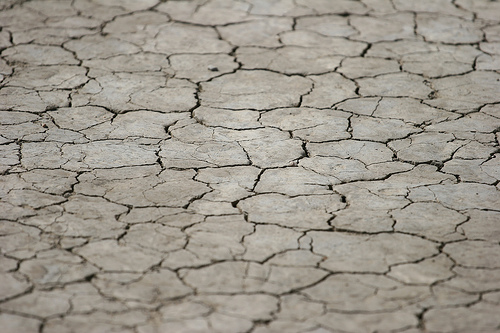
The dry lake in this photo is actually in the Mojave Desert in Southern California, it could one day apply to the Kinneret as well, which is also way below sea level.
After reviewing many of these water saving ideas,I have come up with some interesting ideas that could save at least 18 -20 liters of water per person, per day, by engaging in the following practices:
“Make sure to place your organic waste in the buckets outside and please use our shampoo and soap when you shower so chemicals don’t enter or gray water system,” my hostess explained to my family as we first arrived in Amirim. I immediately felt at home.
We’ve been covering lots of eco-tourism tips and organic and vegetarian hot spots in Tel Aviv on Green Prophet, but I recently spent the weekend at a tzimmer (guest lodge) in moshav Amirim that was a vegetarian and ecological paradise unto itself.
Just 15 kilometers from Tzfat there is a moshav that was founded in the late 50s that was ideologically influenced by organic, vegetarian and vegan principles. My hostess at Ohn-Bar, the tzimmer where I stayed, explained that the people of Amirim were among the pioneers of Israel’s strong vegetarian movement.
Israel’s fastest-growing supermarket chain is the upscale Tiv Taam, where customers can browse shelves of international beers, pick through extensive cheese selections and even purchase pancetta to include in their gourmet dishes at home. At Hinnawi, a Yafo-based butcher with a branch inside the shopping mall in Ramat Aviv, customers can choose between 17 kinds of salt and pepper grinders. And silicon spatulas, Le Creuset pots, and KitchenAid mixers are fixtures at chefs’ stores around Tel Aviv.
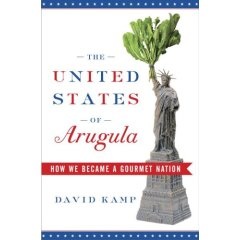
Yet despite all the signs of the Israeli food revolution, the movement has yet to be documented. On the other hand, in his new book ‘The United States of Arugula’ author David Kamp explains the birth of California cuisine, the rise of American celebrity chefs and the movements toward sustainable eating, which are now starting to influence Israeli cuisine, in esoteric and exciting detail.
This fast-paced and engaging 392-page tome examines America’s roots in a Puritan approach to food, which eschewed the French cuisine as too pretentious and instead relied on meat and potatoes, with the occasional monstrosity of fruit salads suspended in Jell-O. Kamp mined Food Network archives, sifted through food-related news reports and interviewed chefs and restaurant critics to find out how the USA went from such unpromising beginnings to become a country suffused with extra-virgin olive oil and truffles.
The word “organic” can be applied to many things in our modern day lives. Most commonly, it applies to food that has been grown organically (meaning without pesticides). But as a quick search in Webster’s dictionary showed us, the term organic means “of, relating to, or derived from living organisms.”
And Tel Aviv’s “Don’t Panic It’s Organic” concert this Saturday night is all about living organisms.
So what’s an organic concert?
The “Don’t Panic It’s Organic” concert is a response to the hostile takeover of electronica music in the local music scene and a collective insistence upon the merit and value of man-made music. (In other words, music of, relating to, or derived from living organisms.) Of course it’s not entirely organic… it’s no Earth Hour Tel Aviv concert powered by biodiesel and human bicycle pedalers and some electricity will probably be used to power the lights and instruments – but it’s a step in the right direction.
You’re eating a bag of chips while walking down the street. As you finish you look around to find a trash can but nothing is in sight.
Do you drop it? If the city doesn’t bother to make waste bins available, why should you care about the city’s cleanliness? How about eating a piece of steak? Is it irresponsible to eat knowing the vast amounts of carbon created in order to bring it to your plate?
What if your livelihood, and the livelihood of your five hundred employees, depends upon your factory, but the only way to make the books work is if you dump your waste into the river? Does that make that act of destruction okay?
Thomas Hobbes, the father of modern political philosophy, expresses the idea – in a nutshell – that the very fact that we are human gives each of us the right to do whatever we want. Although we each need to give up some of our individual rights to the government, so that the government can make sure that everyone has equal rights. This is a significant issue when dealing with environmental issues.
Ful medames; ta’miyya; bissara — fava beans have given rise to iconic dishes across the Middle East. Egyptian cuisine is unimaginable without them. They’ve been a staple in the region for about eight thousand years, and were one of the first plants cultivated for food.
Most often, they are used in their dried form: rehydrated and simmered until tender, and then prepared in a host of ways. But fresh favas are wonderful – toothsome, nutty, tasting like something halfway between a pea and bean.





 I’m a little embarrassed to admit it, but I didn’t know that cigarette butts were an environmental issue. I’m also not a smoker, so I never gave it much thought. But Hanan Shteingart – co-founder of “Eretz Lelo Bdalim” (


 “If the Israeli government can ever formulate a binding peace accord with the Palestinians, both entities could have access to enough natural gas reserves to satisfy their energy needs for at least 100 years.”





 The word “organic” can be applied to many things in our modern day lives. Most commonly, it applies to