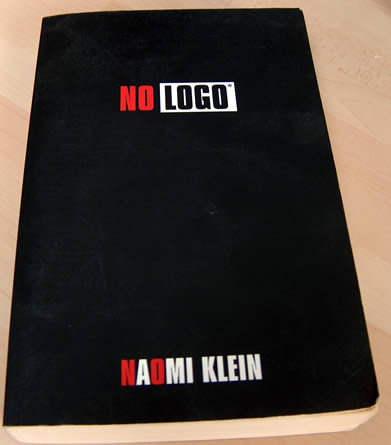

This week’s eco-book review is by Prophet Daniella Cheslow: Although Starbucks never made it in Israel, McDonald’s, Burger King, Puma, Crocs, Nike, Diesel, and the Coffee Bean are among the hundreds of global brands that have found eager customers among Sabras. I read Naomi Klein’s ‘NoLogo’ for some insight into the branded city of Tel Aviv.
Ah, the good old days, when the most pressing global issues were G-8 meetings and Nike’s sweatshops. Published in 1999, ‘NoLogo’ reminded me how much the world has changed since September 11, two years later.
Klein’s 490 pages details the branding of public space, the reduction of quality manufacturing and service jobs, and the rising global anti-corporation movement. By the time I was finished with the book, if I suspended my knowledge of what came between Klein and reality in the last nine years, I would almost expect Tel Aviv to be alive with protesters of corporate abuses every Friday instead of plastered with signs for “The Human Race,” Nike’s upcoming 10K night run.
Klein’s book includes some fascinating insights. She documents the moment when America’s leading companies ceased selling products and began hawking their image instead. According to Klein, this occurred during the 1970s recession. In the face of competition, Marlboro cigarettes decided to lower their prices, which showed how badly they were being battered by the market. At the same time, a few corporations chose to keep the same prices but expand their advertising budgets. Those companies, such as Apple, The Body Shop, Levi’s and Disney, found continued success even in a time of reduced national consumer spending.


 For every ton of paper, roughly 200,000 sheets of paper, that is


 Public Transportation: Considering how many people actually live in Manhattan and the other four boroughs of New York City, there is a relatively small carbon footprint associated with transportation in the city and it keeps getting smaller. Why, you might ask? Because

 Israel has the highest per capita cell phone use in the world at 2.2 cell phones per person. Israeli children, teens and young adults are among the most active users. This presents a huge,


 In a press conference held last week the