Home Blog Page 714

Ecological Housing Coming Soon to Tel Aviv!

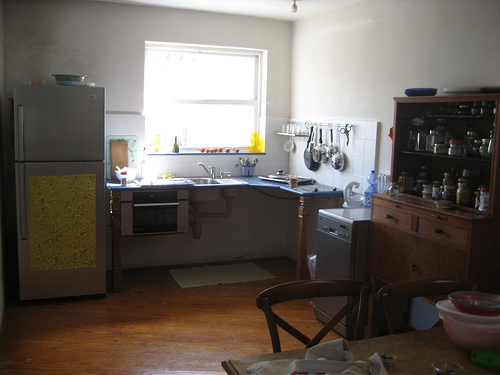
ecological village manchester green photo

The Green Building in Manchester’s Macintosh Village.  An Israeli version, coming soon?

Last month, the Tel Aviv municipality implemented some creative solutions to help solve Israel’s ongoing water crisis.  It appears they are not stopping there in their efforts to green the City That Never Stops.

Soon, construction will begin on Tel Aviv’s first ecological housing project!

The building will be on Akiva Eger Street, near the central bus station, and “will include smart lighting systems, recycled use of grey water (water generated from laundry and bathing) for irrigation or cooling, [and] charging stations for electric motor scooters.”

Since this project is part of the municipality’s plan to renew areas in the southern part of the city, builders receive rights more generous than those in the central and northern part of the city, and they are also permitted to build smaller apartments.  The affordable price and small size of these homes are expected to attract young people and investors.

(As if the coolness of living in an eco-friendly apartment wasn’t incentive enough.  Where can I sign up?!)

:: Ynetnews

Image: Terry Wha

More on Tel Aviv’s environmental initiatives:
Shop Vintage in Tel Aviv Because Vintage Is Green and Stylish

Tel Aviv Cafes Offer Great Cappucinos and Free Bike Rentals

Will the Tel Aviv Light Rail Ever Happen? Do We Want it To?


Solar lights from Innovation: Africa

4
jewish-heart-africa
Sivan Borowich-Ya’ari founder Innovation: Africa

As Westerners, there are some things we really can’t understand about Africa unless we’ve been there. That’s what Sivan Borowich-Ya’ari discovered over the last decade. While working for a clothing manufacturer and then the United Nations, the Israeli woman fell in love with Africa. She understood how very small things — like a single light bulb shining at night — could drastically improve peoples’ lives. 

With this in mind, 30-year-old Borowich-Ya’ari founded the non-profit, A Jewish Heart for Africa, in New York, raising money in America but using technology developed in Israel. It is now called Innovation: Africa. In the year since it began work, she estimates that Innovation: Africa has changed the lives of more than 30,000 Africans in Ethiopia, Tanzania and Uganda.

Connecting America to Israel was logical for Borowich-Ya’ari. Noticing that Africans lack basic needs like fresh water, or a refrigerator to store medicines in their clinics, Borowich-Ya’ari got an idea. 

“We started with solar power because without energy you cannot do much,” she says. And as an Israeli, she turned to the obvious: Israeli solar technologies are well known around the world. 

Helping Africans catch the sun 

Innovation” Africa’s first project, Project Sol, is designed to bring solar power to African clinics and schools. Solar power is an obvious choice in Africa where the sun shines about 12 hours a day. 

“At night if a doctor has to treat patients, he has to do it with candles. With $4,000 we are installing solar panels and eight to 10 lights in a clinic. We put the lights both inside and outside so people can actually find the clinic at night,” she tells us.

The solar panels, bought at cost price from Israeli company Interdan, are also used to power refrigerators used to store and preserve medicines. “It gets so hot there that even when the clinics get vaccines they don?t keep for very long [without a fridge],” she explains.

Basic lighting is a first step, but another pressing concern, says Borowich-Ya’ari, is being able to pump water so that women and children don’t have to walk miles to collect it. With rapid deforestation in Africa, and the effects of global warming already felt, finding clean drinking water is becoming more of a problem every day.

Expanding food production with drip irrigation 

Project Sol’s solar energy panels are also being put to use to power water pumps, now able to pull water from 200 meters below the ground. This is part of the NGO’s new venture in Africa, Project Agro. Borowich-Ya’ari and her team of 24 volunteers will install Israeli drip irrigation technology from the company Netafim in Tanzania and Uganda, where the company already has distributors in place. 

Water pumped from beneath the ground will be fed into Netafim‘s water saving drip irrigation pipes to help African villagers expand agricultural production in locations where food is scarce. 

“We are pumping 20,000 liters of water per day — it’s changed the entire economics of the village and the peoples? health. They can grow food,” says Borowich-Ya’ari, who came up with the idea for the solar power organization while studying at Columbia University in New York, where she received an MA in International Energy Management and Policy, and later at her job with the United Nations Development Program. 

Innovation: Africa is also powering a synagogue in Uganda, for the Ugandan Jews who converted to Judaism 100 years ago. “We’ve powered their chicken farm and a community center; a library, synagogue and we’re powering their homes,” she says. 

In about two years, Innovation: Africa plans to send volunteers to the field in Africa. In the meantime, says Borowich-Ya’ari, cash donations are most welcome to continue buying the much-needed infrastructure. 

More on solar power from Israel:


Quick Guide to Israeli Solar Energy Companies
From Solar Power Air Conditioning to Squeezing Water from Thin Air
Hope Floats With Geotectura’s Solar Energy Balloons

Israelis, Palestinians Dispute Over Quarries in the West Bank

1

Disputes over natural resources are not a new part of the Israeli-Palestinian conflict.  Water, for instance, is a famous bone of contention between the two parties.  Recently, however, a newer twist developed in this ongoing battle between nations.

On Monday, Yesh Din – Volunteers for Human Rights, an Israeli rights group, petitioned the High Court of Justice, seeking both an interim order and an injunction against the operation of 10 Israeli-controlled quarries in West Bank.

Michael Sfard, a lawyer for Yesh Din, argued, “Israel is transferring natural resources from the West Bank for Israeli benefit, and this is absolutely prohibited not only under international law but according to Israeli Supreme Court rulings…This is an illegal transfer of land in the most literal of senses.”

A 2008 government study found that three-quarters of the resources extracted from these quarries goes to Israel, accounting for almost a quarter of the sand and gravel Israel uses annually.  International law forbids occupying powers from exploiting natural resources in the territories they control.  Although Israel does not consider its ongoing military control of the West Bank as an occupation in the classical sense, Yesh Din still maintains that the extraction of rocks and sand for building materials violates international law.

Interview With Elad Orian: Building Wind and Solar Energy for Palestinians With COMET

28

Rachel interviews Elad Orian, co-founder of COMET – Community, Energy, and Technology in the Middle East. He’s creating solar power for Palestinian villages.

Through sustainable energy development for off-grid villages, the project aims to socially and economically empower Palestinian communities of the South Mount Hebron region, one of the poorest and most marginalized areas within the Israeli-controlled Palestinian Territories. The project is small – Elad and his partner Noam Dotan run COMET in their spare time – but successful.  Last summer, they installed 20 homemade solar systems in the village of Susya, as well as held a wind turbine construction workshop for Palestinians from all over the West Bank.

Elad’s views on renewable energy, sustainable development, and social and environmental justice in the Palestinian Territories are excerpted below.

Shop Vintage in Tel Aviv Because Vintage Is Green and Stylish

2

vintage-angel tel aviv photo angel cutsworthReduce, reuse, recycle: the three rules of green living. Thrift, second-hand, and vintage shopping all follow all three.

  • Firstly you’re reducing the need for new products to be manufactured.
  • Secondly you’re reusing things that have been through lord knows what.
  • And lastly, by putting things that you don’t want or need any more back into the cycle of reusing you’re recycling.

Vintage shopping is a big buzz word of our times, suddenly we’re realising not only the green aspect of all of these clothes that are hanging around.

We’re also realising the style value of not only wearing something that’s a little bit worn, but of the fact that no one else owns an identical garment, and even if they do it’s rare!

I run a blog about vintage shopping in Tel-Aviv and thought I’d share a few tips on first of all where to go shopping, and secondly what to look for when shopping.

Siah HaSade: Permaculture initiative greening Jerusalem

1

siah-hasade1

Should I stay or should I go? It’s a common question vexing many people living in Jerusalem, a city suffering from negative population migration, particularly young, secular Jews who leave to seek opportunities in Tel Aviv and central Israel. Siah HaSade is a new permaculture centre in the heart of west Jerusalem which seeks to reverse this negative trend (in the local neighbourhood at least) by providing local people with tools to live more sustainably in the city.

“One of the things that makes the city liveable are green spaces,” says Shaul David Judelman, local green activist and one of the project’s founders, who hopes that centre will help strengthen the connection between more local people and their community. Officially launched on Tu B’shvat, the previously neglected space is being given a green make-over in the shape of raised beds to grow organic vegetables, compost facilities, planting native trees, demonstration porch and hanging gardens and, in the future, composting toilets and a grey water system to recycle waste water from the kitchen to irrigate plants. “We want to give people the tools to live in a more sustainable way in the city, whether it’s producing a small amount of food, or a place to make contact with nature without driving and burning fossil fuels,” says Judelman, who also runs the Yeshivat Simchat Shlomo Eco-Activist Beit Midrash.

Eco Your Moon Cycle

2

wind energy, solar energy, cleantech, Iran, oil, gas, sanctions, alternative energy

Just the way disposable diapers are a nightmare for our environment and children’s health, so are all those disposable sanitary products being aggressively marketed.

Yes I know that for many, just as cloth diapers, the idea of cloth menstrual pads and moon cups are hard to swallow but really these days there are many converts, and more and more women are realising the multiple benefits of ditching those disposables.

So what are we actually talking about, what is available and just why and am I singing their praises so loudly?

Cloth pads for menstruation

Cloth pads are nothing new, and there are centuries of history dedicated to their us: although introduced to the market at the end of the 19th century disposable sanitary products only really became popular about 80 years ago with the market expanding to what it is today in the last 40 years. And women were doing just fine before that. Don’t let those big corporate money makers let you believe anything else.

moon cup instead od tampons

Problems with disposable sanitary products

  • pollutants in the growing of cotton
  • paper production and plastics
  • health issues such as toxic shock syndrome
  • the actual disposal of the product

Hard statistics for women’s health

To get you started here are some of those entertaining facts and figures compiled from a study in the UK.

  1. On average a woman will use around 12,000 disposable towels and tampons in her lifetime
  2. 98% of which are flushed down the toilet,
  3. Of which an estimated 52% go directly to the sea untreated, not a pleasant thought,
  4. They also cause 75% of blocked drains
  5. Tampons take at least 6 months to biodegrade and towels are not biodegradable, the plastic may breakdown into smaller pieces (ideal fish food!) and they are filled with a cocktail of chemicals which keep them white and absorbent.
  6. Disposable sanitary products put even more pressure on landfills than disposable nappies.

The other main environmental issue surrounding these products is the manufacturing process and the materials used. Tampons are made mainly from cotton and rayon, for issues surrounding the cotton industry read Greening Your Baby’s Wardrobe, but in a nutshell conventional cotton is one of the top 3 polluters in agriculture and the processing of cotton is just as chemically laden, not as innocent or as natural as we thought.

Rayon is made from woodpulp, again a chemical process, plus you have to chop those trees down first! And sanitary towels are made mainly from rayon and plastics.

Tampons and sanitary towels are toxic

One other issue regarding the environment and our health was the bleaching agent used, namely chlorine gas which causes dioxins, a known carcinogen, though thankfully due to pressure from health and environmental groups many manufacturers stopped using it and levels of dioxins found have dropped though occasionally trace levels can still be found.

It is not just the environment that these products pose a threat to, many health issues have been connected as well: Toxic Shock Syndrome, though rare is something every women should know about if using tampons, and if tampons are your preferred choice then avoid ones made from cotton and rayon (100% cotton tampons have shown no links TSS), or with lubricants as these may also contain parabens, choose organic cotton tampons (Natracare and Organyc are available in Israel).

It is also known that many women suffer from allergic reactions from the materials and chemicals used in towels, sometimes just heightened sensitivity and soreness though often increased rates of Thrush are also associated with these products.

Homemade Pad and Tampon Alternatives

So what are our options; well I am very happy to say that there are plenty available to us wherever we live. I live in Israel.

AlonaMy personal preference are organic cotton towels which you can buy or make yourself. Find ones with certified organic cotton that come in two parts making them extremely comfortable, very effective and very easy to care for.

Organic cotton is very soft, highly absorbent and breathable (something that disposables are not being made from plastic).

Many women who have changed over to cloth pads due to health reasons say that their symptoms disappear instantly. Pads are available in a range of sizes to fit every woman’s needs, and unique two part design (if you can find it) allows easy change of liners throughout the day.

I know women who sew their own.

Cloth pads are very easy to look after, just soak after use in cold water and place in your regular laundry cycle.

moon cup instead of tampons
Mooncup is a good alternative to tampons

For those of us who prefer tampons, the Mooncup offers an excellent alternative, available at Bishvilenu, this menstrual cup is made from soft silicone and comes in two sizes; before and after birth.

Eco Rabbi on Purim and Building a Good Society

1

purim-hamantschenThis week Jewish people everwhere, and in Israel,  celebrate the festival of Purim, which I would call the festival of communal identity.

The beginning of the Megillah (what Jewish people read on Purim) opens with King Achashverosh’s party, a seven-day-all-out-eat-your-heart-out party.

After spending an entire half-year celebrating throughout the country, the king wanted to impress the people in his capital. If you were ANYONE, or wanted to be, you HAD to be there.

The commentaries describe how it was a celebration of the temple NOT being rebuilt, how Achashverosh took out the holy vessels to show off, and how there was blatant disregard of the commandments. Talk about low communal self-image.

The story is a story about a people coming into their own. This cannot be done without leadership, and is rarely done without some unifying experience.

There are several points during the story where people are forced to choose where their loyalties lie. Whether it’s loyalty to their personal tenets, as Mordechai decided NOT to bow to Haman; or loyalty to communal tenets, as Esther had to decide to stand up for her people, not to mention the Jews of the city fasting for three days along with Esther once she decided to take on the challenge.

It is clear by the conclusion of the story that the process that these people underwent is seen as a point of reunification of the community.

Israeli Cleantech Cos Will Benefit From Obama's $6b Stimulus Plan

obama-green israel stimulus photoIf you’re a regular reader of Green Prophet, you’ll already know that the US and Israel have forged ties to co-develop renewable energy products. And that top US energy leaders were in Israel a few weeks ago.

Now Globes reports, that the $800 billion US stimulus package launched by President Barack Obama will affect both domestic and foreign industries.

Including funds for renewable energy projects, the stimulus plan is good news for Israeli venture capital and technology companies in this field. It’s a dramatic change, the newspaper reports, because the US renewable energy market hitherto was quite difficult to penetrate for foreign entrepreneurs, compared with, for example, the Spanish market.

Netafim to Provide Drip Irrigation for Sugar Cane Ethanol Production in Peru

9

ethanol production sugar cane peru photo

Last week, Israeli company Netafim, a pioneer in drip irrigation technology, signed a $22 million deal to supply irrigation for a large-scale sugar cane project in Peru.

In conjunction with Maple Energy, a Peruvian company that produces energy for industrial clients, the project will cultivate 20,000 acres of sugar cane for the creation of ethanol, an alternative energy fuel.

This project concerns me for a few reasons.

Drip irrigation, the water-saving technology that Netafim and other Israeli companies pioneered, increases water efficiency, but not necessarily sustainability.  Indeed, a study that came out in November found that, contrary to its reputation, drip irrigation actually increases the total amount of water consumed.  In an era when countries all over the world are facing worsening drought conditions, I’m not sure it’s prudent to encourage such large-scale, thirsty agricultural projects, especially in developing nations (like Peru) that are more economically and environmentally vulnerable.

Powerful 150hp Natural Gas Sedan From Iran

Peugeot natural gas iran  405 and 206D sedan photo

Iran Khodro, a Peugeot partner for producing its line of  405 and 206D sedans, announced the production of what it claims is the world’s most powerful natural gas engine at 150 hp.  The engine runs on compressed natural gas (CNG), and is supposed to comply with the EURO 4 emission standards.  It will first be installed in the Samand Soren ELX, a 1700cc turbocharged gasoline bi-fuel four-door sedan, shown above at an auto show under supervision of the Ayatollah (much less dramatic photo here). 

But Khodro’s claims don’t quite measure up:  their engine is more powerful than the 113 hp Honda Civic GX (favorably reviewed by About.com and Consumer Reports) or the 98 hp 2009 Volkswagen Golf GTI BiFuel, but not any more than the 150 hp  Volkswagen Passat TSI EcoFuel Concept revealed last year , and far less than the 163 hp Mercedes-Benz E 200 NGT, which was launched back in 2005.


ngv-cars-1Honda Civic GX     and    Mercedes-Benz E 200 NGT

According to autoevolution.com, Iranians have converted over a quarter million cars to run on Compressed Natural Gas until now.  In Tehran, one of the most polluted cities in the world, all buses run on CNG, while almost all of the city’s taxi drivers have been forced into converting their cars.  CNG vehicles are far less polluting than gasoline or diesel cars, because CNG is a much simpler fuel and gives higher energy output for the same carbon content.

Ecological Artist Shai Zakai

shai-zakai-self-portrait
Shai Zakai: Self portrait 4X2 m. photograph on canvas purchased by the Ministry of Environment.

Since nature can’t speak for itself, Israeli environment artist Shai Zakai has appointed herself as the human moderator. For more than a decade she’s been working as an ecological artist, to communicate and record humankind’s impact on our fragile world.

shai zakai environment artist, portrait

Her most recent installation, Forest Tunes-The Library: A Visual Alarm, travelled to Philadelphia last October, as Zakai took part in an international exhibition with 15 other artists, each with a unique specialty that leans in the environment’s favor.

Called “Global Warming at the Icebox,” the event intended to showcase hot artists who are working in the context of climate change. Devoting more than a decade to the subject — and even founding her own center and national forum — Zakai as a photographer, poet, writer, sculptor, installation artist and educator, was a natural choice.

shai zakai icebox

Her contribution, Forest Tunes, is a catalog of Zakai’s journey to 19 different countries, where she’s collected leaves, seeds, stories, images and surprises. There are 167 different little black boxes, she says, for the curious to explore.

Despite her large body of work, most of all Zakai sees herself as a social worker, and a steward for the environment.

shai-zakai-photoThe journey began when Zakai first moved to the Ellah Valley, Israel’s last stretch of natural greenery wedged between Jerusalem and Tel Aviv. Meaning Valley of the Goddess from the Hebrew, she says, Ellah Valley is home to great biblical stories, such as King David and Goliath.

Revered for its rolling hills, natural greenery and wildlife, Zakai saw environmental tragedies unfold left and right: “When we moved there, I saw a pristine area that is so amazing and felt like wilderness. Then I saw the lack of awareness of people here,” she says.

People were throwing construction waste into the forest and neglecting the land, calling on Zakai to create a new discipline in Israel for ecological art. “There is a difference between environmental and ecological art,” she points out.

Ecological versus environmental art

“Ecological art investigates and responds to ecological issues through various media and the power and beauty of it, and artists can come from all kinds of media: Poets, photographers or sculptors. Whereas, environmental art uses the environment as a background,” she says. Sometimes this approach is in harmony with sound environmental practices, but sometimes it actually harms the environment more, she explains.

Usually ecological artists have a background in ecology, Zakai says, and react to the environmental damage they are investigating: “Some see themselves as social workers on behalf of the environment. It’s much different than doing their own art in the studio.”

Founding the Israel Forum for Ecological Art, Zakai also connects to like-minded groups around the world. She sees ecological art as a language that crosses borders, to stimulate and instill wonder in the observer.

While people are normally presented scary and threatening information about global warming, Zakai hopes to educate in a softer way: “The art in my multi-media installation is inviting people to a experience… they enter a different world – a feature film they are invited to be in. If one digs deep enough, they will come out with a new curiosity for environmental issues.”

Artist holding conferences in the forest

When she’s not on the road, or creating her art, Zakai is leading workshops in the artist community Lion Srigim where she lives, inside the studio and outside. Her conference room, she says, is in a special place in the forest.

Americans met this remarkable woman when she presented her work: “It’s a kind of mosaic of the world’s indifference towards the world’s damages inflicted daily,” she says.

Zakai also showed 20 photographs taken in one forest over 14 years. She’s attempting to “daylight,” she says, the hidden knowledge that no one sees.

See also Ran Morin, an environmental artist from Israel.

oranger suspendu, woman looking on, Jaffa
Oranger Suspendu. An environmental sculpture by Israeli environment artist Ran Morin. Hang in there.

The Marvels Of A 2000 Year Old Olive Tree in Israel

ancient olive tree in Israel permaculture photoThe olive tree in this photo is reputed to be 2000 years old – give or take a century or so.

It’s growing in a grove just above the village of Deir Hanna, in the North of Israel, one of five there that have attained record-breaking ages.

I was a part of a group of ecology-minded people from Gezer, my kibbutz, and some friends who visited these trees on a trip to the nearby city of Sakhnin last summer.

We went there to see new and traditional methods of building and water treatment. After we all stuffed ourselves silly on hummus and salads in downtown Sakhnin, our guide and friend Jan, a permaculture instructor and writer, led us up a winding hillside road to see these forgotten leafy treasures. 

Touching any living thing that’s so inconceivably old is awe-inspiring. But unlike the other ancient trees I’ve walked around – giant old-growth redwoods, whose looming trunks John Muir aptly described as “cathedrals,” reminding you of your petty insignificance – these trees connect one directly to human history. They’re recognizably agriculture, planted by humans in familiar patterns.

Rather than growing tall and stately, their trunks have spread outward, becoming ever more twisted and gnarled with time – sometimes even splitting into separate trunks – as though they’re hunkering down to withstand the ravages of eons.

Green Your Mitzvahs for the Jewish Holiday of Purim

purim-schpielPurim, the Jewish holiday coming up this week, is a time for Jews to cut loose.

Some people will drink until there is no tomorrow (until you have no idea of how drunk you really are).

A lot of people forget that there are to-do mitzvahs associated with the Purim holiday. Green Prophet decided to put together a small resource guide to give you some greener ideas for your Purim celebrations.

Let’s start with the basic mitzvahs.

They are:

1. The Reading of the Megillah (Mikra Megillah)
2. The Festive Purim Meal (Seudat Purim)
3. Sending Gifts (Mishloach Manot)
4. Gifts to the poor (Matanot l’Evyonim)

Megillah Reading
It’s permitted to work and drive on Purim, but how about you go to your friend’s house or synagogue by foot to read the Megillah? There is also the bus.

Also, we suggest if you are going to buy your own Book of Esther, consider buying one at a second-hand shop. I have one from the early 1900s, and it is simply a pleasure to read, because it looks and feels like it is from an ancient time, like the story of Queen Esther.

Festive Meal
Organic and fair trade food is a plenty over here in Israel. Consider a pot luck with some of your friends, or vegewarianism, proposed by Green Prophet’s Daniella. And while plastic dishes seem like the way too convenient way to go, please try and use real dishes that you can wash.

Getting Drunk:
While the getting drunk aspect of Purim is a custom and not obligatory, if you’re going to drink, you might as well do it in a sustainable manner. How about buying beer from the Dancing Camel brewery in Tel Aviv?

How about organic wine? Because after all, wine is supposed to be best.

Sending Gifts
Reusable baskets, but not the cheap plastic kind that everybody throws out, are a good vehicle for sending your gifts, traditionally ready-to-eat foodstuffs. Now is your chance to practice baking some of the recipes that Hamutal has provided for us. (It’s recommended to give 2 food items to at least 2 different people.)

Recipe Ideas:
Winter Applesauce Muffins
Make Biscuits With All That Whey
A Tomato Confit Recipe

Try some more ideas on eco-friendly baskets from the Jew and the Carrot. Or Loli Organic Sweets.

Gifts to the poor:
This basic mitzvah is sustainable by design. You can give money to a local food charity, to your synagogue or directly to a person in need. It’s advised to give to 2 or more people before Purim.

More Purim Resources:
Have a Healthy Sustainable Purim
Eating Organic Food At Reasonable Prices
Quick Eco-Purim Tips
Dancing Camel Brewery Activities
Winter Applesauce Muffins Recipe
Be a Vegewarian Instead of a Vegetarian
What’s In Your Mischloach Manot Basket?


Mega Urban Developments In Gulf Region A Natural Disaster Waiting to Happen

13

dubai_palm-island-photo
(Palm Island in Dubai)

A couple of weeks ago I was in New Orleans with my parents at the annual craziness known as Fat Tuesday during Mardi Gras. Besides the excess of everything I saw there including waste, and the nasty black eye I sustained from a large set of beads being thrown on my head off a Bourbon Street balcony (my friend warned that the beads always come with strings attached), I saw sections of the city that have not yet been rebuilt since Hurricane Katrina.

Like New Orleans which is built below sea level, the Dutch have been fighting nature for centuries, as have the Venetians. According to a new study by an Indian scientist, the mega-urban development projects (like the one pictured above) being established in the Middle East (United Arab Emirates (UAE), Qatar and Bahrain) are just setting people up to be victims of natural disasters. Things will look even worse once the effects of global warming become more pronounced, warn experts.

Apparently no environmental assessment of these developed regions was done before towns and cities were constructed in these unusual settings.

Artificial islands and offshore luxury townships coming up in the Persian Gulf are potentially vulnerable to natural hazards like earthquakes and tsunamis, cautions Arun Kumar, a professor at King Fahd University of Petroleum and Minerals in Dhahran, Saudi Arabia.

Although they are futuristic and novel, “there are serious issues of long-term sustainability of these townships,” he says in The Hindu.