Sydney is best known for the Opera House and the Harbour Bridge. If you’re looking to enjoy dinner with views of these landmarks, here are some great options.
It's sea turtles which may in the end save islands in the Seychelles. They may also better help us understand climate change. Like rings on a tree, scientists have found a way to read sea turtle shells and how they are impacted by climate change tells a story.
For centuries, the Sámi shaman drum was one of the most powerful sacred objects in northern Europe, and one of the most feared by church and state. If ISIS looks bad to us today for its religious fundamentalism, Christians were just as fervent.
In a real emergency, romance takes a back seat to physics, panic, and how fast 150 people can squeeze through a narrow tube. The Federal Aviation Administration says every aircraft must be evacuated within 90 seconds. That’s the gold standard. But new research suggests that in the real world, especially as we age, that number might be more aspirational than achievable.
Sydney is best known for the Opera House and the Harbour Bridge. If you’re looking to enjoy dinner with views of these landmarks, here are some great options.
It's sea turtles which may in the end save islands in the Seychelles. They may also better help us understand climate change. Like rings on a tree, scientists have found a way to read sea turtle shells and how they are impacted by climate change tells a story.
For centuries, the Sámi shaman drum was one of the most powerful sacred objects in northern Europe, and one of the most feared by church and state. If ISIS looks bad to us today for its religious fundamentalism, Christians were just as fervent.
In a real emergency, romance takes a back seat to physics, panic, and how fast 150 people can squeeze through a narrow tube. The Federal Aviation Administration says every aircraft must be evacuated within 90 seconds. That’s the gold standard. But new research suggests that in the real world, especially as we age, that number might be more aspirational than achievable.
Sydney is best known for the Opera House and the Harbour Bridge. If you’re looking to enjoy dinner with views of these landmarks, here are some great options.
It's sea turtles which may in the end save islands in the Seychelles. They may also better help us understand climate change. Like rings on a tree, scientists have found a way to read sea turtle shells and how they are impacted by climate change tells a story.
For centuries, the Sámi shaman drum was one of the most powerful sacred objects in northern Europe, and one of the most feared by church and state. If ISIS looks bad to us today for its religious fundamentalism, Christians were just as fervent.
In a real emergency, romance takes a back seat to physics, panic, and how fast 150 people can squeeze through a narrow tube. The Federal Aviation Administration says every aircraft must be evacuated within 90 seconds. That’s the gold standard. But new research suggests that in the real world, especially as we age, that number might be more aspirational than achievable.
Sydney is best known for the Opera House and the Harbour Bridge. If you’re looking to enjoy dinner with views of these landmarks, here are some great options.
It's sea turtles which may in the end save islands in the Seychelles. They may also better help us understand climate change. Like rings on a tree, scientists have found a way to read sea turtle shells and how they are impacted by climate change tells a story.
For centuries, the Sámi shaman drum was one of the most powerful sacred objects in northern Europe, and one of the most feared by church and state. If ISIS looks bad to us today for its religious fundamentalism, Christians were just as fervent.
In a real emergency, romance takes a back seat to physics, panic, and how fast 150 people can squeeze through a narrow tube. The Federal Aviation Administration says every aircraft must be evacuated within 90 seconds. That’s the gold standard. But new research suggests that in the real world, especially as we age, that number might be more aspirational than achievable.
Sydney is best known for the Opera House and the Harbour Bridge. If you’re looking to enjoy dinner with views of these landmarks, here are some great options.
It's sea turtles which may in the end save islands in the Seychelles. They may also better help us understand climate change. Like rings on a tree, scientists have found a way to read sea turtle shells and how they are impacted by climate change tells a story.
For centuries, the Sámi shaman drum was one of the most powerful sacred objects in northern Europe, and one of the most feared by church and state. If ISIS looks bad to us today for its religious fundamentalism, Christians were just as fervent.
In a real emergency, romance takes a back seat to physics, panic, and how fast 150 people can squeeze through a narrow tube. The Federal Aviation Administration says every aircraft must be evacuated within 90 seconds. That’s the gold standard. But new research suggests that in the real world, especially as we age, that number might be more aspirational than achievable.
Sydney is best known for the Opera House and the Harbour Bridge. If you’re looking to enjoy dinner with views of these landmarks, here are some great options.
It's sea turtles which may in the end save islands in the Seychelles. They may also better help us understand climate change. Like rings on a tree, scientists have found a way to read sea turtle shells and how they are impacted by climate change tells a story.
For centuries, the Sámi shaman drum was one of the most powerful sacred objects in northern Europe, and one of the most feared by church and state. If ISIS looks bad to us today for its religious fundamentalism, Christians were just as fervent.
In a real emergency, romance takes a back seat to physics, panic, and how fast 150 people can squeeze through a narrow tube. The Federal Aviation Administration says every aircraft must be evacuated within 90 seconds. That’s the gold standard. But new research suggests that in the real world, especially as we age, that number might be more aspirational than achievable.
Sydney is best known for the Opera House and the Harbour Bridge. If you’re looking to enjoy dinner with views of these landmarks, here are some great options.
It's sea turtles which may in the end save islands in the Seychelles. They may also better help us understand climate change. Like rings on a tree, scientists have found a way to read sea turtle shells and how they are impacted by climate change tells a story.
For centuries, the Sámi shaman drum was one of the most powerful sacred objects in northern Europe, and one of the most feared by church and state. If ISIS looks bad to us today for its religious fundamentalism, Christians were just as fervent.
In a real emergency, romance takes a back seat to physics, panic, and how fast 150 people can squeeze through a narrow tube. The Federal Aviation Administration says every aircraft must be evacuated within 90 seconds. That’s the gold standard. But new research suggests that in the real world, especially as we age, that number might be more aspirational than achievable.
Sydney is best known for the Opera House and the Harbour Bridge. If you’re looking to enjoy dinner with views of these landmarks, here are some great options.
It's sea turtles which may in the end save islands in the Seychelles. They may also better help us understand climate change. Like rings on a tree, scientists have found a way to read sea turtle shells and how they are impacted by climate change tells a story.
For centuries, the Sámi shaman drum was one of the most powerful sacred objects in northern Europe, and one of the most feared by church and state. If ISIS looks bad to us today for its religious fundamentalism, Christians were just as fervent.
In a real emergency, romance takes a back seat to physics, panic, and how fast 150 people can squeeze through a narrow tube. The Federal Aviation Administration says every aircraft must be evacuated within 90 seconds. That’s the gold standard. But new research suggests that in the real world, especially as we age, that number might be more aspirational than achievable.
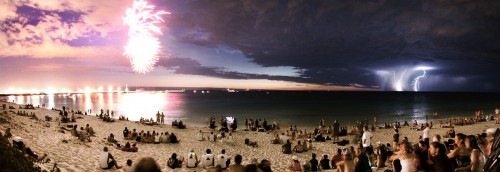
(A picture taken by NASA of McNaught comet in Australia)
Comets have always fascinated us. A mysterious appearance could symbolize God’s displeasure or mean a sure failure in battle, at least for one side. Now Tel Aviv University justifies our fascination — comets might have provided the elements for the emergence of life on our planet, finds a new study.
While investigating the chemical make-up of comets, Prof. Akiva Bar-Nun of the Department of Geophysics and Planetary Sciences at Tel Aviv University found they were the source of missing ingredients needed for life in Earth’s ancient primordial soup.
“When comets slammed into the Earth through the atmosphere about four billion years ago, they delivered a payload of organic materials to the young Earth, adding materials that combined with Earth’s own large reservoir of organics and led to the emergence of life,” says Prof. Bar-Nun.
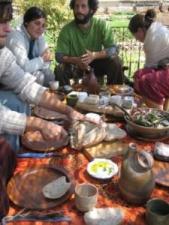
Trip highlights include farms near Modi’in and Emek Hefer, as well as Palestinian organic farms in Wadi Fuqin. The itenerary also includes Jerusalem’s Mahane Yehuda market, Bedouin permaculture sites in the Negev, and Kibbutz Maagan Michael on the Mediterranean coast. In fact, the trip is by happy coincidence a sort of “Greatest Hits of the Green Prophet.”
Hazon’s Web site stresses that the trip is not only about eating, but rather about understanding the complex webs behind Israel’s food delivery system. Some Jewish learning will further round out the itinerary.
The five-day tour is an outrageously cheap $400, although if you are coming from abroad the flight is on you. The application deadline is June 15. Get more information here. (Photo from Hazon.org).
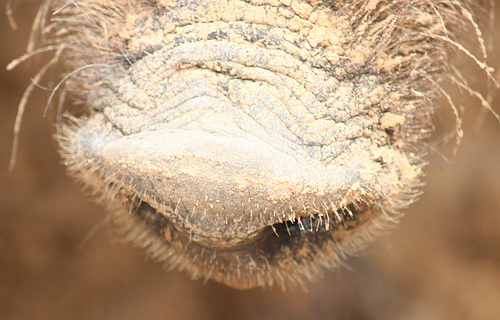
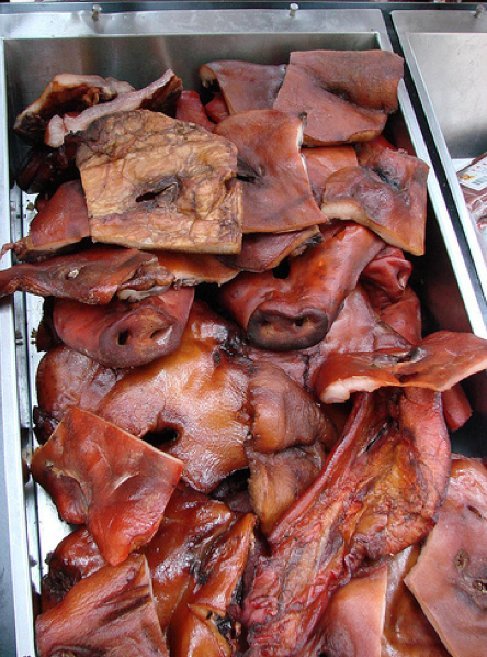
(Israel raises non-Kosher pigs? Yup. And it has a pretty healthy wild population of wild boars, as well).
They are calling to cull all the “swine” in Egypt, as an apparent “pandemic” of swine flu appears to be on the verge of being something out of a nightmarish version of a Stephen King novel. Following the breaking news of more than a hundred deaths from the disease in Mexico, virtually shutting down the country’s Federal District and capital, Mexico City, cases of the disease have appeared in France, the USA, the UK and two cases are reported in Israel.
A 26 year old Sharon region resident is now hospitalized in an isolation section of Laniado Hospital, after returning from a holiday in Mexico with symptoms that resemble this very strong type of influenza, which has symptoms like high fever, coughing, headaches, and other maladies.
Like all cases of flu, including the dreaded avian or bird flu, weaker individuals, including young children, the sick and the elderly, and people with chronic respiratory problems, can develop complications such as pneumonia and heart seizure, that can result in death.
The young man, Tomer Vajim, a resident of Moshav Geulim outside Netanya, went to the emergency room of Laniado after complaining of flu-like symptoms.
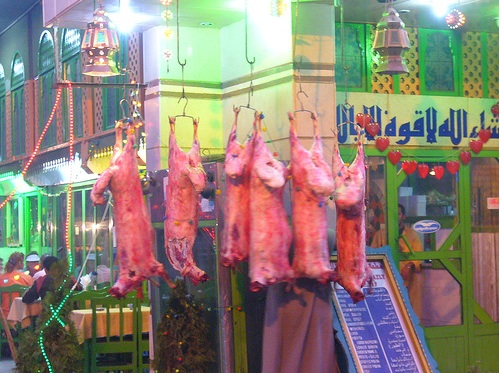
At the time of writing this post, there are 6 confirmed cases of swine flu now in Israel. Out of fear that the virus might spread to Epypt, authorities there have ordered the slaughter of the country’s 300,000 pigs, reports the Associated Press.
“It has been decided to immediately start slaughtering all the pigs in Egypt using the full capacity of the country’s slaughterhouses,” Health Minister Hatem el-Gabaly told reporters after a Cabinet meeting with President Hosni Mubarak.
At the time of writing this post, there are 6 confirmed cases of swine flu now in Israel. Out of fear that the virus might spread to Egypt, authorities there have ordered the slaughter of the country’s 300,000 pigs, reports the Associated Press. You would assume that Israel being a “kosher” Jewish country wouldn’t be raising pork, but certain loopholes that don’t raise the pigs on the land allow the pig industry to survive.
“It has been decided to immediately start slaughtering all the pigs in Egypt using the full capacity of the country’s slaughterhouses,” Health Minister Hatem el-Gabaly told reporters after a Cabinet meeting with President Hosni Mubarak.
While it’s not exactly clear how swine flu first started –- reports are that it “jumped” to humans in Mexico where the animals where being raised in squalor (and in mass feeding operations) – it is still not sure if killing all pigs will effect the transmission of the flu.
“But where did it originate? David Kirby has some ideas, and they involve “confined animal feeding operations”, or CAFOs. There are hundreds of such operations with pigs in Mexico. The more animals get clustered together, and the more time they spend in that state, the more viruses will spread between them—and the thousands of humans that work at the CAFOs. Free range proponents take note–this could’ve been pevented with more sanitary animal living conditions.”
A Reuter’s report, via the blog ConnectAfrica, also from today, says that Egypt is “just considering” the mass slaughter, and this has been prompted mainly because the pigs in the country are raised in terrible conditions:
““The question now is should we kill them or relocate them, and the prevailing idea now is to kill the existing (pigs) and of course compensate their owners,” cabinet spokesman Magdy Rady said on Wednesday. He put the number of pigs that could be culled at between 300,000 and 400,000, and said a decision was expected in days.
““If you see the conditions of the swine farms in Egypt, they are not healthy at all. They are hazards in themselves, even without the swine flu. That’s why people are really getting afraid,” he told Reuters.”
Will culling all the world’s pigs stop this virus from reaching pandemic proportions? When will us humans learn that when we don’t treat nature with respect, and raise animals with dignity, that nature will just bite us back.
Update: As of April 30, the cases of swine flu in Israel has been downgraded from 6 to 2
Reading has its own geography. I read this book The Nature of the State while I traveled back and forth from the West Highlands of Scotland to London for work . . . while Israeli-Palestinian relations erupted into open conflict in Gaza, while fire in Greece turned to fire Australia, while it snowed hard in the South of England, while the rulers of neo-liberal advanced capitalist economies cowed, begged, and then apologised to elected officials.
I read it with the words of the book review editor of Green Prophet in mind: ‘make it relevant to the Middle East.’
The review refused to emerge. I admit this volume sat on various desks and was carried many times in bags back and forth to work and further afield.
I think the reason for keeping hold of the review was fear.
As a UK based researcher I was cautious about how to place this book in a Middle East context. This was compounded by the bombing of Gaza by Israel that ran alongside my reading of the volume, and echoed in my thoughts afterwards. After all, this is a book that explores the relationship between nature, nations and states.
In the UK their charge raises a little static, transposed to a context where the material and symbolic boundaries of these terms are violently contested, it is like a mains shock.
The Inner Circle blog in Lebanon is reporting what it calls “an absurd” idea proposed by the Lebanese Heath Minister Mohammad Khalifeh as a means to prevent the Swine Flu from spreading. Israel, the country bordering Lebanon to the south, has already confirmed one case of the virus.
“If you visit someone, don’t exchange kisses… Let’s stop the social kissing habit,” Khalifeh said in a Reuters news story.
Like in Lebanon where people traditionally greet each other with 3 kisses, over here in Israel, you can find the younger secular generation opting for a single smooch on the cheek or a double — on each side of the cheek. It’s delivered along with a semi-hug.
With the country’s first reported case of Swine Flu announced yesterday, abstinence from the social norm of kissing, may be a cheap and effective method from coming into contact with the infection.
Since it appears to be afflicting totally healthy people, it’s not yet clear if taking immune boosters, or natural remedies will do anything to keep the immune system in check and protected.
It’s probably hype anyway, but instead of investing in expensive and probably ineffective solutions, maybe just refrain from the kiss?
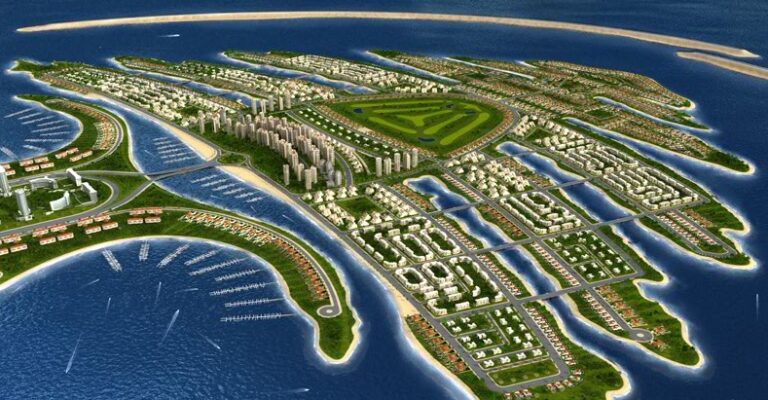
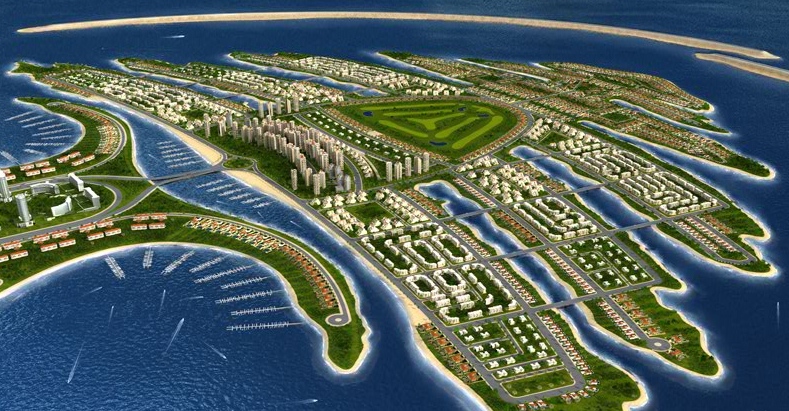
They are calling it Cedar Island, modeled after the Lebanese Cedar, the country’s national symbol. And Panasonic Corporation, and Chinese partners and Arab investors are already on board.
This documentary film describes the activities of IBSAR, an interfaculty center at the American University of Beirut dedicated to nature conservation and sustainable research.
According to IBSAR members, “Nature is a special trust to be enjoyed and conserved for future generations. Conserving the biodiversity of nature in the Middle East is the foundation on which we can build an improved quality of land and ensure a sustainable future for the people of the region.”
This video outlines some research activities of the 20 or so faculty members at the University; and includes plant hunters looking for new drugs, and specifically how the researchers are making clinical investigations on plants like the local Lebanese herbs hindbeh and kishk.
The diet in the Eastern Mediterranean and especially Lebanon, Syria, and Jordan is characterized by a heavy reliance on refined grains (white flour) as the primary source of energy.
These countries also experience an increase in the rates of chronic non communicable diseases (cardiovascular disease, diabetes), a reflection of the emerging “nutrition transition” experienced by these countries. The “nutrition transition,” reports ISBAR scientists, seems to be occurring alongside chronic problems of under nutrition, specifically micronutrient deficiencies reflected in high rates of anemia among certain subgroups, particularly the urban and rural poor.
IBSAR is engaged in a project that aims at increasing dietary diversity in the urban and rural poor through the promotion of the sustainable use of wild edible plants, ultimately improving general health status in the targeted communities.
Green Prophet readers, as we know, are not only dreamers, they are doers. For all those that want to play your part, a job in clean technology might be up your alley. Today we interview Sam Newell from Renewable Energy Jobs, on trends and renewable energy jobs up for grabs in the Middle East.
Green Prophet: Tell us a little bit about your background and why you founded Renewable Energy Jobs
Sam Newell: I’m a career recruiter, and have been in recruitment for about 12 years. I ran technology recruitment businesses as well as focusing on financial services. I have also held roles such as Head of Recruitment & Resourcing for a global consulting business and Leadership Recruitment Manager for a FTSE listed financial services firm.
I started my own executive search firm in 2006 specialising in the early stage cleantech market and I noticed that there was very few quality advertising opportunities within the renewable energy recruitment sector.
In my opinion many of the existing sites where too broad in their scope for what I needed. There were quality ‘green’ or ‘environmental’ sites but little specifically for renewables.
Those that were renewables focused often appeared badly designed or were overpriced in my opinion. I was a technology recruiter during the internet boom of the 90’s, I also had a go at building my first online business at that point which wasn’t a huge success, it did teach me a few things though and so I have a few more tools to use when assessing websites than many recruiters I guess.
Charging hundreds of dollars or pounds to advertise on a site with little traffic is pointless.
Tonight begins Israel’s Independence Day, and a lot of recent articles on Green Prophet have been about the regional water crisis, and what must be done to alleviate it.
Both agronomists and hydrologists in our region have tried to find ways to deal with the increasing lack of water resources, including recycling of sewage and other wastewaters, building of reservoirs to collect winter rains and runoffs from winter snow falls in mountain areas, and most of all, desalination plants to change salty sea water into potable fresh water (after all, the earth’s surface is 70% water).
The recent water article by Professor Hillel Shuval, Director of Environmental Health Services at the Hadassah Academic College in Jerusalem probably summed it up by his opinions as what is the real cause of the current water problems in Israel.
The real cause, according to Prof. Shuval, has been government policies concerning water use and conservation for the past 20-25 years. There is a lot of truth in what he says, and it doesn’t take an expert in this area to conclude that he is right.
Green Prophet is honored to present this opinion piece written by one of Israel’s foremost experts in environmental science and policy. Professor Hillel Shuval was the director of the Department of Environmental Health Sciences at the Hadassah Academic College in Jerusalem. Prof. Shuval describes the harmful consequences that stem from agricultural overuse of Israel’s scarce water resources, and calls for a change in the water management policy to preserve natural areas and green spaces.
This country is facing one of its most severe water crises, triggered by the harsh droughts of 2006-2009.
However the crisis is no less the result of the long-term chronic problem of overutilization of its limited natural water resources. This resulted mainly from demands for more and more water from the agricultural sector, even after the country’s natural water resources were fully developed to their limit in the 1980s. To meet these growing demands, the agricultural and water authorities embarked on a conscious program of dangerous overpumping of ground and surface water resources, the precursor of the water crisis.
Why was this done? We must examine the question of the relationship between water management problems and the role of the country’s deep historic and cultural commitments to agriculture and a romantic vision of a pastoral Israel which still influences water policy.
“It is illogical and immoral to dry up the urban parks, gardens and green areas, while exporting flowers grown with subsidized drinking water to Europe.”
Since water resources are limited, we need to reevaluate the division of water allocations between the sectors resulting from rapidly growing domestic and urban demand associated with the growing population and the continued demands of agriculture for water.
Agriculture has, up to now, used some 50 percent of good quality drinking water, despite the fact that it represents only 2%-3% of the country’s GDP and 3%-4% of the population. To understand this deep commitment to agriculture, an overcommitment as far as allocation of water resources is concerned, it is necessary to understand the historic evolution of the role of agriculture in our society and culture.
The first period, which established the roots of Israel as an agricultural nation, goes back to biblical times when the Jewish people lived in its own land.
During the 2,000 or so years of the Diaspora, the image of Israel as an agricultural nation was continually reinforced in the collective memory by religious rituals and Jewish holidays mainly based on the agricultural seasons in Eretz Yisrael. However, we only began to reestablish our national roots in the land with the establishment of the first settlements in the First Aliya of 1880-1905.
This was followed by a more ideologically motivated period of settlement of the land of the Second Aliya led by such thinkers as A.D. Gordon, who in 1910-20 preached the religion of labor and the mystic need for the nation to reestablish its roots by working the soil in its native land. In the prestate period, the ideology, dream and vision of a pastoral agricultural nation was promoted in the popular culture – poems, press, books, youth movements, popular songs and children’s stories. Every child worked in agriculture in school.
The issue of the limitations of land and water became a serious existential political threat to the Yishuv when attempts by the British to cancel the Balfour Declaration where made by the Hope-Simpson White Paper in 1930 to end Jewish immigration to Palestine due to “lack of economic absorptive capacity… specifically lack of water and land.”
This led to a massive national drive to establish agricultural settlements – “dunam after dunam” – by the Jewish Agency. The national commitment to urgent agriculture development deepened.
Thus, with the founding of the State of Israel in 1948 the drive to establish hundreds of new settlements – moshavim and kibbutzim – became top priority, both to settle the land and assure the borders of the new state as well as to provide jobs for newly arrived immigrants and to provide food security.
Over the years some 700 new agricultural settlements were valiantly established. However, in the view of Meyer Ben-Meir, former water commissioner, we overdid it and could never have met their water needs.
Simultaneously, major efforts were made to develop the nation’s water resources, regardless of costs and economic implications, including the National Water Carrier and more than 1,000 new wells.
As a result of the very high cost of water produced by these heroic national projects, which was greater than most farmers could afford, the subsidy of water for agriculture became a basic part of national policy. While agriculture became highly efficient in water utilization, the heavy subsidy has resulted in farmers growing many crops that would otherwise not be economically feasible and using more water than economically justified.
When natural water resources development reached its limit in about 1980, the country faced a dilemma – not enough water to meet both the growing urban needs and maintain the same level of allocations for agriculture. The agriculture-dominated water establishment developed a new strategy of “temporary” overpumping and “one-time draw-down” of aquifers to justify maintaining the high levels water of allocations for agriculture.
The State Controller’s Report points out that “as a result of overpumping and overutilization, underground water levels were lowered to dangerous levels below the red line, water reserves held for emergency use in case of droughts have dwindled and seawater pollution has intruded to contaminate ground water.”
The water planners naively even promised that eventually these dangerous overdrafts would be repaid with cheap desalinated water, which never came. Thus, based on the deep overcommitment to agriculture, the seeds of the water crisis were planted, which has resulted in the near collapse of rational water management.
This short article cannot go into details, but some of the solutions to this crisis include a reevaluation of the role of agriculture, painful as that may be.
This country can survive only as a hi-tech society and will have to reallocate water from agriculture to the domestic/urban/industrial sectors. We must end wasteful water subsidies to agriculture. It is illogical and immoral to dry up the urban parks, gardens and green areas, while exporting flowers grown with subsidized drinking water to Europe. New ways must be found to maintain as many of the agricultural communities as much possible by subsidizing green areas as the Swiss do, but not by subsidizing water.
We must make major efforts to speed up the construction of seawater desalination plants and the building of treatment plants to increase wastewater recycling and reuse which can assure agriculture a growing source of water to replace fresh water. We will need to increase the allocations of fresh and recycled water to nature, gardens, parks and the environment to keep the country green so as to provide the green lungs required for the health and welfare of those who live in such a crowded urban society.
A solution to our water crisis is possible, but requires giving up many deeply imbedded dreams and visions of the past.
Professor Hillel Shuval has been active for over 50 years in protecting environment and health, founding the National Program for Environmental Protection, and led the development of reclaimed sewage water as a resource. As part of the 60 year Independence celebrations, he was presented last year with a lifetime achievement award. Prof. Shuval is a professor emeritus at Hebrew University’s Environmental Studies Program and is currently the director of the Department of Environmental Health Sciences at the Hadassah Academic College in Jerusalem (where our contributor Daniel Pedersen teaches).
What is the best way to visit Israel? By plane, by bus, or maybe by car? Derech Hateva believes the best way to see this small but fascinating country is by foot.
Registration is now open for Derech Hateva’s annual Israel Trail Teen Adventure (ITTA), a month-long outdoor program for Jewish teens from North America and Israel.
Covering parts of the Israel National Trail by foot (as well as mountain biking and rock climbing thrown in), combining environmental education, leadership and Torah-learning along the way.
“Derech Hateva teaches our kids how to be independent, strong mensches who are caring members of a community,” says Elena, an alumni parent.
This summer’s adventure dates are June 28th to July 27th for girls, and June 29th to July 27th for boys (ages 14 to 19).
There has been a lot of hype around Zenith Solar lately in Israel, where they’ve publicly launched their new solar power technology in Kibbutz Yavne, not far from Tel Aviv. Some residents of the kibbutz are against the industrialization in their kibbutz, others see it as an important environmental contribution. See the video above.
I am told that Zenith Solar might be the most efficient Israeli solar energy technology out there (developed by Ben Gurion University’s Prof. David Faiman), but there are infrastructure barriers this company will have to overcome in order to be relevant.
The Jerusalem Post website is reporting that six Israeli companies made it into the water consultancy firm, The Artemis Project’s first Top 50 Water Companies Competition last week.
The site, quoting promotional materials, states that the award, “distinguishes advanced water and water-related technology companies as leaders in their trade for helping to build water into one of the great high-growth industries of the 21st Century. The companies were selected by a panel of experts based on an integrated matrix of four criteria: technology, intellectual property and know-how, team and market potential.”
Two of the companies, Emefcy and AquaPure were listed in the top 10, at four and seven respectively.