Two people can look at the same sustainability dashboard and reach different conclusions. The problem is not necessarily the data, but whether anyone can trace how the number was produced.
Walk through almost any Saudi city today and one form dominates residential streets: the detached villa, sitting on its own plot, separated from its neighbors, usually surrounded by a wall and reached by car. It feels thoroughly Saudi. But much of the architectural DNA of the modern Saudi house comes from American suburbia.
EIT Pharma CEO Leen Kawas is advancing lonafarnib for chronic hepatitis D, showing how stalled late-stage drug programs can be revived and carried toward regulatory review.
Smart glasses are changing the economics of eyewear by turning conventional frames into higher-priced technology products. What used to be mainly a sale built around frame design, lenses, prescription needs and brand preference is now also a sale built around cameras, audio, AI features, app support and connected-device setup.
Two people can look at the same sustainability dashboard and reach different conclusions. The problem is not necessarily the data, but whether anyone can trace how the number was produced.
Walk through almost any Saudi city today and one form dominates residential streets: the detached villa, sitting on its own plot, separated from its neighbors, usually surrounded by a wall and reached by car. It feels thoroughly Saudi. But much of the architectural DNA of the modern Saudi house comes from American suburbia.
EIT Pharma CEO Leen Kawas is advancing lonafarnib for chronic hepatitis D, showing how stalled late-stage drug programs can be revived and carried toward regulatory review.
Smart glasses are changing the economics of eyewear by turning conventional frames into higher-priced technology products. What used to be mainly a sale built around frame design, lenses, prescription needs and brand preference is now also a sale built around cameras, audio, AI features, app support and connected-device setup.
Two people can look at the same sustainability dashboard and reach different conclusions. The problem is not necessarily the data, but whether anyone can trace how the number was produced.
Walk through almost any Saudi city today and one form dominates residential streets: the detached villa, sitting on its own plot, separated from its neighbors, usually surrounded by a wall and reached by car. It feels thoroughly Saudi. But much of the architectural DNA of the modern Saudi house comes from American suburbia.
EIT Pharma CEO Leen Kawas is advancing lonafarnib for chronic hepatitis D, showing how stalled late-stage drug programs can be revived and carried toward regulatory review.
Smart glasses are changing the economics of eyewear by turning conventional frames into higher-priced technology products. What used to be mainly a sale built around frame design, lenses, prescription needs and brand preference is now also a sale built around cameras, audio, AI features, app support and connected-device setup.
Two people can look at the same sustainability dashboard and reach different conclusions. The problem is not necessarily the data, but whether anyone can trace how the number was produced.
Walk through almost any Saudi city today and one form dominates residential streets: the detached villa, sitting on its own plot, separated from its neighbors, usually surrounded by a wall and reached by car. It feels thoroughly Saudi. But much of the architectural DNA of the modern Saudi house comes from American suburbia.
EIT Pharma CEO Leen Kawas is advancing lonafarnib for chronic hepatitis D, showing how stalled late-stage drug programs can be revived and carried toward regulatory review.
Smart glasses are changing the economics of eyewear by turning conventional frames into higher-priced technology products. What used to be mainly a sale built around frame design, lenses, prescription needs and brand preference is now also a sale built around cameras, audio, AI features, app support and connected-device setup.
Two people can look at the same sustainability dashboard and reach different conclusions. The problem is not necessarily the data, but whether anyone can trace how the number was produced.
Walk through almost any Saudi city today and one form dominates residential streets: the detached villa, sitting on its own plot, separated from its neighbors, usually surrounded by a wall and reached by car. It feels thoroughly Saudi. But much of the architectural DNA of the modern Saudi house comes from American suburbia.
EIT Pharma CEO Leen Kawas is advancing lonafarnib for chronic hepatitis D, showing how stalled late-stage drug programs can be revived and carried toward regulatory review.
Smart glasses are changing the economics of eyewear by turning conventional frames into higher-priced technology products. What used to be mainly a sale built around frame design, lenses, prescription needs and brand preference is now also a sale built around cameras, audio, AI features, app support and connected-device setup.
Two people can look at the same sustainability dashboard and reach different conclusions. The problem is not necessarily the data, but whether anyone can trace how the number was produced.
Walk through almost any Saudi city today and one form dominates residential streets: the detached villa, sitting on its own plot, separated from its neighbors, usually surrounded by a wall and reached by car. It feels thoroughly Saudi. But much of the architectural DNA of the modern Saudi house comes from American suburbia.
EIT Pharma CEO Leen Kawas is advancing lonafarnib for chronic hepatitis D, showing how stalled late-stage drug programs can be revived and carried toward regulatory review.
Smart glasses are changing the economics of eyewear by turning conventional frames into higher-priced technology products. What used to be mainly a sale built around frame design, lenses, prescription needs and brand preference is now also a sale built around cameras, audio, AI features, app support and connected-device setup.
Two people can look at the same sustainability dashboard and reach different conclusions. The problem is not necessarily the data, but whether anyone can trace how the number was produced.
Walk through almost any Saudi city today and one form dominates residential streets: the detached villa, sitting on its own plot, separated from its neighbors, usually surrounded by a wall and reached by car. It feels thoroughly Saudi. But much of the architectural DNA of the modern Saudi house comes from American suburbia.
EIT Pharma CEO Leen Kawas is advancing lonafarnib for chronic hepatitis D, showing how stalled late-stage drug programs can be revived and carried toward regulatory review.
Smart glasses are changing the economics of eyewear by turning conventional frames into higher-priced technology products. What used to be mainly a sale built around frame design, lenses, prescription needs and brand preference is now also a sale built around cameras, audio, AI features, app support and connected-device setup.
Two people can look at the same sustainability dashboard and reach different conclusions. The problem is not necessarily the data, but whether anyone can trace how the number was produced.
Walk through almost any Saudi city today and one form dominates residential streets: the detached villa, sitting on its own plot, separated from its neighbors, usually surrounded by a wall and reached by car. It feels thoroughly Saudi. But much of the architectural DNA of the modern Saudi house comes from American suburbia.
EIT Pharma CEO Leen Kawas is advancing lonafarnib for chronic hepatitis D, showing how stalled late-stage drug programs can be revived and carried toward regulatory review.
Smart glasses are changing the economics of eyewear by turning conventional frames into higher-priced technology products. What used to be mainly a sale built around frame design, lenses, prescription needs and brand preference is now also a sale built around cameras, audio, AI features, app support and connected-device setup.
Vegans, vegetarians, and vegawarians make a difference every day by not eating meat. The meat industry is one of the leading industries responsible for fossil fuel consumption and a 2006 UN report found that the global meat industry produces more greenhouse gases than all of the world’s SUVs, cars, trucks, planes and ships combined.
If done incorrectly, though, vegans and vegetarians can be left without a lot of important nutrients. Protein can be substituted easily enough through tofu, soy, seitan, eggs, dairy and legumes (click here for a wonderful protein-rich quinoa salad recipe). But other important nutrients such as Omega-3, which usually comes in the form of fish oil, are a little tougher to find in vegetarian form.
V-Pure , an EPA and DHA based Omega 3 supplement that is extracted from algae instead of fish, responds to this vegan and vegetarian need (as well as to the needs of Jews and Muslims who observe dietary restrictions). The supplement functions a little like vegetarianism itself by sourcing the nutrients directly from the algae that fish eat (just as vegetarians get their nutrition directly from the sources that livestock animals eat).
Great for vegans and vegetarians, V-Pure’s supplement is also pretty great for the environment. Avoiding the use of fish oil means preserving a biodiverse fish population. The algae that is used instead of fish oil is organically grown and 100% free from toxins and contaminants. The supplement also comes in recyclable packaging.
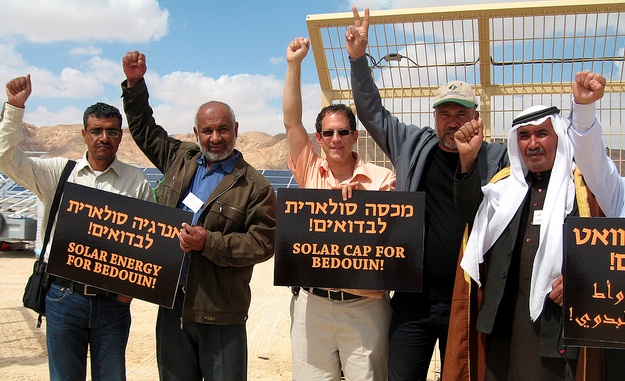
Lots of people are rooting for Bedouin in Israel, this man is greening his culture from the inside.
The first thing visitors to the Bedouin town of Rahat notice is the litter. Household garbage lies strewn at the sides of treeless streets. When the wind picks up, plastic bags, newspapers and sacks billow across the surrounding desert wasteland. Discarded construction materials mar the landscape.
“First you have to understand why they throw litter everywhere,” says environmentalist Ahmed Amrani, who was recently appointed municipal chief of staff of Rahat. “They don’t see it as a crime. Awareness is the key – not punishment. I regularly lecture to local teenagers on ‘Islam and the environment,’ when I emphasize the need to protect the land from a religious perspective,” he tells Green Prophet.
The Bedouin of Israel’s southern Negev desert are a society in transition, whose lifestyle transformed from nomadic to sedentary in little more than a generation. Their situation is roughly akin to that of Native Americans or Aboriginal Australians.
Think Againis a series that provides fun ideas for how to reuse items in your home that you would normally throw out or recycle. Reusing is higher on the “green” food chain than recycling, because getting another use out of an object is always more effective than spending the energy to recycle it. Plus, trying to reuse can force us to be creative!
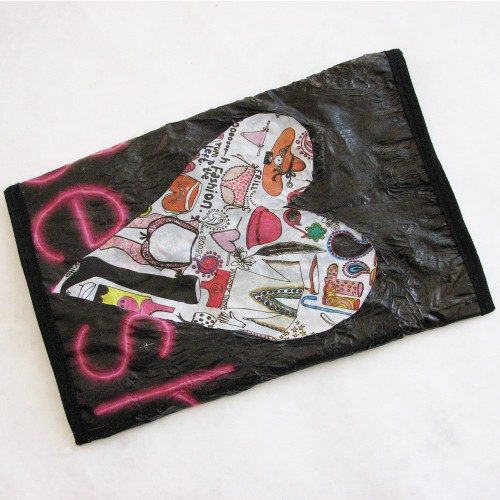
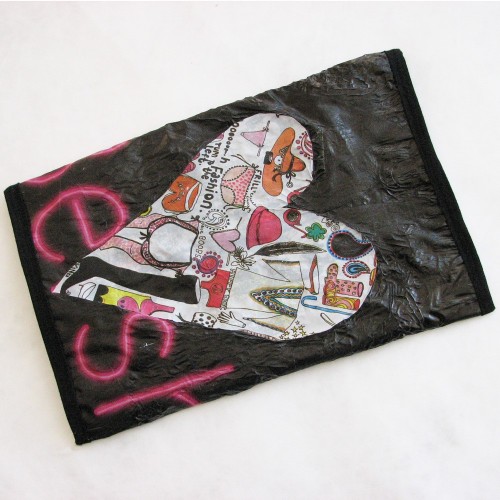
Since we’ve featured so many plastic bag upcycling designers here on Green Prophet lately (such as Inbal Limor whose work is shown above, Limor Matityahoo, and Tali Gordon Bleicher), we thought you may be itching to learn this technique yourself.
Of course, having no plastic bags lying around your house is ideal. But even the strictest cloth bag carrying environmentalist probably has a few. By fusing them and making them sturdier, you can extend their life and make sure they stay out of the landfill for a longer period of time.
The technique is surprisingly VERY easy. Fusing the plastic bags doesn’t require any special equipment other than an iron and once you’ve fused the bags you have a cloth-like material that you can do pretty much anything with. If you’re struggling for ideas, you could use the fused plastic to make a drawstring bag such as the one we featured on Think Again last week.
Clean tech investor David Anthony from 21Ventures explains how clean tech entrepreneurs get funding.
A plucky little country, is how the late Princess Diana once described Israel to Shimon Peres. About the size of New Jersey, Israel has a disproportionate number of clean tech companies and investment in clean technology compared to its size. And now businessman and investor David Anthony from 21Ventures in the US is about to reveal his trade secrets and insider information about clean tech investing in Israel. These tips, of course, can apply anywhere. If you are itching to become a clean tech entrepreneur, this is must-read information.
Unlike Silicon Valley and the high-tech industry, the clean tech market today has no center of excellence, Anthony tells Green Prophet. In the last 50 years of venture capital investing there has been a saying: Never fly over your company –– meaning one shouldn’t invest in a company that isn’t within a 60 mile radius of the office. But without a center for clean technology, explains Anthony, a VC fund now has to dig into new territory to find the golden investment egg. Investors need to cross borders and turn over new stones.
To help Green Prophet readers better understand what American investors are looking for, we’ve asked Anthony for some tips. Compared to any other country in the Middle East, Israel is a clear and defined leader in this market, so we’ve focused on Israel. Most of Anthony’s tips could work in other non-US locales as well.
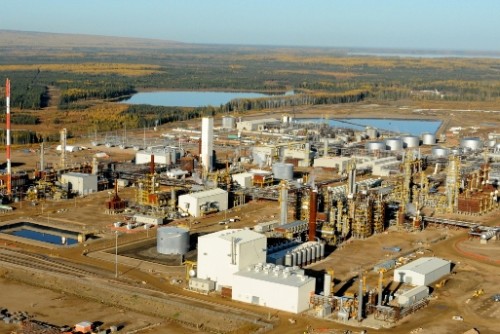
Israel’s ORMAT Industries Ltd (NASDAQ:ORA) has joined with its subsidiary Opti Canada Inc (TSE:OPC) in a project in extract and produce a high grade of petroleum from oil sands located in northern Alberta Canada. ORMAT is a world leader in producing energy from unconventional sources, including geo-thermal energy from volcanoes and hot springs under the earth’s surface.
The company that likes to brand itself as a clean technology company the world over is not so quick to reveal that it is involved in what could be the dirtiest deal ever for the planet:
The northern-Alberta tar sands venture involves Ormat’s technology to use high pressure steam to extract the crude oil, presently trapped in the sands located deep below the earth’s surface. The process is known as steam assisted gravity drainage, or SAGD for short. It’s a dirty process, and some environmentalists say it will make current levels of greenhouse gases look meagre compared to what gets released during tar sands processing.
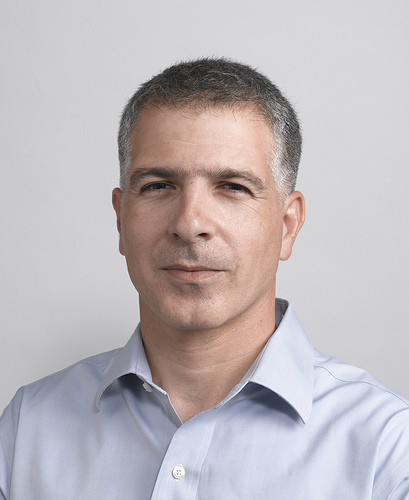
If the Swiss do business with them, they must be doing something right, reasons Eran Tagor, CEO of PowerSines. Founded in 1980 it’s doing more than impressing the discriminating Swiss.
With a staff of 55, the company supplies two main products to municipalities and businesses across the globe: the LEC (Lighting Efficient Controller) for retail and street lighting, and the SinuMEC (Sinusoidal Motor Efficiency Controller) that reduces the operating and electrical costs for electric motors in machines and technology.
FedEx, Macy’s, Pepperidge Farms and TimBar are just a few US clients who have adopted PowerSines’ energy saving solutions for lighting and for machines.
We’ve seen the upcycled wallets that Tel Aviv-based designer, Amit Brilliant, creates out of product packaging. And just a couple weeks ago we saw how Limor Matityahoo (aka EcobyLimitz) is exploring the use of fused plastic bags and plastic yarn to create mobiles and finger puppets and lots of other things. And now we will meet another Israeli designer who is combining the efforts of both of those designers.
Tali Gordon Bleicher, a product and graphic designer as well as a teacher, makes beautiful wallets out of fused plastic bags. Called arnakologis (or, “ecological wallets”), all of her wallets are handmade, one of a kind, and feature a unique collage design.
Tali uses the ubiquitous plastic bag as her base material, saying that “I find inspiration in the materials that are around me.”
Tangy star fruits or carambola can be great ground cover in orchards as an alternate crop or just a way to keep the soil healthy and vital in citrus orchards.
According to climate change experts, our planet has a fever — melting glaciers are just one stark sign of the radical changes we can expect. But global warming’s effects on farming and water resources is still a mystery.
A new Tel Aviv University invention, a real-time “Optical Soil Dipstick” (OSD), may help solve the mystery and provide a new diagnostic tool for assessing the health of our planet.
According to Prof. Eyal Ben-Dor of TAU’s Department of Geography, his soil dipstick will help scientists, urban planners and farmers understand the changing health of the soil, as well as its agricultural potential and other associated concerns.
“I was always attracted to drug development and diagnostics, which spurred the development of this OSD device,” he says. “It’s like a diagnostic device that measures soil health. Through a small hole in the surface of the earth, we can assess what lies beneath it.”
As climate change alters our planet radically, Prof. Ben-Dor explains, this dipstick could instantly tell geographers what parts of the U.S. are best — or worst — for farming. For authorities in California, it is already providing proof that organic farms are chemical-free, and it could be used as a whistle-blower to catch environmental industrial polluters.
The efficacy of the OSD was recently reported in the Soil Science Society of America Journal.
“Precision agriculture”
Today, there is no simple and inexpensive way to test for soil health in the field. Soil maps of individual states are only compiled every 10 or 20 years, and each one costs millions. One testing process even requires the use of a bulldozer, which dredges up large tracts of land to be sampled and analyzed in a laboratory.
Testing can be much simpler with Prof. Ben-Dor’s dipstick, which can be used by non-professionals. The thin catheter-like device is inserted into a small hole in the soil to give real-time, immediately accurate and reliable information on pollution and the all-round health of the soil.
Analyzing chemical and physical properties, the dipstick outputs its data to a handheld device or computer. “To optimize production and save costs, farmers need to know if their crops are getting the right blend of minerals. This tool could permit them to pursue ‘precision agriculture,'” says Prof. Ben-Dor.
The OSD, which is expected to cost about $10,000 per unit per application, allows technicians to determine if the soil needs water or is contaminated. It also provides information about the condition of root zones where crops are growing.
And the quality of information, the researchers explain, is identical to that provided by large government laboratories. Prof. Ben-Dor says that these dipsticks can also be remotely and wirelessly networked to airplanes and satellites, providing the most detailed, comprehensive and reliable soil map of the U.S.
Replacing soil maps
Soil maps are important tools of the trade for land developers, city planners, farmers and environmental prosecutors. Those employed today tend to be outdated, rendering them useless for many applications, and only about 30% of the planet has been mapped in this way.
Soil maps for the Far East, the Arctic, and Africa, which can be more readily developed with Prof. Ben-Dor’s dipstick, will better tell scientists, researchers and government agencies how climate change and population growth are affecting our planet and its resources.
“Soil mapping is a national undertaking,” Prof. Ben-Dor observes. “It takes years and millions of dollars worth of manual labor and laboratory analysis, not to mention exhausting headaches with government authorities and ministries.
For a fraction of that energy and money, and with a staff that has minimal training, the OSD could do the same job, and could continue doing it on a yearly, monthly, and possibly even a daily basis. The headaches would be gone, and we would finally get an accurate picture of the earth’s crust in these environmentally critical years.”
The OSD is currently in a prototype stage and is set for commercialization. If the right strategic partner is found, a new device could be on the shelves, and in the ground, within the year.
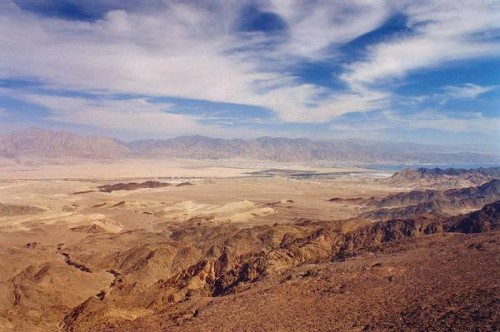
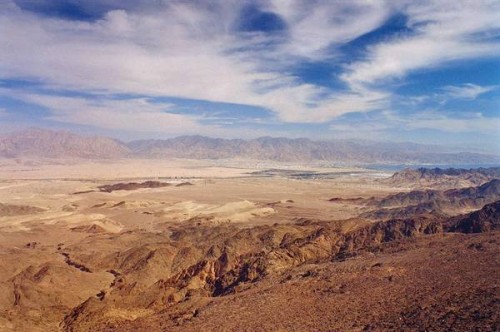
In what was formerly thought to be a three way cooperation between Israel, Jordan, and the Palestinian Authority, the Kingdom of Jordan has decided to unilaterally undertake the first stage of construction of a canal between the Gulf of Aqaba in the Red Sea, and the Dead Sea, with which Jordan has the entire eastern boundary.
The plan to build an elaborate system of pumps, pipelines and actual canals, has been mentioned several times on Green Prophet, including an article last August which noted that an agreement had been made between representatives of the three governments to jointly undertake the construction of this project.
Now it appears, however, that Jordan, one of the driest countries in the world, according to an article published Tuesday, September 29, in Globes, The Kingdom simply can’t wait for Israel and the P.A. to dedicate monies and resources to begin the fist stage of the project.
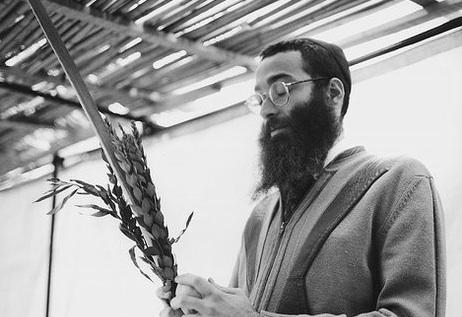
For Jews in Israel, there is probably no better time to reflect on one’s place in nature and the health of the environment than during Sukkot, the Festival of Booths or the Jewish harvest festival.
When I lived in Jerusalem, I could see the small make-shift sukkahs (huts) erected everywhere outside my window – each one has at least three walls made from wooden clapboard or cloth with a simple roof made from plant cuttings (skakh).
Here in Jaffa, a mixed Jewish-Arab city, the effect of the holiday is less profound, because half of the population won’t be building a sukkah, but I am hoping to get a chance to sleep in ours to remember Sinai – physically and metaphorically.
We’ve already written about the annual Green Sukkah conference being held again this year at Kibbutz Ein Shemer, but if an all day conference isn’t your idea of fun then keep on reading. There are plenty of other green Sukkot events out there.
Live Solar Powered Music Sponsored by Greenpeace: Greenpeace will be participating in an international protest called “The Global March for Peace and Non-Violence” which will be held in many cities around the world between October 1st and October 12th. Greenpeace Israel’s protest will be held today, October 1st, in the plaza in front of the Tel Aviv Cinematheque.
Live solar powered music will be part of the protest, as well as storytelling and activities for kids. October 1st at the Tel Aviv Cinematheque (2 Shprintsek Street, Tel Aviv) from 2pm to 6pm.Check out the facebook event.
From a press release: “BrightSource Energy, Inc., developer of large-scale solar thermal power plants, announced recently that it has reached a preliminary agreement with Nevada’s Coyote Springs Land Company to provide the sites for up to 960 megawatts of clean and reliable solar thermal energy to the California and Nevada markets.
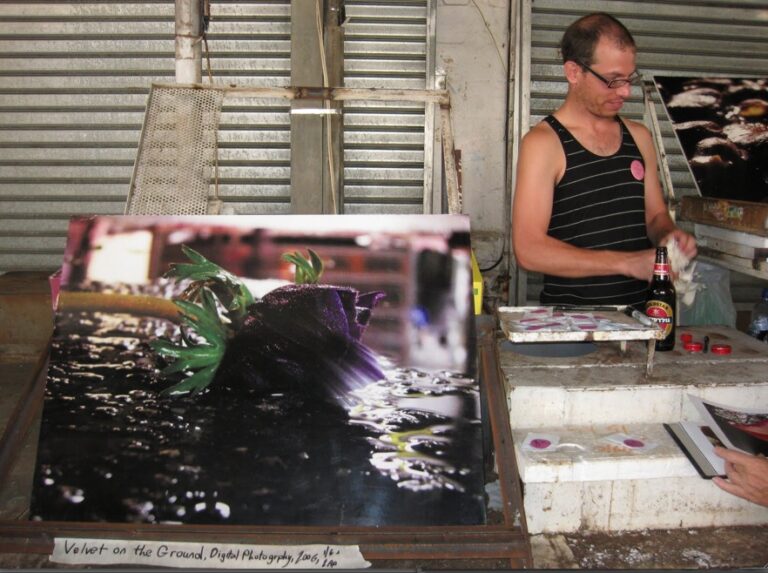
(“Secret Artist” and his “Velvet on the Ground” photo at the Tel Aviv Carmel Market recycled art installation. Photo credit Asaf Ravid. )
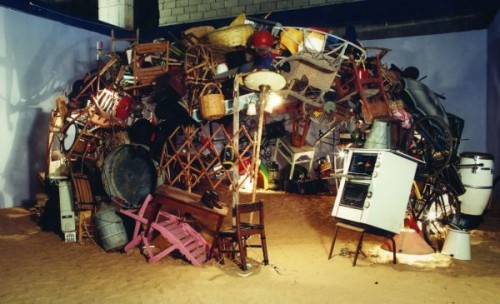
A few weeks ago, on a hot Tel Avivian Saturday, I visited the closed Shuk Ha Carmel (the Carmel Market) on the occasion of the Cucumber Season exhibition. I usually really try to avoid the shuk when it is closed as I find it scary, but it intrigued me to see how the artists were going to use this public yet closed space to display their work.
Once at the event we found among the cats and garbage, works of art which were displayed on the different stalls and on the floor.
During the week of September 20, 2009, Tigo Energy made headlines for its solution to monitor power from the Sun. BioPetroClean announced its partnership with Dow and a new Tel Aviv University-developed sensor called “Dust Alert” can help monitor air quality around us. For these stories and more, check this week’s 7 Israel-related cleantech headlines below.

 Vegans, vegetarians, and vegawarians make a difference every day by not eating meat. The meat industry is one of the leading industries responsible for fossil fuel consumption and a 2006 UN report found that the global meat industry produces more greenhouse gases than all of the world’s SUVs, cars, trucks, planes and ships combined.

 Think Again is a series that provides fun ideas for how to reuse items in your home that you would normally throw out or recycle. Reusing is higher on the “green” food chain than recycling, because getting another use out of an object is always more effective than spending the energy to recycle it. Plus, trying to reuse can force us to be creative!
![Long_Lake_Site__Oct_08_[1]](https://www.greenprophet.com/wp-content/uploads/2009/10/Long_Lake_Site__Oct_08_1-500x334.jpg)
 We’ve seen the

 After a

 (“Secret Artist” and his “Velvet on the Ground” photo at the Tel Aviv Carmel Market recycled art installation. Photo credit
