Before promoting sustainability progress, companies must ensure their initiatives are genuine and measurable. Today’s audiences are increasingly skeptical of vague environmental claims, particularly as awareness of “greenwashing” has grown.
Sydney is best known for the Opera House and the Harbour Bridge. If you’re looking to enjoy dinner with views of these landmarks, here are some great options.
It's sea turtles which may in the end save islands in the Seychelles. They may also better help us understand climate change. Like rings on a tree, scientists have found a way to read sea turtle shells and how they are impacted by climate change tells a story.
For centuries, the Sámi shaman drum was one of the most powerful sacred objects in northern Europe, and one of the most feared by church and state. If ISIS looks bad to us today for its religious fundamentalism, Christians were just as fervent.
Before promoting sustainability progress, companies must ensure their initiatives are genuine and measurable. Today’s audiences are increasingly skeptical of vague environmental claims, particularly as awareness of “greenwashing” has grown.
Sydney is best known for the Opera House and the Harbour Bridge. If you’re looking to enjoy dinner with views of these landmarks, here are some great options.
It's sea turtles which may in the end save islands in the Seychelles. They may also better help us understand climate change. Like rings on a tree, scientists have found a way to read sea turtle shells and how they are impacted by climate change tells a story.
For centuries, the Sámi shaman drum was one of the most powerful sacred objects in northern Europe, and one of the most feared by church and state. If ISIS looks bad to us today for its religious fundamentalism, Christians were just as fervent.
Before promoting sustainability progress, companies must ensure their initiatives are genuine and measurable. Today’s audiences are increasingly skeptical of vague environmental claims, particularly as awareness of “greenwashing” has grown.
Sydney is best known for the Opera House and the Harbour Bridge. If you’re looking to enjoy dinner with views of these landmarks, here are some great options.
It's sea turtles which may in the end save islands in the Seychelles. They may also better help us understand climate change. Like rings on a tree, scientists have found a way to read sea turtle shells and how they are impacted by climate change tells a story.
For centuries, the Sámi shaman drum was one of the most powerful sacred objects in northern Europe, and one of the most feared by church and state. If ISIS looks bad to us today for its religious fundamentalism, Christians were just as fervent.
Before promoting sustainability progress, companies must ensure their initiatives are genuine and measurable. Today’s audiences are increasingly skeptical of vague environmental claims, particularly as awareness of “greenwashing” has grown.
Sydney is best known for the Opera House and the Harbour Bridge. If you’re looking to enjoy dinner with views of these landmarks, here are some great options.
It's sea turtles which may in the end save islands in the Seychelles. They may also better help us understand climate change. Like rings on a tree, scientists have found a way to read sea turtle shells and how they are impacted by climate change tells a story.
For centuries, the Sámi shaman drum was one of the most powerful sacred objects in northern Europe, and one of the most feared by church and state. If ISIS looks bad to us today for its religious fundamentalism, Christians were just as fervent.
Before promoting sustainability progress, companies must ensure their initiatives are genuine and measurable. Today’s audiences are increasingly skeptical of vague environmental claims, particularly as awareness of “greenwashing” has grown.
Sydney is best known for the Opera House and the Harbour Bridge. If you’re looking to enjoy dinner with views of these landmarks, here are some great options.
It's sea turtles which may in the end save islands in the Seychelles. They may also better help us understand climate change. Like rings on a tree, scientists have found a way to read sea turtle shells and how they are impacted by climate change tells a story.
For centuries, the Sámi shaman drum was one of the most powerful sacred objects in northern Europe, and one of the most feared by church and state. If ISIS looks bad to us today for its religious fundamentalism, Christians were just as fervent.
Before promoting sustainability progress, companies must ensure their initiatives are genuine and measurable. Today’s audiences are increasingly skeptical of vague environmental claims, particularly as awareness of “greenwashing” has grown.
Sydney is best known for the Opera House and the Harbour Bridge. If you’re looking to enjoy dinner with views of these landmarks, here are some great options.
It's sea turtles which may in the end save islands in the Seychelles. They may also better help us understand climate change. Like rings on a tree, scientists have found a way to read sea turtle shells and how they are impacted by climate change tells a story.
For centuries, the Sámi shaman drum was one of the most powerful sacred objects in northern Europe, and one of the most feared by church and state. If ISIS looks bad to us today for its religious fundamentalism, Christians were just as fervent.
Before promoting sustainability progress, companies must ensure their initiatives are genuine and measurable. Today’s audiences are increasingly skeptical of vague environmental claims, particularly as awareness of “greenwashing” has grown.
Sydney is best known for the Opera House and the Harbour Bridge. If you’re looking to enjoy dinner with views of these landmarks, here are some great options.
It's sea turtles which may in the end save islands in the Seychelles. They may also better help us understand climate change. Like rings on a tree, scientists have found a way to read sea turtle shells and how they are impacted by climate change tells a story.
For centuries, the Sámi shaman drum was one of the most powerful sacred objects in northern Europe, and one of the most feared by church and state. If ISIS looks bad to us today for its religious fundamentalism, Christians were just as fervent.
Before promoting sustainability progress, companies must ensure their initiatives are genuine and measurable. Today’s audiences are increasingly skeptical of vague environmental claims, particularly as awareness of “greenwashing” has grown.
Sydney is best known for the Opera House and the Harbour Bridge. If you’re looking to enjoy dinner with views of these landmarks, here are some great options.
It's sea turtles which may in the end save islands in the Seychelles. They may also better help us understand climate change. Like rings on a tree, scientists have found a way to read sea turtle shells and how they are impacted by climate change tells a story.
For centuries, the Sámi shaman drum was one of the most powerful sacred objects in northern Europe, and one of the most feared by church and state. If ISIS looks bad to us today for its religious fundamentalism, Christians were just as fervent.
NatureMill’s urban compost bin does the work right in the house. Now there are no excuses to not composting!
You already know through reading Green Prophet that you can make your own vegetable composter for only $10 worth of easily obtainable materials. With all the interest being circulated dealing with organic gardening at home, including the annual event known as Compost Awareness Week the idea of “manufacturing” your own organic compost in your own backyard or on your apartment balcony is not only realistic but very practical.
Especially in the Middle East (Beirut, Tel Aviv, Aleppo) where most of us live in apartments.
Composting at home (in the city) not only offers a solution to alleviate much of the organic food wastes people would normally throw into their refuse dumpster (enclosed in non-biodegradable polyethylene bags); composting saves on gas transport to the dump, and cuts down methane gases there too.
On the lighter side of life, composting, as James has found in his garden, offers an excellent opportunity to embark on your own home organic gardening project as well. And that’s why we love the idea of NatureMill, which can be shipped to almost any address in the world.
It’s easy to cultivate chickweed (a vitamin powerhouse) on your windowsill for a quick springtime salad.
One of the most prevalent edible weeds thriving now in the Mediterranean is chickweed, Stellaria media if you want to get botanical about it.
Its flavor is delicately salty and fresh, not at all like spinach. (Every edible weed’s flavor is described as spinach-like. I’d love to hear someone describe a food as fresh and chickweed-like.) Want to know how to cultivate it?
Birds love chickweed; hence its folk name. And for centuries, people have loved it too. It’s tasty, easy to digest, and good for you. In season, I cut about a cupful from my windowsill planters, rinse it, and mix it into my salads. Or layer it into sandwiches, or add it, chopped, to omelets just before serving. Cooked, the tender plant loses its flavor and becomes stringy and unappetizing.
If you care to cultivate chickweed, it’s an easy thing to do in the Middle East where it is native. Gather it when summer arrives and the plant has gotten long and leggy, with white flowers.
Bring the wild inside by growing chickweed at home
How to start your chickweed garden
There will be plenty of tiny, bright-orange seeds among the flower heads. Scatter them wherever you wish to grow chickweed, and wait till next spring. It will grow and re-seed every year, so you’ll only need to sow once. To harvest it, take a pair of scissors and just snip the leafy tops off, giving it a haircut and leaving at least an inch of stem. You will get a second crop several weeks later.
Chickweed is one of the first edible greens to pop up after winter. Old folks from freezing climates where people ate no fresh vegetables for months, recall how joyful was its appearance (and dandelion’s). It’s a powerhouse of nutrients, offering Vitamins B6, B12, D, and C, ruitin, biotin, choline, and beta carotene as well as the minerals magnesium, iron, calcium, potassium, zinc, phosphorus, and more.
And this tender little weed, which often hides under the taller nettles and mallows of this season, has a large range of medicinal properties as well.
How to make chickweed tea
Chickweed has the power to draw infected matter out of tissue. So if, for example, a splinter in your finger has become infected, soaking it in strong chickweed tea will draw the splinter and pus out. I use the fresh weed, or dry it for strong tea when it’s out of season, in cases of eye infections and boils. Crush the fresh weed and press it to the infected eye: as it draws infection out, the green poultice will get hot. Throw it out, wash your hands, and do it again.
The herb contains saponins, a chemical constituent that dissolves congestion and cleans waste matter out. The kidneys, liver, skin and lungs benefit from this gentle cleansing. You can get this by eating lots of fresh chickweed or drinking chickweed tea.
How to make a chickweed tincture
Tea or tincture of chickweed is helpful in treating acne, and its diuretic properties aid in weight reduction. It is a soothing, lubricating plant whose abundant use in salads or as tincture will ease inflammatory conditions like arthritis. I’ve found chickweed to be soothing to the spirit also, acting not like an anti-depressant but more as something that reduces sorrow and agitation to manageable levels.
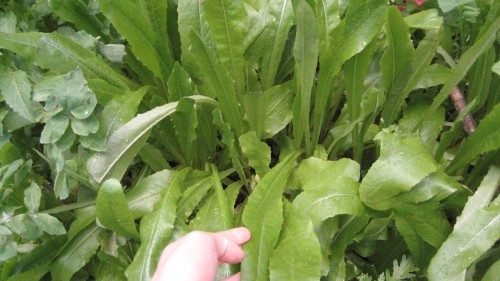
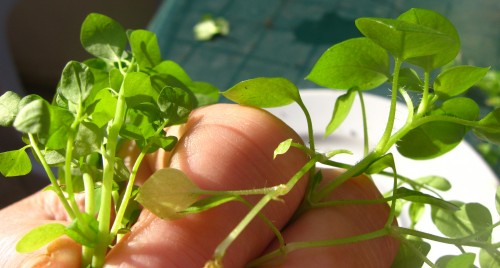
Chickweed’s a soft, low-growing plant with tiny white flowers whose five petals are so deeply cleft they look like ten. An important characteristic of chickweed, and one that helps the forager to distinguish it from a toxic look- alike, is the row of tiny hairlike fibers that climb along its stems.
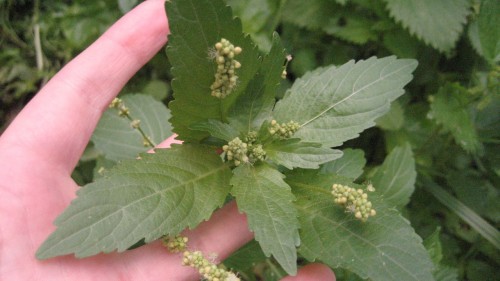
The toxic look-alike is a common spurge (euphorbia). Even experienced foragers look twice – in fact experienced foragers always look twice – to make sure that what they’re gathering is chickweed, not spurge. The second photo from the top shows flowering chickweed on the left and spurge, with its narrower, clustered leaves, on the right.
Here you can see chickweed and spurge side by side from the back. Spurge is on the left, with long, almost leafless stems and a bunch of dark leaves at the tops. Chickweed, on the right, has trailing, branching stems with the characteristic line of hairs.
Remember to harvest chickweed, as well as all other wild herbs, from clean places free from the wastes of dogs and cats.
Christina Pirello combines healthy and organic food recipes with delicious and gourmet.
Acclaimed American macrobiotic cook, food writer and TV personality Christina Pirello will be in Israel this week, teaching how to cook for health, from the 3rd to the 12th of the month.
She has authored five cookbooks and is an activist for better nutrition worldwide. She has also founded a program focused on bettering children’s nutrition in schools and at home.
Pirello was diagnosed with leukemia at age 25 and given nine months to live. On changing to a macrobiotic diet, her illness went into remission and seems to have disappeared.
Convinced of the direct relation between diet and health, she went on to study Chinese and Ayurvedic medicine and earned a master’s degree in nutrition.
Hoping for some sustainable changes in the water sector for Israel and its neighbours, we’ve partnered with the Strategic Foresight Group to interview those people and organizations at the heart of Israel’s water industry.
Last week: Shimon Tal, the past Water Commissioner of Israel. Today from the office of Dr. Uri Shani, Israel’s current water commissioner. Responsible for the overall management of the nation’s water resources, this interview with the Israeli Water Commission office (Ministry of Infrastructure), includes information that policy makers, journalists and those following the Middle East water story, will love.
Read about how Israel formulates its water policy, the planning and development of the water economy, how it prevents the pollution of water sources, how Israel regulates streams and flood prevention; uses its overflow water, develops new water sources, uses waste water, and promotes the efficient use of water. See our questions below and read on for the answers.
The international green networking phenomenon, Green Drinks, re-opens its Tel Aviv chapter.
After a great start and a long “holiday” Green Drinks Tel Aviv has kick-started again. This time organizers hope to make it a regular monthly event. Rather than at a bar, this time Green Drinks will be at LovEat Cafe in south Tel Aviv.
It’s optimal for those looking for a chance to network in the environmental field in activism and in industry (looking for jobs and causes); and for those looking to meet similarly green-minded friends. You might just want to stop by and enjoy a delicious cup of organic coffee.
Green Drinks TLV will meet every monday of the month; this year January 4, 2010. For now the venue will be LoveEat until further notice.
When: 7:30 pm at LovrEat on the corner of Barzilai and Mikve Yisrael, Tel Aviv. No need to RSVP, just show up and bring your friends!
To find out more about Green Drinks international (now active in 641 cities worldwide), visit www.greendrinks.org. It’s an international happening and you can be a part of it!
More on Green Drinks from international website:
Every month people who work in the environmental field meet up at informal sessions known as Green Drinks.
We have a lively mixture of people from NGOs, academia, government and business. Come along and you’ll be made welcome. Just say, “are you green?” and we will look after you and introduce you to whoever is there. It’s a great way of catching up with people you know and also for making new contacts. Everyone invites someone else along, so there’s always a different crowd, making Green Drinks an organic, self-organising network.
These events are very simple and unstructured, but many people have found employment, made friends, developed new ideas, done deals and had moments of serendipity. It’s a force for the good and we’d like to help it spread to other cities. Contact your local node to get the latest info about coming along.
A study conducted by the Center for Remote Sensing at Boston University, commissioned by the Arab Forum for Environment and Development, warned that Egypt would be one of the Arab countries most affected by climate change. The study analyzed a variety of scenarios of climate change impact, particularly on coastal areas, based on satellite images of the region, and showed that Egypt would be the most affected Arab country due to a rise in sea levels.
The study stated that, “at least 12 million Egyptians will be forces to migrate from their area of residence in parts of Nile Delta and that with a rise in sea level by 5 meters, almost one third of the total affected Arab population would be Egyptian.
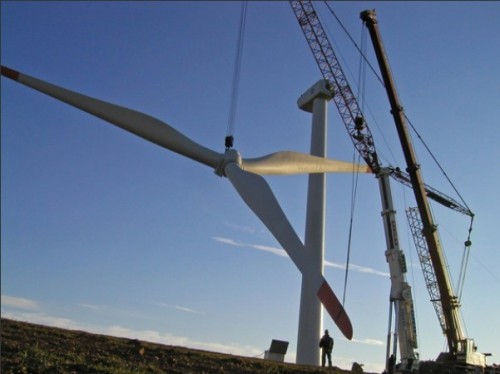
Wind turbines are big, but built to catch the wind in Turkey
Turkey’s got some renewable energy projects brewing see our recent article on renewable energy prospects for Turkey. Competing with oil from the Middle East, it now appears that the Turkish government has decided to favor more projects dealing with wind and other renewable energy programs. In an abstract for an article in the Turkish Digest called “On Wind Energy in Turkey,” the article had some positive points in favor of wind.
“As wind energy is an alternative clean energy source compared to the fossil fuels that pollute the atmosphere, systems that convert wind energy to electricity have developed rapidly.”
Everything’s dead at the Dead Sea; even bikes that get left behind.
It’s pretty shocking when you are out there to see for yourself how this world’s natural wonder is shrinking year by year. It makes you want to scream. Here are some pictures from my visit to the Dead Sea about 6 weeks ago. From the Dead Sea Spa we took a few minutes bus ride to the Dead Sea edge. The spa, about half a kilometre away used to be on the Dead Sea’s shore. The spa didn’t move, so what does that say?
New efforts to get smokers to butt out in special ashtrays at the beach in Tel Aviv look all for naught.
The City of Tel Aviv has made a stellar offer to help its resident smoking addicts (about 3/4 of the city) to stop butting out at the beach. A recent walk along the North Tel Aviv beach introduced me to cigarette cones, stacked neatly in the tray for smokers to butt out in. Nice idea, but hard habits die hard. Israelis love them smokes and cafe ha fouchs at the beach. Case in point: most of the cones were missing from the tray (the beach was empty). Either they were turned into sand castles, or taken home.
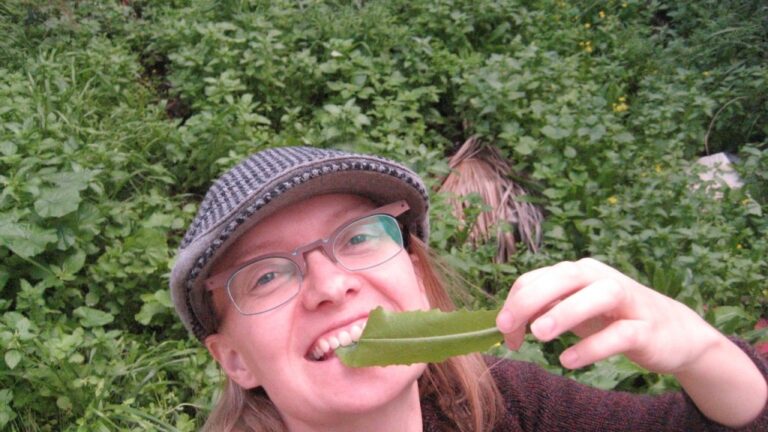
Karin Kloosterman eats a dandelion leaf (weed) she foraged for in her backyard in Jaffa, Israel
Karin tries urban foraging and eating weeds from her garden. What are the chances she will live after this experiment?
Taking cues from the Arab women foraging for mallows in the kindergarten in front of my house, and Miriam’s latest winter salad recipe, I decided to do a little urban foraging myself.
(That’s me above sampling what tastes like dandelion leaves, but it could be roquet.)
This time of the year is perfect for leafy greens – ones we can find growing just about anywhere in the Levant region getting rain. Find them in a neglected city park, out in a forest, or in your background, here I present some of the greens I found in my backyard. Next week I am going to tell you (with the help of an expert), which ones you are allowed to eat and how.
Meanwhile, look through the pictures and let us know in the comments section which ones you’d eat (if you dare), and how they’d taste yummy.
A. I don’t think these are fit for human consumption, but my pooch Tasha loves eating winter grass. She is munching on some here in this picture.
B. Would you eat generic looking weeds?
C. These ones have potential. Heard they taste good stuffed.
D. These ones look kind of poisonous. Do you think they’d work in salad?
E. These are the weeds in my mouth above. I am growing crops of these things without even trying. I think they are dandelion.
F. These weeds look poisonous and not something I feel like biting into. But maybe they have some medicinal purpose.
G. Another weed better left in the garden? Or can we forage it?
H. These ones look like carrot tops. But they don’t smell like carrots.
So what weeds would you eat? Leave your ideas in the comments section, please!
Companies, especially those located in the Middle East, are risking their economic prosperity by not taking enough care for the environment.
According to the article, due to the impact of water scarcity and climate change on the region:
“There is a significant amount of work ahead for public policy leaders and scientists to encourage businesses to appreciate the full scope of the impacts of climate change and water scarcity on economic prosperity and business opportunity.”
As we introduced yesterday, Green Prophet and the Strategic Foresight Group have been interviewing key water leaders from Israel’s water industry to understand what contributions the country can make for sustainable solutions in the region. Today we interview Shimon Tal, the former Water Commissioner in Israel and the president of the Israeli Water Association.
As the CEO of Tal Content – Consulting & Enterprise Ltd, Tal (whose surname means “dew” in Hebrew) has over 30 years of experience in professional and executive duties in Israel’s water resources management and water supply sectors. In the following interview, Tal gives us a brief and comprehensive summary of Israel’s water situation, the regional water situation and the potential for regional water cooperation. We’d sent Tal five questions, but he answered us in a letter.
Here’s his response: The five questions you sent me touch the real problems of water in our region. I will provide you with some facts and personal conclusions that might answer your questions: Water shortage is a common property of all the parties in our region (Jordan, PA and Israel). We also share mutual natural water resources. Therefore it is impossible to manage the water sector in one country separately from the regional water problems. The region is actually on the edge of the desert and extreme changes in the climate are common. A series of drought years should be taken into consideration in planning water supply and the use of natural water resources (“dryness routine”). The affect of climate change on water in our region is neglected in comparison to the affect of population growth.
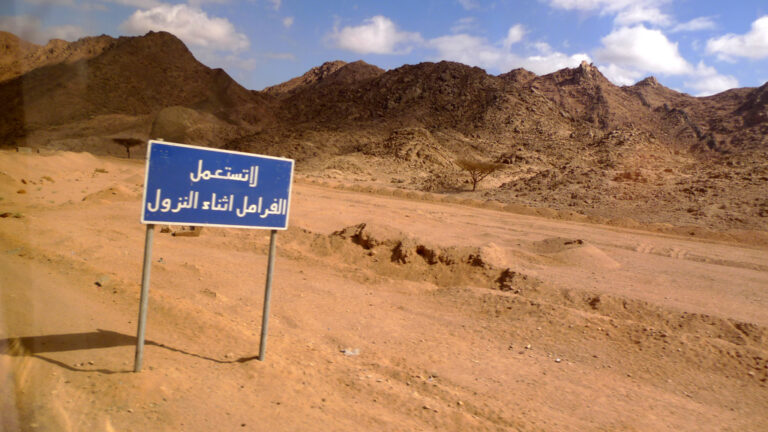
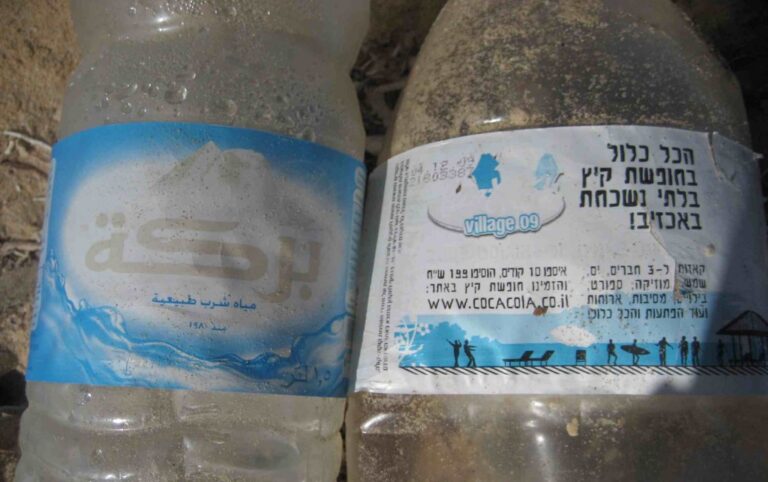
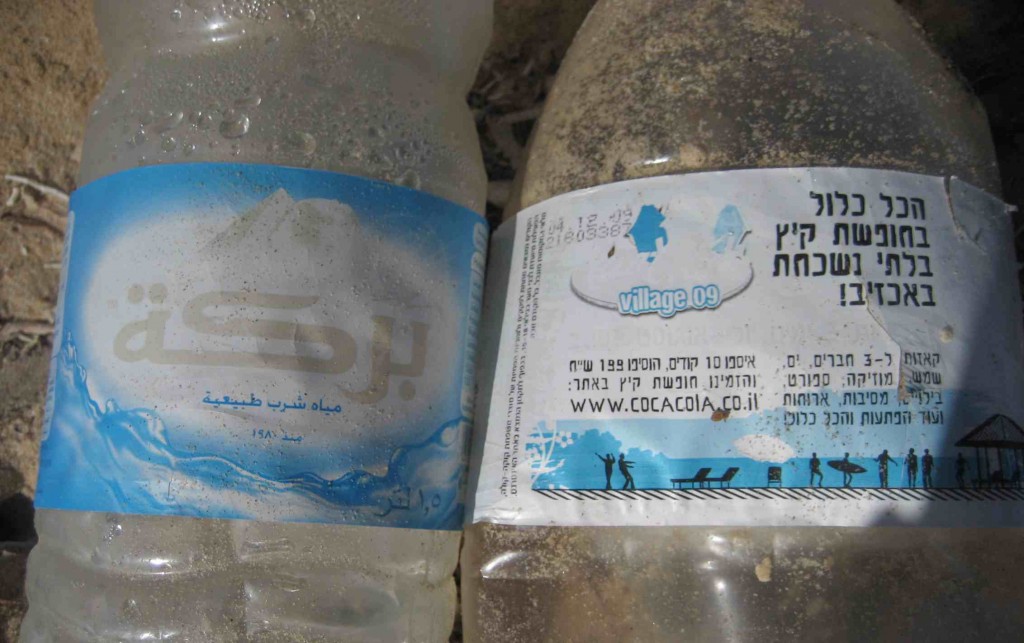
Plastic bottles (in Hebrew and Arabic) wash up on the shore of the Red Sea in Sinai, Egypt. In this region water and pollution knows no boundaries. How can Israel be part of the change?
Is Israel a water hog, unjustly siphoning aquifers from its neighbours? Does it take more than its share? Or does it have political justification for managing its resources? Can water resources be developed so that all in the region have water security, with Israel as an instigator of change, perhaps?
Dropping deep into the well of water experts in Israel, Green Prophet was asked by the Strategic Foresight Group (SFG) based in Mumbai to interview the country’s top experts in water. The aim is to find ways Israel could help promote water security in the region. And to take this information to high level policy makers. We’ve interviewed the country’s Water Commissioner’s office, the heads of top NGOs like Friends of the Earth Middle East, and researchers who know Israel’s water story from working in the field.
Over the next week or so, Green Prophet will be highlighting these different experts, who were posed with five questions directed to long term sustainable solutions. We hope this series will be an invaluable tool for local and international journalists, and international policy makers involved in the Middle East region. Green Prophet will be happy to give contacts to these people to those who ask.
We also hope it will be interesting for Green Prophet readers who know that ‘water’ is one of, if not the most important issue, in the Middle East-MENA region. To know more about the project, we’ve collected more from the Strategic Foresight group, below. This is the same group that penned the report on the Cost of Conflict on the Environment in the Middle East.
Does Rosh Ha’Ayin, Israel, have its future in oil?
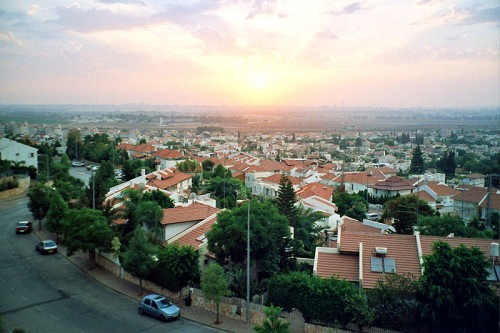
Finding oil in Israel near the Dead Sea is one thing, but finding significant amounts of the black, un-environmentally friendly stuff right outside of the already polluted city of Tel Aviv may wind up being something entirely else altogether.
This scenario may very well be happening, following an announcement to the Tel Aviv Stock Exchange (TASE) that the Givot Olam Oil Company has located what appears to be “significant quantities of oil” in its Meged 5 well, located near the community of Rosh Ha’Ayin, a few kilometers north-east of Tel Aviv.
During the week of December 20, 2009, the IDF revealed that it is adopting solar energy field rechargers. The Copenhagen summit was analyzed and Israel and Michigan are teaming up to revive Michigan’s economy through the battery business. For these stories and the rest of this week’s 7 headlines, see below.

 NatureMill’s urban compost bin does the work right in the house. Now there are no excuses to not composting!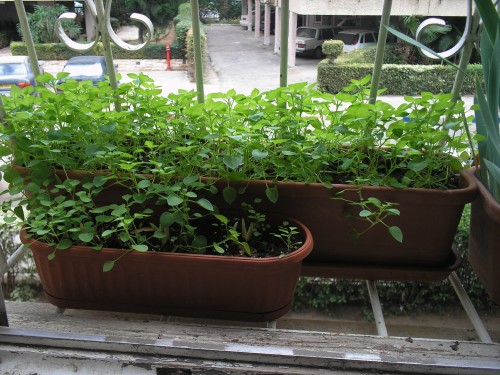
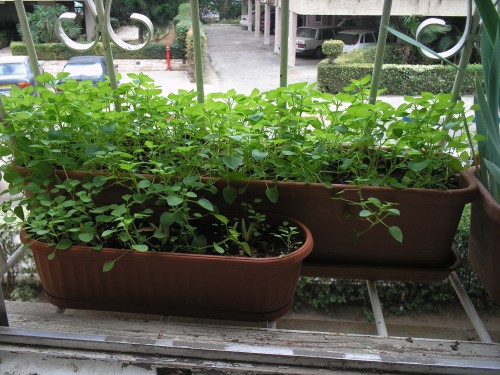 It’s easy to cultivate chickweed (a vitamin powerhouse) on your windowsill for a quick springtime salad.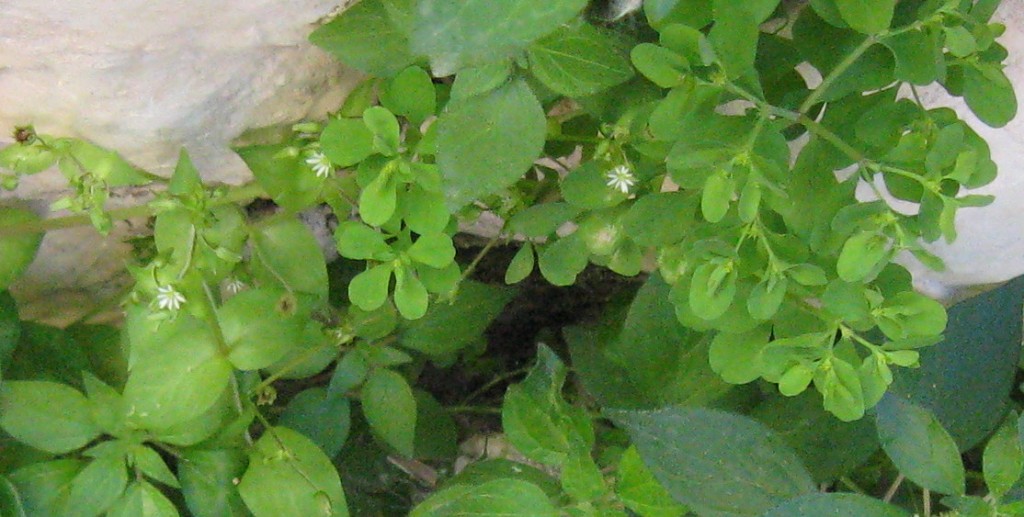



 Wind turbines are big, but built to catch the wind in Turkey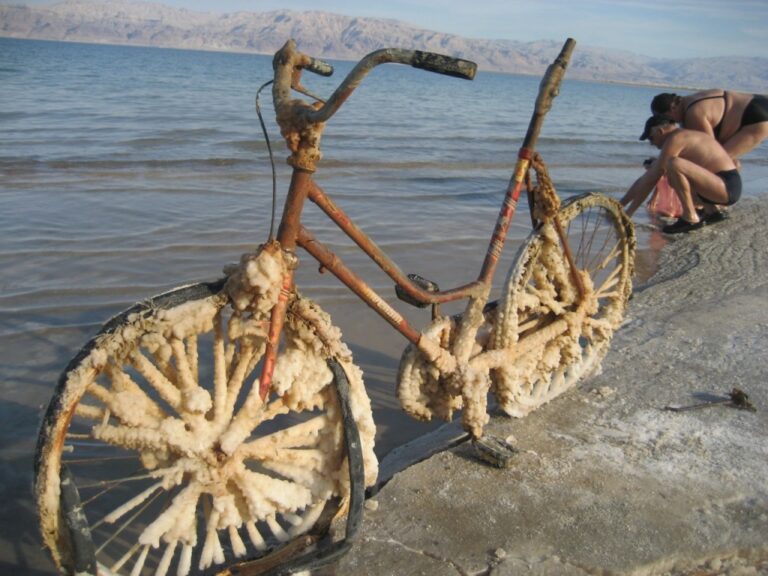
 Everything’s dead at the Dead Sea; even bikes that get left behind.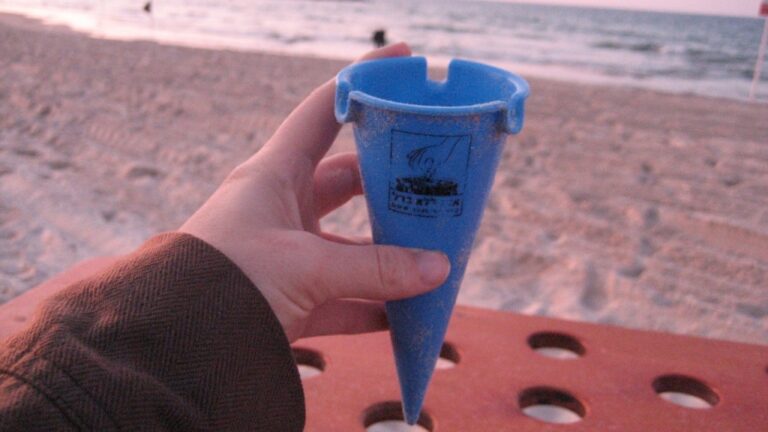
 New efforts to get smokers to butt out in special ashtrays at the beach in Tel Aviv look all for naught.