Home Blog Page 659

Join the Campaign to Get Facebook to Use 100% Renewable Energy

2

For the next week, your friends’ profile pictures might look a little different on Facebook.  A little greener.  Don’t worry, they’re not sick – they’re just concerned.  They’ve joined Greenpeace’s campaign to get Facebook to use 100% renewable energy and you should too.

Starting tomorrow, Facebook protesters will be changing their profiles to icons such as the one below in order to urge the social networking site to go green.

Why now?  Because Facebook recently announced that it will be building a massive data center in Oregon in order to serve the millions of people currently using the site.  Facebook proudly noted that the center will be full of energy efficient computers… but the company plans to run the site on coal-generated electricity.  (So what’s the point, right?)

Since Facebook is one of the largest (and therefore one of the most energy guzzling) social networking sites in the world, having them go sustainable would make a big impact.

The campaign is calling for Facebook to:

Commit to stop using polluting coal power.

Use its purchasing power to choose only clean, renewable sources of electricity.

Advocate for strong climate and energy policy changes at the local, national and international level to ensure that as the IT industry’s energy demand increases, so does the supply of renewable energy.

Share this information publicly on its website so its millions of users know the company is a climate leader.

'Zendegi' in Neve Tzedek Offers Highest Quality Organic, Fair Trade Clothes

3

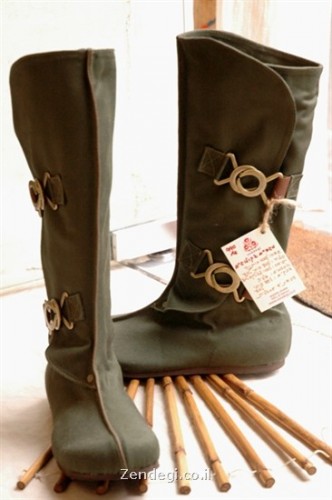
zendegi-neve-tzedek-organic-cotton-boots-fair-tradeThe first time I entered Zendegi, a natural and organic clothing shop in Tel Aviv’s historic Neve Tzedek neighborhood, a particularly unique pair of boots caught my eye.  I picked up the boots to take a closer look, but quickly realized that they were out of my intern-activist-blogger budget range.

“But you have to understand why!” exclaimed Shirly Askary, the store’s proprietor.  Shirly explained that the boots are made of 100% organic cotton and natural rubber soles.  Furthermore, they are hand-sewn by a Palestinian man in Hebron, who receives a fair wage for his labor.

The boots, as well as the organic, hand-loomed cotton clothing, hand-crafted gemstone jewelry, and natural bath and body products reflect Shirly’s ambitious vision for her store.

Is Moshe Safdie’s Habitat ’67 for Middle Eastern Urban Housing?

2

moshe-safdie-habitat-1

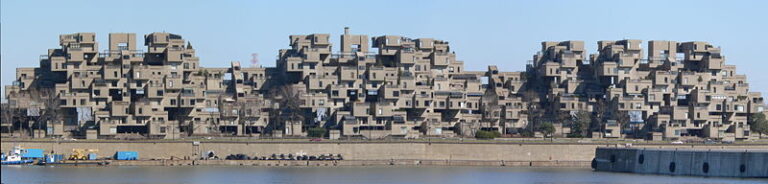
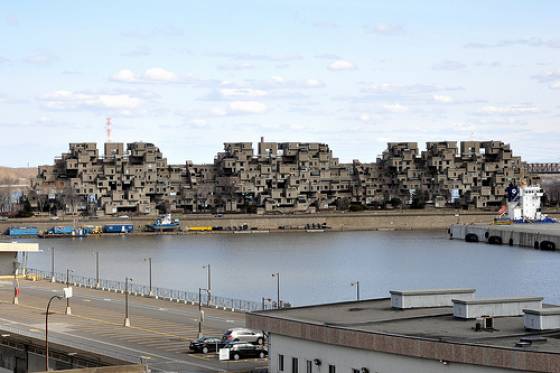
Habitat ’67 was a model for sustainable village living, in the city. Based on the model city Haifa, does it translate to the Middle East today?

We recently profiled Moshe Safdie’s LEED certified Peace Building as a call to bring more sustainable building to the Middle East. In it, we briefly mentioned Habitat, Safdie’s debut project, which was also his Master Thesis for McGill University.

Built for the 1967 World Fair in Montreal, we wondered whether this controversial cube complex, conceived long before today’s flurry of climate concerns, could enhance other Middle Eastern development projects such as REAL Housing in the Negev Desert in Israel.

Moshe safdie, Habitat 67, Montreal, Karin Kloosterman, 2021

The scaled-down village

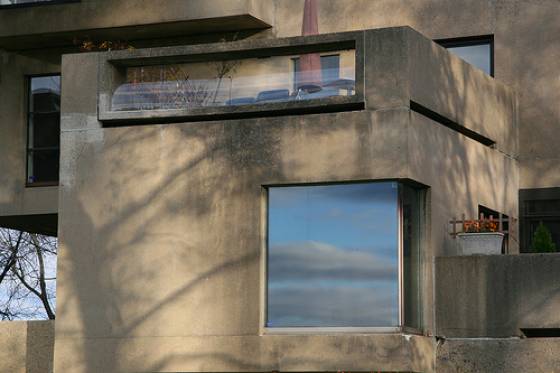
Habitat ’67 is a thirteen level housing complex comprised of 354 modular construction units making up 158 houses.  Each of these, molded with precast concrete, is 38’6” x 17’6” x 10’ high and can be put together in 20 different combinations ranging from 600sq ft single roomed units to 1700sq ft four bedroom homes.

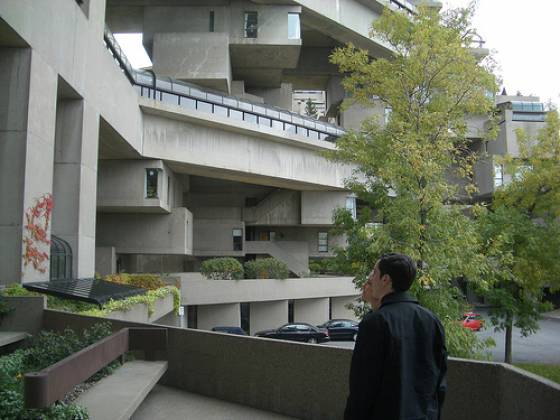
The top eleven floors consist of housing, the second floor shelters a pedestrian plaza complete with walkways and bridges, while parking facilities and a road system connecting the service areas are on the ground level.  One family’s roof is another family’s garden.
moshe-safdie-habitat-6

Creating a garden was an extension of the greater plan to make apartment habitation more like life outside the city.  The young graduate modeled Habitat as an affordable, egalitarian housing unit reminiscent of Arab villages and the hills of Haifa, where he was born and raised. He hoped that his design would give families a sense of belonging, identity, and individuality often lacking in crude block apartments sprouting elsewhere.
moshe-safdie-habitat-2

Habitat should have been a village for 5,000 residents, but the World Fair treasury balked at the idea and the original design was scaled down to 1/6th of its planned size.

Safdie’s village would have included shops, services, a school, and a clinic, and the high population density would have kept rents affordable.  Instead, according to Pierre Berton, because the treasury minimized Safdie’s project, residents feel isolated from amenities and today only the wealthy can afford the high rent prices.

moshe-safdie-habitat-3

Is concrete sustainable?

Sustainable Cities considers pre-fabricated housing to be one of five feasible approaches to city building, which puts Habitat in good standing.  However, though concrete is more sustainable than steel, according to tests conducted by the University of Illinois, mining, heating, and breaking down concrete can be energy intensive.

moshe safdie habitat 67

Concrete is also a mediocre insulator and heat conductor, even though its large thermal mass enables it to store energy efficiently.  So, while we think that Safdie’s original plan could be re-visited as a decent model for urban housing in the Middle East, the actual complex, which is neither affordable nor necessarily sustainable, is less than ideal.
moshe-safdie-habitat-5

::Habitat 67 website

Melt-in-your-mouth tehina cookie recipe

8
tehina cookies
You can only go right with cookies made from tehina. So good with black tea or a cup of milk.

You won’t be able to keep these halvah-like cookies around for long. And they couldn’t be simpler to make.

We never thought to use tehina (or tehini as you might know it) in baking, but this recipe produces the most meltingly delicious cookies you can imagine.

If you’re looking for ways to use up your flour before the Jewish Passover holiday coming up, try them. It takes only 25 minutes and six steps from raw ingredients to placing them in the cookie jar. Advice: hide a few for yourself before they disappear.

Tehina Cookies Recipe
Yield: about 3 dozen cookies

Ingredients:

200 grams soft margarine or butter

1 cup sugar
2 tsp. vanilla
1 cup tehina. If there’s a layer of oil floating on top of the jar, stir in back in.
2 cups plus 4 tbsp. flour
1 tsp. baking powder
Optional: 2 tbsp. pine nuts and powdered sugar

Method:
Preheat the oven to 160 C – 325 F.

1. Cream the margarine and the sugar together.

2. Add the vanilla and the tehina and blend again.

3. Combine the flour and the baking powder; add to the tehina mixture.

4. Form balls the size of walnuts and place them on a greased baking sheet. The dough is dry and crumbly, so squeeze it together to make the balls.

If adding the optional pine nuts, do it like this: form one cookie ball; take 2 or 3 pine nuts into your left palm, and with your right hand, press the ball onto them. Reverse it onto the baking sheet. If the ball crumbles slightly, just squeeze it back into shape with your fingertips.

Bake for 13-15 minutes. Do not bake longer. The cookies need a little moisture to retain their shape and not crumble. Cool the baking tray on a rack, and don’t touch the cookies for at least 5 minutes. If they’re handled while hot, they will fall apart.

Dust with powdered sugar when they’re cool.

Enjoy!

Other green-inspired recipes you’ll enjoy:

Photo of Tehina Cookies by Miriam Kresh

The Middle East Will Remain "LEAF" – Less as Nissan Puts Electric Car Efforts Elsewhere

nissan electric car

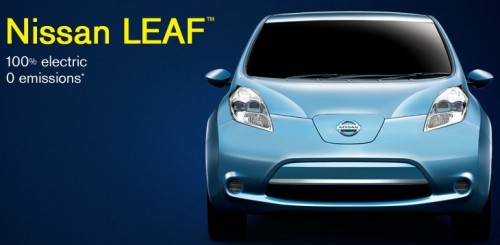
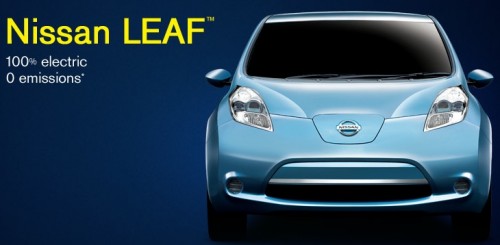
Nissan’s all-electric LEAF gives a run for Volt’s and Better Place’s money. Nissan has no plans, however, to target infrastructure-poor Middle East.

The battle over which company will market the first practical electric car is becoming more intense with the introduction of Nissan’s new total electric LEAF model. The Japanese carmaker is marketing this new entry into the electric car market as being one which is totally electric, as compared to hybrids and GM’s Volt model (which also has two engines, even though the gasoline one is only used for charging the batteries for the electric engine).  I’ve compared the Chevy Volt to Better Place’s Renault prototype model, and pointed out the differences between the two concepts.

Get a Ride and Reduce Carbon Emissions with Egypt Carpoolers

If you’ve ever braved the streets of Cairo, you know that every time you cross the street there as a pedestrian an adventure is in store.  Cairo, unfortunately, is almost synonymous with traffic congestion, and all those drivers want to get where they’re going – fast.

But if there were less cars on the road (and fewer people riding alone in their cars), those drivers really could get where they wanted fast.

Five young Egyptians who got sick of sitting in traffic during their morning and evening commutes decided something had to be done.  They started Egypt Carpoolers for those who are “fed up with traffic, pollution, gas prices and stress related to driving in Egypt.”

How does Egypt Carpoolers work?

It is a website where ride offerers and ride wanters can meet.  The steps are simple: register on the website for free, offer/request a ride, and start carpooling.  (Or, in other words, start reducing carbon emissions, saving money, meeting new people, and hopefully getting to work faster.)

Green Prophet Interviews Author and Journalist, Alanna Mitchell

Of the many non-fiction, environmentally-themed books I’ve read over the past few years, those that stand out are Alanna Mitchell’s ‘Dancing at the Dead Sea’ and ‘Seasick‘, both of which I have reviewed for Green Prophet.

Mitchell is an acclaimed Canadian writer, skilled in her clear evocation of the destruction of the environment she witnesses around the world, and her unpicking of the scientific reports and data from scientists who are at the coalface of our changing planet.

In this exclusive interview, Alanna Mitchell explains some of her motivation, and shares insight into her exploration:

GP: In both ‘Dancing at the Dead Sea’ and ‘Seasick’ you describe many ecological disasters around the world, on land and at sea. How do you remain optimistic in the face of this?

AM: The ecological disasters are terrible; that part is clear. And we know that human actions are causing the disasters. So my hope lies in my knowledge that we are a profoundly moral species and we are capable of making things better. I choose to hope.

The Tale of Ancient Trees in the Holy Land (Video)

5

[youtube width=”560″ height=”400″]http://www.youtube.com/watch?v=anjsDjPvsN8&feature=player_embedded[/youtube]

Trees tell stories. And it’s not just because you can see and measure their rings. In Israel there are thousands of old trees with history. Serious history. Some have “seen” great battles, heard prophets, witnessed the advent of new religions and the rise and fall of different empires through the ages. The Jewish National Fund cares for many of these old trees and over the last three years has been conducting a survey to determine their “orthopedic” needs and building supports, fumigating them and treating rot when necessary. See this story produced by ISRAEL21c on the story of the country’s trees. We know that not every environmentalist is a tree hugger, but it can be nice visiting the “roots” to green movements around the world, through trees.

Israel Seeks to Build Nuclear Power Plants With Arab Neighbors

4

nuclear power plantsA pan-Middle East nuclear power plan? Arabs and Israelis working together?

While Israel continues to maintain a policy of ambiguity regarding its military nuclear capability, it is making no secret about its plans to pursue a nuclear option to meet its energy needs. The minister of infrastructure, Uzi Landau, officially announced today that Israel seeks to build nuclear power plants in cooperation with “scientists and engineers from our Arab neighbors,” the AP reported.

Garbage Trucks Dump Straight Into the Sea in Lebanon As Hizbollah Takes Hold

17

sewage lebanon sea pollution fishing photoRaw sewage seeping off Beirut coastline, and dump trucks heading straight for the sea, is the “catch of the day” in Lebanon.

Marine pollution in Lebanon is becoming so severe these days that local fishermen are catching more garbage in their nets than fish. An article on thenews site Inter Press Service said that Lebanon’s 6,500 fishermen are having with the increasing problem of coastal and marine pollution being caused by large amounts of garbage and other forms of pollution finding its way into the sea. Political ambivalence is to blame.

Extra! Extra! Read All of Green Prophet's News on Kindle!

2

green prophet kindle reader amazonGood news for all our readers out there who have (paper and ink and fossil fuel saving) Kindle Wireless Reading Devices: now you can get your Green Prophet news downloaded straight to your Kindle!

The Kindle is Amazon.com’s lightweight, portable electronic reader that can hold as many as 1,500 books (eliminating the need for these books to use up precious paper and energy resources).  The display screen is supposed to simulate the look of real paper, with no glare, and many books are cheaper if you buy their electronic version for the Kindle.

Green Prophet is proud to be joining the Kindle’s current selection of New York Times Best Sellers, US and international newspapers, and magazines.  We are definitely in good company and happy to be distributed in such an eco-friendly format.

So how does Green Prophet work on the Kindle?  When you subscribe to get GP on your Kindle, it is downloaded automatically so that you can read our stories even when you’re not wirelessly connected.  And don’t worry about the format – unlike RSS readers which often only provide headlines, on Kindle you’ll be able to read the full text and see the images from our stories.

We would love to hear about your experiences reading GP on Kindle, and about using the Kindle in general. And if you really love, we’d appreciate a rave review on the Amazon website.

Read more about green reading::
Sustainable Reading: The CEO of Eco-Libris Speaks
Friedman’s “Hot, Flat and Crowded” – The Perfect “Green” Starter Book
Book Review of Precycle! by Paul Peacock: So You Can Do Better Than Recycling

The National Religious Coalition on Creation Care Takes Interfaith Environmental Concerns to the US Government

2

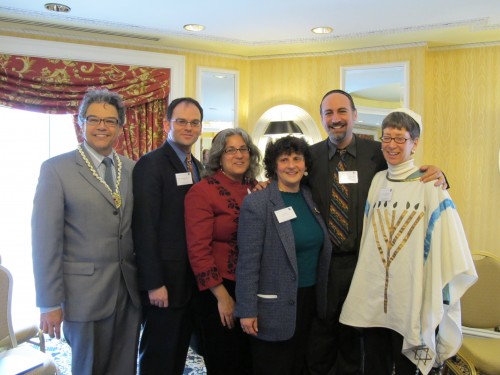
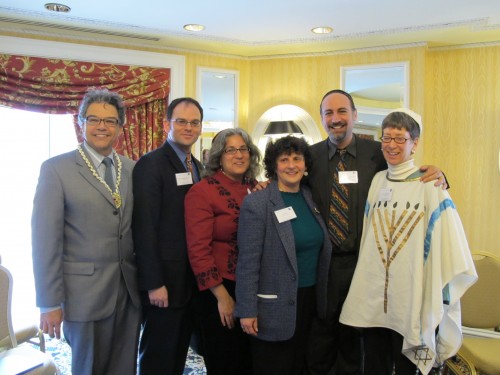
(Photo Credit: Jim Davidson) Jewish leaders were among 50 religious leaders who prayed and visited Capitol Hill together during the week of February 22 to tell US legislators that action on climate change is urgently needed.

Religious faith and concern for the environment should really go hand in hand.  If you believe in God and in God’s creations, then you are invested in protecting and caring for them.

Here on Green Prophet we have repeatedly demonstrated the correlation between religion and the earth.  To name a few related stories, we have written about Islam’s green agenda, the Eco-Rabbi series, and interfaith environmental initiatives.

The concern for the environment among the faithful was demonstrated during recent weeks by the National Religious Coalition on Creation Care (NRCCC) in the US.  A delegation of approximately 50 people from a variety of backgrounds and religions met in Washington D.C. from February 21-24 for the NRCCC’s annual Washington Week and National Prayer Breakfast on Creation Care.  The delegation’s mission was to remind legislators of the moral need for strong environmental legislation now.

The NRCC, which brings together Catholics, Jews, Evangelicals, Protestants, Bahaiis and Buddhists (among others), describes its mission as “serv[ing] God and the health of creation by bringing together the formal environmental policy positions of religious institutions and by communicating those positions to elected officials and government leaders.”

Are "Green" Garbage Bags Good for the Environment?

1

garbage containers Question: What product do we buy just to throw out again? Answer: Garbage bags.

New “green” products, like biodegradable garbage bags, are a hot topic. But it’s usually best to manage with fewer products instead of buying more, even if they are “green.”

In most cases, biodegradable bags pose less danger to landfills and groundwater and are a better choice than conventional garbage bags.

When biodegradable bags start to decompose, the nutrients from your garbage go right into the earth. But what if you have spray cans, batteries or other contaminants in your garbage? Using a biodegradable bag will increase the likelihood of dangerous chemicals leaching into the ground.

Bunkers for Bats

1

bats bunker israel jordan idf photo hanging batBats find no-man’s land makes a great “hang-out.” Image via Yuvalh.

The song lyrics ask, “War — what’s it good for?” Well, conflicts between peoples may create new opportunities for displaced and endangered animals. Haaretz newspaper reports that Ph.D. student Eran Levin of Tel Aviv University’s Department of Zoology has discovered one of the most species-rich bat populations in the world — and they’re hiding out in unused army bunkers in the Jordan Valley. The bunkers, originally set up by the Israel Defense Forces, have been abandoned since the 1994 peace accord with Jordan. Since then, they have become the bats’ preferred haunt. Levin is making sure that the bats — some of them endangered — get adequate “hanging” space to encourage breeding and long-term survival.

Bring Moshe Safdie’s Green Building to the Middle East

14

habitat 67 moshe safdieMoshe Safdie’s Habitat ’67 designed for Montreal World Fair a model of sustainable living. Image via Wikipedia.

Sustainable building is gaining some speed in the Middle East, but at a pace that is powerless against escalating climate damage.  The Gutman Visitation Center’s Living Building in Jerusalem and Qatar’s LEED certified convention center offer good examples of what can and should be done, but we can only hope that influential architects and developers will do more to voluntarily adopt better building standards.