Home Blog Page 651

GM foods shrinking sexual health in a womb near you

The USA allows them, and the EU has banned them, but the controversy over genetically modified foods is far from over, globally or in the Middle East. While Israel prohibits the import of genetically modified seeds, according to a 2009 article in Haaretz, even green-savvy consumers may be eating their fair share of Frankenfoods. (Genetically enhanced food sold unmarked).

“Agricultural products that underwent genetic engineering are sold in Israel without any marking to inform consumers, according to Milouda Quality Control Laboratories, which was testing food products containing soybeans…. The tests found that some baked goods, packaged schnitzel products and meat substitutes sold in stores around Israel contained soybeans that were essentially genetically modified organisms.”

This information isn’t new to readers of Green Prophet. We’ve cautioned readers on the dangers of this technology in previous articles (Israeli consumers at risk from GM foods), and on the importance of eating organic. Now, however, more recent research suggests that GM foods could have colossal consequences on our sexual health. In other words, eat genetically engineered foods at your own reproductive risk.

Dr. Jeffrey M. Smith is the author of Seeds of Deception and Genetic Roulette: The Documented Health Risks of Genetically Engineered Foods. In an article published March 2010 on Mercola.com, he covers many of the danger angles, including some that are very eco-unsexy. He’s not alone in tooting the trumpet of concern. Dr. Joseph Mercola, the founder of Mercola.com, recently was named the “Ultimate Game Changer in Wellness by Huffington Post.” They are just two in the medical field working to educate the public about GM foods.

The American Academy of Environmental Medicine (AAEM) is also extending its green arm to the cause, and has suggested that physicians prescribe non-GM diets to all patients. Quoting Dr. Smith, “They called for a moratorium on genetically modified organisms (GMOs), long-term independent studies, and labeling, stating, “Several animal studies indicate serious health risks associated with GM food, including infertility, immune problems, accelerated aging, insulin regulation, and changes in major organs and the gastrointestinal system…There is more than a casual association between GM foods and adverse health effects. There is causation…” (Doctors Warn: Avoid Genetically Modified Foods)

The evidence is enough to shrivel even the boldest pair. From birth defects, to infertility, to altered testicle color and size in animal studies, GM foods may be the beginning of the end of safe sex as we now know and enjoy it.

Dr. Smith writes: “GM foods are particularly dangerous for pregnant moms and children. After GM soy was fed to female rats, most of their babies died—compared to 10 percent deaths among controls fed natural soy.2 GM-fed babies were smaller, and possibly infertile.3

“Testicles of rats fed GM soy changed from the normal pink to dark blue.4 Mice fed GM soy also had altered young sperm.5

“Embryos of GM soy-fed parent mice had changed DNA.6 And mice fed GM corn had fewer, and smaller, babies.7

“In Haryana, India, most buffalo that ate GM cottonseed had reproductive complications such as premature deliveries, abortions, and infertility; many calves died.

“About two-dozen US farmers said thousands of pigs became sterile from certain GM corn varieties. Some had false pregnancies; others gave birth to bags of water. Cows and bulls also became infertile.8

“In the US, incidence of low birth weight babies, infertility, and infant mortality are all escalating.”

While it is true that “scientific progress on molecular biology has a great potential to increase our understanding of nature and provide new medical tools,” until we know more about the risks, environmental and otherwise, it behooves scientists, citizens and governments to avoid “turning the environment into a giant genetic experiment” (Greenpeace EU).The forbidden fruit may have a new label, but do you want to eat it? (Photo: Pameladrew212)So what can the average reader do with this information, in the Middle East or abroad? Our suggestion is to stay informed on the topic, and find out where you can purchase food free of genetic voodoo. If a label is iffy, find an alternative that you know is GM free.

Since 1996, these foods have slowly been entering our everyday lives, yet GM activism is still in its infancy in this part of the world. But as evidence mounts, and people respond at the grass-roots level, we may be able to score one for Mother Nature, and zero for those who want to experiment with her perfection, or our sexual well-being. (Which may in fact be in augmented in a positive way using natural male enhancement compounds.)

More food, sex and health:
Genetically Modified Hype in Israel
Are You and Eco-Sexual?
How Green is Your Garlic?
Greenprophet visits Amirim, a Vegetarian Paradise in the Galilee

Iron-Rich Whale Poop Essential in Middle Eastern Marine Habitats

1

whale poopBig recyclers and important for carbon storage: New evidence explores how important this large mammal is for regulating nutrients in the sea.

What does whale excrement, or poop, have to do with enriching the world’s marine environment? Plenty,  according to a recent  article on Greenbang. The “poop” the article is referring to is that contributed by whales whose diet is largely consisting of ingesting thousands of pounds of a small marine crustacean known as krill. Krill are small, shrimp-like creatures whose average size is that of a paper clip, and are full of iron that they obtains from the sea; especially from feeding on algae in many of the world’s oceans. Their poop, also, helps our oceans absorb the greenhouse gas carbon dioxide from the atmosphere. Now’s a better time than ever to Save the Whales!

Israel Plans Wind-Powered Lighting for Coastal Highway, Takes Initial Step to Buttress Shoreline Cliffs

1

Israel's cabinet okays recommendations to combat cliff erosion

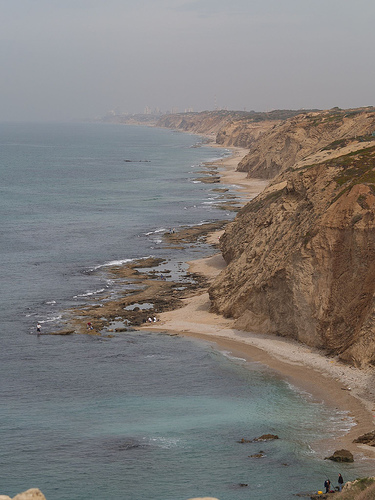
Israel’s cabinet has approved recommendations for preventing the further erosion of coastline cliffs.

The Israel National Roads Company  is preparing to publish tenders for the supply, installation and maintenance of wind turbines to generate electricity for highway lighting.

According to the Globes business daily, the CFO of Israel National Roads Co., Shay Yiftach, explained at a conference this week that small wind turbines could be installed on lighting poles on the coastal highway running along Israel’s Mediterranean coastline to exploit the sea winds.

Have You Ever Met a Green Sheikh?

green sheik united arab emiratesGreen Prophet interviews the Green Sheikh, from the United Arab Emirates. He’s looking to change the “green” perceptions and reality of the Middle East.

The environment movement is no stranger to royalty: Prince Charles, the Prince of Wales has made his commitment to supporting the green movement, and over in Jordan, Prince Hassan has told Green Prophet that he’s committed to water protection and environmental education for his people. But green royalty from wealthy oil nations? From a ruling royal family in the United Arab Emirates, Green Prophet has befriended Sheikh Abdul Aziz bin Ali Al-Nuaimi, better known as the “Green Sheikh.

Black Globe for Israel's PM, While Green Goes To Worthy Organizations

0

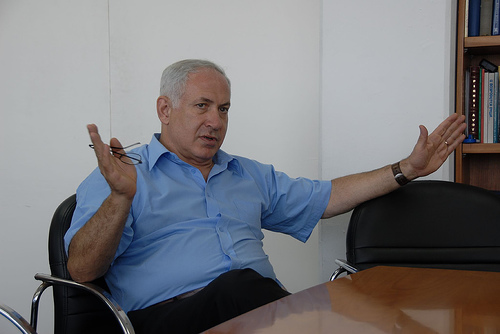
benjamin netanyahu israel prime ministerNetanyahu ‘wins’ a Black Globe Award as a statement that he should improve his environmental reform plan, and other organizations win positive Green Globes.

Earth Hour wasn’t the only way that Israel celebrated Earth Day this past Thursday – it was also the day that Life and Environment warded its annual Green and Black Globe awards.  Taking place for the seventh year in a row this year, the award recognizes the positive efforts of Israeli environmental organizations, activists, groups, and companies.  It also recognizes, however, parties responsible for actions that harm the environment.

Mulberry chutney recipe

4

mulberry berry bush china native photoMulberries make delightful jams and chutneys. Miriam shows you how.

You know mango chutney from India. It’s eaten well on samosas. But all manners of fruit can create a chutney, especially those fruits that don’t keep in the fridge.

Wherever you see  several old mulberry trees standing together in the Middle East, you can be sure that they are descendants of trees once cultivated to provide fodder for silkworms. And although the leaves have medicinal properties that humans can also enjoy, we two-legged folks are more likely to feast on the fruit.

Chutney and jam are two easy ways to preserve mulberries for eating later. The season is short, just a few weeks at the end of April-beginning of May, so if a tree or two grows near you, now’s the time to go foraging.

This chutney is chunky in texture and a little sweeter than most.

Mulberry Chutney

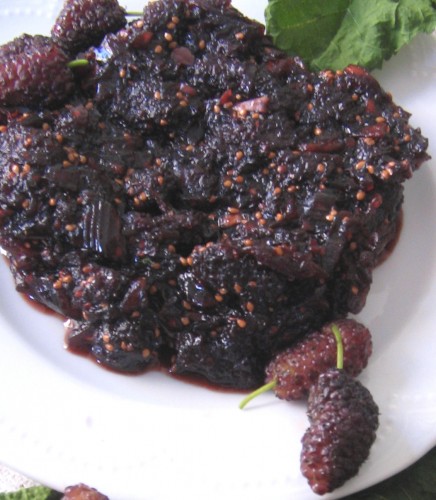
mulberry chutney and fresh mulberries

Ingredients:

2 cups fresh, ripe mulberries

1 small onion

1 small green apple, grated with the peel on

3/4 cup brown sugar

3/4 cup apple cider vinegar

1/2 teaspoon grated ginger

1 garlic clove

1/2 teaspoon salt

1/8 – 1/4 teaspoon chili flakes

Method:

1. Put the mulberries and the sugar in a saucepan over medium heat. Stir to dissolve the sugar.

2. Add all the other ingredients. Bring to a boil, stirring often.

3. Allow the chutney to boil till it forms a thick jam, about 20 minutes. Stir often.

4. Pack the chutney into a glass jar. Allow to cool, covered. Refrigerate. Wait a week for the flavors to marry. Eat soon afterwards.

If you prefer to make jam,  leave out the onion, vinegar, garlic, and salt. Add three leaves of fragrant, edible rose or lemon geranium for a real Middle-Eastern flavored jam.

Enjoy!

More recipes from Green Prophet:

"Slash and Burn" Clouds in Amazon May Have Telling Consequences for Volcano Ash

0

colin price volcano volcanic ashProf. Colin Price suggests link between volcanic ash, cloud formation and global weather patterns.

Native Americans used smoke signals to indicate danger, and a white plume is sent up by the Vatican when a new Pope is chosen. A new research project by Tel Aviv University and Weizmann Institute researchers has shown that where there’s “smoke” there may be significant consequences for local weather patterns, rainfall and thunderstorms. While the research was done on the smoke emitted from slash and burn forests in the Amazon, the implications of the research may tell us a whole lot about how volcanic ash (you know, the volcano disrupting flights around the world) could influence our climate.

Israel’s Air Force Plans Solar Installations at All its Bases

0

Israel’s Air Force Plans Solar Installations

Not yet swords into plowshares, as depicted in this sculpture at the UN, but the Israel Air Force is embarking on a solar power campaign.

Unfortunately, the Green Prophet cannot report that the nations of the Middle East are beating their swords into plowshares (as another prophet once envisioned), but there is some good news on the military front: The Israel Air Force (IAF) is planning an array of solar installations to generate electricity for all of its bases.

AIA Names Saudi's KAUST In 2010 Top Green Projects

2

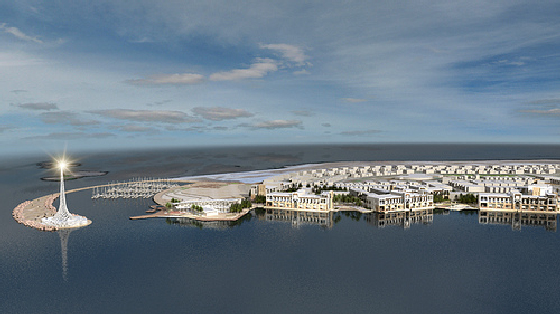
aerial view saudi KAUST photoThe king willed it – so it was built…Michael Arndt questions the ‘greenliness’ of KAUST, granted the US Green Building Council’s highest LEED certification possible.

The American Institute of Architecture recently hailed The King Abdullah University of Science and Technology (KAUST) as one of its top ten most environmentally responsible building designs.   This follows other “green” developments in Saudi Arabia, including the largest environmental tourism park, and a solar-powered desalination plant.  KAUST has bagged a few firsts:  it is the country’s first co-ed university as well as its first LEED certified building, and at 6.5 million sq feet, with 26 buildings built on 9,000 acres of land near Jeddah, on the Red Sea, it is also the largest Platinum certified building in the world.

Israel Bars Fishing In Sea of Galilee

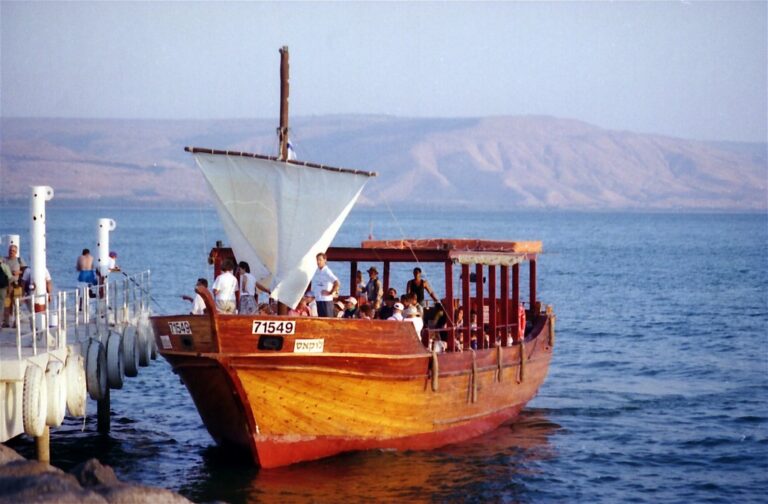
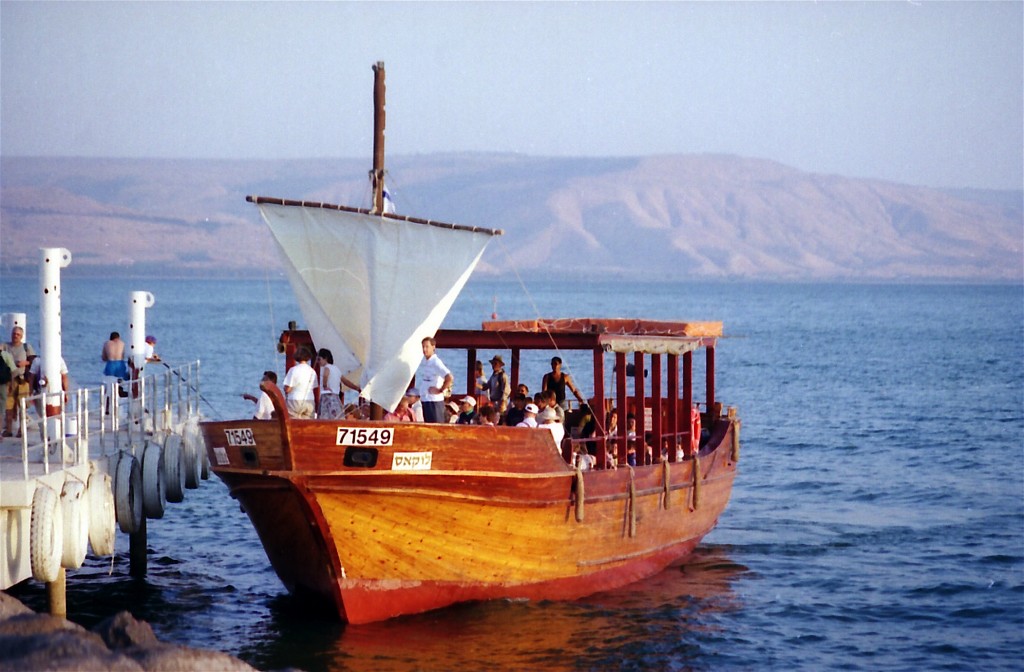
sea of galilee fishing boatIt happened to St. Peter when his nets came up empty. Now, new two-year ban on Sea of Galilee hopes to replenish sea nearly emptied by overfishing.


Shaul the fisherman hoses down a load of imported sea bream flown in from Greece, speaking nostalgically of the good old days when the catches were plenty: “When I was a kid, fishermen would toss out 150 hooks and haul in 100 kilos of fish,” says Shaul Rokach, a 57-year-old fishmonger from Jaffa.

“Today the fishermen toss out 3,000 hooks. He starts letting them out and doesn’t know when it will finish and in the end he hauls in 15 kilos, maybe. They can’t even cover the cost of the bait let alone the fuel. “Once my smile spread from ear to ear,” he adds. “My pockets were full of money. We’d strut down the piers. Now, they’re just trying to kill off the profession.”

Rokach is not the first fisherman to complain there are no longer any fish to catch in the holy land. Tradition holds that Jesus and his disciples fished the Sea of Galilee. According to the New Testament, Apostle Simon Peter ran a fishing business on the shores of the lake and complained that his net kept coming up empty. Jesus told him to cast his net again and it came up bursting with fish (Luke 5:4).

Generations have carried on this tradition, and today the most popular fish in the lake is dubbed St. Peter’s Fish, or Tilapia. But after being almost overfished to death, in the coming six weeks the Israeli government will gradually enforce a total ban on fishing in the biblical lake an effort to bring it back to life.

Holyland and Israel’s Commons, The Government’s Song

2

israel army base iaf air force construction projectA real estate scandal in Jerusalem reveals Israel’s government’s dangerous stance on the privatization of land development, and use of open spaces, Yosef argues.
As the Israeli press reveals one new real estate scandal after another including but not limited to the Holyland complex in Jerusalem, the ease with which “developers” were able to purchase zoning clearances through the payment of bribes from leading public officials continues to stun the society. In an article in Haaretz (April 22, 2010, p. 11), Prime Minister Benyamin Netanyahu is reported to have commented on both the scandals and pending government legislation to further liberalize the approval process for building projects by stating:

“It is very important to remove bureaucratic barriers and to make the planning and building process faster and more efficient. That’s exactly what we have done with the proposed legislation to reform planning and building procedure.”

The comments reveals much about the government’s ideological commitments to resource use in the country, part of the general “reform” instituted by Israeli governments since the first Likud-led government came to power in 1977. The party and its allies advocate the predominance of the free market system (see the Likud’s Economic Outlook). In its grand rush to privatize land use in Israel, the government now seeks to further enable free market forces to wrest control of the country’s land resources for private development.

Omani Handicrafts Facing Extinction Versus Machine Made Imitations

1

omani handicrafts oman old man photoAt stake for Oman is the extinction of traditional handicrafts in the face of cheaper, machine made imitations.  Man making khanjars (traditional Omani daggers). [image via: v.williams46]

Omani handicrafts – such as silver items, woven cloths, and pottery – may have been passed down from generation to generation and faced difficulties such as material shortages or lack of interest among the younger generation in the past.  But now these crafted items face a new challenge: the machine made imitation product.

Rare Sea Turtles and Other Wildlife Living Happily on Persian Gulf Atoll

1

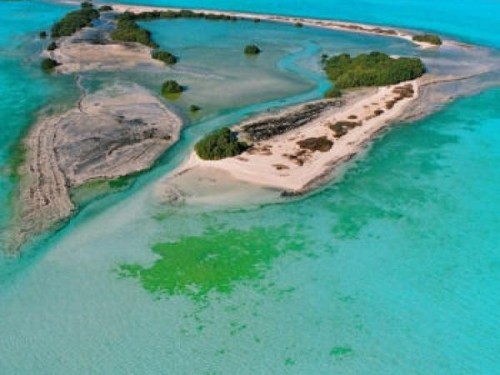
bu tinah abu dhabi island paradise Not in the Pacific, but near Abu Dhabi: Bu Tinah island is small paradise for birds and marine life

Increasing salinity and higher water temperatures may be causing problems for wildlife in many parts of the Persian Gulf. But in one location at least on Abu Dhabi’s Bu Tinah islands, located 130 km west of the sheikdom’s capital, rare hawksbill sea turtles, dugongs, dolphins, and thousands of birds appear to be very happy on or around the island, according the Abu Dhabi newspaper The National.

H&M Israel's CEO, Andrew Horesh, Speaks About Sustainable Clothing

0

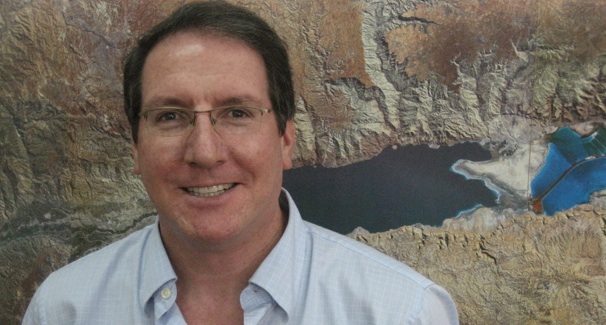
H&M Israel’s CEO talks about his motive for importing H&M’s sustainable fashion line

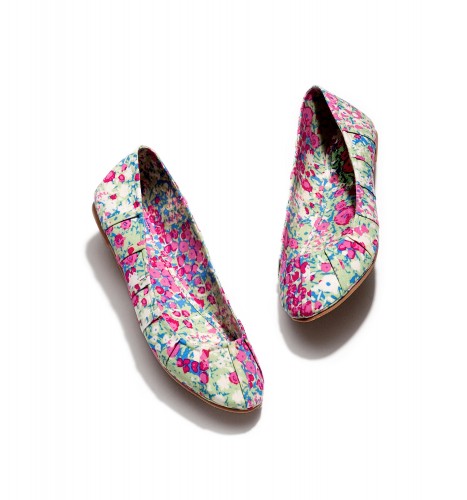
Thousands of Israelis have flocked to the newly opened H&M stores in Tel Aviv, Jerusalem, and Haifa – many of them unaware that they were, in fact, on their way to buying sustainable fashion.  As we mentioned in a previous post, H&M Israel has featured the Garden Collection – H&M’s first collection made entirely of organic cotton and recyclable materials – prominently as a shop-within-a-shop and in the window displays.  Last week we talked to Andrew Horesh, H&M Israel’s CEO, to learn more about the collection as well as about H&M and sustainable clothing.  

Egypt Nears Completion of Hybrid Solar Thermal Plant

0

solar field for hybrid solar thermal plant in Kuraymat, Egypt

Solar field at Kuraymat, Egypt is now fully assembled. Image via changents.com

Ra, the sun god of the ancient Egyptians, would be proud: Egypt’s first large-scale solar thermal facility is nearing completion. A parabolic trough solar field, incorporating nearly 2,000 collector units and covering 130,000 square meters, has been installed at the Kuraymat project site, located about 100 kilometers south of Cairo. The solar power plant is scheduled to become fully operational in the fall.