Before promoting sustainability progress, companies must ensure their initiatives are genuine and measurable. Today’s audiences are increasingly skeptical of vague environmental claims, particularly as awareness of “greenwashing” has grown.
Sydney is best known for the Opera House and the Harbour Bridge. If you’re looking to enjoy dinner with views of these landmarks, here are some great options.
It's sea turtles which may in the end save islands in the Seychelles. They may also better help us understand climate change. Like rings on a tree, scientists have found a way to read sea turtle shells and how they are impacted by climate change tells a story.
For centuries, the Sámi shaman drum was one of the most powerful sacred objects in northern Europe, and one of the most feared by church and state. If ISIS looks bad to us today for its religious fundamentalism, Christians were just as fervent.
Before promoting sustainability progress, companies must ensure their initiatives are genuine and measurable. Today’s audiences are increasingly skeptical of vague environmental claims, particularly as awareness of “greenwashing” has grown.
Sydney is best known for the Opera House and the Harbour Bridge. If you’re looking to enjoy dinner with views of these landmarks, here are some great options.
It's sea turtles which may in the end save islands in the Seychelles. They may also better help us understand climate change. Like rings on a tree, scientists have found a way to read sea turtle shells and how they are impacted by climate change tells a story.
For centuries, the Sámi shaman drum was one of the most powerful sacred objects in northern Europe, and one of the most feared by church and state. If ISIS looks bad to us today for its religious fundamentalism, Christians were just as fervent.
Before promoting sustainability progress, companies must ensure their initiatives are genuine and measurable. Today’s audiences are increasingly skeptical of vague environmental claims, particularly as awareness of “greenwashing” has grown.
Sydney is best known for the Opera House and the Harbour Bridge. If you’re looking to enjoy dinner with views of these landmarks, here are some great options.
It's sea turtles which may in the end save islands in the Seychelles. They may also better help us understand climate change. Like rings on a tree, scientists have found a way to read sea turtle shells and how they are impacted by climate change tells a story.
For centuries, the Sámi shaman drum was one of the most powerful sacred objects in northern Europe, and one of the most feared by church and state. If ISIS looks bad to us today for its religious fundamentalism, Christians were just as fervent.
Before promoting sustainability progress, companies must ensure their initiatives are genuine and measurable. Today’s audiences are increasingly skeptical of vague environmental claims, particularly as awareness of “greenwashing” has grown.
Sydney is best known for the Opera House and the Harbour Bridge. If you’re looking to enjoy dinner with views of these landmarks, here are some great options.
It's sea turtles which may in the end save islands in the Seychelles. They may also better help us understand climate change. Like rings on a tree, scientists have found a way to read sea turtle shells and how they are impacted by climate change tells a story.
For centuries, the Sámi shaman drum was one of the most powerful sacred objects in northern Europe, and one of the most feared by church and state. If ISIS looks bad to us today for its religious fundamentalism, Christians were just as fervent.
Before promoting sustainability progress, companies must ensure their initiatives are genuine and measurable. Today’s audiences are increasingly skeptical of vague environmental claims, particularly as awareness of “greenwashing” has grown.
Sydney is best known for the Opera House and the Harbour Bridge. If you’re looking to enjoy dinner with views of these landmarks, here are some great options.
It's sea turtles which may in the end save islands in the Seychelles. They may also better help us understand climate change. Like rings on a tree, scientists have found a way to read sea turtle shells and how they are impacted by climate change tells a story.
For centuries, the Sámi shaman drum was one of the most powerful sacred objects in northern Europe, and one of the most feared by church and state. If ISIS looks bad to us today for its religious fundamentalism, Christians were just as fervent.
Before promoting sustainability progress, companies must ensure their initiatives are genuine and measurable. Today’s audiences are increasingly skeptical of vague environmental claims, particularly as awareness of “greenwashing” has grown.
Sydney is best known for the Opera House and the Harbour Bridge. If you’re looking to enjoy dinner with views of these landmarks, here are some great options.
It's sea turtles which may in the end save islands in the Seychelles. They may also better help us understand climate change. Like rings on a tree, scientists have found a way to read sea turtle shells and how they are impacted by climate change tells a story.
For centuries, the Sámi shaman drum was one of the most powerful sacred objects in northern Europe, and one of the most feared by church and state. If ISIS looks bad to us today for its religious fundamentalism, Christians were just as fervent.
Before promoting sustainability progress, companies must ensure their initiatives are genuine and measurable. Today’s audiences are increasingly skeptical of vague environmental claims, particularly as awareness of “greenwashing” has grown.
Sydney is best known for the Opera House and the Harbour Bridge. If you’re looking to enjoy dinner with views of these landmarks, here are some great options.
It's sea turtles which may in the end save islands in the Seychelles. They may also better help us understand climate change. Like rings on a tree, scientists have found a way to read sea turtle shells and how they are impacted by climate change tells a story.
For centuries, the Sámi shaman drum was one of the most powerful sacred objects in northern Europe, and one of the most feared by church and state. If ISIS looks bad to us today for its religious fundamentalism, Christians were just as fervent.
Before promoting sustainability progress, companies must ensure their initiatives are genuine and measurable. Today’s audiences are increasingly skeptical of vague environmental claims, particularly as awareness of “greenwashing” has grown.
Sydney is best known for the Opera House and the Harbour Bridge. If you’re looking to enjoy dinner with views of these landmarks, here are some great options.
It's sea turtles which may in the end save islands in the Seychelles. They may also better help us understand climate change. Like rings on a tree, scientists have found a way to read sea turtle shells and how they are impacted by climate change tells a story.
For centuries, the Sámi shaman drum was one of the most powerful sacred objects in northern Europe, and one of the most feared by church and state. If ISIS looks bad to us today for its religious fundamentalism, Christians were just as fervent.
Despite its claim to promote sustainable urban development practices, the world’s largest, disposable Expo invites irony and criticism.
The first ever world fair took place in 1851 at Prince Albert’s behest. That fair was initiated to display participating nations’ industrial prowess. The tradition continues with ever-increasing largesse, culminating in this year’s World Expo that officially opened yesterday, May 1st. Countries and corporations will display elaborate pavilions that best represent their cultural and industrial brand until the expo’s closure at the end of October, 2010, which is expected to draw 70 million spectators. Israel’s half stone, half glass pavilion is one of several Middle Eastern pavilions on display, which in part highlights the region’s interest in cultural and business exchange with China.
Despite its impressive shoreline, Alexandria – the self-proclaimed “Capital of Arab Tourism” – seems to be a city in decline. (Hint: watch out pedestrians).
When the Green Prophet’s editor heard I’d be stopping in Alexandria en route to the MENASOL solar energy conference in Cairo next week, she asked (implored) me to write a post from there. So, after my first day in Egypt’s second largest city, here are a few first impressions. (I’ll let some pictures do the talking too.) Any Alexandrians or others familiar with the city are invited to comment and tell me what I missed and where these first impressions are mistaken.
This Gulf of Mexico oil spill may make Exxon Valdez seem like child’s play. Image via MNN
The massive oil spill in the Gulf of Mexico, is already being referred to by many as “President Obama’s Katrina.” The ongoing spill, a direct result of an explosion on an offshore oil drilling platform has resulted in millions of gallons of crude oil moving toward the American Gulf Coast in an ever widening oil slick that is “threatening to surpass the 1989 Alaskan Exxon Valdez oil spill disaster that occurred 20 years ago,” according to CNN.
Builder of Jerusalem and Israeli solar energy company Brightsource. Meet Arnold Goldman. Image via NYTimes.
Serious philosophers rarely make good businessmen. But solar energy innovator Arnold J. Goldman is no navel-gazer. Goldman heads Jerusalem-based BrightSource Industries and its California-based parent, BrightSource Energy, which is contracted to deliver more than 2,600 megawatts of solar electricity in California using new technology demonstrated at Goldman’s Solar Energy Development Center in the Negev, the largest solar energy facility in the Middle East.
People go to Mecca for spiritual alignment, not to be exposed to drugs.
Some drugs like pot, gat and hash are natural. But antidepressant drug abuse in Mecca, Saudi Arabia is causing social problems.
Mecca province, home to the holiest site in Islam, has the highest rate of drug-related crime in Saudi Arabia, a university study has found. The national study, carried out by Dr. Ashraf Shilbi of the National Center for Youth Research at King Saud University in the capital Riyadh, calculated that the number of drug-related legal cases in Mecca province has steadily risen by around 1,000 each year. In 2009 it peaked at 9,000 cases.
Most countries in the world are facing issues of teenage drug addiction and other forms of substance abuse.
“Drugs is certainly a problem in Saudi Arabia and every day you hear about the government killing someone for smuggling drugs,” Wajiha Al-Huwaidar, a former teacher, told The Media Line. “I would think that the problem is more pronounced in Mecca because it’s very crowded and very easy to get a visa to come to Saudi Arabia for Hajj or Umrah, so many people can come as drug dealers under the guise of a pilgrim.”
The study, first reported by the Al-Madinah daily, found the Saudi capital Riyadh to be second in the number of drug-related cases, followed by the provinces of Jazan, the Eastern Province, Asir, Madinah, Tabuk, Al-Qassim and Al-Jouf.
While drug abuse made up the majority of cases, drug trafficking was also found to be on the rise. Despite a Saudi stigma that drug smuggling is led by foreigners, the study found the vast majority of drug smuggling cases to be Saudi citizens, with foreigners making up only 22 percent of drug trafficking cases.
The study also found that over the last decade Saudi hospitals in the country’s capital and commercial center have recorded a tripling of the number of drug addicts receiving treatment. The number of drug addicts seeking treatment in the Saudi capital Riyadh, for example, were found to have tripled, from 13,520 in 200 to 40,515 in 2009. The number of addicts treated in Jeddah more than tripled, from 10,876 in 2000 to 35,857 in 2009.
Ahmed Al-Omran (links to his blog Saudi Jeans), an influential Saudi critic and blogger, said it was unclear why Riyadh and Jeddah had witnessed such a notable rise in drug use. “There are likely many factors – unemployment, more people travelling inside and outside of the country, etc,” he said. “But it’s hard for me to speculate and the study should have looked more into the reasons for the rise in drug use.”
Al-Omran downplayed the importance of the study. “Drugs are everywhere in the world, the Mecca region is big and is not just the holy city of Mecca,” he told The Media Line. “So it doesn’t seem very weird that there would be a high rate of drugs in Mecca province.”
“Whenever the government publishes the news that they have seized a large amount of drugs coming into the country it indicates that there is a problem of drugs in the country,” Al-Omran said. “But the government only manages to seize a small percentage of what’s in the market, so they also need to work on awareness and make sure families know the dangers of drug use.”
Shilbi’s research found the most popular illegal drug in Saudi Arabia to be the antidepressant Catptagon, followed by hashish, Qat (or gat), heroin, amphetamine, opium and cocaine.
Hashish, dried cannabis also known as ‘hash’, made up the largest proportion of the drugs confiscated by Saudi authorities. The volume of Hashish seized has steadily increased by 18 percent each year. Qat, a plant with an amphetamine-like stimulant, made up the majority of drug seizures in the southern province of Jazan, with more than 10,000 recorded seizures of the plant last year alone. Seizures of cocaine and opium were very rare and recorded only in the capital Riyadh and Saudi Arabia’s commercial center Jeddah.
The study found that drug dealers in Saudi tend to be students or workers, and those most vulnerable to drug abuse tend to be young men aged 20 to 30. Bachelors and the unemployed were also found to be demographic groups more at risk for drug abuse.
The Saudi Interior Ministry announced last week that drug enforcement officials had completed one of the largest drug busts in its history, arresting 195 individuals over four months on charges of drugs smuggling. Authorities also seized eight million tablets of Captagon, two tons of hashish, and more than 20 kilograms of pure heroin.
Drug trafficking is punishable by death in Saudi Arabia, regardless of the quantity being trafficked. The knock-on effect is that if drug traffickers take the risk of doing business in the Saudi kingdom, to make it worthwhile they will usually traffic huge volumes of drugs with large profit margins.
While Qatar is not an oil-rich company, it’s rich in natural gas and is a member of OPEC, which means it can greatly influence environmental policies put in place in the oil and gas industry. The country hopes to bill itself as an environmentally-friendly one, getting a boost with the Qatar Petroleum Environment Fair that opened last week at the Doha Exhibition Centre, according to the Gulf Times. “Environment” and “Petroleum” are not normally words associated together in a fair in a positive way. While natural gas is not as polluting as oil or coal, it’s a limited resource which still pollutes, but less.
With a palace for nature, Qatar looks to corporations to help educate about recycling
On Qatar Environment Day in February, the UK mobile phone company Vodaphone launched its program to give back 10% on new phone purchases if their Qatari customers recycle their old phones. In some countries like Canada, new device buyers actually have to pay a fee to offset recycling costs.
Around this time they also launched wind and solar powered base stations to cellular networks that need to be powered off-grid as par of international efforts to go green.
This week, members from the company’s Green Ambassadors program started recycling old company posters and flyers, setting a precedent in a country and industry that has a lot to learn about environmental awareness. The launch was at the company’s store in Mushereib and the material is to be sent to a recycling facility in Doha.
“It was amazing seeing the large white truck from the only paper recycling company in Qatar, coming to pick up our old paper, posters and flyers that will be recycled into blank paper rolls and used in a thousand new ways. The Green Ambassadors are thrilled to know that each small initiative we take plays an important role in protecting Qatar’s environment,” said Ahmed al-Manwari, the Green Ambassadors’ leader in a Gulf Times interview.
The link has since been taken down to the Gulf Times. But it is a great way to get daily news on the Gulf region.
I like seeing how mega multi-national companies take on environmental challenges that rub off in countries in need of more environmental awareness. Vodafone Group plc (LSE: VOD, NASDAQ: VOD) is a British multinational mobile network operator headquartered in Newbury, England.
Let’s hope that companies like Apple will create similar projects to recycle the iPhone and iPod.
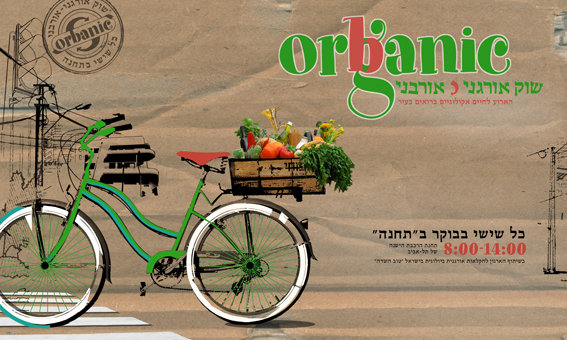
Traditional organic agriculture and gorgeous historic architecture come together at Tel Aviv’s restored Turkish train station.
The historic Turkish train station between Neve Tsedek and Jaffa in Tel Aviv, which in its former glory operated trains from Jaffa to Jerusalem, has laid in ruins for decades. Over the past few years, though, the Tel Aviv Municipality has been restoring the complex and its beautiful historic buildings. Someone must have thought it would be appropriate to restore traditional agricultural methods on the site as well, since this Friday “Hatachana” (or, “the station”) will be starting the city’s first all-organic farmer’s market.
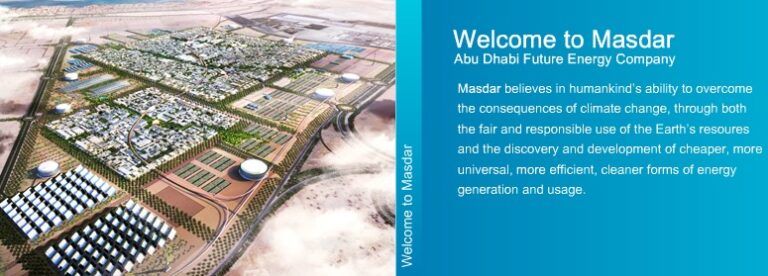
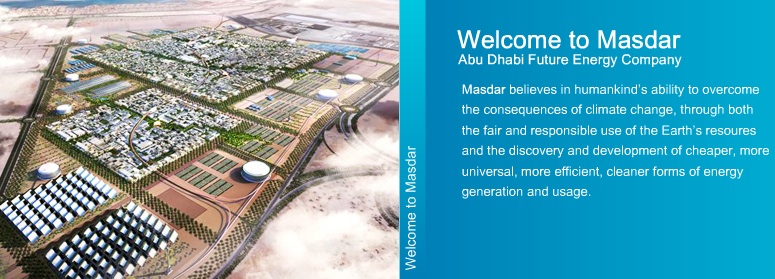
United Arab Emirate’s renewable energy company Masdar signed MoU with the US Department of Energy, Canada too.
Aligning America with United Arab Emirates? the The US Department of Energy (DoE) and Masdar, Abu Dhabi’s multifaceted renewable energy initiative which includes an eco-city with the same name, signed a Memorandum of Understanding this week to promote collaboration on clean and sustainable energy technologies, reports Carbon Capture Journal and a press release issued by Masdar.
Signed in the US by US Deputy Secretary of Energy Daniel Poneman and Dr. Sultan Ahmed Al Jaber, the CEO of Masdar, the agreement will build on a framework for cooperation in three important areas to tackle global warning, and to address depleting and polluting fuels: carbon capture and sequestration, water and bio-fuels, and clean technology.
Will “no hands driving ” work in the macho Middle East?
It seems the race to create the most innovative electric powered vehicles has become even more bizarre: America’s General Motors recently unveiled its new EN-V Robot car in Shanhai China. The vehicle, which uses a GPS type guidance, vehicle-to-vehicle wireless communications system, is being promoted as a vehicle in which its occupants “need not touch their steering wheels ever again.” This concept of “hands off driving” is even more bizarre than the previous “road train” article we wrote about in which several cars will ‘link’ themselves together behind a truck and travel together down the road without their drivers having to steer them. And it also goes one step beyond the Honda U3-X electric unicycle that even goes sideways. Nice ideas but will these catch on in the super-macho Middle East?
From leaps in the bronze age to massive droughts that wiped out cities, civilizations we learn from history, depend on water. We need to protect our life sustaining resources now. An Akkad sculpture from Iraq.
Over the course of history, numerous civilizations have peaked and then gradually fettered out or even disappeared abruptly. In many cases, the cause of both their rise and disintegration was the same: Water. This precious resource has been a driving factor of progress in the past and will prove to be a determining factor for development in the future as well.
The Indus Valley Civilization (IVC), located in present-day Pakistan and India, was based around the Indus River and its tributaries as early as 2,600 BCE. Its efficient management of water resources has led archeologists to consider it an extremely advanced civilization for its time: The Bronze Age.
The Harappans — named after the first IVC site discovered — constructed public baths, drinking water infrastructure, water storage facilities and intricate sewage network systems. But did water also play a hand in its demise?
Till date archeologists debate over the ultimate cause for the collapse of IVC, but most of the possible theories involve water. The existence of defensive walls and multiple layers of silt found among the ruins have suggested that the civilization was destroyed by floods; an opposing theory suggests that rivers could have changed their course and caused drought and desertification. Either way, the Harappans found themselves at the mercy of water.
Taxis can’t wait all night to recharge: The Better Place battery switch is showing another way for electric cars, in Tokyo.
A few days ago, Better Place electric car company sent out the press release. The Israeli-US company launched its electric taxis in Tokyo, Japan. The pilot will be small, with only 4 taxis which will replace their batteries, over time, with Better Place’s battery-switch system. Taking about 2 minutes to switch, this kind of solution is needed since taxis are in operation all day long and don’t have time to plugin and recharge the traditional way.
“Charging spots are not a realistic option for taxis that need to be on the go all day long,” Better Place CEO Shai Agassi said from Tokyo, during a conference call. The pilot project will last 3 months and is currently being funded by the Japanese government. Similar tests on taxis will be part of the pilot tests done in Israel later this year, Agassi (pictured below) said.
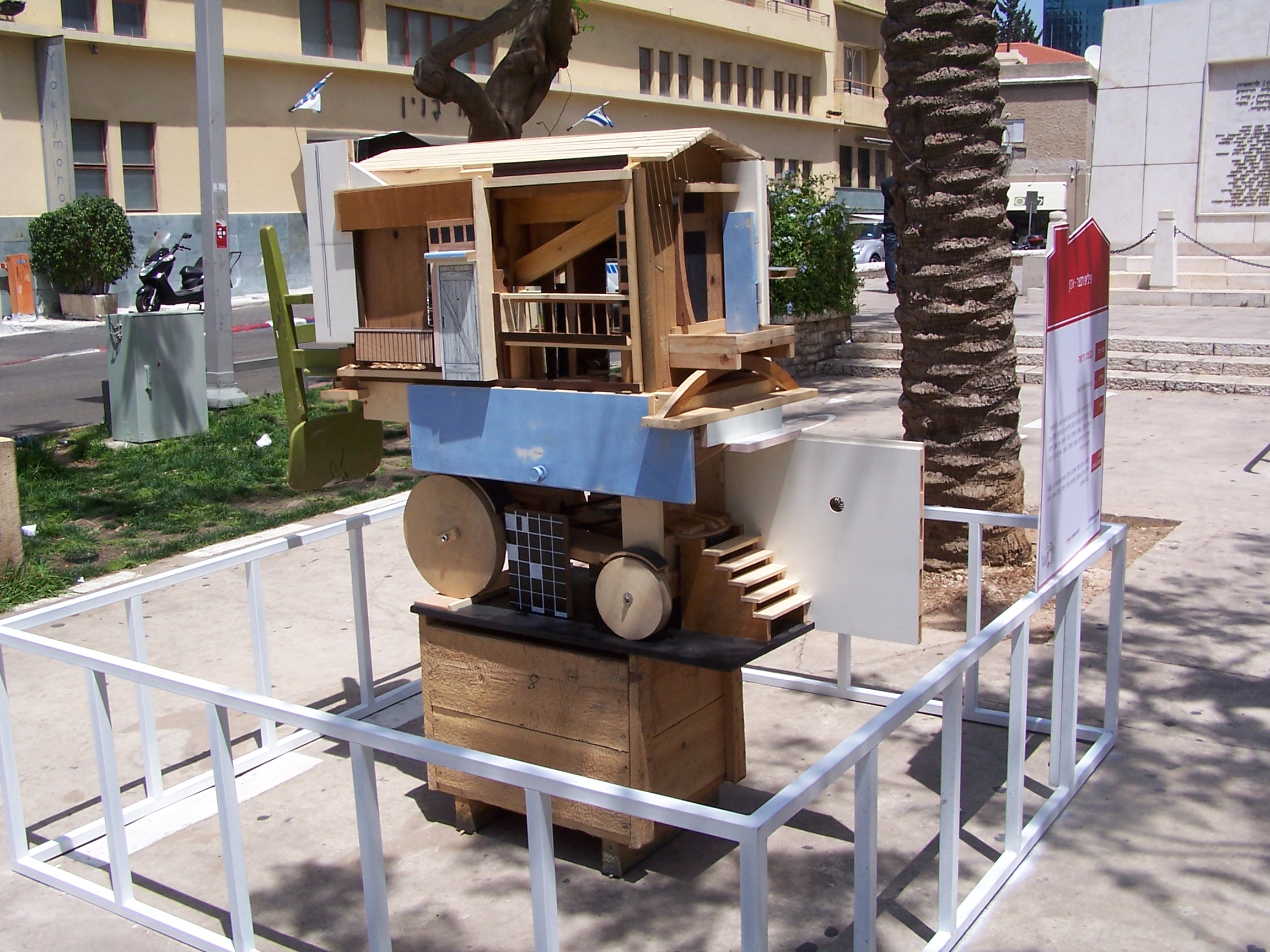
An Israeli bank tries to sell “green mortgages” with installation exhibit on busy boulevard.
As part of their campaign to sell “green mortgages” (in other words, mortgages for homes built with environmentally friendly construction or for financing the installation of solar home energy systems), Bank Hapoalim has sponsored an exhibition of futuristic green homes along Tel Aviv’s Rothschild Boulevard. Rothschild Boulevard is often the venue for unusual exhibitions, including an installation of trees by environmental sculptor, Dani Karavan, a few years ago. This exhibition of 22 homes – all made by Israeli designers, artists, and architects – spans from Betzalel Yafe Street to Herzl Street. Some houses are scientific in nature, others are whimsical, and all of them are a little bizarre.
By taking into account embodied energy, Catherine and her husband half the energy required to build their home.
In her recent Ted talk, Catherine Mohr encourages us to look at the bigger picture when discussing and analyzing green stories. Whether we weigh the benefits of a LEED certified project against the energy required to ship its raw materials, or evaluate the true sustainability of certain clothing, it is important to take into account the project or item’s embodied energy. Maybe there are some lessons to be learned here for people looking to build in the Middle East?
Farmigo aims to improve day-to-day operations for small organic farms.
More and more Israelis are joining the worldwide move to buying their fresh produce from small, organic farms (and CSAs – see our list). But because they’re farmers, and not necessarily businessmen, most of these family-run businesses aren’t being run on the most optimal level.
Consumers who get the fresh produce delivered to their homes often don’t have a say in what kind of fruit and vegetables they’ll receive – will it be 10 radishes and two apples, or top heavy with red peppers? And despite the clear health benefits, the discrepancy in prices between store-bought and organic produce is too much for many consumers.
That’s where startup Farmigo and its CEO Benzi Ronen comes in Farmigo, aiming to improve day-to-day operations for small organic farms, making them more effective and hopefully profitable as well.
Ronen and his team interviewed farmers at 124 CSA (Community-Supported Agriculture) farms and discovered that their heads were in the ground – literally. They were focusing so much on the food they were growing, that the business side was being neglected.
Farmers complained that they often spent up to 30 hours a week on emails and calls dealing with member payment and delivery questions – time they would prefer to spend tending their gardens.
Most farms don’t have their own online store and it’s rare that they’re set up to take credit card payments. But when Ronen asked them questions like: “Did everyone pay you?” or “Did any checks bounce?” they would scratch their heads.
A shorter lifespan for the coming generation
Ronen says that the potential for organic farms (see our WWOOF list) is fast approaching a tipping point, and none too soon. With diabetes and obesity on the rise, the “generation coming of age now will be the first to have a shorter lifespan than their parents,” Ronen warns.
How did we get into this situation? According to Ronen, after World War II, there was a push to reduce the cost of food (families were paying up to 16 percent of their income for groceries at the time) and increase accessibility.
Those economies of scale led to huge ‘mono-crop’ farms, each focusing on only one to two crops. Small farms growing a more diverse selection were nearly driven out of business entirely until recent years when they’ve started to make a comeback.
Selling their produce to the big conglomerates just doesn’t make economic sense for organic farms that would earn only 20 cents on every dollar in such an arrangement. Going directly to the consumer is the only way to compete.
A Fortune 500 approach to organic farming
Ronen and his partner Yossi Pik met at SAP where they worked on software applications for Fortune 500 companies. Their vision for Farmigo is to build the same type of customer-relationship management and e-commerce systems for the CSA industry.
The Farmigo founders talked to hundreds of farmers and their customers to determine what would satisfy everyone and make the CSAs sustainable. Their research led to a system that includes an ordering engine that tracks and verifies payment in a variety of formats, including credit card validation; a delivery and reporting tool that prints box labels, route maps and site pick-up locations; a harvest module that helps farmers select what goes into each weekly produce box; and an online store and collaboration tool so that separate farms can work together to offer a wider variety of produce to their customers.
Farmigo charges nothing up front and no set-up fees. Instead it takes two percent of sales and even offers an initial 60-day money back guarantee. The entire service is hosted “in the cloud” (meaning it’s all web-based with no software to install locally) and is built using Google’s application environment.
Racing to do business before harvest time
It all began in 2008 and the company is still small with four employees in two locations – marketing and sales are located in the San Francisco Bay Area, R&D is in Israel. Ronen won’t divulge how much he’s raised, but says it’s from angels rather than VCs and is enough to keep the company going through until 2011 “as long as we stay lean.”
He’s optimistic about the growth of the organic farm market. In addition to families and individuals, small farms are increasingly selling directly to restaurants and schools. It’s important that they continue to supply their fresh produce to children, for many schools have moved to providing only food that can be “held in your hand” with no cutlery needed, which Ronen points out is too often unhealthy ‘fast food.’
Moving beyond produce, Ronen says that Farmigo could be applied to meat as well, although that would require a much more complex model. “You don’t know the weight until it gets to the customer,” he says. “And you also have to sell more parts of the cow to make it economically worthwhile.” Brains in the delivery box, perhaps? Wine and spices can also benefit from the Farmigo system, according to Ronen.
The company is first targeting the American market and Ronen admits that getting the interface to work in Hebrew is challenging. To date Farmigo has two new customers coming onboard every week and the race is on to June, which is peak harvest time. “Farmers won’t talk to us for three months after that,” Ronen says.

 Despite its claim to promote sustainable urban development practices, the world’s largest, disposable Expo invites irony and criticism.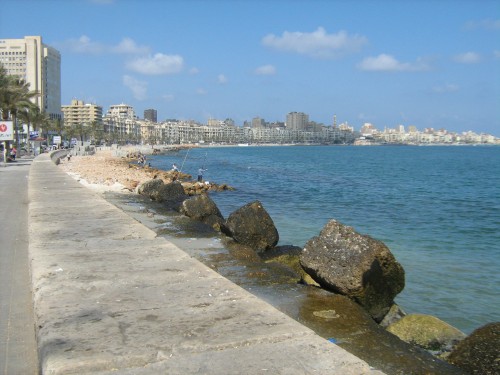


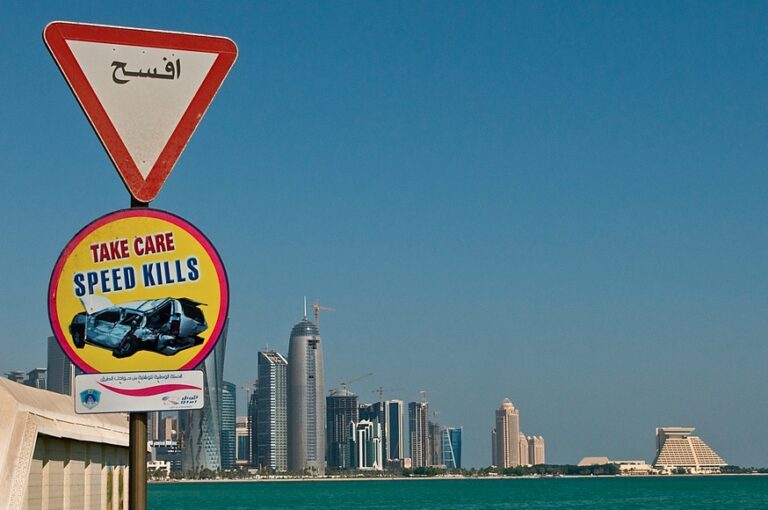
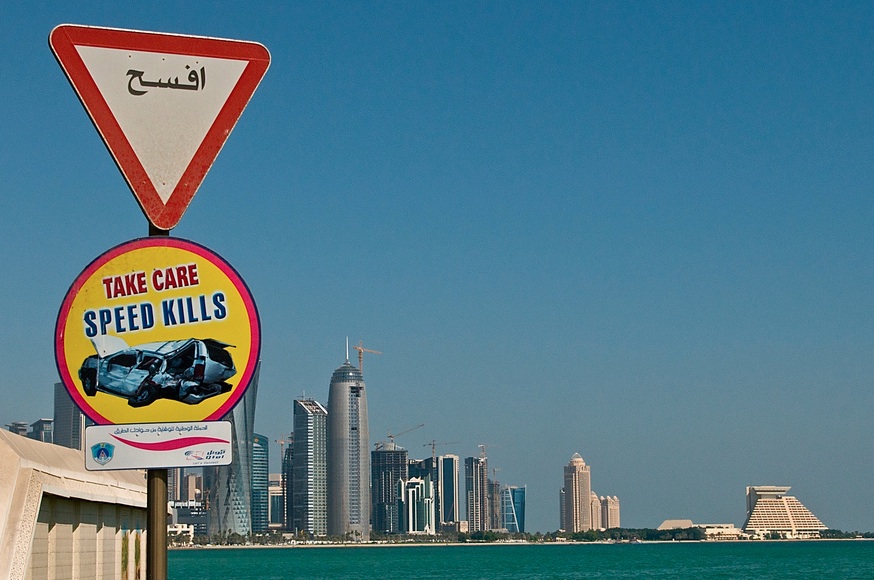 Qatar’s petroleum industry is making efforts to “go green.” Is it speeding ahead in the right, or wrong direction?