Home Blog Page 642

Abu Dhabi Eco-Chicks Organize Green Drinks Event

abu dhabi eco chicks green drinksGet your green drinks on in Abu Dhabi tonight with the Eco-Chicks and other eco folks.

If you happen to be passing through the One to One Hotel in Abu Dhabi tomorrow night around 6:30pm, you may stumble across an Abu Dhabi Eco-Chick organized Green Drinks event.  Green Drinks is a loosely organized (yet widely successful) informal meeting group for greenies of all orientations, and has already become popular in Tel Aviv.  It is very exciting to see this movement spreading across the Middle East, and exciting to learn about the active, spunky Abu Dhabi Eco-Chicks.

Wind And 9 Israel-Related Cleantech Headlines, Week of May 23, 2010

0

Highway-In-Israel

Israel’s plan to use renewable energy to power highway lighting, Italy’s plan to use Israeli technology for highway signs, the OECD and more headlines related to Israeli cleantech this past week. Image via david55king.

During the week of May 23, 2010, Israel announced that it will be converting the energy sources for its infrastructure, specifically highway lighting, to renewable ones, including wind. Israeli and Taiwanese water experts met in Taiwan to discuss water technology and cooperation and Solaredge was named a Red Herring 100 Europe Award winner for 2010. For these stories and more, see below.

Green Zionist Alliance (GZA) – Bold Resolutions for 36th World Zionist Congress

4

green-zionist-alliance-banner Can Zionism claim Green credentials? The jury is still out on this one.

On the one hand, Zionism was initially very much a “back to the land” movement, in the European Romantic tradition. Trees were being planted in Palestine as early as 1901, there was a strong emphasis on agriculture and “redemption of the land”, and communal settlements blossomed.

There is no doubt, however, that the growth of the Yishuv –– Jewish community in Palestine –– also put a huge strain on the country’s environment and natural resources, especially post-1948. The emphasis was on the huge challenges of defence and security, development, absorption of immigrants and building the state. Given this mixed record, it would probably be fair to say that the founding fathers mostly followed the best practices of their day, but those practices would not pass our Green scrutiny today.

Take Your Team To Lebanon's Ecovillage

1

lebanon-ecovillageGet Your Green On in The Dmit Valley

Ecovillages are slowly sprouting in the Middle East.  There’s Kramim in Israel’s Negev Desert, as well as the well-known Kibbutz Lotan, and now the first of its kind in Lebanon.  Called simply EcoVillage, this project was grown from the ground by Karim al Khatib and a group of green-minded fellows.

Welcome Home: Meet Theo Who's Running Jordan's Alternative Eco Aqaba House

theo the house aqabaDutch native Theo van de Laar exposes the eco secrets and paradise he entertains through The Aqaba House, an eco-friendly guest house he runs in Jordan.

A while back Tafline featured the eco-cool guest house The Aqaba House, near the Read Sea port of Aqaba, Jordan. Today we feature a short interview with Theo, the handsome Dutchman who is running the eco outpost in the middle of the desert.

Tell us a little more about you, and your interest in promoting the Aqaba House: I am a historian from the south of The Netherlands, and after my studies and working for a year and a half in marketing and communications, I decided that that was not what I liked. I applied for a job as a tourleader, got hired and was sent to Egypt for 3 months. The year was 1999, and I basically never came back.

The Deepwater Horizon Debacle: A Tough Lesson for Free Markets Like Israel?

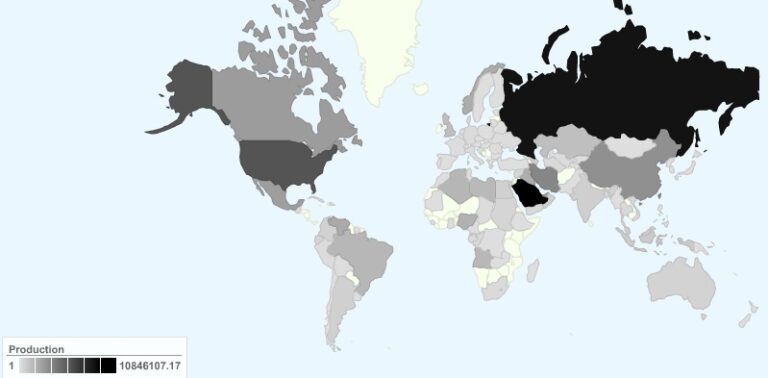
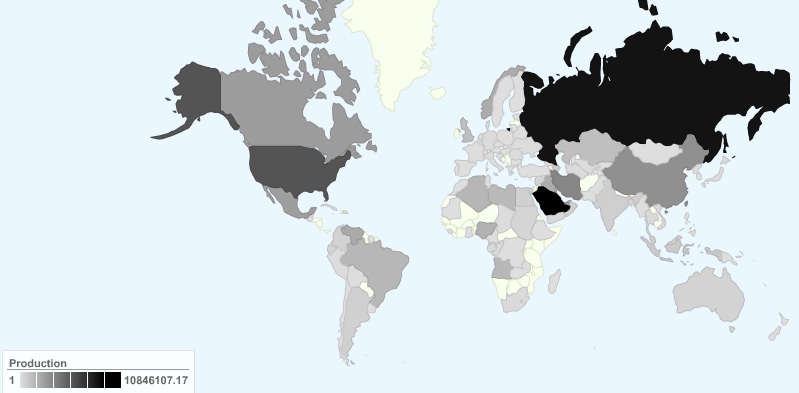
world oil production map

Dr. Gotlieb comments on the disastrous effects of the oil spill in the US Gulf of Mexico and the dangers it portends for Israel’s emerging oil industry.

In a New York Times article entitled Our Fix-It Faith and the Oil Spill published this week, Elisabeth Rosenthal writes that “Americans have long had an unswerving belief that technology will save us — it is the cavalry coming over the hill, just as we are about to lose the battle. And yet, as Americans watched scientists struggle to plug the undersea well over the past month, it became apparent that our great belief in technology was perhaps misplaced.”

Ms. Rosenthal’s comment concerning the hemorrhaging of crude oil from the Deepwater Horizon oil rig in the Gulf of Mexico cuts to the bone with respect to the harm entailed by the blind use of technology. For Israel, where tycoon Yitzhak Tshuva’s Delek Group is drilling in the Tamar oil fields off our coast and other entrepreneurs are racing for a piece of the action, there is a burning question: Can we afford the sort of catastrophe that is already wreaking untold environmental disaster on the Louisiana coast? Are our coastlines so long and robust that they can withstand the kind of onslaught that the southeast United States is facing?

In the context of the Deepwater Horizon debacle, the effects could be devastating.

The Times  reports on a “serious setback” in the attempts by British Petroleum (BP) to stanch the oil leak. The “top kill” technique which company officials said would stop the leakage did not succeed and other efforts are underway. This is the fourth technique to be applied by the company in tying to control what had already become the largest oil spill in US history, twenty years after the Exxon Valdez disaster in Alaska.

The leak began on April 20th when Deepwater Horizon exploded, killing eleven workers. According to the Times, 18-40 million gallons of oil has flowed into the Gulf of Mexico with an estimated 12-19,000 barrels leaking into the sea each day.

Despite attempts to keep the oil slick from reaching the fragile ecosystems of the Louisiana coast, oil has already washed ashore. The US National Oceanographic and Atmospheric Administration (NOAA) has already banned commercial fishing in the affected southeast coastal area.

The fishing communities of the Louisiana coast are reeling from the economic and social effects of the disaster, which threatens their way of life: They are mindful that the coastal communities of Alaska have still not recovered from the Valdez disaster. Marine animals and birds are also among the victims of the disaster. Ecosystems are endangered.

It is now believed that only the drilling of two relief wells, which will not be completed until August can provide effective relief. What the environmental toll of this human-made disaster will be by then is immeasurable at this time.

An example for the Middle East?

Recent reports show that Israel has among the lowest royalty rates of any country with respect to how much oil companies pay the state for extracting mineral stocks. The Netanyahu government, with its free market advocacy, has not taken steps to change this situation: The government has left the business environment very conducive for the extraction of fossil fuels off our coast, a gift for big business.

In terms of Middle East history, it is insightful to ask whose interests are truly served by such the petroleum industry and its associated adventures. Much of  the political discord in the region stems from the gerrymandering of the area in a  manner that postcolonial states and the elites that govern them would further the strategic affairs of the European powers and the corporate interests of the oil industry. The strategy has left a state system in the region based on economies that fuel climate change while filling the corporate coffers of the Seven Sisters (of which BP is one), the major oil conglomerates that have dominated the energy industry for nearly a century.  

The failure of  technology at Deepwater Horizon and its inability to remediate the consequences are indicative of the dangers inherent to blind faith in technological fixes for environmental problems.  The implications for Israelis and others  interested in preserving a future for our progeny should be clear: Placing the fate of the commons in the hands of private economic interests is ridden with risk. 

Read more on oil spills and the Middle East:
Method To Seal Kuwait Spill Could Work on Gulf Oil Spill
Will Gulf Of Mexico Oil Spill Open Pandora’s Box on Oil Sands Drilling?
Kuwait Still Cleaning up After Saddam’s Mess
Russian Vessel Fined for Dumping Oil Bilge into Red Sea

Above image: see what nations of the world are producing the most oil. Via Digital_Dreams

Israeli Designer Yinnon Lehrer Encourages Urban Biking with Vertical Bike Racks

2

Yinnon Lehrer’s urban long-term bike parking solution encourages more commuters to keep on pedaling.

If you’ve ever thought about commuting to work everyday on your bike and still haven’t done it yet, chances are there are a couple of reasons why you thought better of it.  A) You didn’t want your bike to get stolen and didn’t have a good place to park it all day and B) You didn’t want to get to work sweaty, smelly and wet.  These are legitimate reasons, and unless you are a major business executive with a private office with ample space to store a bike and a private shower… there isn’t much to be done.  Or is there?  Israeli designer Yinnon Lehrer has come up with a combination long-term bike rack and public shower, for ambivalent urban cycling commuters.

Green Zionism May Change Israel’s Pioneering Spirit

green zionist allianceGreen Zionism may be a way to integrate the old movement into new global village.

With the 36th World Zionism Congress about to get under way, a somewhat new movement known as the Green Zionist Alliance (GZA) – whose exec director we interviewed –  is hoping to inject environmental or ‘green’ concepts into the world Jewish settlement body that is celebrating the 150th anniversary of the birth of modern Zionism’s founder Theodore Herzl this year.

The Congress, which will meet June 15th in Jerusalem, will have a number of important issues to reslve; and members of GZA hope to introduce a number of environmental issues, that are vitally important for the future of the Jewish People in their national homeland.

Some of these “green” issues include the construction of wetlands to protect and sustain wildlife; the decentralization of ‘grey water’ reclamation facilities to conserve scarce water resources; the construction of  vertical farms, rooftop gardens; and the creation of the concept of “urban farming” to enable urban dwellers to have the opportunity to grow their own produce in gardens and balconies; and on lands not presently being used for other purposes.

The GZA also plans to introduce resolutions to save energy by encouraging the use of energy efficient lighting in homes and offices; the use of cars running on electricity and other energy saving fuels; and by projects to help reduce the effects of climate change to the Middle East.

Projects to help the environment also refers to the human environment, according to ideas originally espoused by Theodore Herzl himself at the first World Zionest Congress in Basel Switzerland, over a century ago. These ideas include improving education and absorption of various immigrant groups in to Israeli society, like absorption center projects run by the Jewish Agency.

These ideas are not only good for new immigrants, but for “vatikim” or “old timers” as well. The idea for introducing these various “green issues” into Israeli society is to generate interest in people, especially younger people between ages 18 and 30 years of age, of which around 25% of the total delegate makeup of the Congress will be composed of.

Since these younger delegates will be the future leaders of tomorrow, it is very important to get them “on board” for integrating these green concepts into the mindset of Israeli society. Those interested in getting involved with the concepts and goals of Green Zionism, can readily do so by visiting the GZA NGO’s website and becoming involved in their various programs.

::GZA

More articles on green projects in Israel:
New Concepts to Encourage Tel Aviv Urban Farming
Eco Jews Study Sustainable Farming Methods

Canadian Politician McGuinty On Cleantech Business Mission to Israel and the West Bank

0

dalton mcguinty ontario canadaCanada, unlike the United States, is made up of provinces.

One of its richest, and home to Toronto is Ontario – a province whose leader wants it to “go green” (see fist pumping, left). It is also where I was born and raised.

Now, Ontario’s Premiere (leader) Daltan McGuinty is currently on a trade mission to Israel, and a focus will be on clean tech.

He and his entourage arrived in Tel Aviv on May 26, and have already visited some of Israel’s most exciting clean technology companies – those attracting worldwide interest and investment, as part of Ontario’a trade mission to Israel. Part of his journey was to see how the private and public sectors cooperate in clean tech innovation, according to News Ontario.

Bahrain Aims to Increase its Water Production by 33% – Within One Year

0

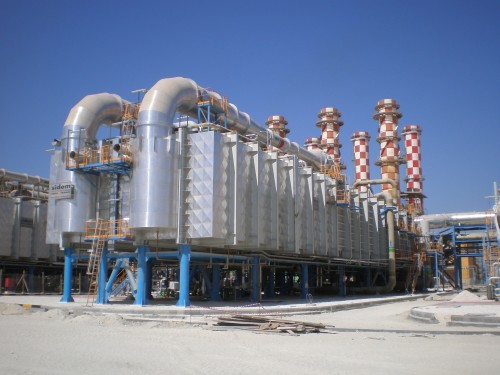
This desalination plant in Al-Hidd will be joined by additional facilities as Bahrain seeks to boost its water production. (Image via sidem-desalination.com)

Aiming to meet its growing water needs, Bahrain is pursuing an ambitious plan to increase its production of desalinated water. The kingdom currently produces 142 million gallons of water a day.

The first stage of the plan will cost some $400 million and has a particularly ambitious timetable:  The aim is to already produce an additional 48 million gallons of water a day by mid-2011. The second stage will phase in production of another 52 million gallons per day over the next two decades, bringing total daily capacity to 242 million gallons.

Gat, The Middle-East’s Bad Habit

5

Gat, qat yemen israel ethiopia Miriam interviews store owners who sell legally addictive substances: soft drinks, cigarettes, junk snacks  – and Gat.
Some folks chew gum. A lot of Israelis chew seeds: sunflower, pumpkin, watermelon seeds. Some people put a plug of tobacco into their cheek and chew away, only pausing to spit once in a while. But for maximum chewing pleasure, there’s Catha edulis, popularly known all over the Middle East as gat, qat, khat, or ghat. Chewing the fresh green leaves produces a mild euphoria, yet heightens awareness. The energy boost experienced is different from caffeine, in that one is more alert, yet relaxed.

Taking Israel's Lead, Solar Water Heater Use on Rise in Egypt

6

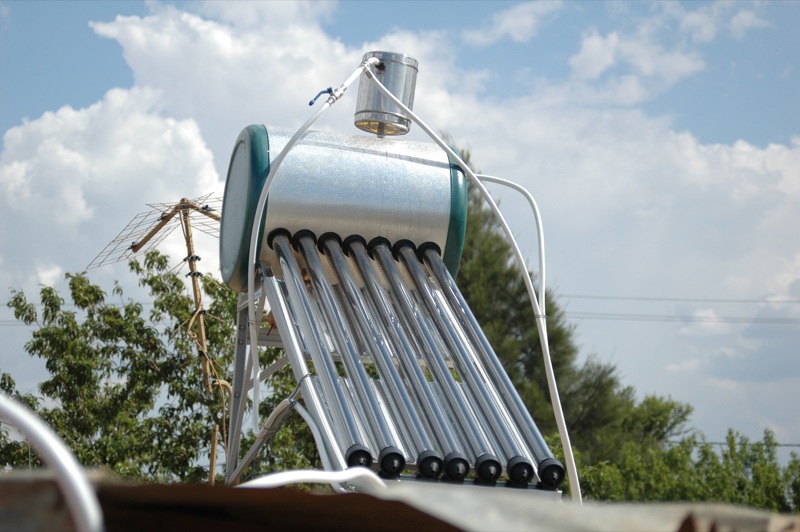
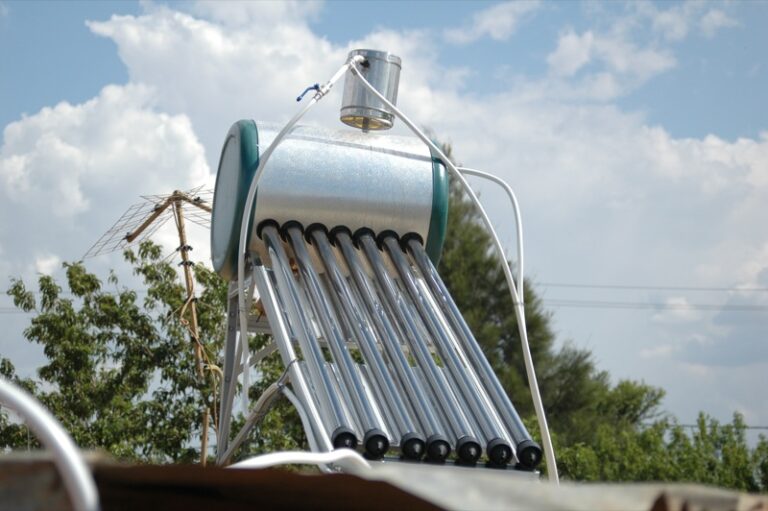
solar hot water heaterA solar hot water heater is a cheap way to collect endless hot water, from the sun. What are you waiting for? Image via Beluga.

They are relatively cheap units to install and can provide almost endless supplies of free hot water. Like Israel discovered decades ago, people in Cairo are now onto using energy from the sun to heat water, Bikya Masr reports. Why now? As electricity has become an extra financial burden for many Egyptian famileis, they are looking for ways to cut their electric bills. A good portion of the bill is spent on heating and water.  Solar water heaters are a somewhat obvious solution but up until the last few years have often been underutilized as a technology that can be implemented to make both fiscal and environmental sense.

Method To Seal Spill in Kuwait Could Work for Gulf Oil Spill

2

Gulf oil spill in early May. It’s much worse now but a solution used in Kuwait might be the key for containing the contaminated.

As the BP Deepwater Horizon oil spill continues to saturate the Gulf of Mexico with millions of barrels of crude oil and natural gas, company engineers have begun to turn to even more bizarre methods to plug the well that has now been creating ecological havoc for over a month now. The newest attempt to seal the well, according to articles in CNN is by using what is being called a “top kill” method, that involves pumping mud into the site of the oil leak to slow it’s flow, and then afterwards to plug the well with cement, making it a “dead well”.

The method was used successfully to plug some of the scores of Kuwait oil wells that were sabotaged by the retreating Iraqi Army at the end of the 1991 Gulf War.

Ginger Dosier: When Architecture and Chemistry Mix

0

chemistry-apparatus-dosierDosier’s fearlessness of the science of construction sets her apart from her peers [image courtesy of flickr]

We were so intrigued by Professor Ginger Dosier, the Architect at Sharjah University who grows bricks by combining sand, common bacteria, calcium chloride and urea, that we decided to dig deeper.  Some architects, like those at Geotectura, develop mindbending concepts.  But we wanted to understand how an architect could come to know so much about microbiology and chemistry, and then dare to leap from science to design? 

Chicago Muslims Take Their Green Lifestyles to the Streets

The largest Muslim-led festival in the US, Takin’ It to the Streets, will feature arts, music, activities, and how to be green.

The Inner-City Muslim Action Network (IMAN) is currently putting together a free festival in Chicago that will take place on June 19th.  Expected to be the largest Muslim-led festival in the US, Takin’ It to the Streets will bring together an estimated 20,000 people to take part in arts and music performances, forums, and a variety of activities.  And while those 20,000 people are there, they’ll also learn a little about what it means to be a green Muslim.