Home Blog Page 612

Israel’s New “Green” Synagogue to Raise Environmental Awareness

0

green-synagogue-IsraelRabbi Ian Pear believes that public institutions should take the lead in generating environmental awareness.

The relationship between ecology and worldwide religions has taken center stage recently. Islamic leaders are speaking out and two traveling Americans found all manner of environmentally aware Muslims in their country.

Also, if it ever lifts off, the famous “Ground Zero” mosque will be built according to LEED building principals. Ilana explains how Jewish leaders in Israel are also contributing to a growing eco-centric ethos.

Traffic Accident Fatalities in Iran: the Statistics and Causes

4

traffic-in-iranIran’s high fatality rate is usually attributed to cultural attitudes towards road rules, and poor safety facilities.

Driving cars can be a hazardous affair. Traffic congestion can make the mildest person tear out their hair, or at least abandon them altogether for public transportation. And in cities where public transportation is sketchy, some people may choose to bike instead.

In Iran, where few people are suicidal enough to ride bicycles on the roads, the country competes with Saudi Arabia for the highest rate of traffic accident fatalities in the world. This is the statistical news that has attracted increased citizen, government, and media attention. While the car ownership rate in Iran is less than western countries, the number of victims is consideraby higher.

Four months ago, Dr. Hassan Emami Razavi, Iran’s Deputy Minister of Health, said that the traffic accident fatality of Iran is 5 times more than the world average.

Vehicular disobedience

At present, the fatality rate is about 20,000 people annually. In 2002, 44 deaths occurred for every 100,000 people. The same factor in the same year for Germany and Canada were 9 and 6 respectively. In 2008, it was 12.25 for the United States. Last year, during a period of focus on traffic accidents, the media announced that the car accident fatality rate in Iran is 25 times more than Japan and 2 times more than Turkey, which has similar cultural conditions to Iran.

Researchers and the media have offered a list of potential explanations. Some accidents are attributed to human error when driving or social and cultural aspects such as disobeying driving regulations. For example, how people use seat belts is a serious concern.

In the past few years, using seat belts has been attended by most of the people, however using seat belts is compulsory for the front seats but not for the back seats. That is why in June 2010, Alireza Zamani, a Parliament member, asked for making the back seat belt use compulsory to reduce fatalities.

Blame it on the youth

Some researchers claim that Iran’s relatively young population is more likely to create accidents, but this is only valid if regulations are not obeyed. Many fatalities occur because of deficiency of safety facilities in the car. Producing cars with seat belts has been obligatory for Iranian car producers since 1999. However, most of the cars that were produced before that date do not have seat belts, and just 7 out of 37 types of cars which are produced in Iran have air bags and ABS brakes.

Additionally, Iran’s road network is very old. Many accidents, which usually have a lot of fatalities, happen on old roads that were built decades ago with low road engineering standards. These kinds of roads are usually located far from major metropolitan areas, or in provincial centers.

Nevertheless, the statistics show that the fatality rate is dropping. In 2002 about 30,000 people died in the accidents, but the most recent statistics suggested that the annual rate of fatalities has been reduced by 10,000. Although statistically some improvements can be seen, we still have a long way to go to solve this multi-variable problem. As car users and drivers, the first step we is to keep in mind some basic safety hints.

More on cars and transportation from the Middle East:

Car Talk With the “Driving Dutchman” Highlights Many Green Auto Issues

Oman’s “Noor Majan” To Build MidEast’s First Electric Car – With Massage Seats to Boot

Why China Will be Tipping Point for EVs – Interview With Better Place’s Mike Granoff

Egypt’s Long Path to Nuclear Power

0

egypt-nuclear-powerUS President Nixon offered to build eight nuclear power plants for Egypt during the Cold War; Matt questions whether the first such plant will finally be built by 2019?

How long is its worth waiting on your country to build its first nuclear power plant? If you are Egyptian, the answer is 45 years. That is if everything goes according to plan. According to The National, the Egyptian energy authorities have announced that by the end of year they will issue an international tender for the construction of a nuclear power plant in the Al-Dabaa region to be completed in 2019.

The final decision on the location was reportedly taken by Egyptian President Hosni Mubarak. The Al-Dabaa region along the Mediterranean coast is known for its beaches, and the local tourism industry was concerned how tourists would feel about sharing the beaches with a nuclear power plant.

Glean The Future Of Tourism At Abu Dhabi’s World Green Tourism Conference

2

abu-dhabi-mosqueLeaders in academia, government, and the tourism industry will meet in November to discuss the future and sustainability of tourism.

It is becoming increasingly evident in the Middle East that our approach to tourism must be adjusted to take environmental and social concerns into account. There are numerous approaches: there is the Egyptian way, which is to encourage as many tourists as can squeeze between the country’s monuments, to the detriment of various local communities, there is Jordan’s new combination of tourism and conservation, or Lebanon’s carbon-free city tours. To discuss the sustainability of its tourism industry, Abu Dhabi is hosting the three day World Green Tourism conference commencing  22 November, 2010.

Israel’s Shriveled Vegetables Will Increase Market Prices

3

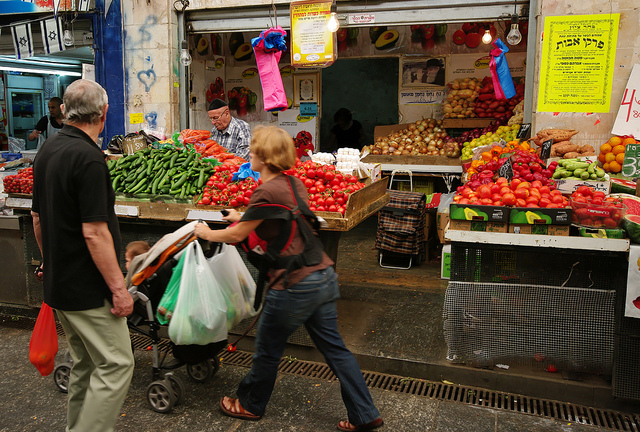
vegetable-market-israelAs temperatures continue to rise, can we expect to see more crop losses and higher market prices?

Any attentive Israeli who has bought extra supplies for their various holiday recipes may have noticed that produce prices are higher than usual. Those prices are likely to grow higher still. The recent heat wave that spread throughout the region literally burned Israel’s vegetable crops, resulting in massive waste that has forced farmers to raise prices to recover their loss.

Jordan’s Gray Wolves Are Hunted, Poisoned, and Run Over

11

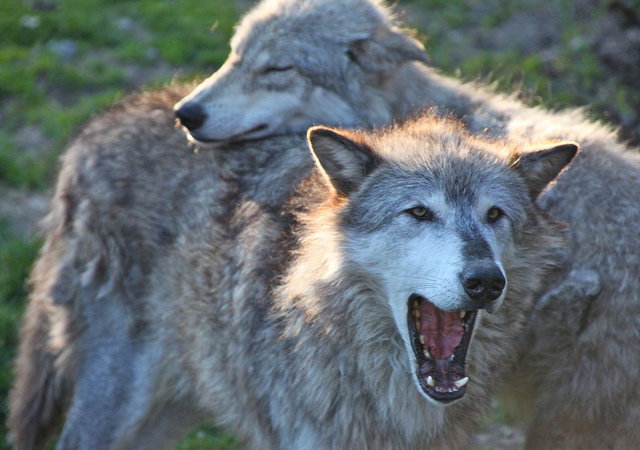
hunting-jordan-gray-wolvesHabitat destruction and other human factors threaten crucial gray wolf populations in Jordan

Jordan is a sliver of a country visible from Israel’s Dead Sea shore. It is also a sliver full of historical remnants, a whole lot of solar potential – albeit with an attendant water shortage – and up and coming conservation heroes. But there is at least one dark side to Jordan: a primordial fear of wolves. The situation is complicated; Bedouin herders protect against the creatures who prey on their livestock by poisoning them. Others run them over. And others still find satisfaction in hunting and killing them. Ignorance is creating an ecological balance that conservationists find difficult to counteract.

Thailand To Help Jordan Make Artificial Rain

0

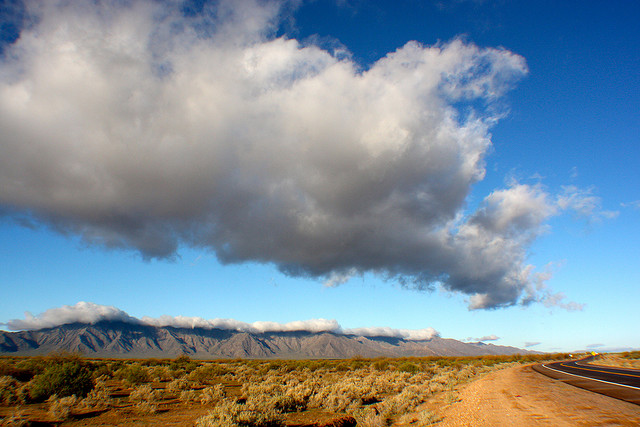
seed-clouds-for-rainIn order to mitigate the country’s devastating water shortages, Jordan seeks help from Thailand to create artificial rain.

Drought and floods are on different sides of the same coin, both equally devastating. Pakistan’s cries for help are being heard throughout the world while the rest of us, particularly in the Middle Eastern desert regions, are simply waiting for our turn. Yemen is close to being waterless. The Jordan River is close to dying altogether, and Jordan the country suffers one of the world’s worst water shortages. In the northern part of the country, the situation is getting serious. In the past, African cultures used to dance in order to open the skies, but Jordanian officials are studying Thai techniques that artificially stimulate clouds and make them produce rain.

5 Vegetarian Myths To Counter Die-Hard Carnivores

4

bunking-vegetarian-mythsLong-standing myths about the deficits of vegetarianism are herein debunked.

Good news! Going vegetarian won’t leave you with a protein deficiency or put you at risk for developing gout. We’re going to put those rumors to rest so that you can stop wondering and worrying and get started down the road to better health.

Myth 1: Vegetarians have trouble getting enough protein.

Nearly every food that we consume contains some protein. Healthy vegetarian sources of protein include eish balady (Egyptian local bread), oatmeal, falafel, tofu, mock meats, lentils, nuts, soya milk, leafy green vegetables and beans (eg, black beans, garbanzo beans and kidney beans).

Eating too much protein – especially animal protein – can put a strain on your kidneys and lead to kidney disease. A diet high in protein can also rob your body of calcium and increase your risk of developing osteoporosis.

Many people incorrectly believe that vegetarians have to combine certain foods at each meal in order to form “complete proteins”. But if you consume a balanced diet and eat a variety of grains, beans, vegetables, nuts and seeds, you’ll have no trouble getting all the protein your body needs.

Myth 2: Eating fish and other sea animals is good for you.

If you wouldn’t drink seawater, you shouldn’t eat sea animals. The flesh of some sea animals, such as crabs, calamari, tilapia and shrimp, has been found to be 9 million times more toxic than the water they live in.

The flesh of many sea animals is laden with polychlorinated biphenyls (PCBs), DDT and dioxin. Sea animals also ingest sewage, which contains dangerous bacteria such as E. coli. Serious and even fatal cases of food poisoning have resulted from E. coli contamination. Dangerous amounts of heavy metals and minerals – including cadmium, mercury, lead and chromium – have been found in the flesh of sea animals. The flesh of some sea animals even contains arsenic! Consuming these toxins can cause birth defects, various types of cancer and damage to the liver, kidneys and nervous system.

Although fish flesh does contain healthy omega-3 fatty acids, it’s much safer to obtain omega-3s from plant sources, such as walnuts, broccoli, cabbage, kale, soya milk, tofu, flaxseeds and flax oil.

Myth 3: Dairy products are a good source of calcium and are essential for bone health.

As healthy sources of calcium, dairy products can’t compare to tofu, beans, almonds, tahini, soya milk, seaweed, beans and grains. The calcium-absorption rate of milk is approximately 32 percent. Broccoli and other leafy green vegetables have calcium-absorption rates between 40 and 61 percent. When it comes to calcium, absorption is key!

A 12-year study of nearly 78,000 women found no evidence to support the claim that milk builds stronger bones. However, studies do show that the animal protein in dairy products actually increases the risk of developing osteoporosis!

Why does cow’s milk, which is supposed to be good for us, put so much stress on our bodies? Because it’s designed for baby cows! Humans are the only animals who consume milk from other species; no other species consumes any kind of milk past infancy. Dairy products are laden with cholesterol, saturated fat and an ever-increasing variety of pesticides and antibiotics. The consumption of dairy products has even been linked to heart disease, intestinal problems, obesity, diabetes and various types of cancer. It turns out that milk isn’t so good for us after all!

Myth 4: A vegetarian diet increases the risk of kidney stones and gout.

Gout, or metabolic arthritis, is the result of crystallized uric acid deposits in the joints and cartilage. The symptoms of gout include joint pain and stiffness. Scientists at the University of Bonn in Germany have found that eating a vegetarian diet can actually reduce the risk of gout. The study, published in the European Journal of Nutrition, compared the risk of uric acid crystallization for three different diets: a typical Western diet (ie, one containing excessive animal protein), a healthier omnivorous diet and a vegetarian diet. Study participants who consumed a vegetarian diet showed the lowest risk of uric acid crystallization – 93 per cent lower than the participants who consumed a typical Western diet.

A study conducted by scientists at the Center for Mineral Metabolism and Clinical Research in the US has proved that the rumor that a vegetarian diet causes kidney stones is also untrue. The study found that people who consumed a diet based on animal protein actually have a higher risk of developing certain types of kidney stones than those who consumed a diet based on vegetable protein – even when both groups consumed the same amount of protein. The scientists also noted that participants who consumed diets based on animal protein were at higher risk of developing osteoporosis.

Myth 5: Eating meat is the best way to get iron.

Nonsense! Iron is available in all kinds of foods – from beans to whole-wheat bread – and is particularly plentiful in breakfast cereals, oatmeal, nuts, peanut butter, seeds, molasses, mock meats, tofu and leafy green vegetables (such as spinach).

A study published in the American Journal of Clinical Nutrition found no significant difference between the anemia (ie, iron deficiency) rates of meat-eaters and vegetarians. A study conducted at Harvard University found that consuming the type of iron found in meat, eggs and dairy products can actually increase the risk of developing diabetes.

If you’re already a vegetarian, these myth-busting responses are great to keep in hand for the next time your die-hard meat-eater colleague is grilling you. If you haven’t gone vegetarian yet, quit making excuses – take a proactive step for your health and for animals by ditching meat and other animal-derived products! With so many options available these days, it’s easier than ever to switch to a vegetarian diet!

More Food and Health news:

Bee Stings Are Sweet in Israel: An Interview with a Beekeeper

RECIPE: Compote, A Cool Healthy Dessert For Summer

Complications of Coffee – A Habit Worth Kicking

Blackouts And Black Clouds: What’s Wrong With Egypt’s Environmental Policies?

0

whats-wrong-with-egyptian-policyBetter insulation and passive building techniques could go a long way to reducing energy demand

An outsider would think that Egypt is roiling is soot and rooting around in the dark as the annual black cloud season begins and blackouts continue to wrack the nation. And they would be close to correct. In order to back track its energy policy, at least, Egypt has announced plans to lift industrial energy subsidies and press forward with its renewable energy plan. But the people on the street aren’t willing to wait until 2019 for a decent energy supply. Armed with a bundle of scathing statistics, Yahia Shawkat goes to town on Egypt’s poor management.

Israel Cleantech Intelligence: Israeli Bees and 7 More Headlines

0

Bee-pollinating-flower Pollution off Israel’s coast, investments in water tech, a green future and more headlines related to Israeli cleantech and the environment.

During the week of September 1, 2010, water management tech company TaKaDu was named World Economic Forum Technology Pioneer 2011. The price of lithium batteries has plunged, which is good news for Better Place and the electric vehicle industry. And an Australian tree has helped save Israel’s bee population and ensure a sweet Jewish New Year. For these stories and more, see this week’s headlines below.

Take An Astro-Tour With Iranian Photographer Babak Tafreshi

0

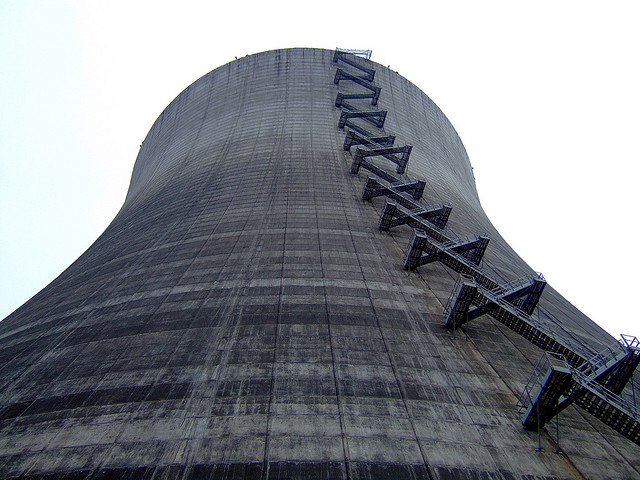
Science journalist Babak Tafreshi
Science journalist Babak Tafreshi creates night photography club.

While many people concern themselves with what gas fields “belong” to them, or who really has rights to the Nile River, Babak Tafreshi gazes at the night sky – a wholly more unified place. This perspective has led the young Science Journalist to reflect on the foolishness of divisive earthly institutions, because through his telescope the sky looks the same above every church, every mosque, and every temple.

This is not to belittle those institutions, but rather Mr. Tafreshi would want adherents of different faiths to maintain the overarching principle that we are all family on this one earth, even as they practice their unique daily rituals. In order to inspire such universal thoughtfulness, he founded The World At Night (TWAN), a collection of the most talented night-photographers’ work.

A volunteer organization founded in 2007, and named A Special Project of the International Year of Astronomy in 2009 by The United Nations Educational, Scientific, and Cultural Organization (UNESCO), TWAN collects and distributes night-time photography and time lapse videos.

These are then shared in photo exhibitions and seminars around the world, on their interactive web site, as well as those of Astronomers Without Borders (AWB) affiliates, and they have also produced a documentary film, a book of photographs, and a multimedia DVD of photography all entitled “The World At Night.”

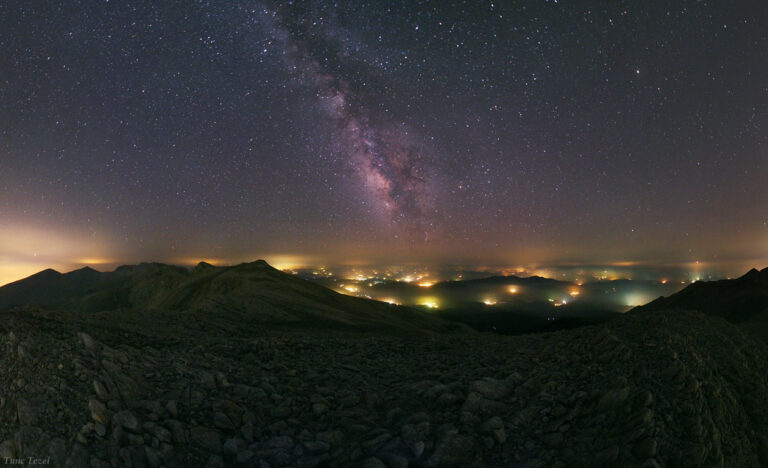
mt.-uludaq-at-nightProfessional night-photographer, Tunc Tezel, showcases this image of Mt. Uludaq in Turkey on “The World At Night”

Astro-tour

TWAN also conducts astro-tours in conjunction with AWB, a non-profit organization under which TWAN operates, to sites that are depicted in the photographic collection. These are led by TWAN project leaders and photographers.

The project’s philosophy is eloquently featured on their web site:

TWAN is a bridge between art, humanity, and science. The eternally peaceful sky looks the same above all the landmarks and symbols of different nations and regions, attesting to the truly unified nature of Earth as a planet rather than an amalgam of human-designated territories. Those involved in global programs learn to see humanity as a family living together on a single planet amidst the vast ocean of our Universe. This global perspective motivates us to work for a better, more peaceful planet for all the world’s inhabitants.

According to them, the earth as seen from space demonstrates a world separated into land and sea, rather than Israel and Palestine, Mexico and America, or India and Pakistan, and the night sky is likewise a vast ocean of space. No ownership. No divisions.

“The beauty of brilliant Venus might be seen in Texas just after it is seen by sky gazers in Tehran,” the founders write. The images really do evoke the kind of awe that levitates one out of the earthly realm of separateness, into a swirl of stars and suns, a swirl of togetherness.

BeBeirut Offers Eco-Friendly Tours in Lebanon’s Capital

0

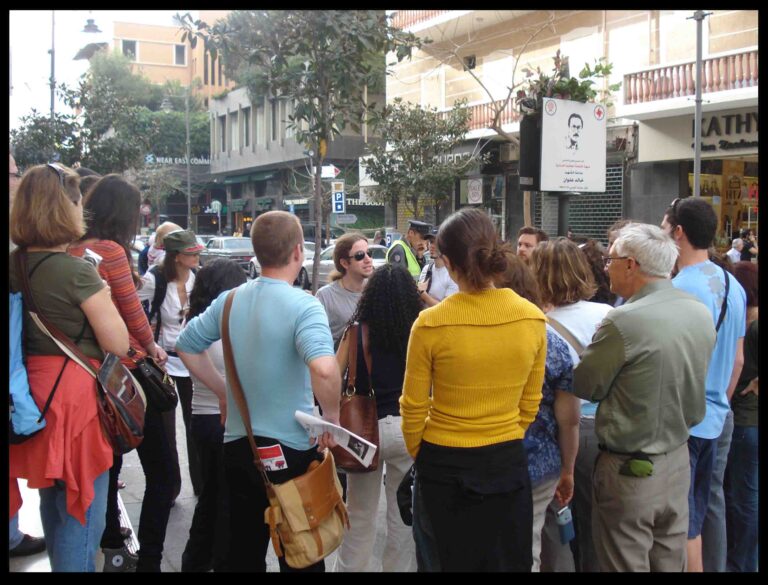
Enjoy a tour of Beirut the low carbon-emission way, with a walking or running tour.

Walking is the best way to get to know any city, whether it’s the city you live in or a city that you’re visiting as a tourist.  It’s also the most eco-friendly way.  The only energy you’re using is your own, and you don’t emit any harmful carbon.  For the independent tourers out there, grab a map and some sneakers and head out on your way.  But if you want some guidance – those of you living in or visiting Beirut – check out BeBeirut.

Green Student Life Using “10 Ways to Change the World in Your Twenties”

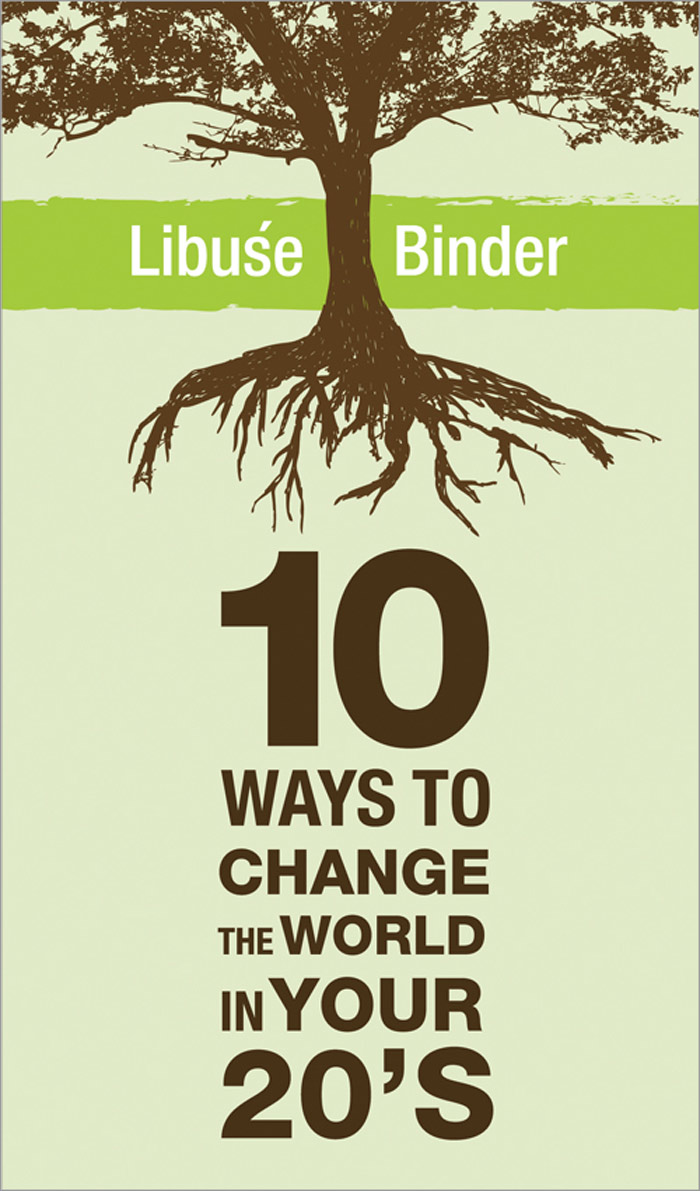
10 go green guides twentiesI am a fanatical ‘thrifter,’ an unstoppable charity shop consumer; the best bit about shopping in this way is that all the guilt of buying too many clothes is eradicated because they are second hand.

Instead of being a part of the disposable fashion industry, I am reusing loved clothes as well as donating my own. I am one of a growing breed of charitable, fashionable students without a guilty conscience.

Libuse Binder would be proud. Her book “10 ways to change the world in your twenties” is full of similar stories and messages, which ring true for me as a student who strives to be as eco aware as possible in everyday life. Binder focuses on how we can simply and practically change our habits and actions to benefit the wider world with bold heading, chunky boxes, and relevant logos.

This book, as Binder says, “is not limited to any age group.” However, the presentation of facts and suggestions  makes for easily digestible reading, a rare thing in the world of eco-literature and a bonus for any busy student.

Recipes for simanim (signs) for Rosh Hashanah’s symbolic foods

1

fish head for rosh hashannah rosh hashana simanimA play on words and a plea for blessings. Start the Jewish New Year with a variety of salads that symbolize things you desire.

Rosh Hashana’s symbolic foods represent things we ask to be granted in the coming year, the Jewish New Year. But they simply might represent words. Enjoy these easy-to-make symbolic salads and the puns that go with them on Rosh Hashanah.

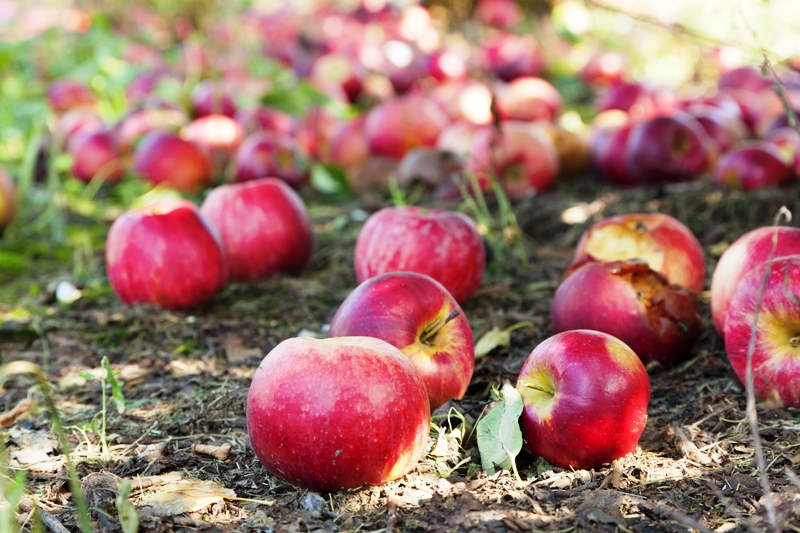
apples for rosh hashana or rosh hashannah, the simanim, or the signs for the Jewish New Year

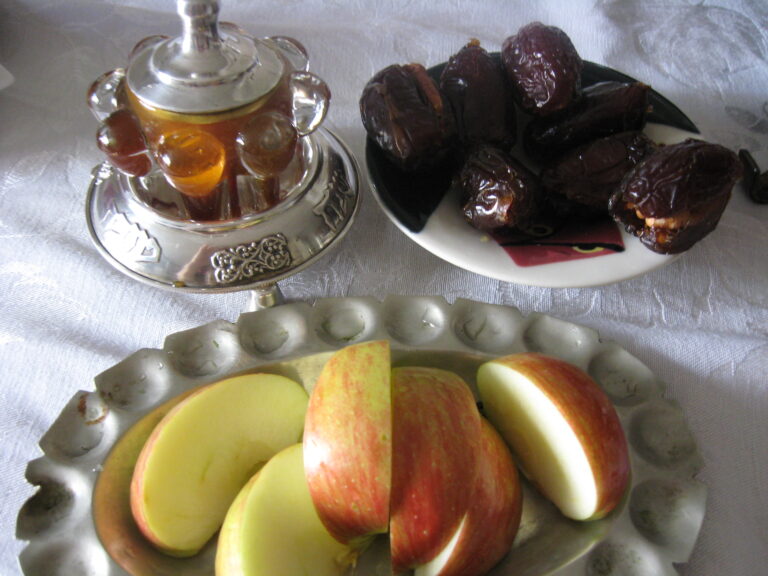
Apples dipped in honey are the classic first siman. They represent our wish that the coming year may be sweet.

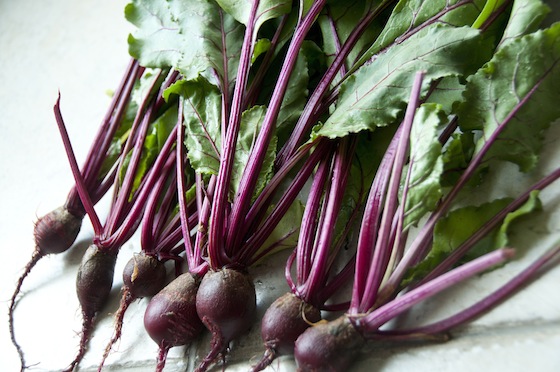
Beets are selek (in Hebrew), which reminds us of the word lesalek – to remove. “May our enemies be removed.”

beets for rosh hashana or rosh hashannah, the simanim, or the signs for the Jewish New Year

Make a beet salad with some thinly sliced onion, salt, pepper, a little cumin, olive oil, a little sugar, and vinegar. Just add seasonings and keep tasting and adjusting till you like it.

Black-eyed peas are rubiah – similar to yirbu – to increase.  “May our merits increase.”

Rather than serve them hot, make another salad of them, seasoning it with a little chopped onion and a handful of mixed, chopped cilantro, parsley, and celery tops. Add lots of fresh lemon juice to balance the earthy taste of the peas. Salt and pepper to taste.

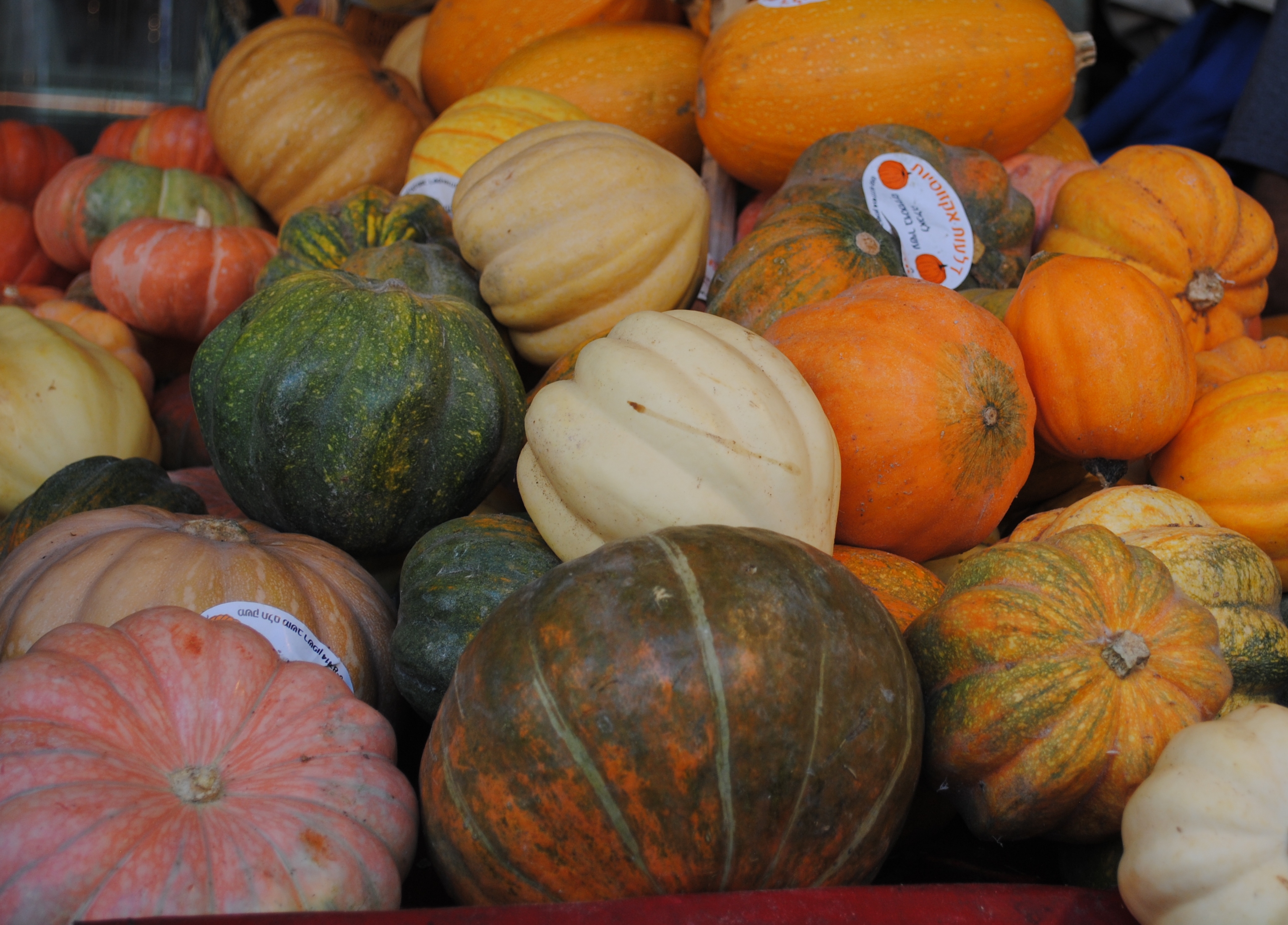
Pumpkin – in Hebrew k’ra. This is a homonym, in Hebrew, for both “tear apart” and “read.” “May any evil decree be torn up, and may our merits be read in Your presence.”

image-squashes or squash for rosh hashana or rosh hashannah, the simanim, or the signs for the Jewish New Year

This is a simple saute of onions, chopped tomatoes, and thin slices of pumpkin in olive oil. Add a handful of your favorite fresh herbs: cilantro, parsley, a little sage, thyme.  For body, splash in a dollop of white wine or two tablespoons of good soup. Give it all a good stir and it’s ready.

Leeks, in Aramaic karsi, are associated with the Hebrew word karas – to cut down – “May our enemies be cut down.”

Slice the whites of slender, fresh leeks and stir-fry them in olive oil. Add lemon juice, salt and pepper, and serve cold.

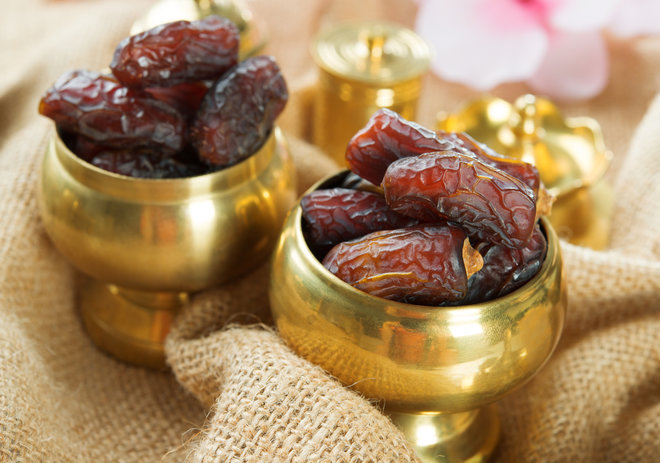
Dates, tamarim, sound like the word sheyitamuconsumed. We wish for those intending evil to be consumed.

freshly dried dates for rosh hashana or rosh hashannah, the simanim, or the signs for the Jewish New Year

Stuff pitted dates with pecans or walnuts, and serve.

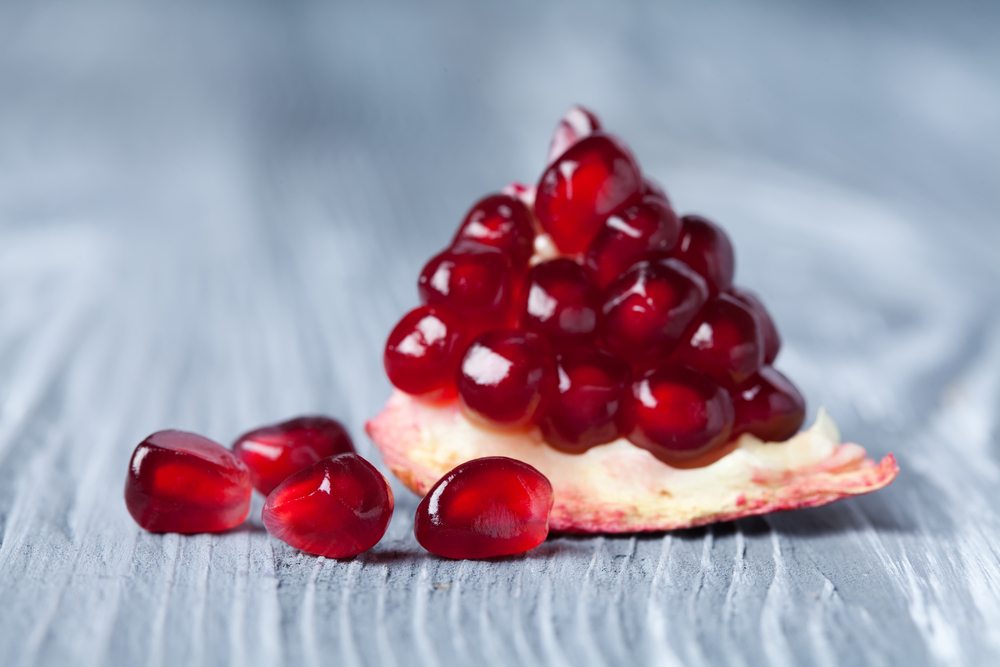
Pomegranates are said to contain 613 seeds each: the number of the mitzvot given to the Jewish people. We eat pomegranate seeds in hopes of fulfilling all our mitzvot in the coming year.

how to open a pomegranate for rosh hashana or rosh hashannah, the simanim, or the signs for the Jewish New Year

An easy way to get the seeds without splashing yourself scarlet from the juice is to submerge the fruit in a deep bowl full of water. Cut and de-seed the pomegranate while it’s in the water. Remove the seeds with a slotted spoon to a bowl for serving.

Carrotsgezer in Hebrew, sounds like g’zar – decree. May we be granted a good decree for the coming year.

carrot salad for rosh hashana or rosh hashannah, the simanim, or the signs for the Jewish New Year

An ever-popular carrot salad: finely grate 1 medium carrot per person; add the juice of an orange and a handful of white raisins.

The Head of a Fish symbolizes our wish to be “as the head, and not as the tail” in the world.

Prada-fish-leather-fashion fish heads for rosh hashana or rosh hashannah, the simanim, or the signs for the Jewish New Year

Lay a fresh, cleaned fish (making sure it’s local and chemical-free) in oiled baking paper. Stuff it with 1/4 cup breadcrumbs, salt and pepper, 1/4 cup chopped onions, and a handful of parsley/cilantro/mixture of thyme and rosemary as you like. Salt and pepper it, shake ground cumin and paprika over it, and drizzle olive oil over all. Bake for 20 minutes – 1/2 hour at 350 F 180 C, or until the flesh comes away from a probing knife in white flakes.

Or try this recipe for Moroccan Fish Stew. Enjoy the fish – save the head for the siman!

How to say the request. Before the first bite of each siman, say the following formula, ending the sentence according to the symbolism attached to each one.

“May it be Your will, our G-d, and G-d of our fathers,  that (apples with honey) we have a sweet new year…(beets) that our enemies be removed…(black-eyed peas) that our merits increase…(pumpkin) that any evil decree be torn up, and may our merits be read in Your presence…(leeks) that our enemies be cut down…(dates) that those intending evil be consumed…(pomegranates) that we fulfill the mitzvot…that we be granted a good decree for this year…(fish head) that we may be as the head and not as the tail!”

…And…Does anyone actually ever eat the head of the fish? Depending on the size of the fish, there’s actually a nice amount of flesh in the cheeks. But many families simply display the head and eat the rest.

More festive recipes on Green Prophet:
Rosh HaShanah Honey Cake
Golden Roasted Potato Wedges
Fresh Figs with Arak and Cream


Go Green and Go Offline For Green Yom Kippur

0

uncross-your-wires-yom-kippurDoes  your relationship with technology give you feelings of impatience and narcissism? Go offline.

Along with numerous other bloggers, we have argued that a culture of doing and spending creates an impetus to do and spend more than the earth can provide. What happened to the simplicity of art to ease our earthly cares? Or simple earth-based architecture that celebrates and enhances its natural surroundings?

The Industrial Revolution happened, and more recently, an explosion of technology without which people believe they simply can not live. Certainly some technology makes life easier – like these solar stoves used in Darfur – but how often does your boss need to contact you on your shiny new iphone while you’re supposed to be having dinner with your friends or family?