Home Blog Page 608

Morocco To Stave Off Desertification With New Environmental Charter

0

moroccos-environmental-charter-firstThe first Arab country to create one, Morocco’s new charter provides a blueprint for environmental protection and sustainable energy production.

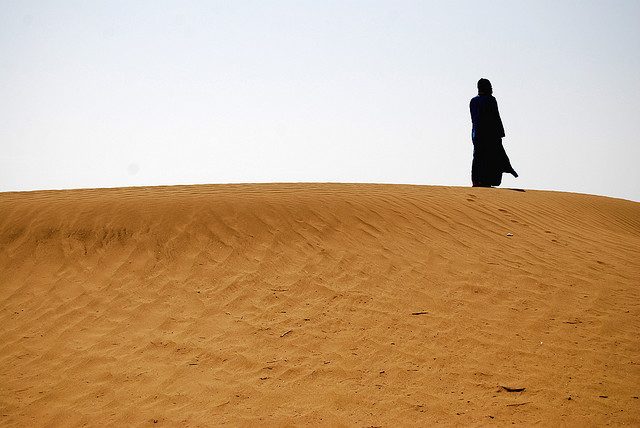
In a first for the Arab world, the Moroccan government announced a National Charter for Environment and Sustainable Development, becoming the first African country to launch any such ambitions. It is part of the country’s push to lead the Arab and African nations in their effort to become more energy independent via alternative energy sources, including wind, solar and biogas.

King Mohamed VI announced the charter during the country’s celebrations of Earth Day last April 22 – it was the first such celebrations on the African continent – and hopes that the country will continue to move forward on its promises to garner nearly half of its energy from alternative sources by 2020.

Don’t Eat Your Etrog Unless You Know It’s Organic

3

image-etrog-citron sukkoth

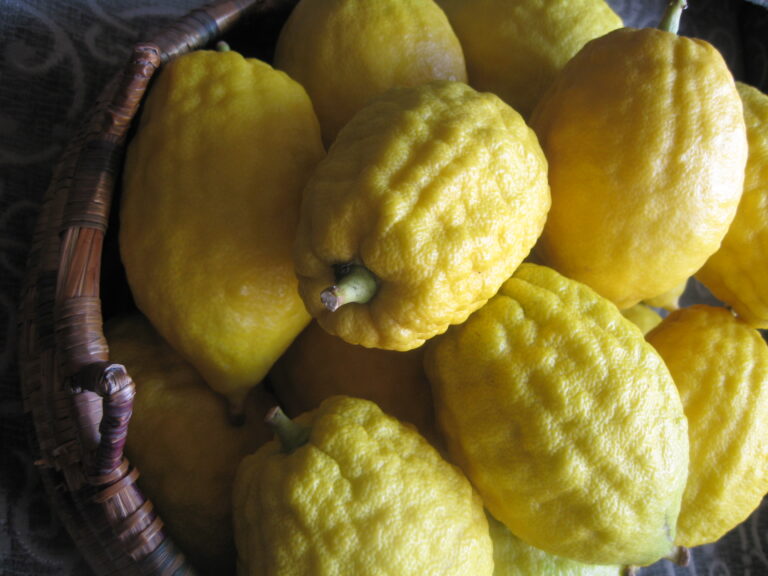
Are you sure you want to cook etrog jam this year? Make sure it’s organic, first.

In my parent’s old-fashioned cookbooks are recipes based on the beautiful, fragrant etrog (citron): etrog jam, etrog cake and cookies, even an etrog souffle. As tempting as it is to make jam out of the attractive yellow fruit after Sukkot, refrain. Non-organic etrogim are so full of pesticides that they are a danger to human health.  (If you are sure your etrog is safe, here is our etrog jam recipe.)

Citron is a fragile crop. Farmers we spoke to said that the fruit will spoil even if one rubs against another on the branch, so the very best are chosen and the rest are culled. And they’re particularly vulnerable to insect infestation. In order for an etrog to be kosher for the Sukkot holiday, it must be blemish-free, so farmers are obliged to protect their scanty crop with lots and lots of pesticide. This is legal because the etrog isn’t considered a food crop.

So what can we do with our etrog after the holiday? We love etrogim, and always run out to buy a sackful of unsold extras right after the holiday. We arrange them in a basket and keep them on the coffee table: see photo above. Their exquisite perfume drifts through the room and lasts for many days.

Make an old-fashioned pomander out of your etrog. The best-known way to preserve an etrog is to stud it with whole cloves. You must poke small holes all over the etrog with a sharp, pointed object like a thick, heavy needle, then push the cloves into the holes. The etrog will shrink in and dry out. It will lose its characteristic fragrance and smell of the cloves. Many people like to use a clove-etrog for the Havdalah ceremony after Shabbat.

Chag Sukkot Sameach!

More on Sukkot from Green Prophet:
Make Your Own Ricotta on Sukkot“Ye Shall Live in Booths” and Be With Nature on Sukkot

Where Have All The Iranian Leopards Gone?

0

persian-leopards-conservationPersian Leopards are hurtling towards extinction. While creating promotional mugs and Ts can raise awareness about biodiversity in general, The Iranian Cheetah Society takes on the leopard for measurable results.

High vehicle fatality rates and rubbish in the national parks is not all that threatens Iran. That country stands to lose the remaining populations of majestic Persian leopards if conservation efforts are not put in place to mitigate the various factors that threaten them.

In addition to habitat destruction, and indeed possibly because of habitat destruction, leopards that prey on livestock are killed by farmers. Like Jordan’s Gray Wolves, leopards are also hunted. According to the Persian calendar, 2010 is the Year of the Leopard, and thus as good a year as any to install various programs that will help to protect those that continue to roam Iran’s mountains.

New Design Approved For Jerusalem’s Giant Glass Museum Of Tolerance

0

museum-of-tolerance jerusalem
The glassy new plans for the Museum of Tolerance reflect badly on the nearby environment.

During the festival of Sukkot, Jews worldwide are camping out in their organic Sukkahs, touching the earth, reconnecting. Karin wrote about sustainable booths all over Jerusalem, while another, snazzier Sukkah is currently being displayed on Manhattan’s Union Square.

Contrasted with these structures steeped in tradition, the new, cheaper plans for the Museum Of Tolerance in Jerusalem seem glaringly unwholesome. The back end of the six-storey will be covered in glass from “top to bottom” according to the LA Times, though some architects suggest glass is among the least efficient building materials to use in the Middle East, and caused controversy in the past since it is being built on the site of a former Muslim cemetery.

Bicycle Manufacturers Adjust to a Larger and Heavier Client Base with Super Sized Cycles

0

plus-size-bikesEveryone should be able to engage in eco-friendly forms of transportation, like cycling, and now with super-sized bikes they can.

Cycling has been gaining popularity in Israel and other areas of the Middle East over recent years, which is great for the environment, great for reducing vehicle congestion in cities, frugal, and healthy.  But unfortunately, this trend is accompanied by another societal change – an increase in child and adult obesity. And therein lies the rub. Because since overweight people could, arguably, benefit the most from healthy forms of exercise such as cycling, they often have a hard time finding bikes that can comfortably support them.

Researchers Get Potatoes Off The Couch And Powered Up

1
potato-power-developing-world
Cheap, and widely available in most countries of the world all year round, potatoes make an ideal source of power.

Potatoes offer more than just a valuable source of nutrition, now they can also power your lights and computers, say Israeli researchers. The scientists from Hebrew University of Jerusalem (HUJ) have discovered that potatoes can be used as organic batteries, providing a cheap, immediate and easy to use source of green power to parts of the world that currently lack electrical infrastructure.

Some Reasons You Should Make Time for Breakfast

0

Israeli-breakfast-choices
The great breakfast spread; it not only looks fantastic, but it is also a healthy way to start your day.

Waking in the morning and rushing out the door to make it to work on time is a daily hassle for many people, therefore breakfast seems to be another thing on the to-do-list for which there is no time. In the Middle East the traditional breakfast involves cheeses, olives, and salads, however many people find themselves skipping all this, reaching for the coffee mug instead, and heading out the door.

Great Examples Of ‘Hima’ Or Protected Areas In The Middle East

0

hima-middle-east-islamThough the practice of establishing Himas to protect nature had previously declined, the Middle East is currently witnessing a resurgence of this ancient tradition.
Now that Green Prophet has looked into the tradition of ‘Hima’ or environmental preservation in the Middle East, this post will explore some of the most famous examples of Hima and how they helped create sustainable societies.

As the birthplace of the Hima, the Arabian Peninsula is home to some of the most noted examples of Himas. The two most widely recognised examples are those established by the Prophet Muhammed [pbuh] in Mecca and Medina within Saudi Arabia. These were based on the meaning of Hima under Islamic law, which required that they be declared for the good of the wider community and not for the benefit of private individuals.

Tinkering With Nature: World’s Largest Lagoon Planned For The Red Sea

0

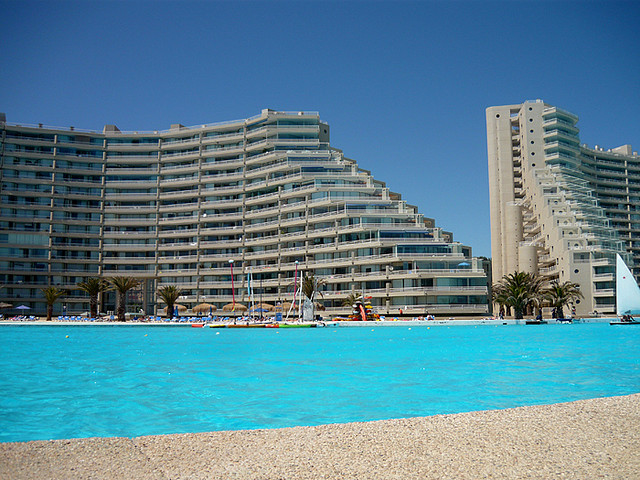
san-alfonso-artificial-lagoonIs this a mirage, or does Chilean Fernando Fischmann really intend to build the world’s largest artificial lagoon on the already ecologically-sensitive Red Sea?

In Egypt there will be more artificial fun for rich men and women while the poor can’t even trust that their tap water is safe, that their waste will be disposed of safely, or that they will be able to cook their dinner if the power cuts out. While everyone should be able to enjoy a nice dip in the sea, there is folly in tinkering with nature. Especially when we’re talking about the Red Sea, which has already suffered devastating losses to its coral reef as a result of development, tourism, oil spills, and other human activity.

The Tomato Has 790 Names! Scientists Have Culled A Few

0

kew-botanical-gardensScientists have discovered 600,000 redundancies in the Dictionary of Life, and have so far scaled flower plants species from one million to just 301,000.

How many names do you have? Three, four, five? Scientists have discovered that not only do tomatoes have 790 names – what name do we give to Israel’s shriveled tomatoes? – but Oak trees and their relatives have 600. In fact, of the nearly one million flowering plants on record, at least 600,000 are duplicates. From an organizational point of view, this is an absolute nightmare. Like the cook who needs order in the kitchen, scientists need their names to be orderly too. A new study conducted in West London (with cooperation from throughout the world) will ensure more accurate access to information about species that are important economic sources as food.

Nano ‘Stars of David’ Offer Promise of Using Sunlight to Make ‘Green’ Fuel

0

Nanoparticle developed at Hebrew University

This nanoparticle, 10,000 times smaller than the width of a human hair, could star in clean energy applications.

Researchers at Hebrew University of Jerusalem have created an artificial nanoparticle that looks like a six-pointed Star of David and offers potential for environmental applications, including use as photocatalysts for separating hydrogen from water to create clean fuel.

No More Gas Exploration in Israel?

3

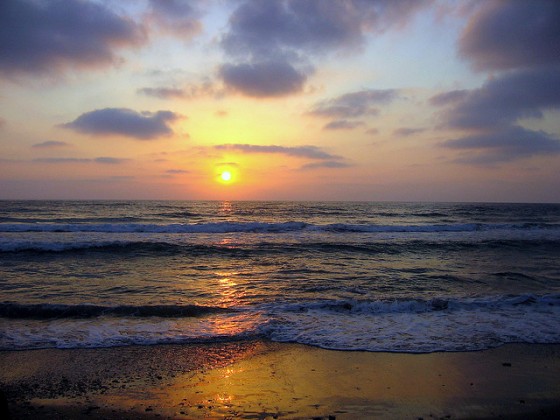
Gas-Oil-ExplorationWill the sea outside Israel be calm again?

Hopes and dreams of a gas bonanza in Israel came to a sudden halt as shares came tumbling down after the Israeli Ministry of National Infrastructure under Minster Uzi Landau decided to cancel any further sale of oil and gas exploration rights, the Israeli business daily Globes reported.

Beauty Increases Sustainability, According to Designer Gadi Amit

0

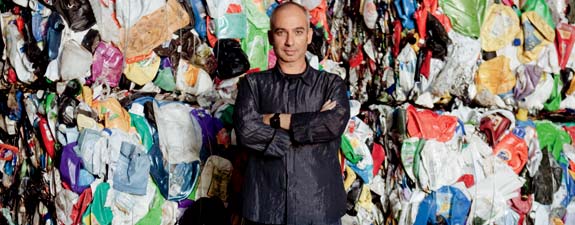
beauty-sustainability-gadi-amitSustainable design is about more than energy efficiency and recyclable parts, says Gadi Amit.  Beauty is no less important.

When we think about sustainable design, there are some key concepts that come to mind: cradle-to-cradle (or the idea that all materials put into a product can be recycled for use in another), the use of sustainable, recycled, or upcycled materials, and energy efficiency. But among all these new green ideas and buzz words floating around, one of the most fundamental design concepts has been pushed aside: beauty. And that, according to Israeli-born industrial designer Gadi Amit (the person responsible for the design of the Better Place charge spots), is a really big mistake.

Are Bedouins Cutting Down Trees As A Form of Political Protest?

7

chopped trees bedouin beduin
The Mayor of Omer insists that Bedouins are behind the felling of thousands of trees on disputed lands.

Every so often we are put in the unfortunate position of having to weigh our environmental concerns against socio-political issues. A while ago, we wrote about Palestinian architect Omar Yousef whose philosophy and style are based on necessity borne out of injustice. And frequently, innocent bystanders suffer most from war, such as these innovators who eventually lost their creative designs as a result of  oppressive decisions from their leaders.

This recent story from the Jerusalem Post similarly creates conflict for us; we at Green Prophet are the ultimate tree-lovers: trees are carbon sinks, they provide shade, nutrition, and spiritual sustenance. It’s hard to quantify the many benefits of trees. As such, the loss of thousands of Mesquite, Acacia, and Eucalyptus trees in Israel’s Negev Desert is a serious blow for everyone. But it is also an interesting tool of protest for the Bedouins who are suspected of killing them.

Saudi Aramco’s 80-Year Reserves vs. German “Peak Oil”

0

Saudi Aramco peak oil
Saudi Aramco claims to have an 80-yr steady supply of oil or more, while a German thinktank predicts that “peak oil” is imminent.

Despite Bill McKibben’s pleas to reduce the amount of carbon in our atmosphere to 350 parts per million, or face serious consequences, and despite the myriad innovations worldwide aimed at shrinking our dependence on fossil fuels, Saudi Aramco’s President and CEO insists that not only are fossil-fuels here to stay, but he intends to increase production. Khalid A. Al Falih claims lifestyle changes coupled with population surges will ensure an increase of the world’s energy needs of nearly 40% by 2030. However, a separate report leaked from one of their military thinktanks reveals that the Germans are preparing themselves for “peak oil,” and a resulting cascade of dramatic world changes.