Home Blog Page 600

Quinoa Tabouleh Salad recipe

2

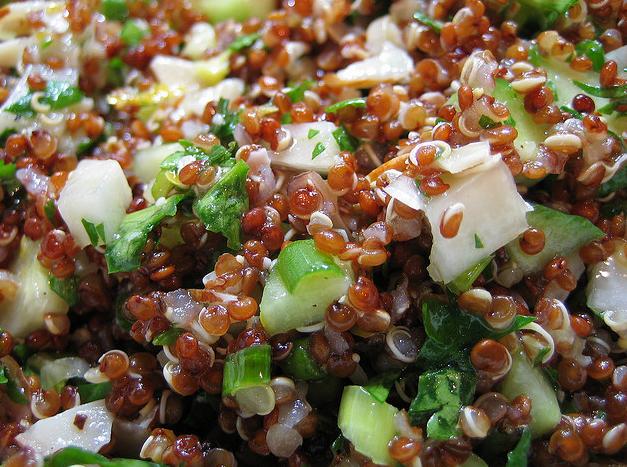
image-quinoa-tabboulehTry a new twist on traditional tabbouleh, with quinoa instead of bulgur.

Tabbouleh or tabouleh is a standard part of mezze – the array of small, piquant dishes set down on the table before a serious meal in the Middle East. Traditionally made with bulgur wheat, tabbouleh is really a cold salad packed with herbs and vegetables. But we’ve found that for a change, or to boost nutrition, quinoa, an “ancient new grain” like freekah, makes a very good substitute for bulgur. Try this modern variation on a traditional Middle-Eastern dish.

Quinoa Tabbouleh

4 generous servings

Ingredients:

1 cup quinoa, rinsed twice and drained

1- 1/2 cups boiling water

1 teaspoon olive oil for cooking the quinoa

1 teaspoon salt

1/4 cup olive oil for the dressing

1/4 cup lemon juice

3 ripe tomatoes, chopped finely

1  cucumber, diced

3 scallions, chopped finely

1 raw carrot, coarsely grated

1 cup  parsley, chopped finely

1 /4 cup fresh mint leaves, chopped finely

1/2 cup feta cheese chopped into small cubes

Method:

1. Put the quinoa in a medium-sized saucepan. Add the teaspoon of olive oil, salt,  and the boiling water. Stir, then cover.

2. Steam the quinoa over a low flame for 15 minutes. Allow it to rest, covered, another 5. Before removing it from the pan, fluff it up with a fork.

3. Combine the 1/4 cup olive oil, lemon juice, and all the vegetables and herbs in a bowl. Mix the cooled quinoa in. Stir the feta cubes in. Taste the salad and add salt if needed.

4. Cover the tabbouleh and refrigerate it for at least 2 hours to overnight, to allow the flavors to marry.

Drizzle tehina over each serving, and enjoy!

Discover more Middle-Eastern recipes with Green Prophet:
10 Hyper-Miling Techniques for Greener Driving

4

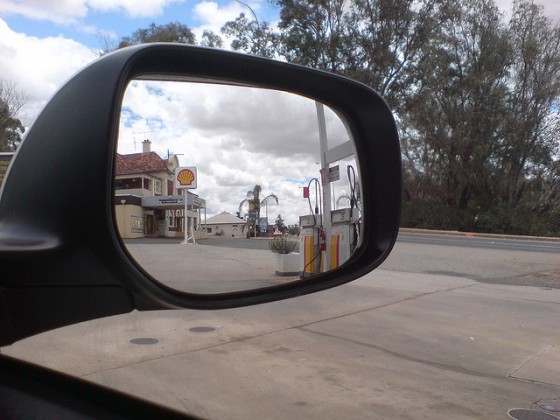
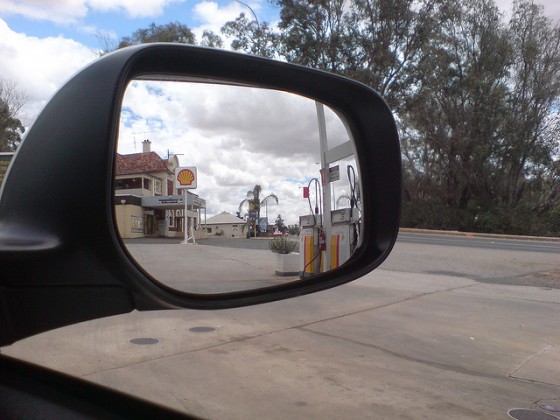
View of petrol station in car side mirror
Your mileage can vary —with driving techniques that save fuel.

Here at Green Prophet, we’re in favor of increasing “green” mass transportation and reducing dependence on private vehicles. But people who need to drive fuel-based vehicles, whether for work or emergencies, can use “hypermiling” techniques to save gas. There have even been contests to get maximum fuel efficiency, sometimes double the kilometers per liter advertised by the car manufacturer. Using less fuel means less pollution, less drilling and a greener planet.

Here are ten simple hyper-miling techniques to get you started:

Gulf Countries Are Picking From Sudan’s Breadbasket

1

sudan bread pita

With insufficient arable land of their own, Arab countries are farming in Sudan to secure their food future.

Early last year Karin reported on a troubling trend – a neo-colonial land grab occurring in Africa: Britain, Sweden, Germany, and South Korea have all usurped fertile African land in order to develop various agricultural pursuits. Then Gulf countries entered the fray since the combination of their own non-arable land and dependence on Western countries for food signaled a potentially insecure future.

That trend now appears to be escalating. Egypt is taking advantage of its Arab ties with Southern Sudan and has signed agreements to allow private companies to grow food to feed its burgeoning population, while the United Arab Emirates controls more farm acreage in Sudan than they have in their own country.

“Earth Day Network” President Kathleen Rogers Defines “The New Environmentalist”

0

kathleen-rogers-earth-dayKathleen Rogers and the world wide web have revolutionized citizen environmental activism.

Since 1970, Earth Day has pivoted grassroots environmental activism in a powerful way, uniting the global community with global concerns.

Numerous other campaigns have also emerged, providing untold opportunities for ordinary citizens to voice their insistence on a cleaner, safer, and saner future.

And while these campaigns appear to “just happen,” it is important to acknowledge the extraordinary people shepherding the flock.

We interviewed Kathleen Rogers, President of Earth Day Network, who has worked as an environmental attorney for 20 years. She has been the Chief Wildlife Counsel for the National Audubon Society, the Environmental Representative on the United States Delegation-Free Trade Area of the Americas (FTAA), and brought the first citizen complaint before the Commission for Environmental Cooperation. Though her accolades are endless, she talks with us about the Earth Day Network, where she is helping to define the “new Environmentalist.”   

First Transit Implements GreenRoad Technology

0

Hod Fleishman, GreenRoad Founder

GreenRoad’s founder and Chief of Safety Hod Fleishman is leaving the company. Is Google his next destination?

Fresh off making the “Global Cleantech 100″ Guardian List, Israel’s GreenRoad announced this week that First Transit, the operator of San Diego’s North County Transit District (NCTD), has implemented GreenRoad’s GreenRoad 360™ solution in its fleet of buses.

GreenRoad 360™, a software solution, combines real-time automated driver coaching with Web-based applications that continuously rate driving skills and behavior with the goal of creating more fuel-efficient and safer drivers.

Beirut’s Souk el Tayeb Farmer’s Market Celebrates Healthy Local Food Traditions

0

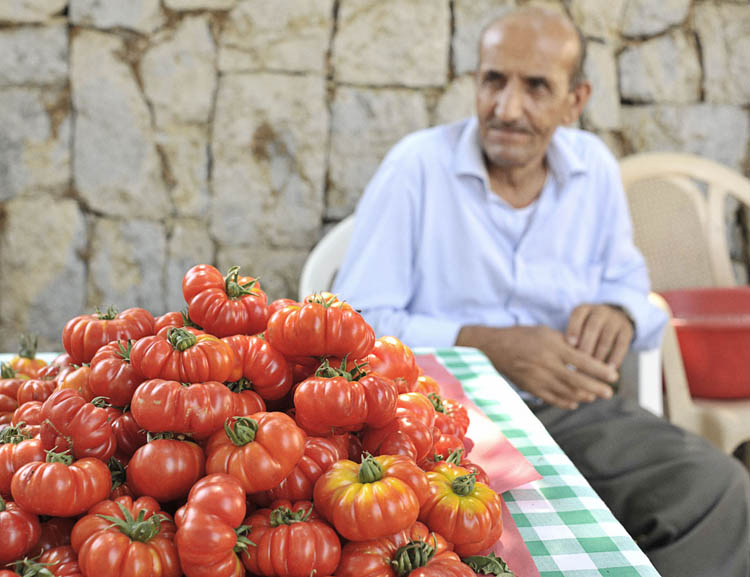
Beirut's Souk el Tayeb Farmer's MarketWhat good is a farmer’s market if it only appeals to a small group of people?  Beirut’s Souk el Tayeb reaches out to the community.

Whereas some farmer’s markets can set an elitist tone – appealing mostly to a yuppy or wealthy clientele instead of delighting in bringing good food and good values to the masses – this does not seem to be the case for Beirut’s first farmer’s market, Souk el Tayeb.  Started in 2004 by Lebanese celebrity chef Kamal Mouzawak, the market encourages organic farming practices but does not limit its offerings to strictly organic food.  As part of its approach to reach out to a greater number of people regarding healthy and eco-friendly eating practices, the market also focuses on small-scale local farmers and local community development initiatives.

An Unwelcome Colony? Ring-necked Parakeets Threaten Biodiversity in Jerusalem

2

parakeetA “beautiful nuisance” infiltrates Jerusalem’s German colony.

On a recent walk through the German Colony, I was treated to a stunning sight. Filling a tree with their flapping green wings was a flock of eight parakeets, calling raucously to each other and pecking at fat red berries with gusto.

Residents of the German Colony (in Jerusalem) are apparently inured to this experience, as sightings of the gorgeous birds – officially named ring-necked parakeets – have become increasingly common in recent years. People like to theorize about the birds’ origins, speculating that they are all the progeny of an intrepid pair of escaped pets, years ago. Or that they were imported to Israel to be sold and were accidentally released into the wild. The outcome is, of course, the same: A species of bird that was once alien to the region is now right at home in the holy city, squawking and snacking on local plants like it owns the place.

94% of Americans Want Solar Energy. What About Israel?

0

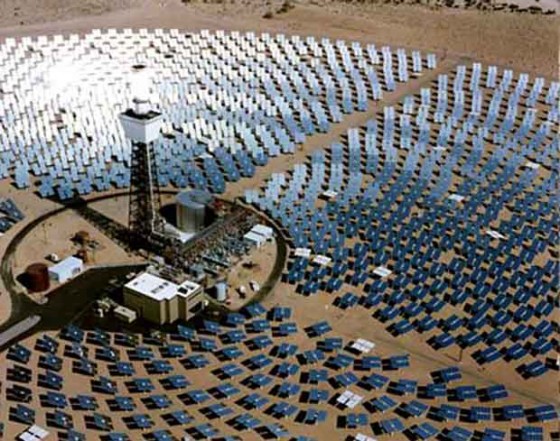
Israeli innovated BrightSource gets US Presidential nod to electrify the California desert.

More than 94% of all Americans, or more than 9 out of 10 want solar energy over conventional power sources, according to a recent survey conducted by the 2010 Schott Solar Barometer Survey. This represents a 2% increase over the 2009 survey in which 92% of those American’s surveyed expressed their wish for more emphasis on solar energy. The survey also noted that 49% of those questioned said that they would be willing to pay more for solar energy, and 51% said they would be interested in obtaining jobs in the solar energy industry.

Beirut’s “A New Earth” Provides Lebanese Urbanites a Place to Shop for Eco-Products

0

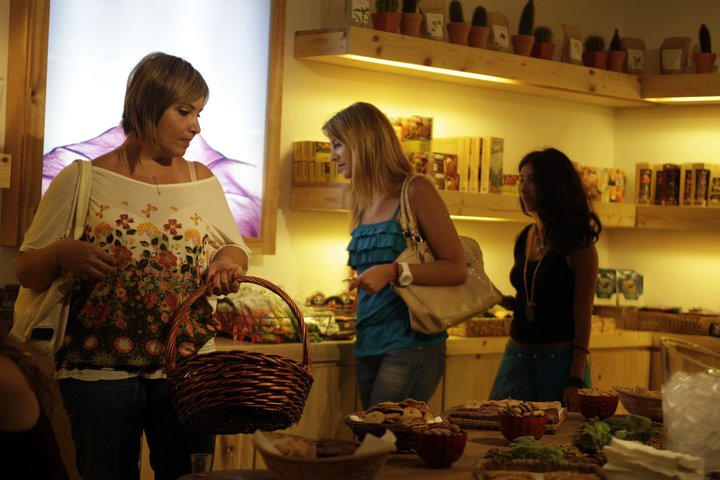
Eco-friendly products AND vegan shwarma can be found at Beirut’s A New Earth.

Sometimes, despite all our good intentions towards living a greener, healthier lifestyle, it’s just not convenient.  Sadly, most mainstream supermarkets don’t carry a variety of organic produce (if they carry it at all), and natural products may be few and far between.  The search for them alone can cause you to give up.  But when a store conveniently gathers all the eco-friendly foods and products for you in one location?  Well, that’s good news.

Abu Dhabi Builds Giant Lightbulb For “Turn It Off” Campaign

2

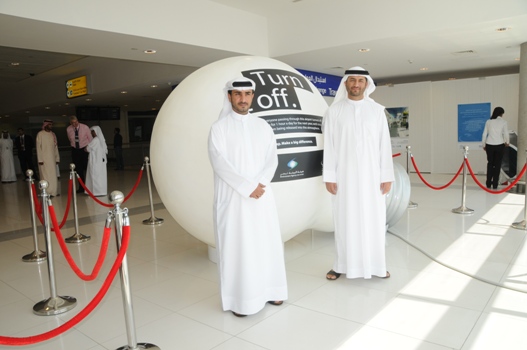
turn-it-off-campaign
Giant lightbulb installation in Abu Dhabi International Airport forms part of a campaign to reduce energy and water waste.

How do we best effect change is a question that environmentalists, marketers, and social activists are constantly addressing. In the UAE, one man hopes to stop reckless driving through a campaign that combines emotion and logic, the “Green Sheikh” believes that it is necessary to reach Middle Eastern men, whose responsibility it is to lead by example, while Lebanese bloggers are creating change by circumventing mainstream media.

In Abu Dhabi, the government has chosen the airport as the perfect location to reach the greatest number of people. And their props demonstrate just how desperate they are to change the attitude of this carbon and water guzzling Emirate.

The Mythical Mermaid, the Dugong, Under Severe Threat

0

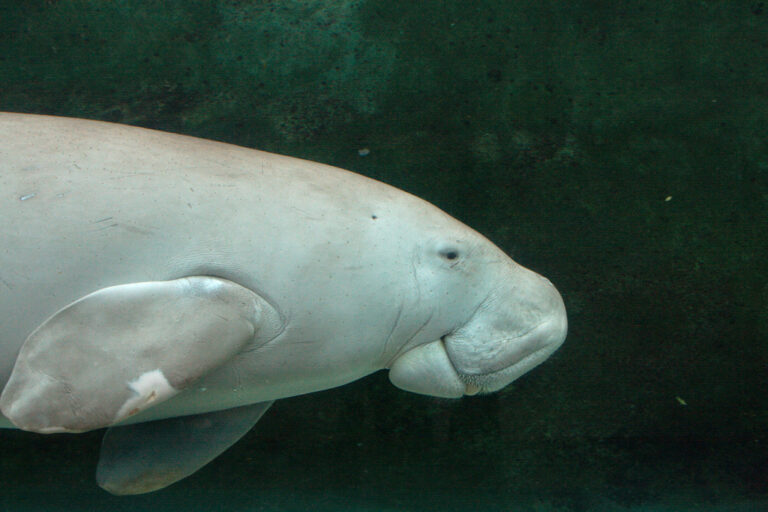
Little is known about them in the west, but the world’s only vegetarian mammal in marine waters is under serious threat in the Middle East.

Dugongs, or sea cows, believed to be the source of mermaid legends, are threatened with extinction within 40 years, and an arsenal of measures, from replacing fishing nets that trap them to setting up marine reserves, are vital for their survival, a United Nations-backed forum has warned. “Man-made threats pose the greatest risk to the gentle sea cow,” the UN Environment Programme (UNEP) said, summing up a meeting this week in Abu Dhabi, United Arab Emirates. The dugong is the world’s only herbivorous mammal living in marine waters.

Egypt To Grab Sudanese Land To Meet Its Wheat Needs

2

suez canal farm egyptLacking sufficient water to grow enough wheat for its burgeoning population, Egypt (above pic of Suez Canal farm) looks to other Nile Basin countries for land and water.
During the heat of this year’s scorching summer, Russia’s wheat supply took a serious hit and the country scaled back its exports. One of their main wheat importers, Egypt lacks the water to provide what is a staple for its 80 million strong population. As the population inflates and water becomes even more scarce, Egypt hopes to make its wheat supply more self-sufficient.

After recently signing an agreement with Sudan to allow private Egyptian companies to grow various cereals there, the Egyptian authorities began eyeballing other Nile basin countries as potential sources of land and water for their agricultural pursuits. Meanwhile, fifty percent of the population living within the Nile basin live below the poverty line of $1 per day. Private Egyptian companies will grow food in the Al-Gezira Region south of Khartoum, while the Egyptian government’s role is limited to technical support, according to IRIN news.

The deal signed between Egypt and Sudan in September is part of what IRIN (the United Nations news source) calls “the land-grab phenomenon” that began to take shape in 2008 (and Green Prophet’s editor Karin wrote about it here – Africa Up For Sale?). This refers to various foreign countries that are cultivating crops in African countries to support their own populations.

Dead Poisoned Fish Found in Red Sea

0

Green Prophet has closely followed the undersea disasters unfolding in the region such as the Red Sea oil spill, the impact of noise pollution as well as the absence of life forms in Lebanon’s seas.

Now, lab tests have confirmed that dead fish discovered in Jordan’s Gulf of Aqaba this September were in fact poisoned by chemical substances. In early September, teams from the Royal Marine Conservation Society of Jordan (JREDS) discovered several dead fish floating in the Gulf of Aqaba. Samples were collected to identify cause of death and these indicated that chemical substances dumped in the gulf had proved fatal to the fish.

Earthmisting Irrigation May be Plausible Solution to Middle East Agriculture

2

earthmisterIf it works as claimed, the Earthmister will go a long way toward greening the deserts.

In the water scarce Middle East, a new type of crop irrigation device may prove to be a boon to growing crops. Called the “Earthmister” this system is said to use up to 80% less water than conventional irrigation methods while increasing the yields of plantings by as much as 150%.  Based on patented technology, this subsurface system delivers the water directly to the root zone of the plant; completely eliminating evaporation, runoff, and the associated plant diseases associated with surface irrigation. Additionally the system provides essential aeration to the roots at each cycle.

8 Israeli Companies Make “Global Cleantech 100” Guardian List

0

tigo energy
It’s no secret that Israeli cleantech companies and their products are hot commodities. Now in: the Cleantech Group just announced their global list, the Global Cleantech 100 for the second year running, and it’s no surprise that Israeli companies earned 8 of the 100 spots (I correct myself for the 7 I had originally posted). Six are based in Israel; two of them, though founded by Israelis are based in the United States. I have interviewed and written feature stories on all of them, except CellEra. The list is: drumroll please…