For those unaware, SpaceX has already shifted focus to building a self-growing city on the Moon, as we can potentially achieve that in less than 10 years, whereas Mars would take 20+ years.
For those unaware, SpaceX has already shifted focus to building a self-growing city on the Moon, as we can potentially achieve that in less than 10 years, whereas Mars would take 20+ years.
For those unaware, SpaceX has already shifted focus to building a self-growing city on the Moon, as we can potentially achieve that in less than 10 years, whereas Mars would take 20+ years.
For those unaware, SpaceX has already shifted focus to building a self-growing city on the Moon, as we can potentially achieve that in less than 10 years, whereas Mars would take 20+ years.
For those unaware, SpaceX has already shifted focus to building a self-growing city on the Moon, as we can potentially achieve that in less than 10 years, whereas Mars would take 20+ years.
For those unaware, SpaceX has already shifted focus to building a self-growing city on the Moon, as we can potentially achieve that in less than 10 years, whereas Mars would take 20+ years.
For those unaware, SpaceX has already shifted focus to building a self-growing city on the Moon, as we can potentially achieve that in less than 10 years, whereas Mars would take 20+ years.
For those unaware, SpaceX has already shifted focus to building a self-growing city on the Moon, as we can potentially achieve that in less than 10 years, whereas Mars would take 20+ years.
Does new crackdown demonstrate a gradual shift in Egyptian environmental policy?
The Red Sea Governorate is cracking down on illegal, unsustainable development in Hurghada, Egypt, where 200,000 citizens are custodians of one of the earth’s most unique marine ecosystems.
Though challenges to its coral reef system and overall health are numerous – including tourismand oil spills – many businesses and residents have stepped up to the plate to keep it safe.
Since the 1980s, the Hurghada Environmental Protection and Conservation Association (HEPCA), comprised of a collection of dive centers and hotels, has lobbied on its behalf, and the Red Sea Sustainable Tourism Initiative was established in 2000. Even so, until now, bad eggs have been hard to regulate. This may change with the recent move to prosecute two resort owners who defied local construction and environmental law.
Young Israeli entrepreneurs contribute their cleantech ideas to Global Entrepreneurship Week.
Global Entrepreneurial Week, a worldwide initiative that hopes to inspire the next generation of creative, entrepreneurial people to “generate new ideas and to seek better ways of doing things” is taking place next week (November 14th-19th). Throughout this week around 40,000 events are expected to take place in approximately 100 countries. The Middle East is well represented with events taking place in Egypt, Bahrain, Saudi Arabia, Lebanon, Jordan and the United Arab Emirates, and Israel is observing Global Entrepreneurial Week with a Cleantech Open Ideas Award Ceremony.
Twenty-two countries (including Israel) will be participating in the Global Cleantech Open Ideas Competition, a field are very well suited to the mission of Global Entrepreneurship week, which hopes to support sustainable enterprises.
Warming temperatures are creating a shift in agriculture in Egypt, the cradle of civilization.
Human civilization began with the growing of wheat in the fertile crescent. Fifteen thousand years ago in the Middle East, people started to select and later to cultivate strains of wheat and began farming, and the rest is, as they say, history. (You can read the history of ancient emer wheat here).
Warmth and sun is needed. But not too much. With the onset of climate change, temperature rises are actually beginning to cut into wheat yields. Although Egypt was one of the original lands of the fertile crescent, it has now become the world’s biggest importer. With Ethiopia damming the Nile, agriculture could change forever in the Nile region.
The North African and Middle Eastern countries of Algeria, Tunisia, Cypress and Egypt were still exporters of wheat as late as the nineteenth century. But as temperatures have risen in the Middle East, that has changed.
Egypt no longer can grow enough to export any surplus.
Emer wheat is one of the world’s oldest cultivated grains. What about plant diversity in this species and thousands of others? How can we hold onto the past for our future? We need a world seed vault.
Increasingly, the first wheat farming region now relies on wheat supplies from places that only warmed up enough to able to support wheat farming in recent centuries.
Russia and Ukraine were insignificant wheat growers until the end of the 20th century. But as the world has warmed, the conditions have improved for farming wheat at higher latitudes. The region now provides 30% of the world’s wheat.
But, temperatures are not going to simply conveniently stop at the perfect temperature for wheat farming. This year, in got too hot for wheat, even in Russia, with temperature records that were broken worldwide. And with too much heat, yields drop. Russia lost a third of the wheat crop this year. It stopped exporting.
Egypt, as well as Tunisia, Algeria and Jordan, all reacted to the Russian ban by buying extra wheat on the spot market. Worldwide, wheat prices have nearly doubled in just four months from $4.26 a bushel.
Haguy Ben Yehuda making ancient emmer wheat into bread in Israel.
Scientists estimate that even the small amount of wheat that Egypt can now produce for its own market could fall by another 15% by 2050 if temperatures increase by two degrees Celsius, and by more than a third if temperatures rise by four degrees.
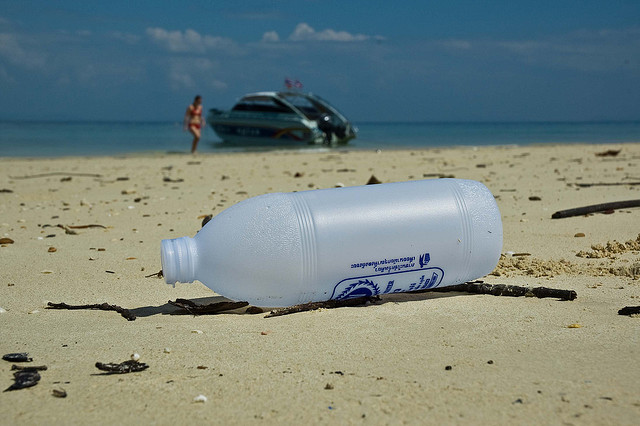
To stop boaters from dumping trash in the sea, Abu Dhabiset up trash facilities at Yas Marina Port.
It’s hard to know where trash comes from, since we seem to be brimming in it. Every single piece of plastic ever made still exists, and a lot of it gets washed into our waterways. The Pacific Ocean, the Mediterranean, and the Atlantic, along with major rivers such as the Nile, are all polluted. That some marine life continues to thrive is a strong testament to nature’s resilience.
But if we don’t curtail the extent to which solid waste and contaminants such as oil seep into our rivers and seas, our fish will become increasingly toxic. Not to mention that International law requires that countries keep their oceans and seas clean. Abu Dhabi has finally taken the first step towards making that easier for boat owners to do.
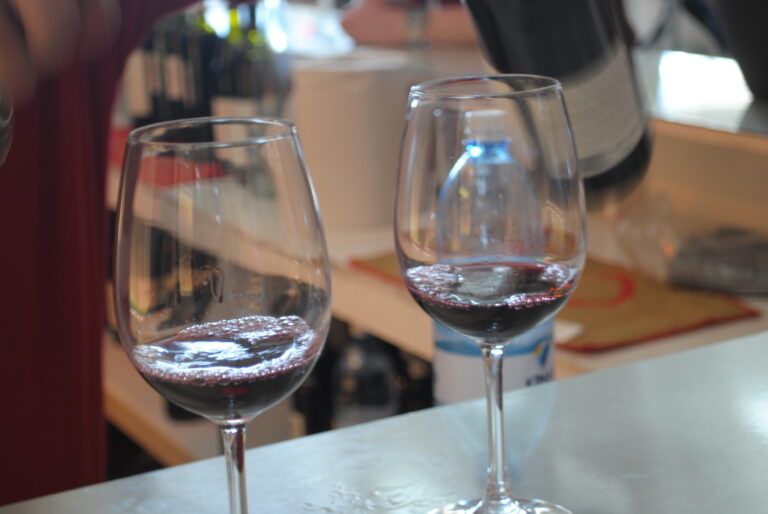
Israel’s main wine event showed a welcome growing trend towards more natural wines.
“Natural wines” are taking off in Israel. At the Sommelier wine event, held in Tel Aviv last night November 8th and continuing through today, we found that some wineries already have organic vineyards, while others are greening their production facilities through recycling and water conservation. Innovations like wind- and solar-powered wine production are happening in Israel already. At our last visit to a major wine exhibit, there were far fewer signs of green winemaking. It’s encouraging to see the change.
Alstom, which is providing the trams for the Jerusalem Light Rail project, will invest in Israeli cleantech
The French energy company Alstom, which recently acquired a 10% stake in the solar company BrightSource, is embarking on another green project in Israel, TheMarker reported this week. In a joint venture with Rotem Industries (the business arm of the Dimona nuclear research center) and Gefen Biomed Investments, Alstom will support technology startups in the field of clean energy.
Hope floats. Want to help save water and feed nine billion people? Go vegetarian.
For vegetarians who have researched all the possible angles to justify their meatless habit – it’s healthier, we might say, or Islam sanctions it, it is no secret that raising meat taxes the environment. In addition to methane gases released, particularly by giant beef and chicken factories (a sustainable free-range facility is far less onerous), raising meat requires significant water resources. Now a leading water expert is spreading the news that scaling back our carnivorous ways is an important step in alleviating the Gulf countries’ serious water woes.
The greatest artificial lake in the Middle East, in Iran? Environmentalists in Tehran haven’t decided how a giant artificial lake, Chitgar Lake, will impact their city. Developers already have their plans.
As artificial islands in Dubai start to smell foul, authorities from the Iranian city of Tehran are pushing for a giant artificial lake for the western side of the city. Debates on construction of a vast artificial lake in the west of Tehran continues: The critics believe that the environmental impact assessment of the construction has not been done in a correct way and that the method of assessment has become “personal.”
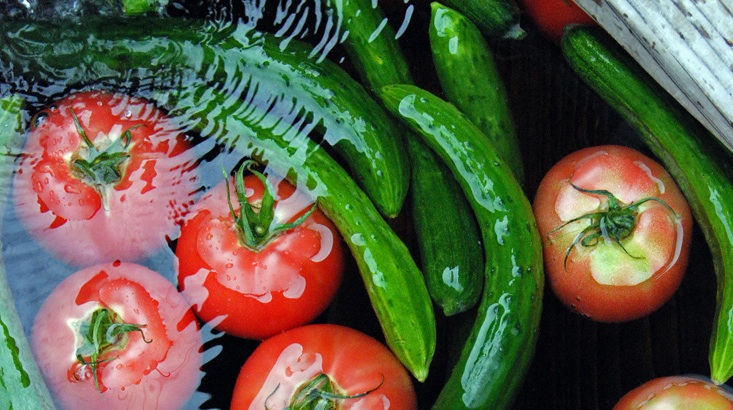
Bring home basil, mint, garlic, tomatoes and potatoes from the supermarket and grow them into your own organic garden.
If you dream of growing a few sustainable crops but don’t have garden space, you still can. Start at your local supermarket. Many commercial vegetables can be rooted at home and like in the nature experiments we did in school, they will grow into real food like tomatoes, potatoes, basil, mint and garlic.
Make sure you have an appropriate plant container. A bucket with a few holes drilled in the bottom, a conventional window box, recycled and clean gallon cans, even an old boot for a touch of humor in your garden.
(We once grew geraniums in a recyled – and clean – toilet.) See our post on gardening for food for more ideas. As long as it has drainage holes and good-quality dirt in it, with room enough for new roots, it’s a container and you can grow food in it.
High energy dinosaurs may get the axe as part of Israel’s plan to reduce energy use by 20%
Energy doesn’t come easily to Israel. With few resources of its own, apart from solar – the widespread exploitation of which is beginning to take shape – and maybe natural gas, officials have to get creative about the energy they do have.
Since asking consumers to cut back requires a serious paradigm shift, the National Infrastructures Ministry is taking a different approach, requiring computer screens and televisions to be more efficient than they currently are.
Bright green ideas from Bahrain University students were showcased at a campus exhibit last week.
Since universities are supposed to train the next generation of thinkers, creators, and doers, it is only fitting that the projects generated by their students be showcased and highlighted in order to encourage new ideas. At Bahrain University, apparently, the value of student projects is not lost on the administration – to the contrary, they celebrate student work and exhibit it. This was the case last week when a two-day exhibition of eco-related student projects took place at the university under the patronage of University President Dr. Ibrahim Mohammed Janahi.
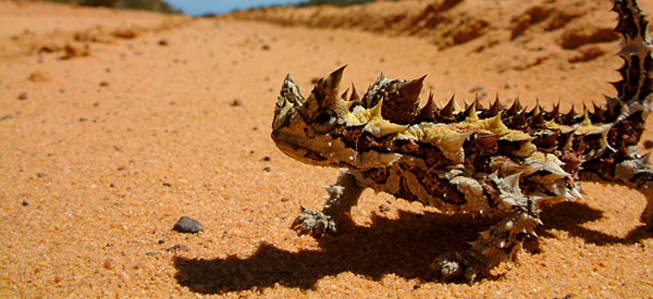
This spiny little creature can help us survive the Middle East water crisis.
How do we value nature? Do we value trees for their role as carbon sinks? As hope in hard times, like Anne Frank did? Or must we dangle a giant price tag from a branch – put a number on that sucker – so our wallet feels the pinch as the last tree standing is felled? Or can we deepen our relationship with nature again, to learn from its infinite wisdom?
Last week we started a series that looks to fauna and flora for water conservation tips. We showed you how a beetle captures dew in the Namib desert, and how one enterprising company developed a water bottle that mimics that behavior. This week from Australia we have the Thorny Devil, whose spiny tricks are just as clever.
ARC works with major religions like Islam, Christianity and Judaism to develop environmental programs. Now they look at food.
It might have something to with the fact that it’s almost Eid al-Adha, where halal slaughter is carried out en masse, but it feels like everywhere I look halal is getting a hard time in the press. First, the iconic Campbell’s soup was targeted for a boycott after introducing halal labelling and then the Australian government refuses to send their cattle to Egypt for the Eid sacrifice.
Although it turned out that the Campbell boycott was entirely orchestrated by right-wing Islamaphobes, there is more substance to the Australian government’s move which was based on serious concerns about the way the animals were treated. An expose released by the animal rights organisation Animals Australia, documented the cruel handling and slaughter of the animals who were also forced to travel long distances in harsh conditions to reach Egypt.
With this in mind, you’ll understand how happy I was to hear about the Alliance of Religions and Conservation’s (ARC) latest project ‘Faith in Food’ which aims to inspire faith communities to adopt fairer, healthier and more sustainable ways to produce, purchase and consume food.
Susan appeals to the Middle East and world to look to the “empty” US states to push clean energy agenda.
The whole world and generations into the future will suffer because the US is unable to pass climate policy. The US lumbers like a wounded giant on the world stage, already beginning to clumsily sink islands and flood nations. Our ignorance kills you because our voters are bombed with lies by the dirty energy industries that control our media.
Here’s the solution. Money bomb our empty states with reverse propaganda: The US needs clean energy propaganda to fight dirty energy propaganda. Why target our empty states? Because empty states control US policies. Empty or full, every state in this country gets two Senators. As Americans, we don’t have one man: one vote. We have one state: one vote. Two, actually. (Yes, we have other branches of government, a president and so on, but the US Senate can make or break climate policy.)
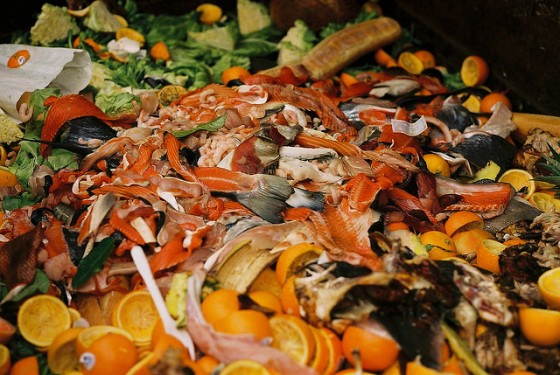
Jonathan Bloom, author of “American Wasteland,” explains why the environmental impact of food waste is rarely acknowledged.
Because most food decomposes into the ground (even McDonald’s), people assume that leftover food makes a small impact. But by the time food reaches our table, it has already used enormous amounts of natural resources for growing, harvesting, and transport. Then there are the pesticides and other chemicals used in modern food production. When food remains uneaten, those resources have served no purpose. And much of the wasted food, whether left at the farm, grocery store, restaurant, school, or home, ends up in a landfill.
In his new book American Wasteland, food waste expert Jonathan Bloom tackles an environmental topic that people prefer not to think about. But food waste, especially in landfills, is a serious environmental hazard.

 Does new crackdown demonstrate a gradual shift in Egyptian environmental policy?





 Hope floats. Want to help save water and feed nine billion people? Go vegetarian.
 Bring home basil, mint, garlic, tomatoes and potatoes from the supermarket and grow them into your own organic garden.






 Because most food decomposes into the ground (