Home Blog Page 589

Harley Davidson Bikers “Vote for Dead Sea” With Their Tailpipes

4

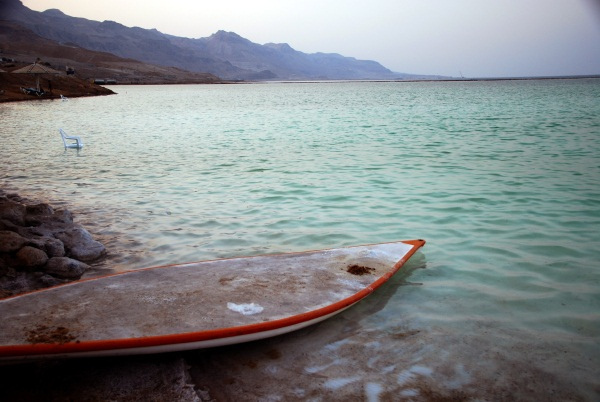
harley dead sea Is the Dead Sea one of the top 7 natural wonders of the world? One hundred bikers are coming to show their support.

The Seven Wonders of the World is a famous list of impressive ancient constructions, largely centered around the Mediterranean.  (We still think that the Mediterranean and the whole Middle East are pretty wonder-ful.)  The original seven wonders included the Great Pyramid of Giza, the Hanging Gardens of Babylon, and the Statue of Zeus at Olympia (among others).  Now a global democratic campaign headed by New7Wonders is in full force to select the top seven natural wonders of the world, and, as can be expected for such a unique region, the Middle East is well represented.

The vote is open to literally everyone in the world, and some are choosing the cast their ballots in bizarre (and not very eco-friendly) ways.

Third ‘Greenomics’ Conference Set for 8th November 2010 in Dubai

0

greenomics conference dubai
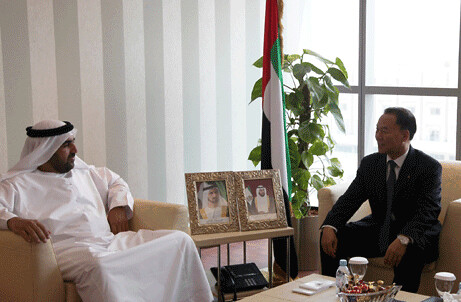
UAE Minister of Environment and Water, H.E. Dr. Rashid Ahmad Bin Fahad and Mr. K. W. Kim, CEO, LG Electronics during their meeting.

The UAE Ministry of Environment and Water (MoEW) recently announced the third “Greenomics” conference will take place on 8th November 2010. This year the conference will focus on the principles of clean production and benefits that green policies will have on business. Dr. Rashid Ahmad Bin Fahad, UAE Minister of Environment and Water, and Mr. K. W. Kim, CEO of LG Electronics met to discuss final arrangements for Greenomics 2010.

Is Egypt The New Dubai?

0

Cityscape-real-estate-fair Is marketing Egypt as the next hot spot for high-tech architecture the right way to deflect Dubai’s failure?

From an ecological perspective, Dubai is heading towards failure. From an economic perspective, some argue that it already has. How will this improbable city pick up the pieces? Todd Reisz, an architect based in New York City, helped contribute to Al Manakh – a two-part analysis of Gulf countries from an architectural perspective.

Al Manakh Continued focuses on how Gulf cities are coping with the economic downturn by turning their developmental and technological prowess outward. Blogging for Huffington Post, Mr. Reisz discusses post-fall Dubai in particular within the context of Cityscape, an annual real estate fair. Typically characterized by exuberant glitz, this year’s event was more subdued.

Ecoventure “Lab” Gives Emirate Children Hands On Experience

0

child-in-nature

Emirate children will have a chance to seek their teeth into nature at the new Ecoventure Field Study Center.

Children in America were asked where their beef comes from. Their answer? The supermarket. This could be a classic case of the stupid American, or it could point to the wider implication. Many children have never been to a farm, much less the kind of beef factory that has put thousands of animal lovers off meat forever. They can’t integrate the knowledge that the calf is born, then it’s fed until it grows into a juicy fat cow, and then… well, I’ll leave out the grizzly details.

Instead, most children only see the inert piece of beef in the refrigerated section of a supermarket. If we don’t show them, we can’t expect them tocare  how it got there. The same applies to the wild. Dubai’s city children rarely get to experience nature up close and personal, to fall in love with its genius, so they have little incentive to protect it. But now they have a chance thanks to Ecoventure, the UAE’s first field study center.

Don’t Go To Israel’s Vegetarian Village, Amirim, For the Food

10

"amirim vegetarian village galilee"Amirim, a unique vegetarian village in northern Israel, offers gorgeous views… and mediocre food.

Once upon a time (according to the owner of the bed and breakfast that I recently stayed at in Amirim), a young group of idealistic vegetarians gathered in central Israel and decided that they needed to get away from all that civilization.  (Mind you, this was in the 1950s, just a few years after the young country declared independence and it is unclear how “civilized” the country was anyway.)

This group marched up to the Israel Land Authority asking to be granted space in a remote location, and was given a town in the Galilee that had been deserted by previous settlers.  And thus, the strictly vegetarian village of Amirim was born.  The village has maintained its early vegetarian roots to this day, and all (or at least 95%) of its residents just say no to meat.

As a vegetarian of 20 years myself, Amirim naturally had quite an appeal for me.  A whole village of vegetarians?  I conjured images in my head of what the houses might look like, and a-la Hansel and Gretel I imagined houses made of tofu bricks, trees that were larger versions of broccoli, and tempeh roads.

I was lucky enough to be taken for my first visit to Amirim this past weekend, and my fanciful illusions were put to rest.

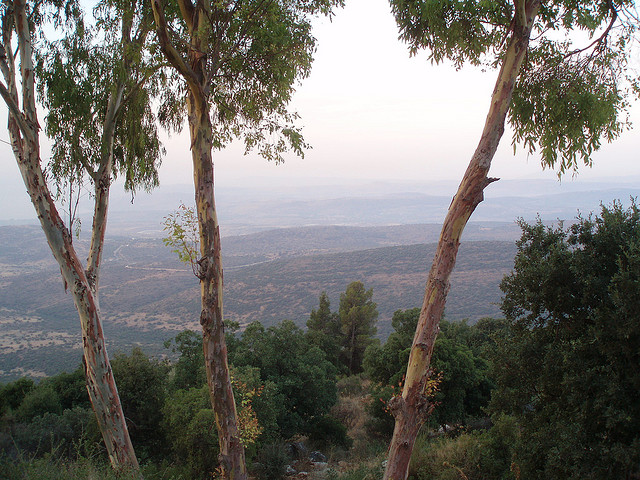
Amirim looked nothing like what I imagined – it was even more beautiful (check out the views above and below).  Perched on top of a mountain in the Galilee, Amirim overlooks the Sea of Galilee, the neighboring towns, and lots of green.  The air is fresh, it is refreshingly quiet, and rosemary and other herbs seem to grow like weeds.
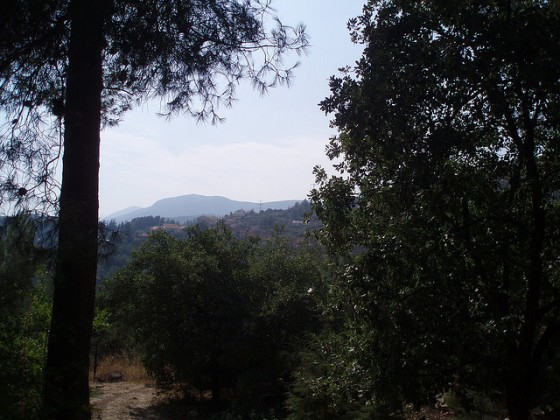
"galilee vegetarian village israel"But the food?  Nothing to write home about (or recommend warmly to Green Prophet readers).  The food at this self proclaimed vegetarian haven was standard at best and led me to believe that the villagers left their food standards back in the 1950s as well.

Vegetarianism has come a long way, baby, but it seems like Amirim has kept it old school (and not in the good way).

Vegetarianism in Israel in the 1950s probably meant, for the most part, eating all of the vegetable side dishes that accompany meat.

Some roasted eggplant, some peppers stuffed with rice, a variety of salads… and that’s what I found at Amirim.  Even at the village’s most renowned restaurant, Dalia’s, all I found were overpriced kibbutz cafeteria side dishes and a few minor highlights (I must admit, the almond and peanut patties were yummy).

When dining at a “normal” or carnivore-oriented restaurant, I would expect to have to make do with such dishes and skip the protein.  I can forgive a standard urban Italian restaurant its lack of tempeh.  But to have no delicious, fun vegetarian proteins available in a vegetarian village?

Where’s the seitan, Amirim?  The vegetarian bacon?  The soy chorizo?

It almost seems like Amirim knows that it will be visited by hungry vegetarians such as yours truly, knows that it is unique, and stopped trying a while ago.  A vegetarian village is an attraction and people will come regardless, so why bother making it a gourmet vegetarian mecca (and convince some carnivores to skip a few bites of steak in the process)?  We can just overcharge for our protein-less, mediocre dishes and make bank anyway.

Sadly, I’ve had better vegetarian food in the homes of highly carnivorous friends.

At a time when it is more important than ever to convince people to go vegetarian – the meat industry is one of the most energy intensive and carbon emitting enterprises in the world – it is unfortunate that Amirim can’t give people a delicious or good reason why.

Read more about Amirim
The Pacifists and Vegetarians from Amirim
Green Prophet Visits Amirim, a Vegetarian Paradise in the Galilee
Dria Peterson’s Handmade Creations, Born From a Genealogy of Vegetarianism and Recycling

Ten Potential Bidders Hear Israel’s Plan for Ashelim PV Solar Plant

Ibex in the Negev
If all goes as plans, this ibex will be sharing the Negev with three solar power plants at Ashelim.

Israel’s Ministry of Finance hosted ten companies last week to present its tender for a 30-megawatt photovoltaic (PV) power plant at the Ashelim site in the Negev desert, the Globes business newspaper reported. The NIS 450 million BOT (build, operate, transfer) project is the smaller part of Israel’s flagship solar project at Ashelim, which is slated to also include two 110-megawatt thermal plants.

Meet Naqa’a: Saudi Arabian Women Fighting For The Environment

21

naqaa'a-saudi-women-environment-climate-change
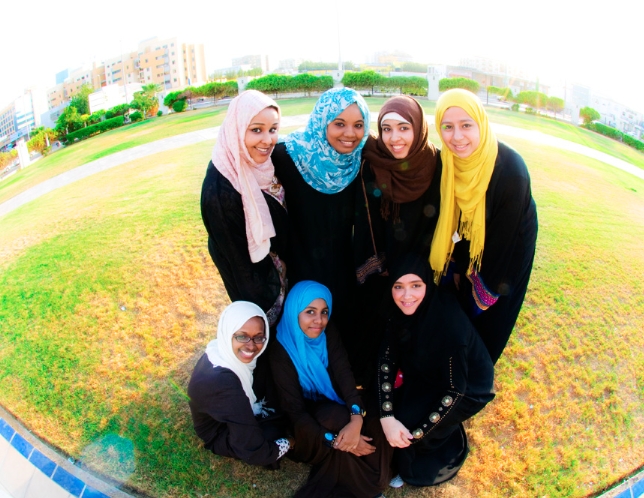
Members of Naqa’a: Norah Magraby, Mona Othman, Muna Alamer, Elham Uthman, Reem Oudah, Amal Aljuhani, Wafaa Aljuhani and Shaima’a Alhajj.

For over five years, a small group of young Muslim women have been hard at work in Saudi Arabia helping to fight climate change. Naqa’a, the environmental enterprise, was setup with the aim of introducing environmental practices to organizations and spreading  Islam’s green message to the masses. The founders of the group were even selected by the White House to participate in the Presidential Summit on Entrepreneurship. Arwa caught up with Norah Magraby, a full-time nurse who manages the organisation in her spare time, to find out more about their work, the biggest issues facing Saudi Arabia and the role that all Muslims must play in protecting the environment.

Going Green In Abu Dhabi Isn’t Easy Without Eva Ramos

0

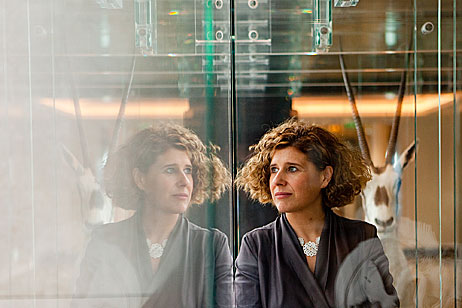
eva-ramos-abu-dhabiEva Ramos relies on 15 years of sustainability experience to lead Abu Dhabi down a greener path.

With so much media criticism leveled at businesses and governments for their failure to incorporate more sustainable practices, it’s helpful to ensure that a path to achieving sustainability is clear. And so far, it isn’t. Ever tried changing a system in your own household? Like not using plastic bags?

After deciding to leave plastic behind forever, how long did it take before you consistently remembered to carry your re-usable bag to the grocery store? Chances are, you still slip up. That’s because old habits do die hard, especially in Abu Dhabi, where environmental awareness is only gradually being mapped. But with help from Eva Ramos, the Abu Dhabi Sustainability Group is leading the Emirate down a greener path.

Birds Help Israel, Jordan And Palestine Flock Together

1

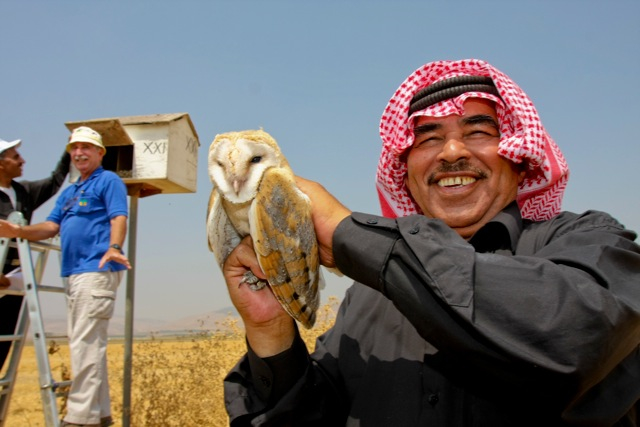
After fifteen years of cooperation between the three countries, birds continue to help break down borders.

The migration corridor that fosters the ambitious biannual itinerary of half a billion birds has long been an incentive for Israel, Jordan, and Palestine to get along. Faced with cross-border concerns that threatened both migratory and local species – roughly 500 species in total – Dr. Yossi Leshem from Israel and Mr. Imad Atrash from Palestine made a joint commitment in 1995 to foster civil solutions.

That partnership, which has grown to include Jordan and various  organizations, started with a project to track 120 German White Storks. It became enormously popular, with students from all three nations eager to track the storks as they progressed across the long sky.

Israeli Officers to Be Trained at Green Training Base

Green pushups anyone? Hybrid jeeps and other “green” training equipment will now be used to train future Israel Defense Force officers

The Israel Defense Forces (IDF) are now extending their green military programs (like solar energy chargers) to training future officers at a special “green” training base in the country’s Negev desert region. In a first or “flagship” venture, the new training base will feature a 400- panel solar farm for heating hot water for the entire facility, expected to save 90,000 liters of oil a year.

Motion detectors that turn off the lights after a set period without movement and water-conserving faucets will also be featured.. Fluorescent lights, which consume a lot of energy have been replaced by T5 energy efficient ones, which should cut electricity use by 30 percent. These features were reported recently in the Jerusalem Post.

Why He’ll Be Eco-Networking With A “Green” MBA

3

john lenhertThe environment is floundering at best, and people are looking more than ever to put real meaning in their career lives. While he’s overseas and far from the Middle East, Green Prophet talks with John Lehnert (left), an IT specialist and clean tech consultant for Expansion Media, on why he decided to earn a “green” MBA.

John’s now at Presidio in San Francisco, considered by environmentalists to offer the best MBA in the world for its MBA in sustainable management. In a recent article Green Prophet has written for the Huffington Post, we awarded it the top of the Top 5 Green MBA’s in the world.

Here’s John’s story on his journey to sustainability (and what he’s learning at Presidio). He’s also provided a partial reading list (for you to steal):

“Once you understand it,” a classmate told me, “it’s like a switch has flipped.” He’s right: you won’t be able to think about anything the way you did before. It’s the foundation of everything we need to do in sustainability and moving to clean energy. The “it” is systems thinking. My own journey to grasp it continues through my MBA program in sustainable management, at Presidio Graduate School in San Francisco.

Getting the MBA wasn’t my original ambition. Working in IT as a team leader and project manager, I’d enjoyed working at small start-ups and large public companies. But I yearned for something closer to my evolving interests, inspired by the development of clean tech and alternative energy in the Bay Area.

American Elections Are Bad For The Nile Delta

0

swallow-nile-delta

If temperatures continue to increase and icecaps melt, scientists say a one meter rise in sea level will swallow the Nile Delta.

In order to protect the good life: big cars, up to three or four or more in one family, massive homes, fancy food, and five star trips to the Bahamas, (all unavailable to those on the losing end of this racket), Americans recently elected some of the most dangerous people in the world. Dangerous because they deliberately suppress climate science, blatantly prioritizing corporate interests over everyone else.

This is bad news for the Middle East too. Unregulated, America’s cars and factories send greenhouse gases into the atmosphere. These then trap heat. Which melts glaciers and in general plays havoc with our weather patterns. As ice melts, sea levels rise and will eventually consume certain shorelines. Egyptian scientists recently announced the Nile Delta will be one of them, but their government wasn’t listening.

Israel Cleantech Intelligence: LAN-cancer link and 9 More Headlines

Light pollution in Europe

Water shortages caused by malfunctioning, wind power in Israel, Better Place in San Francisco and more headlines related to Israeli cleantech and the environment.

During the past week, Israeli researchers released findings that supports the link between Light At Night (LAN) pollution and cancer. European leaders convened in Israel to discuss R&D and a new reservoir near Sderot is helping agriculture in Israel’s south continue to thrive. For these stories and the rest of this week’s headlines, see below.

Pesticides In Pregnant Jerusalemites Higher Than NYC Counterparts

4

Pregnant women in Jerusalem might not be receiving adequate protection against harmful pesticides, while those with graduate degrees had the highest levels of all.

Given the choice between a roach-free house or one filled with scattering critters, most people will take the former. But in some parts of the Middle East, such as the UAE, pests are becoming more pernicious – attributed to rising temperatures and deepening the challenge to get rid of them.

Unfortunately, chemical concoctions used to exterminate pests can be harmful to their “unintended targets,” such as cats, dogs, and pregnant women. So the Hebrew University of Jerusalem’s recent findings – that pregnant women in Israel’s capital had high levels of various pesticides in their plasma and urine – is particularly alarming.

Successful Ormat Waste Heat Recovery Test Could Green Dying Oil Fields

0


Israeli geothermal energy company Ormat is soaking up excess energy from an oil field in Wyoming.

One of the most interesting of the US Recovery Act geothermal funding recipients – it received $4.5 Million – is Ormat Industries, the Israel-based vertically integrated geothermal energy and waste heat recovery specialist. Working with the US Department of Energy, Ormat Technologies has the results of a two year test of the exploitation of a completely new and renewable energy source at a fully operational oil field in Wyoming, which the US Department of Energy makes available for trying out new technology.

Normally the hot water that drives a geothermal turbine system comes from naturally occurring geothermal hot springs. But Ormat is developing a way to use the oil and water found naturally during drilling to make energy by first separating out the oil, and then running the hot water through a heat recovery device, to make electricity.