Koh Phangan may be known for yoga, detox retreats, and full moon parties, but beyond the curated paradise lies a different reality—one of injured stray animals and the quiet work of rescue. This story explores PACS (Phangan Animal Care for Strays), a grassroots animal shelter tackling overpopulation, disease, and neglect on the island. Through firsthand experience with teens, it reveals how meaningful travel, volunteerism, and compassion offer a deeper kind of healing—far from the Instagram version of paradise.
The earliest stages of life, from infancy through childhood, form the foundation for lifelong health and development. During these years, the brain develops rapidly, children learn social and emotional skills, and the body undergoes significant physical growth.
Back in late 2025, Green Prophet began asking uncomfortable questions about what’s really inside your yoga pants, from transparency failures (yes, those infamous see-through leggings) to the less visible and scarier issue: Your sweat is unlocking microplastics and chemical coatings sitting in the most absorbent parts of the human body.
Reliable light matters in more places than ever. It matters on a back road after sunset, in a cabin with limited power, and at home during a storm outage. Research across sustainability guidance, preparedness resources, and off-grid living coverage points to one clear takeaway: people want lighting that works well, lasts longer, and creates less waste.
Koh Phangan may be known for yoga, detox retreats, and full moon parties, but beyond the curated paradise lies a different reality—one of injured stray animals and the quiet work of rescue. This story explores PACS (Phangan Animal Care for Strays), a grassroots animal shelter tackling overpopulation, disease, and neglect on the island. Through firsthand experience with teens, it reveals how meaningful travel, volunteerism, and compassion offer a deeper kind of healing—far from the Instagram version of paradise.
The earliest stages of life, from infancy through childhood, form the foundation for lifelong health and development. During these years, the brain develops rapidly, children learn social and emotional skills, and the body undergoes significant physical growth.
Back in late 2025, Green Prophet began asking uncomfortable questions about what’s really inside your yoga pants, from transparency failures (yes, those infamous see-through leggings) to the less visible and scarier issue: Your sweat is unlocking microplastics and chemical coatings sitting in the most absorbent parts of the human body.
Reliable light matters in more places than ever. It matters on a back road after sunset, in a cabin with limited power, and at home during a storm outage. Research across sustainability guidance, preparedness resources, and off-grid living coverage points to one clear takeaway: people want lighting that works well, lasts longer, and creates less waste.
Koh Phangan may be known for yoga, detox retreats, and full moon parties, but beyond the curated paradise lies a different reality—one of injured stray animals and the quiet work of rescue. This story explores PACS (Phangan Animal Care for Strays), a grassroots animal shelter tackling overpopulation, disease, and neglect on the island. Through firsthand experience with teens, it reveals how meaningful travel, volunteerism, and compassion offer a deeper kind of healing—far from the Instagram version of paradise.
The earliest stages of life, from infancy through childhood, form the foundation for lifelong health and development. During these years, the brain develops rapidly, children learn social and emotional skills, and the body undergoes significant physical growth.
Back in late 2025, Green Prophet began asking uncomfortable questions about what’s really inside your yoga pants, from transparency failures (yes, those infamous see-through leggings) to the less visible and scarier issue: Your sweat is unlocking microplastics and chemical coatings sitting in the most absorbent parts of the human body.
Reliable light matters in more places than ever. It matters on a back road after sunset, in a cabin with limited power, and at home during a storm outage. Research across sustainability guidance, preparedness resources, and off-grid living coverage points to one clear takeaway: people want lighting that works well, lasts longer, and creates less waste.
Koh Phangan may be known for yoga, detox retreats, and full moon parties, but beyond the curated paradise lies a different reality—one of injured stray animals and the quiet work of rescue. This story explores PACS (Phangan Animal Care for Strays), a grassroots animal shelter tackling overpopulation, disease, and neglect on the island. Through firsthand experience with teens, it reveals how meaningful travel, volunteerism, and compassion offer a deeper kind of healing—far from the Instagram version of paradise.
The earliest stages of life, from infancy through childhood, form the foundation for lifelong health and development. During these years, the brain develops rapidly, children learn social and emotional skills, and the body undergoes significant physical growth.
Back in late 2025, Green Prophet began asking uncomfortable questions about what’s really inside your yoga pants, from transparency failures (yes, those infamous see-through leggings) to the less visible and scarier issue: Your sweat is unlocking microplastics and chemical coatings sitting in the most absorbent parts of the human body.
Reliable light matters in more places than ever. It matters on a back road after sunset, in a cabin with limited power, and at home during a storm outage. Research across sustainability guidance, preparedness resources, and off-grid living coverage points to one clear takeaway: people want lighting that works well, lasts longer, and creates less waste.
Koh Phangan may be known for yoga, detox retreats, and full moon parties, but beyond the curated paradise lies a different reality—one of injured stray animals and the quiet work of rescue. This story explores PACS (Phangan Animal Care for Strays), a grassroots animal shelter tackling overpopulation, disease, and neglect on the island. Through firsthand experience with teens, it reveals how meaningful travel, volunteerism, and compassion offer a deeper kind of healing—far from the Instagram version of paradise.
The earliest stages of life, from infancy through childhood, form the foundation for lifelong health and development. During these years, the brain develops rapidly, children learn social and emotional skills, and the body undergoes significant physical growth.
Back in late 2025, Green Prophet began asking uncomfortable questions about what’s really inside your yoga pants, from transparency failures (yes, those infamous see-through leggings) to the less visible and scarier issue: Your sweat is unlocking microplastics and chemical coatings sitting in the most absorbent parts of the human body.
Reliable light matters in more places than ever. It matters on a back road after sunset, in a cabin with limited power, and at home during a storm outage. Research across sustainability guidance, preparedness resources, and off-grid living coverage points to one clear takeaway: people want lighting that works well, lasts longer, and creates less waste.
Koh Phangan may be known for yoga, detox retreats, and full moon parties, but beyond the curated paradise lies a different reality—one of injured stray animals and the quiet work of rescue. This story explores PACS (Phangan Animal Care for Strays), a grassroots animal shelter tackling overpopulation, disease, and neglect on the island. Through firsthand experience with teens, it reveals how meaningful travel, volunteerism, and compassion offer a deeper kind of healing—far from the Instagram version of paradise.
The earliest stages of life, from infancy through childhood, form the foundation for lifelong health and development. During these years, the brain develops rapidly, children learn social and emotional skills, and the body undergoes significant physical growth.
Back in late 2025, Green Prophet began asking uncomfortable questions about what’s really inside your yoga pants, from transparency failures (yes, those infamous see-through leggings) to the less visible and scarier issue: Your sweat is unlocking microplastics and chemical coatings sitting in the most absorbent parts of the human body.
Reliable light matters in more places than ever. It matters on a back road after sunset, in a cabin with limited power, and at home during a storm outage. Research across sustainability guidance, preparedness resources, and off-grid living coverage points to one clear takeaway: people want lighting that works well, lasts longer, and creates less waste.
Koh Phangan may be known for yoga, detox retreats, and full moon parties, but beyond the curated paradise lies a different reality—one of injured stray animals and the quiet work of rescue. This story explores PACS (Phangan Animal Care for Strays), a grassroots animal shelter tackling overpopulation, disease, and neglect on the island. Through firsthand experience with teens, it reveals how meaningful travel, volunteerism, and compassion offer a deeper kind of healing—far from the Instagram version of paradise.
The earliest stages of life, from infancy through childhood, form the foundation for lifelong health and development. During these years, the brain develops rapidly, children learn social and emotional skills, and the body undergoes significant physical growth.
Back in late 2025, Green Prophet began asking uncomfortable questions about what’s really inside your yoga pants, from transparency failures (yes, those infamous see-through leggings) to the less visible and scarier issue: Your sweat is unlocking microplastics and chemical coatings sitting in the most absorbent parts of the human body.
Reliable light matters in more places than ever. It matters on a back road after sunset, in a cabin with limited power, and at home during a storm outage. Research across sustainability guidance, preparedness resources, and off-grid living coverage points to one clear takeaway: people want lighting that works well, lasts longer, and creates less waste.
Koh Phangan may be known for yoga, detox retreats, and full moon parties, but beyond the curated paradise lies a different reality—one of injured stray animals and the quiet work of rescue. This story explores PACS (Phangan Animal Care for Strays), a grassroots animal shelter tackling overpopulation, disease, and neglect on the island. Through firsthand experience with teens, it reveals how meaningful travel, volunteerism, and compassion offer a deeper kind of healing—far from the Instagram version of paradise.
The earliest stages of life, from infancy through childhood, form the foundation for lifelong health and development. During these years, the brain develops rapidly, children learn social and emotional skills, and the body undergoes significant physical growth.
Back in late 2025, Green Prophet began asking uncomfortable questions about what’s really inside your yoga pants, from transparency failures (yes, those infamous see-through leggings) to the less visible and scarier issue: Your sweat is unlocking microplastics and chemical coatings sitting in the most absorbent parts of the human body.
Reliable light matters in more places than ever. It matters on a back road after sunset, in a cabin with limited power, and at home during a storm outage. Research across sustainability guidance, preparedness resources, and off-grid living coverage points to one clear takeaway: people want lighting that works well, lasts longer, and creates less waste.
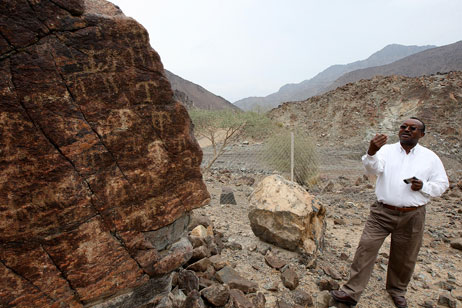
Archaeologists in Fujairah at working against the clock to save the UAE’s precious rock art.
Without an historical record, our future would seem shallow. A future sans identity. A future that lacks the benefit of hindsight to inform important decisions. Because ancient relics – fossils, petroglyphs, and architecture – shed light on our origin, they also help us to put the future into perspective.
Otherwise, we would think of ourselves as mostly urban people with no tool-making or agricultural history, without a rich menu of mythology and culture. Which is why archaeologists in the United Arab Emirates are fighting so hard to protect the few remaining petroglyphs from encroaching industrial development.
From luxury architecture in Mecca to the blinged-out buildings of Dubai, it seems that Islamic architecture is all about opulence and grandeur. The bigger and the more lavish- the better but it hasn’t always been like this. In the past, Islamic architecture relied on natural materials and some of the most iconic Islamic buildings were ones of simplicity and modesty– think the Kaaba in Mecca. Mud was something that was heartily used and architecture sought to reflect the environment rather than to outshine it. Today, the renowned architect Ibrahim Mohammed Jaidah states that the fading green credentials of Islamic architecture are in need of revival.
In December, The United Nations’ Food and Agricultural Organization noted that food prices have exceeded the high prices of 2008, when the Gulf region was hit particularly hard. The IMF found that inflation skyrocketed almost 16% in the Gulf as a result, mostly driven by high food prices – driven by high oil prices. The Gulf states are reliant on food imports.
This time, the Arab states, led by Saudi Arabia and UAE, have decided to take matters into their own hands, according to Arabian Business. They are using their vast oil wealth to buy up tracts of land the size of small countries in Africa, intending to turn them into agricultural hotbeds to feed their multitudes.
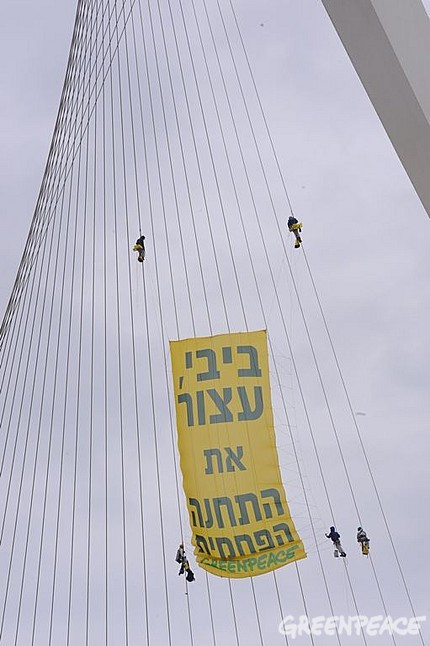
No it’s not Spiderman and friends, just green activists trying to call attention to the environmental impact of coal-burning power plants.
Greenpeace went to great heights yesterday to express opposition to plans for a new coal-burning power plant in Israel. Five Greenpeace activists scaled the cables of the Chords Bridge at the entrance to Jerusalem and hung a huge banner (44 square meters) imploring Prime Minister Benjamin Netanyahu: Stop the coal plant.
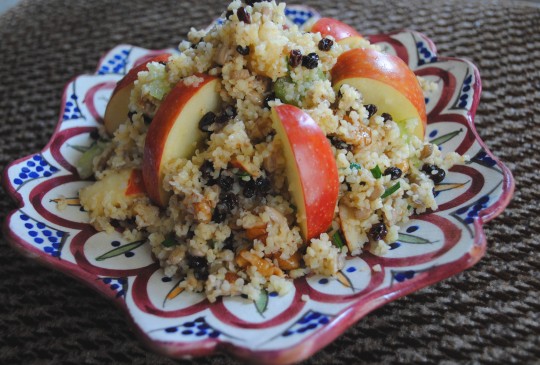
Rabbi Judah, a sage who lived in the 2nd century, said that wheat – not an apple – was the fruit of the Tree of Knowledge. The stalks of wheat in the Garden of Eden were thought to have been “as tall as the cedars of Lebanon.” As Hannah described in her post on Tu B’Shvat, foods traditionally eaten on this holiday come from the seven species of Israel and since wheat is one, it’s fun to eat something delicious made from wheat.
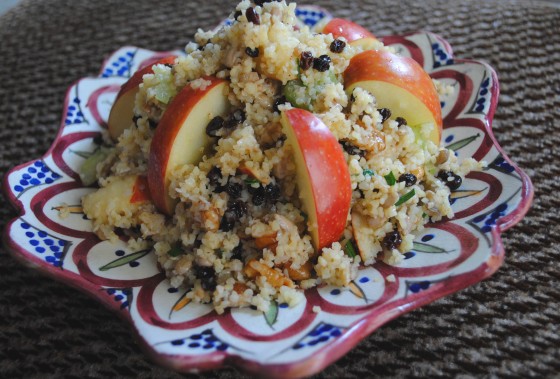
Of course, today’s celebrations include all kinds of fruit that the Sages never dreamed of. Try this bulgur salad made savory and lightly sweet with dried and fresh fruit, seeds, and nuts. After all, not only tabbouleh does cracked wheat make.
Designer Eungi Kim created a sort of clip-on accessory that looks like the silhouette of a horse for the Seoul Cycle Design Competition 2010. While the jury is out on whether the resources needed to create the spirit spoils the fun, our eco-minded friends at the Guardian and Treehugger vote not-guilty.
In the title, I used the term “ecotard.” The person who used it to disparage an environmentally aware festival-goer in Israel who accidentally started a fire in the Golan meant for it to mean “retarded” hippie. But in our internal dialogue, we Green Prophet writers (actually, Karen Chernick made the suggestion) decided that we liked the frilly variety of that invented word.
Riding such a personalized bike can lighten up the sometimes stressful world of climate change and rising temperatures, according to Treehugger, who quotes The Guardian’s Peter Walker:
Who wouldn’t feel better pedalling around with the wooden silhouette of a horse’s head, body and tail clamped to the frame of your bike? Well, maybe quite a lot of people. However impractical and whimsical it might be, I love the way the designer, Eungi Kim, has captured the essential thrill of riding a bike. If driving a car around a city can feel like being trapped in your own personal, (slowly) mobile prison cell, then on a good day cycling is more like cantering along a prairie.
The only thing I would add to this breathless vision is an ecotard. A glowing green lacy thing that frees the inner ecollect as the cyclist tears across the urban landscape on a shadowy steed.
More fun design stories that will free your inner ecollect:
These women began their epic 10,000 mile biking for transboundary conservation journey in Istanbul.
Following their own footsteps down an entirely different path, best friends Kate Harris and Melissa Yule left Istanbul to continue a year-long tour of transboundary protected areas (TBPAs) along the Silk Road.
With concern that these outlaying ecosystems are especially vulnerable to the effects of climate change, the women intend to record their expedition – visually and in script – to draw international attention to these legendary, beautiful but decidedly rugged areas.
Rebecca points out the economical, environmental, and spiritual sides of using washable, reusable diapers on your baby.
Recently, Green Prophet’s Karin talked about her experience with Kushies washable cloth diapers. It opens the debate about disposables versus cloth. Now Taking care of your kids and keeping them clean can be overwhelming, to say the least. Whether you are raising one or ten, does not take away from the fact that there is a lot of cleaning up that needs to be done. So when my friend Yael started telling me all about cloth nappies, I tried very much to switch off and not hear her words.
Who needs more cleaning? I thought to myself. More changes a day and then more laundry. No way! But, as the months dragged by and I was forced to walk down those bright supermarket and pharmacy isles twice a month, to fork out a lot of money on disposable diapers, I felt a spark of curiosity starting to ignite in me: “Just try one or two” Yael encouraged me, and she handed over a few of her own.
So, I tried and well, much to my husband’s horror, I became hooked and we entered the world of cloth—a world full of bright colours, Indian soap nuts, and a change of mindset.
Listed as one of the oldest trees in the world, the Iranian cedar of Yazd, is dying.
The oldest living Iranian creature, a cedar tree in Abarghu (or Abarkuh) near Yazd in center of Iran, is about to die.
There are different opinions about the real age of this famous tree considered a symbol of pre-Islam Iran (because of the respect that the pre-Islamic Iranians had for cedars as the symbol of happiness and beauty).
Some say that the cedar is 4000 years old, possibly even 8000. But as Mostafa Khoshnevis, an environmental expert says, by counting the circles in side the bark of the tree, the age of the tree is not more than 1200 years.
In any case, the cedar is one of the oldest trees in the world. It is famous that Marco Polo along with several Iranian historians had written about it.
This happy bug muncher couldn’t care less about stigmas. Time to bite the bug? Certain varieties are kosher and halal. You can learn how to cook locusts here.
Are you craving for something different to satisfy the “munchies”? Or are you interested in trying a new kind of food that’s high in protein and low in saturated fats and other bad stuff?
Then try eating insects (yuck); especially those like several species of edible and even kosher locusts that have been a source of misery, and food, to humans since the dawn of time. Insects, a thousand species of them no less, are now being considered by the UN Food and Agricultural Organization as a good source of cheap protein for people in poorer parts of the world, especially in Asian and African countries.
You can also learn how to cook locusts at this Michelin-star like restaurant in Jerusalem
The UN is seriously considering promoting various insect species as a good source of dietary protein at a much lower environmental cost than traditional livestock, such as cows, pigs, or sheep.
In fact, the UN organization responsible for helping to secure food supplies for many inhabitants on this planet is seriously considering these exoskeleton critters to supplement often scarce protein supplies.
They want to: “increase appetites for insects, focusing especially on developing areas where protein supplies are scarce and sustainable harvesting of insects can contribute to both nutritional and economic improvements.”
Insects have both infested mankind and have been used as a food source since our ancient forbearers walked the earth millions of years ago. Locusts are mentioned in the Bible as one of the Ten Plagues that God punished the Egyptians with in order to force Pharaoh to free the Israelites from bondage.
Although insects are mostly forbidden in Jewish dietary Kashrut (kosher) laws, certain species of locusts are considered as kosher by some Jews; especially Yemenite Jews, and include the red locust (Arbeh in Hebrew), and the yellow locust which is known by its Hebrew name of Sal’am. A “kosher” locust is noted by having a marking that resembles the Hebrew letter Het on its underbelly.
Islamic dietary laws seem to follow Jewish laws when it comes to eating insects; and as such only locusts are considered as Halal or permitted as food in Islamic Law.
Recipes for these varmints vary according to region and dietary customs, and include “preparing embers (from a cooking fire) and roasting the entire locust upon them”, or putting several of them on a skewer and barbecuing them like chicken wings.
Since humans have to put up with being infested and bitten by various insect critters, we might as well do a turnabout and bite the bugs as well. Eating them can’t be much different than eating things like crayfish and frogs, both of which are excellent sources of protein. One just has to avoid the usual “mindset” abhorrence of eating a bug.
Bon appetit!
Read more on insects and our relationship with them:
This Wednesday evening and Thursday, Jews around the world will celebrate the holiday of Tu B’Shevat (15th of the Hebrew month of Shevat). Tu B’shevat traditions include planting new trees, and eating dried fruit. Tu B’Shevat has also become the Jewish Earth Day, to celebrate the environment and learn about ecology.
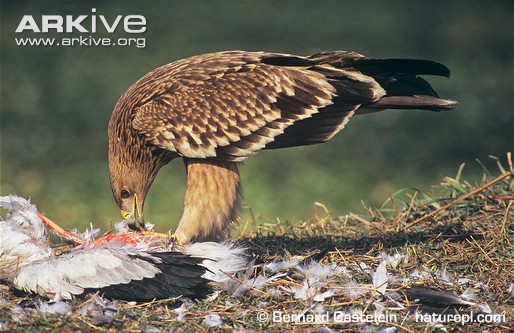
This Imperial Eagle is one of several species in Turkey that face extinction.
Birds accustomed to breeding and rearing their young in healthy wetlands are being pushed out as lakes dry up and agricultural and industrial activity take precedence. And reptiles. And mammals.
Even humans are being displaced as accelerated drought and fire sweep through Israel, rain floods Brisbane, Australia, and snow suffocates the UK and North America. In the last thirty years, 1/3 of all species have already gone extinct. And according to a Professor of Biology Ankara’s Hacettepe University, 70% of Turkey’s birds may be heading down the same devastating path.
Two award-winning companies – Aldar Properties and Enviromena – team up to solar power an Abu Dhabi school.
ALDAR Properties is one of the largest real estate development, management and investment companies headquartered in Abu Dhabi. Their development portfolio includes hotels, marinas, schools, gulf courses, estates management, and theme parks.
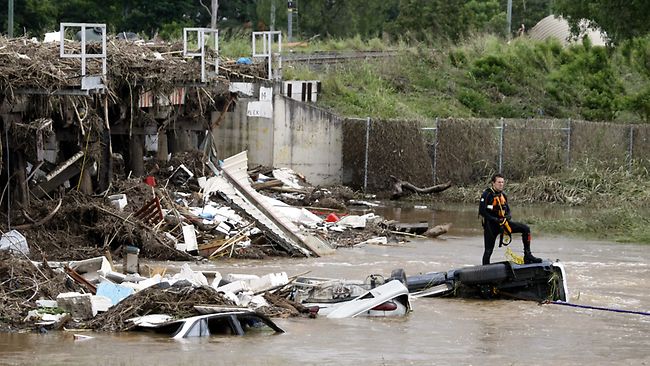
Climate change, which many scientists attribute to be a consequence of global warming, is already wracking havoc in many parts of the world; and unfortunately, the continent of Australia is experiencing more than its share of environmental disasters, including large scale brush and forest fires which devastated large parts of New South Wales and Victoria states. Australia’s central desert region, known “fondly” by locals as the Outback has escaped both the ravages of fire and water, simply because there’s not much there to burn and virtually no water. Brisbane, which is beginning to look like the American city of New Orleans in the aftermath of Hurricane Katrina, will take a long time to recover from these floods, which could become more common due to large scale weather changes.
Jordanian environmentalists have launched a new campaign against planned construction in a nature reserve.
Jordanian environmentalists have launched a new campaign against plans to build a military academy at Bergish, in the Ajloun Forest nature reserve in north-western Jordan. The plans will, says campaigners from Halt Ajloun Deforestation, destroy an estimated 2,200 trees – some of them over 500 years old – in a large area of native forest in the Orjan village area.

 Archaeologists in Fujairah at working against the clock to save the UAE’s precious rock art.






 Rebecca points out the economical, environmental, and spiritual sides of using washable, reusable diapers on your baby.
 Listed as one of the oldest trees in the world, the Iranian cedar of Yazd, is dying.


 This Imperial Eagle is one of several species in Turkey that face extinction.