Home Blog Page 56

COP29 hosted by country that suppresses climate activists, journalists and Christians

0
Cop29 Baku
Cop29 Baku

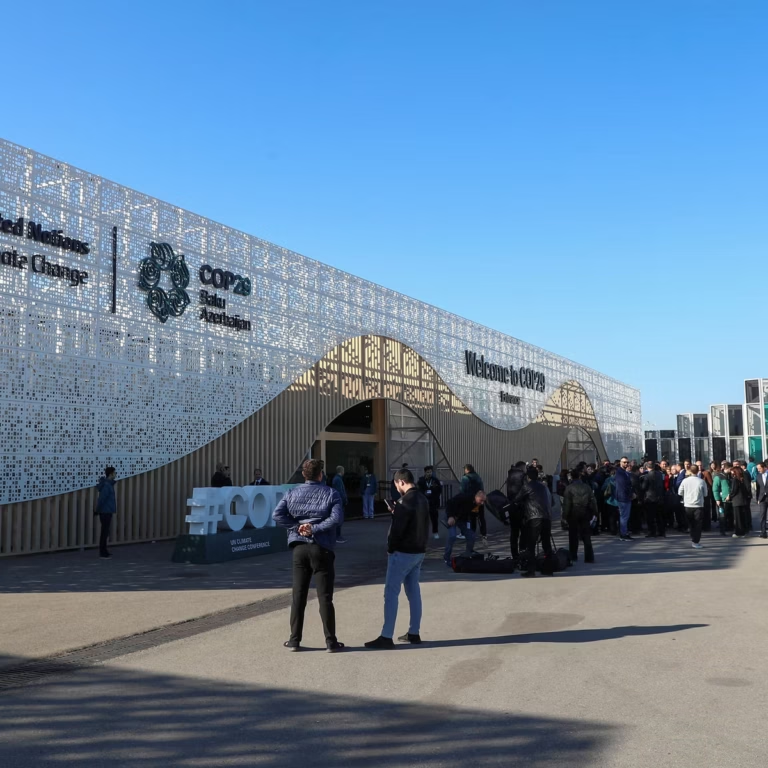
We laugh when the biggest oil nations of the world hold climate conferences, but the UN and how it “thinks” is no less confusing when the latest UN climate change event COP29 is hosted in Azerbaijan, opening today in Baku. The Human Rights Watch organization report that Azerbaijan is carrying out a vicious attack on government critics, independent groups, and media and that crackdowns got worse months before Azerbaijan hosted COP29, the United Nations Climate Change Conference, which opens today. (Earlier this year Azerbaijan celebrated its Islamic architectural heritage win months before destroying an Armenian church).
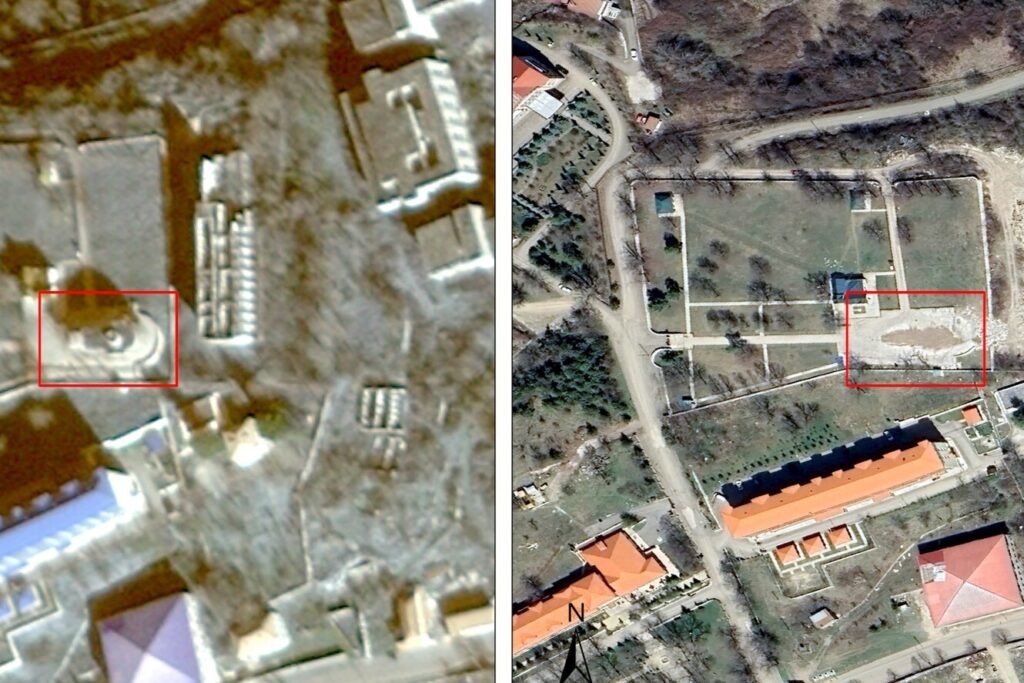
Shusha Church
What happened to Shusha Church? Journalists covering COP29 should ask.

Human Rights Watch issued a report “‘We Try to Stay Invisible’: Azerbaijan’s Escalating Crackdown on Critics and Civil Society,” which documents the Azerbaijan’s efforts to decimate civil society and silence its critics. The authorities have arrested dozens of people on what HRW says are politically motivated, bogus criminal charges.

“The Azerbaijani government’s contempt for civic freedoms is putting independent groups and critical media on the path of extinction,” said Giorgi Gogia, associate Europe and Central Asia director at Human Rights Watch. “This is not the image the government should be projecting of itself on the eve of COP29.

“It is not too late for the government to improve its reputation by freeing imprisoned critics and immediately ending the use of spurious charges against civil society, but it needs to act now.”

Related: the bees of Azerbaijan go hightech

According to the group the authorities aggressively targeted three of the independent online news platforms that remain in Azerbaijan, including Abzas Media and Toplum TV. They arrested and criminally prosecuted at least 12 of these 3 platforms’ media professionals and several other affiliated individuals. They have hacked social media accounts and blocked websites. They have also arrested reporters with other outlets and leaders of several unregistered groups, as well as trade union activists and others who dared to criticize or protest government policies.

Related: how a billionaire destroyed Baku

Among those arrested and in detention is veteran human rights defender Anar Mammadli, who in the weeks before his arrest co-founded a climate justice initiative with the aim of advocating civic freedoms and environmental justice in Azerbaijan ahead of COP29. He is awaiting trial on spurious smuggling charges.
artificial islands, Azerbaijan, unsustainable development, Caspian Sea, world's tallest tower
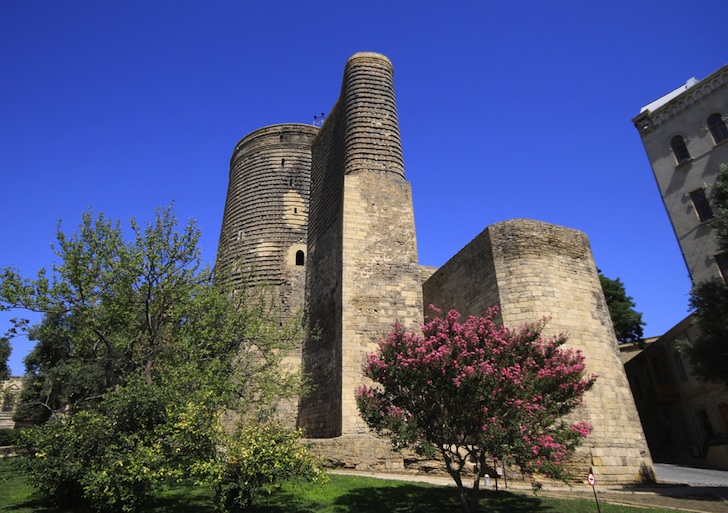
The Maiden Castle, Baku

In July 2023, the authorities arrested a renowned economist and anti-corruption activist, Gubad Ibadoghlu, who specializes, among other things, in revenue transparency in the oil and gas sector. Currently under house arrest, Ibadoghlu is awaiting trial on bogus charges related to counterfeit currency production and extremism and faces up to 17 years in jail if convicted.

Under international law, the Azerbaijani government has obligations to protect the rights to freedom of expression, assembly, and association. This includes the ability to form a legal entity to act collectively in a field of mutual interest.

The European Court of Human Rights has issued numerous judgments finding that the Azerbaijani government’s failure to register independent NGOs violated the right to freedom of association. In at least one of these cases, the court found that authorities restricted rights with the “ulterior purpose” of punishing the applicants for their human rights activities.

Related: Offshore wind deal between Saudi Arabia and Azerbaijan

“Through a combination of unjust detention and restrictive NGO rules, the Azerbaijani government is trying to eradicate civil society,” said Andrea Prasow, executive director of Freedom Now. “States and UN officials should urgently call on Azerbaijan to immediately and unconditionally free arbitrarily detained activists and commit to upholding human rights at COP29 and beyond.”


Santa Fe Care Center Ratings: What They Reveal About Quality and Care

0

Grow old in sustainable Santa Fe

Selecting the right nursing home for a loved one is a crucial decision, and for families considering Santa Fe Care Center, understanding the facility’s ratings provides valuable insights into the quality of care residents receive. Ratings encompass various aspects of a facility’s performance, including safety, staffing levels, and resident satisfaction. Knowing these ratings can help families make informed decisions about choosing a supportive and reliable care environment.

Overview of Santa Fe Care Center

Santa Fe Care Center is a nursing facility that offers both long-term care and short-term rehabilitation services. The center provides around-the-clock medical care, assistance with daily activities, and physical and occupational therapy. For families looking for a place where their loved ones can receive quality care and support, the ratings of Santa Fe Care Center serve as an important benchmark.

Key Factors in Nursing Home Ratings

Ratings for facilities like Santa Fe Care Center are typically evaluated by state and federal agencies, and they reflect several key factors:

  1. Staff-to-Resident Ratios: Sufficient staffing is crucial in maintaining a high standard of care. Facilities with strong staffing ratings, like Santa Fe Care Center, tend to have enough personnel to meet residents’ needs promptly, reducing the risk of neglect or missed care.
  2. Safety and Cleanliness Standards: Nursing homes must meet strict standards for safety and sanitation. Facilities with high ratings in these areas demonstrate a commitment to creating a healthy, secure environment for residents.
  3. Resident and Family Satisfaction: Ratings often include feedback from residents and their families, providing insights into how residents feel about the level of care they receive. Positive ratings in satisfaction suggest that residents feel comfortable, valued, and well-supported.

Increasingly, nursing homes are also assessed on whether they are eco-friendly, as eco-friendly spaces have been proven to enhance quality of life. 

Common Challenges in Nursing Home Care

chess, elderly men, seniors playing, outdoors at picnic table

Even facilities with strong ratings, like Santa Fe Care Center, may face challenges in consistently meeting the needs of all residents. Some common issues include:

  • Staffing Shortages: While the center is rated well for its staffing ratios, maintaining consistent staffing levels can be challenging across all shifts. This is a common issue in nursing homes, as it directly affects the quality and timeliness of care.
  • Infection Control: High standards in cleanliness and hygiene are essential in preventing infections among residents. Regular inspections ensure that Santa Fe Care Center continues to meet these standards, keeping residents healthy and reducing the risk of communicable diseases.
  • Specialized Care for Diverse Needs: Nursing homes cater to residents with a variety of medical and personal needs. Adapting to these needs, from physical therapy to memory care, requires ongoing training and resources.

What Families Can Do to Stay Informed

Life Assure tech
Life Assure app helps seniors live sustainably at home

The current CMS rating for the Santa Fe Care Center is 1 out of 5. Understanding this rating is an important first step for anyone considering this home for their loved one. Once you’ve chosen a facility, it’s important to stay engaged with them while your relative is there. Here’s how families can stay engaged:

  1. Review Publicly Available Ratings and Inspection Reports: Online platforms, including Medicare’s Nursing Home Compare, provide access to ratings and inspection reports. These documents reveal the facility’s strengths and areas for improvement.
  2. Visit the Facility Regularly: Frequent visits allow families to observe the level of care firsthand, communicate with staff, and assess whether the facility maintains its rating standards.
  3. Engage in Open Dialogue with Staff: Don’t hesitate to ask about the facility’s approach to addressing areas that may need improvement. Transparency with families is a key indicator of a facility’s dedication to providing quality care.

Conclusion

Choosing a nursing home like Santa Fe Care Center involves examining ratings and understanding the facility’s commitment to meeting high standards of care. By considering factors like staffing, safety, and resident satisfaction, families can make informed choices to ensure their loved ones are cared for in a safe, supportive environment. It’s important to stay engaged with the nursing home once your relative is there, because ratings are not the only indicator of the quality of care, and being engaged yourself can help ensure that the facility stays accountable. 

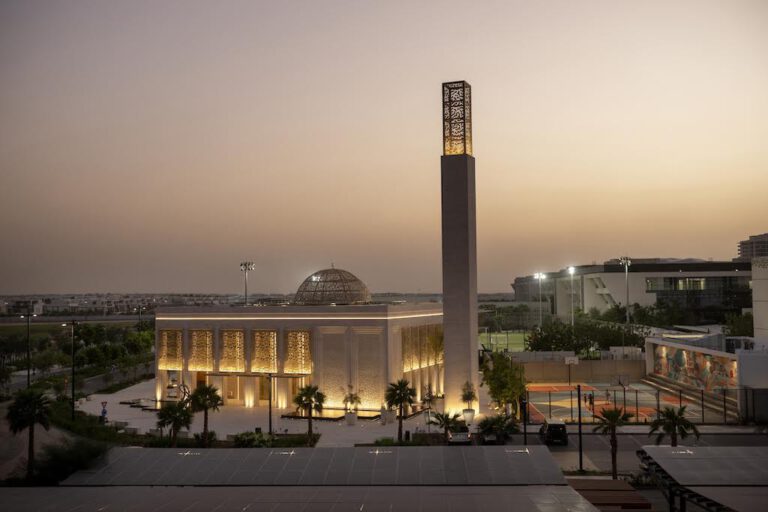
Dubai’s first carbon free mosque

Dubai solar mosque

It’s the greenest mosque in the Middle East Majid Al Futtaim, a leading shopping mall developer opened the Middle East’s first net-positive mosque under the name of its late founder, Majid Al Futtaim. The mosque, located in Dubai integrates sustainable and modern design practices in support of the UAE’s Green Agenda 2030, ensuring energy efficiency, resource optimisation, and minimal environmental impact.

“The opening of the first net-zero emissions mosque in the Middle East is an achievement that reflects our deep commitment to the principles of sustainability, this project represents a significant shift in the field of environmental sustainability and highlights our fruitful collaboration with Majid Al Futtaim in implementing this initiative,” says Ahmed Darwish Al Muhairi, General Manager, Islamic Affairs & Charitable Activities Department.

Middle East's greenest mosque in Dubai
Middle East’s greenest mosque in Dubai

“It serves as a live example of a successful partnership between the public and private sectors, setting a new standard for responsible innovation in building and maintenance, it also aligns with the noble Islamic values that advocate for environmental preservation and protection.

“As a result of a series of key sustainable features, the Majid Al Futtaim Mosque is set to become the first bespoke project to achieve BREEAM certification.

Related: Is this Chicago mosque the greenest in the world? BREEAM (Building Research Establishment Environmental Assessment Method) is a sustainability assessment method that is used to masterplan projects, infrastructure and buildings.

This assessment recognises measures of performance, which are set against established benchmarks, evaluating the building’s specification, design, construction, and use.

The mosque’s construction incorporates advanced mechanical, electrical, and plumbing (MEP) systems, renewable energy sources, and sustainable building practices designed to achieve a net-positive status.

Inside the Dubai green mosque powered by renewable energy

Key features include a robust renewable energy system with  203 solar photovoltaic panels, providing a total installed solar capacity of 116.73 kWp and generating over 204,121 kWh annually, providing more than 115% of the mosque’s energy demand. Related: Green Muslims need to read these 11 booksThe excess green energy  is supplied back to the grid to be used across the communnity. Additional energy-efficient systems include  a solar-powered hot water system, LED lighting, an efficient HVAC setup, EV charging stations and a Building Management System (BMS) to optimise energy consumption.

Water efficiency, air quality, and non-toxic materials have been employed to ensure a healthy environment, with responsibly sourced, low-carbon materials prioritised to  reduce its overall carbon footprint.
The first of its kind structure reinforces Majid Al Futtaim’s commitment to building a cleaner tomorrow as the Group’s aim to achieve net positive in carbon and water for all its operating companies by 2040.

Budgeting for a Life of Remote Work and Travel: Balancing Savings and Splurges

0

tiny office on the road Are you doing the #vanlife? 

Embarking on a journey of remote work and travel requires more than just a passion for adventure; it demands a strategic approach to financial planning. As you navigate different time zones and cultures, managing your budget becomes essential to maintaining stability and enjoying your experiences. Careful budgeting is your key to ensuring that you can embrace exciting locales without financial stress.

Balancing savings and splurges is crucial in the digital nomad lifestyle. While it’s important to indulge in unique local experiences, maintaining financial discipline prevents overspending. Allocating funds for essentials like accommodation and food, while setting aside a stash for special experiences, helps you enjoy both daily life and memorable occasions.

Embracing flexibility in your financial planning allows you to adapt to the various cost-of-living scales across the globe. Having a flexible budget helps you make the most of affordable opportunities without compromising your overarching savings goals. This adaptability ensures that you can seize spontaneous opportunities that enhance your journey.

Crafting Your Remote Work Lifestyle

Designing a remote work lifestyle requires thoughtful planning and strategy. This involves evaluating your financial situation, creating diverse revenue channels, and forming budgets that align with your lifestyle goals.

Assessing Financial Readiness

Dr. Eduardo Sampaio from the Cluster of Excellence “Centre for the Advanced Study of Collective Behaviour” and researcher at the Max Planck Institute of Animal Behavior. Credit: Victor Rault / Captain Darwin

Before committing to a remote work lifestyle, evaluate your current financial status. Start with a detailed audit of your savings, debts, and ongoing expenses. Create a list of necessary monthly costs such as rent, food, insurance, and subscriptions. Compare these expenses to your savings to determine how long you can sustain yourself without a steady income.

Consider creating an emergency fund. This should cover at least 3-6 months of living expenses. A spreadsheet may help you track your progress here. Knowing your numbers will provide peace of mind and prepare you for varied financial demands.

Strategizing Income Streams

Vending machines offer another avenue for generating passive income. Once you’ve purchased and placed the machine in a strategic location, it can generate revenue with minimal daily effort. This allows for a flexible schedule and can supplement other income streams while you travel or work on other projects. A good example is a niche market like Hot Wheels vending, which can attract a dedicated customer base and provide a steady, reliable source of income.

To maintain a mobile lifestyle, diversify your income sources. Consider freelancing, consulting, or remote part-time work. Platforms like Upwork or Fiverr offer numerous opportunities.

If you have specialized skills, think about offering online courses or digital products. Passive income can come from investments or real estate, though these often require upfront capital and research. The goal is not just to make money but to create a sustainable income that adapts to changes in work availability and location.

Setting Realistic Budgets

man in van in hottub
Covid makes us all push for staycations. How about a week in a #vanlife AirBnb?

Establishing budgets is crucial for balancing essentials with life’s pleasures. Begin with a basic budget that covers all fixed expenses, then allocate a portion for travel and leisure. Use a budgeting app to track expenses in real time while you are on the move.

Don’t forget to include healthcare and retirement savings. Regularly review and adjust your budget for changes such as currency fluctuations or unexpected costs. Stay flexible and allow some room for splurges that enhance your lifestyle, as long as they don’t hinder your financial safety net.

Travel Considerations and Cost Management

To succeed in balancing work and travel, focus on strategic destination choices, smart accommodation and transport planning, diligent management of daily expenses, and knowing when to save or splurge. Each of these areas requires careful attention to maintain financial stability while enjoying your adventures.

Choosing Destinations Wisely

Selecting the right destinations plays a vital role in managing your travel budget. Look for locations where the cost of living aligns with your financial goals. Destinations in Southeast Asia or Eastern Europe, for instance, often offer affordable accommodations and dining options.

Research the local economy and currency exchange rates to maximize the value of your money. Consider the impact of travel seasons, as off-peak times can lead to lower costs and fewer crowds. Prioritize destinations that allow you to accomplish work goals while enjoying what the location has to offer.

Accommodation and Transport Budgeting

Accommodation and transport represent significant portions of your budget, so planning is crucial. Consider long-term stays at co-living spaces or serviced apartments for cost-effectiveness. For shorter stays, explore last-minute deals on cruises as an alternative form of travel.

When it comes to transport, research public transport systems in each city. Compare options such as rental bikes, carpool services, or metro systems. Factor in the flexibility and convenience they provide in addition to cost. Advance bookings on flights or trains can reap significant savings, too.

Managing Daily Expenses

Keeping track of daily expenses ensures that your everyday spending doesn’t derail your budget. Stick to buying local groceries and cooking meals as opposed to dining out frequently. Use budgeting apps to monitor and categorize expenses in real-time.

Seek out local experiences that offer both cultural insights and affordability, like free walking tours or community events. Establish a daily expense limit to prevent overspending. Carry cash in local currency to avoid foreign transaction fees, and be aware of exchange rates that might impact your budget.

Indulgence vs. Frugality in Travel

Balancing indulgence and frugality requires a plan for when to spend and when to save. Allocate portions of your budget for unique experiences that justify a splurge, like experiencing a famous local festival or trying an exceptional meal.

Consider the long-term financial implications before opting for luxury options. Prioritize spending on memorable experiences over material purchases. By indulging strategically, you can savor life’s pleasures without compromising your financial goals.


Morocco and France to build largest desalination plant in Africa

France and Morocco desalinate Africa

On the occasion of the president of the French Republic Emmanuel Macron’s state visit to Morocco, the French company Veolia and the Kingdom of Morocco signed yesterday a MOA for the establishment of a strategic partnership to develop on an exclusive basis a seawater desalination project that will be the largest in Africa and the second largest in the world.

It will supply drinking water to regions of the Kingdom particularly affected by drought.

Desalination plants are energy intensive and destructive to the environment and are often seen as a last chance.

Located near Rabat on the Atlantic coast, a great surfing spot, the project will be structured as a public-private partnership, involving the construction, financing and operation for 35 years, by Veolia, of a seawater desalination plant. With a capacity of 822,000 m3 of drinking water per day, or 300 million m3 per year, it will ensure the supply of the Rabat-Salé-Kénitra and Fès-Meknès regions to meet the water needs of nearly 9.3 million inhabitants.

This initiative is part of the Moroccan national energy strategy, launched by King Mohammed VI, which aims to strengthen water supply security and to face the challenges of climate change.

Read related: Follow our adventures in Morocco at the Atlas Mountains here at the Kasbah

As a global leader in water technologies, Veolia will bring the best of its cutting-edge expertise in desalination for a reference plant in terms of efficiency, innovation and environmental protection. Its operational expertise will also ensure high plant performance by balancing investment and operating costs, thus ensuring the most competitive water price over the entire life cycle of the facility. The facility could be powered by low-carbon electricity, mainly from renewable sources.

Desalination plant saudi arabia
A desalination plant in Saudi Arabia

Related: This eco luxury resort not in the Maldives will get its water from desalination

Against a backdrop of climate change, which is particularly affecting the Mediterranean region, this partnership comes at a time when Morocco is facing unprecedented water stress. The country is experiencing its worst drought for 40 years, with rainfall continuing to decline and reservoirs at historically low levels, threatening agriculture, drinking water supplies and, more broadly, the country’s economy. Seawater desalination is therefore becoming an essential solution to these urgent challenges.

Estelle Brachlianoff, CEO of Veolia, said: “With a long history of partnership, we are thrilled and honoured to write this new page with the Kingdom of Morocco and Moroccan citizens to meet the challenges related to the environment and water. We are fully aware of the urgency of the situation and proud to contribute to this major project, which will strengthen the country’s water resilience. We will put the best of our international expertise and our long-standing presence in the region at the service of the Kingdom for a reference project in terms of performance and sustainability.

Pando aspen forest in Utah is one of world’s oldest beings

0
An Aspen forest in Utah, Pando, is known as the world's oldest living being.
An Aspen forest in Utah, Pando, is known as the world’s oldest living being.

Researchers have taken the DNA from ‘Pando’ — a vast forest made up of a single root system sprouting nearly 50,000 cloned quaking aspen trees in Utah and it seems to confirm that it is one of the oldest organisms on Earth.

The Latin name Pando means “I spread,” and the forest is one single living thing –– one one tree that has cloned itself tens of thousands of times. Pando consists of approximately 47,000 individual stems all connected by a single, vast root system.

Do those trees have eyes?

Aerial outline of Pando. (Lance Oditt/Friends of Pando)

Researchers sequenced hundreds of samples from the Populus tremuloides and found that it is between 16,000 and 80,000 years old. They were also able to track patterns of genetic variation spread throughout the tree, offering clues about how it has adapted and evolved over the course of its lifetime.

Located in central Utah on the Fishlake National Forest, Pando is approximately 1 mile southwest of Fish Lake on State Highway 25. Go on a road trip to see spots of nature, not cities. Your soul will thank you.


Get clean with a Japanese folding bathtub

0

Bathtope, a folding bath by Japan's LIXIL

The best thing about Japan is the Japanese toilet and the bathing scene called the onsen. Well there could be other things but this is what you will miss the second you leave Tokyo’s airport. Japanese toilets and bathhouses are clean, the seats are warm, they self clean, and if you are lonely they speak to you. Public bathrooms have seats for hanging toddlers and well, the whole scene even in the smallest grungiest noodle bars is uplifting. Now if you live in a small space, trust that Japan will make your bathroom better.

Bathtope by LIXIL, a Japanese company, is a portable Japanese bathtub that hangs, and then folds after the bath is clean and dry.

What kind of bathroom will enrich our lives in this era of diversifying lifestyles, the company asks?

“Simple yet luxurious and minimalistic yet free, where we have reached is a new bathroom space that balances the abundance of people and the earth,” they write.

LIXIL is celebrating the 100th anniversary of the domestic plumbing and tile business, and has created “bathtope,” a new concept for bathroom space, as a new step towards the next 100 years.

The company designers say their underlying question was: “Is it okay for the daily bathing habits that have been loved by many people in Japan to remain the same? Therefore, we considered how bathroom space could accommodate diverse personalities and lifestyles, how it can change flexibly, and explored bathing methods and frequency that would both reduce the burden on the global environment and provide enjoyment. And the concept we derived is an ambiguous style that is neither a shower room nor a bathroom, and the idea came from the traditional Japanese concept of haretoke.”

Folding bath, origami bat, japan design, onsen, Bathtope, LIXIL Folding bath, origami bat, japan design, onsen, Bathtope, LIXIL Folding bath, origami bat, japan design, onsen, Bathtope, LIXIL Folding bath, origami bat, japan design, onsen, Bathtope, LIXIL

We create a sense of richness in each, by dividing the immersion bath to soothe the mind and body on special days as “Hare,” and the shower bath to wash away the dirt and stress of daily life as “Ke.”

A bathroom that allows us to freely transform into a single space brings freedom of choice according to time, season, and mood. We believe this is one of the answers to accepting diversity, providing new manners and customs, and connecting bathing culture to the next generation.

::LIXIL

Reserve a Red Sea pod hotel at Shebara Island for $2,400 a night

0
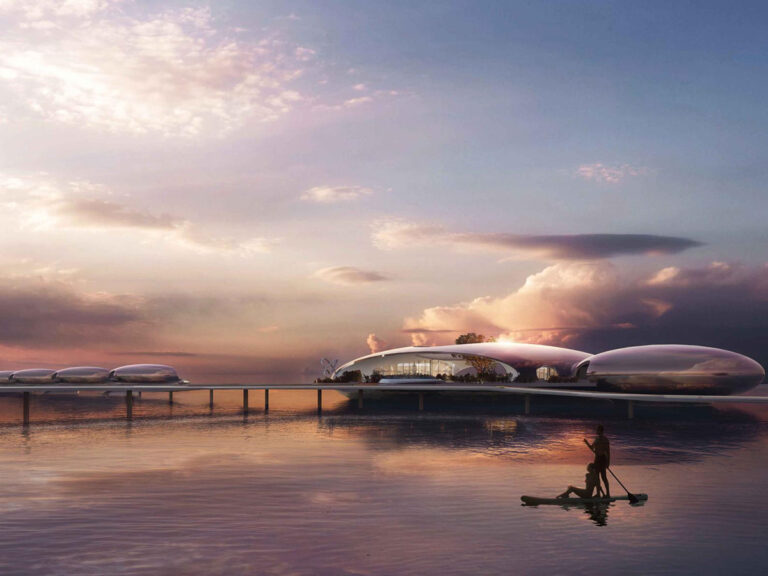
Shebara Report, Saudi Arabia

In an oil wealthy state like Saudi Arabia luxury has no limits. And the latest is LEED certified.

A new Red Sea resort in Saudi Arabia called Shebara Island is already taking pre-bookings for its glamorous pod hotels, a cool SAR 9,000 a night, which equals about $2,400 USD. No big deal if you’ve berthed your mega-yacht at its shores.

Powered by the sun, the resort features 73 pods that rival the best of luxury from the Maldives seeing a downturn in tourism for its racist policies on religious freedom.

 With 73 breathtaking overwater and beachfront villas powered by sunlight, this resort is where nature and sustainability come together at The Red Sea
With 73 overwater and beachfront villas powered by sunlight, this resort is where nature and sustainability come together at The Red Sea

Saudi Arabia is hoping to become booming hotspot for business and tourism and has started creating 15-minute cities like Neom.

Shebaya, the latest from dozens of new projects announced, is LEED-Platinum property which is built to “minimise its environmental and literal environmental footprint by cantilevering the accommodation spaces above the coral reefs with only a few square meters of ground impact at the base of the supporting column.

“The result is an aerial accommodation ‘pod’ that almost seems to defy gravity and suspends the guest directly above and within the beauty of an untouched marine eco-system; an observation platform for guests to witness the fish, birds and turtles that thrive in the area,” says a handout.

The LEED-Platinum property seeks to minimise its environmental and literal environmental footprint by cantilevering the accommodation spaces above the coral reefs with only a few square meters of ground impact at the base of the supporting column. The result is an aerial accommodation ‘pod’ that almost seems to defy gravity and suspends the guest directly above and within the beauty of an untouched marine eco-system; an observation platform for guests to witness the fish, birds and turtles that thrive in the area. The entire project is powered by a centralized solar farm and fresh water is supplied from a solar powered desalination plant. Recycling of waste material takes place on the island minimizing the need to bring or remove materials from the site. The entire infrastructural backbone of the project forms part of a visitor experience where guest can be exposed to and learn about the approach that goes into making the project a truly self-sustained human development. The design language of the resort compliments the uniqueness of the site. The approach to the façade design has been to minimize visual impact, employing a highly reflective stainless-steel skin polished to a mirror finish. These reflective orbs float, almost imperceptible, reflecting the colors and surface patterns of the ocean, the intense colors of the sky as they change throughout the day. This approach serves to lessen the visual impact of the architecture on the surrounding environment while also greatly improv the building’s energy performance with a near 100% reflection of the solar gain at the mirror surface. These heavily insulated spaces can be effectively cooled with minimal energy losses.

The entire project is powered by a centralized solar farm and fresh water is supplied from a solar powered desalination plant. Recycling of waste material takes place on the island minimizing the need to bring or remove materials from the site.

The LEED-Platinum property seeks to minimise its environmental and literal environmental footprint by cantilevering the accommodation spaces above the coral reefs with only a few square meters of ground impact at the base of the supporting column. The result is an aerial accommodation ‘pod’ that almost seems to defy gravity and suspends the guest directly above and within the beauty of an untouched marine eco-system; an observation platform for guests to witness the fish, birds and turtles that thrive in the area. The entire project is powered by a centralized solar farm and fresh water is supplied from a solar powered desalination plant. Recycling of waste material takes place on the island minimizing the need to bring or remove materials from the site. The entire infrastructural backbone of the project forms part of a visitor experience where guest can be exposed to and learn about the approach that goes into making the project a truly self-sustained human development. The design language of the resort compliments the uniqueness of the site. The approach to the façade design has been to minimize visual impact, employing a highly reflective stainless-steel skin polished to a mirror finish. These reflective orbs float, almost imperceptible, reflecting the colors and surface patterns of the ocean, the intense colors of the sky as they change throughout the day. This approach serves to lessen the visual impact of the architecture on the surrounding environment while also greatly improv the building’s energy performance with a near 100% reflection of the solar gain at the mirror surface. These heavily insulated spaces can be effectively cooled with minimal energy losses. The LEED-Platinum property seeks to minimise its environmental and literal environmental footprint by cantilevering the accommodation spaces above the coral reefs with only a few square meters of ground impact at the base of the supporting column. The result is an aerial accommodation ‘pod’ that almost seems to defy gravity and suspends the guest directly above and within the beauty of an untouched marine eco-system; an observation platform for guests to witness the fish, birds and turtles that thrive in the area. The entire project is powered by a centralized solar farm and fresh water is supplied from a solar powered desalination plant. Recycling of waste material takes place on the island minimizing the need to bring or remove materials from the site. The entire infrastructural backbone of the project forms part of a visitor experience where guest can be exposed to and learn about the approach that goes into making the project a truly self-sustained human development. The design language of the resort compliments the uniqueness of the site. The approach to the façade design has been to minimize visual impact, employing a highly reflective stainless-steel skin polished to a mirror finish. These reflective orbs float, almost imperceptible, reflecting the colors and surface patterns of the ocean, the intense colors of the sky as they change throughout the day. This approach serves to lessen the visual impact of the architecture on the surrounding environment while also greatly improv the building’s energy performance with a near 100% reflection of the solar gain at the mirror surface. These heavily insulated spaces can be effectively cooled with minimal energy losses. The LEED-Platinum property seeks to minimise its environmental and literal environmental footprint by cantilevering the accommodation spaces above the coral reefs with only a few square meters of ground impact at the base of the supporting column. The result is an aerial accommodation ‘pod’ that almost seems to defy gravity and suspends the guest directly above and within the beauty of an untouched marine eco-system; an observation platform for guests to witness the fish, birds and turtles that thrive in the area. The entire project is powered by a centralized solar farm and fresh water is supplied from a solar powered desalination plant. Recycling of waste material takes place on the island minimizing the need to bring or remove materials from the site. The entire infrastructural backbone of the project forms part of a visitor experience where guest can be exposed to and learn about the approach that goes into making the project a truly self-sustained human development. The design language of the resort compliments the uniqueness of the site. The approach to the façade design has been to minimize visual impact, employing a highly reflective stainless-steel skin polished to a mirror finish. These reflective orbs float, almost imperceptible, reflecting the colors and surface patterns of the ocean, the intense colors of the sky as they change throughout the day. This approach serves to lessen the visual impact of the architecture on the surrounding environment while also greatly improv the building’s energy performance with a near 100% reflection of the solar gain at the mirror surface. These heavily insulated spaces can be effectively cooled with minimal energy losses.

The design language of the resort compliments the uniqueness of the site. The approach to the façade design has been to minimize visual impact, employing a highly reflective stainless-steel skin polished to a mirror finish. These reflective orbs float, almost imperceptible, reflecting the colors and surface patterns of the ocean, the intense colors of the sky as they change throughout the day.

Desalination and power plant powered by the sun

This approach serves to lessen the visual impact of the architecture on the surrounding environment while also greatly improv the building’s energy performance with a near 100% reflection of the solar gain at the mirror surface. These heavily insulated spaces can be effectively cooled with minimal energy losses.

The LEED-Platinum property seeks to minimise its environmental and literal environmental footprint by cantilevering the accommodation spaces above the coral reefs with only a few square meters of ground impact at the base of the supporting column. The result is an aerial accommodation ‘pod’ that almost seems to defy gravity and suspends the guest directly above and within the beauty of an untouched marine eco-system; an observation platform for guests to witness the fish, birds and turtles that thrive in the area. The entire project is powered by a centralized solar farm and fresh water is supplied from a solar powered desalination plant. Recycling of waste material takes place on the island minimizing the need to bring or remove materials from the site. The entire infrastructural backbone of the project forms part of a visitor experience where guest can be exposed to and learn about the approach that goes into making the project a truly self-sustained human development. The design language of the resort compliments the uniqueness of the site. The approach to the façade design has been to minimize visual impact, employing a highly reflective stainless-steel skin polished to a mirror finish. These reflective orbs float, almost imperceptible, reflecting the colors and surface patterns of the ocean, the intense colors of the sky as they change throughout the day. This approach serves to lessen the visual impact of the architecture on the surrounding environment while also greatly improv the building’s energy performance with a near 100% reflection of the solar gain at the mirror surface. These heavily insulated spaces can be effectively cooled with minimal energy losses.

The interior space of the project provides spacious room for the guests, with detailing, and finishes inspired by the interiors of luxury yachts. The room offers panoramic views to the sea with sliding doors that open to a deck, a seating area and an infinity pool with uninterrupted views of the sea and horizon beyond.

The project is designed by the UAE based K

Other Red Sea attractions in the region include our favorite place: low-key eco tourism in Sinai. There is also a great list of eco-tourism sites in the Holy Land. A typical trip in the future might look like this:

  1. A cruise down the Nile. The pyramids. A visit to Siwa Oasis in Egypt.
  2. Head over to St. Catherines Monastery, hike God’s Mountain, and spend a few nights diving in Sinai.
  3. Taxi over to Eilat and head to Tel Aviv, Tiberias, Jerusalem, the Dead Sea.
  4. Head across the Allenby Bridge to Jordan and check out Madaba, then down to Petra.
  5. From Petra head to Saudi Arabia to one of its dozens of new Red Sea attractions.


Robot retrieves radiactive nuclear material from Fukushima

About 800 tonnes of questionable nuclear waste remain in Japan. It is too dangerous for humans to get close

Fukishima robot
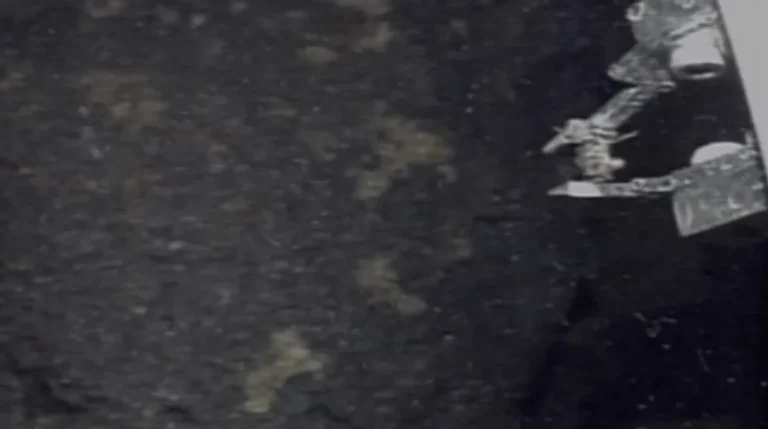
A robotic retrieval device grasps a piece of nuclear debris from reactor 2 of the Fukushima nuclear power plant on October 30. Image credit: TEPCO

Japanese nuclear scientists have sent a remote-controlled robot to collect a tiny piece of melted radioactive uranium from inside the Fukushima Daiichi nuclear power plant. The Japanese nuclear power plant was shut down after suffering major damage in an earthquake and tsunami in 2011.

The robot clipped off a piece of a fuel rod that weighed less than 3 grams from inside the Unit 2 reactor core and brought it back to the lab assess its radioactivity.

Related: how to avoid radioactive fish from Japan

Analysing the melted fuel debris this way is essential to determine how best to remove, store and dispose of the roughly 800 tonnes that remain. Countries like Germany have shut down their nuclear energy plants while countries like Turkey, aligning with terror entities, fires up its first ones.

Fukishima nuclear team
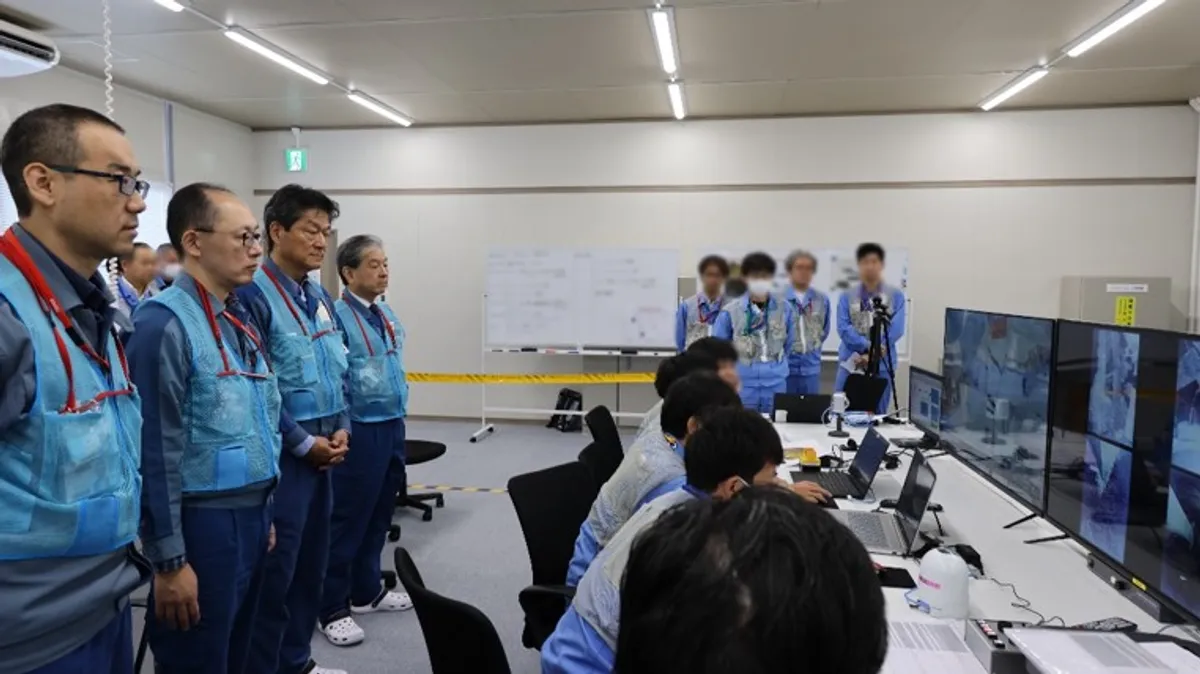
Workers at Fukushima watch the retrieval operation from the control room. Image credit: TEPCO

“From the results of primary containment vessel internal investigations, we have deduced that the accumulated debris on the surface of the floor inside the pedestal is solidified molten material that consists of fuel elements and also may contain a lot of metal,” TEPCO said in a statement.

“By analyzing the attributes of the sampled fuel debris we will directly ascertain information such as the composition of debris at the sampling location and radioactivity density,” added TEPCO.

Japanese teams have tried to isolate and retrieve bits of radioactive fuel in the past. This was the first successful attempt. Knowing more about the radioactive nature of the spent fuel will help TEPCO decommission the reactor.

The origins of writing may be traced to clay tablets in Iraq

0

 Researchers have uncovered links between the precursor to the world’s oldest writing system and the mysterious, intricate designs left behind by engraved cylindrical seals that were rolled across clay tablets about 6,000 years ago.The origins of writing in Mesopotamia (the birthplace of the Jewish Bible’s Abraham and which is modern day Iraq) lie in the images imprinted by ancient cylinder seals on clay tablets and other artifacts, say a research group from the University of Bologna.

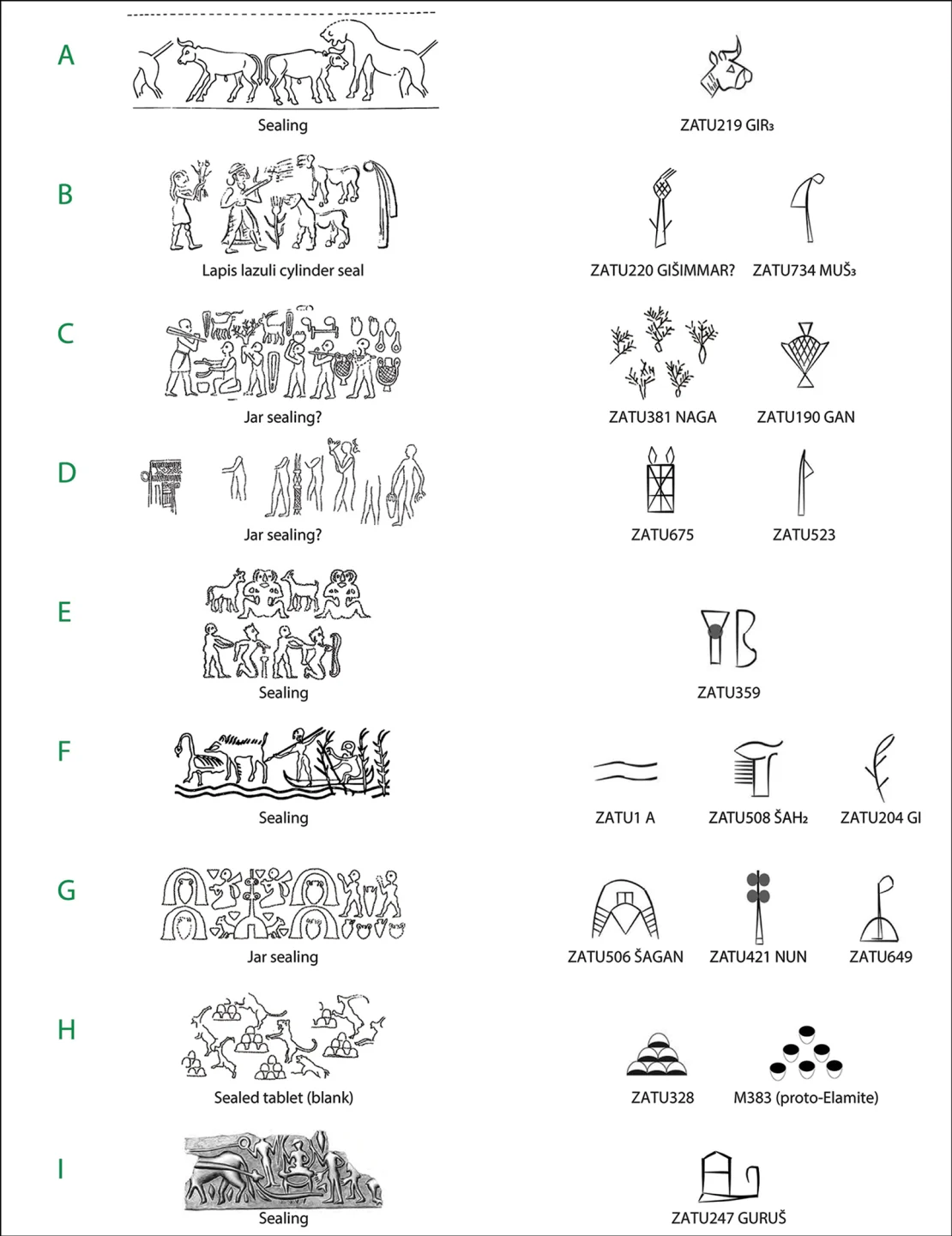
The researchers have identified a series of correlations between the designs engraved on these cylinders, dating back around 6,000 years, and some of the signs in the proto-cuneiform script that emerged in the city of Uruk, located in what is now southern Iraq, around 3000 BCE.

The study, published in Antiquity, opens new perspectives on understanding the birth of writing and may help researchers not only to gain new insights into the meanings of the designs on cylinder seals but also to decipher many still-unknown signs in proto-cuneiform on pottery vessels.

Related: restoring the original garden of Eden

“The conceptual leap from pre-writing symbolism to writing is a significant development in human cognitive technologies,” explains Silvia Ferrara, professor in the Department of Classical Philology and Italian Studies at the University of Bologna.

Related: Read more sustainable news from Iraq here

“The invention of writing marks the transition between prehistory and history, and the findings of this study bridge this divide by illustrating how some late prehistoric images were incorporated into one of the earliest invented writing systems.”

Among the first cities to emerge in Mesopotamia, Uruk was an immensely important center throughout the fourth millennium BCE, exerting influence over a large region extending from southwestern Iran to southeastern Turkey.

In this region, cylinder seals were created. Typically made of stone and engraved with a series of designs, these cylinders were rolled onto clay tablets, leaving a stamped impression of the design.

The origin of writing in Mesopotamia is tied to designs engraved on ancient cylinder seals
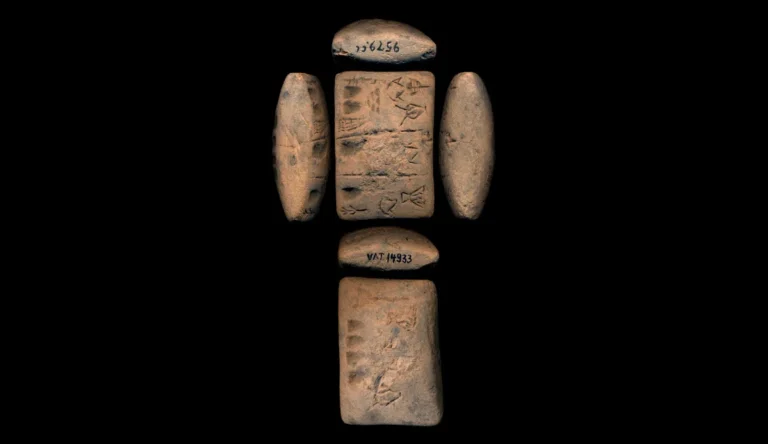
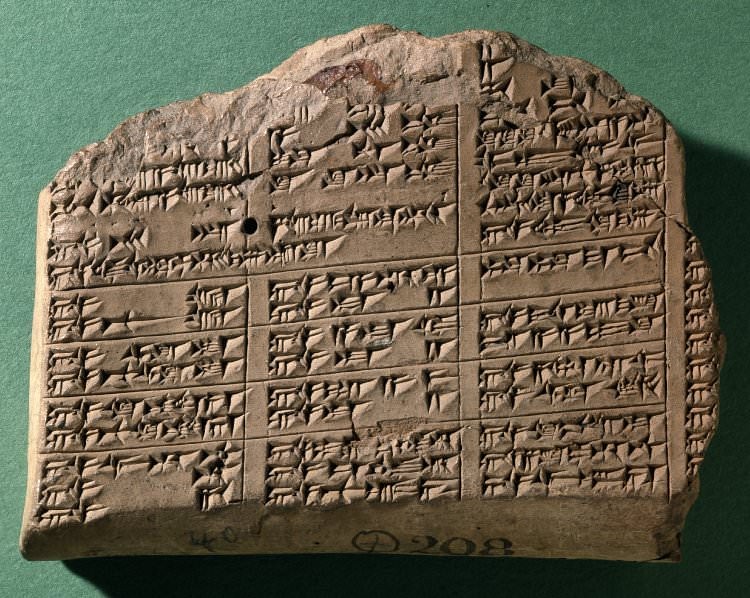
Photograph of proto-cuneiform tablet showing signs discussed in the article. Credit: CDLI – Cuneiform Digital Library Initiative

Starting in the mid-fourth millennium BCE, cylinder seals were used as part of an accounting system to track the production, storage, and transport of various consumer goods, particularly agricultural and textile products.

It is in this context that proto-cuneiform appeared: an archaic form of writing made up of hundreds of pictographic signs, more than half of which remain undeciphered to this day. Like cylinder seals, proto-cuneiform was used for accounting, though its use is primarily documented in southern Iraq.

“The close relationship between ancient sealing and the invention of writing in southwest Asia has long been recognized, but the relationship between specific seal images and sign shapes has hardly been explored,” says Ferrara. “This was our starting question: did seal imagery contribute significantly to the invention of signs in the first writing in the region?”

To find an answer, the researchers systematically compared the designs on the cylinders with proto-cuneiform signs, looking for correlations that might reveal direct relationships in both graphic form and meaning.

The origin of writing in Mesopotamia is tied to designs engraved on ancient cylinder seals
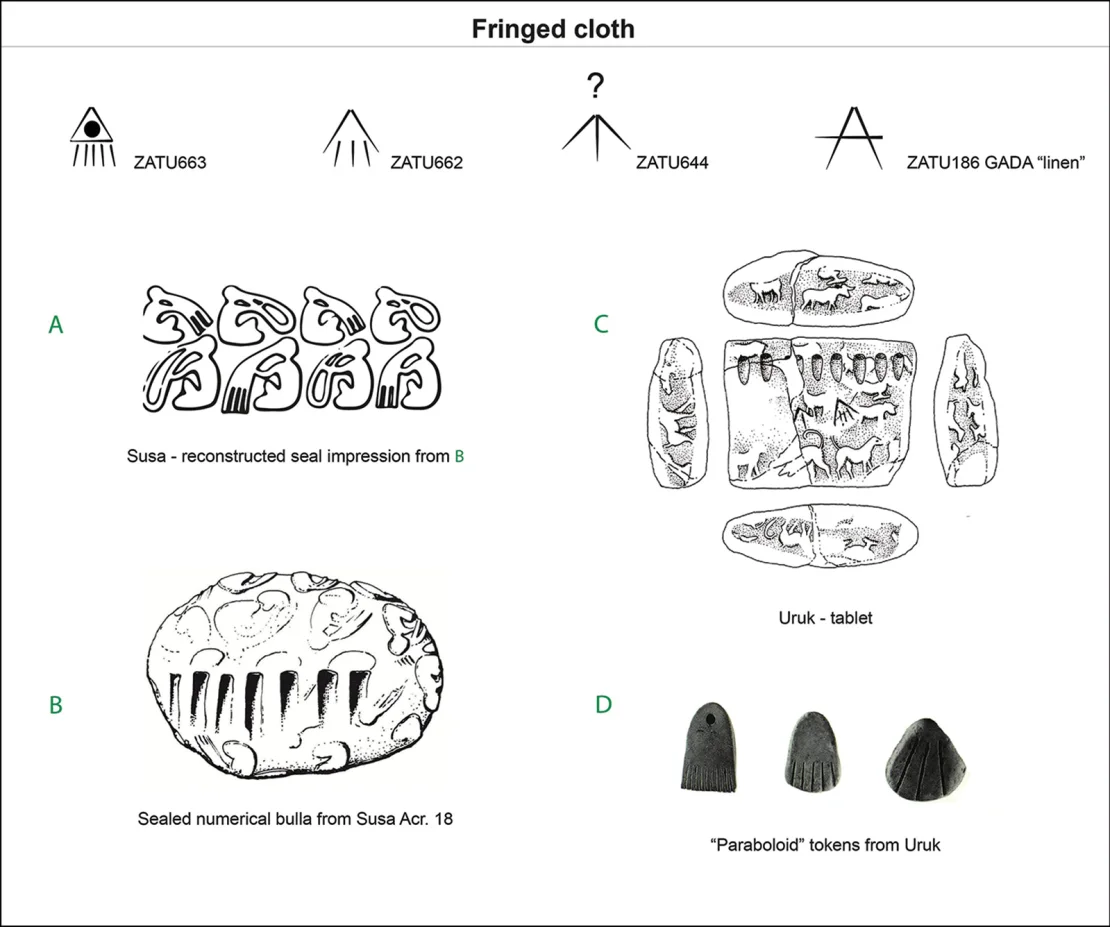
Diagrams of proto-cuneiform signs and their precursors from pre-literate seals. Credit: CDLI – Cuneiform Digital Library Initiative. There are others below.

“We focused on seal imagery that originated before the invention of writing, while continuing to develop into the proto-literate period,” add Kathryn Kelley and Mattia Cartolano, both researchers at the University of Bologna and co-authors of the study.

Researchers have uncovered links between the precursor to the world’s oldest writing system and the mysterious, intricate designs left behind by engraved cylindrical seals that were rolled across clay tablets about 6,000 years ago.  Researchers have uncovered links between the precursor to the world’s oldest writing system and the mysterious, intricate designs left behind by engraved cylindrical seals that were rolled across clay tablets about 6,000 years ago.

“This approach allowed us to identify a series of designs related to the transport of textiles and pottery, which later evolved into corresponding proto-cuneiform signs.”

This discovery reveals, for the first time, a direct link between the cylinder seal system and the invention of writing, offering new perspectives for studying the evolution of symbolic and writing systems.

“Our findings demonstrate that the designs engraved on cylinder seals are directly connected to the development of proto-cuneiform in southern Iraq,” confirms Silvia Ferrara. “They also show how the meaning originally associated with these designs was integrated into a writing system.”

What is cuneiform?

Cuneiform tablet
Cuneiform tablet

Cuneiform is a logo-syllabic writing system that was used to write several languages of the Ancient Near East. The script was in active use from the early Bronze Age until the beginning of the Common Era.

Avocado Green Mattress gets eco award, a first in the US

0
Avocado is a leader in organic mattresses in the United States.

What you sleep on 8 hours a night matters. New mattresses off gas harmful chemicals to you and your loved ones. As we lean towards finding more sustainable sleeping options, Avocado Green Mattress, the leader in organic mattresses, is proud to announce that the Avocado Green Mattress, Eco Organic Mattress, and Eco Organic Kids Mattress have earned the highly esteemed OEKO-TEX STANDARD 100 certification. Avocado helps you get a sustainable night’s sleep.

The OEKO-TEX STANDARD 100 is a globally recognized, independent testing and certification system for raw, semi-finished, and finished textile products at all processing levels, as well as accessory materials used. For a finished innerspring mattress to be OEKO-TEX® STANDARD 100 certified, every component, from the outer fabric to the threads, foams, and other accessories, must be tested and found safe from more than 1,000 substances known to be detrimental to human health.

Related: Here is our guide to understand organic mattress labels

“Mattresses can contain harmful materials, adhesives, and flame retardants. Given the intimate and prolonged exposure we have to our mattresses, it is crucial to consider their potential impact on health,” notes Mark Abrials, Chief Marketing & Sustainability Officer of Avocado Green Mattress.

organic eco mattress

Unlike some brands that only certify select components of their mattresses, Avocado Green Mattress has achieved STANDARD 100 certification for the finished innerspring mattress — and is the first in the United States to do so. This comprehensive certification means that every part of the Avocado Green Mattress, Eco Organic Mattress, and Eco Organic Kids Mattress, from the outer fabric to the pocketed innersprings, is tested for harmful substances and found to be within safe limits.

As Avocado Green Mattress looks to the future, the company remains dedicated to not only being the best in the world but also the best for the world. The company’s efforts to combat climate change, enhance social equity, and promote sustainable practices are more than just part of its business model; they are a call to action for businesses and individuals alike to contribute to a more sustainable and equitable world.

Follow their standards?

Are you a bed manufacturer that wants to do better? Avocado is “Best for the World” Certified B Corporation, Fair Trade Certified, Climate Neutral Certified, OEKO-TEX STANDARD 100 certified, meet MADE SAFE standards, a two-time winner of the Good Housekeeping Sustainable Innovation Awards, and are the Pinnacle Award Winner from 1% for the Planet. Fast Company lists Avocado as a “Brand that Matters.”

::Avocado

UAE’s Etihad Rail solar powers its freight terminal

0
Etihad freight
Etihad freigh

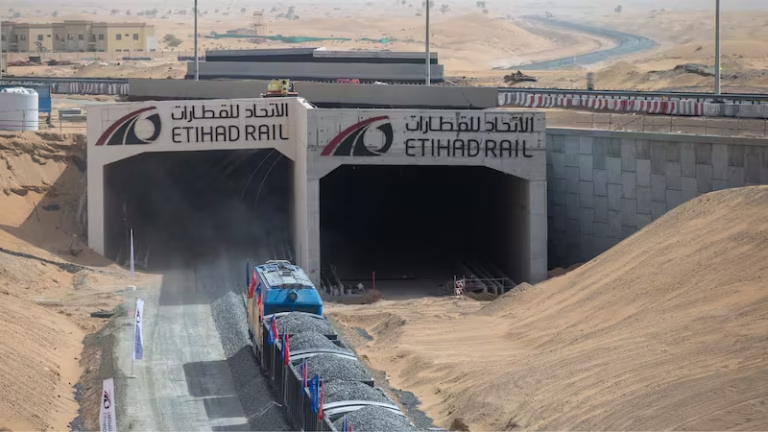
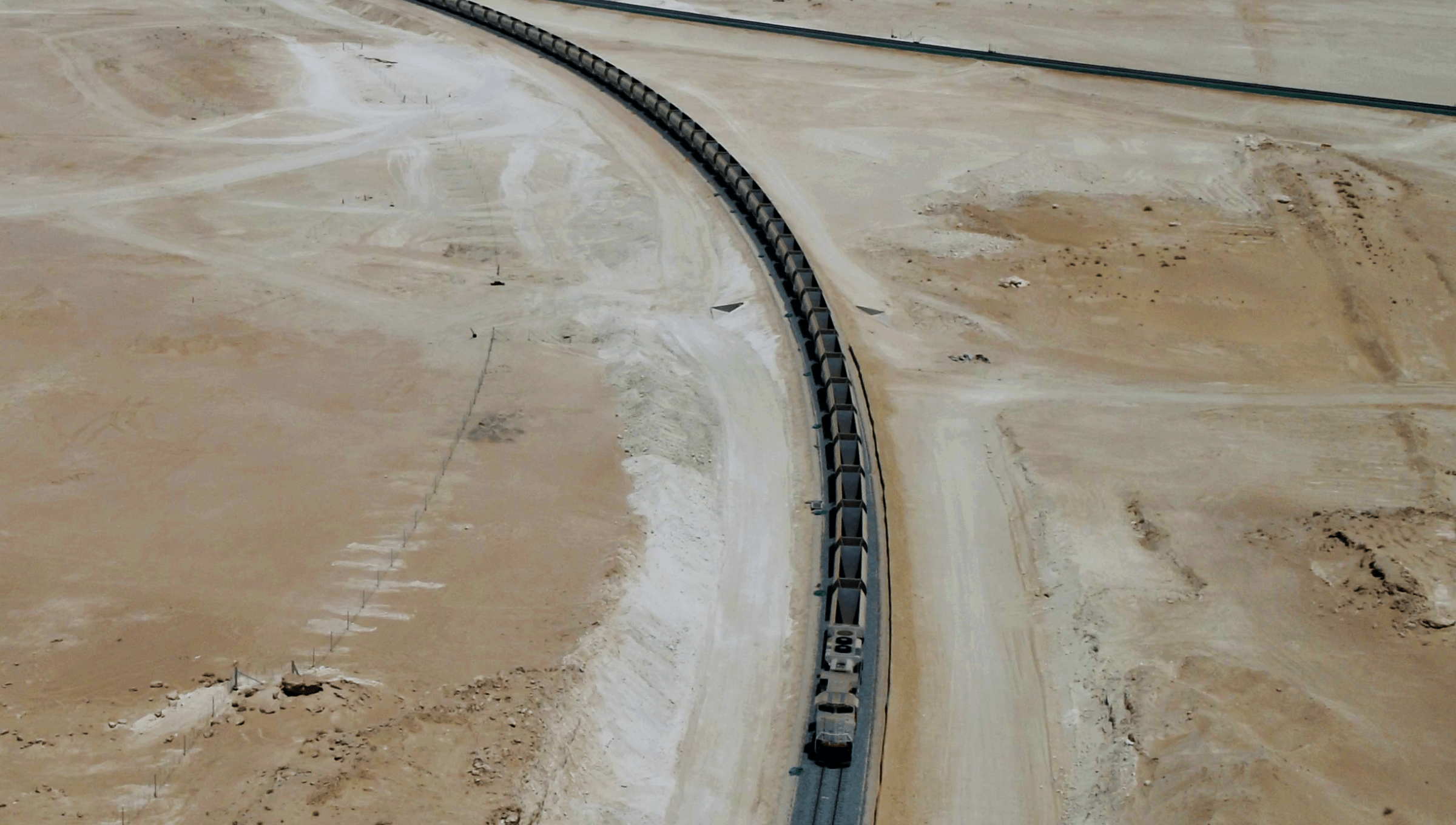
Etihad Rail, the developer and operator of the UAE National Rail Network, signed a landmark agreement with Emerge, a joint venture between Abu Dhabi Future Energy Company PJSC – Masdar and EDF Group to solarize the railway network’s freight terminal in Ghuweifat.

The total installed capacity is comprised of a 600 kWp ground-mounted solar PV system in addition to a 2.56 MWh battery energy storage system (BESS), and upon completion is expected to generate up to 85% of the terminal’s electricity consumption.

The agreement was signed by Ahmed Al-Yafei, CEO of Etihad Rail Infrastructure and Eng. Abdulaziz AlObaidli, Chairman of Emerge, and witnessed by His Excellency Shadi Malak, CEO of Etihad Rail, Mohamed Jameel Al Ramahi, CEO of Masdar, and Luc Koechlin, CEO EDF Middle East.

Under the terms of the agreement, Etihad Rail will leverage Emerge’s technology to generate solar power to supplement its Ghuweifat freight terminal with renewable energy during daylight hours, thus, offsetting night-time energy consumption as well as reducing CO2 emissions by more than 8,500 tons over the duration of the contract.

We are leading the charge in the shift to a low-carbon and energy efficient economy. By collaborating with Emerge and initiating the transition to solar power, we are not only reducing our environmental impact, but also building greener and more resilient supply chains, thus, supporting our nation’s goals and ambitions for a more sustainable future,” says Shadi Malak, CEO of Etihad Rail.

This initiative represents a significant step in Etihad Rail’s long-term commitment to environmental stewardship, directly contributing to its Environmental, Social, and Governance (ESG) strategy. Furthermore, it demonstrates Etihad Rail’s leadership in driving forward the UAE’s Net Zero by 2050 Strategy, supplemented by the railway network’s contribution to reducing CO2 emissions in the UAE road transport sector by 21% annually by 2050.

The Ghuweifat freight terminal serves as a key hub for facilitating seamless cross-border operations. With its strategic location at the border with Saudi Arabia, the terminal is uniquely positioned to accelerate sustainable logistics solutions regionally, aligning with Etihad Rail’s objectives to foster more eco-friendly freight operations.

By integrating solar technology into its network, Etihad Rail’s Ghuweifat terminal will eventually become self-sufficient, harnessing renewable energy to operate sustainably and reduce its carbon footprint, thus, setting a new standard for efficient and green logistics and infrastructure.

Related: Etihad Rail pioneers 3D plastics operations

Emerge, a joint venture between Masdar and EDF Group, was formed in 2021 to develop distributed solar, energy storage, and hybrid solutions for commercial and industrial applications. As an energy services company, Emerge offers clients full turnkey solutions through solar power agreements at no up-front cost to the client.

IUAE and KSA border at Ghuwaifat. Image via Overland Birds

Etihad Rail connects the emirates, linking industrial and commercial centres with 11 terminals, including four major ports: Ruwais Inland Terminal, Ruwais Port, ICAD, Khalifa Port, DIC, Jebel Ali Port, Al Ghail Dry Port, Fujairah Port, Ghuwaifat Terminal, Shah Terminal, and Habshan Terminal.

Ghuwaifat is a small town in the far west of the emirate of Abu Dhabi. The place forms a border crossing to Saudi Arabia on the transit road to Qatar. Ghuwaifat belongs to the urban area of Sila, which extends in the west to the border with Saudi Arabia.

Two-faced Turkey imposes tariffs on solar panels from Asia

China opens a $1 billion agreement with Turkey to build EVs in Turkey
China makes a $1 billion deal with Turkey to build EVs in Turkey circumventing EU tariffs imposed on Chinese electric cars.

Turkey imposes tariffs on solar panels when it hurts its local economy but it speaks from the other side of its mouth when it stiffs Europe by helping China evade high tariffs on electric vehicles sold in Europe.

China evades tariffs through a $1B car factory it is building in Turkey. Meanwhile Volkswagen is seeing 3 factories shut down and 30,000 people laid off.

Keep Europe European

According to the Turkish General Directorate of Imports as of September 27, Energy Trend is reporting that Turkey has imposed a tariff of $25 per square meter on photovoltaic modules imported from Vietnam, Malaysia, Thailand, Croatia, and Jordan. But exemptions have been made for JinkoSolar’s Malaysian subsidiary, JA Solar’s Vietnamese subsidiary, Trina Solar’s Thai subsidiary, and Vina Solar, a Vietnamese module manufacturer acquired by Longi Green Energy a few years ago.

On November 25, 2023, Turkey’s Ministry of Trade announced that, at the request of Turkish companies, it had launched an anti-circumvention investigation into photovoltaic modules originating from China. The investigation seeks to determine whether Chinese products are being exported to Turkey via Vietnam, Malaysia, Thailand, Croatia, and Jordan to evade anti-dumping duties.

Turkey suspects that some companies from these five countries are using “transshipment” to circumvent the previously imposed $20 per square meter countervailing duty on Chinese photovoltaic products. After months of review, the Turkish government decided in March this year to impose a new tariff of $25 per square meter on photovoltaic products imported from these countries, a 25% increase over the previous tariff.

This is rich considering that Turkey is helping China circumvent EV trade tariffs as together China and Turkey build a $1B Chinese EV company, BYD, on its soil so that China and Turkey can both profit from EU electric vehicle tariff exemptions. Currently any China-made electric car would see a high tariff and tax if it gets sold in Europe – which does not make them a viable purchase in Europe. Meanwhile Volkswagen is laying off employees in Germany because of the lowered costs of cars coming from Asian countries like China.

Volkswagen is seeing 30,00 layoffs and the closure of three factories: “This is the plan of Germany’s largest industrial group to start the sell-off in its home country of Germany,” Cavallo added, not specifying which plants would be affected or how many of Volkswagen Group’s roughly 300,000 staff in Germany could be laid off.

Turkey is not part of the EU for a reason. It is playing dirty against Western values with Iran, Syria and China and its dealings with Chinese businesses to avoid EU tariffs should be investigated. Trump as the new US president will probably restructure this unholy alliance, but not before the quality of life in Europe crumbles further from globalism.

Egypt’s agritech startup Viridia wins green $100K accelerator prize in Saudi Arabia

0

Saudi Arabia-based Mirai Solar, a Saudi-based solar-powered shade system out of KAUST, received the $30,000 second place prize.

Omar Elboghdady, co-founder and CEO of Viridia Tech.

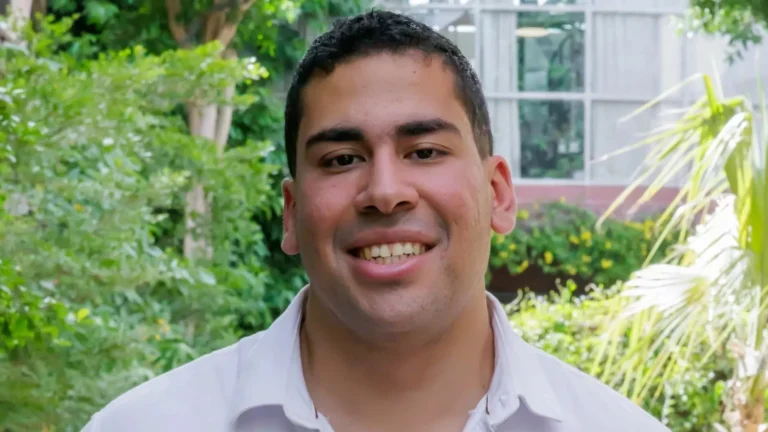
Egypt-based agritech Viridia Tech has been named the overall winner of the 2024 Mega Green Accelerator, awarded the $100,000 grand prize in Saudi Arabia for their impactful data analytics platform, which helps farmers grow crops more sustainably and efficiently.

Viridia Tech has been named the overall winner of the 2024 Mega Green Accelerator, following an exciting industry Demo Day held in Riyadh where eight startups from across the Middle East and North Africa region showcased innovative solutions addressing food security, clean energy transitions, and the circular economy.

Read more: Red Sea farms from KAUST grows food with brackish water

The Mega Green Accelerator, launched in 2023 by PepsiCo, SABIC, AstroLabs, and eleven other strategic partners, received over 350 submissions. The eight selected startups participated in a six-month programme of trainings and workshops, mentorship from business leaders, and opportunities to network, scale their businesses, and gain access to investors.

“PepsiCo has been a key partner in the region for 70 years, and we remain committed to supporting progress and empowering the next generation. Through MENA Innovates, we are focused on driving meaningful change by backing startups and advancing broader initiatives that promote innovation across the region. We look forward to seeing how the startups will contribute to a more sustainable future,” said Wael Ismail, Vice President of Corporate Affairs, PepsiCo AMESA (Africa, Middle East, and South Asia).

At the Demo Day, Egypt-based Viridia Tech was awarded the $100,000 grand prize for their artificial intelligence and data analytics platform, which provides real-time insights and recommendations to help farmers grow crops more efficiently and sustainably and forecast yields accurately.

Foreign-founded but Saudi Arabia-based Mirai Solar out of KAUST produces an innovative solar-powered shade system, received the $30,000 second place prize.

Mirai solar for carparks

The Mega Green Accelerator is part of PepsiCo’s MENA Innovates programs, which champion entrepreneurship, innovation, and sustainability through a series of events and initiatives that celebrate groundbreaking ideas and inspire future leaders.

Eight startups, including Mrüna and The Surpluss (UAE), AHYA TECHNOLOGIES (KSA), YY ReGen (Lebanon), P-VITA (Egypt), and Kumulus (Tunisia), were selected for this year’s edition of the Accelerator, led by PepsiCo, SABIC, AstroLabs, and eleven strategic partners.

Mega Green Accelerator
Mega Green Accelerator entry requirements

None of the companies in the competition included submissions from Israel – a proven, global leader in agtech, solar and water tech. Green Prophet calls on Saudi Arabia aiming to be a global tourism and business hub by 2030 to fight antisemitism in all its forms, including the exclusion of Jewish candidates from MENA prizes and exhibitions. It is common for the Arab world to circumvent antisemitism by inviting “Palestinians” who can be Arab Israelis, without letting the Jewish Israeli members of the MENA region participate. Decades of quiet antisemitism are no longer acceptable in contests and calls to actions by EU-funded, UN-funded and privately-funded contests.

A few leading cleantech inventions from Israel include CropX, Ormat Geothermal, and SolarEdge, solar energy technology.

About the start-ups participating in the 2024 edition

UAE Mrüna, inspired by the Arabic word for resilience, is a consulting and distribution company dedicated to developing innovative urban solutions. Their flagship product, BiomWeb, is a nature-based solution that utilizes emerging technologies to treat and manage wastewater for reuse.
The Surpluss is a US-patented award-winning climate technology start up that helps SMEs reduce their greenhouse gas emissions, profitably, through resource sharing through a digital sustainability exchange.


Saudi Arabia

Mirai Solar expands the utilization of solar energy beyond conventional applications via its proprietary Mirai Screen – a lightweight and foldable electricity generating shade screen. Mirai’s solutions dramatically improve the energy use efficiency of food production and smart buildings for a sustainable future.
AHYA TECHNOLOGIES is a climate software and AI start-up building a unified platform for scaling climate action across the Middle East North Africa & Pakistan. Ahya has two core products in AhyaOS – AI powered greenhouse gas emissions operating system and Tawazun – omni-channel voluntary carbon marketplace.
Lebanon YY ReGen is an innovator in agritech and renewable energy committed to transforming the way customers’ ventures are powered, watered, and grown. They focus on a more affordable, less pollutive, and regenerative approach to create a sustainable future.
Egypt Viridia Tech offers a platform enabling crop analytics at scale for industrial agricultural companies offering unprecedented monitoring capabilities and refined recommendations resulting in double digit improvements in yield, unit economics and sustainability metrics.
P-VITA is a pioneer biotechnology hub that specializes in producing natural raw materials for the cosmetics, and food & beverage industries through innovative and patented processes with utilizing AI and IoT technologies to reduce carbon footprint through automated processes.
Tunisia Kumulus a water tech startup that turns air into fresh drinking water through innovative AWG machines. Their machines make drinking water more accessible, sustainable, and economical for hotels and businesses across MENA and southern European regions.

Curious to know more about this accelerator hosted by PepsiCo, click here for last year’s winners which include companies from Lebanon, Jordan, and the UAE.


How bats navigate on sound alone over long distances

0

While we know that bats echolocate for short distances, for the first time science shows that bats can navigate in nature over many kilometers using only echolocation, without relying on other senses

Blind as a bat is an expression but now scientists show how bat navigation using sound really works when navigating long distances. Could this advance help propel autonomous vehicles or robotics in the future that look to biomimicry for inspiration?

“For the first time, we have shown that bats are able to navigate great distances in open areas with their eyes closed, using only echolocation; they even create a mental acoustic map of their surroundings,” say researchers from Tel Aviv University.

Related: how bats help your babies

While we know that bats echolocate for short distances, for the first time science shows that bats can navigate in nature over many kilometers using only echolocation, without relying on other senses: “It’s well-known that bats are equipped with a natural sonar, allowing them to emit sound waves that bounce back from nearby objects, helping them navigate. However, it’s also known that bats use their sense of sight during flight.

Laboratory studies have shown that bats are able to navigate within enclosed spaces using only echolocation — but sonar ‘sees’ only about 10 meters ahead, so what happens under natural conditions, in open areas stretching over many kilometers? Can bats rely solely on echolocation for long-distance navigation?” 

Kuhl’s pipistrelle bat

The research was led by Prof. Yossi Yovel.

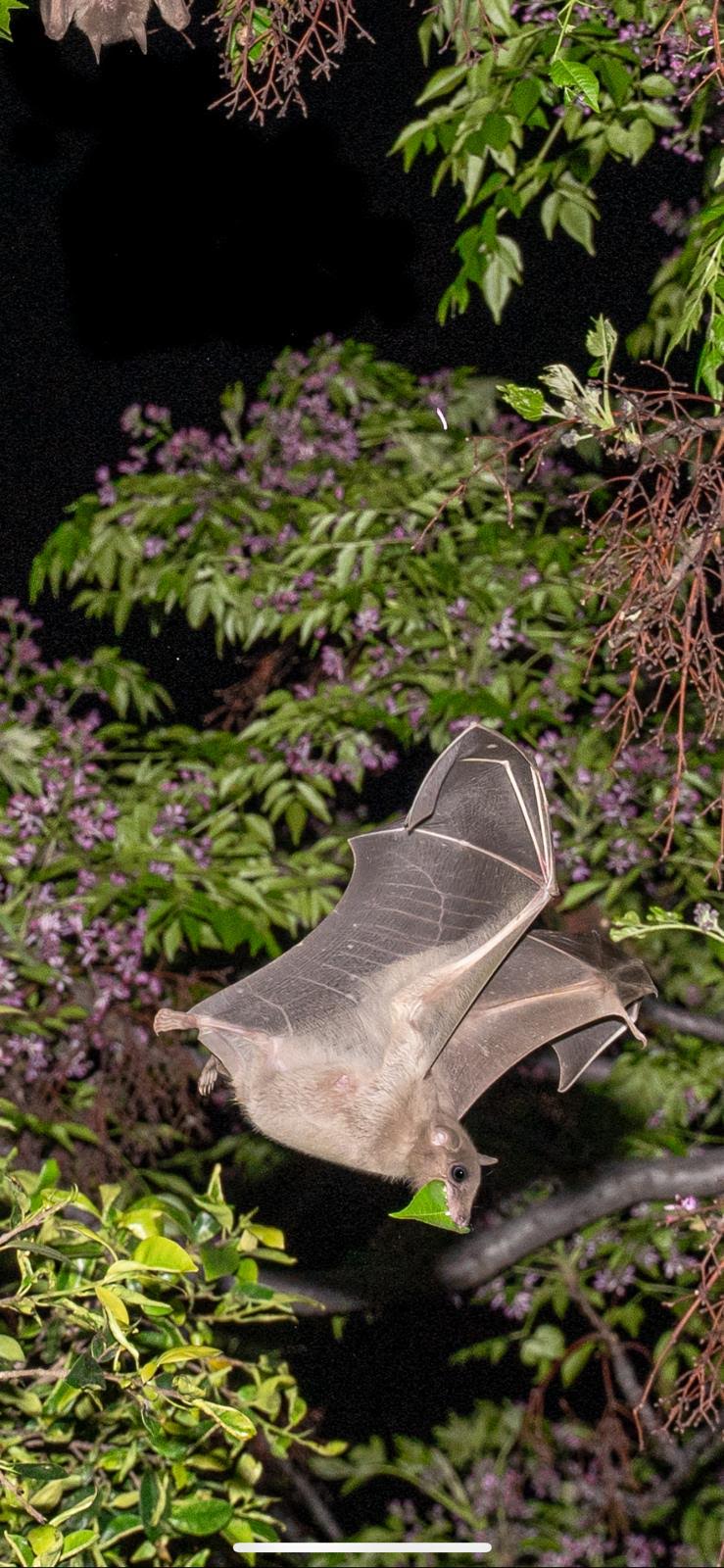
The innovative research, carried out over a six-year period, utilized a unique tracking system installed in Israel’s Hula Valley. Using this GPS-like technology, the researchers were able to track the flight of tiny bats from the species known as Kuhl’s pipistrelle, each weighing only six grams —— the smallest mammal ever to be monitored in this way.

For the study, the researchers collected around 60 bats from their roost in the Hula Valley area and moved them about three kilometers away from the roost — still within their familiar habitat. A tag was attached to each bat, and the eyes of some were covered with a cloth strip, temporarily preventing them from seeing during flight, though they could remove the covering with their feet upon landing.

In addition, the researchers employed techniques to temporarily disrupt the bats’ sense of smell and magnetic sense, thereby creating conditions in which they would be able to find their way home using only echolocation. Remarkably, the bats managed to return to their roost without difficulty.

In the second phase, the researchers built a computerized acoustic model of the bats’ natural environment in the Hula Valley.

the researchers were able to track the flight of tiny bats from the species known as Kuhl’s pipistrelle, each weighing only six grams

Prof. Yovel explains: “This model is based on a 3D map of the area where the bats navigate, reflecting the echoes that the bat hears as it uses echolocation to journey through its surroundings. In examining the bats’ flight paths, we discovered that they choose routes where the echoes contain a lot of information, which helps them navigate. For example, an area rich in ​​vegetation, such as bushes and trees, returns echoes with more information than an open field, making bats less likely to fly over open terrain. We also found that some areas are characterized by distinct echoes, which are picked up by the bats.

“These findings strengthened our hypothesis that in any given area, bats know where they are based on the echoes. The bats effectively create an acoustic map in their head of their familiar environment, which includes a variety of active ‘sound landmarks’ (echoes) — just as every sighted person has a visual map of their everyday surroundings.”