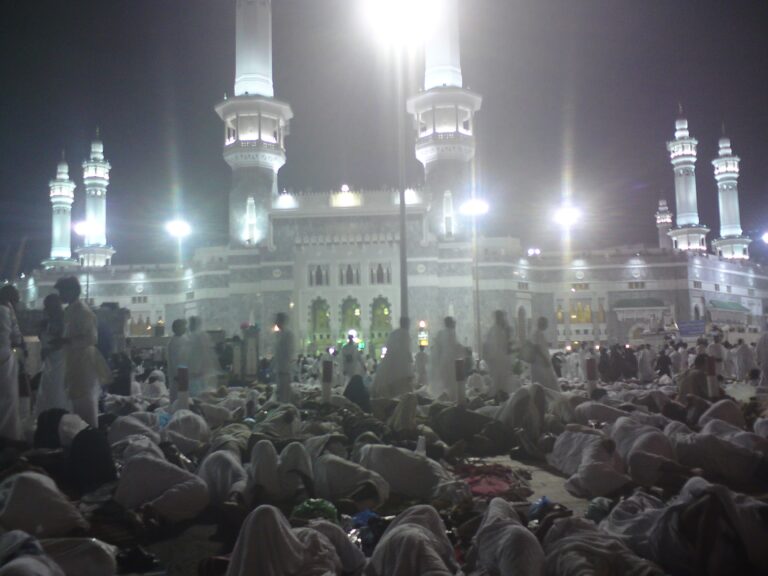
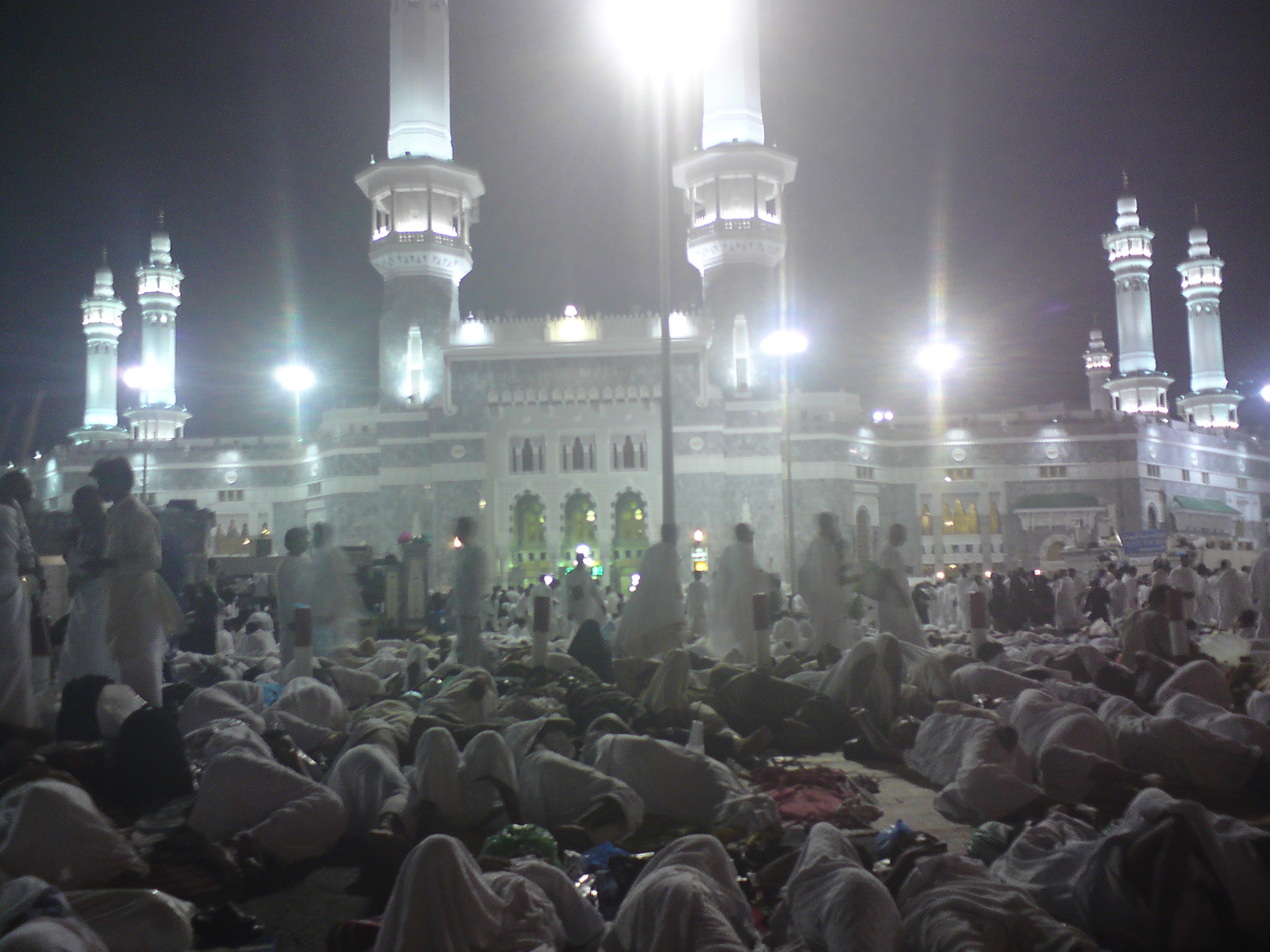
 Green Prophet’s Arwa measures her family’s carbon footprint to Hajj.
Last year, my auntie and her family- the Hussains- did one of the most important things that a Muslim can do in their lives. They fulfilled one of the five pillars of Islam and went to Hajj which is a pilgrimage to Mecca in Saudi Arabia. However, as a journey required by every Muslim who can afford it, concerns have been raised about the impact of this annual pilgrimage on climate change due to aviation, waste and litter. If every year around 3 million people make the journey, what is their carbon footprint? Also how can we ‘green’ Hajj to make its impact on the planet gentler?
In the first installation of a three-part feature, I will be totting up the carbon footprint of the Hussain family’s pilgrimage from the UK to Mecca. Now, I am not claiming to be some carbon expert who has measured their journey accurately, I just wanted to look at the major aspects of the pilgrimage and their environmental implications. Stay tuned for part two where the good and bad (environmental) aspect of Hajj are explored and suggestions are made to help ‘green’ Hajj.
Travel to Mecca and Back
A large chunk of the Hussain’s carbon footprint is from their flight as they are travelling from the UK to Saudi Arabia. All together the family consists of five members and they travelled from Manchester Airport to King Abdulaziz International. According to one carbon calculator (and remember they all differ hugely) this brings them to a grand total of 11.65 tonnes of carbon for their flights.
Now taking into consideration that they stayed in Mecca for 18 days, this brings them to a total of around 25.57 tonnes of carbon according to calculations by the Carbonica holiday calculator.
Travel in Mecca

Overall, my aunty’s family relied on buses and coaches to get around. Clearly some locals do bring their own private transportation but due to high congestion most visitors will rely on public transport. Iman Hussain, my aunty’s daughter noted that due to the volume of people heading to prayers at the same time, travel is Saudi is very slow. Consequently, this brings the Hussain’s total carbon footprint to approximately 32.77 tonnes of carbon. This calculation does not include any activities they took part in, where they stayed or what they ate.
Food & Drink
I struggled to find a carbon calculator which considered the carbon footprint of food and drink during travel/holiday but I still felt it was an important category to include. Iman Hussain noted that most of the food publicly provided during Hajj is tinned food as well as lots of fruit. “Due to the heat, everything was in plastic containers as the food would just go off very quickly otherwise. Most of the tinned food was imported from different countries and there was a lot of waste.” No doubt the huge amount of imported and tinned food as well as waste and reliance on plastic containers would add to the carbon footprint.
Even so, the overall carbon footprint is already quite large and there are probably many other pilgrims with larger footprints. Look out for part two and three when I explore what can be done to cut this carbon footprint and make Hajj more environmentally friendly.
Image via Iman Hussain.
Again I just want to re-iterate that I am no expert on carbon calculation. In fact, I welcome any offers from experts to assess the carbon footprint of the average Hajj pilgrim properly as it was the lack of any data which led me to this rather slapdash effort.
For more on Green Hajj see:
‘Mekka Metro’ Marls a Green Hajj for Pilgrims
An Epic Journey to Mecca- by Bike! (Slideshow)
Saudis Listen to Call for Green Hajj
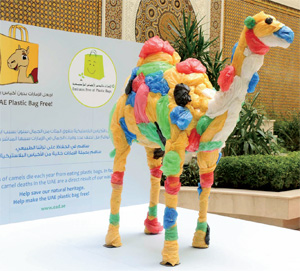
 This story makes our hearts sing! Taking the threat of plastic bags seriously, Abu Dhabi is preparing for the 2013 total ban with a plastic-free weekend.