Home Blog Page 533

Gulf Interconnection Electrical Grid Could Save Billions in Energy-Hungry Gulf

Six Gulf states hook up for profit

A few years late, phase two of the long-planned GCC Grid was inaugurated this week. When all four sections are complete it will unite the six Gulf nations on one unified electric grid, making it much easier to build and share power from renewable energy sources, and realize the gains in energy efficiency that come from sharing a wider grid. The cost savings could amount to Dh$18.4b – in US dollars, about $5 billion.

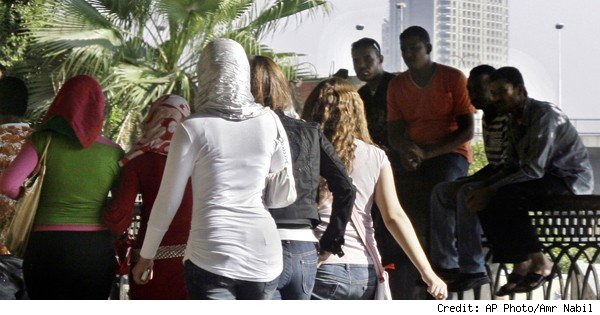
Sexual harassment against women in Muslim countries

Conservative Muslim bloggers and women’s rights activists bring harassers and inadequate legal and cultural protection to task, with women leading the charge.

Women’s rights are a key environmental issue, a topic we’ve covered in recent articles about the need for a language revolution and the Arab Spring of women.  Women in the MENA region are struggling behind their western counterparts with regards to reproductive and sexual sovereignty. From virginity tests to sexual harassment, environmentalists are committed to giving voice to efforts that stake a stand against gender-based social injustices.

That conversation recently becoming more pronounced in the MuslimMatters.org community, with the April 25, 2011 publication of an article entitled, “Sex & the Ummah | Sexual Harassment: A Muslim Problem?” The author, Hena Zuberi, shares her personal encounters with unwanted touch – each one is chilling and some are echoed in the experiences of other commentators of her blog.

“A touch, a feel, a whisper. It doesn’t take much to make a young girl feel dirty, stripped of her dignity. Walking in the streets of this Muslim country was treacherous,” she writes. And then in thoughtful language that spares neither civility nor responsibility, she ascertains those features of her beloved country and religion (or interpretations thereof) that allow for the continued subjugation of women.

Her conclusion: Women and men must speak loudly about the problem, and no longer hide in shame when someone harasses them for simply being a woman in the wrong place at the right time from the perspective of the aggressor.

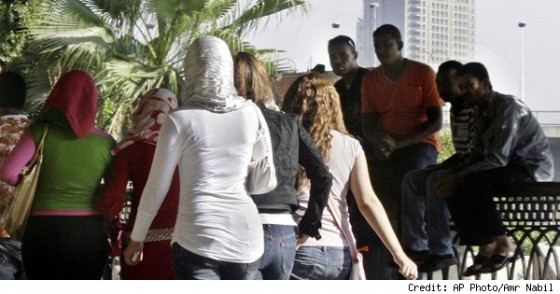
Sexual Harassment is at epidemic proportions in some countries in the region. Consider these statistics, taken from Zuberi’s article:  “In 2008, Abul Komsan, the woman’s rights activist, polled 1,000 women from all parts of the country. What she found shocked her. 98 percent of foreign women polled said they had been sexually harassed. And about eight out of 10 Egyptian-born women said the same thing. She also surveyed Egyptian men, and almost two-thirds of men polled actually admitted that they harassed women.”

Religious and non-religious women, Muslim and not, dressed conservatively and otherwise, have been reporting extraordinary high numbers of untoward advances that include groping, inappropriate language, to outright assault.

Further, she writes that, “From Mexico City to Chicago, this is a male problem.  According to National Crime Records Bureau, the fastest growing crime in India is violence against women.  Walking down the street, taking public transportation or having a career, all put women at risk for sexual harassment and sexual assault, no matter the city, country or continent.” No country and no female are fully safe, she states, even those dressed in the most conservative attire.

Zuberi holds men and women responsible – not those who are victimized, but those who as she experienced as a child either offered no support or looked the other way. “I do not believe a victim is responsible, but the other women in the society are. Having said that… just as we would caution children about sexual predators, we should remind ourselves not to be vulnerable and accessible, the two qualities that rapist and harassers look for.”

Society must change its responses, she insists. “Men need to support their daughters, sisters, wives when they complain of harassment instead of forbidding them from going out or blaming them for causing the incident.  Men and women both need to raise sons to be men who do not treat women like toys.” These sentiments may resonate particularly well with important allies – non-Muslim women living in Western countries who have long pointed out that no manner of dress or behavior is an invitation to assault.

What’s equally noteworthy about the article, aside from the author’s convictions, are the responses by many readers (at last count, they totaled 160 comments). Many women shared their experiences, suggestions and outrage over sexual harassment in Muslim countries.   One female writer identifying herself as Nadia expressed alarm in response to suggestions that women bring sexual violence upon them because of how they are dressed (i.e., modestly, but without a niqab) or for simply leaving the house (one male reader insisted that harassment would stop if women stayed home all the time).

“That lesson is not going to be learned by just covering someone up because you are validating the point that women are simply sexual beings and cannot be seen as human beings until you add some kind of artificial barrier over them,” Nadia writes. “How come women seem to understand this and don’t demand that men cover their hair or smile or arms, because those can be attractive? Why is a woman not offended or “challenged” by a man walking around and living his life regularly?”

“Obviously rape happens all over the world, but it is unique in the Muslim world for being framed as a clothing-responsibility and gender-responsibility argument instead of a religious-values, social upbringing argument.” She continues.

The author references several important steps men and women can take to end the social acceptance of sexual harassment, including the role that Harrassmap.com (no longer operating as of 2023) can play in empowering women.

According to the website, the aim of harrassmap.com is to, “implement a system in Egypt for reporting incidences of sexual harassment via SMS messaging. This tool will give women a way to anonymously report incidences of sexual harassment as soon as they happen, using a simple text message from their mobile phone. By mapping these reports online, the entire system will act as an advocacy, prevention, and response tool, highlighting the severity and pervasiveness of the problem.”

In a blog about the grassroots program, London-born journalist Jack Shenker investigates why sexual harassment has increased in the Middle East, Egypt in particular, over the last twenty years. He writes:

Why is sexual harassment such a problem in Egypt? Anecdotal evidence suggests that 20 years ago this simply wasn’t an issue on the same scale; when cases of harassment did occur other people on the street would often step in to help. These days such assistance is rarely forthcoming.

Many different explanations have been put forward, with varying degrees of credibility. Some blame Islam’s (highly contested) attitude to women, though harassment levels in Egypt seem to far outstrip those in other Muslim countries. Others point to sexual frustration, which is certainly a factor in a country where economic pressures are forcing many young people to wait longer and longer before they can afford to marry – but this doesn’t account for pre-pubescent children and married men being among the harassment repeat offenders.

HarassMap’s Rebecca Chiao offers another perspective: “Egyptians today are exposed to a great many pressures: unemployment, inflation, urban overcrowding, pollution … pressure from all directions. And one of the ways that pressure manifests itself is in the targeting of the weak and marginalised; in the news we see negative attitudes towards refugees, sectarian violence, and of course harassment of women – who are a social minority, despite making up 50% of society.”

The program currently operates on a volunteer basis, and was formed by both foreign and Middle East born women’s rights activists.

Related News:

The Middle East Needs More Sluts

The Rising Voices of Arab Women

Harrassmap Let’s Women Cyclists Report Abuses in Cairo

 

Trees In Jordan’s Ajloun Forest Still At Risk

0

Despite a campaign by environmentalists to protect the Ajloun forest in Jordan, 300 trees will be uprooted to make way for a military academy

Back in January 2011, Jordanian environmentalists launched a campaign to help protect Ajloun forest from a development project which would have seen 2,200 trees cut down across 45 dunums of land. After a lot of hard work and support from ordinary Jordanians, the Jordanian government announced it would carry out an environmental assessment of the project and help minimize the harm to Ajloun forest. The location of the project (a military academy) was moved and an environmental assessment was carried out- campaigners thought that they had won the battle to protect Ajloun forest.

However, over the last couple of days the government has approved amended plans for the military academy which would entail cutting down 300 trees.

Empower to Cool Dubai With Recycled Sewage


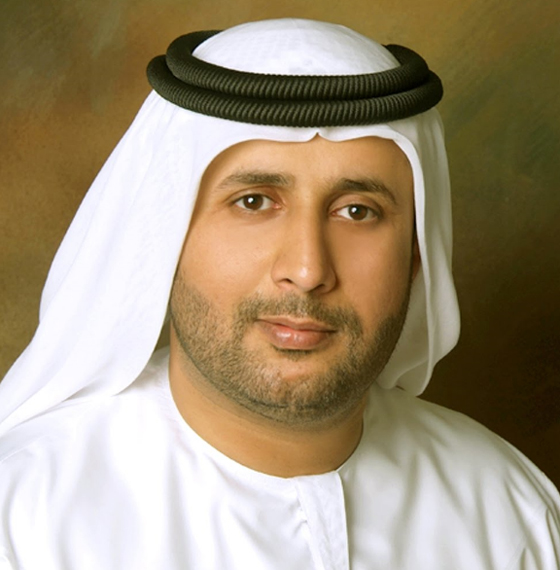
District cooling is already super green. Now Ahmad Bin Shafir plans to take the mission one step further

Wild and crazy Dubai is hardly known for sensible conservation of scarce resources, but CEO Ahmad Bin Shafir could change all that with a radical new approach to keeping cities cool. His rapidly growing company Empower already cools Dubai’s most efficient new buildings with district cooling.

Next BrightSource US Solar Projects Make More Energy than Fossil-Fuel Plants

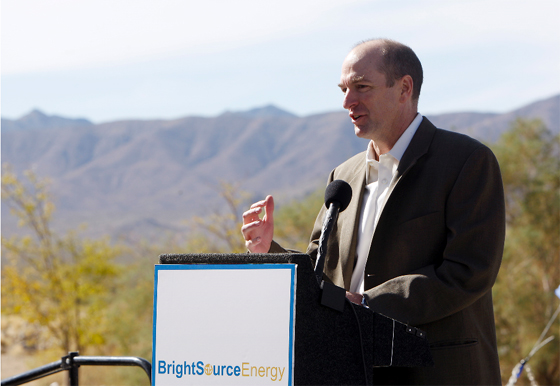
BrightSource Energy has two new mega solar thermal projects in “advanced development” in California, according to its recent filing with the SEC. Rio Mesa Solar is planned on a 6,000 acre site, and Hidden Hills Ranch in Riverside County is a solar thermal project on 10,000 acres with a rated capacity of 500 MW.

Rio Mesa Solar is still in development, but the Hidden Hills project has advanced to the point where it is included in the CEC tracking report that was just updated this month.

The Little Fair Trade Shop Shows Masdar Its Big Heart

2

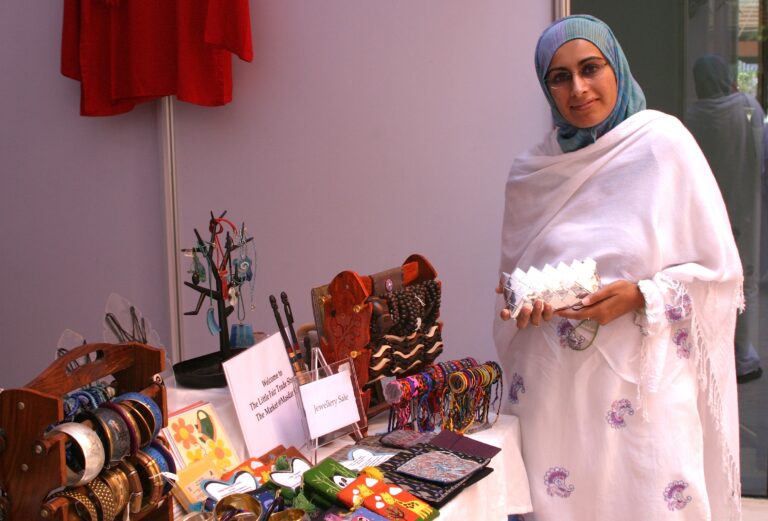
fair trade, eco-store, dubai, eco-design, Little Fair Trade StoreCome sun or more sun, Sabeen Ahmed intends to keep growing the Middle East’s first fair trade store.

Along with other vendors, Sabeen Ahmed set up her little eco-booth for the first time at Masdar City’s Street Fair and Organic Market last Friday. The first to introduce Fair Trade to the Middle East, she normally sells her wares at the weekend Covent Garden Market in Dubai, where she is surrounded by consumers who prefer brand names to the humble products painstakingly crafted by struggling artisans. But the Little Fair Trade Shop’s founder is so passionate about what she does that she presses on despite a flock of obstacles.

Live Blog: School Children Pledge To Save UAE Fish

0

the end of the line, american community school, abu dhabiStudents and parents gather at the American Community School in Abu Dhabi to watch The End of the Line.

Today we’re blogging live from the American Community School in Abu Dhabi, where students have watched an abbreviated version of a documentary called The End of the Line. Based on Charles Clover’s book of the same name, the documentary conveys a crucial message: if we (and our governments) don’t make radical changes now, by 2048 there will be no more fish in our oceans. Joined by Rashid Sumaila, Director of the University of British Columbia’s Fisheries Center, Nessrine Alzahlawi from EWS-WWF, and Melanie Salmon from Global Ocean, we’re eager to hear from kids. Step on in to learn how the children feel about our dwindling fish stock.

Meet Rawabi’s dreamer: Bashar Masri

0

rawabi palestineWe speak to Bashar Masri, the man behind Rawabi, which means “The Hills”, Palestine’s first planned and green city.

Since announcing plans to build Palestine’s first planned and green city back in 2008, the Rawabi project has faced its fair share of criticism. From political complications over using Jewish National Fund trees, concerns by environmentalists over the lack of water and waste-water management plans to threats by Israel to shut down access roads and boycotts– the project really has seen it all.

Rawabi (which means hills in Arabic) is an ambitious $800 million USD project which aims to build houses for up to 25,000 people in a location between Jerusalem and Nablus whilst respecting the environment. Despite these good intentions the Rawabi project does seems to pose more questions then it answer.

For example, how does it plan to navigate the political conflict between Israel and Palestine during construction? Does the Rawabi project really live up to its green credentials? And what do Palestinians think of the project? In a bid to get to the bottom of these questions we caught up with Bashar Masri, the man behind the Rawabi project to find out more.

Bin Laden is Dead – Will the Environment Benefit?

bin laden environment carbon emissionsKilled in a hide-out in Pakistan, Osama bin Laden’s body will be transferred to America.

United States President Barack Obama has confirmed that al Qaida leader Osama bin Laden is dead. Bin Laden was killed in a hide-out in Pakistan, north of Islamabad, according to the White House. The Jihadi terrorist was the mastermind of the Trade Tower bombings on September, 11, 2001.

“We conducted an operation that killed Osama bin Laden,” the president said in a televised address to the United States public.

Other Al Qaida actions against America included bombings of two American embassies in Africa. Obama is vigilant about stamping out terror, a welcome move that would no doubt have environmental and health benefits for the entire Middle East region.

BrightSource Energy Has Potential to Supply 13% of California’s Electricity


According to its recent filing with the SEC, BrightSource Energy has control of approximately 110,000 acres suitable for solar development in California and the U.S. Southwest with the potential to produce approximately 11 GW (11,000 MW) of installed capacity.

The total capacity supplied to California – from all forms of electricity – both from in-state and from out of state is currently 80 GW. This would mean that – if there were none of the nonsense legal obstacles that seem to beset all solar development – BrightSource Energy alone would be able to produce nearly 13% of California’s total electricity needs, just from solar, well up from the less than the 1% of total solar from all developers on the grid so far.

Former Masdar Director Says The UAE Must End Subsidies

2

green building, zero carbon, zero waste, grenea, khaled awad, masdarFounding director of Property Development at the Masdar Initiative, Khaled Awad claims that fuel and water subsidies preclude meaningful sustainable development.

Green building won’t be viable until the United Arab Emirates end water and fuel subsidies, according to Khaled Awad. The founding director of Property Development at the Masdar Initiative and co-founder of Grenea, a Dubai-based startup that aims to develop zero-carbon zero-waste real estate communities around the world, Mr. Awad has offices near Jumeirah Beach in Dubai.

Overlooking the Burj Al Arab, a mesmerizing tower that resembles a sail, the quiet interior belies the bustle outside. What used to be a peaceful weekend getaway for Emiratis is now a metropolitan center full of only partially-occupied towers that devour water and energy. But this wasteful development model is at odds with a dismal reality. The oil boom is over, water is not plentiful, and climate change is real.

A “Fresh” Arab Spring Flows Through Auja, Palestine

auja palestine authority palestinian water jericho peaceA visit to Auja, Palestine can open the world’s eyes to sustainable peace through water.

It starts with water and ends with a Debka dance: Friends of the Earth Middle East, a trilateral Israel-Palestine-Jordan non-profit organization has launched an unbelievably hopeful project based on water in the West Bank village of Auja, about 10 minutes from the city of Jericho in the Jordan Valley.

Probably not since the Roman times when an aqueduct ran through the village, has something this exciting came to Auja (said oo-jah), a rundown and dusty Palestinian village of about 5,000 people of local Arab tribes and Bedouin stock. Today, the locals are getting ready for the guest of honor: American Consul General to Palestine, Daniel Rubinstein, is set to arrive in the next hour. He’s an American Jew, who speaks fluent Arabic.

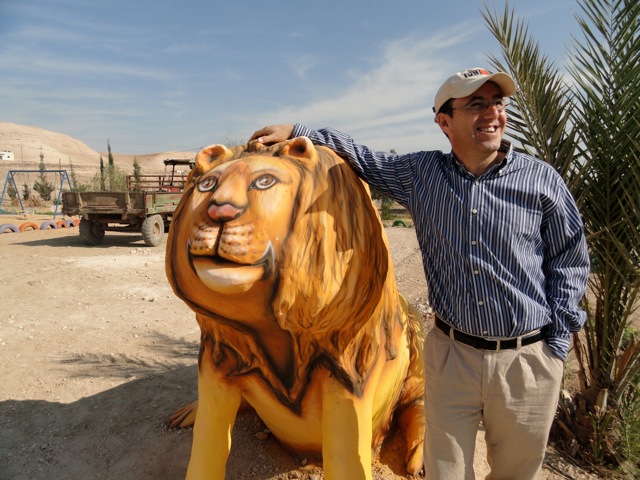
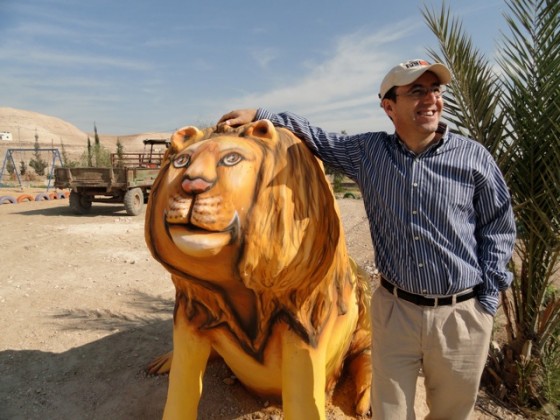
“Oh good, the lions have arrived,” says Gidon Bromberg excitedly, as we wheel into the dusty parking lot in his rental car, staff scurrying around us, including the local mayor, putting the finishing touches on the new building that houses the Auja EcoCenter. Everything is spic and span, polished, swept and dusted. A tent is ready to host Rubinstein and his entourage.

Anne Frank’s Tree Memorialized in Israel

2

anne frank tree
This tree gave Anne Frank so much pleasure when she was in hiding.

Just before it was about to die, seeds from the Anne Frank tree in Amsterdam were collected and germinated so that the tree that she loved so much could live on. In her diary, now a book, The Diary of Anne Frank, Frank recounts her time in hiding from the Nazis. And although she didn’t survive the Death Camps, her father released her diary to the world. In it she mentions the white horse chestnut tree, in the garden of her secret annex hideout. This tree that gave her so much joy will be part of a new memorial in Israel.

Interview with MiKlum Studio, Designers of Furniture Out of Nothing

1

"upcycled wood shelf design"Singular upcycled wooden boxes called “Frank” combine to create larger design pieces.

Tel Aviv has been fortunate enough to experience a recent influx of sustainable design studios, creating anything from rotary telephone desk lamps to wood veneer light fixtures.  These studios are slowly bringing upcycled and sustainable design to the mainstream, and two new girls on the block recently opened yet another studio – MiKlum.  MiKlum (or, “from nothing” in Hebrew) is the south Tel Aviv studio of Daphna Olinsky and Einat Zinger-Feiler, two ladies who decided to create, in their own words, “renewvative design”.

The two “gather and re-design materials that have completed their ‘conventional’ life cycle and are considered waste,” using their design prowess to transform these materials into new, functional, interesting pieces.  Green Prophet spoke to Daphna and Einat recently, learning more about sustainable design, the eco-design community in Tel Aviv, and how they go about collecting materials.

Strip Naked for the Dead Sea and Spencer Tunick

dead sea nakedThe Naked Sea installation is intended to draw attention to the declining environmental situation at the Dead Sea. Will you get naked for the Dead Sea?

Naked-people-installation-artist Spencer Tunick is still trying to raise funds to create a massive naked art exhibit which he plans on photographing at the Dead Sea – which we covered last year.

Called “Naked Sea,” he plans on using real life floating bodies to float on the Dead Sea while he documents the event in print. Spencer and his Israeli partner Ari Fruchter are now trying to raise $60,000 by June 6 to make it happen by the end of this year.

Even winter at the Dead Sea can be warm and divine. But does Spencer have any idea what the high salt content of the Dead Sea can do to your private parts, when exposed?