Home Blog Page 528

Israeli Enviro Minister: Please Keep Politics Out of Water!

1

israel erdan water parisIs it possible to keep politics out of water negotiation in the Middle East? Israel enviro minister (center) thinks so

In a statement to the panel Hydro-Diplomacy: A Path to Peace, at the For’UM Conference on Innovation, which took place in Paris on May 31, Israel Minister of Environmental Protection Gilad Erdan called for keeping the water issue out of the political conflict. He noted to other ministers in the room from the Midde East North Africa Region that water scarcity and water source pollution threaten both the Israeli and Palestinian populations and said that if the issues of water supply and political conflict are not separated, cooperation and a solution to the water problems plaguing the entire population of the region will not be reached.

The Famous Potters Of El-Qasr, Egypt Got Soul

1

sustainable development, art, culture, travel, egyptPottery has been passed on for several generations in el-Qasr, an ancient village 12 hours south of Cairo.

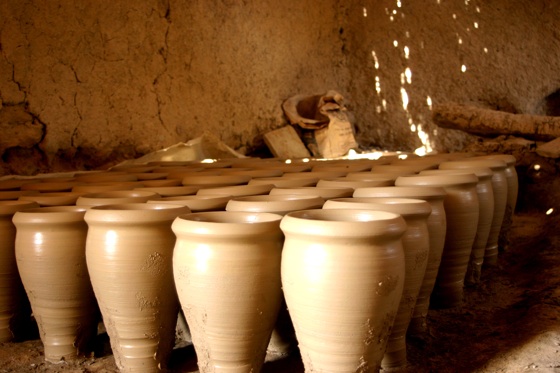
In the medieval village el-Qasr, set at the foot of a limestone mountain in Egypt’s western desert, pottery is taken very seriously. In their book Egypt, Civilization of the Sands, Pauline and Philippe de Flers quote the historian Nessim Henry Henein, who spent several months with master potters in the region.

He said, “The Potter of Al-Qasr describes his wheel as a soul that engenders life, and the act of potting as gestation and birth.” Reading this imbued my visit to a tiny, dark studio situated on the edge of the village with a sense of the sacred. But I don’t think the potters felt the same way.
sustainable development, art, culture, travel, egypt

Followed by a little boy who kept trying to sell me a woven broom, of sorts, and his sister who kept telling him to leave me alone, my guide introduced me to the famous potters of el-Qasr.

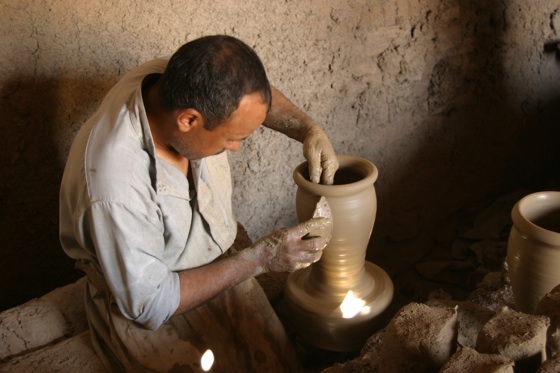
This was a brief interview illuminated by very little explanation. Inside the mud brick studio covered in palm fronds were two piles of clay made from the abundantly-available local top soil. These were covered with clothes to keep in moisture. The helper was responsible for pulling out the right amount of clay for the specific jar being made, and giving it shape, before lining it up in front of the potter.

The latter then turned the lump into a beautiful jar by carefully caressing and smoothing the spinning clay. Despite the old fashioned technology, which consisted of no more than a simple foot-operated wheel, the quiet man churned out three pots in the brief time I was there.
sustainable development, art, culture, travel, egypt

According to the de Flers, an ancient code dictates a unique design for each jar. This ensures that everyone who uses them will know the contents. The sega, which means “to give a drink” and is 16 inches long and 8 inches tall, has been used since before Roman times. They were designed to fit into the irrigation canals built alongside el-Qasr wells. Another jar of a similar size but with different squiggles would be instantly recognized for having a different purpose.

Although I tried not to make a menace of myself, the potters were grumbling unhappily about my presence. The room was small and dark, so I moved around trying to optimize the available light. But their rhythm was disrupted and the helper guy kept bumping into me. After the third time, and him protesting loudly, I realized I was not so welcome.

sustainable development, art, culture, travel, egypt

After being imbued with life inside, the pots are left to dry in the sun for several days before they are fired in a giant kiln. After that, they are sold all over Egypt and used locally to cool water. More than a historical cottage industry, although that is incredibly valuable and interesting to tourists, potting also generates a modest income for the humble people who live here.

El-Qasr is a little known jewel 12 hours south of Cairo. Learn how to bake bread like an Egyptian and stay tuned for more stories about this charming village.

More about Egyptian Culture and Travel:

5 Tips For Traveling Through Post-Revolution Egypt

Eco Sins of the Cheshire Blogger

Egypt May Survive Climate Change Thanks to AUC Students

Sefirat HaOmer: 49 Steps Upward

0

image-man-and-stairs
The 49 days between the holidays of Passover and Shavuot are a stairway to spiritual renewal.

Sefirat HaOmer – the literal counting of seven week’s days in Jewish tradition- is drawing to a close with the upcoming Shavuot holiday (Tuesday night). Reflecting the Biblical commandment to sacrifice a measure of the new barley harvest at Shavuot, the period is rich in mystical, historical, and material significance. It’s a time of meditation, of  self-refinement. See our eco-rabbi’s insights on how to raise your spiritual level, in his post on Parshat Naso. A time of mourning cut through with rejoicing. A time to remember the past and to plan ahead. A significant period in the Israeli agricultural calendar.

On Passover, the Jews experienced the redemption from slavery in Egypt. During the following 49 days, the nation prepared itself for redemption from idol-worship and other spiritual traps. The culmination of this period came on Shavuot, when Moses brought down the Torah from Mt. Sinai.

Bake Bread Like An Egyptian

home cooking, travel, nature, EgyptSurrounded by trash in a small enclosure, this village woman from el-Qasr, Egypt, bakes several loaves of bread in giant clay “jar.”

Baking bread el-Qasr style isn’t great for the lungs, but it does wonders for the beleaguered soul. Twelve hours south of Cairo, past the enigmatic White desert, and past the lush Farafra Oasis, this city was once a Medieval fortress built over an old Roman village. Formerly the capital of Dakhla, the last of the famed oases where intrepid travelers stocked up on provisions before braving the formidable Sahara desert, el-Qasr hasn’t lost its full-bodied, slow-paced rhythm.

But when the news that an Americaine arrived swept through the sleepy village, women suddenly emerged from every corner carrying their woven baskets. “La, shokran,” I said over and over, “No, thank you, la, la, shokran.” One woman, however, taught me something that no money could buy.

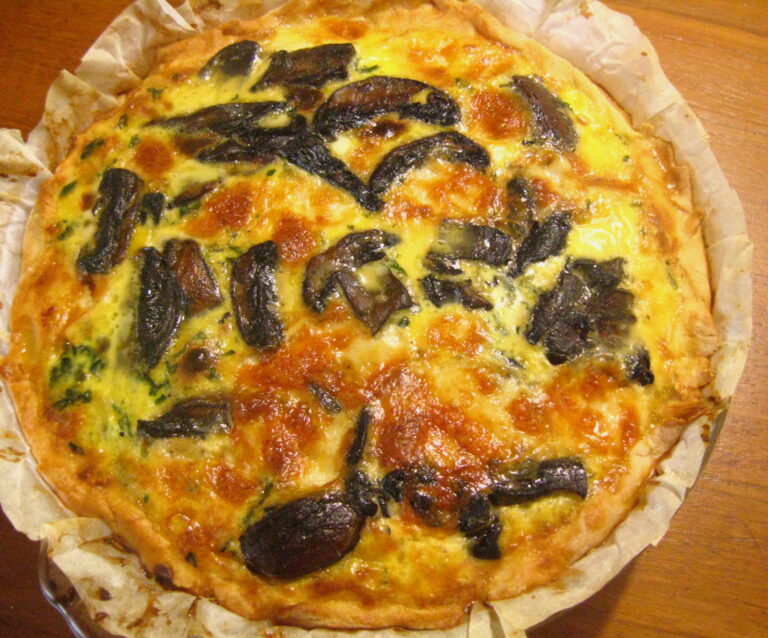
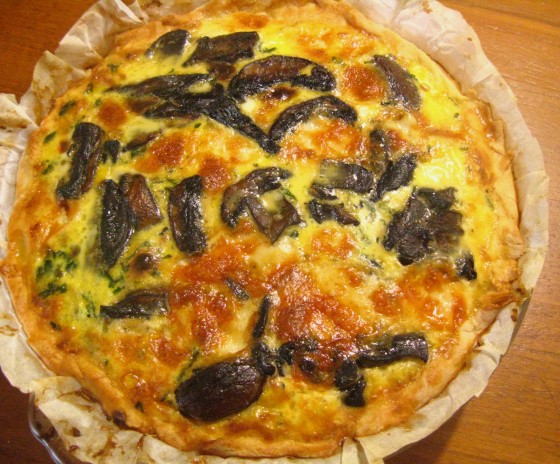
Recipe: Spinach and Mushroom Quiche

0

image-spinach-mushroom-quiche
Just in time for Shavuot, a goat’s-cheese quiche stuffed with fresh greens and mushrooms.

The Jewish Shavuot holiday, which occurs on Tuesday night this week, celebrates  receiving the Torah at Mt. Sinai. All-night study sessions and prayer mark the holiday’s spirit. Other customs include decorating the home with fresh leaves and flowers, and eating dairy foods. See our labneh recipe for an easy Middle-Eastern dairy dip.

Tradition has it that since the laws of kashrut were still to be revealed, the Jews refrained from eating meat for the entire 40 days that Moses stood on Mt. Sinai. Delicious Shavuot recipes have evolved from the dairy tradition, many of them sweet. Last year, we posted a New York Cheesecake recipe for Shavuot. I like to give my family something savory too, something with plenty of organic vegetables in it.

The answer is Spinach-Mushroom Quiche.

Nature Toy Finds Eco-Friendly Ways to Entertain Kids this Summer

"ecological toys chalk"Let kids get outdoors and color driveways and sidewalks with Nature Toy’s eco-friendly chalk.

With the summer vacation from school fast approaching, many parents are trying to find ways to entertain their kids during the long break.  Which means those eco-friendly parents out there are trying to find environmentally and kid-friendly toys for their kids to play with this summer.  Perhaps in response to an obvious need, Nature Toy (an Israeli-based company founded in 2010) has started to collect a range of eco-friendly and natural toys in one place and made it easier on concerned parents.  Nature Toy claims that it was born “out of the need of giving our children a world of imagination and toys, based on natural and pleasant materials – in contrary to the ‘world of plastic’ of our days.”

SBY Solar Blocks Arava Power Solar Field Launch Today

8

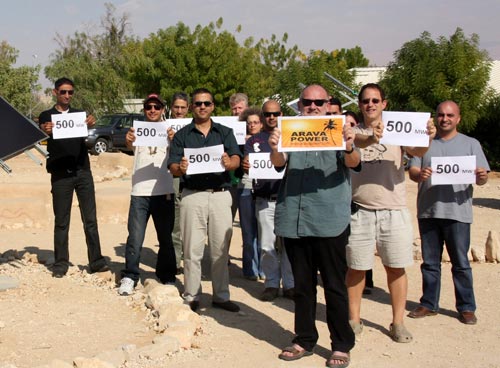
Arava Power solar energy sby
On the eve of its launch, Arava Power must prepare for a “real” solar war: Israel’s first solar field company loses building permit and prepares for battle –– over sun rights and tariffs

The Israeli solar installation company SBY (Solar By Yourself) has effectively played a role in freezing Arava Solar’s building permit this weekend. In a much anticipated event happening today, Arava Power will not be able to connect its solar energy to the grid. Sad news because rapper Shyne, international and local media, and infrastructure and agriculture ministers from around the world are expected at the launch of Israel’s first solar farm today at Kibbutz Ketura, near the Israeli city of Eilat. Word on the ground is that the Israeli government has issued a limited number of feed-in tariffs, and once the allocations of solar energy feeding to the grid are achieved, feed-in tariffs and subsequently the profits of future solar energy installations become limited.

One solar energy company shutting down another over money.

Green Prophet spoke with Arava Power’s CEO, Jonathan Cohen this morning as the news broke: “Solar By Yourself has been aggressively attacking Ketura Sun and indeed all ground-based solar projects in Israel this past year and a half. We will of course prepare and address fully all claims against Ketura Sun’s building permit, as we have done thus far. We are proud to be fulfilling Ben Gurion’s vision this afternoon, launching the first substantial solar field in Israel, the first we anticipate of many to come.”

Arava Power Founders Ask: Time for a Six-Day Solar War?

0

yossi arava power keturaToday is Naksa Day, World Environment Day, and the day when Arava Power is launching its solar field in the desert. With Arava’s permits temporarily halted, Green Prophet looks at a powerful op-ed by Arava founders on 6 steps to creating a green war.
June 5 marks not only World Environment Day and the anniversary of the Six-Day War; this year it also marks the ribbon cutting for the first solar field in the history of the Jewish people. Just as the 1967 war ushered in a new chapter in the strengthening of Israel’s long-term viability, the affixing of the mezuzah on Israel’s first solar field holds the promise of a new era by ending fossil fuels’ role as the exclusive power source for Israel’s growing energy needs.

Turkey’s Dams Are Violating Human Rights, UN Report Says

2

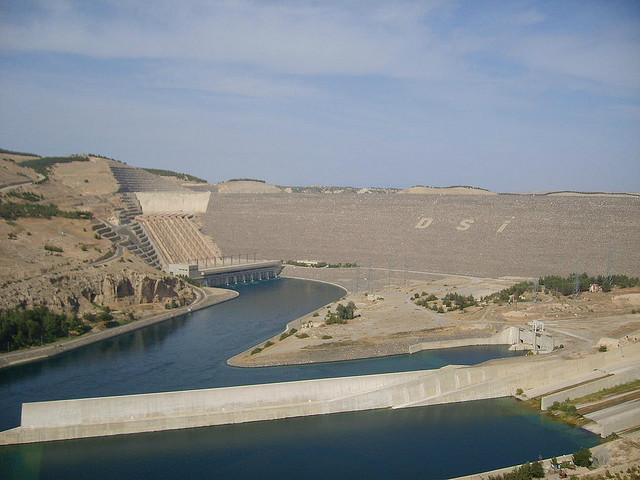
Turkish dams don’t just affect Turks — they cut off access to water in Iraq and Syria as well, forcing entire populations in those countries to resettle.

Hydropower seems like the perfect solution to Turkey’s escalating energy demand: a clean form of energy and an irrigation source that can be harnessed from the many rivers that flow through the country. But the real cost of hydropower in Turkey has long been apparent. Building a hydraulic dam requires acres of land around the site to be torn up and clear-cut, displacing local residents, destroying local habitats, and often submerging settlement sites that date back to ancient times.

Turkey’s government has long been aware of these issues, and mostly ignored them. But a new report submitted to the United Nations Committee on Economic, Social and Cultural Rights puts an international slant on Turkey’s destructive dams. Turkey’s dams, the report alleges, have failed to abide by “international guidelines designed to prevent human rights violations through development and infrastructure projects.”

Protest Against Nuclear Power In Jordan

2

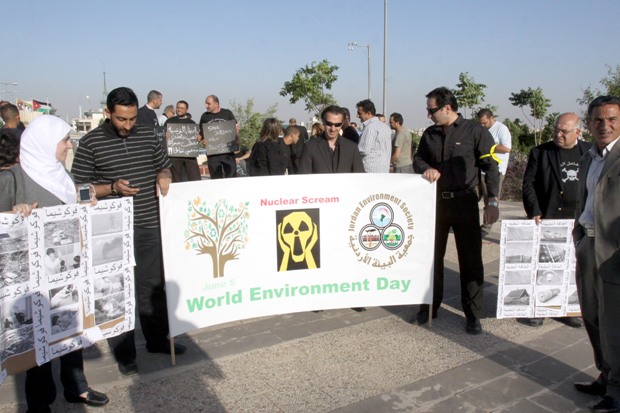
Protesters in Jordan are campaigning against the country’s plans to build a nuclear reactor which they state carries more risks than positive impacts

Despite the disaster at Japan’s Fukushima nuclear station and Germany’s bold move to shut down all nuclear reactors by 2020, it seems the Middle East is still set on a nuclear future. Israel has hinted that it may build a ‘safe nuclear station’, Turkey is pushing on with its nuclear ambitions and Jordan recently announced that it is forging ahead with plans to build its first nuclear power plant despite local resistance and regional instability.

Estrogen Exposure Raises Blood Pressure Via the Brain

New animal research is significant: Chronic estrogen exposure leads to a build up of a compound in the brain that causes blood pressure to rise.

For years, women were told that the estrogen they consumed in the form of contraception or hormone replacement therapy had heart-protective benefits. Recent research suggested otherwise: long-term exposure to estrogen was linked to higher blood pressure in women, but the connection wasn’t fully understood. Now the link is becoming clearer, thanks to research at Michigan State University (MSU).

What should women in the Middle East know about hormones and their health? It’s a complicated answer, but of this, we are sure: Ecosexuality advocates are moving away from their use, opting for natural means to regulate our reproductive health, fertility and wellbeing.

Nissan and Renault EVs: What if Every Appliance We Use Ran on Gasoline?

Gasoline engines still work fine in cars; but what if they ran hair dryers or computers?

Renault and Nissan, who happen to be partner auto companies, and who both are developing electric cars the Fluence and the Leaf, came out with the same clever advertisement: “What if everything we use ran on gas?” The ads are designed to coincide with the launching of both the Renault EV series of electric cars and Nissan’s Leaf, which is currently not scheduled to be introduced into the Middle East. The Renault Fluence electric model, with the help of  the Better Place electric car technology company, is about to begin selling in Israel by late summer.

The Marsh Arabs Who Restored A Global Ecosystem

0

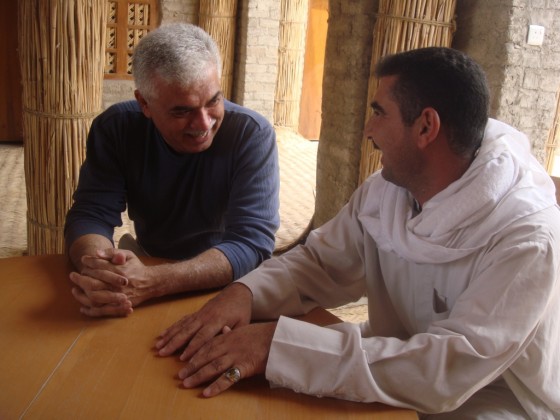
Azzam Alwash (left), director of the environmental organisation Nature Iraq, talks with a Marsh Arab who lives in the Mesopotamian Marshlands of Iraq

In the first part of this two-piece feature, Azzam Alwash the director of Nature Iraq, spoke to us about his warm memories as a child visiting the Mesopotamian Marshlands of Iraq with his father; the shock he faced when he returned to Iraq from America in 2003 to find the marshes completely decimated under Saddam’s regime and his vow to help restore the wetlands to their former glory.

Despite a shaky start to the restoration of the marshlands due to two years of drought and dwindling water supplies, the marshlands (which are home to a wide range of wildlife such as water buffalos, foxes and rare birds) are on the mend. And a new generation of Iraqi environmentalists as well as the Marsh Arabs  have played their part in restoring a global ecosystem which has existed for over 7,000 years.

Natural Herbs for Breast Health and Enhancement

form enhancing herbs
Certain plants, especially those rich in phyto-estrogens, are being looked at more closely for their role in growing a healthier bosom.

Using herbs and foods to enhance a woman’s form date back to ancient times, and some suggest that the use of tinctures, massage oils and brews were popular among Egyptian harems. Some of the most popular supplements include saw palmetto, fenugreek, fennel, red clover, wild yam and dong quai. Empirical scientific evidence is more limited than anecdotal evidence from multiple cultural references that suggest breast enlargement can occur from certain natural compounds.

If larger or suppler breasts are desired, going the natural ‘aphrodisiac‘ route is likely to be safer, greener and gentler to your body and the planet.

Common Herbs: Below is a list of some of the most common mastogenic plants. Please note, while we only cover mostly breast health effects here, each of these plants are known to have additional health properties.

  • Fenugreek: This herb, which tastes like a combination of celery and maple syrup, has been shown to minimize the symptoms of menopause, and increase a woman’s bust size and milk production in nursing mothers.  Specifically, India’s traditional Ayurvedic physicians prescribe it to nursing mothers to increase their milk, and in American folk medicine, fenugreek was considered a potent menstruation promoter. More locally, Middle East harem women ate the seeds to become more buxom.  How does it work? Fenugreek seeds contain steroid precursors, diosgenin and other phyto-estrogens that are thought to increase breast size.
  • Saw Palmetto: This compound is popular as a natural treatment for prostate enlargement and impotence in men, but it is also recommended by those who practice natural medicine to increase a woman’s bust size and sexual desire.  Many cultures have used it throughout the centuries. Native Americans used the berries for food and medicine, particularly for breast disorders in women. Saw palmetto berry also tones the urethra, and it may be used to uphold the healthy function of the thyroid gland and urinary system.  How does it work? Phyto-nutrients stimulate breast tissue, increasing health and size.
  • Wild Yam: This most popular herbal tonic is noted for its benefits to a woman’s reproductive system, including minimizing premenstrual and menopausal symptoms, again because of it’s phyto-nutrients. It can be taken in capsule or tea form. The powder can also be added to cream with which a woman can use to massage her breasts.
  • Fennel:  This herb has been used to treat amenorrhea (absence of a menstrual cycle), low sex drive in women, and to increase bust size and promote milk production in new mothers. Rich in phyto-nutrients, it works well with Fenugreek, and can be added to creams like Wild Yam to be massaged directly on the breasts.

Dosages and Risks: There are many supplements on the market with wide-ranging doses. Some websites suggest that if a woman intends to use breast-enhancing herbs, she take them as single ingredients for maximum results. That way, she can control how much she takes and start with just one or two at a time. Most have been used for centuries across cultures with little known risks.

With that said, we recommend that you see your health care provider before starting any new regime, since dosages are not standardized, and there still could be some risks, especially if a woman is pregnant, nursing or taking other prescription drugs or supplements.

When in doubt, ask an informed provider first.

Success Rates: Generally speaking, using natural herbs and supplements are less drastic than the options provided for by modern medicine, such as surgery. This also means they are less invasive. Until more research is conducted on these and other breast enhancing compounds, we can’t establish universal guidelines or success rates. Individuals are likely to experience different outcomes.

Our recommendation? Check with your physician, obtain these from a reliable source, preferably organic and sustainably harvested, and conduct your own personal research to determine which herbs are best for your breasts.

:: Image: Diana Blackwell

Read more on eco-sexuality issues:

Are Hormones in the Environment Making Breasts Bigger?
How do Tree Humpers Prevent Pregnancy?

World Renowned Author Dishes on GINKS, Green Sex and Making Love to Planet Earth

Paddle For The Planet This World Environment Day

0

marine protected areas, marine conservation, pollution, acidification

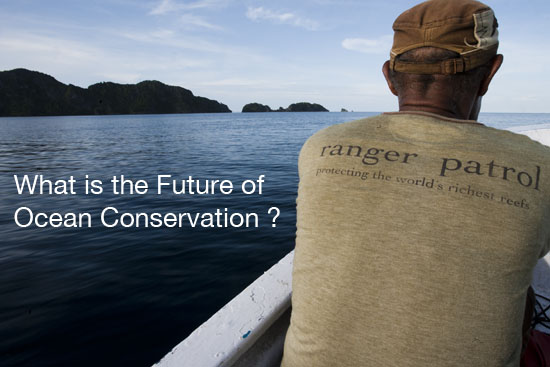
Watermen and women from 52 countries will unite this World Environment Day to raise funds for the Daram Marine Reserve in Raja Ampat, Indonesia.

Pull out your oars and go paddling this World Environment Day, June 5, 2011. Started by a crew of Dubai-based watermen distressed by the state of our oceans but determined to give back in a postive and meaningful way, Paddle for the Planet aims to help establish and support a patchwork of marine reserves across the globe. Plagued by overfishing, pollution, coral depletion, and rising acidification as a result of higher carbon concentrations in our atmosphere, our oceans need help. P4P makes marine conservation splashing fun.Â