Home Blog Page 52

Fast, Fierce, Flawless: The Hair Dryers That Match Your Vibe

0
Curly hair likes a Dyson Am efficient hair dry that will last forever.

In the world of personal grooming, hair dryers have become indispensable tools for achieving salon-quality hairstyles at home. Whether you aim for fast drying, fierce styling, or flawless results, choosing the right hair dryer can elevate your hair care routine. From budget-friendly options to advanced hair dryers by Dyson, there’s a wide range of choices available. 

This article delves into the features and technologies that define top-performing hair dryers, helping you find a device that perfectly matches your vibe.

Understanding Hair Dryer Technologies

Ionic Technology

Ionic hair dryers are celebrated for their ability to reduce frizz and enhance shine. By emitting negative ions, these dryers break down water droplets in the hair, speeding up the drying process. This technology is particularly beneficial for those with thick, frizzy hair, as it helps smooth the hair cuticle and lock in moisture.

Ceramic and Tourmaline Elements

Ceramic and tourmaline are materials integrated into hair dryers to ensure even heat distribution. Ceramic helps produce a consistent temperature, preventing hot spots that can damage hair. Tourmaline, on the other hand, boosts the emission of negative ions, improving the drying speed and maintaining hair health. These features make ceramic and tourmaline hair dryers ideal for individuals with fine or damaged hair.

Titanium Technology

Titanium hair dryers are known for their lightweight design and high heat output. They are perfect for those who need a quick drying session without compromising on efficiency. However, due to their intense heat, they are best suited for individuals with thick or coarse hair. Titanium dryers can be a bit too harsh for delicate or damaged hair types.

Key Features to Consider

Wattage and Power

The wattage of a hair dryer determines its power and drying speed. Higher wattage dryers (1800-2000 watts) are typically more effective for quick drying, especially for thick or long hair. However, lower wattage options (around 1600 watts) are suitable for finer hair types, offering gentle drying.

Heat and Speed Settings

A versatile hair dryer should offer multiple heat and speed settings, allowing users to customize their drying experience. Look for models with at least three heat settings and two speed options. This flexibility ensures that the dryer can cater to different styling needs and hair types.

Cool Shot Button

A cool shot button is a valuable feature for setting hairstyles. By blowing cool air, this function helps to lock in curls and waves, giving your styling efforts a longer-lasting hold. It also adds shine and reduces frizz, leaving your hair looking polished.

Weight and Ergonomics

When it comes to usability, the weight and design of a hair dryer are crucial. Lightweight models with an ergonomic handle prevent arm fatigue, especially during extended styling sessions. If you frequently style your hair, prioritize comfort and ease of use.

Tips for Optimal Hair Drying

  • Start with towel-dried hair: Excess water can prolong drying time and increase heat exposure, potentially damaging your hair.
  • Use a heat protectant: Protect your hair from heat damage by applying a heat protectant spray or serum before drying.
  • Section your hair: Divide your hair into sections to ensure even drying and styling. This method also speeds up the process and provides better control.
  • Maintain a safe distance: Keep the dryer at least 6 inches from your hair to prevent heat damage.
  • Finish with a cool blast: Use the cool shot button to set your style and add shine.

Making the Right Choice

When selecting a hair dryer, consider your hair type, lifestyle, and styling preferences. For those always on the go, a fast-drying, lightweight titanium model might be the best choice. If sleekness and shine are your priorities, ionic and tourmaline technologies should be at the top of your list. Lastly, for those who value precision and control, a dryer with adjustable settings and a cool shot function will cater to your needs.

By understanding the diverse technologies and features available, finding the perfect hair dryer to complement your unique vibe is achievable. Prioritize your hair’s health and style goals, and you’ll be well on your way to achieving fast, fierce, and flawless results with every use.

Sea Story victim “last position” captured by Polarstep tracking app

0
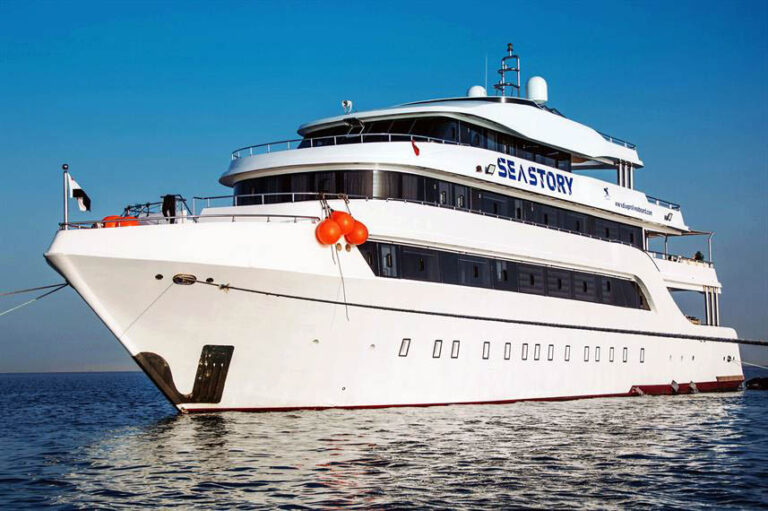
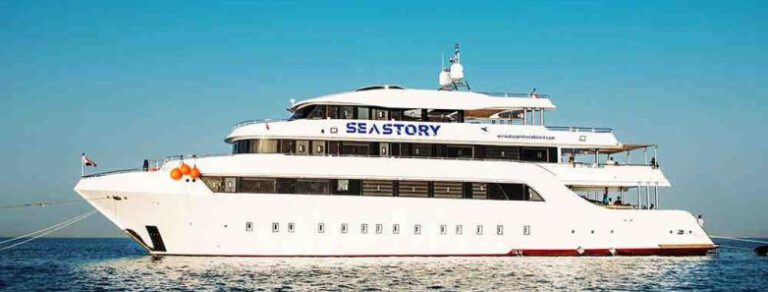
Sea Story, Egyptian diving vessel sinks. Many are still missing.
Sea Story, Egyptian live aboard diving vessel sinks. Many are still missing.

Globe-trotters, divers, sailors, cyclists, pilots on solar airplanes –– those heading around the world like to capture their adventures so their loved ones can follow. That’s what a tourist did when they boarded the M/Y Sea Story on November 24, this year, a liveaboard diving adventure luxury yacht promising 3 dives a day. Egypt’s Red Sea is the most population destination in the world for divers because of its proximity to Europe –– only a 4-hour plane ride to Cairo, then a day bus trip to the seashore town of Marsa Alam.

There were 33 tourists onboard, all seasoned divers, expecting to go on challenging and adventurous dives into the Red Sea coral reefs, with the help of a team of 11, divers, cooks and a captain of the boat. For reasons that no official is yet saying the 3-story yacht listed 3 times and on its third, tipped into the sea and did not recover its balance. At that moment 23 people, including crew managed to jump from the capsized wreck into the sea, and most found life boats back to shore.

The story ends tragically when a day and a half later rescue divers finally went in. They heard knocking on the boat and with a beloved family member inside, one of the Egyptian rescue team insisted they go in. According to some accounts the Navy prevented the rescue divers from going into the boat. According to others the divers were afraid to go in the water because of the sharks. But they did go in but it took 36 hours since the boat started sinking.

After 36 hours from capsizing (varying accounts say an alarm was sent to another boat at 1:30am, others say the sinking happened at 2:30 or 3:30am on November 25) 5 people were rescued from inside their cabins. Those close to the wreck said they were farther out than they should be and saw a ship in the shipping lane passing in the distance.

After reaching out to the booking company (Dive Pro Liveaboard), local divers in the region, some associated with the company and who have local intel, the Navy and the local dive association, The Chamber of Diving and Water Sports, no one was willing to give the exact location when the boat first sent its distress signal. Rumors circulating suggest that the captain was the cook and that perhaps he or others in charge were inebriated (stoned), but since the “Authorities” in Egypt aren’t speaking to anyone, survivors and families of those who have lost their loved ones in the accident, are doing their own guess work.

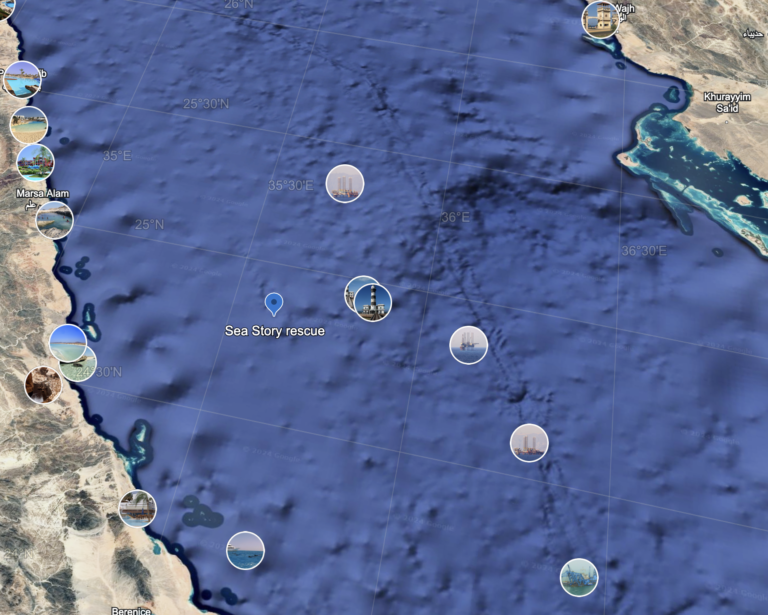
Sea Story rescue location November 26
Sea Story rescue location November 26. Where 5 people were rescued and 4 bodies were recovered from a capsized and semi-floating shipwreck called Sea Story.

We did have a diver “insider” reach out to us with the coordinates of the rescue, 36 hours after the boat listed and remained slightly above water. We spoke with a survivor’s daughter and he said his room’s porthole was above the water. The rescue boats following them did not give survivors trapped in Sea Story any indication they weren’t alone. No Navy ship blew its horn. In what could be a tragic story, if true, one anonymous source said the rescue crew followed the boat for 3 days after the 5 people and 4 bodies were pulled from the wreck on November 25. It is possible people were still inside alive.

We still don’t no where the boat first listed and why. We don’t know where the boat finally sank, although one source that can’t be named says it is in 1000 meters of water.

The family of the victim sent us their last Polarstar location, and you can see it here below. They say they were getting a signal as of December 2. This is the last transmission they’ve had. The location was sent at 14:50 November 25, many hours after the boat would leave the Port Ghalib. And it was transmitting until December 2, according to her in-laws that sent us this information. Does this give us any more clues about what happened when the Sea Story sunk?

If you want to follow the story more deeply, we have half a dozen articles that start here> Sea Story sinking.

If you have any more information related to this tragedy, send us a message [email protected]

Polarstep transmits last location of Sea Story victim. Her family was getting alerts until December 2.

Wave power collector opens at ancient port city on the Mediterranean

0
Eco Wave Energy at the Jaffa Port

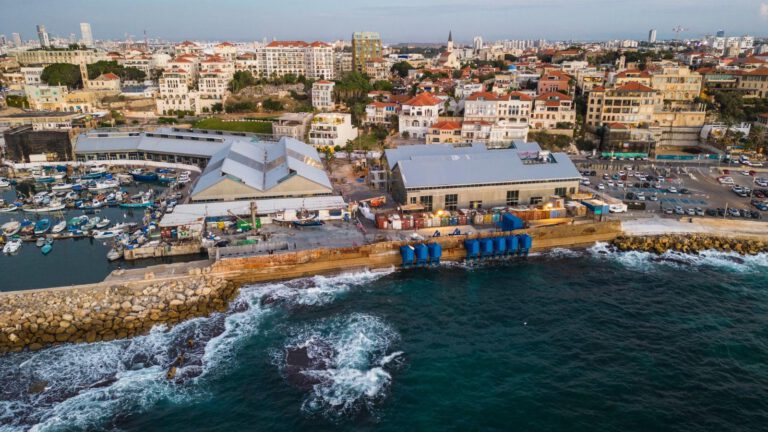
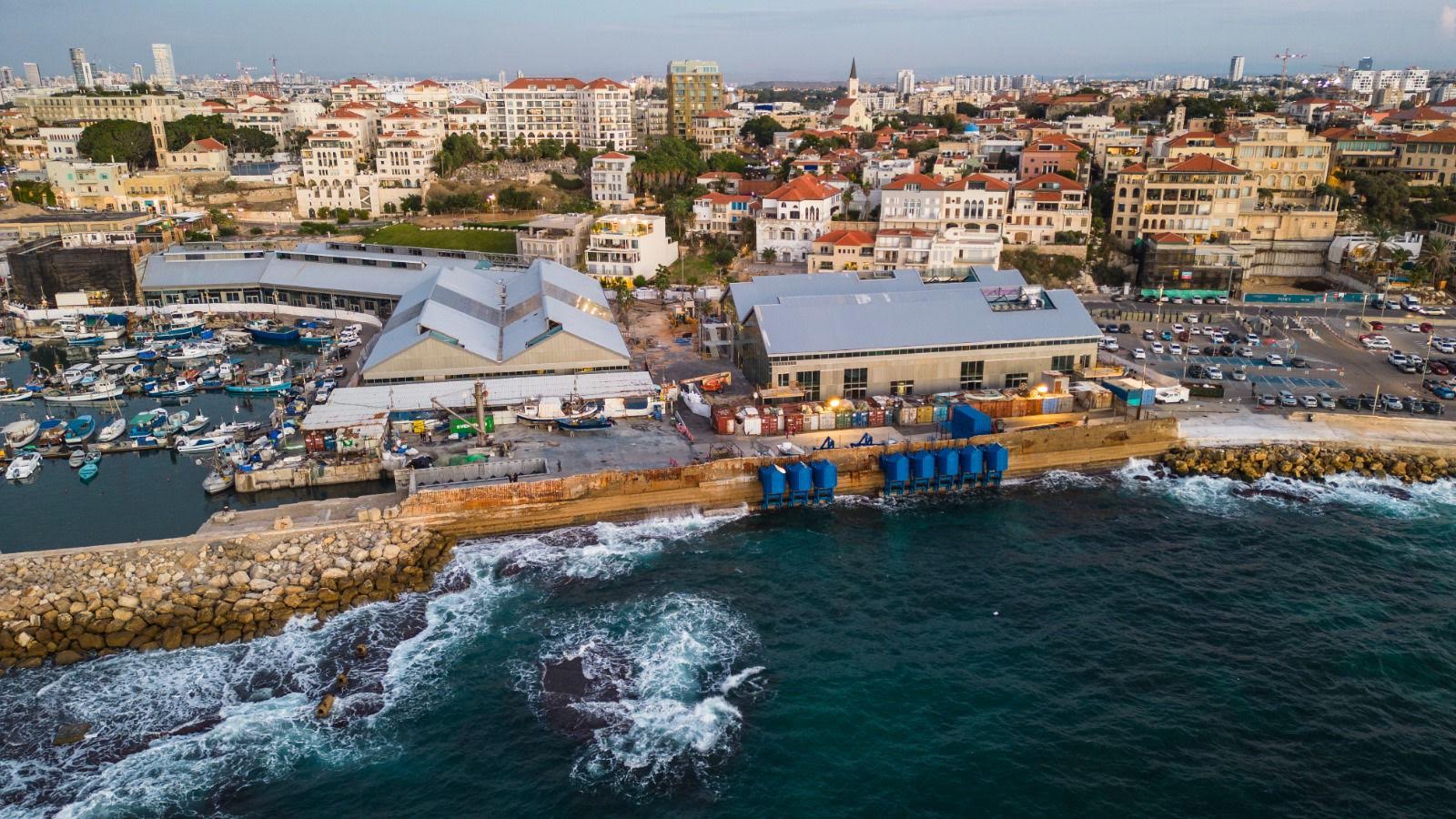
Located in the same ancient port where Jonah sailed off and made his fate with the whale, is a new wave-collecting power plant that officially went online this month. Though it’s been in place for a number of years as a pilot and generally inactive, the city of Jaffa welcomed the municipal company Atarim, in collaboration with Eco Wave Power and EDF Renewables Israel, to Israel’s first pilot station for generating electricity from sea waves.

Related: Eco Wave tests pilot at the Jaffa seashore

Eco Wave Power is a NASDAQ-listed company (ticker: WAVE) holding 18 patents for innovative wave energy technologies. In addition to the Jaffa pilot station, the company is planning projects in the Port of Los Angeles with Shell and in Porto, Portugal, where its first commercial station will be built.

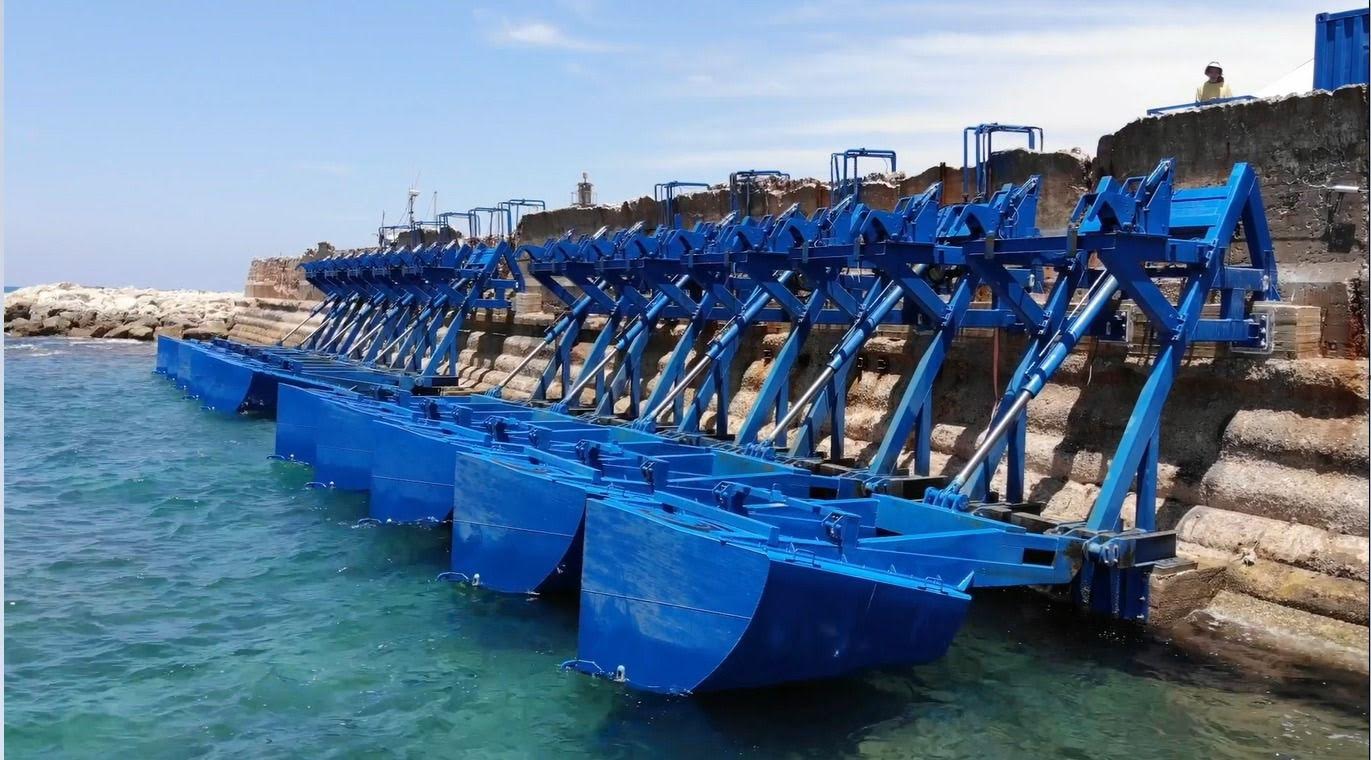
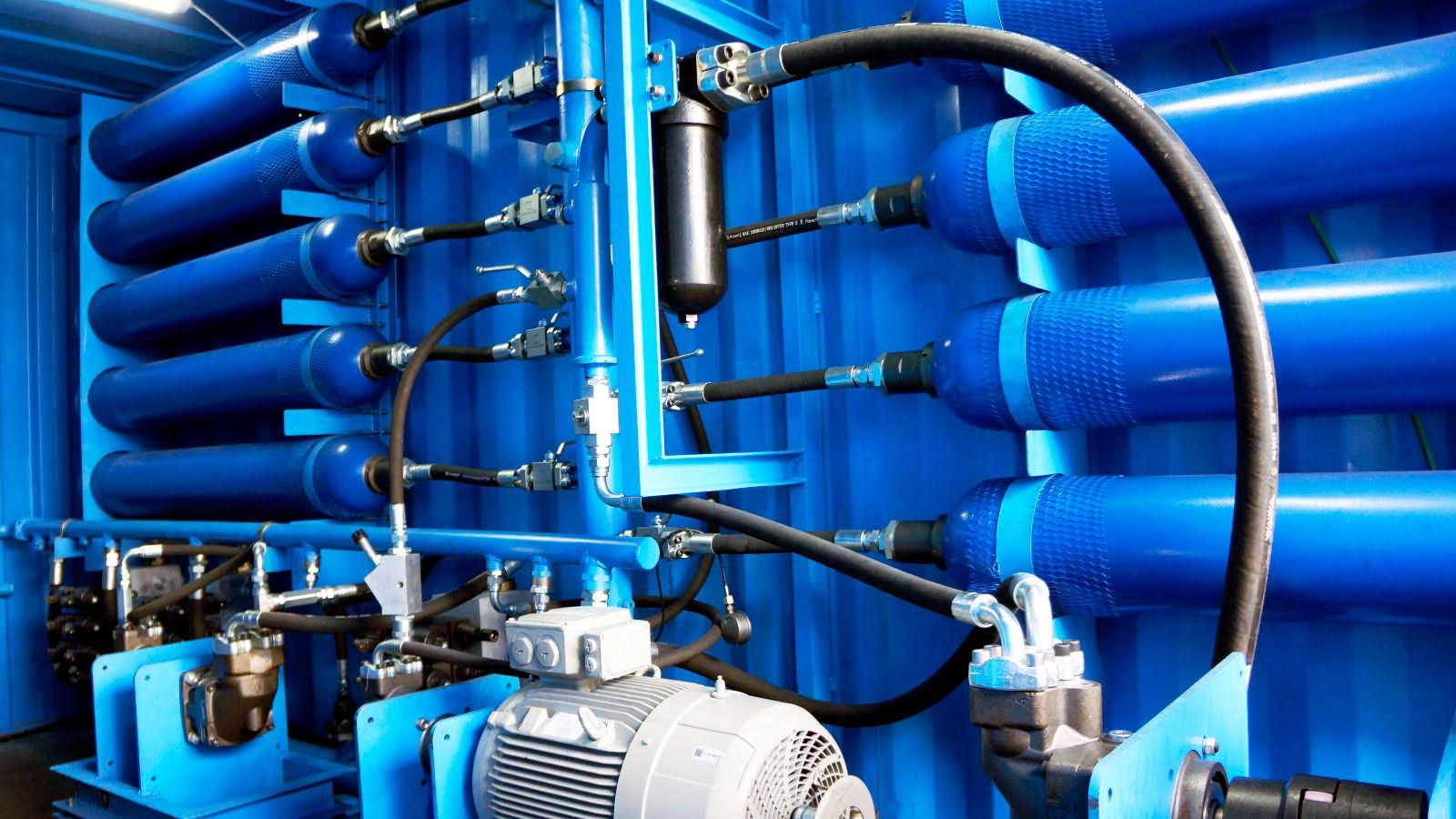
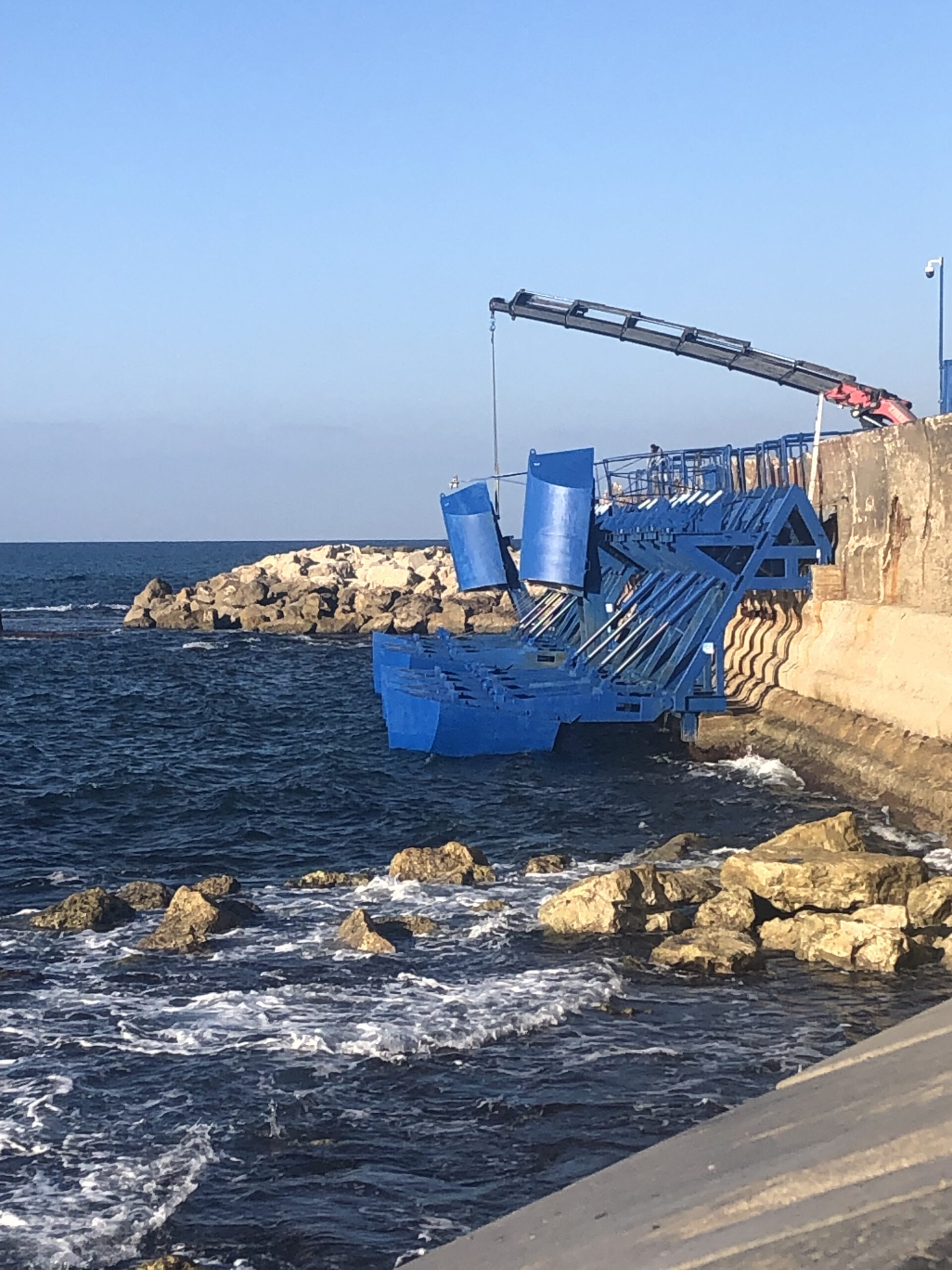
The company’s technology connects floaters to existing marine structures like breakwaters and piers. These floaters rise and fall with the waves, powering a hydraulic motor and generator located onshore. The system includes smart controls that lift the floaters out of the water during storms to prevent damage.

The project is led by Eco Wave Power founder and CEO Inna Braverman, a graduate of the “Women for Climate” program from the group C40. 

Developed by the company Eco Wave Power, the station was built in collaboration with EDF Renewables. The power station is recognized as “pioneering technology” by the Ministry of Energy.  For the first time, electricity generated from sea waves will power the country’s national grid—a historic milestone in the country’s renewable energy progress. 

Related: Oceanwell mines the sea for freshwater

The city which is aiming to brand itself as a green city, says this launch “marks a significant step toward reducing greenhouse gas emissions and advancing sustainable energy, reinforcing Tel Aviv’s status as a global innovation leader.” High-tech center, yes, green city –– um, not always. The city’s lack of financial support to one of its foundational cultural centers, the East West House (no comment from the Mayor Ron Huldai) and indecisions about cutting down trees don’t make it a green city, just because the city wishes it so.

Wave energy collectors, Jaffa
Wave energy collectors, Jaffa. By Green Prophet. 

Middle Eastern Jewish and Arab musical culture, ancient trees: these things make a city sustainable and shouldn’t be pushed aside to make way for “green progress” according to a ledger. The concept is ridiculous. Electric bikes and lack of speeding laws and order make Jaffa an un-walkable city in some of the busier areas. Plastic bags are given out freely. Residents barely compost or recycle home waste. The recent light rail train going online, however, has upgraded the city by 1000%. The CDP group gives Tel Aviv and A- for Sustainability

Are you a woman for climate change? Check out C40 here. Maybe you can join.

::EcoWave


These countries have the saltiest soil and include the US, China and Iran

0
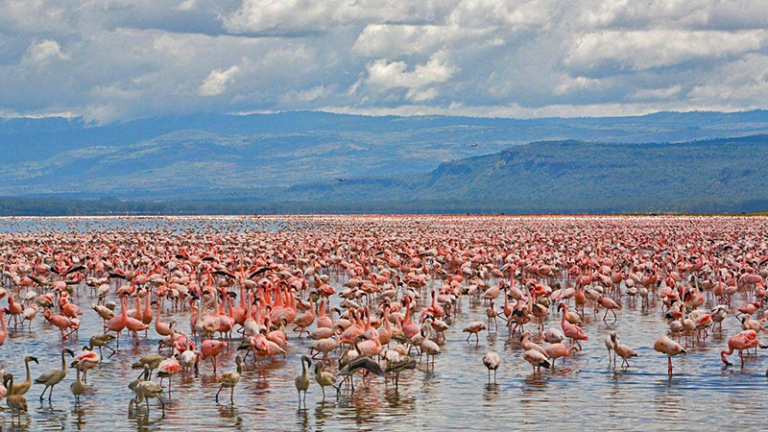
flamingos leave Lake Urmia in Iran
Flamingos leave a salty Lake Urmia in Iran

A new UN report shows that nearly 1.4 billion hectares of land (just over 10 percent of the total global land area) are already impacted by salinity, with an additional one billion hectares at risk due to the climate crisis and human mismanagement. Soils became saline from water overuse. Aquifers become brackish and precipitation that is lacking cannot replenish the natural balance back to the soil, making them unsuitable for farming. This Saudi Arabian company Iyris is working to solve agriculture on brackish (salty aquifers and land).

So who are the worst-affected?

Today, 10 countries: Afghanistan, Australia, Argentina, China, Kazakhstan, Russia, the United States, Iran, Sudan, and Uzbekistan account for 70 percent of the world’s salt-affected soils.

The Global Status of Salt-Affected Soils report was presented today during the International Soil and Water Forum 2024 in Bangkok. The event discussed an action plan for halting and reversing soil degradation and water scarcity.

Excessive salinity reduces the fertility of soils and severely impacts environmental sustainability. In the countries most affected by this issue, salinity stress can lead to crops yield losses – such as rice or beans – of up to 70 percent.

Related: are US aquifers damaged beyond repair?

This comes at a time when there is an urgent need to boost food production to feed a growing global population.

The report estimates the area of salt-affected soils at 1 381 million ha (Mha), or 10.7 percent of the total global land area. It further estimates that 10 percent of irrigated cropland and 10 percent of rainfed cropland are affected by salinity, although uncertainty remains high due to limited data availability.

Models of global aridity trends indicate that, under the existing trend of temperature increase, the affected area may increase to between 24 and 32 percent of the total land surface. The vast majority of aridification is expected to occur in developing countries.

The drivers of salinisation are both natural and induced by humans

The climate crisis is increasing aridity and freshwater scarcity. Rising sea levels are projected to place more than one billion people in coastal zones at risk of progressive flooding and salinisation by the end of the century. Additionallly, global warming is contributing to salinisation through the thawing of permafrost.

Inadequate agricultural practices also play a significant role. These include irrigating crops with poor-quality water, inadequate drainage, deforestation and the removal of deep-rooted vegetation, excessive water pumping in coastal and inland areas, the overuse of fertilisers, de-icing agents, and mining activity.

Strip coal mining

Global freshwater use, in particular, has increased sixfold during the last century, contributing to groundwater salinisation due to the overexploitation of aquifers for irrigation purposes.

Call for action

Since salt-affected soils account for at least 10 percent of land, their sustainable management is crucial to meet growing food demands. The report offers a series of strategies for managing salt-affected soils sustainably. Mitigation strategies include mulching, using interlayers of loose material, installing drainage systems and improving crop rotations.

Related: This sweet pea is smart when choosing a bacterial partner

Adaptation strategies include breeding salt-tolerant plants (such as halophytes, which flourish in mangrove swamps, tropical sand and cliff shorelines, and even salt deserts) and bioremediation – using bacteria, fungi, plants or animals to remove, destroy or sequester hazardous substances from the environment.

Jubail mangrove walk, Abu Dhabi
Jubail mangrove walk, Abu Dhabi. Saudi Arabia says they are planting 1.2 mangrove trees

By highlighting the critical link between sustainable soil management, water quality, and food production, “the report outlines strategies for the recovery of agricultural salt-affected soils, including emerging fields like saline agriculture and salinity bioremediation,” Lifeng Li, Director of FAO’s Land and Water Division, and Jorge Batlle-Sales, Chair of the International Network of Salt-affected Soils (INSAS), wrote in its Forward.

Consequences of drought in Iraq

The report also calls for a legal framework at the national and international levels to safeguard natural saline ecosystems and ensure the sustainable management of agricultural soils under irrigation, particularly in areas at risk of salinisation. The main goal is to protect productivity, quality, and overall soil health, ensuring food quality and quantity for future generations.

Portugal vies to become Europe’s medical cannabis hub but locals say beware of corruption

0
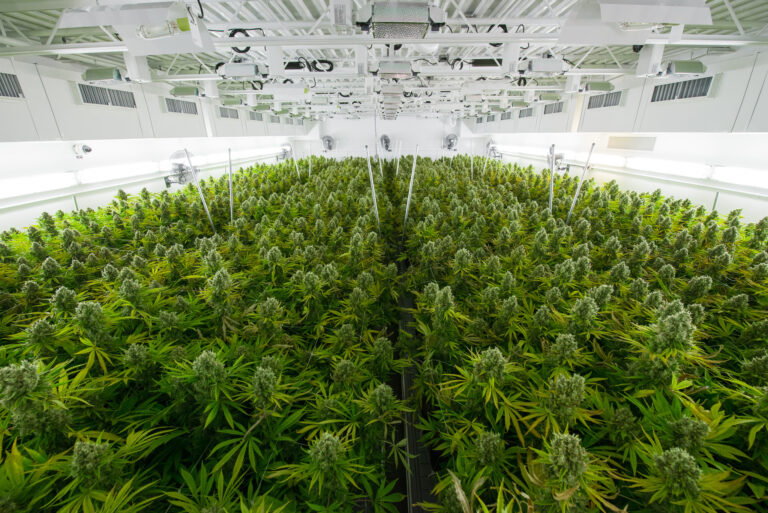
Tilray hydroponic operation
A hydroponic operation at a Tilray facility

Portugal became the new Costa Rica during the Covid epidemic. Lax lockdowns and no need for vaccine certificates, combined with plenty of nature and freedom for global nomads made Portugal the go-to place for people around the globe. Full of entrepreneurial spirit that other countries may have lost Portugal now aims to be a medical cannabis hub of Europe and the world. America’s complicated relationships with Federal cannabis laws make doing business there complicated. Canada’s market is saturated with so many products and companies. Can the climate of Portugal do it better?

Canadian-founded and American headquartered Tilray is one of the companies doing business in Portugal. Tilray (Nasdaq: TLRY; TSX: TLRY) receives its second approval for a new medical cannabis extract in Portugal: Tilray Oral Solution THC10:CBD10. It’s a product that is built with half and half, CBD and THC.

Invest in CBD and medical cannabis guide

Denise Faltischek, Chief Strategy Officer and Head of International at Tilray said: “This is a significant step towards meeting the critical needs of patient care and providing high-quality cannabis products and therapeutic options to those with specific medical conditions. The approval of this oral cannabis solution in Portugal is a testament to Tilray’s global commitment to increasing safe and regulated access to medical cannabis products for patients in need.”

Related: How Alan Shackelford changed cannabis into medicine

Tilray Medical continues to be a global leader in the medical cannabis industry, offering a diverse portfolio of EU-GMP certified medicinal cannabis products. With operations extending over 20 countries, Tilray Medical is dedicated to supporting medical cannabis patient care worldwide through quality products accessible via healthcare practitioners. Its business in Portugal is a stepping stone to the rest of the EU.

Tilray Medical grew from being one of the first companies to become an approved licensed producer of medical cannabis in Canada to building the first GMP-certified cannabis production facilities in Europe, first in Portugal and later in Germany. Today, Tilray Medical is one of the biggest suppliers of medical cannabis brands to patients, physicians, hospitals, pharmacies, researchers, and governments, in over 20 countries and across five continents.

After we published this article, we feel a reader inquiry warrants an update. A cannabis grower with a nationally registered brand tells Green Prophet: “But what you don’t hear in your story is how littered with clandestine growers are in the police services.”

People planning on starting a cannabis business in Portugal beware

“Even though I have a letter from the health minister they destroyed my biolab and destroyed the project to make a natural remedy before covid emerged. Then they came back a second time and demanded I give them my seed bank about a year and a half later. And then last July they came back and repossessed all of my CBD products and the seed ban.
“This time they only counted the number of bags not the weight of the seeds inside the bags. That’s because you’re in Portugal the clandestine growers moonlighting is policeman are scared of border services catching them trying to import seeds. For this reason I’m keeping my business closed and moving to the Azores Islands to register recreational cannabis for exports.”

Sea Story boat rescue site located in the Red Sea

0
Sea Story rescue location November 26
Sea Story rescue location November 26. Where 5 people were rescued and 4 bodies were recovered from a capsized and semi-floating shipwreck and dive boat called Sea Story.

On November 25, a dive yacht by the name of Sea Story listed and capsized several km out into the Red Sea off the coast of Marsa Alam Egypt. It was carrying 44 people and 11 people are presumed to have died. This number includes the 4 bodies found on the shipwreck at this location.

Survivors and their families are telling their stories about loved ones rescued and those they cannot find. The series of articles can be found here. There are so many questions about the rescue operation and reasons for the accident being asked.

The GPS coordinates for the rescue can be accessed here on Google Earth.

The European survivors of this boating accident are being treated as suspects rather than survivors and the Egyptian Authorities have kept them in the dark about the fate of those dead and presumed dead because they are missing.  An anonymous tipster gave Green Prophet the location of the rescue.

Michael Miles rescue
Michael Miles rescue from the Egyptian dive boat M/Y Sea Story

We are still looking for the site where the boat listed on November, 25. And where the wreck drifted to and sunk some estimated 20 to 25 kilometers or more away from the rescue site.

Send us your survivor stories and an anonymous tip at [email protected] 

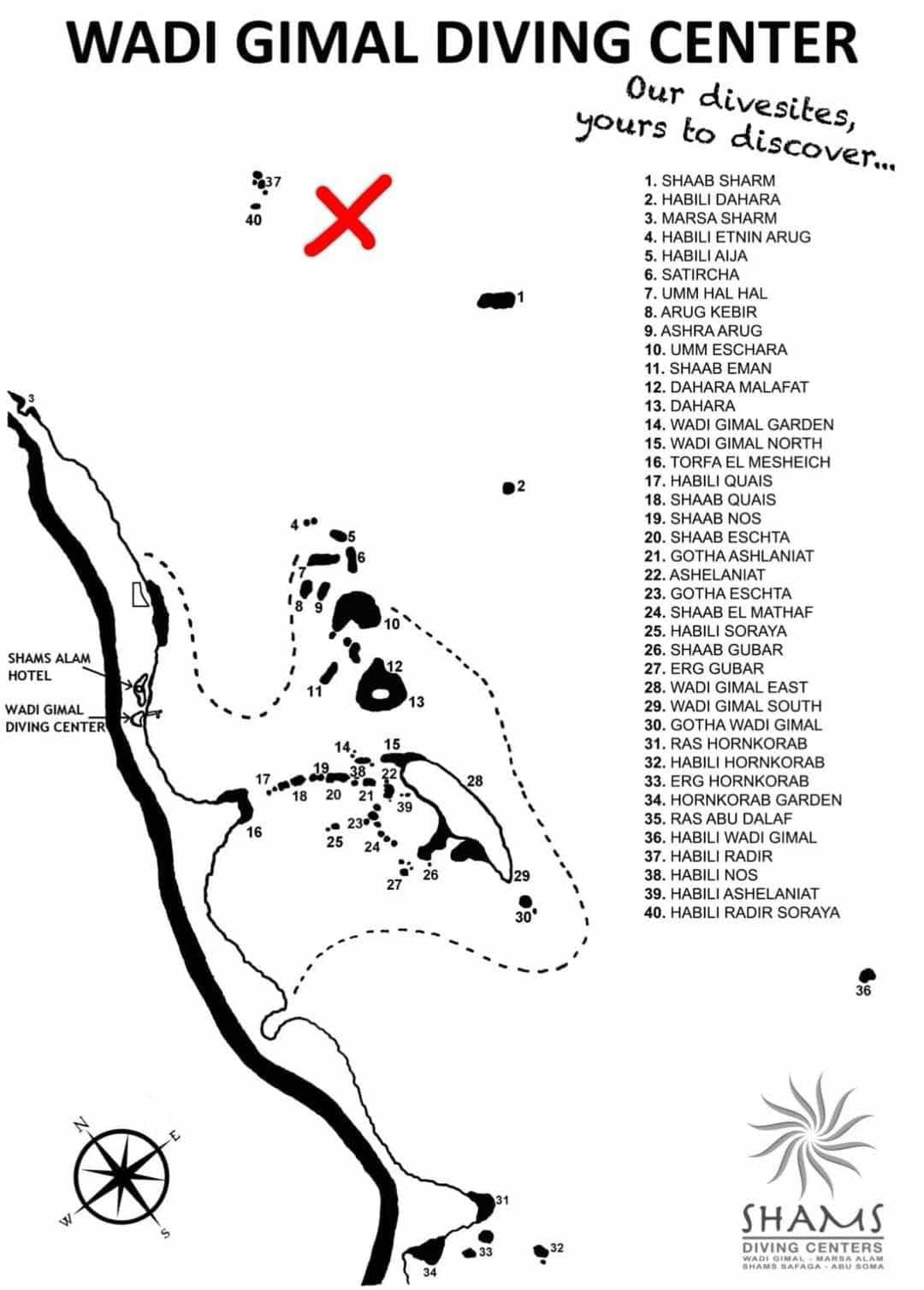
Update January 2025: we were given this map anonymously, indicating the location of the original accident before the boat drifted North East. This puts the accident close to two dive sites, Habili Radir Soraya and

Sea Story accident or crash site on November 25

Is this the world’s first church? Evidence from ancient cave points to communal worship

Dirt church cave manot, Israel
Is this the world’s first church from 35,000 years ago?

Christians in Cairo worship in a cave because they aren’t given a choice. There is evidence that ancient worshippers once gathered in a cave. This may be the first communal expression of religion in the world, according to researchers who found the cave in Israel, in a region of the Levant known as the Cradle of Civilization. It is prehistoric evidence for the world’s first “church”.

Tour inside:


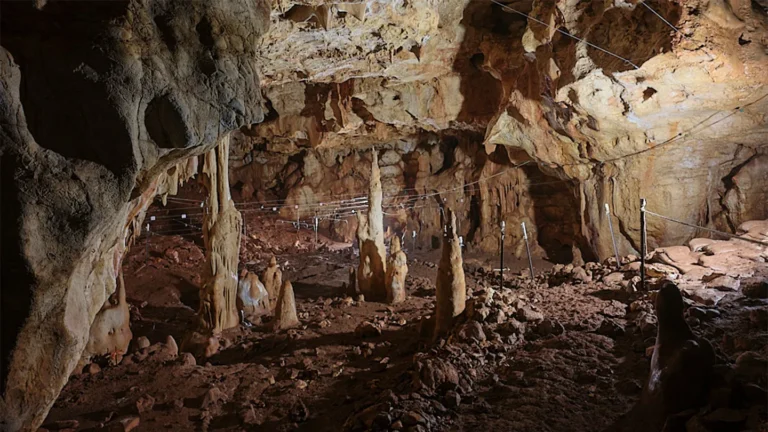
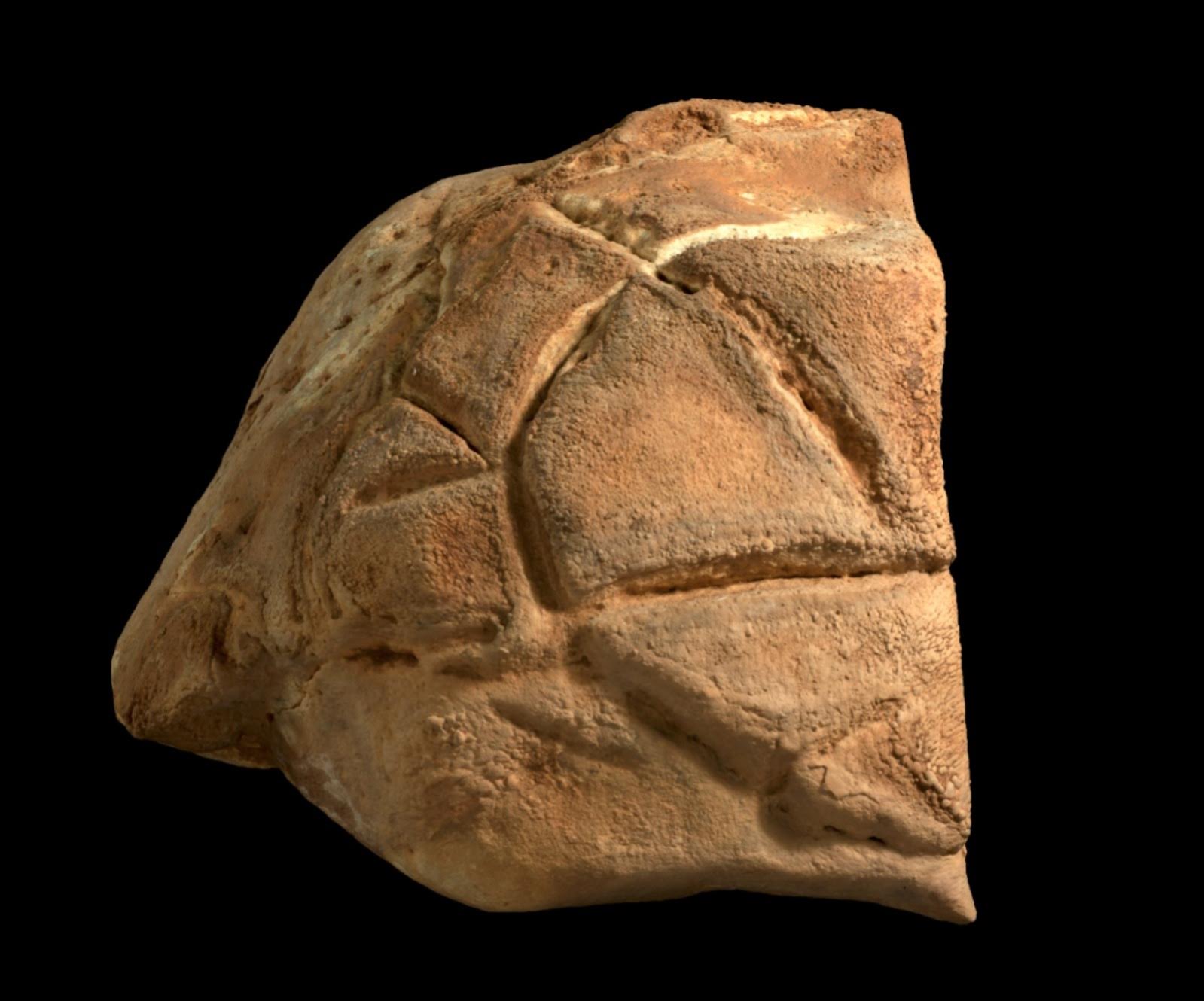
The rare prehistoric ritual complex has been uncovered in the darkest depths of Manot Cave in the Galilee region, Israel. The complex is enclosed naturally by impressive stalagmites that create a distinctive entrance to the site and features a unique and impressive rock with geometric engravings resembling a turtle shell.

“The rare discovery provides a glimpse into the spiritual world of Paleolithic hunter-gatherer groups who lived in our region approximately 35,000 years ago,” says Omry Barzillai from the University of Haifa and Israel Antiquities Authority.

Research-team-Left-to-right-Prof.-Ofer-Marder-Prof.-Israel-Hershkovitz-Dr.-Omry-Barzilai
Research team (L to R): Ofer Marder, Israel-Hershkovitz, Omry Barzilai. Prof. Ofer Marder, Prof. Israel Hershkovitz and Dr. Omry Barzilai in the Manot Cave. Credit: Omry Barzilai.

“The engraved rock was deliberately placed in a niche in the deepest, darkest part of the cave. The turtle-shell design, carved on a three-dimensional object, indicates that it may have represented a totem or a mythological or spiritual figure. Its special location, far from the daily activity areas near the cave entrance, suggests that it was an object of worship.

Turtle shaped rock

“Notably, there are prehistoric caves in Western Europe, with similar findings testifying these places held symbolic importance and served for ritual and communal activities.

Deer antler in ancient cave
A deer beam from the hidden hall in Manot Cave. Photo credit: Dafna Gazit, Israel Antiquities Authority

The study of this complex, published in the journal PNAS, was led by Dr. Omry Barzilai from the University of Haifa and Israel Antiquities Authority, Prof. Ofer Marder from Ben-Gurion University, and Prof. Israel Hershkovitz from Tel Aviv University.

Manot Cave has been excavated systematically since 2010 by the Israel Antiquities Authority, Tel Aviv University, and Ben-Gurion University. The cave is particularly well-known for its stunning stalactites and remains of habitation from several prehistoric cultures of the Upper Paleolithic period.

Ancient skull, via Tel Aviv University
Inside the cave, via Tel Aviv University

Among its notable discoveries is a 55,000-year-old modern human skull, the oldest modern human fossil found outside Africa.

In course of study of the deep complex study the researchers uncovered ash remains in one of the stalagmite rings near the engraved rock, confirming the use of fire to illuminate the ritual space, likely with torches. Acoustic tests revealed that the complex has enhanced natural acoustics, which could have created a unique auditory experience for communal activities such as prayer, singing, and dancing.

Prof. Hershkovitz: “This is an unprecedented discovery of a space with ‘audio-visual equipment,’ centered around a ritual object (the turtle), which constitutes the first evidence of communal rituals in the Levant. It is no surprise that prehistoric hunters chose to conduct their rituals in the darkest part of Manot Cave, as darkness embodies sacred and hidden qualities, symbolizing rebirth and renewal.

“The establishment of ritual centers during the Upper Paleolithic was a central element in the development and institutionalization of collective identity — a necessary stage in the transition from small, isolated hunter-gatherer groups based on blood ties between individuals to large, complex societies.”

(Photo: Amos Frumkin / Hebrew University Cave Research Center)
Inside the cave photo: Amos Frumkin / Hebrew University Cave Research Center

The chronological age of the ritual complex in Manot Cave was dated to 35,000 to 37,000 years ago, a period associated with the sudden emergence of the Aurignacian culture, known in Europe for its symbolic objects and cave paintings. “In our excavations in Manot Cave, we uncovered rich Aurignacian layers near the cave entrance that included flint tools, bone and antler implements, and shell beads,” said Prof. Ofer Marder from Ben-Gurion University.

In a small, hidden chamber adjacent to the ritual complex, a complete deer antler with signs of use was discovered.

“Antlers were used as raw material for crafting tools for various purposes by Upper Paleolithic cultures in Europe, and by the Aurignacian culture in the Levant. The placement of the deer antler in a hidden chamber adjacent to the ritual site may be connected to the ritual activities in the cave,” explained Barzilai.

The researchers also conducted 3D photographic mapping of the cave. “We found a clear separation between the ritual complex and the areas of regular activity at the cave entrance. This observation strengthens the hypothesis about the significance of the complex and the need to differentiate it from the areas where daily activity took place,” said Alexander Wigman from the Israel Antiquities Authority.

According to the researchers, the discovery of the ritual complex in Manot Cave sheds new light on the spiritual life of the Upper Paleolithic people in the Levant. “This research enriches our understanding of prehistoric humans, their symbolic world, and the nature of the worship rituals that connected ancient communities.

“Identifying communal rituals in the Paleolithic era marks a breakthrough in our understanding of human society and offers more than just a glimpse into ancient ritual practices. It reveals the central role of rituals and symbols in shaping collective identity and strengthening social bonds,” the researchers concluded.

What is Bovaer and why are people afraid it’s in cow milk they drink?

0
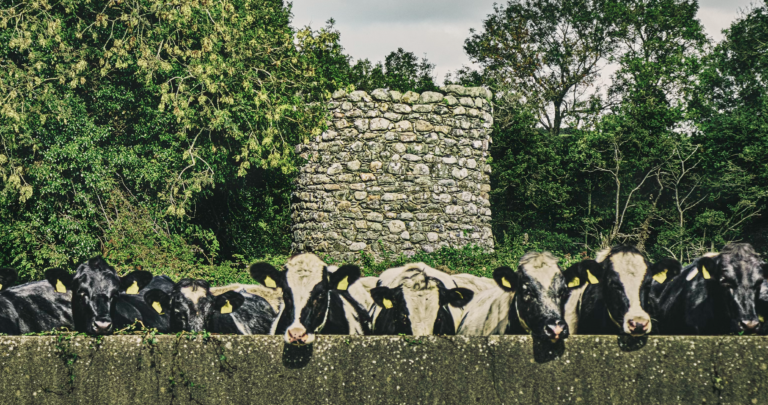
Should cows be eating Bovaer so they produce less methane?

Cows that make milk make methane gas and that gas is leading to more greenhouse gas emissions. One of the market solutions to reducing methane gas from cow farts and manure is a new biotech product marketed as Bovaer. The product, developed by DSM Firmenich from Maastricht, Holland says that when fed to a cow in their feed, when Bovaer gets to the cow’s rumen, it creates more microbes to help break down food. Like eating a probiotic.

Just ¼ teaspoon in a cow’s daily feed takes effect in as little as 30 minutes. As it acts, Bovaer is safely broken down into compounds already naturally present in the rumen, advertises the company. Less methane gas is produced in the process.

Bovaer, they say, is the most extensively studied and scientifically proven solution to the challenge of burped methane to date — “with more than 130 on-farms trials in 20 countries and more than 80 peer-reviewed scientific studies. In every case, it has proven safe for consumer, farmer and animal, having no impact on milk production or reproduction.”

Indeed, you can find clinical trials online from the United States (Penn State) and Canada (University of Alberta) where researchers report in the US and Canada significantly less methane production in dairy cows that are given the supplement, with the scientific name 3-nitrooxypropanol (3-NOP).

In the UPenn study, “Administration of 3-NOP via the TMR at a concentration of 60 mg/kg of feed DM decreased daily enteric CH4 emission by 26% in early-lactation dairy cows. The enteric CH4 yield decreased by 21%, and CH4 emission intensity was decreased by 25%. Dry matter intake was lower in 3-NOP cows (by 5%), but ECM production was not affected, which resulted in increased ECM feed efficiency compared with CON cows.

Shoppers in the UK upon learning that their milk contains Bovaer are pouring their milk into the toilet. It’s caused a stir on social media such as in Facebook groups where people are voicing their concerns about an untested product – is it safe for humans to eat byproducts of Bovaer?

Arla Foods, owner of the UK’s biggest dairy co-operative said on 26 November it will going to start using the supplement in its milk. Arla said it will work with grocery giants Aldi, Morrisons and Tesco to trial the use of the feed additive known as Bovaer across 30 British farms.

British shoppers threaten to boycott all three supermarkets and Arla brands, along with Lurpak butter.

“Bovaer is a relatively simple chemical that is broken down in part of cows’ stomachs, where it also inhibits a specific enzyme that produces methane,” says Prof Oliver Jones, Professor of Chemistry, The Royal Melbourne Institute of Technology. “Because it is broken down quickly, it is not absorbed whole and is not present in milk; it indirectly increases the fat content because substances that would have been converted to methanol are instead converted to fats.

“Worries over new technologies are nothing new. However, the use of food additives is quite strictly controlled in the UK and Europe,” he notes. You can’t just add anything to the food chain without safety testing (although it appears you can claim what you like on social media).

“Despite extensive testing in multiple countries; there is no evidence that Bovaer causes cancer (as it does not damage DNA) or that it is dangerous to consume milk or other products from cows treated with it. Neither does Bovaer prevent other methods of reducing methane emissions from cattle, such as selective breeding.

“One can’t directly compare the everyday use of Bovaer and the potential risks from its use in concentrated form. For example, Bovaer is claimed to be an irritant to the eyes and skin and potentially harmful by inhalation, but common salt is also an irritant to the eyes and skin, and water is clearly potentially harmful by inhalation.

“Context is extremely important when assessing risk, but entirely missing from the social media videos on this topic.”

One solution to industrial food is finding raw milk, though it is illegal to buy and sell raw milk in Canada and the United States, it is possible for communities to self organize and “share” milk this way.

I’d assume, just in general here, that if the community of milk drinkers want to be upset about something, they should look to cow hormones, and antibiotics fed to cows. This may be a bigger reason to be concerned.

States Where Raw Milk is Legal on Producing Farms

It’s against the law to buy and sell raw milk in Canada, and has been since 1991, when the federal government banned its sale due to concerns of food-borne illnesses. Pasteurization is a process that involves heating raw milk to at least 63 C to kill harmful bacteria, such as salmonella and E. coli.

Twelve of those states—California, Maine, New Hampshire, New Mexico, Pennsylvania, South Carolina, Washington, Arizona, and Connecticut—allow farm sales of raw milk with no license. The rest require a license to sell on the farm.

Some people when the can drink goat, sheep and camel milk.


Who is eating less meat in America? And why?

0
rib eye steak aleph farms
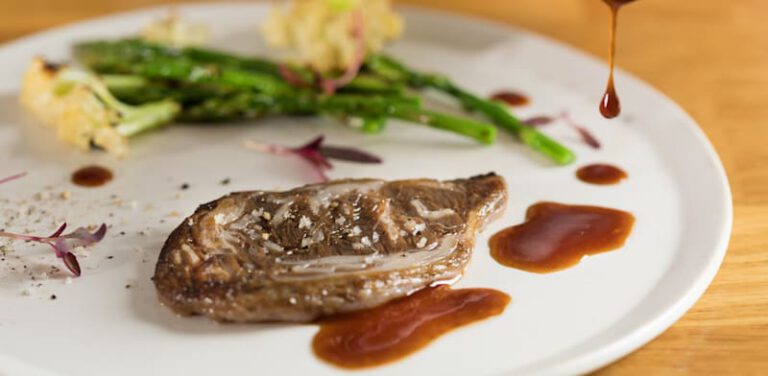
A steak grown in the lab made by Aleph Farms. It is meat grown in a lab, without animal suffering.

People in the Mediterranean already eat a balanced and healthy diet copied the world over. But there is a new trend in the United States and Canada. People that were once adherents to raw food and vegan diets are now eating more meat and are following a keto diet which high in protein and low in carbs. And studies are supporting the notion that unprocessed red meat is good for you. Are the rules of what’s healthy being overturned? What are the non-meat eaters saying?

There is conflicting but supportive evidence to eat less red meat and environmentalists say it’s good for the planet as it contributes to less cow farts and greenhouses gases. There is a huge debate now on whether methane-reducing Bovaer being added to a cow’s diet is good for people. The planet perhaps, but is it worth the risk?

Let’s look back:

Meatless Mondays was one trend years ago that started people tasting the trend of a diet with no meat. Veganism became mainstream. Around the same time there was the whole animal trend begging the question: are you prepared to eat testicles and bull penis soup and stew?

Bull penis stew photo
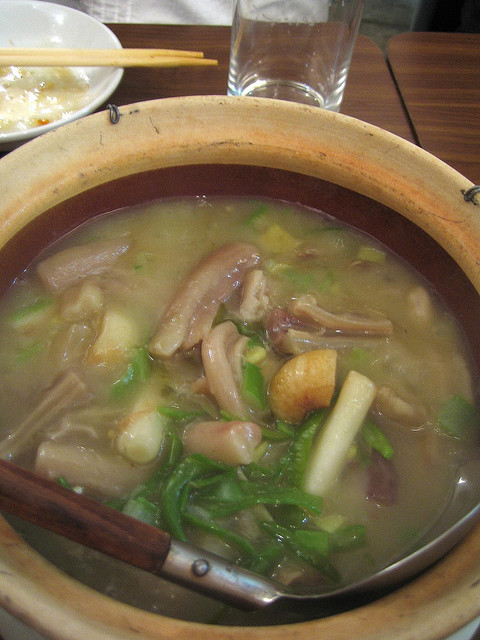
A bowl of bull penis stew. dive in.

Limiting red meat consumption, especially meat that is processed, may be a key to a sustainable and healthy diet, yet Americans are among the world’s largest consumers of red meat.

A new study reveals the demographics of American adults who choose not to eat red meat and finds that environmental concerns may matter more to them than health risks.

Researchers at Baruch College and the University of Southern California (USC) surveyed more than 7,500 adults as part of the Understanding America Study – a probability-based Internet panel of individuals 18 and older. They will present their research at the December annual meeting of the Society for Risk Analysis in Austin, Texas.

Mena face for Le Labo
Is she eating meat, and if no, why?

When they analyzed the survey results, the researchers found that only 12 percent of participants reported they did not eat red meat. Adults who reported not eating red meat were more likely to have indicated that they:

  • were female
  • were 65 years of age or older
  • had a college degree
  • had an annual income of $60,000 or less
  • had voted for Democrats or Independents (vs. Republicans), and
  • self-identified as non-Hispanic Black, Hispanic, or Asian (vs. non-Hispanic whites).

When asked to choose their top two concerns of the past year, the non red-meat eaters were equally likely to choose “environment and climate change” or “health/healthcare.”

In the analysis of survey results, environmental concerns were associated with self-reports of not eating red meat while health concerns were not.

“People may be more familiar with the environmental benefits of not eating red meat than with the potential health benefits,” says lead author of the study Patrycja Sleboda, assistant professor of psychology at Baruch College in New York City.

The authors suggest that public awareness of the environmental impacts of eating red meat may be increasing due to rising climate change concerns.

Red meat production is a major source of greenhouse gas emissions, deforestation, and water usage, according to the Intergovernmental Panel on Climate Change (IPCC).

Production of meat and dairy contribute to 72-78 percent of global food-related greenhouse gas emissions and 15 percent of total global emissions. By eating less red meat, people can lower their own contribution of greenhouse gas emissions.

The lack of a significant association between health concerns and red-meat eating may reflect a lack of clear dietary recommendations in the United States. Studies have shown that high levels of both unprocessed red and processed meat have been associated with elevated risk for colorectal, stomach, and pancreatic cancers.

The American Cancer Society recommends “limiting red and processed meat,” while the American Heart Association suggests people eat more plant-based proteins and meatless meals.

Dive boat tourist raises concerns and tips for dive safety

0
Dive boat liveaboard Egypt, Sea Story
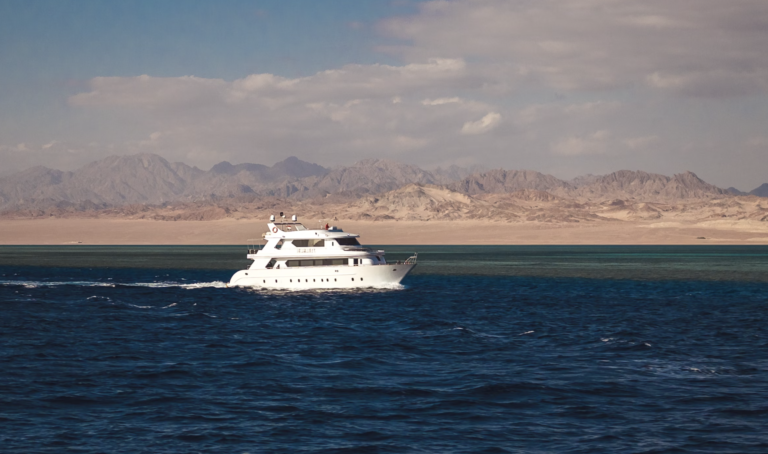
A liveaboard boat in the Red Sea, with Sinai in the backdrop

On November 25, a Red Sea dive boat capsized, leaving 44 tourists and crew fending for their lives. We have a saga of stories you can follow here about the Sea Story incident, including interviews with survivors. Timothy, a diver reached out to us hoping to raise concerns he had while diving in Egypt with the same company that charted the ill-fated Sea Story, but he travelled just a week earlier.

“I am a certified PADI divemaster with over 600 worldwide dives. I am not a survivor of the sinking – I was on a different boat the Sea Pearl, operated by the same company, during the week immediately previous to the sinking,” says Timothy, using his first name only.

Like survivors of the Sea Story, Timothy says Dive Pro transferred him to another boat last minute: “This often happens for operational reasons – desire to have boats travel fully booked; mechanical or logistical issues with the boats; crew availability; weather and conditions, etc. I had been booked onto the Tillis but was moved to the Sea Pearl about 48 hours before the trip was due to begin.

“This wasn’t an issue for me, but many others were annoyed that they could not travel on their preferred boat, or that they had paid for an upper-deck cabin but were now on the lower deck,” he says.

What message do you have for other divers booking liveaboard trips anywhere in the world?

Liveaboard dive safari in Raja Ampat
Liveaboard in Raja Ampat
“Be very aware of safety concerns when researching a Red Sea live-aboard trip. Review your chosen boat’s safety provisions. Book (and insist upon receiving) an upper-deck cabin.
“Familiarise you and your buddy with your life jackets.”
What message do you have for divers whose intuition tells you the boat isn’t safe? 
Liveaboard dive boat in Egypt
A low-cost liveaboard in Egypt sounds like an adventure of a lifetime. Make sure it’s safe.
“Trust your intuition. However there is little you can do other than take safety into your own hands.”
Will you dive in Egypt again and if yes, with who?
“Likely, but perhaps shore dives, and with a different company, which I will thoroughly research.”

How many diving boat accidents were there in 2024 in Egypt?

 “Sea Story” sank in November, as it is in the news. Cause unknown so far, search for remaining survivors is ongoing. 11 people died.

“MV Nouran” sank on 6th of November due to a fire on board, all divers & crew got rescued.

“MY Seaduction” colided with a reef in October, all 18 divers + 10 crew got rescued.

“Exocet” sank after coliding with a reef in June, all divers + crew got rescued.

“MY Sea Legend” had a fire on board in February, one casualty from Germany.

Can this tomato-based supplement slow aging?

0
Biohack with tomatoes and lycopene
Biohack with tomatoes and lycopene capsules made by Lycored

pre-clinical study recently published in Antioxidants finds that Lycored’s Lycomato product used in nutraceuticals has significant benefits for cellular health and aging. Results from this study show Lycomato can improve mitochondrial function, reduce oxidative stress, and protect against cellular damage—all factors that slow the cellular aging process and effect longevity.

Many of us are trying the high-protein keto diet to get fit and are eating protein shakes and enzymes. But have you looked at lycopenes?

To assess the effectiveness of Lycomato, based on lycopene, in delaying cellular aging, researchers treated cells with rotenone, a compound that triggers mitochondrial dysfunction.

Results showed that when cells were also pre-treated with Lycomato, mitochondrial function improved, mitochondrial ROS levels were reduced by about 70%, ATP levels restored to around 70% and the number of senescent cells was dramatically reduced to near-normal levels.

Together, results suggest Lycomato and similar phytonutrient-rich compounds could serve as potential agents for promoting cellular health and longevity.

The company also produces a food dye that replaces the dangerous Red 40 which is both halal and kosher.

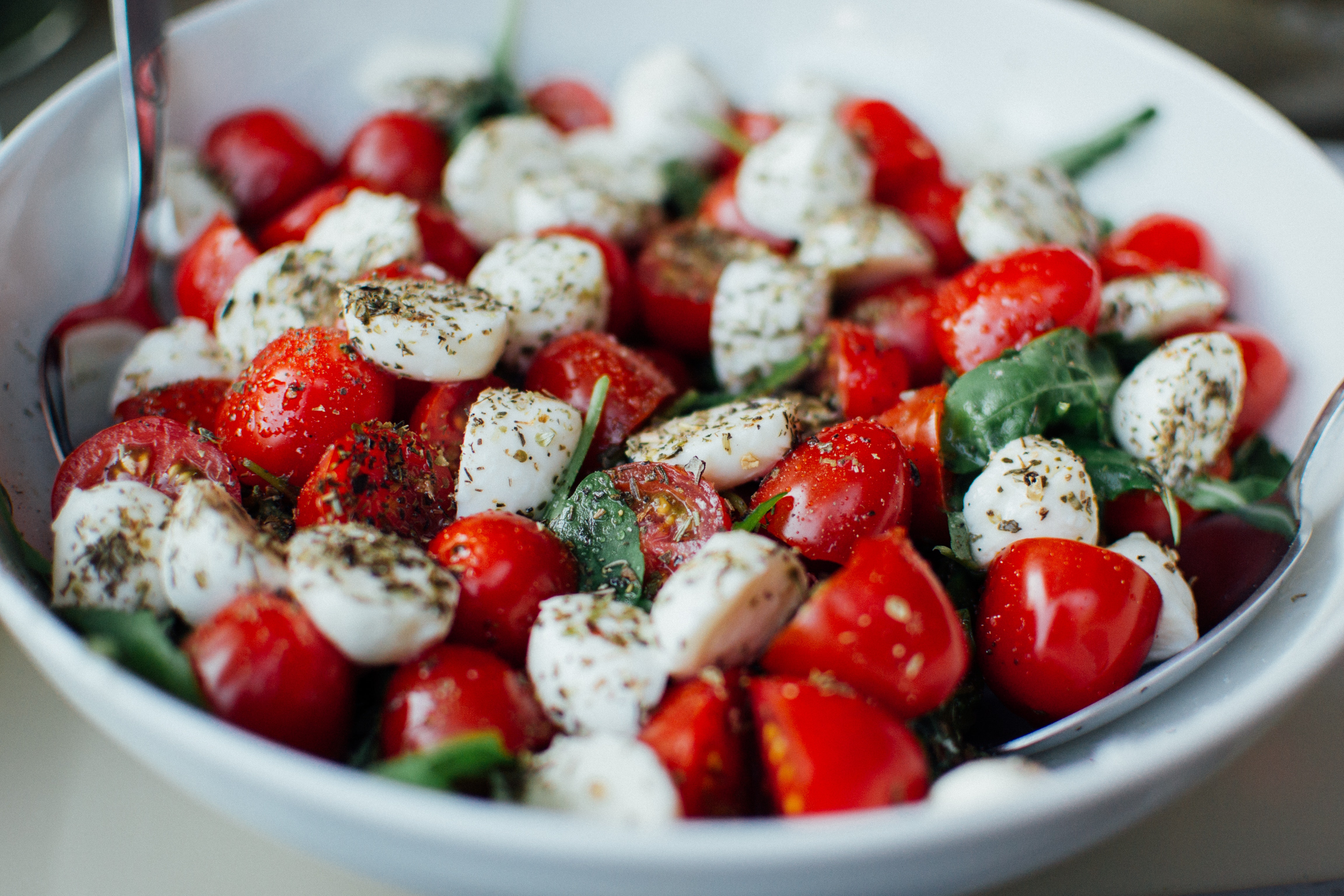
cherry tomato salad

How does Lycored red work?

Mitochondria, the energy (ATP) producers of cells, become less efficient and generate more harmful reactive oxygen species (ROS) over time. Increased oxidative stress damages cells, impairs cellular function, triggers cell senescence and accelerates aging. Studies suggest improving mitochondrial function can extend lifespan and promote healthier aging.

These findings support previous research demonstrating the beneficial effect of lycopene, the hero among the six standardized phytonutrients found in Lycomato, on telomere length, a factor deeply connected to cellular aging.

Elizabeth Tarshish, from Lycored states, “Healthier mitochondria generate less oxidative stress, provide more cellular energy and support improved cellular function, contributing to a slower aging process. We’re excited by the growing body of evidence that demonstrates Lycomato may help delay the aging process, extend cell lifespan, and maintain healthier tissues over time.”

Lycored is an international company at the forefront of discovering the beauty within by combining nature’s goodness with cutting edge science to deliver a sensory journey that impacts wellbeing. Established in 1995 in Israel, Lycored is the global leader in natural carotenoids for food, beverage and dietary supplement products. Read more about the company here. Or get some tomato recipes here and cook your way to staying young.

Saudi greenhouses to feed desert people

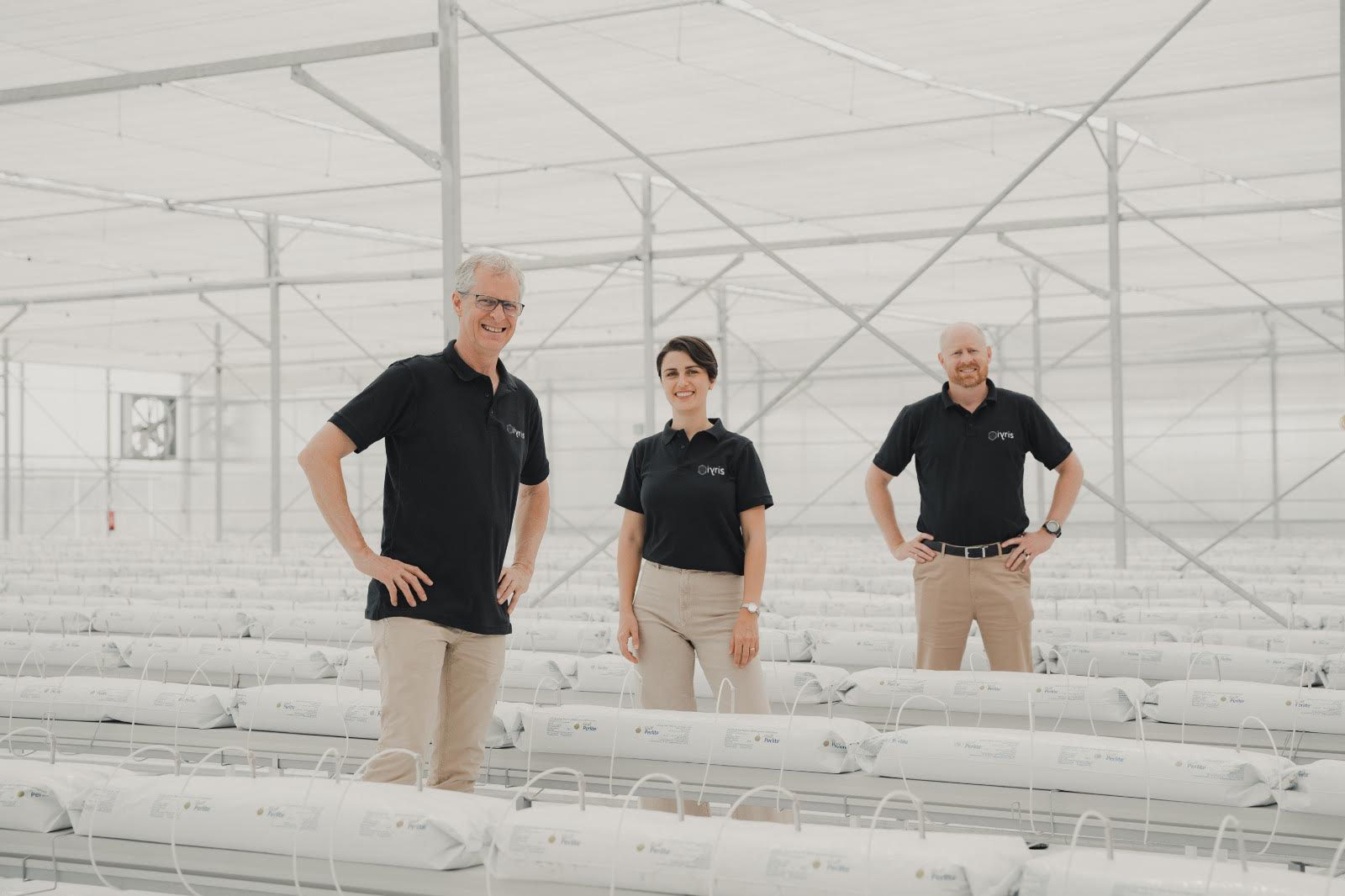
iyris greenhouse team
Iyris greenhouse team, the founders: Dr. Mark Tester, Dr. Ryan Lefers and Derya Baran

iyris delivers more resilient and reliable produce.

Iyris, a company from Saudi Arabia founded by foreign nationals, makes it easier to grow the likes of tomatoes – one of the world’s biggest fresh produce and processing crops – in environments increasingly impacted by climate change. The patented process, which tackles the challenges of hot climates, has the potential to revolutionize where crops are grown to address global food security issues. We interviewed one of the founders Mark Tester earlier this year on the innovation he championed. The company used to be marketed under RedSea Farms.

Their newly patented polyploid hybridization grafting process – mimics and significantly accelerates the natural evolutionary process of breeding genetic resilience into plant rootstocks. With this groundbreaking innovation, farmers can address, without having to change the way that they farm their land, their most urgent need: reliable, resistant crops that can mitigate and combat climate change.

The technology makes crops more resilient to stressful abiotic environments (e.g., salt, drought, heat and pests) delivering higher yields for farmers and reducing crop failure risk. The timescale and predictability of genetic resilience trait integration is significantly accelerated compared to previous methods. 

Related: How Daniel Hillel pioneered drip irrigation

Commercial trials of iyris’ current hybrid grafted diploid rootstocks, delivered an average 20-25% tomato plant yield increase over the best performing commercial alternatives. Expectations are that using this patented polyploid breeding process, yield increases will be even more significant. Results to date have demonstrated that polyploids can double yields when compared to diploids. 

RedSea farms
iyris grafts more desirable plants onto graftstock which is saline resistant

Uniquely, iyris’ plant science innovation allows multiple plant traits to be integrated simultaneously. Previously, scientists and breeders targeted single traits and experienced low predictability rates for even a single integration.

“These achievements in plant science are unprecedented and a significant moment in our mission to feed the world sustainably. iyris can now offer farmers a commercially validated and reliable solution addressing the environmental and economic challenges of today – in tomatoes alone, that’s worth billions of dollars annually,” says John Keppler, Executive Chairperson of iyris.

iyris’ published rootstock patent – ‘Polyploidization of interspecific tomato hybrids to create stable and fertile rootstocks’ follows decades of work and research, most recently at Saudi Arabia’s King Abdullah University of Science and Technology (KAUST), led by iyris co-founder, Professor Mark Tester – the world’s pre-eminent plant scientist. Professor Tester’s thesis developed from research (with his then – PhD student, Yveline Pailles) into resilient relatives of the tomato growing on sea-facing rock faces in the Galapagos Islands.   

Mark Tester, Indiana Jones of the Plants
Mark Tester, Indiana Jones of the Plants in the Galapagos

With increasing global temperature, and dwindling freshwater resources, ground-breaking innovative agriculture solutions are vital to break the food-water-energy nexus. The impact of climate change on global farming is becoming starker every year, and global food production is estimated to need to increase by 50%, by 2050, to feed soaring population rates. iyris’ innovation is perfectly timed given its potential to change the way that crops are grown, allow sustainable agriculture in previously unviable territories for farming and protect farmers from crop failure risk. 

Related: Lycored makes kosher and halal, non-animal tomato-based dyes

With its resilient hybrid tomato rootstocks already available in the market, iyris has proven the commercial viability of their technology in open-field trials. iyris has partnerships with two of the world’s largest tomato producers, with more commercial agreements to come. iyris hybrid rootstocks outperformed the best available alternatives across multiple crop seasons, hybrid tomato rootstocks sales have already exceeded 1 million units.  

Mark Tester, Ryan
Founders Mark Tester, Ryan Lefer

The market context is extremely positive. The processed tomato market (2023 data) is estimated at US$51.8 billion with 182 million tons produced annually. iyris and Professor Tester have already started research into other plant groups such as eggplants, melons and pumpkins, with the potential to increase commercial results and improve resilience exponentially.


The Orange Economy: How Religion and AI Are Shaping Innovation

0

The orange economy is an evolving concept based on the contribution and potential of creative assets to contribute to economic growth and development.

Is orange the pathway in to faith and reconciliation for people and planet? A monk going into a temple in Cambodia
Is orange the pathway in to faith and reconciliation for people and planet? A monk going into a temple in Cambodia. And a design conference in Tashkent on AI. How can we resolve both worlds? Can orange lead the way?

The creative economy is about translating the inspiration of culture and ideas into high-value businesses and enterprises.  For billions of people around the world their faith is a big source of inspiration and creativity. Artificial intelligence will be a major disruptor of our economy. It will also allow many people to join the ranks of the creative economy like never before. In essence, faith has a role to play in the unfurling of the next chapter in humanity’s economic story.

Indeed, prior to the contemporary era most acts of human creativity, we celebrate today were directly related to divine inspiration. This includes ancient artifacts like the bust of Nefertiti and the Pyramids to Renaissance objects like Michelangelo’s “The Creation of Adam” a fresco which forms part of the Sistine Chapel at the Vatican City.

Related: There are more pilgrims to Dubai mall than to Mecca and the Vatican

The recently concluded 4th World Conference on Creative Economy in Tashkent did not deal directly with faith, but attracted diverse individuals from around the globe from supermodel Naomi Campbell who took the stage to a priest who sat in the audience. Faith was even more present in part because the Uzbekistan Art and Culture Development Foundation, who organized the event in partnership with United Nations Trade and Development and the Ministry of Tourism and Creative Economy of the Republic of Indonesia, is involved in restoration works around the country.

Religion in many countries is a strategic reserve for what’s called the “Creative Economy.” For example, tourists around the globe include sightseeing to mosques, churches and temples in their itineraries. Similarly, history would suggest the pop stars of tomorrow are today members of youth choirs or similar groups.

“From a historic perspective the creative economy began with religious inspiration in many places. You can see that in very diverse areas from painting and music for example around the world. In a Muslim country [like Indonesia]… we embrace differences and members of other religions bring their own ideas to the development of the creative economy,” said Sandiaga Uno, Indonesia’s then Minister of Tourism.

The Jameh Mosque, a UNESCO World Heritage Site, is a prime example of Persian-Islamic architecture. Its intricate tilework, innovative use of geometry, and sustainable features such as the central courtyard for natural ventilation make it an inspiration for contemporary architects. The mosque demonstrates the potential for combining cultural richness with eco-friendly design.
Jameh Mosque of Isfahan, Iran is a major stop for tourists

Orange is a color often associated with the Protestant faith and in Asia with Buddhism, Hinduism and Sikhism. It is also the color associated with the creative economy to differentiate — it from other macroeconomy buzzwords like the green economy and blue economy.

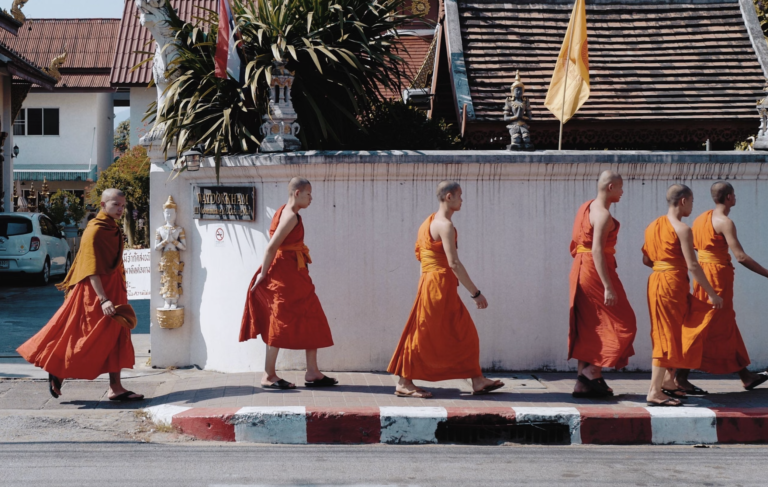
young monks outside a temple in Thailand
Monks in Thailand, dressed in orange

“This summit is about encouraging the talented people here  not to leave the country. Instead of seeking high-paying positions abroad, we want to attract those jobs to Uzbekistan,” said Uzbekistan Minister of Digital Technologies, Sherzod Shermatov. “Digital platforms can help achieve millions of views globally, enabling monetization and additional income. We aim to create local role models and success stories, and by combining digital tools with creative talent, we can open new doors for our youth.”

Simple yet innovative farming technologies and techniques save natural resources while increasing incomes
Simple yet innovative farming technologies and techniques save natural resources while increasing incomes in Uzbekistan. Digital farming is helping these women prosper.

The growth and development of the Orange Economy offers a growing and important sector — especially because polls show that from fashion to video games these are sectors in the economy which a growing number of youths see as important to their futures. There are other ways in which the creative economy growth goes hand in hand with the development of faith

“By focusing on creating an ecosystem where creatives can thrive within their home countries—leveraging technology, financial management, and global platforms—[countries] can better capitalize on … cultural wealth and retain talent that might otherwise seek opportunities abroad,” said Felipe Buitrago, Colombia’s former Minister of Culture.

Image from Brown Political Review by Kayla Morrison, 2024
Comuna 13, Medellin: A model for Middle East peace? Image from Brown Political Review by Kayla Morrison, 2024

In the past, Buitrago also stressed that the Orange Economy can help build peace and reconciliation between diverse groups. In the past, he has pointed to the example from his own tenure as minister and the example of the Comuna 13 area of Medellín. Here, two rival gangs faced off together with little chance of reconciliation. What ultimately brought these two together was a joint music festival in which the two groups battled it out over competing forms of music (such as rap and reggaeton) in these days.

“Faith is a key element of the creative economy. Because freedom of expression and belief are necessary conditions for creativity,”  Buitrago  said, “You cannot not be creative and non-inclusive at the same time. … Of course faith is a delicate issue and you can’t force people to have certain beliefs but, overall religion has played a major role in fostering creativity. As reinforcing and building identity…which often allows people to cooperate in harmonious ways.”

Looking toward the future faith, creativity and technology will often intersect. The pathway from “prophet” to “profit” will not always be clear. However, creativity, at times fueled by faith, will help spur greater creativity where-in new technologies will allow the visionaries of the future to unlock new possibilities for collaboration, innovation, and mutual understanding more quickly than ever.


Joseph Hammond
Joseph Hammond

Joseph Hammond is a former Fulbright fellow in Malawi and a journalist who has reported extensively from Africa, Eurasia and the Middle East. Hammond is also an Idove fellow at the African Union. He speaks enough Spanish and Arabic to discuss boxing, a sport he treasures. 

Unanswered questions after 11 people perished on an Egyptian dive boat accident

0

My Sea Story boat

Dive Pro Liveaboard has lost 2 boats this year. Another one caught fire in 2022. In November, Sea Story tipped and capsized in open water. Eleven tourists are presumed dead, plus a number of crew.

Dive Pro Liveaboard has lost 2 boats this year in the Red Sea. 12 tourists and a number of crew have died, yet the company is still taking bookings for Christmas

The Red Sea is a magical place. It’s in the mountains of Sinai where God first spoke with Moses and gave him the 10 commandments. The beautiful people, the food, the natural mix between sea and desert. The colors of purple, pinks, yellows, oranges, white and black. The coral reefs everywhere and diving in the Blue Hole is an adventure of a lifetime for many divers who do return again and again. Especially Europeans where Cairo is a 5 hour plane ride away.

But am Egyptian dive holiday went wrong for 33 tourists this past November when the second boat in the same fleet  owned by the dive company Dive Pro Liveaboard listed, capsized and sunk. The accident happened on November 25, a Monday, in the early hours of the morning, as early as 2:30am near the area of Marsa Alam about 20 km out into the Red Sea.

Location of the Sea Story tragedy

Location of the Sea Story tragedy on the Red Sea

The Egyptian Navy wasn’t called until a reported 5:30am and helicopters didn’t show up until about 10am or 11am, according to survivors. We first reported on the dive boat accident here right after it happened. Soon after, we were made aware that there were suspicious reports of the dive boat not suited to open seas because it had no keel and was refurbished with an extra floor making it top heavy (read here). Soon after a German diver reached out about a thesis a German student was working on documenting the hazards of Red Sea diving. He offered some solutions for fixing the growing concerns among dive boats and a dive boat checklist – you can get it here.

What we do know is that on Monday, 23 people out of 44 onboard, including crew and tourists, made their way to safety on rescue boats. The next day, some 36 hours later rescue crews pulled out 5 survivors, 4 tourists and one crew, a nephew of one of the rescue team. We have the story of one of the survivors, Michael Miles from Vaud, Switzerland, here, as told to us by his daughter.

In total there are 11 dead and/or missing from Germany, the UK, Poland and Egypt.

The dive operating company Dive Pro Liveaboard and the company that has facilitated the bookings of the trips have not responded to survivors requests for compensation or help. They have not responded to our requests to be interviewed. The Egyptian Navy’s emailed bounced. Dive Pro Liveaboard is based in Hurghada and based on its website is run by Ali Aref. They are still taking bookings for their remaining 2 boats.

“Crazy! Insanely bad management,” says a Reddit commenter. “They also ran a boat Sea Legend that caught fire in Feb where one German diver died. And in 2022, another of their boat also caught fire. How are they still allowed to operate? Makes you question the local systems and enforcement too.”

Both companies Dive Pro Liveaboard and the Dutch-based Liveaboard.com are continuing to book dive trips on risky boats despite the concerns. We have here an eyewitness who travelled on the Tillis, one of the boats being offered by Liveaboard.com currently on its Holland-based booking platform noting how they feared for their life on that boat. Yet only positive reviews are shown on the site.

Sea Story survivor Michael Miles told his daughter he booked on the Tillis (read here one tourists account of lack of safety standards on the boat) but was transferred to Sea Story. See screenshots from December 8 below that bookings are still being made for the dive boat company and if you read comments you will see that Liveaboard.com and Dive Pro Liveaboard in Egypt have a history of switching out boats. Why?

Liveaboard.com still carrying on booking holidays for the Dive Pro Liveaboard which lost 2 boats in the last year from catastrophic accidents that have killed 12 tourists and many crew.

Liveaboard.com still carrying on booking holidays for the Dive Pro Liveaboard which lost 2 boats in the last year from catastrophic accidents that have killed 12 tourists and many crew.

Tillis booking liveaboard.com Sea Story

Tillis booking liveaboard.com transferred to Sea Story boat on arrival. This was a common thing, as noted in the comments. Guest Michael Miles was switched from Tillis to Sea Story when he goat to the boat. Tillis went out on the trip but was not involved in the accident.

The fatal accident on November 25 has left dozens of survivors and the families of those who have died looking for answers and in the very least some financial compensation. Over the last 2 weeks, there are the questions we have collected, still unanswered. If you have any information about the Sea Story, answer in the comments below or email us [email protected].

Open questions after the Sea Story dive boat tragedy

Where did the accident actually happen?

By the time the Navy arrived to the sinking boat several hours after it capsized, they cordoned off the area around the boat, and wouldn’t allow rescue crews from other dive companies in for another day, some 36 hours, on Tuesday. The reason is that there was a risk of a diver bubble entering an air pocket and changing the pressure in the boat. The whole boat could go down.

One source says the boat was in 12 to 15 meters of water, another said 1000 meters. What was it? In deep open water or closer to the shore? If you look at the maps of the Indian Ocean/Red Sea areas you don’t need to boat long to get into water reaching hundreds of meters of depth. Why did it take the Navy 36 hours to agree to let divers inside even though survivors could be heard knocking and whistling from the outside?

Eyewitness accounts put the boat as close to 20km to shore and as far as 80km. A shipping boat was seen passing by at 10am by the survivors curious to know the exact location of the wreck.

Eyewitness accounts put the boat as close to 20km to shore and as far as 80km. A shipping boat was seen passing by at 10am by the survivors curious to know the exact location of the wreck. Marsa Alam sea Story dive boat nautical maps by fishing-app.gpsnauticalcharts.com.

Sea Story travelled from Port Ghalib at Marsa Shouna around 9 to 10pm. They were supposed to arrive at Sataya Reef after 6 or 7 hours at sea early in the morning. Around 2:30 am the boat went down within minutes (as many as 10), but the parts of the bottom of the boat floated about the surface. This is information supplied by survivors interviewed by Green Prophet.


Sea Story’s approximate location in the Red Sea/Indian Ocean. One source estimates 80 km out, another 20 km out in the sea. Depths are around 600m. Why is it reported that the boat sunk in 12 to 15 meters? 

One survivor told Green Prophet that at 10:00 am a helicopter arrived at the wreck. Shortly after, he says (maybe one hour), the motor boats of the Masa Nakari, a dive center brought the survivors from the life rafts to the Polish liveaboard.

Why did it take the Navy so long to let rescue divers in?

Rescue divers reported hearing knocking sounds coming out of the boat, meaning there were people trapped inside after the initial rescue. From Monday there was knocking coming out of My Sea Story. Why did the Navy only let the private rescuers in on Tuesday?

Why did it take so long for the Navy to come? The boat started sinking around 2:30 am. The Navy showed up at around 10am or 11.

Why does the Navy have no dive guides? Or equipment?

Questions about the boat operator

Why did the Tillis and My Sea Story go out when there were warnings and advisors against going to sea?

Was the cook driving the boat?

Why was an inexperienced captain in charge of such a large vessel?

Where is the captain of the ship? Is he on the run? A Facebook eulogy by a friend suggested he killed himself; others say he was in jail. Maybe he is in hiding?

Why are people booking on one boat and getting transferred to another?

How are they still booking trips on Tillis?

Why is Liveaboard.com not refunding money to people afraid of the Dive Pro company in the Egypt who have booked trips on boats like Tillus, also unsafe remodeled boats?

Who is certifying an ancient dive boat as seaworthy?

Why was My Sea Story away from the dive site and why did they separate from Tillis, the sister boat on Sunday?

The Navy and the Egyptian Authorities

Why are there no images coming out from the Navy of the boat in the water?

Where is the wreck now?

Why are they hiding the original location of the wreck?

Why has the public not been told if the boat finally sank?

Why were rescued passengers denied their passports to go home unless they signed a waver?

One diver reported a hole in the boat? Was there a hole in the boat?

Why didn’t the marines try to prop up the boat from sinking? Use floatation equipment?

Where is the crew? Why aren’t they allowed to talk with the media?

Why are the actual divers who went into the Sea Story and saved lives, not being celebrated? Their contribution being told?

Who will compensate tourists and the crew who lost their lives?

Some speculate that the Navy has towed the boat from the site where the boat overturned into shore, close to a reef. Why?

The rescue team that went in rescued 5 people. They found 4 bodies. There were no other bodies on the boat. Were there people still alive in their cabins? According to this rescue story (we interviewed the daughter) the rescue crew could not get into all the cabins. Did they give up on them? Were the risks too great?

There is a debate on whether the boat was in 12-15 meters or in 1000 meters of water. This fact could have changed rescue strategies. Some sources say the boat was close to shore near a reef and eventually sunk in 12 to 15 meters of water. Other say 20 to 80km out in the open water, at about 1000 m depth and the boat was towed back to shore and sunk near a reef by the Navy.

December 10, update: We attempted to book a dive trip on the Tillis through Dive Pro directly. The reply from a rep named Zozo was “Which week, which route, here in Egypt or in KSA?”


If you have anything to contribute to this evolving story, send us an email: [email protected]



How Islamic-era agriculture points way to sustainable farming methods

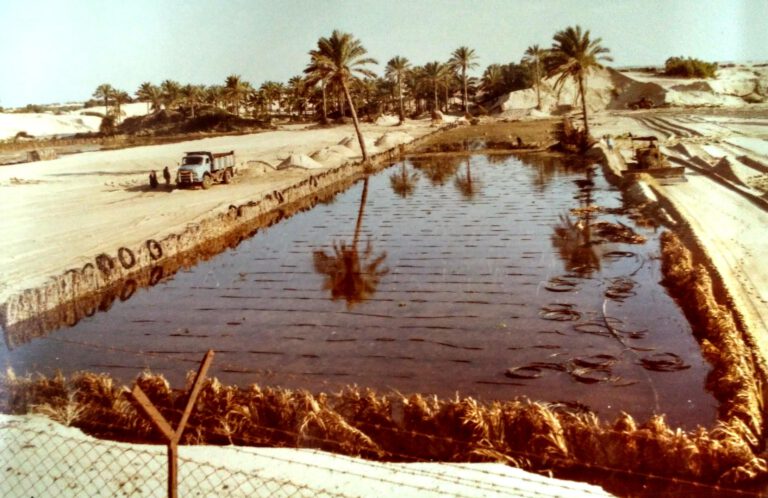
Flooded Mawasi plot (1983) along southern coast of the Gaza StripCredit: Yair Friman
Flooded Mawasi plot (1983) along southern coast of the Gaza Strip Credit: Yair Friman

The researchers suggest that the early Islamic agroecosystems were ahead of their time

As global water resources become more strained, the insights gained from traditional agricultural systems could pave the way for the development of innovative, low-water-use agricultural practices to confront the growing challenges of water scarcity and food insecurity in arid and marginal regions.

A new study exploring traditional sunken groundwater-harvesting agroecosystems in coastal and inland sand (SGHAS) bodies of Israel, Iran, Egypt, Algeria, Gaza, and the Atlantic coast of Iberia offers fresh perspectives on ancient agricultural techniques that could inform modern sustainability practices.

The research, which combines geospatial analysis, archaeological findings, and historical documentation, sheds light on the innovative use of water-harvesting and soil-enrichment technologies developed in the early Islamic period and their continued relevance to contemporary agricultural challenges.

The paper stems from an international workshop at Bar-Ilan University (BIU) in 2023 on continuity-discontinuity of ancient water-harvesting agricultural systems that resulted in a special issue in the journal Environmental Archaeology.

This study on early Islamic (late 9th – early 12th century) Plot-and-Berm (P&B) agroecosystems located along Israel’s Mediterranean coast evolved into an investigation of the long-term viability of regional SGHAS as a sustainable agricultural model.

These methods to utilize water, typically found near urban settlements, leverage local organic material and urban refuse to enrich the inert sandy substrate, creating fertile grounds for growing crops such as vegetables, watermelons, dates, and grapes. Importantly, SGHAS systems provide a model for long-term water security by utilizing shallow groundwater in conjunction with rainfall for irrigation and groundwater replenishment.

The Israel Science Foundation-funded study was jointly headed by Prof. Joel Roskin from the Department of Environment, Planning and Sustainability at BIU and Dr. Itamar Taxel, Archaeological Research Department, Israel Antiquities Authority, along with post-docs Drs. Lotem Robins and Ruben Sanchez (BIU), Prof. Revital Bookman and doctoral candidate M.Sc. Adam Ostrowski (U. of Haifa).

Despite their initial success, early Islamic P&B agricultural systems in Israel were largely abandoned after the Crusader conquest and, surprisingly, were not reestablished. However, these traditional systems found renewed application in regions such as Iran, Algeria, the Gaza Strip, and parts of Iberia since the Middle Ages, where they continue to support agriculture in marginal environments.

With many arid and marginal regions facing expanding populations and decreasing water resources, these ancient water-harvesting practices can address the global challenge of sustainable agriculture.

The long-term use of these agroecosystems contributed to continuous, shallow groundwater availability, which is essential for agricultural production and local food security in arid regions. These systems, which include advanced soil-enrichment techniques and groundwater harvesting methods, show the resilience of traditional agricultural practices and their potential for modern adaptation in water-scarce regions.

Navazo Spain: Oblique aerial photo of modern Navazo agriculture by Sanlucar de Barrameda, Spain. The green pool water is next to a shallow well in the shed by the palm and shady vegetated berms are in the background.Photo courtesy R. Sanchez
Masseira agriculture north in Apulia, northwestern Portugal. Seaweed is collected for sand enrichment. The plot and berm are utilized by irrigation from well into 1 m deep groundwater. Today a wide range of local family-farm produce is sold at stands. Seaweed photos courtesy of Álvaro Campelo. Additional photos by Prof. Joel Roskin. 

The researchers suggest that the early Islamic agroecosystems were ahead of their time, offering a glimpse into agricultural practices that were remarkably advanced compared to later agricultural systems. This understanding helps explain the approximately 400-year gap between the abandonment of early Islamic systems and the reappearance of SGHAS in the 15th century.

“We could not find written or factual evidence of the crops grown in early Islamic times, nor decipher the know-how and motivation for this original, exhaustive and ingenious effort to earthwork, enrich and cultivate sand. However, the inception of traditional Middle Age on SGHASs probably stemmed from a growing demand to cultivate the extensive new world influx of fruits and vegetables from arid zones and the Americas,” notes Prof. Roskin.

“We speculate that the Islamic agroecosystems provided several similar species to those found today in the traditional SGHASs. The reappearance in the Middle Ages and third expansion of SGHASs in the late 19th century early 20th century in Iberia suggests that this type of agriculture is adaptable to varying economic and cultural settings and therefore may possess potential for certain, current socio-agronomic scenarios.”

Masseira gallery: Masseira agriculture north in Apulia, northwestern Portugal. Seaweed is collected for sand enrichment. The plot and berm are utilized by irrigation from well into 1 m deepgroundwater. Today a wide range of local family-farm produce is sold at stands.

Seaweed photos courtesy of Álvaro Campelo. Additional photos by Prof. Joel Roskin.
Navazo Spain: Oblique aerial photo of modern Navazo agriculture by Sanlucar de Barrameda, Spain. The green pool water is next to a shallow well in the shed by the palm and shady vegetated berms are in the background. Photo courtesy R. Sanchez

While modern agriculture often relies on intensive water usage and depleting soil quality, traditional systems like SGHAS offer more sustainable, low-impact alternatives that can be adapted to contemporary needs. The study highlights the value of traditional agroecosystem models as analogues for contemporary agricultural challenges, particularly in the face of climate change and global food security concerns. While traditional agricultural methods cannot entirely replace modern, industrialized farming, they remain valuable in preserving local knowledge and expertise that have been honed over centuries. The study underscores the potential for integrating traditional agricultural practices—such as SGHAS—into modern sustainable agriculture solutions, particularly for communities facing water scarcity and environmental stresses.

The research further suggests that SGHAS-style systems, which rely on rainfall-replenished groundwater, offer a pathway for community-driven, ecologically sensitive farming practices. These systems are not only sustainable but also promote community engagement, resilience to climate change, and environmental stewardship. As traditional farming methods gradually fade in the face of industrial agriculture, these agroecosystems offer important models for creating locally adaptive, sustainable food systems.