Home Blog Page 51

Morocco loses half its wheat crop this year from drought

Morocco drought leaves wheat fields untended

A prolonged drought in Morocco is causing serious problems for the agricultural sector. Local Authorities predict that the 2024 wheat harvest will be reduced by almost 50 per cent. The Arab Spring happened during a drought and raising wheat prices. Can we expect upheaval in the Magreb connected to this prolonged drought?

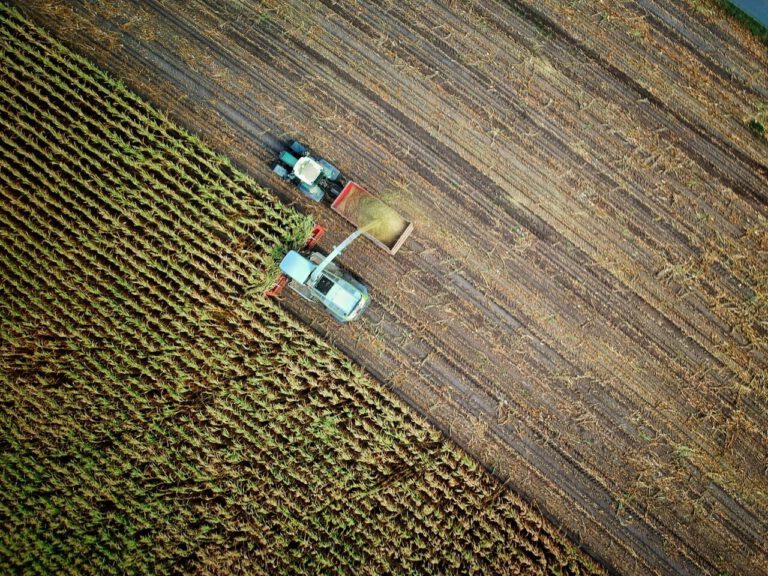
This image above, acquired by one of the Copernicus Sentinel-2 satellites on 3 August 2024, shows the province of Sidi Kacem, once the heart of cereal production in Morocco, but largely uncultivated this year due to a lack of water to irrigate crops.

According to the UN unit to combat desertification, Morocco is facing a severe crisis that threatens its agriculture and food security. A six-year drought, exacerbated by climate change, has deeply impacted the country’s cereal farmers, whose fields of wheat, maize, and barley once sustained both human and livestock consumption.

Sun
A solar paneled building in Morocco

The drought has not only reduced crop yields but has also transformed Morocco’s agricultural landscape, leading to significant economic and social challenges. As Morocco grapples with these difficulties, the government and agricultural sector are employing innovative strategies to combat the water crisis and safeguard the nation’s food supply.

Moroccan agricultural production consists of wheat, oranges, tomatoes, potatoes, olives, and olive oil. They also grow argan seeds for Moroccan oil.

The Impact of Drought on Morocco’s Agriculture

Morocco’s agriculture sector is highly vulnerable to changing climate patterns, especially the delayed and inconsistent rainfall that has plagued the country for years. Cereals, which occupy the majority of Morocco’s farmland, have seen a dramatic decline in both yield and acreage.

Visit a Moroccan farm:

In 2023, Morocco’s wheat harvest is projected to yield only 3.4 million tons, compared to the 6.1 million tons harvested the previous year. This decline has forced many farmers to leave their fields fallow, reducing both productivity and income.

The ongoing drought has also led to a reliance on wheat imports to meet domestic demand. Between January and June 2023, Morocco imported nearly 2.5 million tons of wheat, primarily from France.
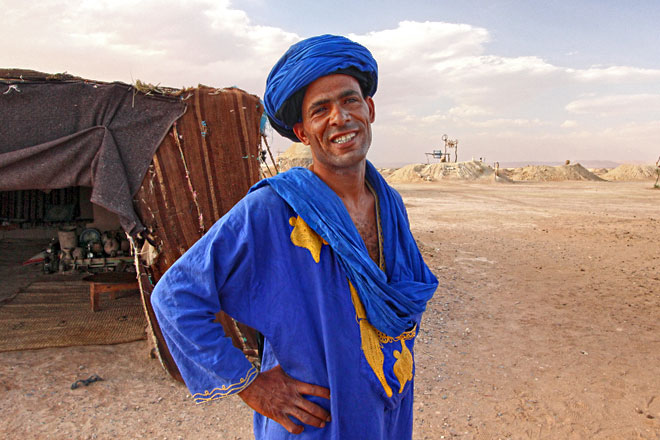
Morocco, travel, Hole in the Donut Cultural Travel, photo essay, travel photos, Fez, Marrakech, Volubilis, Sahara Desert
The men of the desert

However, this solution may not be sustainable, as France itself faces declining harvests due to similar climate challenges. The Food and Agriculture Organization ranked Morocco as the sixth-largest wheat importer in the world in 2023, highlighting the growing dependence on external sources for staple foods.

Recognizing the severity of the drought, the Moroccan government has intensified its efforts to address the country’s water scarcity. One key initiative is the implementation of a national water management strategy, aligned with guidelines set out by King Mohammed VI. This comprehensive strategy aims to mitigate the impact of the drought through water conservation measures and the diversification of water sources.

Seawater desalination has emerged as a cornerstone of Morocco’s water management efforts. Currently, the country operates 12 desalination plants with a total capacity of 179.3 million cubic meters of water per year. Morocco is also building desalination plants with France.

Plans are in place to construct seven additional desalination plants by 2027, which will increase capacity by another 143 million cubic meters. This ambitious plan reflects Morocco’s commitment to addressing its annual water demand, which exceeds 16 billion cubic meters—87% of which is used for agriculture. Yet, over the past five years, available water resources have not surpassed 5 million cubic meters annually, underscoring the gravity of the situation.

Berrechid aquifer Morocco, FAO. To improve water governance, Sweden, the FAO and the Moroccan government install water meters to stop water theft by Moroccan farmers.

Early studies suggest that better water management practices such as water metering can help stop the quick decline of aquifers.

Dive into the Sheybarah sea pods on deserted island in the Red Sea

0
Red Sea hotel pods
Red Sea hotel pods

Europeans have flocked to dive sites in Egypt because of the low cost tourism and liveaboard boats. Sinai and Egyptian Red Sea coral reef diving is a 4-hour plane ride from Europe.

Now that Saudi Arabia is opening up to tourism, westerners can skip the controversial Maldive Islands and head to the Red Sea of Saudi Arabia instead. Built on a pristine island is Sheybara, a series of water pods that offer privacy, and exclusivity.

Red Sea pods
Red Sea pod hotel

See more sea pods here.

The dangers of snorkel and boat adventures in Sinai, Egypt

0

Snorkeling in the Blue Hole, Sinai

If you have ever been to Sinai for a famous dive adventure or snorkeling trip, beware of the dangers. We’ve written about the fatal live aboard dive boat accident in the Red Sea this last November, and one reader reached out, a regular traveller to Sinai, about his family’s harrowing boating experience in Sinai, Egypt. Moral of the story: bring life jackets for each of your family members when traveling in countries like Egypt, Sinai, India, Thailand and South America. Don’t expect any travel company or tour operator to have you covered. Here is David’s story:

Your post made me think of what happened in Sinai in 2023. It turns out that if you live through it you have a good story, if you don’t then well… During April, 2023 the family decided to go to Sinai.

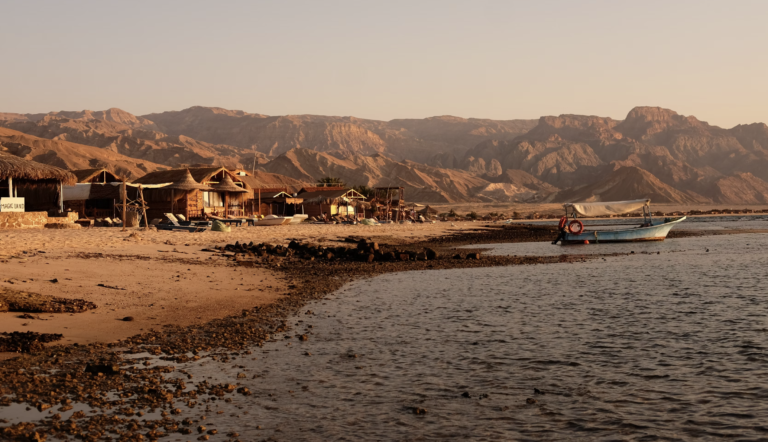
One day we visited the Blue Hole near Dahab, we snorkeled around and decided to visit Ras El Satan and further on explore this wonderful lagoon. We left the Blue Hole around 1pm with one of the local fishing boats, it was just us 8 (5 adults, my two sons 13 and 3 and a 5 year old nephew) and the skipper. I noticed there were no life vests. It’s about a 30 minute boat ride depending on the current or tide.

Snorkeling in the Blue Hole, Sinai

Once there we spent time with the locals and visited the above. Around 4pm I figured we should head back to not be on the roads at dark. When we arrived back at the pier of Ras El Satan there was a large group of visitors who wanted to get back just like us.

This time the polyester boat was stacked with people to the point where I thought, this is unsafe and we should get off, now this was the last boat of the day. I estimate there were about 50 people on this tiny boat, tourists but mostly Egyptian families who were on a day out. Kids, grannies, families.

While leaving I saw a 15-year-old kid fueling the boat with a plastic bottle of gasoline which had large black chunks floating in it. Another red flag. Nobody wore vests as there weren’t any. The waterline was just meeting the waves but once in the water the engine pulled the boat out of the water. Now we’re in the water, engine full throttle, our captain at the steering wheel.

Snorkel blue hole
Snorkeling in Sinai

Half way into the trip the engine goes out. Consternation. The boat slows down and waves start pouring over the side. This is where my instinct kicks in. We weren’t far from the shore, I reckoned it’s 200 meters which we could reach by swimming. There are no boats around us and the shore is nothing more than sea bashing onto rockery that climbs up to 20 meters above sea level.

I understand from the panic on the boat that most people cannot swim so I’m now talking to my family to abandon the boat as soon as a big wave goes over it, leave all the bags and just make it to the shore, first get us to safety as it’s very likely that people who can’t swim would grab onto those who would be wanting to help. Horrible. I tell my big boy to get ready to swim to the shore and not look at anyone else, he’s a good swimmer I know he can make it. I tell my wife and that I’d take the small one and my cousin would take the nephew.

Now we are waiting for disaster as the skipper tries to revive the engine. I hear how he is messing up the gear and drowning the engine with fuel. Another person is trying to call but of course there is no reach. By now it’s about 5:30pm and evening is setting in. Two other men are trying to revive the engine and miraculously the engine kicks in again. To get a few hundred meters again and then give up again. The same scenario repeats.

Eventually the engine gets us to the pier at the Blue Hole where it eventually gives up. Now it’s dark. People with flashlights on the pier are yelling, total chaos and disorder. I think we are going to capsize as the swell is rough and we’ll be smashed onto the rocks. Another boat navigates next to ours and skippers are tying our boat to theirs.

A person in full panic tries to jump into the other boat and lands in the water between the two boats, luckily he’s pulled out right away. Eventually the two boats manoeuvre onto the pier and people hurry off. This could have easily ended bad and you would have read about it in the news. N’importe qui as we say in French.

_____

David’s experience is not unique. Another tourist reported various safety issues on a recent boat and snorkeling trip to the Blue Hole and Ras Abu Galum:

Sinai boat ride
Sinai boat ride. Image via Tuljac.

“The most convenient access to the next stop is a ten-minute boat ride. Alternatively, one can take an unpaved trail parallel to the shore on foot or by camel. Despite its popularity, the boat service was very disorganized. It was hard for me to figure out whether there was any system for boarding. Everyone crowded around the tiny boat dock, and we waited a few minutes for our turn. These boats were small and pretty crowded. Each boat carries almost two dozen passengers, and It felt a little unsafe the moment we boarded.

“Our boat’s motor blew out a few minutes into the boat ride. Waster was very choppy, and we were left in a drift for a while before another empty vessel came to the rescue. Just when we thought it was smooth sailing, the water became so choppy that our boat slammed hard against the water’s surface.

“For a moment, we thought we might capsize. All of a sudden, one big wave tossed the boat so violently that a girl in our group was knocked unconscious briefly. She banged her head into the side of the boat and started to bleed incessantly. There was blood everywhere. Everybody except the boat operator was super worried. This was officially the worst day tour we ever had. Brian told me he was getting seasick and stressed.”

Stella McCartney chooses Balena for upcycled foamy fashion

0

Balena Stella McCartney

When Crocs first came into being, I had already owned a prototype pair of foam-injected slides from Italy. I thought they were the best invention since sliced cheese, until the soles wore out. Crocs were never my look, but the idea of a compostable, injectable foamy plastic is. Enter Balena.

They have worked with a number of fashion brands, as we point out here, and now Stella McCartney.

Their compostable, recyclable, and biobased material embodies the shared vision between Balena and Stella McCartney: a future where innovation meets circularity to create truly sustainable design.

This collaboration is a milestone for Balena and for the future of materials.

Kitty Shukman
Kitty Shukman

“It’s proof of how far we’ve come and how much further we can go together,” says Balena founder David Roubach:

“When I started Balena, one of my dreams was to collaborate with Stella McCartney—a true pioneer in sustainable fashion. Today, I’m proud to share that this dream has become a reality. Our groundbreaking material, BioCir® Flex, is now featured in Stella McCartney’s S-Wave Sport trainers, part of her Autumn 2025 collection.

Read more about Balena here.

Rescue divers need a global rescue alert system, following failed Sea Story incident

Sea Story accident
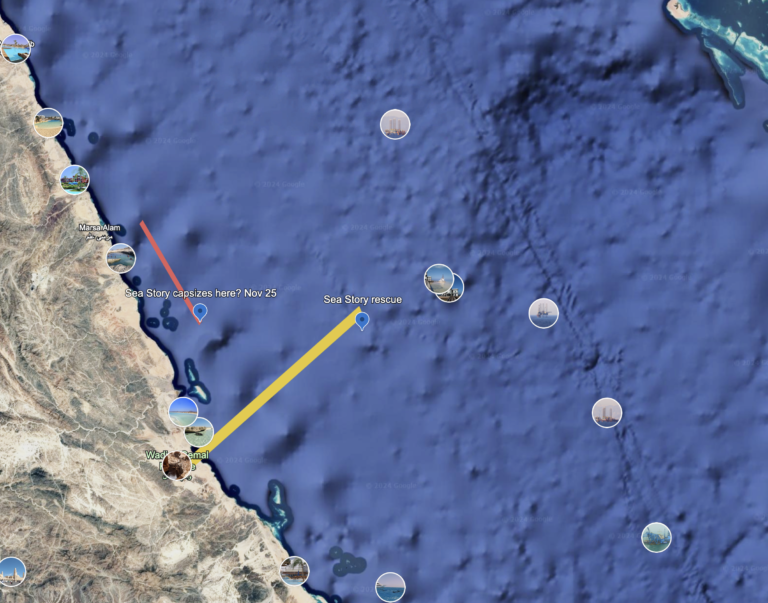
An estimate of the Sea Story accident and where tourists were rescued on the second day in the wreck. See the region of the accident on Google Earth here.

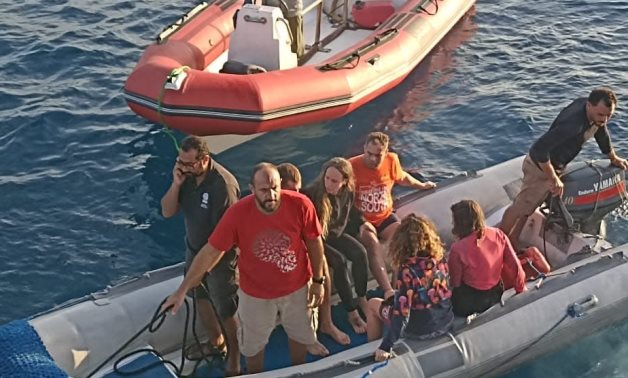
On November 25, a dive boat called Sea Story with 44 souls capsized an estimated 18 nautical miles south of Marsa Alam, Egypt on the Red Sea. Some were rescued within half a day from rescue boats and the Navy. on November 25 Another 5 people were rescued the following day, some 36 hours after capsizing. Rescue divers went down and pulled 5 living people and 4 bodies from the wreck. Seven people are still missing. In total, 11 people lost their lives on this dive boat.

There are rumors that suggest that some people may have been trapped inside the wreck for the next few days after rescue on November 26 but the divers may have been too afraid to enter the wreck for the sharks circling the craft. Others connected to the rescue say this is nonsense. That the boat was searched from room to room on November 26. Here is a rescue story from one of the rescue team here (in Arabic).

Whatever the rumors, in a sad turn of events a boat of rescue divers were within a “30 minutes” boat ride and they could have assisted in the operation, one diver wrote, after seeing the outcome.

Several naval vessels and aircraft from the Search and Rescue Center participated in the rescue operation for the missing tourists after the Sea Story accident in the Red Sea- press photo
Several naval vessels and aircraft from the Search and Rescue Center participated in the rescue operation for the missing tourists after the Sea Story accident in the Red Sea. Press handout

“At the time of the accident we were 30 minutes from the See Story boat full of professional technical divers with experience in salvaging from a sunken ship. One phone call and everything was different,” says Radik Simic in a popular Scuba diving Facebook group.

The families of those lost and those surviving still do not have accountability and closure. “What about foreign embassies and ambassadors? They should be responding because that’s what they’re paid to do. I don’t know what countries the divers were from to assist with this. Feeling incredibly sad to hear these obstacles impeding getting information, accountability and closure,” says one commenter on a recent article we posted to a Scuba diving group.

Could there have been a better outcome if dive boats and rescue divers are connected to a global alerts system? Can there be an app for that? How about a Whatsapp or Telegram chat group (international and country based) so that rescue divers the world over can get a call and rescue when in need? What diving group wants to start such an initiative?

All the Sea Story articles, including a story from a survivor can be found here.

If you have any new details about the Sea Story accident, please email [email protected]

sea story dive boat rescue alert
An alert went out that a boat was in distress 18 nautical miles from Marsa Alam, which could be a radius that went out any 18 miles out from Marsa Alam. Other news reports from Egypt say the boat was 46 nautical miles south of Marsa Alam.

American diver Jeffy Lee has travelled to Egypt: “It makes my blood boil at the fact that a few of us even had knowledge of such a catastrophic event and I personally found out about it from this group,” he says. “None of the media even gave two shits about the incident because it wasn’t an exciting “story” for them. Eleven lives were lost, and could have been prevented had it not been the ignorance and failure to follow standard protocols.

“Being in the middle of the Red Sea is not like being stranded in the middle of the Pacific–help could have arrived from all the surrounding neighbors, from the Jordanians, Israelis, and Saudis, whom are all well trained with their respective responders and within close proximity. This is not the first time an incident occurred under Egyptian jurisdictions where they simply swept it under the rug,” he tells Green Prophet.
Another sour point in the rescue may be the Egyptian ego: “From my many visits and understanding of their culture, three words you’ll never hear them say are “I don’t know” or “I need help”, and I’ve had many engagements and interactions which would have made things much easier and not waste my time due to their inefficiencies. I experience the same in my culture in Asia as well. They’d rather save the face than to admit they “don’t know”, and such ignorance at the cost of human lives is irreprehensible in my books.”

What Is the Closest Black Hole to Earth & Should We Fear the Neighbour?

0
black hole
What Is the Closest Black Hole to Earth

Today, no one doubts the existence of black holes, but until 2019, they remained pure hypothetical speculation – even though the term itself, and logically, the accompanying hypothesis, dates back to the mid-20th century. Well, now that the Event Horizon Telescope has officially confirmed the factual existence of such holes, astronomers have been discovering more and more of them, which raises a pretty relevant question – what is the closest black hole to Earth and should we be anxious about the neighbour?

Not to bury such a dramatic lead, let’s just say that we’re safe for now – actually, we should remain safe for a very long time. And now, in the comfort of our newly confirmed safety, let’s learn a few curious facts about the closest black hole to Earth 2024 astronomical facts we know so far. 

Closest Black Hole to Earth: Gaia BH1

In 2022, the European Space Agency’s Gaia mission, originally set to create a three-dimensional map of our galaxy, discovered a black hole, which, logically enough, was dubbed Gaia. The object is situated in the constellation Ophiuchus and is part of a binary stellar system – that is, a system that consists of two gravitationally tied objects. One of those objects is a star very similar to our Sun, and it’s thanks to the gravitational interconnections that ESA scientists could determine there is a black hole. The thing is, these holes are still tricky to spot with our optics, so the first thing that caught the astronomers’ attention was the slightly unorthodox star behaviour, indicating a strong pull from another object, which turned out to be Gaia.

Another peculiarity that initially made Gaia tricky to spot is its dormant state. Unlike most of its rapidly-feeding and growing ‘sisters,’ Gaia is relatively quiet. But just how quiet and, more importantly, how close? Currently, the closest black hole to Earth distance is estimated at 1,560 light-years from our planet.

On a cosmic scale, that is not too far but consider for a second that our entire solar system stretches only a few light DAYS across. In contrast, the nearest star system, Alpha Centauri, is about 4.37 light-years away — a fraction compared to 1,560 – but still incredibly far. Right, the fastest travelling object humanity has made, the Parker Solar Probe, is heading towards the Sun at 635,266 km/h. But to reach Gaia, it would need 2,650,358 terrestrial years!

Now that you know what’s the closest black hole near Earth? And more importantly, that it’s not that close, we can exhale once again and learn a few more facts about these mysterious matter-devouring objects.

Biggest Black Hole Ever Discovered

While Gaia BH1 is the closest black hole to Earth, it is by no means the largest – not even close!  These holes vary dramatically in mass, from a few times the mass of our Sun to millions or even billions of solar masses. In this regard, Gaia is about ten masses of our Sun. And the biggest title belongs to a quasar TON 618, weighing a staggering 66 billion solar masses! How far is this monster, then? Fortunately, way too far – 18.2 billion light-years!

What Happens if a Black Hole is Near Earth?

Black holes have a scary reputation for devouring everything in their path, but even this process, quick as it may be on a cosmic scale, is incredibly long from our human perspective. Assuming a hole, the mass of our Sun replaced our star at the centre of the solar system (just hypothetically, of course), the solar system planets would keep orbiting as if nothing had changed. We would lose our source of light and energy and freeze to death, but that’s an entirely different hypothesis.

Back to the subject of black holes, one of these would need to venture into the inner solar system to cause immediate trouble for Earth. The thing is, relative to their huge mass, the holes are very small. So, to exert any kind of immediate damage, a planet would really need to be in the hole’s vicinity. And our home system is relatively well-studied, so we can safely state no black holes are lurking around the corner.

Takeaway: Should We Worry about Black Holes?

As you have probably guessed already, the answer to that is a definite no. Even the closest black hole to Earth is incredibly far away on the scale of our solar system. Besides, the gravitational pull of the cosmic monster diminishes with distance – that, as we already explained, needs to be a close one to cause immediate damage. Of course, our telescopes keep developing, and we may discover new cosmic holes soon enough – some of them might even rob Gaia of its closest title. Still, there is every reason to believe our home system and our planet is safe. 

Author: Emma Thorpe

Will you run the Dubai Marathon?

0
Dubai marathon
Dubai marathoners

The Middle East hosts some of the best marathons in the world, and there also some runs where you can do social good for being involved. Get the list of the best Middle East marathons here.

All marathons count on sponsors for prize money and fiscal support. The Dubai Marathon will be supported by Xiaomi, an official partner for the 2025 event. Xiaomi is a Chinese designer and manufacturer of consumer electronics and related software, home appliances, automobiles and household hardware.

The collaboration brings together a global leader in smart technology and one of the most prestigious marathons in the world, which will be staged for the 24th time on Sunday, January One of the Middle East’s most recognised events and an iconic race attracting participants from around the world, the Dubai Marathon offers a unique platform for athletes, enthusiasts, and spectators.

Saudi Arabian woman lacing her running shoes before a marathon, running in hijab
A Saudi woman laces her shoes before a run.

Dubai Marathon Event Director Peter Connerton says, “This collaboration combines the spirit of athleticism with Xiaomi’s passion for innovation, perfectly complementing our goal to inspire and motivate runners of all levels.”

The partnership is expected to further elevate the event’s status as one of the region’s premier marathon races and the fastest race of its kind in the Middle East. With Xiaomi’s support, the marathon is set to deliver an engaging, memorable experience for participants and fans across the Middle East and around the world.

Registration for the Dubai Marathon, the 10km Road Race and the 4km Fun Run can still be made online at dubaimarathon.org.

The 2025 Dubai Marathon is supported by the Dubai Sports Council, adidas, the Channel 4 Radio Network, Xiaomi, ITP Media Group, Bisleri Water, Dubai RTA, Dubai Police and Dubai Municipality.

Related: Is Tel Aviv’s marathon really green?


The Kibbutz Movement from Israel Revival

0

kibbutz lotan family trip

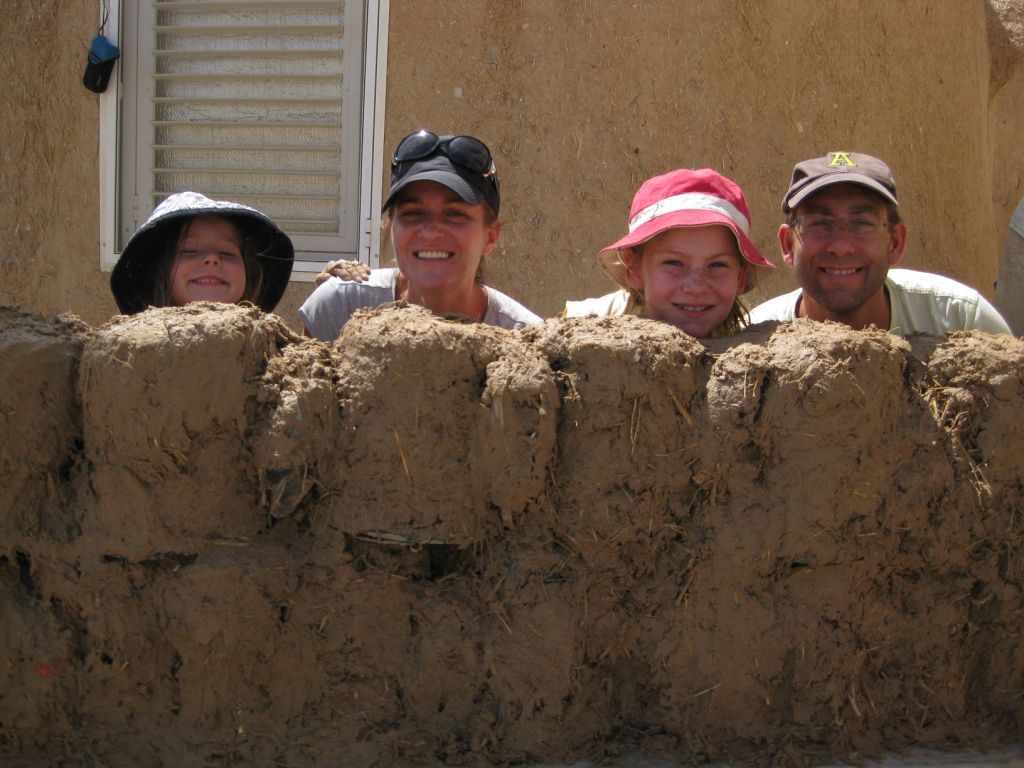
Want to learn about organic agriculture and how it’s done in the Middle East? Maybe you’re interested in making cheese from goat’s milk? Or perhaps letting come what may — being the assistant to an eccentric Kibbutznik’s experiment or mindless work on the production line.

A number of Israeli kibbutzes are now privatized, leaving no opportunities for foreign volunteers to come and work. Despite the fact that fewer jobs are on offer, managers at the Kibbutz Program Center in Israel, the national center that coordinates volunteer experiences in Israel, are seeing a surge of volunteers from all over the world this year. There is even a waiting list.

And today it’s not just for the globetrotting hippy: “It’s a great experience for young people, who come to Israel for over half a year,” says Rina Keren, manager of volunteers at the center.

“Of course there are students in the field of agriculture who come; there are also the ones who are specifically looking for the real organic farms too,” she says. Like at Kibbutz Lotan, the only true organic kibbutz in Israel: “But most of the people are not coming for something special – just a unique way to visit and get to know Israel,” says Keren.

With an abundance of kibbutz volunteers from all over the world — the United States, Europe (England and Germany especially), South Africa and Korea, the kibbutz volunteer experience is also an enjoyable international one, Keren points out. Today about 30 kibbutzes in Israel are accepting volunteers and this past year some 500 people submitted applications.

Kibbutz tracks of Bob Dylan and Seinfeld

Bob Dylan did it. So did Jerry Seinfeld who was only 17 when he came to the kibbutz. He told the Associated Press: “I would be in the fields, and nobody wanted my autograph and nobody wanted to take their picture with me,” he said, joking. “They just let me hack away at those banana leaves, and no, I didn’t meet the prime minister even once.”

Like Seinfeld once did, in exchange for several hours work a day, volunteers get free lodging, meals and some pocket money amounting to about $100 a month. But anyone who has ever lived or volunteered on a kibbutz will know, there is really no need for money. The kibbutz is truly a communal space, where services such as laundry and entertainment come as part of the package.

In recent years the kibbutz volunteer experience is seeing a revival, because it’s an authentic way for Jews and non-Jews to experience the Holy Land. It’s also a good way to get to know Israelis firsthand and to learn Hebrew.

The first kibbutzim in Israel were founded decades before Israel became a state. Groups of new immigrants came to settle Israel with an ideal that they would develop and work the land in a communal style.

Kibbutz Lotan is a good starting home

“It’s a great idea that helped make the kibbutz and Israel itself a home away from home,” says Rebecca Fiala who volunteered at Kibbutz Lotan in the south. In a local newspaper she said, “I felt as if I could finally break through the tourist route and meet the people, as well as know that I always have a place to stay.”

Finding a great kibbutz is often a matter of luck. And while the volunteers have come and gone over the years (there are those who do stay and marry Israelis), to further enhance the experience, some kibbutzim organize special trips to further enrich their volunteers’ time in Israel.

Most volunteers, at the end of their trip will usually agree, that the six short months at a kibbutz leaves them wanting more.

For more green volunteering opportunities in Israel see:
WWOOF: Organic Farm opportunities in Israel
Study Abroad at Kibbutz Lotan
Adam and Eve: An Eco-Farm Paradise in Modiin

The Shah’s Harem and the Subtle Grace of the Persian Mustache

Iran's Anis El Doleh was the favorite of the Shah - and wore a mustache considered a sign of beauty.
Iran’s Anis El Doleh was the favorite of the Shah – and wore a mustache considered a sign of beauty, strength and grace

Women’s beauty standards change just like our taste in wallpaper. Some years one thing is in, another few years and bell bottoms have replaced skinny jeans. Same with beauty standards all over the world. If you know anyone from the areas of Tajikistan or Uzbekistan the people of today sing songs about the beauty of a woman’s thick black eyebrows.

Iran's Anis El Doleh was the favorite of the Shah - and wore a mustache considere Iran's Anis El Doleh was the favorite of the Shah - and wore a mustache considere

Once upon a time in Iran, which was then known as Persia, women with light mustaches were considered beautiful. Here are some photographs from a period in history –– a time when a prince had 84 wives, and some of them had mustaches.

Nasir al-Din Shah and the Subtle Grace of the Persian Mustache

Iran's Anis El Doleh was the favorite of the Shah - and wore a mustache considere

In the opulent courts of Qajar Persia Nasir al-Din Shah reigned as both a monarch and a connoisseur of beauty. Among his 84 wives, one stood above the rest: Anis al-Dawla, the Shah’s confidante and his favorite. Her charm was unmatched, but it wasn’t just her wit or elegance that captivated him—it was her adherence to a beauty ideal that, by today’s standards, might seem unconventional. Anis al-Dawla, like many women in the Shah’s harem, was said to have a delicate mustache, a feature celebrated as a mark of feminine allure in Persian culture.

Related: Use sugaring to remove your hair the Persian way

Born in 1842 she was the daughter of an impoverished shepherd from Amamme village in Lavāsān, northeast of Tehran, and was employed as a maidservant to Jeyrān, the wife of the Shah, in the Qajar harem in 1859. She became the favorite of the shah after Jeyrān’s death in 1860.

Anis was the only wife to take meals with Nāṣer-al-dīn, a unique privilege, and to join him regularly at bedtime after he received visits from other wives. She was also the one with the mind: to openly criticize him and organise political opposition to government policies that she disagreed with. The Shah granted the Shahrastanak Palace to her.

To the Western eye, this strange mustache aesthetic might appear strange. But in 19th-century Persia, where the natural world intertwined with art and philosophy, the light mustache held profound symbolism.

Persian poets, many who were Sufi, and whose words shaped the cultural landscape, compared this feature to a shadow upon the moon—a subtle enhancement that amplified, rather than diminished, its radiance. A line from the great Hafez captures this sentiment perfectly:

“Her lip, adorned with a shadow’s trace,
Holds a sweetness time cannot erase.”

Nasir al-Din Shah’s court was a world where beauty transcended mere physicality. The fine mustache represented vitality, refinement, and balance. Anis al-Dawla embodied this ideal. Her confident demeanor and understated grace left an indelible mark on the Shah and the empire.

Iran's Anis El Doleh was the favorite of the Shah - and wore a mustache considere

Portraits from the era reveal women with bold features: expressive eyes, arched brows, and, often, faintly shadowed upper lips.

Anis al-Dawla, exemplified a harmony of qualities—strength tempered with softness, confidence paired with humility. The light mustache, far from being an imperfection, was a testament to their connection with the divine balance of nature.

Some sources suggest that the Shah forced the women in his harem to gain weight and did not allow them to shave their moustaches. Eventually Iranian women tried to look like the European women who began to adorn the dreams of Iranian men. Moustaches were shaved, eyebrows were thinned and women tried to lose weight.

Today, as global beauty standards often lean toward botox and homogenization of certain western beauty standards, the story of Nasir al-Din Shah and Anis al-Dawla invites us to reconsider our perceptions. That said, are you ready for Januhairy?

Sophia Hadjipanteli
Januhairy is model time for unibrow beauty

This bug bacon is saving the lemurs

Bug bacon
Bug bacon

Let them eat bugs!

It tastes a bit like bacon when you fry it, and it’s affordable and packed with protein. Meet the Sakondry (Zanna tenebrosa), a tiny jumping insect that has been a popular snack for hundreds of years, mainly in the rural areas of Madagascar’s east coast.
But it’s more than just a tasty treat and a booster for food security. With the help of the Sustainable Wildlife Management (SWM) Programme, these edible insects are also an innovative solution and potential game changer in helping to take the pressure off and preserve Madagascar’s endangered and distinctive primates – lemurs.
The SWM Programme, implemented by the Food and Agriculture Organization of the United Nations (FAO) works to restore the balance between food security and wildlife conservation, especially consequential to Madagascar’s unique habitats.
BUg bacon
The lemur enjoys protected status under Madagascar’s wildlife laws. However, around the remote villages in the country’s northeastern Makira Natural Park in the Analanjirofo region, this primate continues to be hunted for meat, putting its survival at risk. Wild meat, including lemurs, can account for up to 75 percent of local people’s protein and 14 percent of people’s iron intake in this part of Madagascar.
Sakondry offer a nutritious and sustainable alternative, helping to safeguard Madagascar’s lemurs. There’s just one problem: populations of the Sakondry itself, once abundant, have also declined, causing concern among local residents.
Climate change, forest and biodiversity degradation as well as dwindling rainfall have all conspired together to create an environment that’s fast becoming too dry for the Sakondry’s comfort.
Another challenge is that, according to field surveys, communities were harvesting the insects without accounting for their reproductive cycle, negatively impacting their numbers. Ideally, only larvae that have reached a certain developmental stage should be collected, avoiding the capture of breeding adults, which are already winged and easily recognizable.
Now, drawing on the innovative research of anthropologist and conservation biologist, Cortni Borgerson, the Programme has launched a community-based insect farming initiative.
Instead of communities relying on catching Sakondry in the forest, the initiative has introduced the production of lima beans (Phaseolus lunatus), called tsidimy by locals and a favourite with the Sakondry, which flock to feed on the bean plants’ sap.
Tsidimy, as a legume, is also a remarkable asset for sustainable agriculture. It enriches the nitrogen in the soil and reduces erosion. This nature-based solution offers a dual benefit: it ensures a steady supply of protein coming from both Sakondry and beans.
Sakondry insects in themselves are exceptionally nutritious, rivaling traditional protein sources. Per 100 grams, they contain 20.1 grams of protein, comparable to chicken, pork and beef. They also provide considerably more potassium, calcium and iron than traditional animal proteins. Add the protein and micronutrients from the beans into the equation and you have a substantial contribution to a communities’ nutrition.
With minimal investment and resources needed, Sakondry farming creates income opportunities, especially for rural women, who are taking the lead in managing production. The ambition is that in the future, Sakondry farming can be expanded, and the insects could be sold nearby, therefore providing additional income to families.
Scaling up this practice exemplifies how using nature-based solutions and reviving local traditions can address both human needs and conservation goals in Madagascar’s unique ecosystem.

Will there be a wildfire in Canada? Our phone data can help make the prediction

0
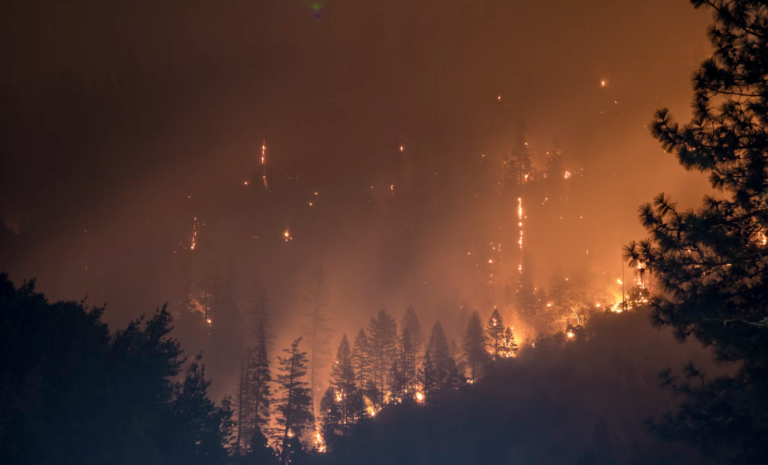
Klamath National Forest, Yreka, United States
Klamath National Forest, Yreka, United States, 2017

A new study has found that the smartphones we all carry in our pockets could help collect weather data from the public to provide early warnings for wildfires and other extreme weather conditions.

All smartphones are equipped with multiple micro-sensors capable of collecting important environmental data, such as temperature, barometric pressure, humidity, magnetic field, light, sound, location, acceleration, gravity, and more. These data help us find our way or define our location and they warn us when the battery overheats or the device absorbs moisture — all in real time, without saving the data.

Professor Colin Price and student Hofit Shachaf from the Porter School of the Environment and Earth Sciences used data collected from the global public via the WeatherSignal app (OpenSignal) to develop a methodology for assessing wildfire risk based solely on smartphone data collected by the public.

The results were published in the journal Natural Hazards and Earth System Sciences (NHESS).

The researchers demonstrated that smart use of such data could support early warnings for severe wildfire events, especially since millions or even billions of data points are collected worldwide every day by our smartphones. Today, early warning systems in remote forested areas typically lack data due to the absence of weather stations in remote locations. (Some researchers are using using goats, dogs and elephants to predict the weather!)

We take our phones everywhere but the data is normally lost and not saved.

Colin Price, climate change expert
Collin Price

However, many companies have started to collect smartphone data to use for various purposes, with user consent. The researchers believe that this huge data source could aid in forecasting extreme weather and natural disasters.

One key parameter determining the likelihood of a wildfire is the moisture content in vegetation (essentially the fuel available for the fire), which, in turn, is determined by the temperature and relative humidity of the surrounding air. Both the temperature and relative humidity can be easily obtained from the public’s smartphones. But smartphone data do contain errors. The temperature reading might reflect the air conditioning in your office, while the humidity sensor might identify moisture when the user is taking a shower.

The researchers say the huge amount of data collected from smartphones allows us to remove outliers in the data set. Furthermore, since the micro-sensors are not calibrated before they are put in our phones, it was necessary to first calibrate the local smartphone data against commercial meteorological stations. This procedure turned out to be relatively straightforward, with just a single calibration needed to correct a smartphone’s readings.

After calibrating or “training” the device, the researchers analyzed major wildfire events: one was the massive fire in Portugal in July 2013. The results were surprising, with smartphone data collected from the public showing significant anomalies before and during these major fires.

“It’s surprising, but even though each smartphone has its own errors and biases, with large amounts of data from many smartphones, we can average out the errors and still retain useful data,” Shachaf says. “The large volume of data helps overcome issues associated with individual smartphones.”

“Given the rapid increase in the number of smartphones worldwide, we propose utilizing this data source to provide better early warnings to the public and disaster managers about impending natural disasters,” Professor Price concludes. “Better early warnings could prevent natural hazards from becoming natural disasters.”

Will the Common Agricultural Policy see reform under the new Commission?

0

irrigation sustainable water solutions europe

Just days into President Ursula von der Leyen’s second EU Commission, leading European food giants including Danone and Unilever wasted no time in delivering a pointed challenge to new Agriculture and Food Commissioner, Christophe Hansen. In a 9 December letter, the group urges Hansen to develop an ambitious Vision for Agriculture and Food to accelerate Europe’s sustainable food transition, framing this undertaking as equally critical for the industry’s long-term competitiveness.

Central to their appeal is Common Agricultural Policy (CAP) reform – currently among Brussels’s hot-button issues – with the sector advocating for a new system of environmental payments that increase annually, helping farmers balance green and economic necessities. The Danone-led group is also pushing for boosted funding for young and new farmers to ensure EU agri-food resilience amid the aging sector’s major demographic challenges. Facing a tight budgetary situation, Hansen and von der Leyen will need to convene a wide range of stakeholders to implement this new vision and replace the past mandate’s ‘stick’-heavy regulatory approach with a ‘carrot’ system based on green farming incentives and innovative income support measures.

CAP overhaul anchoring future talks

In his first days in office, Commissioner Hansen has set a bold tone for reform, expressing his support for disbursing a larger share of the bloc’s €387 billion CAP subsidy programme to  small, low-income farmers. Long its largest source of criticism, the CAP continues to  disproportionately reward agribusiness giants, with the largest 20% of farms absorbing 80% of the budget due to the system’s outdated hectare-based payment system. 

Acknowledging the budgetary constraints amid mounting defense and reindustrialisation priorities in Brussels, Hansen has characterised his call for a CAP overhaul that “better targets the support to those most in need” as an “evolution” to re-balance the farming support system in a financially feasible manner. Nevertheless, Hansen’s proposed changes could mark the CAP’s most profound reorientation in its six-decade existence. 

This new approach follows the Commission’s recent compromises to dilute the environmental goals of last mandate’s Farm to Fork strategy, largely in response to the bloc’s sweeping farmers’ protests by farmers and MEP pressure ahead of the European elections. Yet, while the latter essentially amounts to shallow, albeit pro-farmer, political pandering, Hansen’s appetite for genuine innovation bodes well for the sector’s future. 

Echoing Hansen’s strategic focus, the EU Council approved a set of conclusions on 9 December outlining key priorities for CAP revision, with the bloc’s 27 agriculture ministers stressing the need for farmers’ equitable remuneration, fairer and more transparent supply chains value distribution and bolstered competitiveness across the EU’s agri-food sector.

Dismantling lingering obstacles 

This growing momentum for change reflects Brussels’s broader recognition that economic viability must underpin sustainable agricultural practices. On 10 December, Von der Leyen offered her own proposals to bolster the sector’s negotiating position, from mandatory contracts between farmers and food companies to softened competition rules for young farmers and tighter oversight of retail pricing, while Hansen has equally highlighted the exploitative, income-killing practices of major retailers.

Yet, despite these good intentions, the EU executive risks undermining the farmers they aim to support with a lingering vestige of the widely-discredited Farm to Fork agenda: the front-of-package nutrition label proposal. Indeed, the French creates Nutri-Score has once again found itself in a media storm, with French retail giant Carrefour recently mandating that suppliers display the label on all online products, threatening to publicly call out producers that fail to comply.

The EU cannot in good faith back a labelling system which the very supermarkets they aim to rein in are now using to pressure EU producers – particularly given that Nutri-Score has long disproportionately impacted the bloc’s small, local farmers. With its outdated algorithm, Nutri-Score continues to unfairly grade natural, traditional products, such as olive oil, PDO cheeses and cured meats, at the heart of Europe’s culinary heritage and balanced dietary traditions.

Local farmers across Europe have risen against this misguided imposition that undermines their competitiveness and supermarket bargaining power, prompting an expanding group of governments, including those of Portugal, Spain, Greece and Czechia, to snub the label. The agri-food industry’s biggest players, such as Danone, once a key backer of Nutri-Score, are equally starting to drop the label, recognising its misleading impact for consumers.

Even in France, independent nutritional research is increasingly proving Nutri-Score’s opponents right, contrary to the Nutri-Score team’s claims of unanimous scientific backing. The Commission should therefore consistently apply its emerging policy approach and relegate the labelling proposal to the past. 

Scaling innovative new solutions 

The EU executive must instead focus on novel ideas to bolster farmers’ competitiveness while facilitating the sustainable transition. Commissioner Hansen has encouraged the bloc’s farmers to explore “alternative income” streams to enhance the sector’s economic resilience, citing growing crops for biofuels, planting trees for carbon credit payments  and optimising land usage with solar panels and other forms of green energy production. 

The latter avenue, dubbed “agrivoltaics,” has emerged as a particularly promising solution over the past year, with the EU already recognising its potential by including funding and support mechanisms in innovation programmes such as Horizon Europe. Paired with tax incentives and credits for green energy and agricultural practices, the EU can help pave the way for farmers to unlock their full contribution to a “resilient, competitive and sustainable agri-food system European food system” – a mission von der Leyen has assigned the newly-launched European Board on Agriculture and Food tasked with de-polarising the policy debate and renewing ties with farmers. 

The path forward demands bold leadership. The EU Commission will need to embrace the recent call from industry leaders like Danone and Unilever to balance environmental ambition with economic pragmatism, with CAP reform offering the foundation to launch this new agenda. Delivering targeted incentives and greater support for young and small farmers is not just a policy priority, but a necessity for the sector’s future. Now is the time to move beyond restrictive approaches and cultivate genuine cooperation at the heart of Europe’s agri-food system.


The UK issues warning about dive boat liveaboards in Egypt

0
The family of a British couple still missing after a tourist boat sank in the Red Sea have spoken of their “desperation” as they wait for news. Jenny Cawson, 36, and her husband Tariq Sinada, 49, from Devon, are believed to be among seven people still unaccounted for after the Sea Story went down off the coast of Egypt on November 25.

Accounts from divers that are in Egypt: the liveaboard boats wating to take divers to exotic dive locations are currently grounded. Could this have something to do with MAIB in the UK?

The Marine Accident Investigation Branch (MAIB) in the United Kingdom has been notified of three accidents within the last 20 months affecting UK citizens on Egyptian dive boats operating in the Red Sea.

MAIB writes that these accidents include: the capsize of Carlton Queen on 24 April 2023 resulting in abandonment of the vessel with all passengers and crew rescued; a fire on Hurricane on 11 June 2023 resulting in the deaths of 3 UK nationals; the capsize of Sea Story on 25 November 2024 resulting in up to 18 fatalities/people missing, including 2 UK nationals, Jenny Cawson, 36, and her husband Tarig Sinada, 49, from Devon.

Another accident occurred this week but all 28 people were rescued. The accident allegedly included a refurbished wooden boat.

A miraculous rescue after 36 hours – a survivor’s story on the Sea Story.

Michael Miles rescue
Michael Miles rescue from the Egyptian dive boat My Sea Story

Following the protocols in the IMO Casualty Investigation Code, the MAIB has formally registered the UK as a Substantially Interested State in the Egyptian safety investigations into these accidents.

From the evidence the MAIB has obtained so far, they write that “there is cause for serious concern about the safety of some of the Egyptian dive boats operating in the Red Sea.

“The Chief Inspector of Marine Accidents has written to the Egyptian Authority for Maritime Safety (EAMS) setting out his concerns and seeking full participation in the EAMS investigations. In the meantime, the MAIB is preparing a safety bulletin for publication setting out the areas of concern that individuals intending an afloat-based diving holiday in the region should take into account before booking.”

Follow our Red Sea dive stories here.

If you are a victim of a dive boat accident in the Red Sea reach out [email protected]

Bridging the Gap: How Middle Eastern Investors Are Shaping the Future of Canadian Condo Development

0
green roof in Toronto
A green roof in Toronto

In years prior to the pandemic, a growing number of investors from the Middle East have been eyeing their sights on Canada’s booming real estate market, particularly in the new condominiums sector. While the connection may not seem obvious at first glance, this trend highlights an intriguing intersection of global business strategies and cultural exchange.

Mind you folks this was a fact pre-pandemic and the intent of this article is to showcase the future after the world recovers from its financial turmoil. So, let’s get back to the topic.

Canada has a reputation for a stable and prosperous nation, combined with its demand for urban housing, making it a prime destination for Middle Eastern investors looking to diversify their portfolios and create lasting opportunities.

Why Canada Appeals to Middle Eastern Investors

Canada has earned a reputation as a hub of economic stability and opportunity. Cities like Toronto, Vancouver, and Montreal are thriving and driven by a very strong real estate demand where promising returns on investment, and a business-friendly atmosphere is clearly visible. For Middle Eastern investors, this combination is especially attractive, offering a secure and lucrative alternative to the uncertainties they may face in their home regions.

One standout opportunity lies in Canada’s condo developments (this may be slightly not the case at the moment post-pandemic, but there is a very high chance it will return). So therefore, as urban centers are growing rapidly, the demand for high-density housing is on the rise, fueled by population growth and a shift toward more sustainable living.

Middle Eastern investors, known for their expertise in large-scale projects and strategic investments, are uniquely positioned to play a significant role in this evolution and reap the rewards. What makes Canada even more appealing is its diverse and inclusive society which makes this welcoming environment help international investors including those from the Middle East forge strong connections while establishing a foothold in the Canadian real estate market.

Investing in Sustainability: A Shared Priority

One of the most compelling aspects of this cross-border collaboration is the shared emphasis on sustainability as it was seen in recent years, sustainable development has become a key priority for both Canadian and Middle Eastern real estate markets in the Middle East, countries such as the UAE, Saudi Arabia, and Israel have been making strides in green architecture, renewable energy, and environmentally conscious urban planning while these efforts align closely with Canada’s push for energy-efficient buildings and eco-friendly construction practices.

Canadian condo developers are increasingly incorporating green technologies such as geothermal heating, solar panels, and energy-efficient insulation, into their projects as they focus on sustainability which resonates with Middle Eastern investors who are familiar with similar innovations. Therefore investing in these developments, they not only gain financial returns but also bolster their portfolios with projects that align with global environmental goals.

Real Estate Platforms & Brokerages: Simplifying the Process for Middle Eastern Investors

Navigating the Canadian condo market can be a challenge for Middle Eastern investors, especially when searching for the right opportunities from afar but thankfully, innovative real estate platforms and brokerages are making this process significantly easier by offering comprehensive details and insights about available properties, for example, there are various platforms that focus on new construction homes and condominiums which are particularly beneficial, as they provide a clear window into the market thereby equipping international buyers with the tools to make informed decisions without stepping foot in Canada.

PropertyMesh.ca founded by Faiza Ahmed a real estate agent in Toronto is a great example of such a platform that serves as a centralized hub for property information. It offers valuable insights into property locations, features, and even sustainability credentials—key factors for modern investors. For those overseas, this level of accessibility eliminates the need for extensive on-the-ground research, saving time and effort while fostering transparency.

By bridging the gap between global investors and the Canadian real estate market, platforms and real estate brokerages like PropertyMesh.ca build trust and confidence, empowering buyers to make bold moves in their investment journeys.

Building Cross-Cultural Connections

The influx of Middle Eastern investment in Canadian real estate is more than just a financial transaction and it’s a cultural bridge aswell although by these partnerships, Middle Eastern and Canadian professionals exchange ideas, expertise, and values while their collaboration enriches both sides, bringing innovative approaches to urban planning and construction while fostering greater understanding between cultures.

For instance, Middle Eastern investors often bring a deep understanding of luxury and design, which can influence the aesthetic and functionality of Canadian condos while at the same time, Canada’s emphasis on inclusivity and sustainability can inspire similar efforts in Middle Eastern developments by which the result is a mutually a beneficial relationship that drives progress on multiple levels.

Challenges and Opportunities

Of course, investing in a foreign market is not without its challenges.

Middle Eastern investors may face regulatory hurdles, unfamiliar tax structures, and cultural differences when entering the Canadian real estate sector, however, these obstacles are often outweighed by the opportunities for growth and diversification.

For Canadian developers, partnering with Middle Eastern investors provides access to significant capital and a global perspective and these collaborations can help fund ambitious projects, introduce innovative construction methods, and enhance the appeal of new condos to international buyers therefore by working together, both parties can overcome barriers and achieve shared success.

Looking Ahead

As the world becomes increasingly interconnected, the relationship between Middle Eastern investors and Canadian condo developers is likely to grow stronger in the future this partnership represents a convergence of economic opportunity, sustainability, and cultural exchange, highlighting the power of collaboration in today’s global economy.

For Middle Eastern investors, Canadian condos offer a chance to participate in a thriving market while contributing to sustainable urban development while for Canadians, these partnerships bring fresh perspectives and resources that drive innovation and growth at the same time therefore, in the end, the construction of new condos in Canada is about more than just buildings; it’s about creating spaces that reflect shared values, aspirations, and a commitment to a better future and with Middle Eastern investors playing a key role, this future is bound to be both prosperous and sustainable.


How Sustainable Sourcing Practices Protect Our Planet’s Resources

0
Red Sea Farms cucumbers
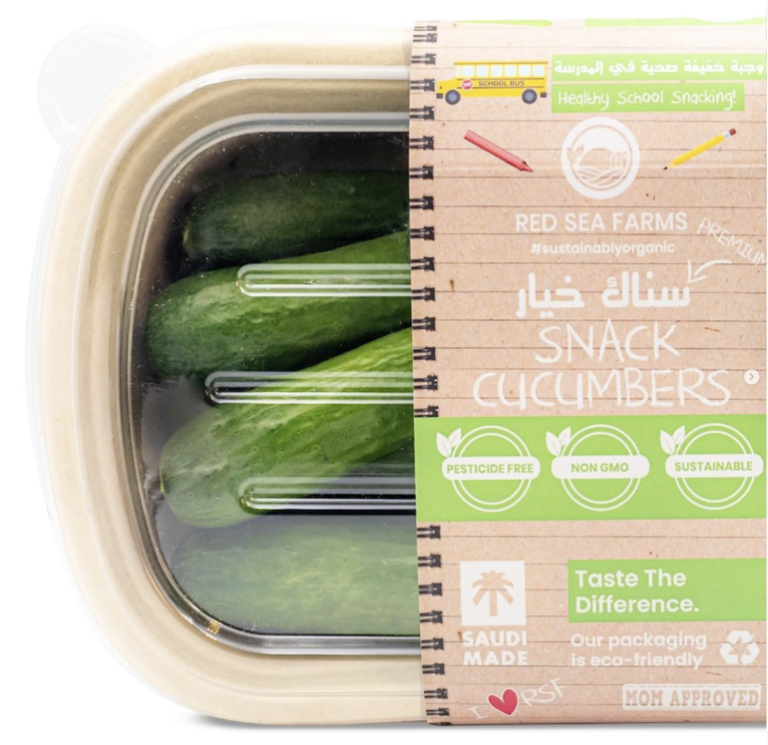
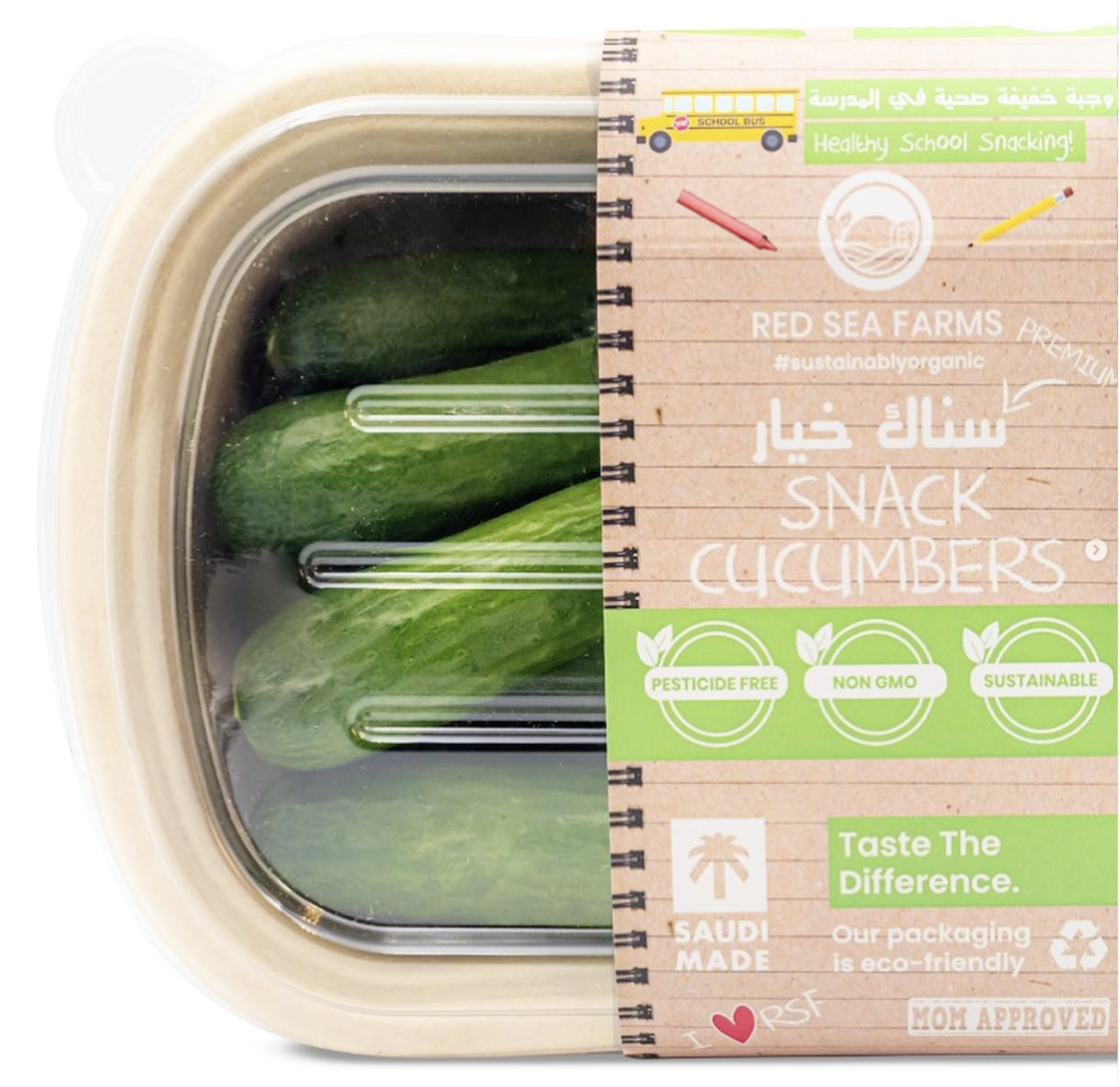
Red Sea Farms makes tiny cucumbers, a Middle East favorite. The packaging is sustainable.

The issue of sustainability continues trending upward, driven by issues such as net-zero emissions, biodiversity, climate action, and a circular economy. People aren’t just paying lip service to this concept. Businesses, individuals, and governments are looking for ways to save the planet.

Companies are examining new ways to improve their sustainability practices. It’s not just about them. It’s also about their supply chains, vendors, logistics, and everything else involved in their operations. And consumers are increasingly seeking to do business with those whose commitment to sustainability is demonstrable. 

As consumer demand rises and resources decline, everyone needs to ramp up their environmental game. Among those efforts is sustainable sourcing, which helps protect our planet’s resources. Here’s how it does.

It Protects Natural Resources

Most of us take resources such as water, air, and soil for granted. It’s difficult to imagine that they won’t be here forever. But if companies don’t take steps to protect our natural resources, they will eventually disappear.

Organic farming is one answer. The absence of chemical pesticide use produces far fewer greenhouse gas emissions, improves soil and water quality, and maintains biodiversity. It also results in the safe storage of vast amounts of carbon dioxide in the soil, keeping it out of the atmosphere.

Food and beverage producers, for example, are taking note. Many are not only sourcing ingredients from sustainable suppliers but also partnering with co-packing services that share these environmental values. Co-packers that prioritize sustainable practices help companies create products that are healthier and free from chemicals and preservatives, while also protecting our natural resources.

Of course, organic farming practices are more expensive, which means procuring these products cost more as well. But it’s an investment in the future that will need our natural resources as much as we do now.

It Reduces Our Carbon Footprint

This package decomposes in your compost!

We hear a lot about our carbon footprint. That’s the amount of carbon dioxide and methane we produce during the course of a day. Those greenhouse gas emissions are what’s causing the planet’s temperatures to rise, so reducing them is vital.

Transportation is a major contributor to greenhouse gas emissions. That’s why companies are looking for ways to green up their supply chains, production, and shipping methods. Finding more local suppliers and using electric vehicle fleets are a couple means to that end.

Where products come from and how they’re produced is also where companies need to amp up their sustainability game. While cheap Chinese goods are easy on the budget, they’re killers on emissions. From low-quality materials used to coal-fired energy used in production to the distance to transport, they take a toll on the planet. Companies that opt for greener products instead make a difference.

The need to reduce emissions is immediate. We need only to look at rising sea levels, rampant wildfires, drought, and devastating weather events as evidence. Sourcing products and services from companies using sustainable practices means no longer giving businesses with huge carbon footprints a pass.

It Builds Resilient Communities

Jadar Valley Serbia, area of lithium mining
Area of lithium mining, Jadar Valley, Serbia

Companies source materials and products from communities of all shapes and sizes, all over the world. The resources of the planet pay a heavy price in some of the poorest countries. That’s because their resources are often exploited by wealthier ones.

Take the mining of lithium that’s destroying the environment. In Zimbabwe, for example, illegal trade, corruption, child labor, and unsafe working conditions mix with environmental destruction. Lithium requires massive water resources, which are already scarce, and pollutes water as well.

If more companies source sustainably, they can create communities that are more resilient against corruption and the effects of climate change. Bolstering economies will help them build better infrastructure that will help them mitigate environmental issues. And public transportation, energy-efficient buildings, and green energy production will help them thrive while reducing negative environmental impact.

Responsible sourcing can build collaboration between the materials that companies need and the communities providing them. From raw materials to consumers, that kind of chain can protect the planet. And if that happens, everyone benefits.

It Builds Commitment

Corporate commitment to sustainable sourcing and procurement begins with a company’s ESG program. That comprises the practices they undertake to measure their impact on the environment, society, and governance. Then, they find ways to reduce the negative impact they measure.

When companies make a commitment to sustainability, they will inevitably need to work with others that have likewise committed. They don’t operate in a vacuum, so they have to reduce their negative environmental impact by partnering with like-minded companies. It’s that demand that should force businesses lagging in sustainability efforts into action.

This demand helps improve the planet in another way, by driving innovation. Climate change can’t be solved overnight. But companies become increasingly creative when challenged to find greener alternatives to traditional ways of doing business. That innovation can lead to a more rapid transformation from environmental destruction to protection.

Moreover, as governments embrace sustainability, companies will have to respond accordingly or face costly penalties. And while protecting the environment should provide the impetus for sustainable sourcing, money talks as well. Even if profits are the primary goal, the planet still gets its share of a different kind of wealth.

Get It from the Source

The need to keep overhead low to reap higher profits puts companies in a somewhat complicated relationship with the planet. But they must find ways to reconcile their bottom lines with the higher cost of sustainable sourcing. Otherwise, there may not be a planet to profit from.