Home Blog Page 513

Israel’s Advantix to Wring out the Soggy Air of the USA

0

In our warming world, ever more moisture is being held by ever warmer air. This means more places now suffer from humid heat more of the time. Humid heat is a problem that regular air conditioning technologies have failed to successfully address.

An ingenious solution from Israel’s Advantix, inspired by its native Dead Sea, could bring relief with a different approach.

Invitation for a Permaculture Tour in Israel

0

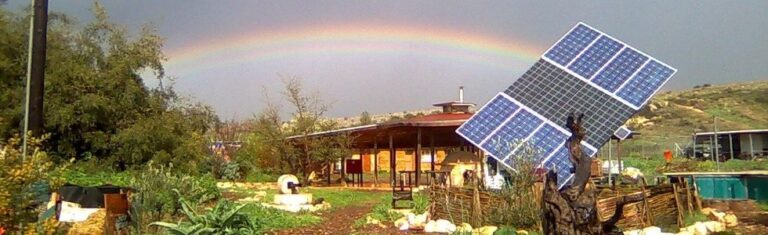
"permaculture farm israel"See how permaculture is spreading across Israel during an international tour at the end of September.

Permaculture, or the sustainable use of land and agriculture, has thankfully been spreading across the Middle East in recent years.  Permaculture farms have sprouted seeds in Palestine, grassroots permaculture initiatives have popped up in urban settings such as Jerusalem, and permaculture courses are taught in the area as well.  Apparently, permaculture is gaining force, and people are taking notice.  In order to make it easier for both the Israeli and the international community to know what’s going on permaculture-wise in Israel, an International Permaculture Tour has been organized between September 26-October 2, 2011.

Burning Egypt’s Agricultural Waste

0

black smog cairo

It’s black cloud season. Again. But there’s no reason to pull out the party favors just yet.

It’s the anniversary of the Black Cloud in Egypt, but nobody’s celebrating. This is the time of year that farmers typically burn off their agricultural waste because they don’t know what else to do with it. When set to flames, this waste produces unimaginable plumes of thick black smoke that billows into the atmosphere, creating respiratory hazards that put much industrial pollution to shame. But the government has been notoriously slow to address this problem, which Abu Bakr al-Shahawy, Head of the Environment Ministry’s Central Department, claims is becoming increasingly serious.

The problem is most pronounced in the Central and Eastern Delta Governorates of Egypt, where farmers burn off their hay and straw en masse – a combined 30 million tons every year. The smog dubbed by locals as “the black cloud” gets caught up in wind currents and hovers over Cairo around August every year.

Al-Shahawy lays blame at the Agricultural Ministry’s door, and told Almasry Alyoum that this department should be responsible for helping farmers dispose of their agricultural waste in a more appropriate manner than has a less disastrous environmental impact. Some farmers such as Ibrahim al-Sayyed from Daqahlia are well aware of the dangers of burning their waste and are urging the government to provide safer alternatives.

Adel Zayed, who is the Governor of Qalyubiya, affirms that agricultural waste is a burdensome dilemma and that he is looking to the private sector for help. This won’t be the first time that the private sector has bailed out the environment. In one of the country’s biggest success stories, Veolia moved into Alexandria and stepped up the city’s once unmanageable solid waste system.

Meanwhile, environmental activist Hisham Sherif told Almasry Alyoum that the waste should be turned into fertilizers, and that following his urging, they are looking into doing so. In the meantime, break out the gas masks ladies and gents.

:: Almasry Alyoum

More on Egypt’s black cloud and pollution:

A Black Smog-Craft Chokes Cairo’s Skies

While You Eat Rice and Breath Clear, It’s Black Cloud Season Again

Blackouts and Black Clouds: What’s Wrong with Egypt’s Environmental Policies?


BrightSource Applies to Build Two More Solar Thermal Plants in California

1

cleantech, BrightSource Energy, California, solar energy, alternative energyBrightSource Energy keeps plunging forward with its solar ambitions!

BrightSource Energy may well be one of the most indefatigable companies on earth. After 20 years of solar dormancy brought about by cheap oil prices, what was once Luz International rose from the ashes to pursue development of the world’s largest solar thermal plant in California. That process has been mired by countless pitfalls, not least of which was the Bureau of Land Management’s decision to halt construction because the Ivanpah project threatened rare animal and plant species. But BrightSource forged ahead, got a little boost from Google, filed for an IPO on Earth Day in order to gather financial help, and has now asked for permission to build another two large plants that will feature the company’s newest evolution in solar thermal technology.

5 Tips To End Food Waste This Ramadan

3

The level of food waste occurring during the holy Muslim month of fasting goes against the very spirit of Ramadan

A couple of days ago, I attended a small communal iftar at a local mosque where I broke my 18-hour fast with some rice, salad and dates. Although there was plenty of food, the organisers made a concerted effort to ensure that none of the food went to waste and most of us went home with some leftovers. Sadly, this was a rare occurrence and doesn’t reflect the wider experience in the Muslim world– particularly in the Gulf nations where studies show that on average 30% of food is wasted per household.

Walmart Stores in China Sell Crocodiles and Strange Critters

0

walmart china crocodilesIt’s not only sharks and turtles turning up at butchers in the Middle East: When picking a cut of fresh meat in China, you might want to ask what it is.

Continuing coverage on Green Prophet has dealt with food products like shark fins that are prized as delicacies by people in the Far East and issues dealing with imported Chinese frozen fish to Israel pumped full of water and preserving chemicals. There is an old saying that in China, anything that walks, swims, crawls or flies is eventually made into a meal there. These “delicacies” can range from live puppies being cooked alive on city streets to other types of critters that are now being sold by China’s version of America’s most successful mega discount store Walmart. Food from China turns up all over the world, and even in the Middle East.

Trouble In Paradise: Water Failure At Luxury Apartments In Dubai

5

palm dubai waterWater trouble has forced residents at Dubai’s man-made Palm Island to wash in the sea and use toilets at shopping malls

The sustainability and usefulness of Dubai’s artificial palm-shaped Island has been widely debated but I think a recent problem at one luxury complex has ironically helped raise awareness of how difficult life can be without water. Water system failure at the seven-building Oceana complex means that Dubai residents have been forced to shower in pools, scrub down in the sea and rely on toilets facilities at nearby shopping centres.

15 Racing Camels in Qatar Killed by Toxic Pesticide

1

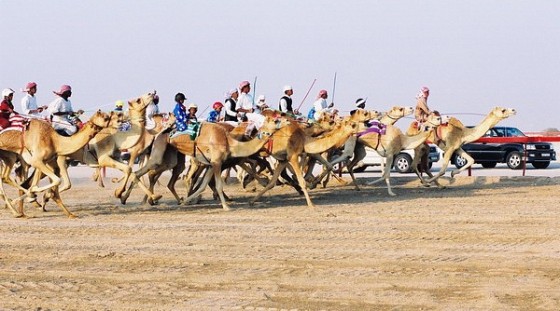
pesticides, Qatar, animal crueltyCamels are prized by their owners. Did the Qatari breeder kill 15 of his own through negligence, or is the vet to blame?

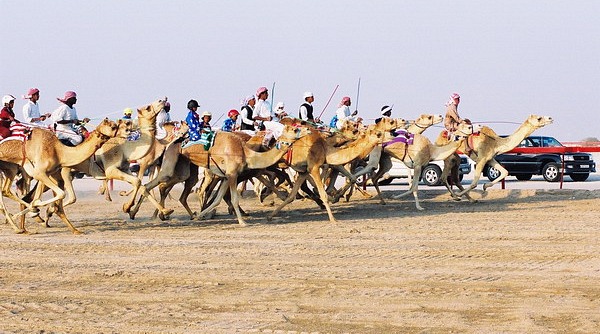
More than two dozen racing camels in Qatar died after their breeder administered a toxic pesticide to their skin. Misfer Safran Al Merri purchased Diazinon from the Al Shahainya veterinary center and then administered it without assistance from veterinary professionals. Qatar’s Animal Husbandry department claims that the deaths of 15 top-breed camels (read about camels killed by plastic) and injuries to several others was a direct result of Al Merri’s negligence, but the camel breeder told Gulf News that fault actually lies with poor veterinary services and the substandard quality of the pesticide provided to him.

UNESCO Urges Ethiopia To Halt Gibe III Dam

0

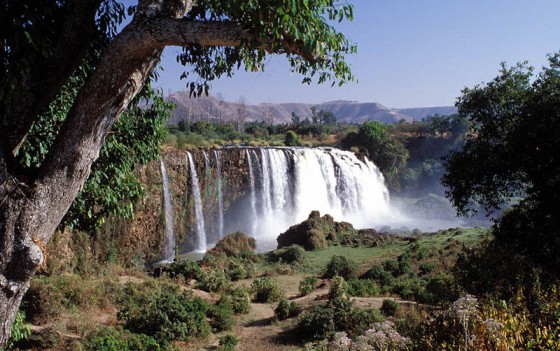
UNESCO heritage site, hydroelectricity, water conservationGreen Prophet has followed the Renaissance Dam project for months, on which another Ethiopian dam project sheds some light.

On its list of dams to be constructed, Ethiopia’s Renaissance Dam project (formerly known as the Grand Millennium Dam) has drawn passionate commentary to our site. Despite the country’s inability to afford the dam and its potential negative environmental impact, not to mention the risks that climate change poses to its long term sustainability, no environmental or social impact assessments have been conducted.

Thanks to a concerted campaign from Prime Minister Meles Zenawi’s office, Ethiopians fiercely (and understandably) defend their right to the enhanced comfort and revenue promised by 5,250MW of new electrical output. But elsewhere in the country, the UNESCO World Heritage Committee urged the government to halt a similar project, the controversial Gibe III dam.

Change Your Shoes With the Click of a Heel

2

"change design shoe"Click your heels three times and say: there’s no thing like eco-fashion!

Eco designers (and designers who are interested in fun and whimsy) have been tackling the shoe issue for some time, finding ways to make them both more sustainable and versatile.  Big shoe titans like Nike have created shoe recycling programs in order to minimize the carbon footprint of their footwear, and other smaller designers have found ways to extend usage and minimize resources with their shoe designs.  Last week we saw Sharon Golan’s Shell 256 shoes that could be transformed in 256 different ways, and now we are looking at the work of another Israeli designer – Daniela Bekerman – who also has a thing for shoes.

Figs and August seasonal cooking in the Middle East

0

image-fresh-figs

In spite of some climate differences, most Middle Eastern countries raise the same crops. Don’t think that it means little choice, though. The huge variety of local fresh fruit and vegetables here, and their bright flavors, astound Westerners who have forgotten how a tomato or a green bean should taste. Real superfoods (see our article about superfoods here.)

It has to do with shorter distances for produce to travel, of course, but some of it has to do with the pickiness of local consumers. When you’re used to cheap, abundant, and fresh, only that will do. August is a peak month for soft fruits and tender vegetables, like eggplant (our recipe for eggplant-based baba ganoush here).

Fruit at its peak are figs, melons, plums, peaches and nectarines, passiflora and table grapes. Pears are just starting to come in. Apples are in the markets but not prime yet. Pomegranates have just started appearing in the shuks. Bananas, which don’t do well in the Middle Eastern heat, are beginning to revive and some handsome ones, still green, are now in the markets.

There are some lemons and limes, but not many and expensive. Dragonfruit is in Israeli markets, as are tiny and expensive pineapples. Mangoes are abundant and beautiful right now. In Turkey, you may find medlars, a fruit that must be allowed to decay before it becomes sweet enough to eat.

Vegetables worth buying now are  herbs (parsley, fresh coriander, dill, tarragon, rocket, spring onions, sorrel), spinach and all the varieties of lettuce. One exception is celery, which is feeling the heat and produces thin, rather dry stalks now. Basil is around but not very good in August heat; examine it carefully for insect infestation.

Swiss chard is a good choice. Capsicums – the peppers, both sweet and hot – are in excellent shape and prices are low. Same for tomatoes. August is tomato month the world over, it seems. Buy now for drying, cooking into sauce, slow-roasting, or pickling. Onions are big and firm, with crisp, thin peels. Summer squashes in all their varieties are good buys now. Kohlrabi is available although not as cheap as in winter.

Potatoes are fine now, but not other root vegetables. Carrots, parsley root, and sweet potatoes are available but not prime, and their prices are high. Eggplant is plump and firm, from the knobbly baladi variety to the long, smooth Chinese ones to the baby eggplants for pickling. Try our creamy eggplant soup Okra is in full season (see our recipe for Lebanese okrah in olive oil), as are green beans, cowpeas and yard-long beans. Cabbages are in season, but wait for cooler weather to buy broccoli and cauliflower. They’re available, but not very good. Fresh corn is in the markets too. Israel’s local champignon and portobello mushrooms aren’t at their best, but there are still plenty of them. Cucumbers are excellent right now, and a good choice for pickling.

Tips:

  • In the north of Israel and in Arab countries, look for Melokhia, a relative of the edible mallow plant and an important ingredient in traditional stews. We have a recipe for melokhia soup here.
  • Arab villagers still cultivate heirloom varieties of tomatoes, beans, and other vegetables seldom seen in the big markets. Look for big, squat, green-striped tomatoes. They’re juicy and sweet/tart.
  • Limes are rare and their season very short – if you love limes and are willing to pay, buy now and freeze the juice.
  • Don’t forget summer’s most abundant wild vegetable – purslane.

More mouthwatering things to do with Middle Eastern produce from Green Prophet:

Photo of fresh figs by Miriam Kresh.

Interview: Pitfalls of Environmental Journalism in the Middle East with Najib Saab

1

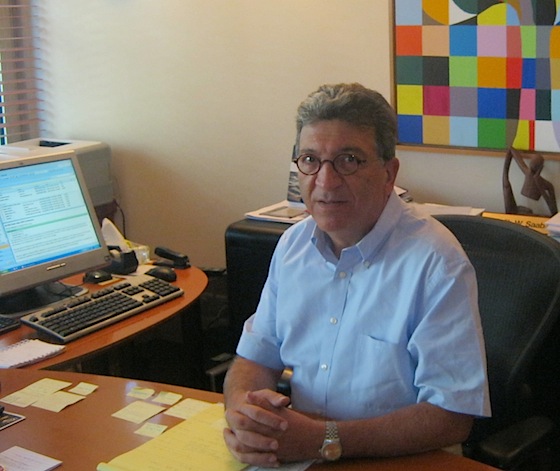
Interview, Najib Saab, AFED, Middle EastRola chats with Najib Saab about the pitfalls of environmental journalism and advocacy in the Middle East

For those with any interest in the environmental issues in the Arab world,  “Al- Bia Wal-Tanmia” is a familiar name. Started in 1996, the only Pan Arab environmental magazine was the precursor of the Arab Forum for Environment and Development (AFED), a regional non-profit organization based in Beirut which has become a public forum for influential eco-advocates from around the region and a source of the latest regional environmental data. Meet Najib Saab, the Zayed award-winning Editor who continues to lead the way in the face of mounting environmental and financial challenges.

Yale Researcher: “Desalination Should Be A Last Resort”

3

desalination, water conservation, waste water managementWhen is energy-intensive desalination a last resort?

One of humankind’s worst tragedies is currently unfolding in the Horn of Africa, and it is caused by the absence of water. Two years of failed rain, and subsequent drought and famine, is responsible for the daily deaths of roughly 2,000 people in Ethiopia, Kenya, and Somalia.

According to the Director of Yale’s Environmental Engineering Program, water scarce countries like these in Africa and the Middle East can achieve greater water security by developing desalination plants. However, as you might have guessed, this conviction does include a rather large caveat.

Better Place Denmark Hopes to Get Electric Car Venture (Finally) Going in October

0

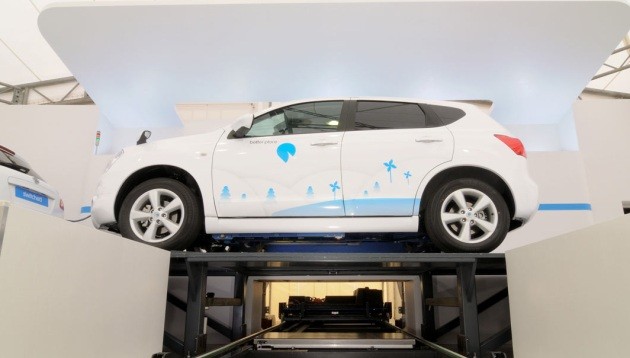
Denmark’s Better Place commercial launch may finally take place – in October

Better Place’s electric car project in Denmark will finally get going in that country after all, says easyecar blog author Martin Thomson, who is an authority on several electric car models that are vying to be introduced into Denmark.

Thomson, who earlier said that Better Place’s electric car network  might not be suitable to the Danish market ,  appears to have softened his views on the network, which requires car owners to use only their system of battery charging posts and exchange stations on a monthly “subscription” basis.

The Middle East’s Carbon Emissions At A Glance (Infographic)

10

Carboun, an organisation which promotes sustainability in the Middle East, has produced its first infographic which does a great job of mapping out the region’s carbon emissions

I am huge fan of infographics – information as graphics – for the simple reason that they are a great way to get a handle on lots of complex information by just looking. Rather than reeling off lots of statistics and figures, graphics are used to give you a better understanding of the issue and allow you to make comparisons and reach conclusions. Carboun, an online sustainability advocacy group led by Karim Elgendy, has recently released a clear and easy-to-understand infographic on the carbon emissions of Middle Eastern residents.