In 2018, archaeologists excavating near Aswan, Egypt, uncovered the remains of a young woman who lived approximately 3,700 years ago. Tragically, she was in the final stages of pregnancy at the time of her death, but the fetus was not positioned head-down in her pelvic area—a typical orientation for late-term pregnancy. This finding suggests that complications during childbirth may have led to both their deaths. A fracture on her pelvis may have complicated the situation.
The woman’s skeleton exhibited pelvic abnormalities, possibly from a previously misaligned fracture, which could have contributed to difficulties during labor. Buried alongside her were items such as a pottery jar, a red-and-black container characteristic of ancient Nubian craftsmanship, and beads fashioned from ostrich eggshells.
These artifacts not only indicate her cultural connections but also imply she may have been a bead maker, reflecting her role and status within her community.
This poignant discovery offers a glimpse into the maternal health challenges faced by women in ancient times and underscores the potential dangers of childbirth in that era. It also highlights the rich cultural interactions in the region, as evidenced by the Nubian-style artifacts found in the burial.
The woman was found in a grave-pit, inside a small cemetery, with the skeletal remains of the unborn baby still in her stomach
“There’s something very poignant and quite sweet about it, but also very sad,” Nigel Hetherington, an Egypt-based archaeologist and heritage consultant said about the find. The find was made by the Aswan-Kom Ombo Archaeological Project (AKAP), led by Yale University and University of Bologna. The project has investigated selected areas in the Aswan-Kom Ombo region since 2005.
Preliminary analysis of the mother’s corpse also revealed that the woman’s pelvis was misaligned, which could have been a fracture that hadn’t healed properly. Waziri said the injury could have been the cause of the labor problems.
The skeleton in the grave pit was found wrapped in a leather burial shroud.
There were also two pottery vessels in the grave – one a small jar, the other a fine bowl that appeared to have once been polished in red on the outside, and black on the inside, a Nubian style; this kind of vessel was popular in nomadic communities.
Egyptians tended to pray to female deities like Hathor, Taweret, and Bes.
The archaeological mission also found numerous unfinished ostrich eggshell beads and black fragments, which Dr. Waziri also speculated was an offering. “The beads were common, but they were for the burial for the poor, since they weren’t gold beads, it makes sense,” Ahmed Salah, an Egyptology graduate from the American University of Cairo, told Arab News.
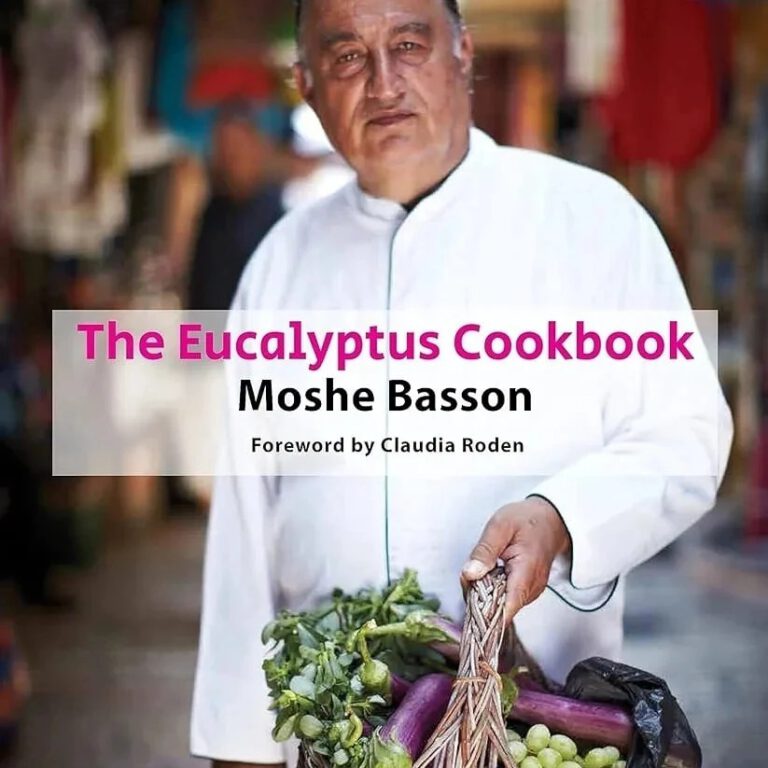
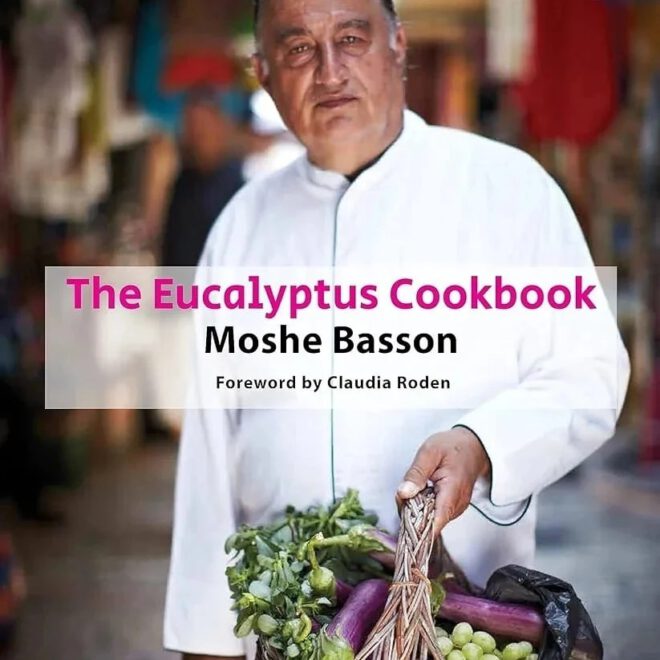
Moshe Basson, chef, food historian and owner of the famous Eucalyptus restaurant in Jerusalem, has finally published his cookbook. Its title is, naturally, The Eucalyptus Cookbook. The foreword is by Claudia Roden, an international authority on the foods of the Middle East and the Mediterranean.
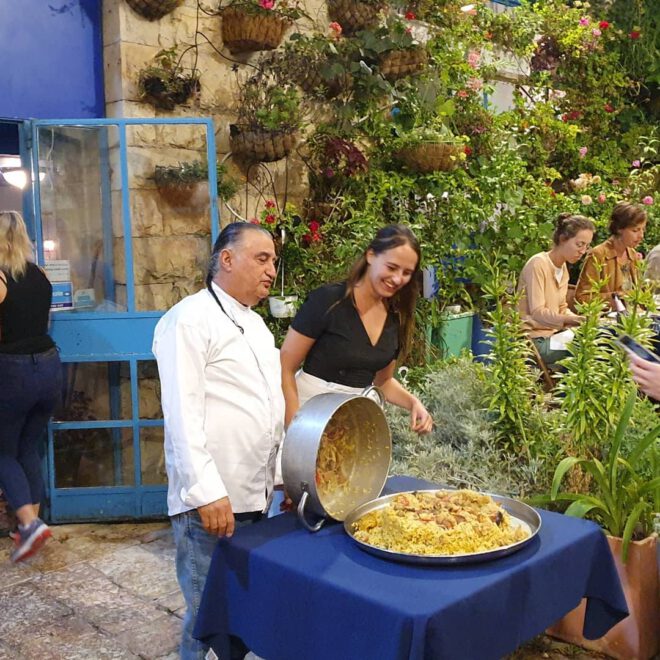
I’ve often eaten at The Eucalyptus, and to my delight, I found recipes in the book for dishes I’ve enjoyed there, such as chicken makloubah, Basson’s signature dish. Chicken and vegetables are cooked with rice, then the pot turned upside down on a platter to present a savory cake. I cooked it. It’s delicious, and elicits a “Wow!” from impressed guests. Read a personal interview with Moshe Basson.
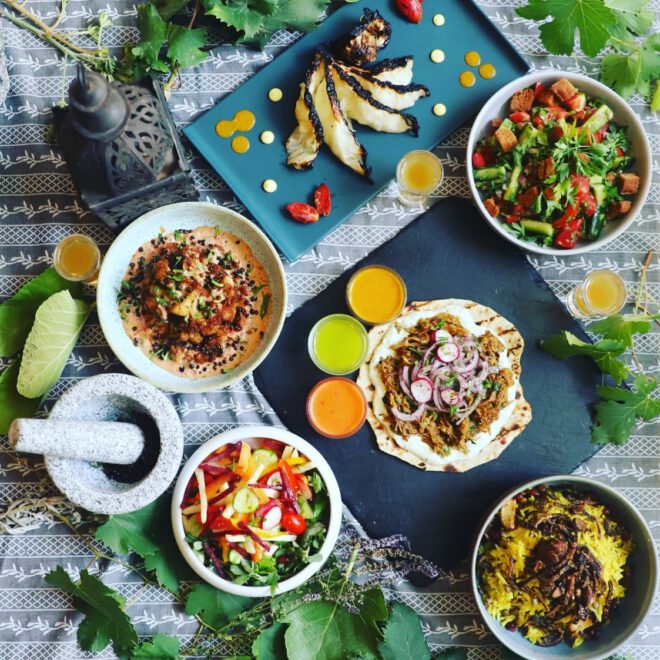
The contents begin with vegetable recipes and go on to soups, grain and bean-based foods, meat, chicken, and fish, sweets, cocktails, and condiments and basics.
Peppered throughout the book are beautiful photos of the dishes and the chef himself at work.
There are recipes for all varieties of eaters. Vegans and omnivores alike will find appetizing recipes in the vegetables, soups, and grains and beans sections. Bonus: here’s a vegan maklubah recipe, with portobello mushrooms, cauliflower, and eggplant. It must be said though that the list of meat dishes is the longest in the book. And very delicious they are, as I’ve had occasion to find out.
As the Eucalyptus Restaurant is kosher and serves meat, the desserts don’t include dairy in any form. Almond and soy replace milk and cream. In the few places where butter is listed (a nod to tradition as in the baklava recipe), sunflower oil is the suggested alternative. It must also be noted that there are no artificial ingredients in The Eucalyptus recipes.
Moshe Basson’s book has a version of green shakshuka
The book is a great read for food lovers. Basson loves to tell stories, and you’ll find many there. His recounts vignettes from his childhood in the Judean hills with his Iraqi immigrant parents, and from his travels and present home life. He tells of his early culinary inspirations, often quoting his mother, Spirons. He combines his passion for reviving biblical foods (with delicious variations) with references from Jewish and other historical sources. He meditates on beloved dishes central to family life, especially dishes for Shabbat and holidays, such as the hamine overnight stew, Iraqi style.
Read carefully, and you’ll find little humorous asides, like this tip for cooking Jerusalem artichoke soup: “Don’t lift the cover during the first 25 minutes – Jerusalem artichoke is a crazy vegetable and a draft of cold wind may prevent the tubers from ever getting soft.” He also recommends that when you grind his cilantro pesto with a mortar and pestle, you should “raise your voice in song, because the sound is good for the spices.” Well – that’s if you choose the ancient way over your food processor.
Especially endearing are vignettes like the one in which we see Basson’s mother cooking Aruk chicken fritters and keeping an eagle eye on hungry grandchildren getting ready to filch them. I don’t know if I could resist those savory patties, myself (mouthwatering photos and recipe on pages 136-139.)
Recipes with wild greens cast an interesting light on foraged food. I’ve eaten Basson’s gnocchi based on mallows with much pleasure, and as nettles are just coming up in the backyard, I’ll soon be opening the book to the nettles soup page.
From simple daily foods like humus to sumptuous party dishes like figs stuffed with chicken in tamarind sauce, the Eucalyptus Cookbook offers over a hundred recipes to choose from. Browse its pages, and be prepared to cook.
Forget coffins. At least the traditional ones. That was the idea we explored in a recent post on green burials, but that story overlooked a new product in the mortuary arts tool kit that takes burial full circle. The Capsula Mundi project by Italian designers Anna Citelli and Raoul Bretzel is an organic, biodegradable burial capsule that directly converts cadavers into nutrients for trees.
The design duo explain that their larger concept is to create entire cemeteries full of trees instead of tombstones. Low maintenance swaths of land that require minimal irrigation (if any at all) will – when mature – provide new and protected wildlife habitat, and serve as carbon sinks and natural ‘air-fresheners’ to nearby urban areas.
They anticipate advance purchasing of their burial capsules, stating that each client will be able to choose their favorite tree.The project’s site already has a number of trees to choose from.
As with other green burials such as Bios Urna (shrub pots pre-planted with soil, seeds, and human remains) and Poetree Burial Planter (human ashes in a biodegradable cork pot, planted with a boxwood sapling and ringed with the deceased’s inscription in ceramic), families and friends could visit the future flora, care for it and rest in its shade.
Capsula Mundi
Presumably, if we chose a fruit tree, they could harvest some fruit and make jam. If it was a maple, they could tap it for pancake syrup. Unique ways to remember deceased and continue the “circle of life”, indeed.
The designers point out on their website that the process circumvents the need for coffins, saving valuable resources. Bodies would be left in a natural state, with no embalming chemicals to poison the soil and groundwater. It’s certainly sustainable, so why does this scheme give me the creeps?
I attribute my unease to the burial process. Unlike the schemes in our past post, the Capsula Mundi uses whole bodies, not cremated remains. Stretchable fabric encapsulates bodies bent into fetal position and shaped up in an egg-like orb, with a sapling atop the planted human bulb.
It’s that fetal pose part, so adorable in a newborn, but for others? The idea makes me ache. And don’t get me started on their story-board (above). The only thing pulls my gaze from the curled-up cute dead guy is the ant.
No zen-like picnics in the lovely forest for me, I’d be obsessed with all those shrinking sacks of below-ground people tucked tightly into tree-feeding balls. Call me claustrophobic, but it’s like being trapped in an economy airplane seat for eternity.
The project is now only a concept because Italian law forbids such burials. But rest assured I’ll think of it every time I fly on the cheap.
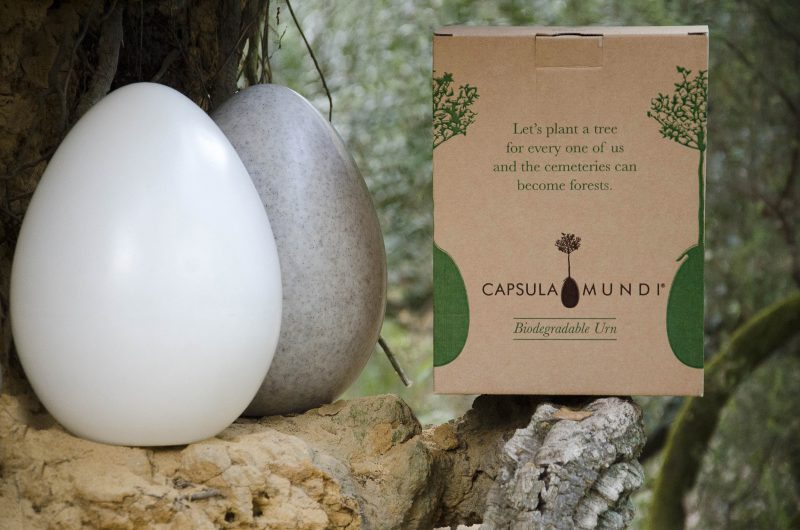
The Capsula Mundi urn is a biodegradable urn. The ashes are put in through a hole, closed with a cone shaped screw top. After the burial, a tree, chosen in life by the deceased, in consideration of the local ecosystem, will be planted in top of it. Capsula Mundi biodegradable urn turns the ashes into a tree. Capsula Mundi urns are made in Italy. Each urn is unique, thanks to handcrafted interventions during production. And it comes in two versions: Sand and White.
“Capsula Mundi for the body is still in a start-up phase,” write the designers. “This kind of burial is legal in many countries but not everywhere. In Italy, where this project was born, only the Capsula Mundi urn is permitted. However, “green cemeteries” are popular in many other countries, especially in the English speaking countries.
Since 2003, when Capsula Mundi was exhibited for the first time at the “Salone del Mobile” (an international furniture exhibition in Milan, Italy) our team has been working to raise awareness and to promote the idea, fully convinced that before changing laws, we need to challenge the way people think.
Both teachers and students are embracing tools that make education more engaging and interactive. QR codes have emerged as a powerful solution, bridging the gap between traditional learning materials and the digital age. These versatile codes provide instant access to a wealth of resources, and with platforms like me-qr, educators can easily create qr code solutions to make learning exciting, dynamic, and seamless.
The Role of QR Codes in Modern Education
QR codes are revolutionizing how students interact with educational materials. A free qr code generator online to even write my discussion post empowers teachers to deliver information in a way that resonates with tech-savvy learners. By linking QR codes to videos, quizzes, or additional reading materials, teachers can turn static resources into engaging, interactive content.
Students can also take advantage of a qr code generator free online for their projects and presentations. By embedding QR codes in their work, they can link to supporting research, multimedia files, or even their explanatory videos, elevating the quality and interactivity of their assignments. This fosters creativity and encourages students to think beyond the conventional boundaries of classroom learning.
Creative Applications of QR Codes in Education
The possibilities for using QR codes in the classroom are nearly endless. Teachers and students alike can use a qr generator in ways that make learning both fun and functional:
interactive homework – teachers can link assignments to videos or audio explanations, using a qr maker to make complex concepts more understandable;
instant access to study materials – a qr code generator online can provide students with quick access to digital textbooks, additional resources, or practice tests;
collaborative learning – students working on group projects can use a qr code creator to share documents, timelines, and updates in real-time;
gamification – teachers can create scavenger hunts or gamified quizzes using a free qr code generator, encouraging active participation in lessons;
parental engagement – educators can share QR codes with parents to provide updates on their child’s progress or access to class announcements.
Me-qr simplifies these processes by enabling educators to generate qr code free for any purpose. Their platform offers dynamic QR codes, allowing teachers to update the linked content without having to replace the code. This flexibility is invaluable for lesson planning and adapting to changing educational needs.
Why QR Codes Are the Future of Education
QR codes are not just a tool for convenience; they represent a significant shift in how education is delivered. A qrcode generator removes the limitations of physical learning materials, replacing them with digital tools that are accessible anytime, anywhere. This not only saves resources but also ensures that educational content is always current and relevant.
Moreover, using an online qr code generator allows teachers to track student engagement. By analyzing how often QR codes are scanned, educators can gain insights into which materials resonate with students and adjust their teaching strategies accordingly. This data-driven approach enhances the effectiveness of lessons and helps teachers better meet the needs of their learners.
For students, the ability to scan a qr generator online and instantly access study aids, tutorials, or supplementary materials creates a more personalized learning experience. QR codes make it easier to cater to diverse learning styles, providing visual, auditory, and interactive content that supports different preferences and paces.
How Me-qr Supports Education
Me-qr is a valuable resource for educators looking to integrate QR codes into their teaching strategies. With their intuitive platform, teachers can create qr code free for a variety of applications, from sharing lesson plans to linking interactive exercises. The ability to customize QR codes with colors, logos, and designs ensures that the codes are visually appealing and align with the classroom’s branding.
Me-qr’s dynamic QR codes are especially useful for educators. Whether it’s updating content linked to a homework assignment or adding new resources to a previously shared QR code, teachers can make real-time adjustments without reprinting or redesigning the code. This level of adaptability streamlines the teaching process and ensures that students always have access to the most relevant information.
Conclusion
QR codes are revolutionizing education, offering tools that make learning more engaging, interactive, and accessible. With a free qr generator, teachers can transform lessons into dynamic experiences that resonate with today’s students. From interactive homework assignments to gamified classroom activities, QR codes bring an exciting, tech-driven approach to education.
CubeSats have emerged as a university project, and, originally, this tech was used for educational missions – primarily because of its affordability. Today, with the rapid private space sector development, these compact, easily scalable mini-satellites are actively used for a wide range of commercial purposes and are steadily securing their positions in missions from international space agencies.
Thanks to advances in private-made CubeSat components, such as these https://dragonflyaerospace.com/components/, CubeSats are becoming increasingly more advanced and versatile. At the same time, they retain their uniform design, measuring 10x10x10 cm per unit (1U) while increasing scalability. Modern CubeSats can measure up to 27U, but that is still very compact compared to previous-generation space tech!
Below, we will explain the main CubeSat structures and mechanisms that make these satellites work, explaining the importance of CubeSat components in modern satellite missions. But first, we need to understand what today’s space missions are usually about, so let’s start with that.
What are the objectives of the CubeSat mission?
Right now, every launched CubeSat focuses on its own mission, but the range of applications has evolved far beyond education. Currently, the most common CubeSat missions include:
Earth Observation: EO is an extremely vast industry segment – in fact, most spacecraft in our planet’s orbit are EO tech, and many of those satellites are CubeSat. Depending on the components they carry, actual applications may include environment monitoring of pollution levels in waters or air; urban planning; tracking illegal mining, fishing, or poaching activities, etc.
Technology demonstration: most new space tech is tested and demonstrated with CubeSats because, if something goes wrong, the cost of losing a CubeSat is lesser than it could have been with a larger satellite. But that does not mean CubeSat technology is unreliable. In fact, these satellites successfully coped with most demonstration missions – including testing for NASA’s upcoming Mars landing.
Internet of Things: most IoT devices remotely controlled from our smartphones are backed up by CubeSat constellations, so every time you turn up home heating while still at work, you can thank advances in CubeSat components.
Clearly, such a range of applications requires a series of advanced equipment to carry out designated missions. So, let’s take a better look at the CubeSat component’s functions and variations.
What are the main components of a CubeSat?
Even though the actual CubeSat components list may vary slightly depending on mission goals, some components are an absolute must-have for a CubeSat to operate:
Structure is a component that holds all other pieces together; it is normally made of highly durable materials to withstand harsh space environments;
Power component supplies electricity to all other CubeSat components – usually through built-in batteries or by generating power via solar panels;
Communication component is a series of antennae and receivers that transmit data back to Earth and receive new commands from ground stations;
Computer component is exactly what you may think – a powerful processor that oversees all CubeSat operations;
Attitude Determination and Control System, or ADCS component, is a complex mix of sensors that measure CubeSat position in space and make sure it is pointing in the right direction, i.e., to take images of designated areas of interest – on Earth or in deep space.
Payload may be one of the most important CubeSat components because it is the equipment a CubeSat needs to carry out its mission goals. Obviously, that’s where the differences begin because satellites are made for different missions, so the equipment necessary to fulfil them will also be different!
Besides, there have been major advances in CubeSat propulsion systems – normally, this component was reserved for pricier space tech. In a nutshell, propulsion is a series of thrusters and engines allowing satellites to adjust their position in orbit or even move to entirely new orbital destinations when initial mission objectives are complete, and it’s time to move on to a new stage.
Today, many CubeSats can do the same, but those aren’t the only impressive advances in CubeSat components and applications. So, let’s see what space agencies have in mind.
Space agency missions: what is the importance of CubeSat?
Even though most CubeSats, along with their components, are manufactured by private companies, NASA and other space agencies understand the amazing potential of this tech. For example, mini-satellites play a huge part in NASA’s upcoming lunar mission, Artemis. Its first phase, which began in 2022,launched ten CubeSats that provided a wealth of information on our Moon, including its ice layer composition.
ESA also holds CubeSat components and their potential in high regard. Its upcoming Hera mission should study the Didymos asteroid system and check how NASA’s DART mission went – that’s when the US agency crashed its impactor tech into the asteroid to see if we could deflect asteroids from their course to avoid future collisions with our planet. So, heads up for HERA because it finally looks like our space tech is on its way to helping the planet – and advances in CubeSat components will prove useful in this process.
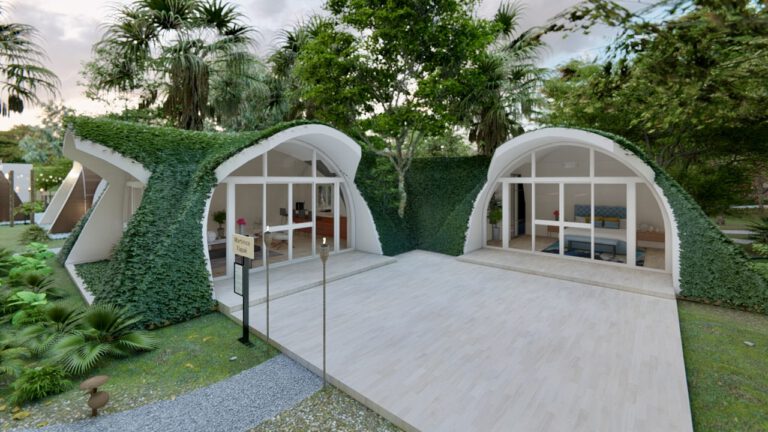
Maybe you were raised on Teletubbies or fell in love with Hobbits? You too can have a curved, green-roof home as a backyard home for AirBNB or for your in-laws. Maybe it will be your first home and you want to make it a tiny home and green. Meet Wonderful Structures, a US company that supplies the framework upon which you can build a hobbit home. A build can be done in as little as 3 days, according to the company formerly known as Magic Homes.
Imagine a 400-square-foot tiny home with a low carbon footprint, nestled in the earth making it energy efficient to boot but with the convenience of a conventional house?
Vanlife made sense 10 years ago when global nomadism first took hold, but with a Starlink and an off grid parcel of land, true off-grid and efficient living is possible with Wonderful Structures.
The company manufactures prefabricated vaulted panels to be covered with soil so you can live in a Tolkienesque building you might be able to build yourself. Check your local building codes of course before you order.
Below are some photos of the construction process.
Can anyone build such a home anywhere? The company says: “Our technology features an innovative construction system designed to meet various standards for earthquake resistance, wind loads, and fire safety, making it eligible for approval worldwide.
“We recommend consulting your local building department to understand the specific requirements in your area. Additionally, standard construction permits will be needed for your project.”
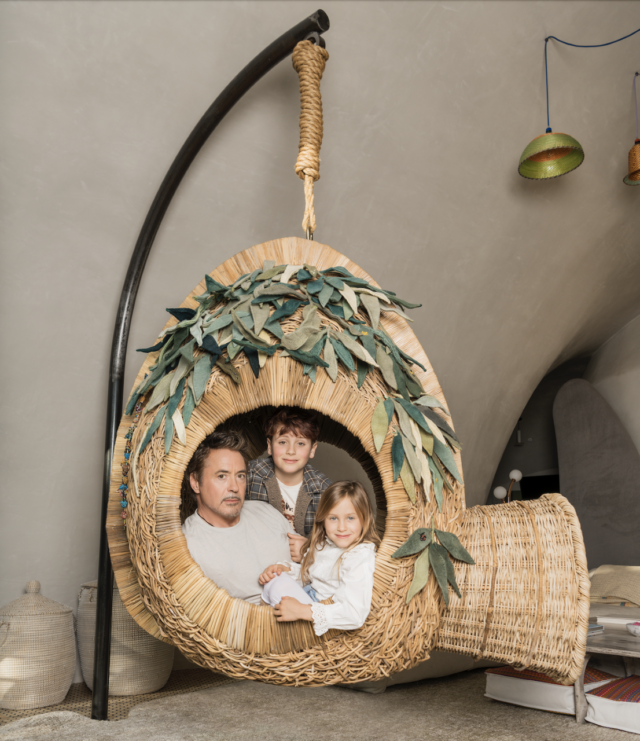
Robert Downey Jr.’s Binishell in Malibu. Courtesy of Nicolo Bini.
Binishells are a fast-made construction made by inflating a gigantic neoprene bladder then covering this balloon in a thin coat of reinforced spray-on concrete. The technique developed in the 60s by an Italian architect could be a great solution to urban and rural housing in southern United States and Mediterranean regions.
Concrete isn’t considered an environmental material (see the problem with concrete mining here) but perhaps the technique of creating a sort of paper mache with concrete sprayed on an inflatable surface could have applications in vernacular building thinking and the use of more natural materials.
Binishell clay model
How Binishells are created: architect Nicoló Bini starts with a two-dimensional shape on the ground, then adds wooden a form around an air bladder and reinforced steel rebar, and then places concrete that sets and slowly rises from the ground.
Some installations of this technique can cost only $3500 for a tiny home, posing a solution to a housing crisis.
A Binishell rendering. Courtesy of Nicolo Bini.
The Italian-born, Australia-raised Bini started doing high-end work for Usher and Cara Delevingne but then grabbed onto an idea started by his Italian father which is now seen in seaside celebrity retreat or in disaster-area shelters that he has suggested for Pakistan and Ukraine and to protect Bedouin desert dwellers.
Binishell homes for $3500
His father Dante Bini built some 1,600 Binishells globally making him the most prolific dome builder in the world. It’s a mode of building that sits well with Middle East and western sensibilities.
Among his projects are a cave-like bungalow in Malibu, custom-built for Robert Downey Jr. and his wife.
Binishell Robert Downey Junior home in Malibu
Fit for a Hobbit or the Jetsons or the Flintstones, this home was built with spray-on concrete and with advances in 3D printing we assume these structures could be built more quickly and safely using AI and current modeling software.
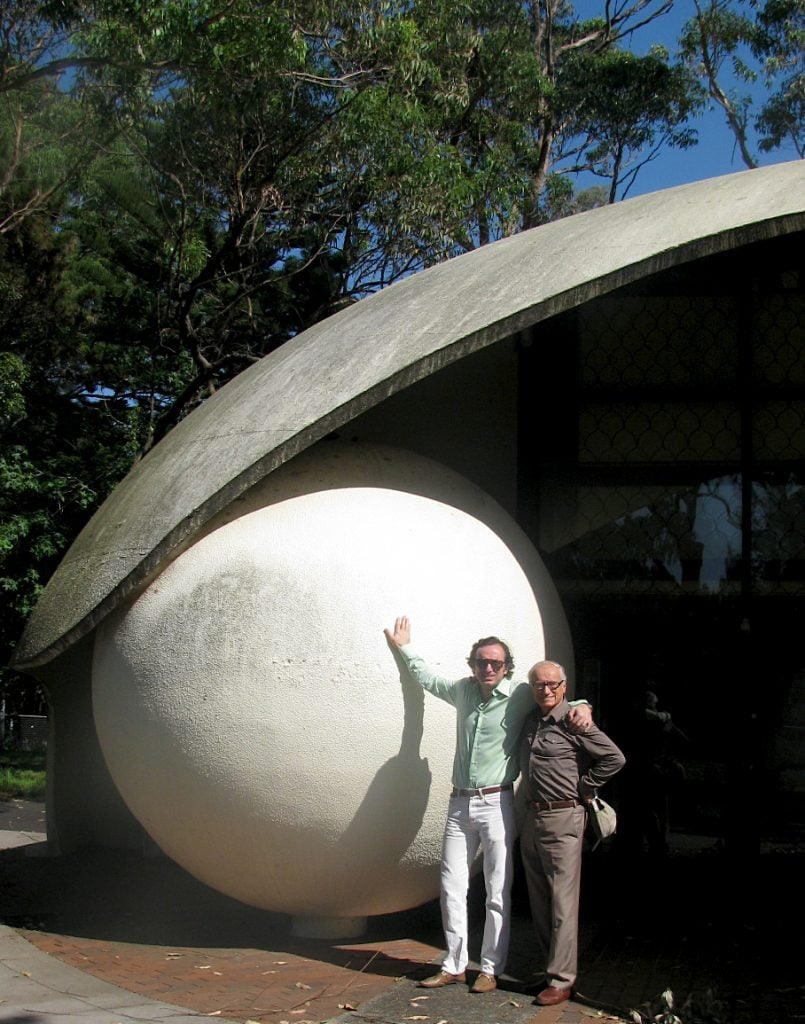
Nicolo Bini and his father, Dante Bini, at the Binishell school in Narrabeen, Australia. Courtesy of Nicolo Bini.
If you look to nature it’s not easy finding squares and sharp angles. Nature loves curves and shells for protection and for homes.
Binishells can be quickly erected with locally sourced materials and a minimum of specialized tools. Darin Olien, the wellness guru and producer/co-star (with Zac Efron) of the Netflix series Down to Earth is also planning on purchasing a Binishell home which will go further than the Downey home; it will operate off the grid.
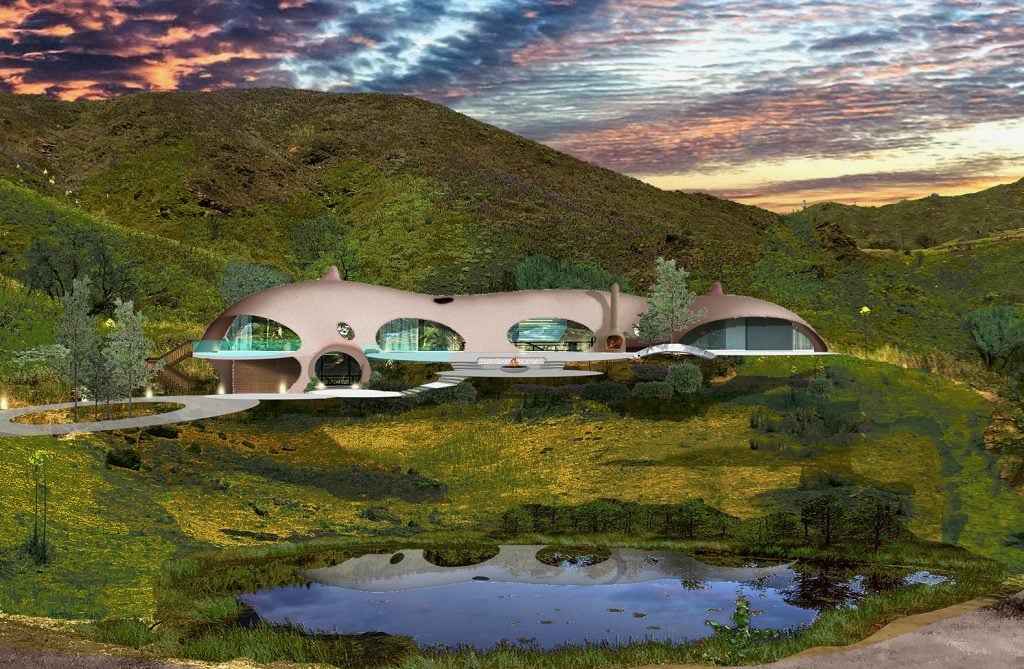
A Binishell rendering for Darin Olien. Courtesy of Nicolo Bini.
Celebrities have the resources and money to try experimental buildings as they often have multiple homes and go for showstoppers for wowing the world. But Binishells, if made with earthen materials could give livable and loveable homes as envisioned by architects like Hassan Fathy.
Given that concrete does not do well in extreme cold climates like Canada where freezing and thawing in rapid succession would crack the concrete, this could be a good alternative in Mediterranean cities. Better yet, build the homes with surfaces so at the end of life the concrete can be thrown into the sea for coral reef restoration.
Want to create a team that considers sustainable issues?
Efficient communication is at the heart of any successful sales team, and dialing software plays a pivotal role in making that happen. For businesses looking to optimize their outbound call strategy, power dialer software is an absolute must-have. But what is a power dialer, and how can it transform your business operations?
This guide explores the features, benefits, and top choices for power dialer software to help you make an informed decision.
Key Features of Power Dialer Software
Power dialer software offers faster calls, smarter workflows and better connections. Here are the main features you’ll want to keep an eye out for.
Automated Call Dialing
One of the biggest perks of a power dialer app is automated dialing. Forget manual dialing—it’s slow, prone to errors, and wastes valuable time. In its place, power dialers use various modes tailored to your needs.
Predictive Dialing: This mode calls multiple numbers at once, connecting live calls to available agents. It’s a great fit for high-volume sales teams who need to maximize their time.
Progressive Dialing: Here, the system dials one number at a time, only when an agent is ready. It strikes the perfect balance between efficiency and personal engagement.
Preview Dialing: Ideal for leads that require a more tailored approach, this mode lets agents review lead information before initiating the call.
Call Routing and Distribution
Routing calls to the right person is both convenient and essential for a positive customer experience. Modern power dialers use intelligent routing to ensure each call reaches the best-suited agent based on:
Availability
Expertise or skill set
Call priority
This minimizes wait times and eliminates the frustration of repeatedly being transferred.
You can manage advanced routing rules directly in Microsoft Teams with integrated contact center tools at ROGER365.io, so agents always see the right customer details at the right moment. This clarity in workflows keeps customer journeys smooth and helps teams hit their targets with less effort.
Call Analytics and Reporting
A power dialer doesn’t just connect calls; it tracks and measures performance. With detailed analytics, you can see metrics like:
Call duration
Answer rates
Conversion rates
These insights are useful for coaching your team and fine-tuning your outreach strategy.
CRM Integration
One of the most powerful features of a power dialer system is its integration with CRMs. This allows agents to view customer history, add notes, and update statuses—all without switching between platforms. This seamless flow keeps your team on the same page and eliminates the hassle of juggling multiple tools at once.
Real-Time Monitoring and Call Recording
For managers, monitoring live calls is like having a bird’s-eye view of your team’s performance. Features like call whispering (where managers can speak directly to the agent without the lead hearing) and barge-in capabilities make training and quality control a lot simpler. Call recording ensures every interaction can be reviewed for training or compliance purposes.
Lead Management and Prioritization
Not all leads are created equal. With features like lead scoring and segmentation, power dialers help teams focus on high-priority opportunities. You’ll save time by reaching the right people at the right moment.
Benefits of Power Dialer Software
Why should businesses invest in a power dialer app? Here’s what makes it an essential tool for modern teams.
Increased Call Efficiency
Manual dialing can waste precious seconds, adding up to hours of lost productivity. By automating this process, power dialers allow agents to spend more time connecting with leads and less time punching in numbers.
Improved Agent Productivity
By cutting down on tedious admin work, agents get to focus on what they’re really great at—connecting with customers and closing deals. With features like CRM integration and lead prioritization, they’ll always have the right info ready to go when they need it most.
Enhanced Lead Conversion Rates
With more calls made and better-prepared agents, power dialers naturally lead to higher conversion rates. Features like preview dialing and call analytics give teams the insights they need to fine-tune their approach.
Better Customer Experience
Faster connections and smarter routing mean leads get the help they need without any frustration. Personalized interactions, backed by CRM data, make conversations more engaging and relevant, leaving a lasting impression.
Scalability for Growing Teams
As your team expands, your power dialer system should grow with you. Whether you’re a startup bringing on your first agents or an enterprise scaling globally, these tools are built to adapt to your needs.
Best Power Dialer Software Picks
Choosing the right power dialer software depends on your business’s specific needs, whether it’s seamless CRM integration, advanced analytics, or handling high call volumes. Let’s take a closer look at some of the top options, highlighting what makes each one stand out.
CloudCall
CloudCall is a brilliant choice for businesses aiming to simplify their communication workflows. As a cloud-based solution, it ensures flexibility, allowing teams to make and manage calls from anywhere.
Key Features:
CloudCall offers powerful CRM integrations that enable teams to keep track of customer interactions in real-time. Its call analytics tools offer detailed insights into call performance, helping managers identify trends and improve strategies. Compliance tools also ensure that every call meets regulatory standards, providing peace of mind for teams handling sensitive customer information.
Best For:
Small to medium-sized businesses looking for an all-in-one communications platform will find CloudCall incredibly helpful. It’s especially beneficial for businesses that already rely on CRM systems.
Five9
Five9 is a great option for enterprises and high-volume call centers that need a reliable solution to manage their outbound dialing operations.
Key Features:
Five9’s predictive dialing capabilities ensure minimal downtime between calls by dialing numbers in advance and connecting agents only when a live call is detected. It also offers multi-channel support, allowing teams to communicate via voice, email, and chat, all from one platform. With agent performance tracking, managers can monitor metrics like call times and conversions to optimize team performance.
Best For:
Enterprises and large-scale call centers will benefit most from Five9, especially those handling significant outbound call volumes.
Aircall
Aircall is designed with user-friendliness in mind, offering seamless integration with popular CRMs and collaboration tools to keep teams connected.
Key Features:
Aircall simplifies communication with features like call queuing and easy collaboration for multi-user teams. It effortlessly integrates with CRMs such as Salesforce and HubSpot, ensuring that all customer data is synced and accessible during calls. This focus on usability makes it a favorite among businesses that value efficiency and usability.
Best For:
Teams that need a dialer solution capable of working harmoniously with their existing tools. Its intuitive interface and CRM integrations make it particularly useful for sales teams that prioritize collaboration and efficiency.
Mojo Dialer
Mojo Dialer is a specialized solution catering to businesses with extensive lead lists, such as real estate agencies.
Key Features:
This platform is perfect for lead management, providing tools for organizing and prioritizing prospects. Automated follow-ups ensure no opportunity slips through the cracks, while call recording capabilities allow teams to review conversations for training or quality assurance.
Best For:
Real estate agents and businesses that rely on high-volume lead generation will find Mojo Dialer particularly valuable.
PhoneBurner
PhoneBurner is all about efficiency, offering tools that help sales teams make the most of their time and resources.
Key Features:
With predictive dialing and VoIP integration, PhoneBurner eliminates wasted time spent on manual dialing or disconnected calls. The platform also includes real-time reporting, allowing managers to track metrics like call durations, outcomes, and agent performance.
Best For:
Sales teams and marketing professionals focused on lead generation. Its emphasis on speed and analytics ensures that teams can connect with more prospects and refine their approaches for better results.
To sum up, power dialer software is a powerful tool that helps sales teams improve efficiency, increase productivity, and deliver better customer experiences. By automating time-consuming tasks and streamlining workflows, power dialers make it easier for businesses to connect with more leads, close more deals, and grow their operations. With the right power dialer, businesses can optimize their sales processes, enhance team performance, and create a more seamless experience for both agents and customers.
Reviving Gaza’s fishing sector hinges on restoring peace and safe access to the sea
When Hamas Palestinians attacked Israel they wouldn’t image this would lead to such a collapse of Gaza’s once thriving fishing sector. The situation could still be reversed quickly when peace is restored and fishers are granted safe access to fishing waters, along with the resumption of imports of essential fish production inputs and tools, says the UN’s FAO.
The impact of the ongoing escalation on the fishing sector is devastating, according to the UN. Gaza’s average daily catch between October 2023 to April 2024 dropped to just 7.3 percent of 2022 levels, causing a $17.5 million production loss.
The destruction of Gaza’s two main aquaculture farms, along with the hatchery facility, has also left the sector unable to produce alternative aquatic foods through aquaculture. According to one assessment, before the conflict over 6 000 individuals in Gaza, including 4,200 registered fishers and boat owners, relied on fishing as their main income. The sector supported around 110,000 people.
North of Wadi Gaza, which separates the northern and southern parts of the Strip, the Port of Gaza City has been severely damaged, with most fishing boats destroyed.
The damage to Gaza’s fishing sector has exacerbated an already dire food security crisis. Fish, once a vital source of protein and other essential nutrients for Gazans, is now nearly unavailable. And with Hamas holding food stocks hostage, the people are at wit’s end.
“In Gaza’s fishing areas now lie broken boats, torn nets, and ruined infrastructure, standing in stark contrast to the once-vibrant industry that supported thousands of fishers for generations,” said the FAO Deputy Director-General, Beth Bechdol. It is not clear if she was there personally.
“For Gazans, the sea was not just a source of food, but a source of livelihood and identity. FAO can assist to help rebuild Gaza’s fishing industry, but for this to happen peace must first be established and fishers must be allowed to operate their boats and cast their nets without fear of harm,” she added.
Ciro Fiorillo, Head of the FAO Office for the West Bank and Gaza Strip, stated, “FAO is ready to restart projects, replenish damaged boats and equipment, and inject emergency funds as soon as these key fishing inputs for production are allowed to enter the Strip, a sustained ceasefire is in place, and access to the sea is restored.
“This will help Gazan fishers resume their activities, revitalize livelihoods, contribute to economic recovery, and restore dignity to the people of Gaza.”
Before the escalation of hostilities, FAO supported over 4,000 Gazan fishers, improving food security, safety, and sustainability. Key initiatives like the marine cage project and enhanced fish stock monitoring, helped to establish inland fish farms, enhanced fishers’ skills, shared best practices, and supplied essential cold chain resources, including solar panels, ensuring a more resilient food source for Gaza.
Despite all the billions in aid given to Gaza, most of it was used to build tunnels and bombs and the fishing industry on its own could not survive without outside help, which raises an eye. How we can help Gazans?
All images supplied by the UN. December 2024. Deir al-Balah, Gaza Strip.
A prolonged drought in Morocco is causing serious problems for the agricultural sector. Local Authorities predict that the 2024 wheat harvest will be reduced by almost 50 per cent. The Arab Spring happened during a drought and raising wheat prices. Can we expect upheaval in the Magreb connected to this prolonged drought?
This image above, acquired by one of the Copernicus Sentinel-2 satellites on 3 August 2024, shows the province of Sidi Kacem, once the heart of cereal production in Morocco, but largely uncultivated this year due to a lack of water to irrigate crops.
According to the UN unit to combat desertification, Morocco is facing a severe crisis that threatens its agriculture and food security. A six-year drought, exacerbated by climate change, has deeply impacted the country’s cereal farmers, whose fields of wheat, maize, and barley once sustained both human and livestock consumption.
A solar paneled building in Morocco
The drought has not only reduced crop yields but has also transformed Morocco’s agricultural landscape, leading to significant economic and social challenges. As Morocco grapples with these difficulties, the government and agricultural sector are employing innovative strategies to combat the water crisis and safeguard the nation’s food supply.
Moroccan agricultural production consists of wheat, oranges, tomatoes, potatoes, olives, and olive oil. They also grow argan seeds for Moroccan oil.
The Impact of Drought on Morocco’s Agriculture
Morocco’s agriculture sector is highly vulnerable to changing climate patterns, especially the delayed and inconsistent rainfall that has plagued the country for years. Cereals, which occupy the majority of Morocco’s farmland, have seen a dramatic decline in both yield and acreage.
Visit a Moroccan farm:
In 2023, Morocco’s wheat harvest is projected to yield only 3.4 million tons, compared to the 6.1 million tons harvested the previous year. This decline has forced many farmers to leave their fields fallow, reducing both productivity and income.
The ongoing drought has also led to a reliance on wheat imports to meet domestic demand. Between January and June 2023, Morocco imported nearly 2.5 million tons of wheat, primarily from France.
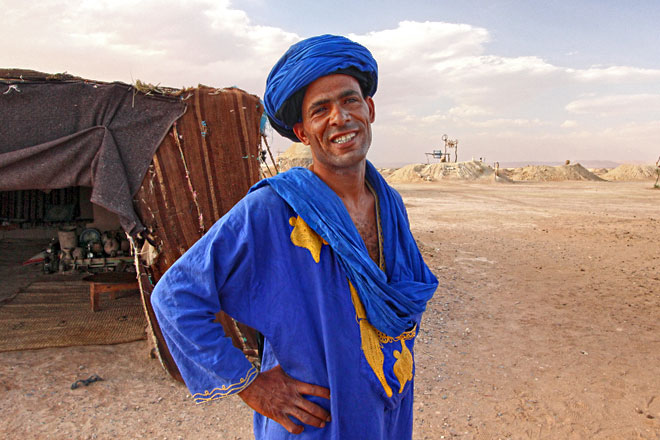
The men of the desert
However, this solution may not be sustainable, as France itself faces declining harvests due to similar climate challenges. The Food and Agriculture Organization ranked Morocco as the sixth-largest wheat importer in the world in 2023, highlighting the growing dependence on external sources for staple foods.
Recognizing the severity of the drought, the Moroccan government has intensified its efforts to address the country’s water scarcity. One key initiative is the implementation of a national water management strategy, aligned with guidelines set out by King Mohammed VI. This comprehensive strategy aims to mitigate the impact of the drought through water conservation measures and the diversification of water sources.
Plans are in place to construct seven additional desalination plants by 2027, which will increase capacity by another 143 million cubic meters. This ambitious plan reflects Morocco’s commitment to addressing its annual water demand, which exceeds 16 billion cubic meters—87% of which is used for agriculture. Yet, over the past five years, available water resources have not surpassed 5 million cubic meters annually, underscoring the gravity of the situation.
Berrechid aquifer Morocco, FAO. To improve water governance, Sweden, the FAO and the Moroccan government install water meters to stop water theft by Moroccan farmers.
Europeans have flocked to dive sites in Egypt because of the low cost tourism and liveaboard boats. Sinai and Egyptian Red Sea coral reef diving is a 4-hour plane ride from Europe.
Now that Saudi Arabia is opening up to tourism, westerners can skip the controversial Maldive Islands and head to the Red Sea of Saudi Arabia instead. Built on a pristine island is Sheybara, a series of water pods that offer privacy, and exclusivity.
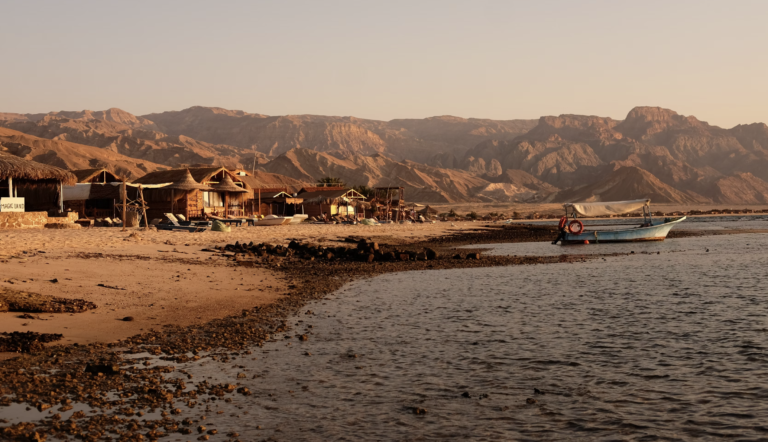
If you have ever been to Sinai for a famous dive adventure or snorkeling trip, beware of the dangers. We’ve written about the fatal live aboard dive boat accident in the Red Sea this last November, and one reader reached out, a regular traveller to Sinai, about his family’s harrowing boating experience in Sinai, Egypt. Moral of the story: bring life jackets for each of your family members when traveling in countries like Egypt, Sinai, India, Thailand and South America. Don’t expect any travel company or tour operator to have you covered. Here is David’s story:
Your post made me think of what happened in Sinai in 2023. It turns out that if you live through it you have a good story, if you don’t then well… During April, 2023 the family decided to go to Sinai.
One day we visited the Blue Hole near Dahab, we snorkeled around and decided to visit Ras El Satan and further on explore this wonderful lagoon. We left the Blue Hole around 1pm with one of the local fishing boats, it was just us 8 (5 adults, my two sons 13 and 3 and a 5 year old nephew) and the skipper. I noticed there were no life vests. It’s about a 30 minute boat ride depending on the current or tide.
Snorkeling in the Blue Hole, Sinai
Once there we spent time with the locals and visited the above. Around 4pm I figured we should head back to not be on the roads at dark. When we arrived back at the pier of Ras El Satan there was a large group of visitors who wanted to get back just like us.
This time the polyester boat was stacked with people to the point where I thought, this is unsafe and we should get off, now this was the last boat of the day. I estimate there were about 50 people on this tiny boat, tourists but mostly Egyptian families who were on a day out. Kids, grannies, families.
While leaving I saw a 15-year-old kid fueling the boat with a plastic bottle of gasoline which had large black chunks floating in it. Another red flag. Nobody wore vests as there weren’t any. The waterline was just meeting the waves but once in the water the engine pulled the boat out of the water. Now we’re in the water, engine full throttle, our captain at the steering wheel.
Snorkeling in Sinai
Half way into the trip the engine goes out. Consternation. The boat slows down and waves start pouring over the side. This is where my instinct kicks in. We weren’t far from the shore, I reckoned it’s 200 meters which we could reach by swimming. There are no boats around us and the shore is nothing more than sea bashing onto rockery that climbs up to 20 meters above sea level.
I understand from the panic on the boat that most people cannot swim so I’m now talking to my family to abandon the boat as soon as a big wave goes over it, leave all the bags and just make it to the shore, first get us to safety as it’s very likely that people who can’t swim would grab onto those who would be wanting to help. Horrible. I tell my big boy to get ready to swim to the shore and not look at anyone else, he’s a good swimmer I know he can make it. I tell my wife and that I’d take the small one and my cousin would take the nephew.
Now we are waiting for disaster as the skipper tries to revive the engine. I hear how he is messing up the gear and drowning the engine with fuel. Another person is trying to call but of course there is no reach. By now it’s about 5:30pm and evening is setting in. Two other men are trying to revive the engine and miraculously the engine kicks in again. To get a few hundred meters again and then give up again. The same scenario repeats.
Eventually the engine gets us to the pier at the Blue Hole where it eventually gives up. Now it’s dark. People with flashlights on the pier are yelling, total chaos and disorder. I think we are going to capsize as the swell is rough and we’ll be smashed onto the rocks. Another boat navigates next to ours and skippers are tying our boat to theirs.
A person in full panic tries to jump into the other boat and lands in the water between the two boats, luckily he’s pulled out right away. Eventually the two boats manoeuvre onto the pier and people hurry off. This could have easily ended bad and you would have read about it in the news. N’importe qui as we say in French.
_____
David’s experience is not unique. Another tourist reported various safety issues on a recent boat and snorkeling trip to the Blue Hole and Ras Abu Galum:
Sinai boat ride. Image via Tuljac.
“The most convenient access to the next stop is a ten-minute boat ride. Alternatively, one can take an unpaved trail parallel to the shore on foot or by camel. Despite its popularity, the boat service was very disorganized. It was hard for me to figure out whether there was any system for boarding. Everyone crowded around the tiny boat dock, and we waited a few minutes for our turn. These boats were small and pretty crowded. Each boat carries almost two dozen passengers, and It felt a little unsafe the moment we boarded.
“Our boat’s motor blew out a few minutes into the boat ride. Waster was very choppy, and we were left in a drift for a while before another empty vessel came to the rescue. Just when we thought it was smooth sailing, the water became so choppy that our boat slammed hard against the water’s surface.
“For a moment, we thought we might capsize. All of a sudden, one big wave tossed the boat so violently that a girl in our group was knocked unconscious briefly. She banged her head into the side of the boat and started to bleed incessantly. There was blood everywhere. Everybody except the boat operator was super worried. This was officially the worst day tour we ever had. Brian told me he was getting seasick and stressed.”
When Crocs first came into being, I had already owned a prototype pair of foam-injected slides from Italy. I thought they were the best invention since sliced cheese, until the soles wore out. Crocs were never my look, but the idea of a compostable, injectable foamy plastic is. Enter Balena.
They have worked with a number of fashion brands, as we point out here, and now Stella McCartney.
Their compostable, recyclable, and biobased material embodies the shared vision between Balena and Stella McCartney: a future where innovation meets circularity to create truly sustainable design.
This collaboration is a milestone for Balena and for the future of materials.
Kitty Shukman
“It’s proof of how far we’ve come and how much further we can go together,” says Balena founder David Roubach:
“When I started Balena, one of my dreams was to collaborate with Stella McCartney—a true pioneer in sustainable fashion. Today, I’m proud to share that this dream has become a reality. Our groundbreaking material, BioCir® Flex, is now featured in Stella McCartney’s S-Wave Sport trainers, part of her Autumn 2025 collection.
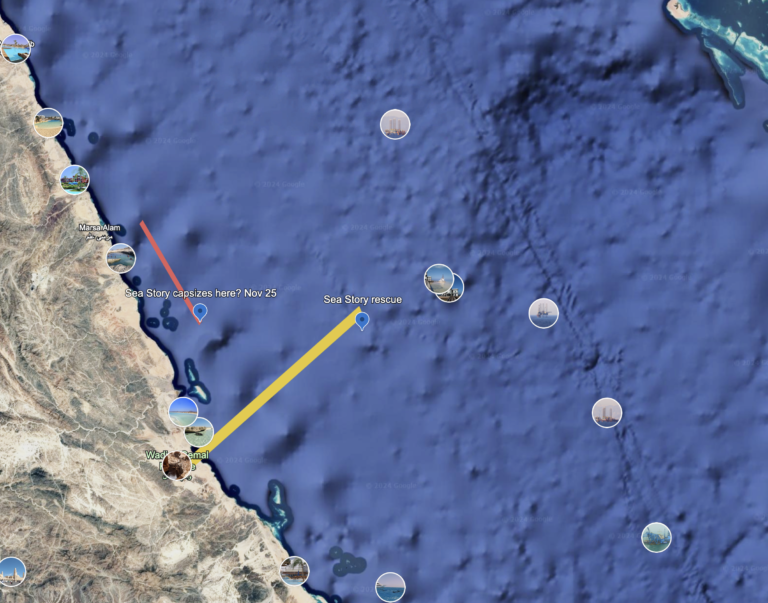
An estimate of the Sea Story accident and where tourists were rescued on the second day in the wreck. See the region of the accident on Google Earth here.
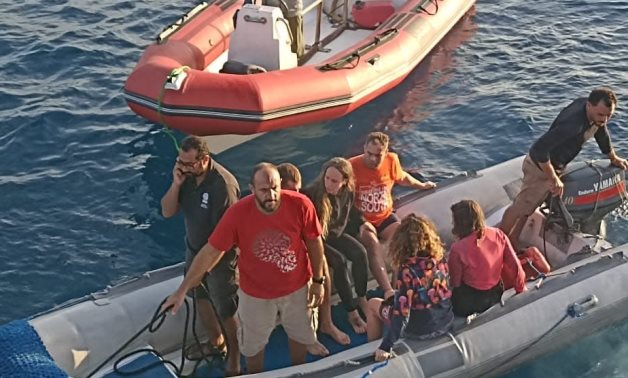
On November 25, a dive boat called Sea Story with 44 souls capsized an estimated 18 nautical miles south of Marsa Alam, Egypt on the Red Sea. Some were rescued within half a day from rescue boats and the Navy. on November 25 Another 5 people were rescued the following day, some 36 hours after capsizing. Rescue divers went down and pulled 5 living people and 4 bodies from the wreck. Seven people are still missing. In total, 11 people lost their lives on this dive boat.
There are rumors that suggest that some people may have been trapped inside the wreck for the next few days after rescue on November 26 but the divers may have been too afraid to enter the wreck for the sharks circling the craft. Others connected to the rescue say this is nonsense. That the boat was searched from room to room on November 26. Here is a rescue story from one of the rescue team here (in Arabic).
Whatever the rumors, in a sad turn of events a boat of rescue divers were within a “30 minutes” boat ride and they could have assisted in the operation, one diver wrote, after seeing the outcome.
Several naval vessels and aircraft from the Search and Rescue Center participated in the rescue operation for the missing tourists after the Sea Story accident in the Red Sea. Press handout
“At the time of the accident we were 30 minutes from the See Story boat full of professional technical divers with experience in salvaging from a sunken ship. One phone call and everything was different,” says Radik Simic in a popular Scuba diving Facebook group.
The families of those lost and those surviving still do not have accountability and closure. “What about foreign embassies and ambassadors? They should be responding because that’s what they’re paid to do. I don’t know what countries the divers were from to assist with this. Feeling incredibly sad to hear these obstacles impeding getting information, accountability and closure,” says one commenter on a recent article we posted to a Scuba diving group.
Could there have been a better outcome if dive boats and rescue divers are connected to a global alerts system? Can there be an app for that? How about a Whatsapp or Telegram chat group (international and country based) so that rescue divers the world over can get a call and rescue when in need? What diving group wants to start such an initiative?
If you have any new details about the Sea Story accident, please email [email protected]
An alert went out that a boat was in distress 18 nautical miles from Marsa Alam, which could be a radius that went out any 18 miles out from Marsa Alam. Other news reports from Egypt say the boat was 46 nautical miles south of Marsa Alam.
American diver Jeffy Lee has travelled to Egypt: “It makes my blood boil at the fact that a few of us even had knowledge of such a catastrophic event and I personally found out about it from this group,” he says. “None of the media even gave two shits about the incident because it wasn’t an exciting “story” for them. Eleven lives were lost, and could have been prevented had it not been the ignorance and failure to follow standard protocols.
“Being in the middle of the Red Sea is not like being stranded in the middle of the Pacific–help could have arrived from all the surrounding neighbors, from the Jordanians, Israelis, and Saudis, whom are all well trained with their respective responders and within close proximity. This is not the first time an incident occurred under Egyptian jurisdictions where they simply swept it under the rug,” he tells Green Prophet.
Another sour point in the rescue may be the Egyptian ego: “From my many visits and understanding of their culture, three words you’ll never hear them say are “I don’t know” or “I need help”, and I’ve had many engagements and interactions which would have made things much easier and not waste my time due to their inefficiencies. I experience the same in my culture in Asia as well. They’d rather save the face than to admit they “don’t know”, and such ignorance at the cost of human lives is irreprehensible in my books.”
Today, no one doubts the existence of black holes, but until 2019, they remained pure hypothetical speculation – even though the term itself, and logically, the accompanying hypothesis, dates back to the mid-20th century. Well, now that the Event Horizon Telescope has officially confirmed the factual existence of such holes, astronomers have been discovering more and more of them, which raises a pretty relevant question – what is the closest black hole to Earth and should we be anxious about the neighbour?
Not to bury such a dramatic lead, let’s just say that we’re safe for now – actually, we should remain safe for a very long time. And now, in the comfort of our newly confirmed safety, let’s learn a few curious facts about the closest black hole to Earth 2024 astronomical facts we know so far.
Closest Black Hole to Earth: Gaia BH1
In 2022, the European Space Agency’s Gaia mission, originally set to create a three-dimensional map of our galaxy, discovered a black hole, which, logically enough, was dubbed Gaia. The object is situated in the constellation Ophiuchus and is part of a binary stellar system – that is, a system that consists of two gravitationally tied objects. One of those objects is a star very similar to our Sun, and it’s thanks to the gravitational interconnections that ESA scientists could determine there is a black hole. The thing is, these holes are still tricky to spot with our optics, so the first thing that caught the astronomers’ attention was the slightly unorthodox star behaviour, indicating a strong pull from another object, which turned out to be Gaia.
Another peculiarity that initially made Gaia tricky to spot is its dormant state. Unlike most of its rapidly-feeding and growing ‘sisters,’ Gaia is relatively quiet. But just how quiet and, more importantly, how close? Currently, the closest black hole to Earth distance is estimated at 1,560 light-years from our planet.
On a cosmic scale, that is not too far but consider for a second that our entire solar system stretches only a few light DAYS across. In contrast, the nearest star system, Alpha Centauri, is about 4.37 light-years away — a fraction compared to 1,560 – but still incredibly far. Right, the fastest travelling object humanity has made, the Parker Solar Probe, is heading towards the Sun at 635,266 km/h. But to reach Gaia, it would need 2,650,358 terrestrial years!
Now that you know what’s the closest black hole near Earth? And more importantly, that it’s not that close, we can exhale once again and learn a few more facts about these mysterious matter-devouring objects.
Biggest Black Hole Ever Discovered
While Gaia BH1 is the closest black hole to Earth, it is by no means the largest – not even close! These holes vary dramatically in mass, from a few times the mass of our Sun to millions or even billions of solar masses. In this regard, Gaia is about ten masses of our Sun. And the biggest title belongs to a quasar TON 618, weighing a staggering 66 billion solar masses! How far is this monster, then? Fortunately, way too far – 18.2 billion light-years!
What Happens if a Black Hole is Near Earth?
Black holes have a scary reputation for devouring everything in their path, but even this process, quick as it may be on a cosmic scale, is incredibly long from our human perspective. Assuming a hole, the mass of our Sun replaced our star at the centre of the solar system (just hypothetically, of course), the solar system planets would keep orbiting as if nothing had changed. We would lose our source of light and energy and freeze to death, but that’s an entirely different hypothesis.
Back to the subject of black holes, one of these would need to venture into the inner solar system to cause immediate trouble for Earth. The thing is, relative to their huge mass, the holes are very small. So, to exert any kind of immediate damage, a planet would really need to be in the hole’s vicinity. And our home system is relatively well-studied, so we can safely state no black holes are lurking around the corner.
Takeaway: Should We Worry about Black Holes?
As you have probably guessed already, the answer to that is a definite no. Even the closest black hole to Earth is incredibly far away on the scale of our solar system. Besides, the gravitational pull of the cosmic monster diminishes with distance – that, as we already explained, needs to be a close one to cause immediate damage. Of course, our telescopes keep developing, and we may discover new cosmic holes soon enough – some of them might even rob Gaia of its closest title. Still, there is every reason to believe our home system and our planet is safe.










 I attribute my unease to the burial process. Unlike the schemes in our past post, the Capsula Mundi uses whole bodies, not cremated remains. Stretchable fabric encapsulates bodies bent into fetal position and shaped up in an egg-like orb, with a sapling atop the planted human bulb.