The CFTC, FINRA, and NASAA have jointly warned retirees about precious metals fraud targeting retirement accounts. This checklist provides a structured framework for evaluating any company before transferring savings — and illustrates what credible providers look like across 7 measurable criteria.
A vast and largely untapped lithium reserve may be hiding beneath one of North America’s oldest landscapes, the Appalachian Mountains, offering a surprising twist in the global race for clean energy materials. According to new findings from the U.S. Geological Survey (USGS), as much as 2.5 million tons of lithium could be buried across the region, stretching from the Carolinas up through New England.
Energy equities are responding unevenly to the evolving landscape. Companies with direct exposure to UAE production growth and infrastructure are benefiting from increased activity expectations, while global oil majors face a more mixed outlook.
All air conditioners release water. That's Physics. Cities like Los Angeles pour billions of water down the drain every year. And while home owners who are savvy to water reuse are finding ways to use AC water in the garden (here are 5 ways to use air con water at home), or in art studios (it's basically free distilled water), cities could save water in meaningful ways by using creative ideas. These are solutions you can send to urban planners and those running smart city accelerator programs. Pick one of them and you might win the grant!
As tensions rise in one of the world’s most critical maritime chokepoints, the ripple effects go far beyond oil—touching food systems, climate pressures, and regional stability
The CFTC, FINRA, and NASAA have jointly warned retirees about precious metals fraud targeting retirement accounts. This checklist provides a structured framework for evaluating any company before transferring savings — and illustrates what credible providers look like across 7 measurable criteria.
A vast and largely untapped lithium reserve may be hiding beneath one of North America’s oldest landscapes, the Appalachian Mountains, offering a surprising twist in the global race for clean energy materials. According to new findings from the U.S. Geological Survey (USGS), as much as 2.5 million tons of lithium could be buried across the region, stretching from the Carolinas up through New England.
Energy equities are responding unevenly to the evolving landscape. Companies with direct exposure to UAE production growth and infrastructure are benefiting from increased activity expectations, while global oil majors face a more mixed outlook.
All air conditioners release water. That's Physics. Cities like Los Angeles pour billions of water down the drain every year. And while home owners who are savvy to water reuse are finding ways to use AC water in the garden (here are 5 ways to use air con water at home), or in art studios (it's basically free distilled water), cities could save water in meaningful ways by using creative ideas. These are solutions you can send to urban planners and those running smart city accelerator programs. Pick one of them and you might win the grant!
As tensions rise in one of the world’s most critical maritime chokepoints, the ripple effects go far beyond oil—touching food systems, climate pressures, and regional stability
The CFTC, FINRA, and NASAA have jointly warned retirees about precious metals fraud targeting retirement accounts. This checklist provides a structured framework for evaluating any company before transferring savings — and illustrates what credible providers look like across 7 measurable criteria.
A vast and largely untapped lithium reserve may be hiding beneath one of North America’s oldest landscapes, the Appalachian Mountains, offering a surprising twist in the global race for clean energy materials. According to new findings from the U.S. Geological Survey (USGS), as much as 2.5 million tons of lithium could be buried across the region, stretching from the Carolinas up through New England.
Energy equities are responding unevenly to the evolving landscape. Companies with direct exposure to UAE production growth and infrastructure are benefiting from increased activity expectations, while global oil majors face a more mixed outlook.
All air conditioners release water. That's Physics. Cities like Los Angeles pour billions of water down the drain every year. And while home owners who are savvy to water reuse are finding ways to use AC water in the garden (here are 5 ways to use air con water at home), or in art studios (it's basically free distilled water), cities could save water in meaningful ways by using creative ideas. These are solutions you can send to urban planners and those running smart city accelerator programs. Pick one of them and you might win the grant!
As tensions rise in one of the world’s most critical maritime chokepoints, the ripple effects go far beyond oil—touching food systems, climate pressures, and regional stability
The CFTC, FINRA, and NASAA have jointly warned retirees about precious metals fraud targeting retirement accounts. This checklist provides a structured framework for evaluating any company before transferring savings — and illustrates what credible providers look like across 7 measurable criteria.
A vast and largely untapped lithium reserve may be hiding beneath one of North America’s oldest landscapes, the Appalachian Mountains, offering a surprising twist in the global race for clean energy materials. According to new findings from the U.S. Geological Survey (USGS), as much as 2.5 million tons of lithium could be buried across the region, stretching from the Carolinas up through New England.
Energy equities are responding unevenly to the evolving landscape. Companies with direct exposure to UAE production growth and infrastructure are benefiting from increased activity expectations, while global oil majors face a more mixed outlook.
All air conditioners release water. That's Physics. Cities like Los Angeles pour billions of water down the drain every year. And while home owners who are savvy to water reuse are finding ways to use AC water in the garden (here are 5 ways to use air con water at home), or in art studios (it's basically free distilled water), cities could save water in meaningful ways by using creative ideas. These are solutions you can send to urban planners and those running smart city accelerator programs. Pick one of them and you might win the grant!
As tensions rise in one of the world’s most critical maritime chokepoints, the ripple effects go far beyond oil—touching food systems, climate pressures, and regional stability
The CFTC, FINRA, and NASAA have jointly warned retirees about precious metals fraud targeting retirement accounts. This checklist provides a structured framework for evaluating any company before transferring savings — and illustrates what credible providers look like across 7 measurable criteria.
A vast and largely untapped lithium reserve may be hiding beneath one of North America’s oldest landscapes, the Appalachian Mountains, offering a surprising twist in the global race for clean energy materials. According to new findings from the U.S. Geological Survey (USGS), as much as 2.5 million tons of lithium could be buried across the region, stretching from the Carolinas up through New England.
Energy equities are responding unevenly to the evolving landscape. Companies with direct exposure to UAE production growth and infrastructure are benefiting from increased activity expectations, while global oil majors face a more mixed outlook.
All air conditioners release water. That's Physics. Cities like Los Angeles pour billions of water down the drain every year. And while home owners who are savvy to water reuse are finding ways to use AC water in the garden (here are 5 ways to use air con water at home), or in art studios (it's basically free distilled water), cities could save water in meaningful ways by using creative ideas. These are solutions you can send to urban planners and those running smart city accelerator programs. Pick one of them and you might win the grant!
As tensions rise in one of the world’s most critical maritime chokepoints, the ripple effects go far beyond oil—touching food systems, climate pressures, and regional stability
The CFTC, FINRA, and NASAA have jointly warned retirees about precious metals fraud targeting retirement accounts. This checklist provides a structured framework for evaluating any company before transferring savings — and illustrates what credible providers look like across 7 measurable criteria.
A vast and largely untapped lithium reserve may be hiding beneath one of North America’s oldest landscapes, the Appalachian Mountains, offering a surprising twist in the global race for clean energy materials. According to new findings from the U.S. Geological Survey (USGS), as much as 2.5 million tons of lithium could be buried across the region, stretching from the Carolinas up through New England.
Energy equities are responding unevenly to the evolving landscape. Companies with direct exposure to UAE production growth and infrastructure are benefiting from increased activity expectations, while global oil majors face a more mixed outlook.
All air conditioners release water. That's Physics. Cities like Los Angeles pour billions of water down the drain every year. And while home owners who are savvy to water reuse are finding ways to use AC water in the garden (here are 5 ways to use air con water at home), or in art studios (it's basically free distilled water), cities could save water in meaningful ways by using creative ideas. These are solutions you can send to urban planners and those running smart city accelerator programs. Pick one of them and you might win the grant!
As tensions rise in one of the world’s most critical maritime chokepoints, the ripple effects go far beyond oil—touching food systems, climate pressures, and regional stability
The CFTC, FINRA, and NASAA have jointly warned retirees about precious metals fraud targeting retirement accounts. This checklist provides a structured framework for evaluating any company before transferring savings — and illustrates what credible providers look like across 7 measurable criteria.
A vast and largely untapped lithium reserve may be hiding beneath one of North America’s oldest landscapes, the Appalachian Mountains, offering a surprising twist in the global race for clean energy materials. According to new findings from the U.S. Geological Survey (USGS), as much as 2.5 million tons of lithium could be buried across the region, stretching from the Carolinas up through New England.
Energy equities are responding unevenly to the evolving landscape. Companies with direct exposure to UAE production growth and infrastructure are benefiting from increased activity expectations, while global oil majors face a more mixed outlook.
All air conditioners release water. That's Physics. Cities like Los Angeles pour billions of water down the drain every year. And while home owners who are savvy to water reuse are finding ways to use AC water in the garden (here are 5 ways to use air con water at home), or in art studios (it's basically free distilled water), cities could save water in meaningful ways by using creative ideas. These are solutions you can send to urban planners and those running smart city accelerator programs. Pick one of them and you might win the grant!
As tensions rise in one of the world’s most critical maritime chokepoints, the ripple effects go far beyond oil—touching food systems, climate pressures, and regional stability
The CFTC, FINRA, and NASAA have jointly warned retirees about precious metals fraud targeting retirement accounts. This checklist provides a structured framework for evaluating any company before transferring savings — and illustrates what credible providers look like across 7 measurable criteria.
A vast and largely untapped lithium reserve may be hiding beneath one of North America’s oldest landscapes, the Appalachian Mountains, offering a surprising twist in the global race for clean energy materials. According to new findings from the U.S. Geological Survey (USGS), as much as 2.5 million tons of lithium could be buried across the region, stretching from the Carolinas up through New England.
Energy equities are responding unevenly to the evolving landscape. Companies with direct exposure to UAE production growth and infrastructure are benefiting from increased activity expectations, while global oil majors face a more mixed outlook.
All air conditioners release water. That's Physics. Cities like Los Angeles pour billions of water down the drain every year. And while home owners who are savvy to water reuse are finding ways to use AC water in the garden (here are 5 ways to use air con water at home), or in art studios (it's basically free distilled water), cities could save water in meaningful ways by using creative ideas. These are solutions you can send to urban planners and those running smart city accelerator programs. Pick one of them and you might win the grant!
As tensions rise in one of the world’s most critical maritime chokepoints, the ripple effects go far beyond oil—touching food systems, climate pressures, and regional stability
Katerva picks the top of the top social entrepreneur and NGO projects for 2011. The grand prize winner will be courted by top business and marketing advisers to help its impact reach the stratosphere.
In an ambitious effort to screen the best of the best sustainability projects that can radically change our world, quickly, our friends at Katerva have announced its competing finalists, a list of 8. “We are pleased to confirm the Katerva Award Category Winners have been identified following rigorous review by our expert panelists,” announces the organization set up to radically change the deteriorating course of planet earth: ” These winners were chosen from a field of very strong candidates after undergoing a year-long nomination and review process involving roughly 500 experts, researchers, business and thought leaders across 50 countries.
A number of the 8 have been featured on Green Prophet as vehicles for change in the Middle East. Who are Katerva’s Top 8? Read on.
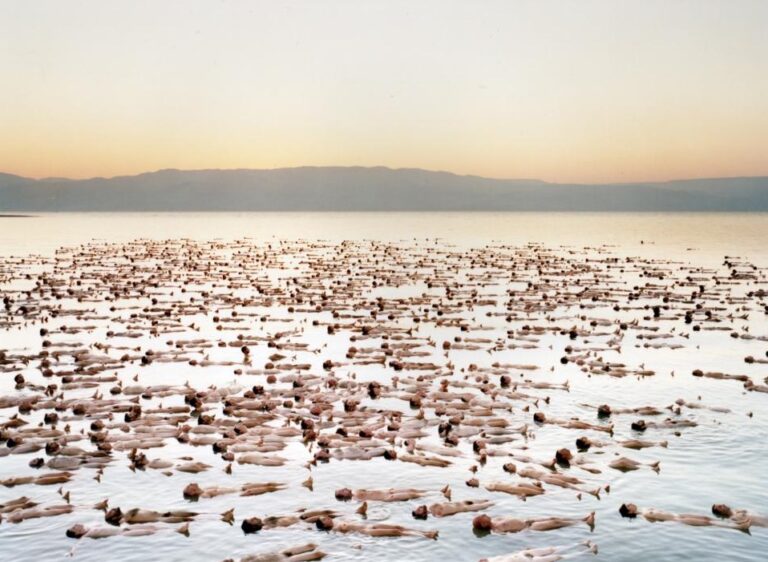
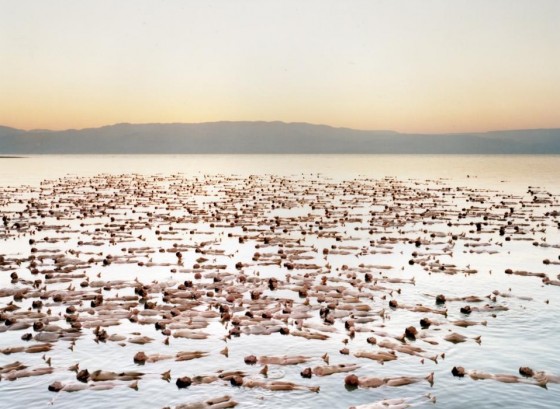
Spencer Tunick publishes the first official Naked Dead Sea photo this weekend.
Naked Dead Sea and naked Israelis were the talk of the Internet last month as 1,200 Israelis volunteered to strip all to save the Dead Sea from environmental decay. American-Jewish installation artist Spencer Tunick came to Israel and photographed the glistening naked bodies in the dawn of the day, including one Green Prophet writer Alex.
You can read Alex’s account of getting naked for the Dead Sea here. But all the pictures we saw back then were taken from afar as volunteers were not allowed to even sneak in cameras. Up above you are looking at the first picture released by Spencer Tunick, in what is likely to be a huge attention grabbing installation.
An aerial perspective of Spencer Tunick’s Naked Sea project at the Dead Sea. Photo by Itamar Grinberg.
A video of the installation in the works: caution, there is clear nudity in the video
Some Green Prophet readers will no doubt be offended by the idea of getting naked for the Dead Sea, religious Jews, Muslims and Christians included. And I certainly wouldn’t do it at this point in my life. But some environmentalists have no problem with exposing their bodies to support a cause: a rapidly retreating global wonder, devastated from lack of water runoff, and industrial mineral-grabbing.
One reader Xoussef writes:
“I do not “understand” art, and don’t pretend to, but this is a bit “faux cul”. I mean that experiencing the nakedness, participating in a shooting, are good enough reasons to participate, and the aesthetic value of it is all the reason the artist needs, but grafting the angle of saving the sea on it is extremely naive at best, dishonest at worst, and eminently futile otherwise.
“What’s needed here is funding and lobbying, I fail to see how this installation helps with either, if it doesn’t prove to be detrimental.
“Just doing the installation straight forward for the sake of Art seems to me a whole lot more honest and honourable.”
What’s your take? A good cause to save the sea or …?
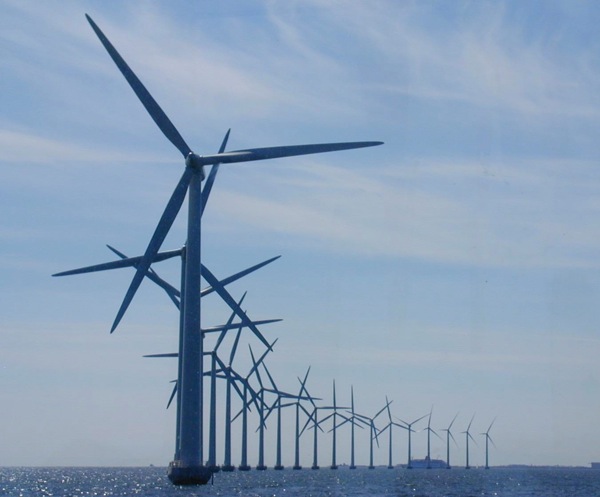
A landmark wind power project is set to be built in south Pakistan, which will form part of the 6% target renewable energy in the total power mix by 2030.
Asian Development Bank has provided a loan of $36.8 million to Pakistan’s first privately owned wind farm by the Turkish company, Zorlu Enerji Electrik Uretim, that is utilising it to raise the power output from the current 6 megawatts (MW) to 56.4 megawatts.
A statement issued by the International Finance Corporation (IFC) said the total cost of the project is $159 million, out of which 30% is being financed through equity provided by Zorlu Enerji and the rest through loans from Asian Development Bank (ADB), and ECO Trade and Development Bank, as well as a Pak Rupee loan from Habib Bank.
With crippling floods every year and regular power outages, a new internationally financed wind project in Pakistan is breezy green news to us.
Iran, finding itself increasingly isolated due to US-backed sanctions, has been pressing energy-deficient Pakistan to connect with Iran’s natural gas “peace pipeline“. Natural gas is better than coal (which is killing miners) and dirty fuel that Pakistanis use in their households, but it is not the greenest. We laud a new announcement by the International Finance Corporation, part of the World Bank Group, which is investing $38.1 million in the company Zorlu Enerji Pakistan Limited, a Turkish energy firm to build what it is calling a landmark wind energy project in Pakistan, the Associated Press Pakistan reports.
Beep beep! This solar powered taxi intends to tour the globe on zero gas and a full tank of sunshine.
Swiss inventor Louis Palmer‘s solar powered taxi will be rolling into Israel next week, after having traveled to over 40 countries and through 60,000 kilometers already. Without a single drop of standard fuel. Powered by the sun, this revolutionary taxi will teach Israelis (and the world) that solar powered cars are a viable option for our future. The country is already awaiting the widespread launch of Better Place’s more sustainable electric cars, but in the meantime, Palmer is showing us that the Middle East’s strong solar rays can be used for transportation as well.
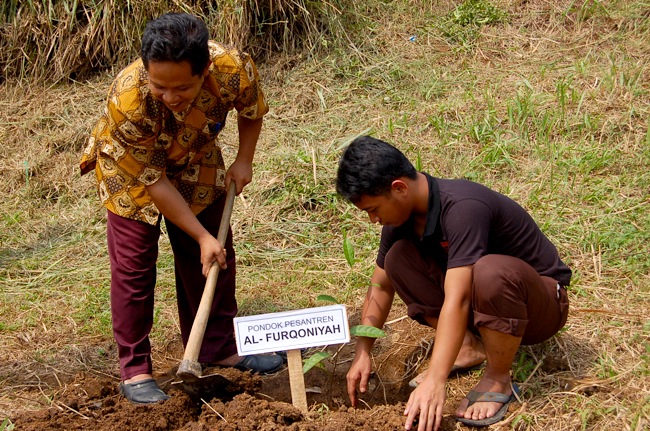
British Muslims are breaking the terrorist stereotype in a new eco-awareness campaign. Trees4Life, a British grassroots organisation has branched out as far as Palestine and Indonesia, to facilitate positive solutions to environmental problems in the form of tree-planting programs.
In the faithful hopes of trying to make us aware of our environmental obligations, Trees4Life believes planting a tree is the first small step in being a green Muslim. “We are just trying to open the door in thinking ‘green’,” says founder Naweeda Ahmad.
Green Prophet writer Zaufishan Iqbal asked the Trees4Life team how British Muslims can help the Middle East and whether planting trees is really the way to go about it.
Green Prophet launches the Green Prophet Eco Hero 11 Award for 2011. Who are your eco-heros for the Middle East and North Africa region?
With so much green, inspiring energy in the Middle East North Africa region, we decided to give local green prophets a little pat on the back. At the end of the year, Green Prophet will announce its first list of environmental activists from the Middle East and North Africa region. Top winners will win a small personal cash prize of $200, $100 and $50. All winners will be profiled on Green Prophet, giving credit and credence to their work. Do you know someone who is fighting to save sharks from fin soup, someone fighting for dead seas or lakes, or who is creating new water technologies that could change the water-parched region? If so, let us know about them! Read on for how you can nominate your eco-hero.
Our recent post about Israeli argan oil caused a few ripples over the Internet. While we now know that the old-fashioned “goat” treatment of the fruit is no longer used in Morocco except as a tourist attraction, we’ve also learned much about the success of growing the tree itself in Israel.
We interviewed Professor Elaine Solowey of the Arava Institute for Environmental Studies, responsible for most of of the argan tree’s propagation in Israel. Prof. Solowey has worked with argan trees since 1985. She worked in the National School of Agriculture, Meknes, Morocco, on a 7-year project aimed at increasing fruit yield. In more recent years, she has been developing argan propagation at the Arava Institute.
Upcycled, easily recycled and sturdy cardboard is the base material for Nokka’s furniture.
Cardboard is one of those miracle materials that has recently been rediscovered and used widely by sustainable designers. It is easy to come by, easy to upcycle, and easy to recycle – and no less importantly, it is surprisingly strong and durable. Cardboard has been used to create furniture for adults, cardboard dollhouses and cradles for kids, and even mounted cardboard deer heads. Now Noah Naveh, a young designer from Moshav Beit Itzhak in Israel, has started making customized cardboard items (such as the New York Times inspired stools above) through her new company, Nokka.
Breast cancer is the boogey man lurking underneath our breastbones, and organizations committed to eradicating the disease are the super heroines wearing pink capes, except when they are selling something that can cause cancer.
That Susan G. Komen’s fragrance ‘Promise Me’ may be laced with cancer-causing ingredients is a blessing in disguise. The world needs a smoking gun to wake up consumers to the toxins we are lathering in as we pursue dangerous beauty. An ecosexual revolution will gain the necessary traction when enough people recognize the inherent value of greening their personal and intimate lives, one vibrator, lipstick, bubble bath, massage oil, sanitary hygiene, condom, lubricant and bottle of perfume at a time. (Just to be clear, that’s a truncated list of ways everyone reading this can be kinder to their somatic and erotic selves; being an ecosexual is actually fairly easy, green and consummately pleasurable.)
Israel’s Ministry of Agriculture denies that a crazy eye-popping disease is killing a substantial population of fish in the Sea of Galilee.
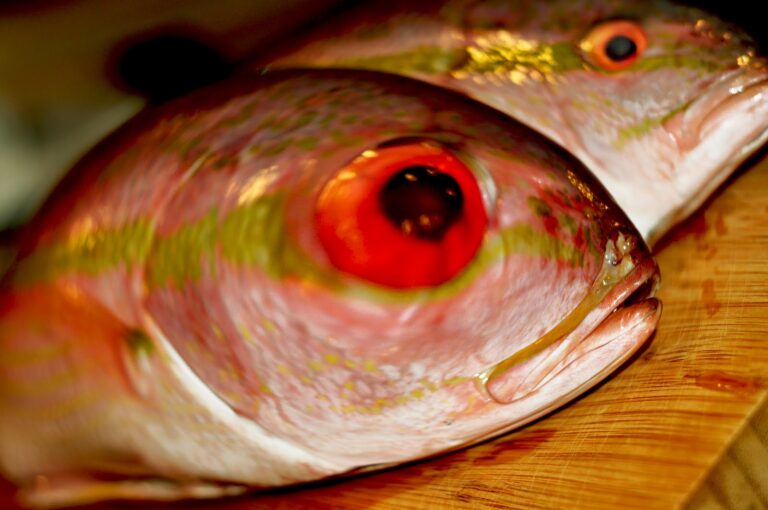
A bizarre disease is killing off a host of fish in the Sea of Galilee, including the St. Peter’s fish considered sacred because of its relevance to the biblical bread and fishes story. After a fish contract the disease, one of its eyes pops out, leaving behind a gorged-out hollow, and then the other. Soon the fish turns black and begins to starve, and finally red spots appear on its body and it dies. While this is very strange, the most bizarre twist to this story is that the Ministry of Agriculture denies that this has been going on for the past 10 years!
Desalination’s negative environmental risks can outweigh the benefits, argues our environmental lawyer blogger Josh.
Israel will quadruple its output of desalinated water by 2050, according to a report released by the country’s Water Authority Council. The government will also encourage construction of new desalination facilities on manmade islands. These measures will ensure a continuous stream of desalted water without developing coastal lands in the tiny country.
Water experts have sung desalination’s praises far and wide lately. It provides a reliable, secure water supply. It reduces our reliance on natural waterways. And not least importantly it has become cheaper as desalting companies develop more cost-effective technology.
Desalination’s critics have, in equal measure, leveled their own concerns at the industry. The process requires exorbitant amounts of energy, they say, is too expensive, and poses potential health risks.
But these concerns only tell a partial story of desalination’s environmental impacts. It affects the marine environment in an important way: through seawater intakes. Decision makers often ignore or downplay this impact. When desalination facilities suck in huge amounts of water, scores of fish and even marine mammals become stuck to the grates. Scientists call this phenomenon “impingement”.


 Spencer Tunick publishes the first official Naked Dead Sea photo this weekend.

 With crippling floods every year and regular power outages, a new internationally financed wind project in Pakistan is breezy green news to us.



 Nah, nobody does that goat thing anymore…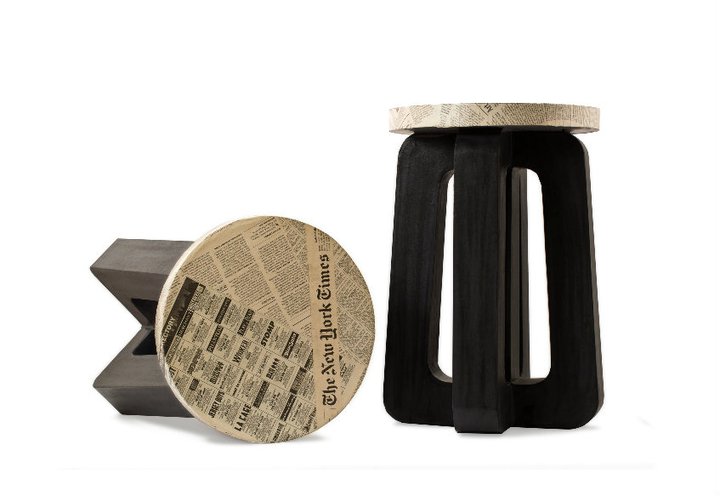




 Desalination’s negative environmental risks can outweigh the benefits, argues our environmental lawyer blogger Josh.