Home Blog Page 494

Interview With Green Hajj Expert Husna Ahmed

4

green-hajj husna ahmedmuslims We speak to Dr Husna Ahmed, the co-author of the newly launched Green Guide to Hajj about the role Muslims can play in protecting nature

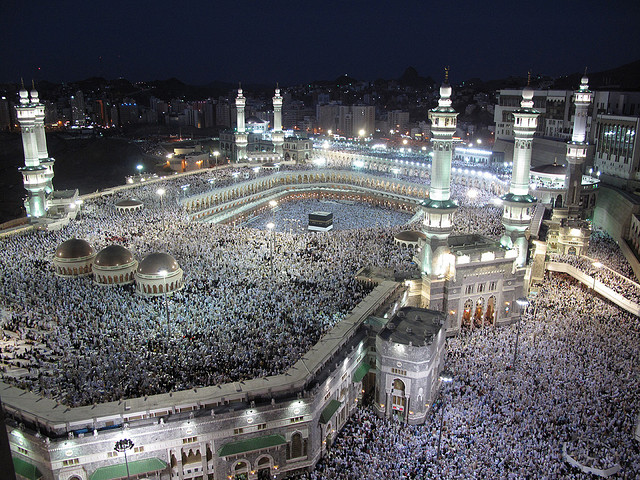
As part of its work to encourage green religious pilgrimages worldwide, the Alliance of Religions and Conservation have just launched a ‘Green Guide to Hajj’. Co-authored by Dr Husna Ahmed OBE, the guide looks at practical ways that Muslims can embrace a green Hajj and adopt more environmentally friendly habits. We caught up Dr Husna Ahmed, who is an international speaker on climate change with a PhD in Environmental Law, to discuss the harmful aspects of religious pilgrimage and what can be done about them.

Husna Ahmed green hajjGetting The Green Message To Muslims

“What we want to do is use a theological grounding- the Qur’an and hadith– to encourage people to think more carefully about protecting their environment,” says Dr Husna over the phone. It’s officially her day off and although she’s busy shopping with her daughter who is off to college she’s decided to have a quick chat with me anyway. “I mean people are now more and more aware of their carbon footprint and what they can do to limit their impact but Muslims are not really hearing it. So this guide is about encouraging them to do their bit.”

It is estimated that around 2.5 million Muslims go to hajj each year and whilst the impact of this mass religious pilgrimage is hard to measure, it is believed that 10 million plastic bottles get left behind every year. What’s more, according to my calculations, a pilgrimage to Mecca from the UK releases more tonnes of carbon than the average French person does in a year. So given the fact that many Muslims aspire to go on Hajj, which is the fifth pillar of Islam, it makes perfect sense to try and make it more environmentally friendly.

Hajj As A Time of Eco-Awareness

During the research into the Green Guide, Dr Husna states that the main issues that emerged were transport, waste and consumption. A lot of the pilgrims fly to Mecca, travel by private transport and are careless about the energy they use and the waste they create. “We want people to be cutting their waste, re-using items like water bottles and also thinking about what they can do beyond their hajj,” says Dr Husna.

“Hajj is a time for embracing good habits and reconsidering moral behaviours, so it’s the ideal time to change our outlook on the environment,” she added. Dr Husna is also keen to point out that Hajj is meant to be a once in a lifetime experience and states that those who have been on the pilgrimage several times need to think carefully about the impact of their travel.

Also Available In Arabic

The Guide is full of tips and bits of information to help the Muslim pilgrim plan their hajj with care. And in a bid to spread these green words of wisdom, the guide will also be translated into Indonesian, Urdu, Malay, Hausa (for Nigeria) and Arabic. So keep an eye out for them and I will post the Arabic guide for the Muslim community in the Middle East and North Africa when it’s available.

For more on Green Hajj:

Faith Network Promotes Sustainable Religious Pilgrimages
Middle East Leaders To Launch Green Hajj Guide

Four Steps To A Greener Hajj

Karim Rashid Brightens Up Cairo with the Amazing Komb House

0

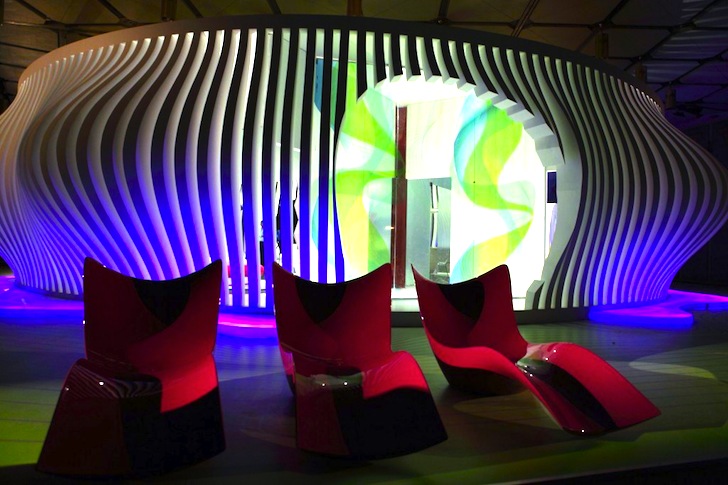
islamic design, green building, eco design, sustainable design, Karim Rashid, EgyptKarim Rashid’s incredible Komb House exhibited in Cairo last year features the most cutting-edge eco-technologies without compromising its colorful “wow” factor!

We think Egypt needs a little brightening up, and it seems that Karim Rashid agrees. The New-York based Egyptian design master presented the incredible Komb House at last year’s Le Marche exhibition in Cairo before the revolution swept the country off kilter. Karim Rashid is every bit as daring as Zaha Hadid, however, unlike the Iraqi designer who rarely takes the environment into consideration when conceiving her projects, Rashid is definitely one of the top Arab sustainable designers.

A fusion of ancient Islamic and contemporary western design principles, the house is powered by renewable energy sources, receives its heat from radiant flooring, and features the most energy efficient appliances available on the market. Step on in for more images of a home that may not look like anything like the straw bale homes we typically advocate, but which is almost equally ecologically-friendly!

Turkish Water Projects Stirring Resentment Around The Region

4

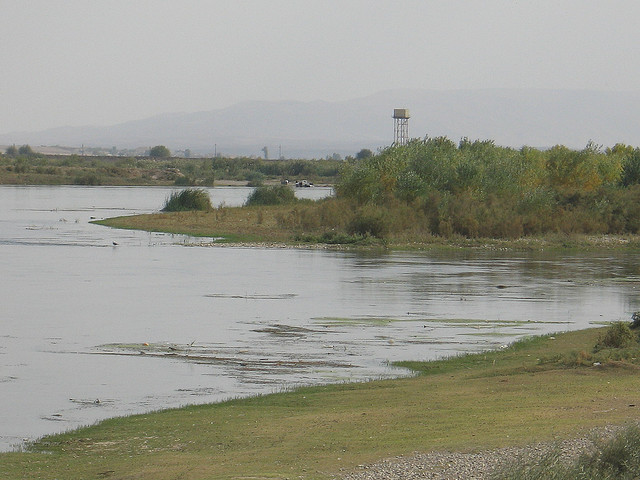
The Tigris River has sustained the inhabitants of modern-day Iraq for millennia. Are Turkey’s hydraulic projects threatening this vital resource?

Turkey’s massive Southeastern Anatolia Project (GAP) is an effort to develop the country’s southeast region sustainably, through the use of hydropower plants, irrigation canals, and more. Whether such developments are truly sustainable has long been debated within Turkey. Now, international critics are arguing that Turkey uses its portion of cross-border rivers irresponsibly, without regard for the communities that rely on them downstream.

Abu Dhabi Neuters and Chips 5,000 Stray Cats and Dogs

0

abu dhabi cats dogsThis poor Lebanese stray dog might have a chance if neutered and then adopted out

While some people might be against the neutering of stray animals like dogs and cats, this practice is much better than having them shot on sight as they are in Lebanon or allowed to starve to death, as occurred recently in Japan following the Fukushima nuclear plant meltdown. In the Middle East, stray animals often lead miserable and trying lives in large cities. This is often as a result of abandonment or simply due to being allowed to continue breeding generations of offspring who are born into a very rough and cruel environment. But a new animal spaying program in Abu Dhabi is something other Middle East countries can learn from.

Desertec Begins: 500 MW Moroccan Solar in 2012

3

desertec_potential

“Deserts get more energy in six hours than the world’s population consumes in a year” – TREC

I remember when Desertec was dismissed as a wild idea that would never happen, just the pipe dream of the international network of scientists and engineers of TREC (Trans-Mediterranean Renewable Energy Cooperation), who claimed back in 2006 that “mirrors could light up the world” and 15% of Europe’s entire energy need could be supplied by solar power from the deserts of North Africa.

Back then TREC’s ideas, which built on work by NASA and the US Department of Energy, was considered to be wildly out-of-the-box thinking on climate change prevention.

But the ambitous plan to power Europe and the MENA region off of a gigantic chain of renewable power strung along a huge new supergrid of High-Voltage Direct Current (HVDC) transmission lines connecting the two continents got some serious attention from surprising German investors and is now… drum roll please… about to begin.

How Palestinian Authority’s UNESCO Membership Could Affect Middle East Heritage Sites

13

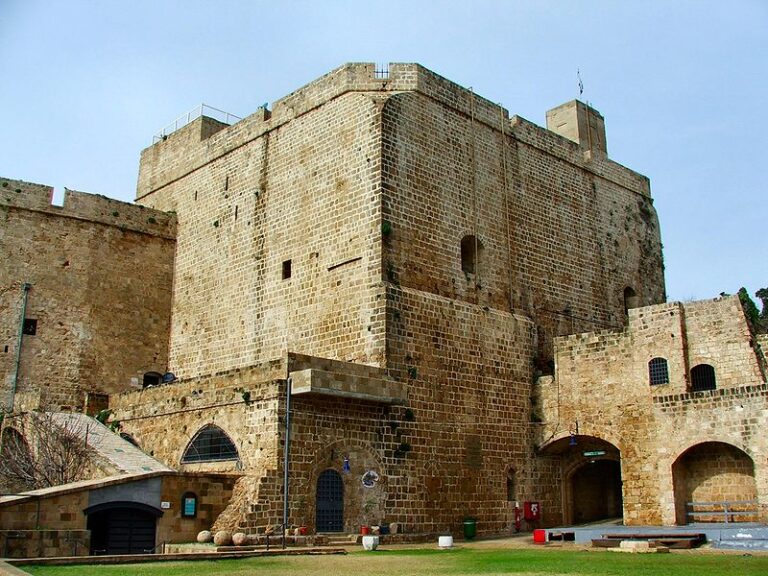
UNESCO, world heritage sites, nature conservation, Israel, AkkoAkko in Israel is just one important World Heritage Site in the Middle East region that could suffer from the United States’ decision to withhold funding to UNESCO following the admittance of Palestine as a member state.

Department of State spokesperson Victoria Nuland said that the United States will “refrain from making contributions to UNESCO as a result of the organization’s vote to admit Palestine as a member state.

Earlier this year this Palestinian Authority submitted a bid to become part of the United Nations – a bid that the United States is firmly opposed to and has threatened to veto if the UN Security Council approves. One hundred and seven  UNESCO members voted to admit the Palestinian Authority, 14 opposed, including Israel and the United States, and 52 member countries abstained from voting.

Nuland said that the UNESCO vote is “regrettable, premature, and undermines our shared goal of a comprehensive, just, and lasting peace in the Middle East.”

The United States contributes 22% of UNESCO’s budget and will withhold the pending November payment of $60 million, according to CNN. Slashing such a chunk of the organization’s funding could have far-reaching consequences for no fewer than 50 world heritage sites throughout the Middle East and Mediterranean region, including at least 6 in Israel.

After the vote, UNESCO Director-General Irina Bokova expressed concern for UNESCO’s financial stability. She said, “I believe it is the responsibility of all of us to make sure that UNESCO does not suffer unduly.” And Ban Ki-Moon, UN Secretary General said that it will be necessary to find practical solutions to the U.S. withholding.

UNESCO’s mission is to contribute to the building of peace, the eradication of poverty, sustainable development and intercultural dialogue through education, the sciences, culture, communication and information, according to their website. The preservation of World Heritage Sites, which include threatened natural sanctuaries, falls under their purview.

Without a large chunk of their budget, it remains to be seen how well the UNESCO World Heritage Sites in the Middle East region will fare. Meanwhile, a Facebook group has already been started to “Raise 60 Million Dollars for UNESCO – The Cost of Democracy.”

Following is a list of important sites in the Middle East that rely in part on U.S. funding, via Wikipedia. Will they  survive?

Al Qal’a of Beni Hammad M’Sila Province, Algeria
GM Djemila Roman Theatre02.jpg Djémila Sétif Province, Algeria
Algeri01.jpg Kasbah of Algiers Algiers Province, Algeria
Ghardaia.jpg M’zab Valley Ghardaïa Province, Algeria
Tassili rocks.jpg Tassili n’Ajjer Illizi Province and Tamanrasset Province, Algeria
Timgad area.jpg Timgad Batna Province, Algeria
Tipaza Tipaza Province, Algeria
Bahrain Fort 7.jpg Qal’at al-Bahrain – Ancient Harbour and Capital of Dilmun Northern Governorate,  Bahrain
Abu Mena Alexandria Governorate, Egypt
SFEC AEH -ThebesNecropolis-2010-FULL-Overview-039.jpg Ancient Thebes with its Necropolis Luxor Governorate, Egypt
Islamic Cairo (2005-05-385).jpg Historic Cairo Cairo Governorate, Egypt
All Gizah Pyramids.jpg Memphis and its Necropolis – the Pyramid Fields from Giza to Dahshur Giza Governorate, Egypt ]
Panorama Abu Simbel crop.jpg Nubian Monuments from Abu Simbel to Philae Aswan Governorate, Egypt
Katharinenkloster Sinai BW 2.jpg Saint Catherine Area South Sinai Governorate, Egypt
Whale skeleton 2.jpg Wadi Al-Hitan (Whale Valley) Faiyum Governorate, Egypt
Ashur (Qal’at Sherqat) Salah ad Din Governorate, Iraq
Hatra ruins.jpg Hatra Ninawa Governorate, Iraq
Great Mosque of Samarra.jpg Samarra Archaeological City Salah ad Din Governorate, Iraq  
The Old City of Jerusalem and its Walls Jerusalem
Petra Jordan BW 36.JPG Petra Ma’an Governorate, Jordan
Qusayr Amra.jpg Qasr Amra Zarqa Governorate, Jordan
Umm Rasas House ruins.JPG Um er-Rasas (Kastrom Mefa’a) Madaba Governorate, Jordan
GabelRum01 ST 07.JPG Wadi Rum Protected Area Faiyum Governorate, Jordan
Anjar - Cardo vu du nord 2.jpg Anjar Beqaa Governorate, Lebanon
Baalbek-Bacchus.jpg Baalbek Beqaa Governorate, Lebanon
ByblosPort.jpg Byblos Mount Lebanon Governorate, Lebanon
Qadisha.jpg Ouadi Qadisha (the Holy Valley) and the Forest of the Cedars of God (Horsh Arz el-Rab) North Lebanon Governorate, Lebanon
TyreAlMina.jpg Tyre South Lebanon Governorate, Lebanon
Cyrene8.jpg Archaeological Site of Cyrene Jabal al Akhdar, Libya
Leptis Magna market place April 2004.jpg Archaeological Site of Leptis Magna Khoms, Libya
Theatre, Sabratha.JPG Archaeological Site of Sabratha Zawiya District, Libya
Ghadames - Altstadt mit Palmenhain.jpg Old Town of Ghadamès Nalut District, Libya
Tadrart Acacus 1.jpg Rock-Art Sites of Tadrart Acacus Fezzan, Libya
Chinguetti old town.jpg Ancient Ksour of Ouadane, Chinguetti,Tichitt and Oualata Ouadane, Chinguetti, Tichitt,and Oualata, Mauritania
PNBA 43.JPG Banc d’Arguin National Park Nouadhibou and Azefal, Mauritania
Volubilis-basilica.jpg Archaeological Site of Volubilis Meknès-Tafilalet, Morocco
Royal Palace, Meknes.jpg Historic City of Meknes Meknès-Tafilalet, Morocco
Kasbahs in Aït Benhaddou.JPG Ksar of Ait-Ben-Haddou Souss-Massa-Draâ, Morocco
Ramparts of Essaouira.JPG Medina of Essaouira (formerly Mogador) Marrakesh-Tensift-El Haouz, Morocco
Fes, Old Medina.jpg Medina of Fez Fez, Morocco
Koutbia.jpg Medina of Marrakesh Marrakesh-Tensift-El Haouz, Morocco ]
Tetuan vista desde un tejado.JPG Medina of Tétouan (formerly known as Titawin) Tangier-Tetouan, Morocco
El Jadida panorama.jpg Portuguese City of Mazagan (El Jadida) Doukkala-Abda, Morocco
Aflaj Irrigation Systems of Oman Sharqiyah and Batinah Regions, Oman
Archaeological Sites of Bat, Al-Khutm and Al-Ayn Ad Dhahirah Region, Oman
Bahla6.jpg Bahla Fort Ad Dakhiliyah Region, Oman
Land of Frankincense Dhofar Governorate, Oman
Thamudi.jpg Al-Hijr Archaeological Site (Madâin Sâlih) Al Madinah Province, Saudi Arabia
Diriyahpic.jpg At-Turaif District in ad-Dir’iyah Riyadh Province, Saudi Arabia
Sudan Meroe Pyramids 2001.JPG Archaeological Sites of the Island of Meroe River Nile State, Sudan
Gebel Barkal.jpg Gebel Barkal and the Sites of the Napatan Region Northern State, Sudan
Ancient Aleppo view.JPG Ancient City of Aleppo Aleppo Governorate, Syria
Bosra pano Syria.jpg Ancient City of Bosra Daraa Governorate, Syria
The Jupiter temple in Damascus.jpg Ancient City of Damascus Damascus Governorate, Syria
Church of Saint Simeon Stylites 17.jpg Ancient Villages of Northern Syria Syria
Krak des Chevaliers 14.jpg Crac des Chevaliers and Qal’at Salah El-Din Homs and Latakia Governorates, Syria
Palmyra 03.jpg Site of Palmyra Homs Governorate, Syria
Eljem2.jpg Amphitheatre of El Jem Mahdia Governorate, Tunisia
Ruines de Carthage.jpg Archaeological Site of Carthage Tunis Governorate, Tunisia
Dougga theatre.jpg Dougga / Thugga Béja Governorate, Tunisia
Parcichkeul3.jpg Ichkeul National Park Bizerte Governorate, Tunisia
Kairouan's Great Mosque courtyard.jpg Kairouan Kairouan Governorate, Tunisia
Sousse Grosse Moschee.JPG Medina of Sousse Sousse Governorate, Tunisia
PatioDarBenAbdallah.JPG Medina of Tunis Tunis Governorate, Tunisia
Kerkouane1.JPG Punic Town of Kerkuane and its Necropolis Nabeul Governorate, Tunisia
Zabid, Yemen.jpg Historic Town of Zabid Al Hudaydah Governorate, Yemen
Sana.jpg Old City of Sana’a Sana Governorate, Yemen
Shibam Wadi Hadhramaut Yemen.jpg Old Walled City of Shibam Hadhramaut Governorate, Yemen
Socotra dragon tree.JPG Socotra Archipelago Hadhramaut Governorate, Yemen

World Heritage Sites in the Middle East:

Environmental Concerns Greet Wadi Rum World Heritage Status

BBC Series Celebrates UNESCO “Heritage Heroes”

UNESCO Urges Ethiopia to Halt Gibe III Dam

Micro-Financed Straw Houses For Pakistan Are Quake-Proof

1

pakistan environmental energy efficient house Twice as energy efficient as a conventional house, straw bale makes for environmentally friendly earthquake-proof homes

After the 2005 Kashmir earthquake, Pakistan Straw Bale and Appropriate Building (PAKSBAB) was set up to protect people’s homes against extreme weather conditions. More recently with the catastrophic earthquake in Turkey, I am reminded of the value of homes and family.

PAKSBAB invests in creative micro-financing, giving the local community innovative design solutions to semi-independently construct energy efficient houses. A training period enables families directly affected by the earthquake to build their own houses using refined natural materials, and locals are recruited to participate in developing the community.

Since 2006, PAKSBAB has trained fifty people and constructed twenty-six straw bale buildings in Pakistan’s Khyber Pakhtunkha province. Construction expertise is passed forward as disadvantaged Pakistani families are educated in the necessary steps to build their own straw bale homes. The Community Development Program (CDP) in 2007 did just that, providing all the necessary materials, training and financing to the poorest socio-economic group in the region.

World Population Hits 7 Billion Today

0

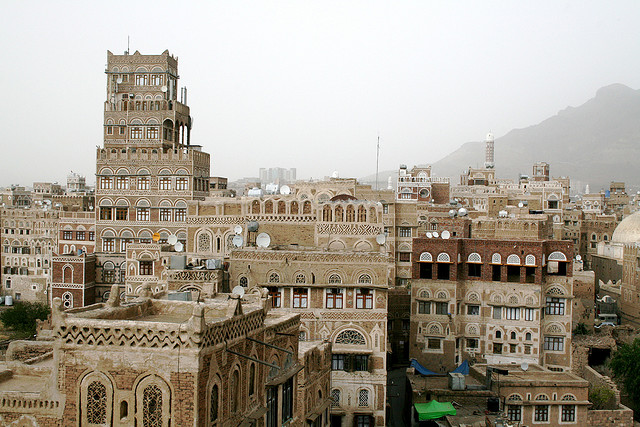
yemen-sanaa-world-population-seven-billionThe world population hits seven billion and the Middle East is playing its role with one of the fastest growing cities on earth

According to UN estimates the world population will reach seven billion today. It’s a pretty big feat considering that we hit six billion a little over a decade ago and the world population at the birth of Christ was just two hundred million. To mark this milestone, Foreign Policy have put together a list of the seven fastest growing cities in the world and it turns out that the capital city of Yemen, Sana’a, is one of them.

EneR Morocco is Window to Maghreb’s Shiny Energy Potential

0

ener morocco casablancaThe free EneR event is a networking and investment platform for those interested in Morocco’s renewable energy markets happening later this month in Casablanca.

Morocco is wild, yet for the average business or tourist traveler tame and safe. You can walk out of your riad in Marakesh and get lost in another time. Meander around the market in Fez and feel forever connected to Arabian Nights, or wind around the modern city of Casablanca for good food and pleasant chats with locals. You won’t find Clarke Gable in Morocco, but business investors interested in new financing opportunities might be advised to head to the EneR event in Casablanca later this month, November 22 to 26.

White Roofs Don’t Slow Global Warming

9

white roof walmart global warming

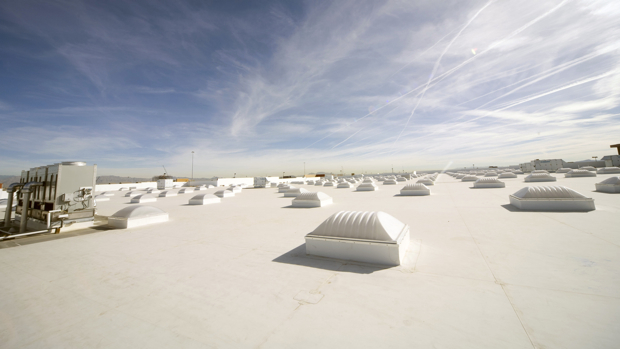
Leave the white paint in the bucket. It won’t help climate change. Add solar panels instead to “green” your home.

Stop the contractors! If you were thinking about painting the roof of your house white this winter, before winter rains start, leave the paint in the bucket: Environmentalists were advocating white, just like they offer a quick fix to climate change by getting you to change to CFL lightbulbs.

But according to a new study by Mark Jacobson from Stanford, the white roof doesn’t act like an anti-warming device, keeping your house cooler in the summer. White paint, it turns out, is a big fat waste of money.

Writing in the journal Climate, Jacobson and his research student John Ten Hoeve did report that white surfaces cooled houses, but the white roof effect also reduced cloudiness, thereby allowing more of the sun’s rays to reach the ground.

“There does not seem to be a benefit from investing in white roofs,” says Jacobson. “The most important thing is to reduce emissions of the pollutants that contribute to global warming.”

Solar panels, the team reports, are better than white paint: “The better thing to do is to put a solar panel on the roof because that not only cools the house by absorbing the sunlight to make electricity. It also offsets fossil fuel generation at power plants.”

They are dead set against any other form of quick fix or geo-engineering schemes to “fix” climate change: “With all geo-engineering approaches, you are not solving the problem but masking it. There are all kinds of consequences people are not aware of, and it doesn’t solve the problem. You are still going to have all these greenhouse gases going into the air.”

The effect of heat islands whereby buildings cover natural vegetation needs to be studied more.

Photovoltaic panels helpful

How you can upgrade your house while leaving the white paint in the bucket? One way to reduce emissions while simultaneously reducing summer air conditioning demand is to install photovoltaic panels on roofs.

Such panels not only generate electricity, reducing emissions of fossil fuels from electricity-producing power plants, but they also reduce sunlight absorbed by buildings because they convert sunlight to electricity. Because photovoltaic panels do not reflect the sunlight back to the air, unlike white roofs, reflected light is not available to be absorbed again by pollutants in the air, creating heat.

“Cooling your house with white roofs at the expense of warming the planet is not a very desirable trade-off,” Jacobson said. “A warmer planet will melt the sea ice and glaciers faster, triggering feedbacks that will lead to even greater overall warming. There are more effective methods of reducing global warming.”

::Fast Company

Salt Cedars are Carbon Sinks in the Desert

0

tamarix salt cedar israelConsidered a pest in California, a tamarix salt cedar tree found in the Arava Desert could sequester greenhouse gases on barren, desert land.

Fears of global warming and its impact on our environment have left scientists scrambling to decrease levels of atmospheric carbon we humans produce. But Tel Aviv University researchers are doing their part to reduce humanity’s carbon footprint by successfully growing forests in the most unlikely place — deep in Israel’s Arava Desert.

Water Hackathon in Cairo and Tel Aviv

2

cairo water hackathon

As the dust of revolution settles in Egypt, the country is beginning to face some of its other challenges. Chief among these is a scarcity of water. In fact, by 2017, demand is projected to outpace the country’s supply.

At the American University in Cairo (AUC) last week, dozens of water and technology experts convened to discuss and create solutions for Egypt’s water crisis. The Water Hackathon was organized by both the AUC Desert Development Center and the World Bank as a competition between 13 teams with prizes awarded to the best ICT solutions.

Could Israel Join With its Arab Neighbors in Medgrid?

0

Medgrid Israel Arab grid

Could sharing a transmision grid for renewable energy bring Arabs and Jews together?

Invited to speak by the Israeli branch of CIGRE in Israel, Jean Kowal, executive vice president of Medgrid suggested that the road to Middle East peace could be a shared and interconnected electrical grid that facilitates the addition of more green energy. The Israel-hosted CIGRE conference covered different techniques of transmitting power within, and among, the countries of the Mediterranean basin.

Timo Handmade Finds Modern Uses for Vintage Fabrics

1

"handmade fabric toy"Made mostly from used and vintage scraps of fabric, Timo Handmade’s new creations have a warm, old-world feel.

Fabric scraps can be used for lots of things, and we’ve seen designers refashion them in all kinds of ways – like use them to make repurposed fabric shoes, purses made from upholstery fabric samples, and even fabric scrap necklaces.  Israeli designer Timor Cohen, the brain and creator behind Timo Handmade, is no exception, and uses her collection of fabric scraps and knick knacks to create one-of-a-kind dolls, fabric books, blankets and handbags and rid the planet of a little more waste.  In using upcycled and repurposed materials that would have otherwise ended up in a landfill, TIMO’s creations eliminate waste and reduce the need for new materials to be created.

Find Green Prophet at the 2nd Annual DII Conference in Cairo

2

Dii, Kuryamat, Cairo, Egypt, Desert, renewable energy, DesertecGreen Prophet is crossing the desert in a bus to attend one of the most important renewable energy conferences on earth.

Green Prophet is heading across the desert to attend the second annual Dii Conference being held at the swanky Semiramis InterContinental Hotel in Cairo. Part of a concerted push to develop wind and solar energy in Africa and the Middle East, the Desertec conference being held on the 2nd and 3rd of November is one of the most important gatherings of its kind. This is an opportunity for business and government leaders from MENA and Europe to discuss the various opportunities and challenges associated with growing and exporting the desert’s numerous renewable energy resources.

The conference will be hosted by Egypt’s Prime Minister Dr. Essam Sharaf, who says that the Egyptian government “shall spare no effort to turn this international event into a real success.” Topics to be discussed include regulatory challenges associated with developing renewables (specifically Concentrated Solar Power, Photovoltaics, and Wind Power), success factors, challenges of long distance transmission, and renewables market integration. We will also attend a tour of the Kuraymat hybrid gas and solar energy plant on Friday November 4th, so come on by and introduce yourself!

More on Desertec:

Arab Spring May Boost Chance for Desertec Solar Power

Looks Like Desertec and Morocco’s Government May Join Hands

Next for MENA Nations: Desertec University