Home Blog Page 495

Mountains of Toxic E-Waste in Pakistan Are a Goldmine

4

Pakistan, E-waste, soil contamination, water contamination, pollutionThousands of tons of electronic waste are dumped in Pakistan each year, creating a hazard, and a mountain of opportunities for recyclers.

Nobody knows for sure how much electronic waste is dumped in Pakistan, but it’s easily in the thousands of tons every year. Some of it is generated internally but most is imported from developed countries. It’s not legal under the Basel Convention – to which Pakistan is a party – to import E-waste  into the country, and legislation calls for proper handling of what does exist to minimize lead, cadmium, beryllium, and brominated flame retardant contamination, but these laws are not well enforced.

In just two years, between 2005 and 2007, cell phone ownership in Pakistan increased from 1.277 million people to 100 million. In time these phones will be added to Karachi landfills, where they will leach harmful toxins into the soil that will eventually make their way into the Arabian Gulf. The country’s Environmental Ministry acknowledges the country’s Waste Electrical & Electronic Equipment (WEEE) challenges and presented potential solutions at a conference in Japan this past July. It turns out, these toxic heaps represent a potential goldmine for investors and industrious business people.

Sheep’s tail fat alya is the ancient Middle-Eastern shmaltz

0

sheep tail herd iran

A Middle Eastern flavor that refuses to go out of style – sheep’s tail fat.

Some vegetable species thrive in harsh, arid conditions and still produce oil, like argan trees. And some animal species survive the desert by storing fat around their bodies, like camels. And like Awassi sheep, bred to store fat in their tails. A mature ram’s tail can carry up to 12 kg. (25 lbs) of prized fat, softer and more delicately-flavored than fat stored in the body’s interior.

Cooking with alya, the rendered fat, has been around for a very long time. The oldest existing Arabic cookbooks (both called Kitab al-Tabikh and written between the 10th and 13th centuries) instruct the cook to “melt tail fat.” A 6th-century mosaic from the Beit Alpha synagogue, Israel, depicts shepherds and a fat-tailed sheep.

Nowadays vegetable oils are preferred in daily Middle-Eastern cooking, yet when folks crave that old-time flavor, it’s still fat rendered from sheep’s tails. In rural areas, people simply heat chunks of it to melt down in the skillet or pot, as done with chicken shmaltz or bacon. Townsfolk can find white disks of prepared rendered sheep’s fat in the freezers of their supermarkets. In Israel, it’s even kosher.

Some skewer and grill whole chunks of the fat, declaring that the delicious flavor is worth any health risk. I have eaten potatoes flavored with lamb fat in a high-end Jerusalem ethnic restaurant. A stack of shwarma meat is often topped with a slab of fat to drip down as the meat rotates and cooks; shish kebabs may alternate chunks of lamb cubes and fat with onions and other vegetables.

image-shish-kebabFestive Asian/Russian rice dishes like the Bucharian osh polo and Uzbeki plov pilaf start by frying meat in lamb fat. In rural Lebanon, lamb meat is traditionally preserved in the fat, confit-style, and called qawarma.

According to traditional Arabic medicine, drinking warm, liquid alya will cure sciatic pain if taken three days in a row.

Feel like trying it out?* If you’re not in the Middle East, maybe a Turkish or Lebanese butcher near you will spare you some lamb’s fat. Melt a couple of 1-inch cubes down slowly to use as the fat in a rice dish, fishing out the cracklings to salt and eat quietly as the cook’s treat. Or chop up any quantity of raw fat, , cover it with cold water, and put on a medium heat. When the water has evaporated and the meat adhering to the fat starts to pop and crackle, allow the liquid fat to cool down to warm. Strain it into a jar. Let it cool, and store in the fridge for up to 6 months.

image-fat-tailed-sheep

What can you do with the fat? Same as you would with lard, shmaltz, or drippings from a roast. Fry eggs in it, spread a little on bread if you dare, cook some into almost any vegetable or meat dish. Substitute it for the olive oil in our maklubah recipe. I’ve heard that a discreet quantity of rendered sheep’s tail fat is the secret of really spectacular baklawa – but if that’s so, the bakers aren’t giving the recipe away.

More Middle Eastern lamb recipes from Green Prophet:

Photo of Assawi sheep by Fardeen Omidwar via Sheep 101

Photo of lamb shish kebabs by Mamonello via Flickr.

Sunday’s Middle East Green News Snippets

1

green-middle-east-newsCatch up on the green stories from Middle East you may have missed this week

It’s certainly been a busy week of green news and our team of Green Prophet reporters have been working hard to get the latest to you. From Lebanon’s embrace of the car to the continuing water problems for Egypt’s Nile, we have been bringing you the best. We also launched our Green Prophet Eco Hero of 2011 campaign (don’t forget to nominate someone!) and highlighted an important new initiative working to green religious pilgrimages.

However, there are some smaller stories which we just didn’t get time to cover. That’s not to say they’re just as important- in fact, if you think more in-depth coverage of these stories would be useful just let us know.

Cypriot Law Threatens to Discourage Cycling

2

"urban cycling cyprus"A new law in the works in Cyprus may deter cycling (and therefore promote more carbon-emitting forms of transportation).

We’ve heard some pretty crazy stories coming out of Cyprus lately (such as some Cypriots’ appetite for pickled migrating songbirds), but this may be just as shocking: a new Cypriot law proposal wishes to fine and imprison cyclists for riding on pavements, among other things.  The problem with this law?  Cypriot cyclists currently have no allocated bike lanes and it is dangerous for them to use the roads, so the sidewalks are their only real urban cycling option.  Take this away, and you may as well be taking cycling in Cyprus away altogether.

Environment Commisioner Charalambos Theopepmtou agrees that the proposal is a problem, saying that “such a ban should be enforced only when the necessary infrastructure is put in place or else it will keep cyclists away.”

Cyprus Researcher: Protect Sea from Natural Gas Drills

0

Drilling for undersea gas in Cyprus’s Exclusive Economic Zone may have serious impacts on marine life.

Like 0ther-energy poor countries in the eastern Mediterranean basin, including Israel and Lebanon, who are now in a  serious dispute over energy reserves located there, the Republic of Cyprus has shown interested in exploiting the undersea natural gas fields that lay near its shores. Last July,  the Republic of Cyprus’s Commerce Minister Antonis Paschalides expressed his concern involving his country’s exploration for natural gas in what is known as the Exclusive Economic Zone (EEZ) south-east of Cyprus, otherwise known as Block 12. In an interview in the Cyprus Mail, Paschalides expressed concerns that drilling for natural gas could result in severe environmental damage.

Katerva Picks 8 Global Projects to Save Planet Earth

1

katerva
Katerva picks the top of the top social entrepreneur and NGO projects for 2011. The grand prize winner will be courted by top business and marketing advisers to help its impact reach the stratosphere.

In an ambitious effort to screen the best of the best sustainability projects that can radically change our world, quickly, our friends at Katerva have announced its competing finalists, a list of 8. “We are pleased to confirm the Katerva Award Category Winners have been identified following rigorous review by our expert panelists,” announces the organization set up to radically change the deteriorating course of planet earth: ” These winners were chosen from a field of very strong candidates after undergoing a year-long nomination and review process involving roughly 500 experts, researchers, business and thought leaders across 50 countries.

A number of the 8 have been featured on Green Prophet as vehicles for change in the Middle East. Who are Katerva’s Top 8? Read on.

Naked Dead Sea Picture Released by Spencer Tunick

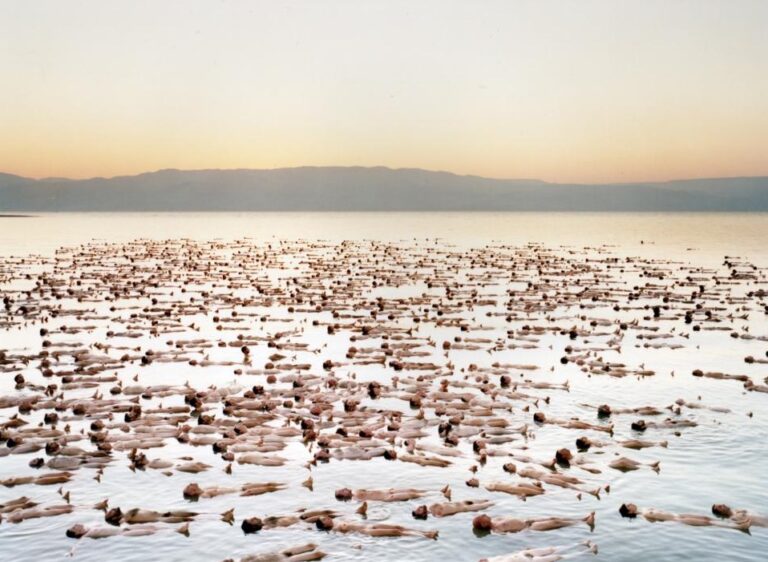
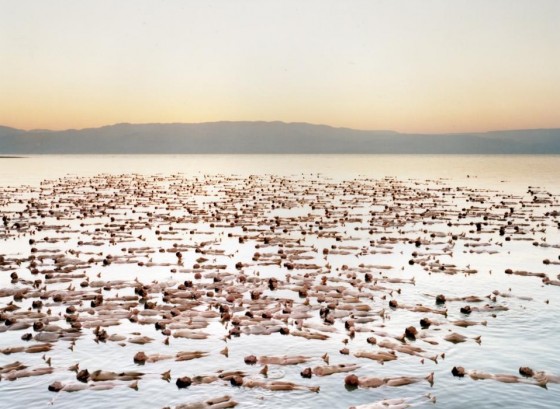
naked dead seaSpencer Tunick publishes the first official Naked Dead Sea photo this weekend.

Naked Dead Sea and naked Israelis were the talk of the Internet last month as 1,200 Israelis volunteered to strip all to save the Dead Sea from environmental decay. American-Jewish installation artist Spencer Tunick came to Israel and photographed the glistening naked bodies in the dawn of the day, including one Green Prophet writer Alex.

You can read Alex’s account of getting naked for the Dead Sea here. But all the pictures we saw back then were taken from afar as volunteers were not allowed to even sneak in cameras. Up above you are looking at the first picture released by Spencer Tunick, in what is likely to be a huge attention grabbing installation.

naked dead sea photo areil
An aerial perspective of Spencer Tunick’s Naked Sea project at the Dead Sea. Photo by Itamar Grinberg.

A video of the installation in the works: caution, there is clear nudity in the video

Some Green Prophet readers will no doubt be offended by the idea of getting naked for the Dead Sea, religious Jews, Muslims and Christians included. And I certainly wouldn’t do it at this point in my life. But some environmentalists have no problem with exposing their bodies to support a cause: a rapidly retreating global wonder, devastated from lack of water runoff, and industrial mineral-grabbing.

One reader Xoussef writes:

“I do not “understand” art, and don’t pretend to, but this is a bit “faux cul”. I mean that experiencing the nakedness, participating in a shooting, are good enough reasons to participate, and the aesthetic value of it is all the reason the artist needs, but grafting the angle of saving the sea on it is extremely naive at best, dishonest at worst, and eminently futile otherwise.

“What’s needed here is funding and lobbying, I fail to see how this installation helps with either, if it doesn’t prove to be detrimental.

“Just doing the installation straight forward for the sake of Art seems to me a whole lot more honest and honourable.”

What’s your take? A good cause to save the sea or …?

More on the Naked Dead Sea project:
Why I got Naked for the Dead Sea
Strip Naked for the Dead Sea
A Thousand Israelis Get Naked for the Dead Sea
New Life Found in the Dead Sea

Dubai Launches Arabic Carbon Calculator

3

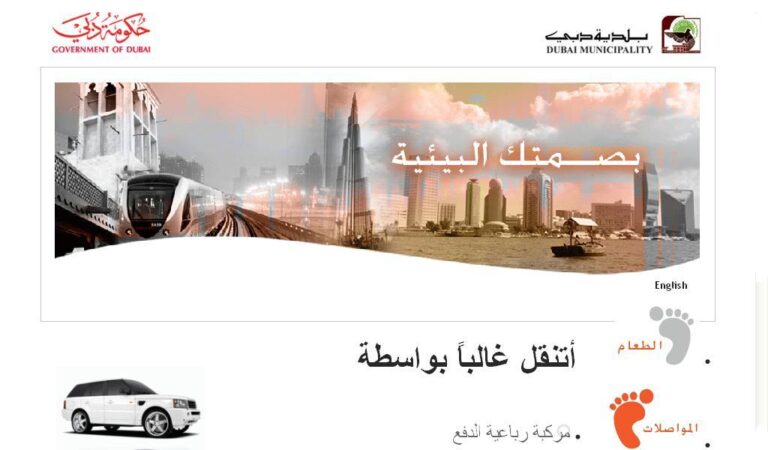
A carbon calculator in Arabic will help Dubai residents track everything from food, travel to energy consumption

The carbon emissions of Gulf nations in the Middle East are notoriously high. The UAE has one of the largest carbon footprints per capita in the world and the average citizen in the Gulf produces between two to ten times more carbon than the average global citizen. As such, it’s great to see the Dubai government launch one of the first ever carbon footprint calculators in Arabic to help residents track their green and not-so-green behaviours.

Landmark Wind Power Plant To Be Built In Pakistan

2

pakistan wind turbine power renewable energy
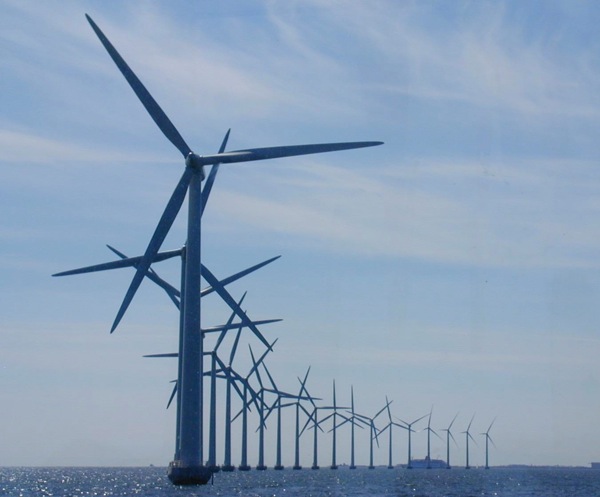
A landmark wind power project is set to be built in south Pakistan, which will form part of the 6% target renewable energy in the total power mix by 2030.

Asian Development Bank has provided a loan of $36.8 million to Pakistan’s first privately owned wind farm by the Turkish company, Zorlu Enerji Electrik Uretim, that is utilising it to raise the power output from the current 6 megawatts (MW) to 56.4 megawatts.

A statement issued by the International Finance Corporation (IFC) said the total cost of the project is $159 million, out of which 30% is being financed through equity provided by Zorlu Enerji and the rest through loans from Asian Development Bank (ADB), and ECO Trade and Development Bank, as well as a Pak Rupee loan from Habib Bank.

World Bank Supports Turkey-Built 56.4 MW Wind Project in Pakistan

0

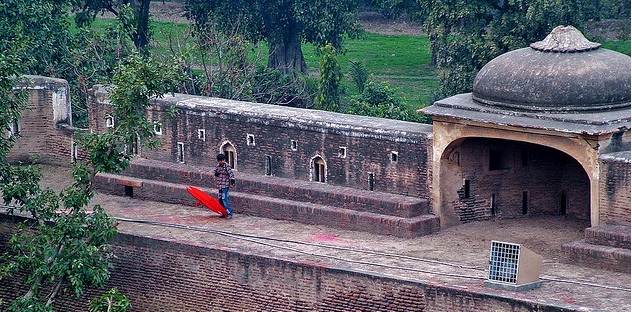
boy flying kite pakistanWith crippling floods every year and regular power outages, a new internationally financed wind project in Pakistan is breezy green news to us.

Iran, finding itself increasingly isolated due to US-backed sanctions, has been pressing energy-deficient Pakistan to connect with Iran’s natural gas “peace pipeline“. Natural gas is better than coal (which is killing miners) and dirty fuel that Pakistanis use in their households, but it is not the greenest. We laud a new announcement by the International Finance Corporation, part of the World Bank Group, which is investing $38.1 million in the company Zorlu Enerji Pakistan Limited, a Turkish energy firm to build what it is calling a landmark wind energy project in Pakistan, the Associated Press Pakistan reports.

Can Nuclear Power Ever Be Justified For Environmental Reasons?

2

nuclear-solar-middle-east-environmentJordan looks into the advantages of nuclear and we debunk the ‘green’ arguments for going nuclear

Whilst Turkey reassesses its own nuclear plans following a devastating earthquake, Jordan is still exploring the pros and cons of going radioactive. A recent meeting held in Amman brought together various NGOs, experts and academics for the 4th International Symposium on Nuclear Energy. Issues such as the Fukushima incident, safety and the need for transparency came up but so did the advantages of nuclear power for water security. So can nuclear power ever really be justified on environmental terms?

Solar Powered Taxi To Stop in Israel Next Week As Part of Worldwide Tour

2

"solar powered taxi"Beep beep!  This solar powered taxi intends to tour the globe on zero gas and a full tank of sunshine.

Swiss inventor Louis Palmer‘s solar powered taxi will be rolling into Israel next week, after having traveled to over 40 countries and through 60,000 kilometers already.  Without a single drop of standard fuel.  Powered by the sun, this revolutionary taxi will teach Israelis (and the world) that solar powered cars are a viable option for our future.  The country is already awaiting the widespread launch of Better Place’s more sustainable electric cars, but in the meantime, Palmer is showing us that the Middle East’s strong solar rays can be used for transportation as well.

Trees4Life Tell British Muslims To Plant Trees In Palestine And Reduce Waste

1

trees4life british muslims plant trees palestine indonesia carbon

British Muslims are breaking the terrorist stereotype in a new eco-awareness campaign. Trees4Life, a British grassroots organisation has branched out as far as Palestine and Indonesia, to facilitate positive solutions to environmental problems in the form of tree-planting programs.

In the faithful hopes of trying to make us aware of our environmental obligations, Trees4Life believes planting a tree is the first small step in being a green Muslim. “We are just trying to open the door in thinking ‘green’,” says founder Naweeda Ahmad.

Green Prophet writer Zaufishan Iqbal asked the Trees4Life team how British Muslims can help the Middle East and whether planting trees is really the way to go about it.

Nominate Your Green Prophet Eco Hero for 2011

2

middle-east-north-africa-environment-hero-2011Green Prophet launches the Green Prophet Eco Hero 11 Award for 2011. Who are your eco-heros for the Middle East and North Africa region?

With so much green, inspiring energy in the Middle East North Africa region, we decided to give local green prophets a little pat on the back. At the end of the year, Green Prophet will announce its first list of environmental activists from the Middle East and North Africa region. Top winners will win a small personal cash prize of $200, $100 and $50. All winners will be profiled on Green Prophet, giving credit and credence to their work. Do you know someone who is fighting to save sharks from fin soup, someone fighting for dead seas or lakes, or who is creating new water technologies that could change the water-parched region? If so, let us know about them! Read on for how you can nominate your eco-hero.

Argan Oil: Expert Estimates About 20,000 Trees in Israel

5

image-argan-fruitNah, nobody does that goat thing anymore…

Our recent post about Israeli argan oil caused a few ripples over the Internet. While we now know that the old-fashioned “goat” treatment of the fruit is no longer used in Morocco except as a tourist attraction, we’ve also learned much about the success of growing the tree itself in Israel.

We interviewed Professor Elaine Solowey of the Arava Institute for Environmental Studies, responsible for most of of the argan tree’s propagation in Israel. Prof. Solowey has worked with argan trees since 1985. She worked in the National School of Agriculture, Meknes, Morocco, on a 7-year project aimed at increasing fruit yield. In more recent years, she has been developing argan propagation at the Arava Institute.