Millions of visitors swim in the pristine waters of the Galápagos each year, but new research suggests sunscreen chemicals and other human-made pollutants are reaching even the islands' most protected marine habitats. Scientists are calling for urgent monitoring to safeguard one of Earth's most iconic ecosystems.
Artificial intelligence is opening a new chapter in Dead Sea Scrolls research. By combining machine learning with chemical analysis, scientists hope to uncover where the ancient manuscripts were produced, identify connections between scribes, and reveal hidden patterns across more than 25,000 fragments that have remained unsolved for decades.
Microplastics are showing up everywhere—from dollar store toys and synthetic clothing to bottled water, toothbrushes and even human sperm. A new Ocean Conservancy survey finds that nearly 9 in 10 Americans are concerned about the health impacts of microplastics, while support is growing for tougher regulations. As scientists uncover plastic particles in the heart, placenta and reproductive organs, the question is no longer whether microplastics are affecting our lives, but how much damage they are already doing.
Karl Studer occupies an unusual position in American business. As President of Quanta Services, he oversees electrical infrastructure operations across the United States, Canada, and Australia, managing thousands of employees and multibillion-dollar projects.
A fresh oil spill in the Tigris River, filmed by an Iraqi university student, has reignited concern over Iraq's polluted waterways. From ancient Mesopotamia to modern Basra, the country's dependence on oil has come at a steep environmental and human cost, with activists warning that unchecked contamination is putting ecosystems and public health at risk.
Millions of visitors swim in the pristine waters of the Galápagos each year, but new research suggests sunscreen chemicals and other human-made pollutants are reaching even the islands' most protected marine habitats. Scientists are calling for urgent monitoring to safeguard one of Earth's most iconic ecosystems.
Artificial intelligence is opening a new chapter in Dead Sea Scrolls research. By combining machine learning with chemical analysis, scientists hope to uncover where the ancient manuscripts were produced, identify connections between scribes, and reveal hidden patterns across more than 25,000 fragments that have remained unsolved for decades.
Microplastics are showing up everywhere—from dollar store toys and synthetic clothing to bottled water, toothbrushes and even human sperm. A new Ocean Conservancy survey finds that nearly 9 in 10 Americans are concerned about the health impacts of microplastics, while support is growing for tougher regulations. As scientists uncover plastic particles in the heart, placenta and reproductive organs, the question is no longer whether microplastics are affecting our lives, but how much damage they are already doing.
Karl Studer occupies an unusual position in American business. As President of Quanta Services, he oversees electrical infrastructure operations across the United States, Canada, and Australia, managing thousands of employees and multibillion-dollar projects.
A fresh oil spill in the Tigris River, filmed by an Iraqi university student, has reignited concern over Iraq's polluted waterways. From ancient Mesopotamia to modern Basra, the country's dependence on oil has come at a steep environmental and human cost, with activists warning that unchecked contamination is putting ecosystems and public health at risk.
Millions of visitors swim in the pristine waters of the Galápagos each year, but new research suggests sunscreen chemicals and other human-made pollutants are reaching even the islands' most protected marine habitats. Scientists are calling for urgent monitoring to safeguard one of Earth's most iconic ecosystems.
Artificial intelligence is opening a new chapter in Dead Sea Scrolls research. By combining machine learning with chemical analysis, scientists hope to uncover where the ancient manuscripts were produced, identify connections between scribes, and reveal hidden patterns across more than 25,000 fragments that have remained unsolved for decades.
Microplastics are showing up everywhere—from dollar store toys and synthetic clothing to bottled water, toothbrushes and even human sperm. A new Ocean Conservancy survey finds that nearly 9 in 10 Americans are concerned about the health impacts of microplastics, while support is growing for tougher regulations. As scientists uncover plastic particles in the heart, placenta and reproductive organs, the question is no longer whether microplastics are affecting our lives, but how much damage they are already doing.
Karl Studer occupies an unusual position in American business. As President of Quanta Services, he oversees electrical infrastructure operations across the United States, Canada, and Australia, managing thousands of employees and multibillion-dollar projects.
A fresh oil spill in the Tigris River, filmed by an Iraqi university student, has reignited concern over Iraq's polluted waterways. From ancient Mesopotamia to modern Basra, the country's dependence on oil has come at a steep environmental and human cost, with activists warning that unchecked contamination is putting ecosystems and public health at risk.
Millions of visitors swim in the pristine waters of the Galápagos each year, but new research suggests sunscreen chemicals and other human-made pollutants are reaching even the islands' most protected marine habitats. Scientists are calling for urgent monitoring to safeguard one of Earth's most iconic ecosystems.
Artificial intelligence is opening a new chapter in Dead Sea Scrolls research. By combining machine learning with chemical analysis, scientists hope to uncover where the ancient manuscripts were produced, identify connections between scribes, and reveal hidden patterns across more than 25,000 fragments that have remained unsolved for decades.
Microplastics are showing up everywhere—from dollar store toys and synthetic clothing to bottled water, toothbrushes and even human sperm. A new Ocean Conservancy survey finds that nearly 9 in 10 Americans are concerned about the health impacts of microplastics, while support is growing for tougher regulations. As scientists uncover plastic particles in the heart, placenta and reproductive organs, the question is no longer whether microplastics are affecting our lives, but how much damage they are already doing.
Karl Studer occupies an unusual position in American business. As President of Quanta Services, he oversees electrical infrastructure operations across the United States, Canada, and Australia, managing thousands of employees and multibillion-dollar projects.
A fresh oil spill in the Tigris River, filmed by an Iraqi university student, has reignited concern over Iraq's polluted waterways. From ancient Mesopotamia to modern Basra, the country's dependence on oil has come at a steep environmental and human cost, with activists warning that unchecked contamination is putting ecosystems and public health at risk.
Millions of visitors swim in the pristine waters of the Galápagos each year, but new research suggests sunscreen chemicals and other human-made pollutants are reaching even the islands' most protected marine habitats. Scientists are calling for urgent monitoring to safeguard one of Earth's most iconic ecosystems.
Artificial intelligence is opening a new chapter in Dead Sea Scrolls research. By combining machine learning with chemical analysis, scientists hope to uncover where the ancient manuscripts were produced, identify connections between scribes, and reveal hidden patterns across more than 25,000 fragments that have remained unsolved for decades.
Microplastics are showing up everywhere—from dollar store toys and synthetic clothing to bottled water, toothbrushes and even human sperm. A new Ocean Conservancy survey finds that nearly 9 in 10 Americans are concerned about the health impacts of microplastics, while support is growing for tougher regulations. As scientists uncover plastic particles in the heart, placenta and reproductive organs, the question is no longer whether microplastics are affecting our lives, but how much damage they are already doing.
Karl Studer occupies an unusual position in American business. As President of Quanta Services, he oversees electrical infrastructure operations across the United States, Canada, and Australia, managing thousands of employees and multibillion-dollar projects.
A fresh oil spill in the Tigris River, filmed by an Iraqi university student, has reignited concern over Iraq's polluted waterways. From ancient Mesopotamia to modern Basra, the country's dependence on oil has come at a steep environmental and human cost, with activists warning that unchecked contamination is putting ecosystems and public health at risk.
Millions of visitors swim in the pristine waters of the Galápagos each year, but new research suggests sunscreen chemicals and other human-made pollutants are reaching even the islands' most protected marine habitats. Scientists are calling for urgent monitoring to safeguard one of Earth's most iconic ecosystems.
Artificial intelligence is opening a new chapter in Dead Sea Scrolls research. By combining machine learning with chemical analysis, scientists hope to uncover where the ancient manuscripts were produced, identify connections between scribes, and reveal hidden patterns across more than 25,000 fragments that have remained unsolved for decades.
Microplastics are showing up everywhere—from dollar store toys and synthetic clothing to bottled water, toothbrushes and even human sperm. A new Ocean Conservancy survey finds that nearly 9 in 10 Americans are concerned about the health impacts of microplastics, while support is growing for tougher regulations. As scientists uncover plastic particles in the heart, placenta and reproductive organs, the question is no longer whether microplastics are affecting our lives, but how much damage they are already doing.
Karl Studer occupies an unusual position in American business. As President of Quanta Services, he oversees electrical infrastructure operations across the United States, Canada, and Australia, managing thousands of employees and multibillion-dollar projects.
A fresh oil spill in the Tigris River, filmed by an Iraqi university student, has reignited concern over Iraq's polluted waterways. From ancient Mesopotamia to modern Basra, the country's dependence on oil has come at a steep environmental and human cost, with activists warning that unchecked contamination is putting ecosystems and public health at risk.
Millions of visitors swim in the pristine waters of the Galápagos each year, but new research suggests sunscreen chemicals and other human-made pollutants are reaching even the islands' most protected marine habitats. Scientists are calling for urgent monitoring to safeguard one of Earth's most iconic ecosystems.
Artificial intelligence is opening a new chapter in Dead Sea Scrolls research. By combining machine learning with chemical analysis, scientists hope to uncover where the ancient manuscripts were produced, identify connections between scribes, and reveal hidden patterns across more than 25,000 fragments that have remained unsolved for decades.
Microplastics are showing up everywhere—from dollar store toys and synthetic clothing to bottled water, toothbrushes and even human sperm. A new Ocean Conservancy survey finds that nearly 9 in 10 Americans are concerned about the health impacts of microplastics, while support is growing for tougher regulations. As scientists uncover plastic particles in the heart, placenta and reproductive organs, the question is no longer whether microplastics are affecting our lives, but how much damage they are already doing.
Karl Studer occupies an unusual position in American business. As President of Quanta Services, he oversees electrical infrastructure operations across the United States, Canada, and Australia, managing thousands of employees and multibillion-dollar projects.
A fresh oil spill in the Tigris River, filmed by an Iraqi university student, has reignited concern over Iraq's polluted waterways. From ancient Mesopotamia to modern Basra, the country's dependence on oil has come at a steep environmental and human cost, with activists warning that unchecked contamination is putting ecosystems and public health at risk.
Millions of visitors swim in the pristine waters of the Galápagos each year, but new research suggests sunscreen chemicals and other human-made pollutants are reaching even the islands' most protected marine habitats. Scientists are calling for urgent monitoring to safeguard one of Earth's most iconic ecosystems.
Artificial intelligence is opening a new chapter in Dead Sea Scrolls research. By combining machine learning with chemical analysis, scientists hope to uncover where the ancient manuscripts were produced, identify connections between scribes, and reveal hidden patterns across more than 25,000 fragments that have remained unsolved for decades.
Microplastics are showing up everywhere—from dollar store toys and synthetic clothing to bottled water, toothbrushes and even human sperm. A new Ocean Conservancy survey finds that nearly 9 in 10 Americans are concerned about the health impacts of microplastics, while support is growing for tougher regulations. As scientists uncover plastic particles in the heart, placenta and reproductive organs, the question is no longer whether microplastics are affecting our lives, but how much damage they are already doing.
Karl Studer occupies an unusual position in American business. As President of Quanta Services, he oversees electrical infrastructure operations across the United States, Canada, and Australia, managing thousands of employees and multibillion-dollar projects.
A fresh oil spill in the Tigris River, filmed by an Iraqi university student, has reignited concern over Iraq's polluted waterways. From ancient Mesopotamia to modern Basra, the country's dependence on oil has come at a steep environmental and human cost, with activists warning that unchecked contamination is putting ecosystems and public health at risk.
Defunct French company PIP has sold leaky, industry grade silicon implants now being recalled. image via Globalpost
Thousands of faulty breast implants have been recalled by the French government for fears of leaks that could lead to cancer. A call to women has been issued in the Middle East to women from Israel all the way to Abu Dhabi. The defunct French company Poly Implant Prothese (PIP) has had its implant linked to cancer and other ill health effects. Some 30,000 women in France have been told to remove the implants.
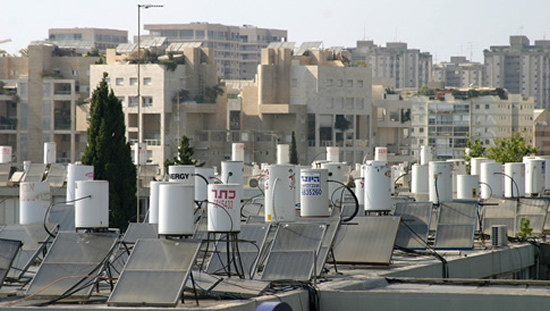
Free hot water from the sun. Cyprus now leads the way.
Although China leads the world in the number of solar water heaters in use, and Israel was the pioneer and chief country-wide user of solar water heaters for 25 years, today the Republic of Cyprus has the distinction of being the world leader of solar water heater users per capita.
Israel boasts that its population uses solar energy to heat water at a rate of 0.56 square maters of solar water heating collectors per person. But Cyprus has an even greater percentage with 0.79 square meters per person.
North America, on the other hand lags far behind, with the USA ranking 36th in installed capacity relative to its population, with just 0.01 square meters installed per person according to same article. China is much more involved in solar water heating with more than 1.8 billion square feet (1,676,134 sq.m) of solar water heating.
Even European countries like Germany are jumping onto the solar water heating bandwagon, with 2 million Germans already heating water in this manner. In Austria, 15% of the population use solar water heating; while Spain has a law requiring that all new or renovated buildings have solar heating installed.
Many Spanish cities like Barcelona now use the sun to heat water
Compared to many other types of water heating systems solar water heaters only require the heat of the sun to provide hot water on sunny days.
Whether it involves passing laws, like Spain did; or simply a desire to utilize a cleaner and cheaper energy source, solar water heating is definitely on the rise all over the planet. We’d like to see its use more widespread in Arabian countries.
Researchers in Al Ain find that saffron can protect your liver from cancer.
Great news just in time for Christmas: Arab scientists from the United Arab Emirates have located anti-cancer compounds in the much loved and expensive spice saffron. Known for centuries as a home remedy, the research project led by Professor Amr Amin from the United Arab Emirates University, Al Ain, found that saffron is able to suppress a large variety of cancer compounds. This news reported in the journal Hepatology, puts saffron in the ranks of cancer fighter along with another much-loved Asian spice, turmeric.
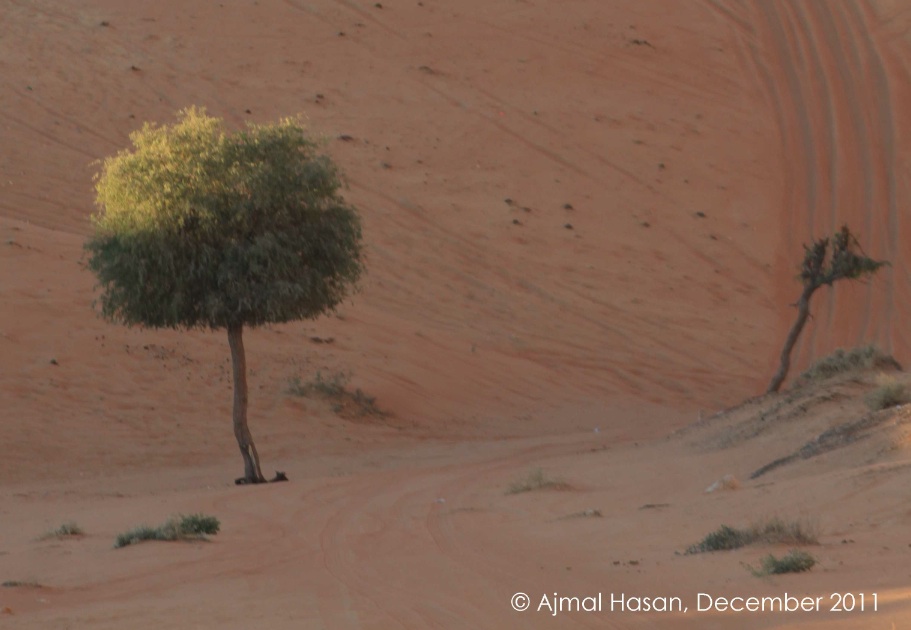
Ajmal spends his weekends scouting for animals and life in the desert. Here is his trip to Fossil Rock.
I’ve always known that much of the Arabian peninsular mountains, especially those in the United Arab Emirates and Oman were at one point in time, millions of years ago, under the ocean. The Tethys sea to be precise. But when I recently heard there could be fossils of ancient sea creatures in the middle of the desert in Sharjah, this sounded almost unbelievable.
So I set out last Saturday to explore a small rocky limestone outcrop aptly called ‘Fossil Rock’ on the outskirts of Sharjah.
The celebrations will include: swapping/sharing of seeds (and whatever else comes to mind), tours and workshops for children, a general assembly of the members of the Israeli Permaculture Organization, and a communal vegan/vegetarian feast.
Half of the wild camels near Abu Dhabi are choking on plastic and dying
When the grownups give up on protecting the earth and its numerous creatures, the youth are left to pick up the baton. Cameron Oliver was just 11 years old when he first learned about the plight of camels living in the desert, 50% of which die long, slow deaths after consuming plastic. Four years later and the South African activist who attends the Al Yasmina School in Abu Dhabi is still campaigning at other schools throughout the Emirates to raise awareness, but his pocket money is beginning to run out and he needs help.
The Taj mall in Amman, Jordan seems as current and eco-sensitive as a polyester leisure suit.
Costing in excess of $170 million and with a total floor area of 150,000 square meters, Amman’s newest mega-project is located in a middle class residential area, skirted by vacant lots of grazing goats and humble concrete houses. Access to its underground car park on Opening Day was blocked when a sheep sprinted from an adjacent field, a typically surreal Amman experience.
Just in time for Christmas and joining the existing team of city shopping centers, Jordan’s latest retail-abalooza has arrived: Taj is Amman’s newest shopping mall, boy does it have a ‘shiny nose’. Pitched as a “lifestyle destination”, right now this 21st century citadel is the antithesis of sustainable development.
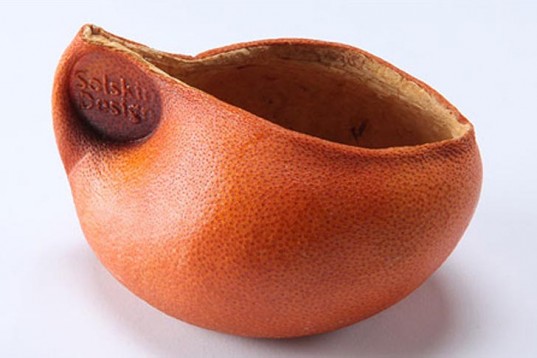
A self-described optimist, Sonnenschein believed in the potential of this usually discarded material and found a way to make it durable and useful again.
Israel’s Geothermal Giant Ormat Signs Deal For Solar In California
It already has an international presence, but Israel’s Ormat Industries (NYSE: ORA) just made its global presence a little brighter: On December 21, Ormat’s US subsidiary Ormat Technologies announced that it will be developing its very first 10 megawatt solar photovoltaic (PV) farm near one of its geothermal plants in California. Ormat is an internationally recognized geothermal company but has already signed a 20-year power purchase agreement for its newest solar plant with the local community-owned utility Imperial Irrigation District.
Get one up on Rumpelstiltskin by turning plastic shopping sacks into uber-artsy bookmarks.
I really hate giving cash gifts. Gift cards aren’t much higher on the “Hey, I burned lots of calories thinking of you” scale. Even when the card’s end use fits the user, it’s still not very satisfying for me (wow, so it is always about me?). Do you also need to up the personalization ante? Here’s the recipe for what’s accompanying all those bookstore gift cards flying out of our house this holiday season:
For $8 million USD you too can own a car like this. It’s gold and armor plated too!
We live in the Middle East and can’t avoid noticing the ostentatious and ungreen ways of some people over here. We’ve covered a white gold Mercedes sports coups and other luxury vehicles highlighted at the Abu Dhabi car show. And now we dig up yet another gold car, a Rolls Royce ultra luxurious EWB Phantom limousine that is not only armor-plated but contains 250 pounds of solid 18 Carat gold trim.
Rolls Phantom inside view. Louis Jadot Champagne anyone?
The special project by Stuart Hughes, which took 18 months to complete, is a cooperative effort between Stuart Hughes of Liverpool, a designer of luxury products; and Eurocash AG of Zug, Switzerland.
The car, which was built for an anonymous Middle East businessman, carried a price tag of 5 million Pounds Sterling (US $7,850,000).
DM 51 fragmentation grenade: contains 6,500 steel balls and hurled at the Rolls to make sure it’s bullet proof.
The “businessman” who ordered such a car, and is willing to pay so much for it, must be looking for more than just an outlandishly priced set of wheels. Eurocash AG, a firm that specializes in customizing luxury cars, including bullet proofing and armour plating, appears to have done their work well for this Rolls Royce.
After the armor plating was completed, the car was tested against 570 caliber 7.62 Russian bullets fired from an AK47 assault rifle and aside from numerous scratches came through unscathed. To make sure the car was really assault proof, a couple of military type DM 51 fragmentation grenades were also hurled at the Rolls.
Wealthy businessmen living in the Gulf region have been known to purchase super luxury cars, like white gold Mercedes and gold Bentley cars. But even so, the cost of this armored plated gold-trimmed tank is about as ridiculous and wasteful as it gets. No doubt, the owner wants to not only ride in style, but as safely as possible as well. We can only wish him well, and hope that some of this wealth, most likely from non-green fossil fuels, will somehow find its way to helping the environment.
Rates of skin cancer in Israel are some of the highest in the world, though the rest of the MENA region has significantly lower incidence, according to the World Health Organization.
Conventional thinking suggests that the best way to avoid skin cancer is to use sunscreen, particularly one made from organic materials. New research, however, continues to find other risk factors. Long known as a causative factor in lung cancer, new research suggests that smoking increases your chances of developing skin cancer, especially if you are a woman. For the now, the data is correlational.
According to reports, the study, which is published in Cancer Causes, compared 383 patients with skin cancer to 315 people without the disease (355 men, 343 women). It found a significant increased risk for skin cancer among women, with the data less robust for men.
He may appeal to the eyes, but what is all that computer use doing to his sperm?
Infertility is a family affair. In the Middle East, the matter is often more than a medical concern. Larger families are the norm and in certain communities (for example, the more religious), a sign of honor and prestige. Couples trying to conceive without success must rule out male infertility as one of the culprits.
Male infertility can be a result of several factors including low sperm count, sperm that are immotile (don’t swim properly to reach the female egg) or sperm with altered DNA (DNA fragmentation). Successful fertilization depends on sperm being able to reach and penetrate the egg, but globally, fertility rates are declining, with many speculations about why sperm counts and sperm health are shrinking.
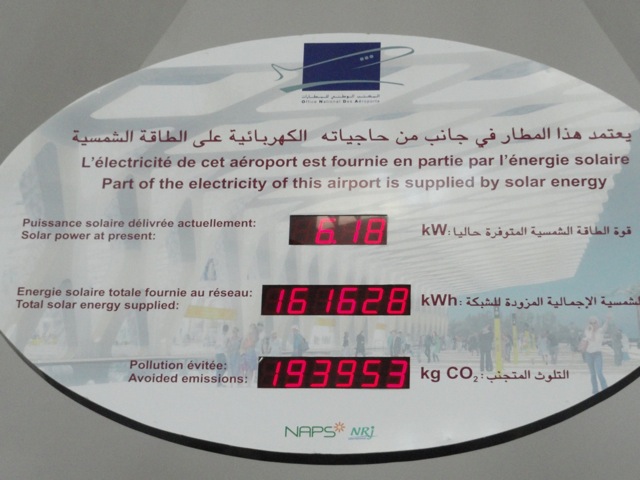
Marrakesh also known as the “Ochre City” is my favorite place in Morocco. Visiting there last summer, I got to see how the futuristic transport hub is creating solar power in action. Supplied by the Finnish company Naps Oy, who I met in Finland in 2010, I like the way the solar elements integrate with the design experience. I also love how the company has added a solar energy meter (see above), showing how much carbon dioxide has been spared from the atmosphere. Placed inappropriately below the meter is a large plastic wrap center where worried tourists slap reams of plastic onto their luggage to protect it. Well, the world can’t be made perfect all at once. See below for some remarkable photos of the beautiful Marrakesh airport.


 Many Spanish cities like Barcelona now use the sun to heat water