Home Blog Page 482

Women are Aroused by Cucumbers and Carrots According to an Islamic Cleric

Muslim, sex, vegetables, Cleric, IslamA Muslim Cleric in Europe has stated that cucumbers and carrots prompt women to have seedy sexual thoughts and that they should therefore be banned from touching them.

Women should be banned from touching cucumbers, carrots, bananas, and zucchinis, says a European Muslim cleric, simply because they resemble the male penis and could prompt women to think of sex.

The Sheikh whose name has not been revealed, according to Bikya Masr, has suggested that women who need to cook with these ingredients should have the men in the family cut them up into small pieces. This shape-shift will reportedly banish all sexual thoughts from women’s minds.

Asked how they should avoid wanton thoughts while shopping for groceries, the cleric retorted that this is between “them and God.” Does this mean that men should stay away from pomegranates and peaches?

:: Bikya Masr

image via morguefile

Artist Chronicles the Petrochemical Age With Crude Oil Paintings

2

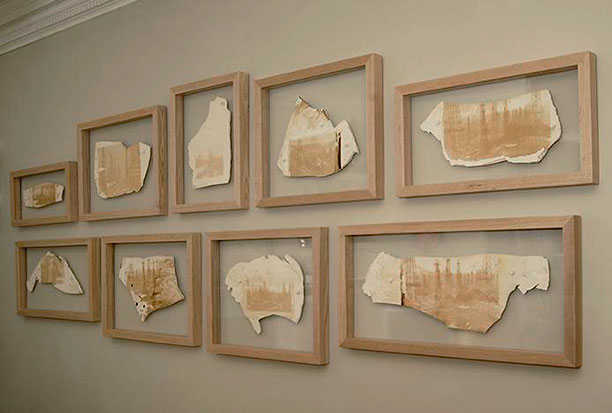
art, oil, environmental art, Saudi Arabia, crude oilPiers Secunda spent years collecting archival footage and crude oil to create these striking historical paintings currently on display at the Aubin Gallery in London. 

Just like the first gush of black gold that emerged from Saudi Arabia’s inaugural oil well in 1937, the idea to chronicle the petrochemical age came quite suddenly to artist Piers Secunda. He was riding on the London tube reading Daniel Yergin’s history of oil, The Prize, when it occurred to him that he wanted not just to paint oil scenes, but to paint them with crude oil.  

World-Famous Architect Jørn Utzon Admired Morocco’s Vernacular Architecture

0

green design, sustainable design, vernacular architecture, morocco, Jorn Utzon, Jan Utzon, Atlas Mountains

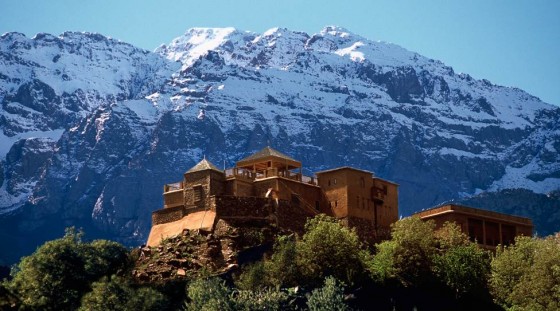
Jørn Utzon spent time in Morocco, where he admired the traditional architecture. The Kasbah du Toubkal south of Marrakech is a sterling example of the design and materials commonly used.  

In the late 1940’s, long before he experienced the honor of seeing a building he designed named a UNESCO world heritage site, Jørn Utzon traveled to Morocco. Only the second person in the world to achieve this honor, the genius behind Sydney’s remarkable Opera House was deeply inspired by the country’s vernacular architecture – particularly the tall earthy homes that cling to the Atlas Mountains’ verdant valleys.

The notes and sketches that Utzon accumulated during his stay have been carefully preserved and will provide material for an 8 day Easter workshop being held in Marrakech next year. Following in his father’s footsteps, architect Jan Utzon will lead the workshop that is being organized jointly by the University of Portsmouth, the Jørn Utzon Research Network (JURN), the Utzon Research Center in Denmark, and the National School of Architecture in Morocco

Eco-Tourists to Israel Can Now Be a “Forester For a Day”

0

"forest eco tourism israel"In an attempt to maintain Israel’s forests and prevent forest fires in the future, Keren Kayemeth LeIsrael and the Jewish National Fund enlist tourists to become “Foresters for a Day.”

About a year ago, the Carmel forest in northern Israel suffered the worst fire in the nation’s modern history and 5,000 hectares of forest land were destroyed.  Several Jewish organizations around the world have made efforts to rehabilitate the damaged forest (despite the theories of some ecologists that replanting too soon could disturb the forest’s natural healing process).  Joining their efforts now is the Keren Kayemeth LeIsrael-Jewish National Fund (KKL-JNF) with a “Forester for a Day” program that will educate eco-tourists about the fire and take steps to prevent forest fires in the future.

Nature’s Wisdom Through the Photographer’s Lens: The Green Sheikh

1
The Green Sheikh, Falconry, travel, nature, environmental art, photography, The Middle East, falconry
The Green Sheikh loves falconry

After publishing so many stories about Arabs who offend nature so deeply, the Green Sheikh’s soothing  words are especially timely. 

What links humans, nature and technology is one of the secrets of life. This link should be used to reach sustainability and to seek “Nature’s Wisdom,” which originates from a conscious and extensive belief in friendship and culture, in order to achieve the natural balance of life.

Our eyes let us see and imagine and bring us to a charming landscape, while a pure heart connects us with the earth and gives us consciousness of nature. A bright spirit influences the waves and sense of magic with its transparency, although many of us can only see superficially, losing the perception of nature and of particular environmental facts. But the photographer helps us re-gain our connection.

Spencer Tunick Mad Over Naked Dead Sea Photo Leak

1

leak dead sea photoLeaked pictures from the Dead Sea naked shoot reveal identifiable information of the naked models.

When more than a thousand people signed up for the Naked Sea project, US installation artist Spencer Tunick took great care to ensure that the privacy of the naked models would be kept, um, private. Green Prophet’s Alex was part of the day, and he spoke about the fun, and routine that the volunteer models had to go through to ensure the day would be kept secret until the pictures were taken.

A $7000 Electric Car Coming to the Middle East?

1

streetscooter electric car from germany It won’t take you long distances, but it will take you around town; and at a reasonable speed too.

Electric cars of various shapes and sizes are appearing a lot on the news these days. Despite performing less unfavorably in international vehicle crash tests, two of the big issues that may be preventing more people from purchasing these cars are their limited driving range and their cost, especially in countries that impose high import duties and other purchase taxes for cars. But a new and cheap car the StreetScooter could change all that. The price tag? About $7,000. Close to the Tata Nano.

Kuwaiti Kills Wolf and Then Shows Off

20

animal conservation, poaching, hunting, wolves, middle eastSome people make collages of family pictures, but a group of friends in Kuwait compiled these images after killing a wolf with a shotgun.

In response to yesterday’s post about the only two countries in the Middle East that offer wolves any kind of legal protection, a Kuwaiti reader forwarded a link to a story published online by Al Watan. A google translated version of the story goes like this: a young man went on a fishing trip with friends, carrying a shotgun, and was greeted by a lone wolf at the entrance of his tent one morning.

Abdullah Algelawi told the paper that the wolf or fox attacked, he wasn’t certain what kind of animal it was at first, so he proceeded to pump a pile of shotgun shells into it. Then he posed with the dead, bloodied Gray Wolf, sometimes hoisting it up, and proudly forwarded the following images to his local paper. 

Egypt’s Next Huge Wind Farm

0

egypt wind farm, map of country

Even as the country tries to sort out its new political identity following the first democratic elections in decades, Egypt is forging ahead with its wind power plans. Big time.

As part of its target of going from its current 550MW of wind to a staggering 2,690MW by 2016 to reach 7,200MW by 2020, Egypt is putting bids out for yet more wind power.

A tender for a 200 MW wind farm to be built on the Gulf of Suez, at a cost of $500 million was announced by Energy Minister Hassan Yunis. This would continue progress towards this ambitious goal to tap some of the best wind resources in the world. He said that the winning bidder would also perform maintenance long term as well as supplying and installing the farm. It is likely to generate a gold rush of wind developers.

Peak Everything? Save Your Junk.

0

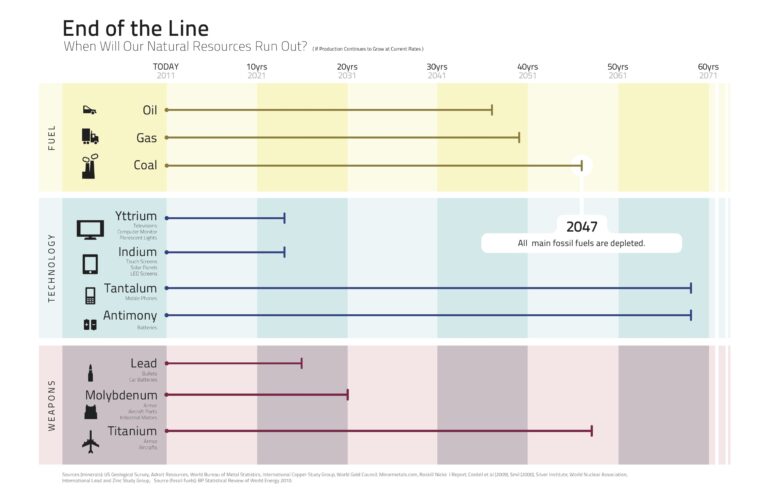
Camden Asay, Peak Everything, Peak Oil, Infographic, Recycled Materials, Natural Materials, ewasteDon’t throw out your e-waste and other junk; in a few decades, you could be sitting on a gold mine.  

Last year we posted a funky little video that detailed what goes into making just one cell phone. “Eric-Sun” – a personified cellular phone facing the end of its life – is comprised in part of  South African gold and Russian platinum, of silver from Mexico, and nickel from Australia, and so many other components it would take all day to list them. Eventually, this and the other 99% of the world’s cell phones are tossed in a landfill when the next iPhone comes out.

This eye-opening video raised a lot of questions about how feasibly we can continue on our so called developmental path full of fancy gadgets and cloud-hugging towers when we live on a planet of finite resources. But convincing people to think about this is tricky – until you see a nifty infographic like the one put together by American designer Camden Asay and posted on FastCo Design. Finally, thanks to one succint (but no doubt fallible) chart, we have a pretty good idea of just how quickly we are depleting … a lot.

FastCo warns that although Asay derived his data from reputable sources such as the U.S. Geological Survey, this chart might be a little bit too easy to grasp since it’s difficult to predict how our rate of consumption will compare to our increasing ability to do more with less. The site’s founder Cliff Kuang cites Jevons Paradox, which describes how (paradoxically) increased efficiency also increases our rate of consumption. Jevons Paradox + Rapid Population Growth = something worth sitting down for in order to properly digest it.

So think twice before you throw out your e-waste and other “junk,” which Egyptian fixers put to good use; one day it could be worth its weight in gold.

Only Two Countries in the Middle East Protect Wolves

9

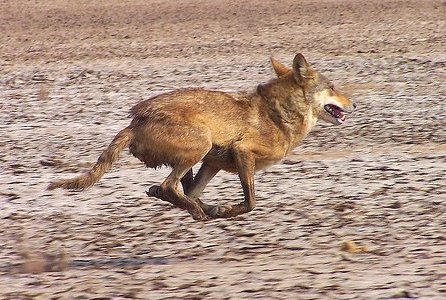
animal conservation, wolves, middle east, endangered species, dogsThe wolf pictured above is an Iranian wolf, which exists is dwindling numbers throughout Israel, Iran, and Turkey. 

Our fear of the wolf is historically as deep-seated as our survival instinct, which may explain why only two countries in the Middle East have established official bans against hunting them. Two subspecies of the Gray Wolf occur in this region. The Iranian wolf (Canis lupus pallipes), which is the only wolf species in the world that is not in danger of extinction, can be found in dwindling numbers throughout Iran, Israel, Turkey, and Saudi Arabia, whereas the Arabian wolf (Canis lupus arabs) can be found in Israel, Iraq, Jordan, Oman, Saudi Arabia, and Yemen, and possibly some parts of Egypt’s increasingly degraded Sinai Peninsula as well. But only Oman and Israel subscribe to the notion that wolves have the right to coexist with man as part of natural ecosystems by giving them legal protection.

Test Tube Testes Developed by Arab Scientist

3

artificial testes test tube, sperm
An Arab scientist has developed an artificial testis to give infertile man a chance to sire their own children.

In the western world couples who have trouble conceiving go to sperm banks when the male produces no viable sperm. And while these options are available in the Middle East, the more traditional male types here obviously fare better psychologically when the baby is born with his own blood, and DNA. But for men with a zero sperm count, or boys undergoing treatment for cancer, there were no other options – until now. An Arab scientist Prof. Mahmoud Huleihel from Ben Gurion University in Israel has developed an artificial testis in a test tube. It opens a world of possibilities for infertile men.

Going Green GreenGraffiti Hits the Streets of Cyprus

4

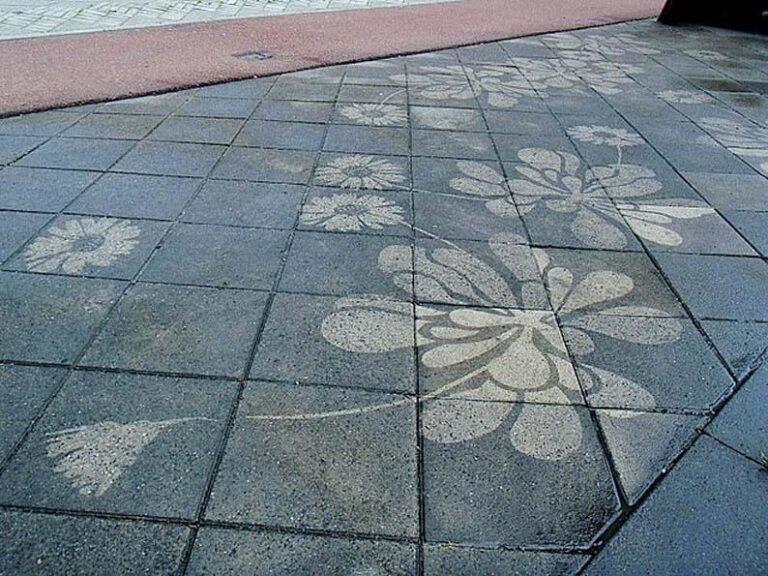
"moss grafitti cyprus"Cyprus may have a long way to go in terms of being eco-friendly, but GreenGraffiti has brought it a little closer.

Graffiti may conjure up images and smells of atmospherically harmful spray paints and underground punk rock enthusiasts, but it doesn’t have to.  Well, the punk rockers can stay, but graffiti can be green without sacrificing any of its cool.  Graffiti can be made out of natural materials instead of spray paints, and even be used as a more sustainable form of advertising (instead of wasteful and polluting billboards).

And that is the message that GreenGraffiti, a sustainable communications company that helps companies advertise through eco-friendly graffiti, is trying to promote.  That, and the idea that you can have “profits with principles”.

Santa on a Camel in Qatar: are the Reindeers Protesting?

2

Doha, Qatar, Santa, Carbon Emissions, high desert temperatures, camels, camel milk, Christianity, Christmas

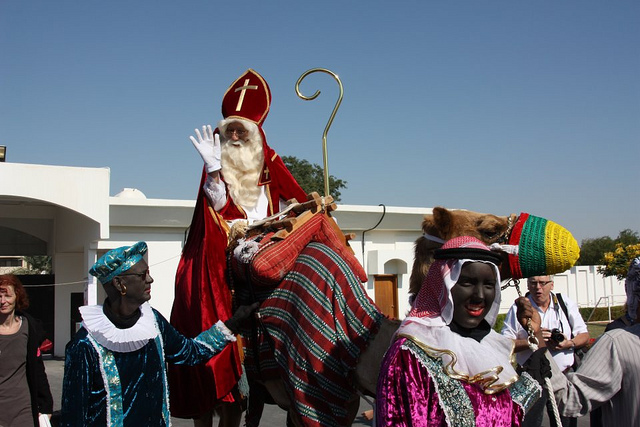
Santa takes a ride on a camel in Doha, Qatar, where it was recently announced the COP 18 talks will be held.

Santa has the lowest carbon footprint of them all. He doesn’t drive in fossil-fueled cars to deliver his eco-friendly gifts. Instead, he relies on his trusted team of reindeers. Not big meat eaters, the production of which is a major cause of carbon emissions, reindeers (caribou) typically subsist on a diet of moss and leaves. Although they do occassionally enjoy a protein fix of rodents and fish.

But it seems the reindeers might be protesting for a greater share of this year’s holiday cheer? Either that or Santa has decided to diversify his transportation portfolio in support of the COP 18 climate talks taking place next year in Qatar… by switching to camels. And we can see why. The trusted steed of the Arab world’s indigenous tribes, camels are powerful creatures that can withstand high desert temperatures and there are at least 6 good reasons to drink their milk too.

This fantastic image of Santa riding a camel in Doha, Qatar was captured by Radio Nederland Wereldromroep and posted on Doha News. We just had to share it with you. Never-mind that this Gulf country isn’t particularly receptive to Christianity, it’s the holiday season and everybody’s celebrating.

Gaza’s Green Schools Fuse Islamic Architecture and Sustainable Design

0

sustainable development, green design, solar energy, eco-schools, Gaza, UNRWA, environmental education, green building, renewable energyA fusion of traditional Islamic architecture and modern sustainable design, Gaza’s new green schools will cost the same to build as their less-sustainable counterparts. 

We recently reported that Gaza is slated to receive not one but 20 zero-energy eco-schools, and now we have a better sense of what they will look like thanks to a handful of architectural renderings sent to us by the United Nations Relief and Works Agency (UNRWA).

UNRWA has teamed up with architect Mario Cucinella to build solar and geothermal-powered schools using local materials, which combined will slash their overall environmental impact. Not only will this project blaze a new path in sustainable development, but education in the Gaza Strip will also become less vulnerable to the politics du jour. More images of this groundbreaking project after the break.