Home Blog Page 478

Egypt’s Next Huge Wind Farm

0

egypt wind farm, map of country

Even as the country tries to sort out its new political identity following the first democratic elections in decades, Egypt is forging ahead with its wind power plans. Big time.

As part of its target of going from its current 550MW of wind to a staggering 2,690MW by 2016 to reach 7,200MW by 2020, Egypt is putting bids out for yet more wind power.

A tender for a 200 MW wind farm to be built on the Gulf of Suez, at a cost of $500 million was announced by Energy Minister Hassan Yunis. This would continue progress towards this ambitious goal to tap some of the best wind resources in the world. He said that the winning bidder would also perform maintenance long term as well as supplying and installing the farm. It is likely to generate a gold rush of wind developers.

Peak Everything? Save Your Junk.

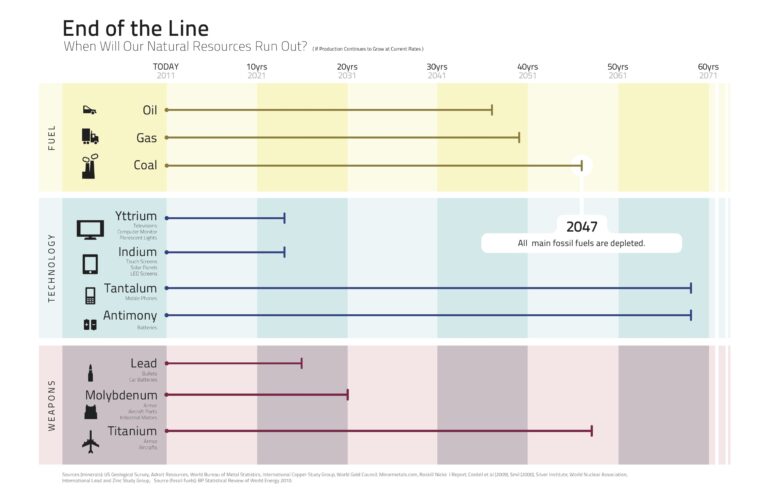
Camden Asay, Peak Everything, Peak Oil, Infographic, Recycled Materials, Natural Materials, ewasteDon’t throw out your e-waste and other junk; in a few decades, you could be sitting on a gold mine.  

Last year we posted a funky little video that detailed what goes into making just one cell phone. “Eric-Sun” – a personified cellular phone facing the end of its life – is comprised in part of  South African gold and Russian platinum, of silver from Mexico, and nickel from Australia, and so many other components it would take all day to list them. Eventually, this and the other 99% of the world’s cell phones are tossed in a landfill when the next iPhone comes out.

This eye-opening video raised a lot of questions about how feasibly we can continue on our so called developmental path full of fancy gadgets and cloud-hugging towers when we live on a planet of finite resources. But convincing people to think about this is tricky – until you see a nifty infographic like the one put together by American designer Camden Asay and posted on FastCo Design. Finally, thanks to one succint (but no doubt fallible) chart, we have a pretty good idea of just how quickly we are depleting … a lot.

FastCo warns that although Asay derived his data from reputable sources such as the U.S. Geological Survey, this chart might be a little bit too easy to grasp since it’s difficult to predict how our rate of consumption will compare to our increasing ability to do more with less. The site’s founder Cliff Kuang cites Jevons Paradox, which describes how (paradoxically) increased efficiency also increases our rate of consumption. Jevons Paradox + Rapid Population Growth = something worth sitting down for in order to properly digest it.

So think twice before you throw out your e-waste and other “junk,” which Egyptian fixers put to good use; one day it could be worth its weight in gold.

Only Two Countries in the Middle East Protect Wolves

9

animal conservation, wolves, middle east, endangered species, dogsThe wolf pictured above is an Iranian wolf, which exists is dwindling numbers throughout Israel, Iran, and Turkey. 

Our fear of the wolf is historically as deep-seated as our survival instinct, which may explain why only two countries in the Middle East have established official bans against hunting them. Two subspecies of the Gray Wolf occur in this region. The Iranian wolf (Canis lupus pallipes), which is the only wolf species in the world that is not in danger of extinction, can be found in dwindling numbers throughout Iran, Israel, Turkey, and Saudi Arabia, whereas the Arabian wolf (Canis lupus arabs) can be found in Israel, Iraq, Jordan, Oman, Saudi Arabia, and Yemen, and possibly some parts of Egypt’s increasingly degraded Sinai Peninsula as well. But only Oman and Israel subscribe to the notion that wolves have the right to coexist with man as part of natural ecosystems by giving them legal protection.

Test Tube Testes Developed by Arab Scientist

3

artificial testes test tube, sperm
An Arab scientist has developed an artificial testis to give infertile man a chance to sire their own children.

In the western world couples who have trouble conceiving go to sperm banks when the male produces no viable sperm. And while these options are available in the Middle East, the more traditional male types here obviously fare better psychologically when the baby is born with his own blood, and DNA. But for men with a zero sperm count, or boys undergoing treatment for cancer, there were no other options – until now. An Arab scientist Prof. Mahmoud Huleihel from Ben Gurion University in Israel has developed an artificial testis in a test tube. It opens a world of possibilities for infertile men.

Going Green GreenGraffiti Hits the Streets of Cyprus

4

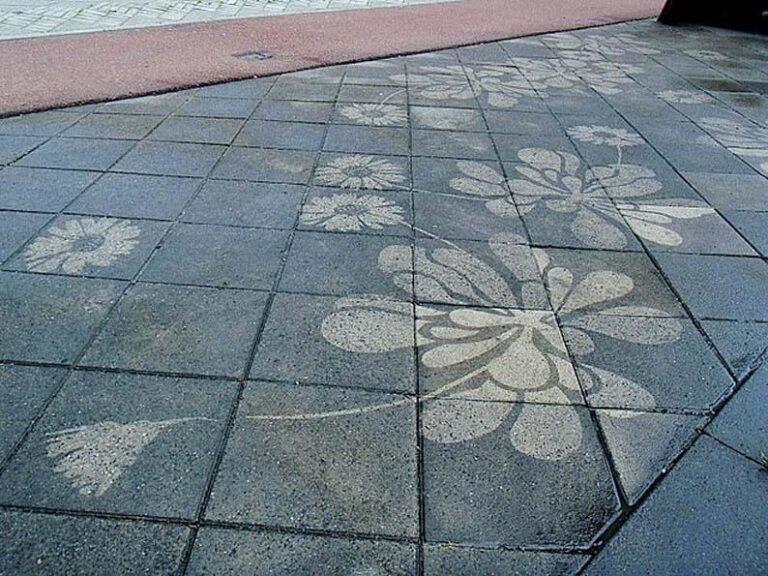
"moss grafitti cyprus"Cyprus may have a long way to go in terms of being eco-friendly, but GreenGraffiti has brought it a little closer.

Graffiti may conjure up images and smells of atmospherically harmful spray paints and underground punk rock enthusiasts, but it doesn’t have to.  Well, the punk rockers can stay, but graffiti can be green without sacrificing any of its cool.  Graffiti can be made out of natural materials instead of spray paints, and even be used as a more sustainable form of advertising (instead of wasteful and polluting billboards).

And that is the message that GreenGraffiti, a sustainable communications company that helps companies advertise through eco-friendly graffiti, is trying to promote.  That, and the idea that you can have “profits with principles”.

Santa on a Camel in Qatar: are the Reindeers Protesting?

2

Doha, Qatar, Santa, Carbon Emissions, high desert temperatures, camels, camel milk, Christianity, Christmas

Santa takes a ride on a camel in Doha, Qatar, where it was recently announced the COP 18 talks will be held.

Santa has the lowest carbon footprint of them all. He doesn’t drive in fossil-fueled cars to deliver his eco-friendly gifts. Instead, he relies on his trusted team of reindeers. Not big meat eaters, the production of which is a major cause of carbon emissions, reindeers (caribou) typically subsist on a diet of moss and leaves. Although they do occassionally enjoy a protein fix of rodents and fish.

But it seems the reindeers might be protesting for a greater share of this year’s holiday cheer? Either that or Santa has decided to diversify his transportation portfolio in support of the COP 18 climate talks taking place next year in Qatar… by switching to camels. And we can see why. The trusted steed of the Arab world’s indigenous tribes, camels are powerful creatures that can withstand high desert temperatures and there are at least 6 good reasons to drink their milk too.

This fantastic image of Santa riding a camel in Doha, Qatar was captured by Radio Nederland Wereldromroep and posted on Doha News. We just had to share it with you. Never-mind that this Gulf country isn’t particularly receptive to Christianity, it’s the holiday season and everybody’s celebrating.

Gaza’s Green Schools Fuse Islamic Architecture and Sustainable Design

0

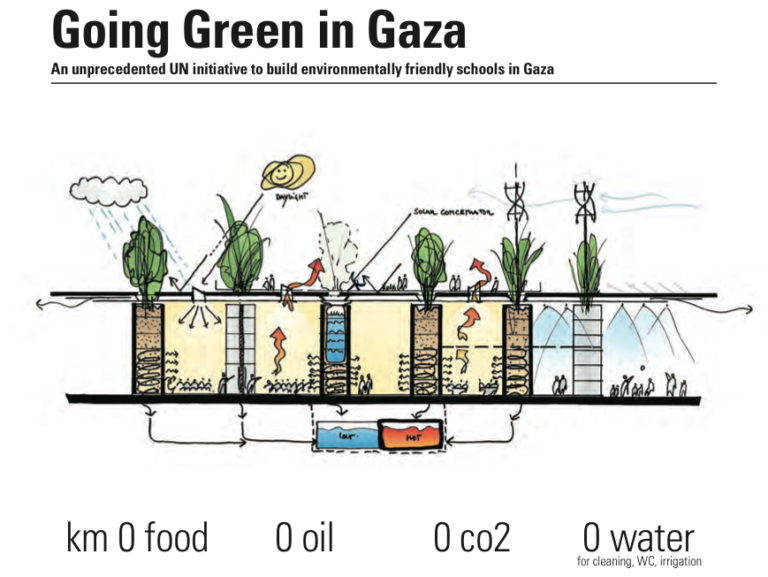
sustainable development, green design, solar energy, eco-schools, Gaza, UNRWA, environmental education, green building, renewable energyA fusion of traditional Islamic architecture and modern sustainable design, Gaza’s new green schools will cost the same to build as their less-sustainable counterparts. 

We recently reported that Gaza is slated to receive not one but 20 zero-energy eco-schools, and now we have a better sense of what they will look like thanks to a handful of architectural renderings sent to us by the United Nations Relief and Works Agency (UNRWA).

UNRWA has teamed up with architect Mario Cucinella to build solar and geothermal-powered schools using local materials, which combined will slash their overall environmental impact. Not only will this project blaze a new path in sustainable development, but education in the Gaza Strip will also become less vulnerable to the politics du jour. More images of this groundbreaking project after the break.

Modular Flower Store Keeps Shoppers on Their Toes

4

"milk crate shelves"Shoppers at Zerim-Liftan’s specialty store will never know what layout design to expect, as it is modular and ever-changing.

The modular design concept – which is sustainable as it saves the resources that would otherwise be used to create multiple objects from scratch – has been applied to all kinds of designs.  It has been used to create furniture (in the form of a loop chair that can be used twelve different ways) and Daniela Bekerman’s “ze or ze” (“this or that”) shoes with adjustable heels for different looks.  Yet it is rare to see designs that are doubly sustainable by being both modular and upcycled.

Which is what Israeli design Studio 200404 has done in creating the store design for 24/7 Zerim-Liftan flowers and gourmet shop.

Using green plastic milk crates and wooden boxes collected from nearby businesses, the shop’s furnishings are completely repurposed and the layout can be constantly reinvented without consuming additional resources.

"modular furniture store"Aesthetically, the color of the green boxes serves as a perfect complement to the greenery of the flowers sold in the shop.  Many of the wooden boxes have been painted green as well to create visual harmony.

Studio 200404 boasts that the layout of the store “can be rearranged in just a few minutes”, and that flexible do-it-yourself attitude is reflected in the practices of the shop as well.  The 24/7 shop is completely self-service and customers are trusted to pay the proper amount for their goods using a credit card machine on site.

"makeshift flower shop"As Zerim-Liftan introduces new products, the display easily changes as well.  Besides flowers, the shop also sells gourmet food items such as homemade chocolates, coffee, and hand crafted gift boxes.

As of 2023 the site’s website was down.

Read more about modular design:
Modular Toaster Design Makes Toast for the Long Haul
Change Your Shoes With the Click of a Heel
Modular Loop Chair Serves a Twelve-Fold Function

Croatian Firm to Design Istanbul’s First Disaster Prevention & Education Center

0

natural disasters, earthquakes, turkey, istanbul, Radionika Arhitekture, Croatia, green design, arabic architecture, islamic architecture, alternative energyRadionika Arhitekture from Croatia won an international design competition to design  Instanbul’s Disaster Prevention and Education Center, which is hoped to create more public awareness about earthquakes in particular.

In the last two months, two large earthquakes in Turkey claimed a total of 670 lives – deaths that might have been prevented with better disaster preparedness and more resilient building design. In response to these ongoing natural disasters, the Istanbul Metropolitan Municipality commissioned the ThyssenKrupp Elevator Architecture 2011 International Design Competition to select a suitable design for the country’s first Disaster Prevention and Education Center. Radionika Arhitekture from Croatia won with this sensible low-rise program, which uses passive Arabic design and alternative energy to keep its energy footprint to a minimum. Step in for more images and details.

Miraculously Sustainable and Upcycled Hannukah Menorah Designs

2

"clothespin candlestick menorah"Can’t find your old Hannukah menorah?  Israeli designers come up with clever alternatives.

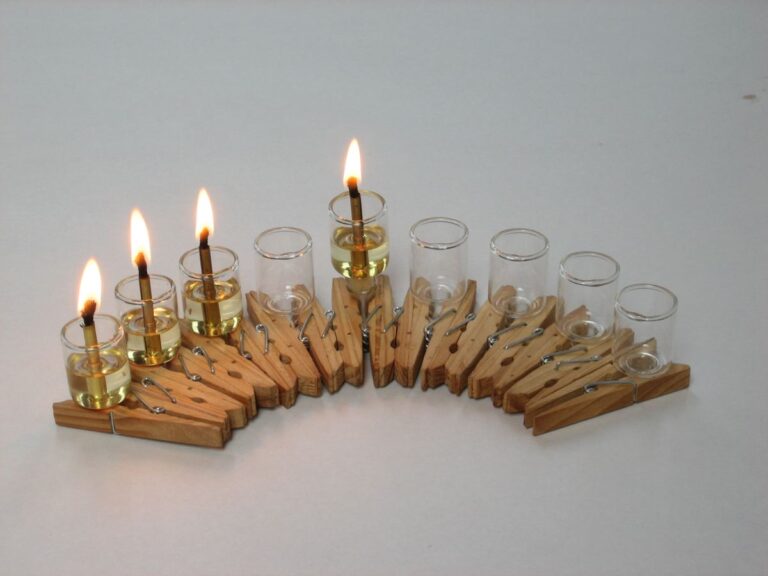
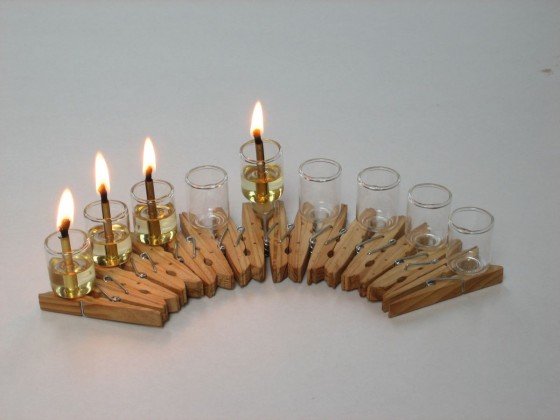
With the Jewish Hannukah holiday only a few weeks away, many Jews in the Middle East and elsewhere are anxiously waiting to eat sufganiot (jelly doughnuts) and searching their closets and cupboards for their Hannukah menorahs.  In case they can’t be found, here is a roundup of a few upcycled and sustainable menorahs made by Israeli designers (such as Gad Charny’s clothespin menorah, seen above).

Charny used clothespins to create this menorah, and made a few different versions.  (If you’re feeling crafty, you could try making your own either out of clothespins or other readily available materials that you have lying around at home.)

"recycled candlestick menorah"Repurposing multiple solitary candlesticks that had lost their mates, the menorah above made by Reddish Studio renders the candlesticks functional as part of an ensemble again.  While this version only has 7 candlesticks, it could be easily expanded and adapted to suit the requirements of a Hannukah menorah.

"tomato LED lamp"If energy efficiency is what you look for in a menorah, you might consider Cygalle Shapiro’s tomato-powered LED lamp.  It may be difficult to make on your own or obtain, but it’s the most organic (and delicious) lamp design that we’ve seen."trash candle holder"

If you like your menorahs to have a less finished look, we suggest Godspeed’s Trash Candleholder, a set of candlesticks made from trashed and reclaimed wood.

The candlesticks to the left are currently only suited for two candles, but you could either request that Godspeed make you another one (they make all their items by hand in a single hour or less) or attempt to make a similar one yourself from scraps at home.

Menorahs can be made creatively and sustainably in unlimited ways.  Below, another version of Gad Charny’s clothespin menorah sheds some more light on the matter.
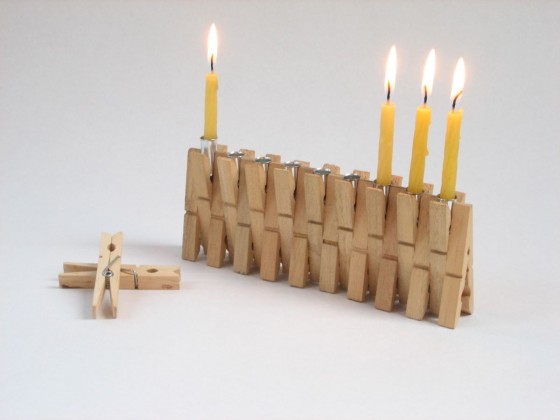
"hannukah menorah clothespin"

More on Hannukah:

image-apple-cinnamon-latkehs

The ultimate latke recipe
Baked Sufganyot For a Healthier Hannukah
Climate Change and Hanukah – A Connection?

Jerusalem Design Week Uses Design to Heat Our Reactions to Climate Change

0

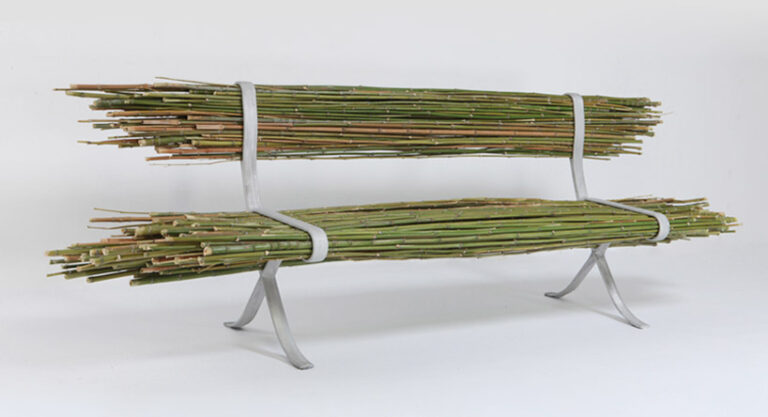
"bamboo bench design"Jerusalem’s second annual Design Week will generate awareness of climate change through design and show off some local sustainable designers.

Jerusalem will host the grand opening of its second annual Design Week on December 4th, with a week of design exhibitions, conferences, master classes, cinema events and workshops planned for a variety of audiences.  The exhibitions will touch on a few design issues.  Culture Climate, curated by Alfons Hug, will attempt to use design to create more empathy towards the global issue of climate change.  Time 02 Fervency, the central exhibit, will focus on designs created within a short period of time and feature some local sustainable designs, such as the work of Adi Zaffran Weisler (of upcycled bullet jewelry fame) and Joy van Erven of Godspeed (the speedy design team that makes all its pieces within one hour).

Gaza’s Getting 20! Zero-Emissions Eco-Schools

6

sustainable development, green design, solar energy, eco-schools, Gaza, UNRWA, environmental education, green building, renewable energy

In time, students living in Gaza Strip will no longer be vulnerable to the politics du jour. 

In an unprecedented move, the United Nations Relief and Works Agency (UNRWA) has unveiled plans to build as many as 20 zero-emissions schools throughout the Gaza Strip, which will rely entirely on renewables for their energy supply. The agency has teamed up with architect Mario Cucinella to apply the most cutting edge sustainable innovations to the schools that will be completely self-sustaining. Plans for the Gaza schools are currently being displayed at the COP 17 conference in Durban and will render education in the Gaza Strip significantly less vulnerable to the politics du jour. Find out how after the jump.

Alon Tal Paints a Picture of Israel’s Environment Wrongs and Rights (INTERVIEW)

alon tal, environmental lawyer
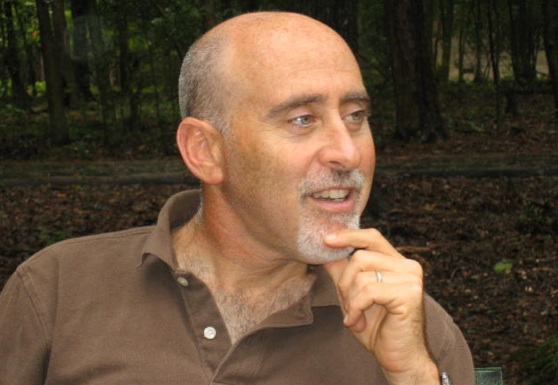
Joshua interviews Israel’s most influential and accomplished environmentalist, Dr. Alon Tal.  Where is Israel at in terms of environmental protection?  Get the scoop here.

Israel has introduced several environmental protections in the last few years, but many problems remain.  Although massive social protests swept Israel over the summer, environmental issues were not at the fore.  So who is paying attention?  Dr. Alon Tal, a lawyer, is a professor in the School of Desert Studies at Ben Gurion University.  He has been active in Israel’s environmental movement for more than two decades.  Dr. Tal founded the Arava Institute for Environmental Studies and the Israeli Union for Environmental Defense.  He is co-chairman of the Green Movement, Israel’s Green Party, which is projected to win 3 seats in the next Knesset election.  Currently on sabbatical at Stanford University, Dr. Tal is writing a book about Israeli forestry policy. We caught up with him to discuss what the Israeli government has – and hasn’t – done to prioritize environmental protections.

World’s Worst Coal-Funding Bank Just Saved the Biggest US Rooftop Solar Project Ever

0

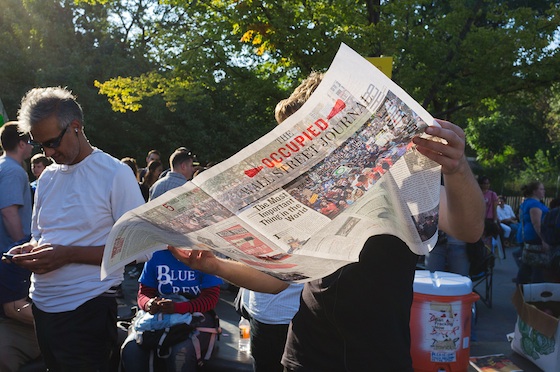
occupy wall street photo newspaperAt a time when banks could hardly be more unpopular, one of America’s most despised has just saved the biggest solar rooftop project in US history.

It is not just the Occupy Wall St protesters who are angry at the behavior of banks. At the Durban Climate Talks this week, NGOs attending the Durban Climate Talks named the three worst banks in the world who have funded the most coal projects since the Kyoto Accord was signed. Funding coal projects is about the worst thing banks can do for the climate. The top three banks in the world for coal project funding are… JP Morgan Chase, Citibank and Bank of America. (All, you might note, US banks).

Yet one of the these three global pariahs (in my opinion) – Bank of America –  has just revived the military SolarStrong project, 120,000 solar installations on military housing rooftops that will more than double the total residential solar installations in the US, and be the largest residential solar project in US history.

Confused? Wait, it gets even more strange…

Sustainable Travel Event of the Year in Abu Dhabi

2

world green tourism, green tourism, eco tourism, sustainable tourism, sustainable travel, abu dhabi, middle east, green sheikhAre you a green travel guru? Do you want to see and be seen at the most important sustainable tourism event of the year? If so, pack your bag and head to World Green Tourism Abu Dhabi 5-7 December, 2011.

Nothing advances sustainability more than a meeting of green minds, which is why the World Green Tourism event in Abu Dhabi is the one of the most important conferences to attend. Organized by the Abu Dhabi Tourism Authority, WGT Abu Dhabi puts hundreds of international government officials, planners, educators, and tourism authorities devoted to sustainable travel in the same room.