Home Blog Page 471

Roots to Fruits: Eat Pea Pods, Cauliflower Leaves, and Onion Peels

0

image-cauliflower-with-leavesAvoid food waste – eat your peels, roots and vegetable “waste” like pea pods, onion skins and cauliflower leaves.

Want another reason to feel virtuous? Alright – remind yourself that your local landfill isn’t one tiny bit fuller because you cooked. But let’s not dwell on smelly, pollution-charged landfills when we’re contemplating dinner. Let’s look at more ways to utilize all edible parts of your produce – even onion skins.

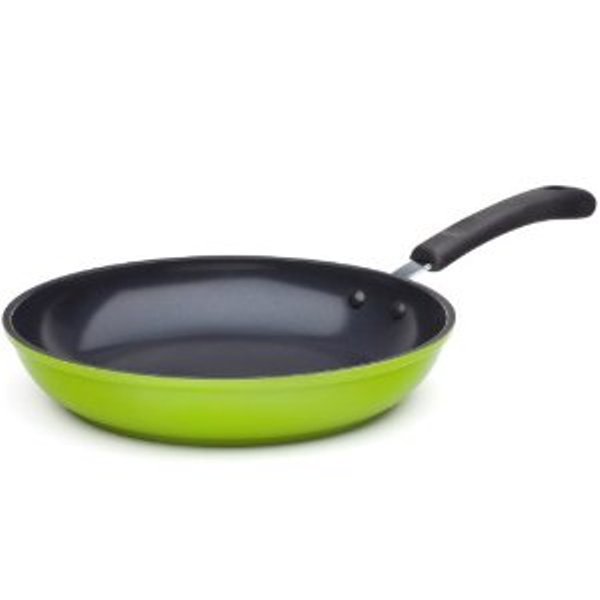
Ceramic Coated Cooking Pans May be Killing You With Color

33

kolbotek frying pan neoflam, mom hitting pan
So-called eco-friendly, ceramic utensils may contain toxic metals like arsenic, an Israeli journalist investigates. It’s in the colors, so also be wary of color-coated knives!

We buy them at health food stores because the ceramic coated pans are supposedly safer than teflon, and good for the planet. A new investigative report by an Israeli consumer protection TV show called Kolbotek finds that ceramic cookware may damaging to your health, and could contain lead and cadmium, which cause a number of serious medical problems such as brain damage (especially in small children), and certain types of cancer. The problem is with the lack of regulation on the materials used to color the pots and pans, and these colors made with cadmium and lead, can leak into your food.

ceramic coated pots and pansColor coated knives were also found to contain toxic metals

Various brands of ceramic cookware were tested by Kolbotek in an environmental testing laboratory Enviro Services Company (ESC), located next to Israel’s notorious hazardous wastes disposal site Ramat Hovav.

The tests found that certain ceramic cookware brands (not mentioned here due to reasons of sensitivity) contained amounts of toxic metals far above “accepted levels” (levels that do not constitute a danger to human health unless absorbed in large quantities).

Even some so called “green guard” brands using a coating called Neoflam were found to contain low levels of these metals, which might warrant then not to be used.
Kobotek also interviewed some prominent toxicologists to obtain their opinions on the dangers from using these products. One of these toxicologists is Professor Yoni Amitai a former Senior Physician at the Hadassah University Hospital in Jerusalem, and Director of  the Department of Mother, Child and Adolescent Health at the Ministry of Health. Amitai said that utensils containing high amounts of metals like lead and cadmium should not be used, especially for families with children.

While the nonstick coatings make these utensils very nice to use, the lab tests found that heating the utensils to very high temperatures, such as done when frying foods of a high fire, releases toxins from metals and other substances at a much faster rate.

The coated knives were found to release toxic substances when scratched or chipped.

kolbotekA link to the entire Kolbotek program, aired on Israel’s Channel 2 TV of Monday, December 26, was posted here. But by March, 2020 it was no longer there.

The program did not say that all ceramic, non stick coated cookware is dangerous, but that some brands that contain high amounts of the mentioned metals should be avoided.

The general consensus from the program is for people to avoid using these ceramic coated utensils, even those considered as “safe”.

This is not the first time that consumers have been warned to avoid using utensils with nonstick coatings. Warnings against use of those with “teflon” non stick coatings have been issues for years, and also in the USA warnings against nonstick utensils have been issued.

Maybe the best idea it to stick to good quality stainless steel utensils; or even better, to use that old cast iron skillet and cooking pot or dutch oven, and use lots of “elbow grease” to clean them afterwards.

Consumer protection programs have made us more aware of products that may be dangerous to human health. Some of these products already mentioned on Green Prophet include a food substance known as meat glue (transglutaminase), an article giving  warnings of possible toxic contraceptives; and a brand of silicone breast implants, PIP, that have been recalled by the French government for fears of leaks that could cause cancer.

In short: buyer beware if you want to protect your health.

UPDATE article (Jan 2): Public Launches Class Action Suit Against Neoflam

More articles on dangerous products you should watch out for:
PIP Breast Implant Warnings Hit the Middle East
Is Conscious contraception site selling a bag of dirty tricks?
The Meat You Eat May Not be What You Think
Meat Glue (transglutaminase): the meat industry’s dirty secret

Muslim President Calls for Rain Prayers on Sunny Friday

1

Islam, religion and environment, rain, drought, UAE, prayer, Abu DhabiFollowers of Islam perform the Al Istisqaa prayer on occasions of drought.

United Arab Emirates AE President Sheikh Khalifa Bin Zayed Al Nahyan is urging residents to pray for rain this Friday: There is a popular story listed on WikiIslam as “Allah, rain there, not here!” It chronicles a time when livestock were dying and roads were cut off so nobody had access to water. While the Prophet Mohammed was delivering a sermon or Khutba in the mosque, a man asked him to pray to Allah for rain.

Electrified Cages Revive Dead Coral Reefs

11

water issues, pollution, climate change, coral reef, red sea, gulf, electricity, nature conservation, coral

An ingenious technology installed in 20 countries around the world has enormous potential not only to regenerate ailing coral reefs but improve their resilience as well!

Coral reefs throughout the world are in dire straits, which bodes badly for the world’s marine ecosystems. But a proven technology that has been floating around for two decades can revive even the most bleached and poorly reefs in a matter of years.

First conceived by German architect and marine scientist Wolf Hilbertz, Biorock technology delivered via a metal cage called a “crab” creates a spontaneous accumulation of limestone, which in turn encourages coral growth. A similar idea called Econcrete made in Tel Aviv creates new reef growth.

Jordan Railway Plans On The Right Track

0

jordan-amman-rail-transportPlans to expand the railway network in Jordan have been given the go-ahead after an assessment that it will cost JD2.8 million

Seriously excited to hear that plans to expand the rail network in Jordan have been approved. According to news reports, the Amman-Zarqa light railway project has been announced by the transport minister who also told employees of the Aqaba Railway Corporation that technical and environmental studies related to the project have been completed. The railway tracks will stretch across 950 kilometres and connect Jordan with Syria, Iraq and Saudi Arabia. It also believed that the project will save the Jordanian treasury around JD 219 million annually.

A 2012 Energy Forecast For Turkey: Heading Down A Tried-And-False Path

0

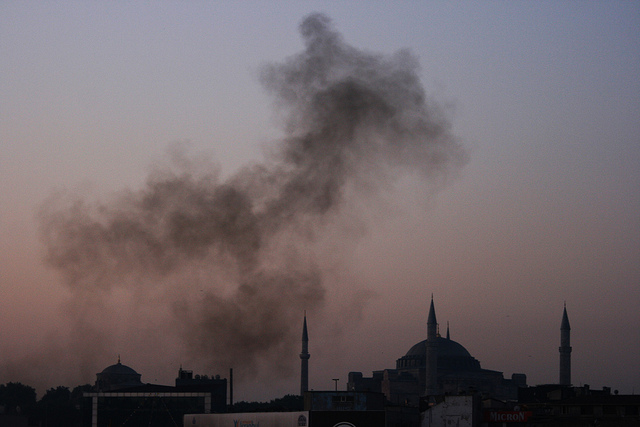
Increasingly smoggy skies are in store for Turkey if it follows the energy paths predicted.

A mostly dismal list of 2012 predictions that recently appeared in the Eurasia Review, courtesy of Haluk Direskeneli, an energy analyst, consultant, and member of the Chamber of Mechanical Engineers in Ankara, Turkey’s capital city. Low investor interest in alternate fuels and a reliance on other countries for fossil fuels will strain Turkey financially, even as new domestic  coal- and gas-fired power plants seek space and funding, Direskeneli says.

Read on to learn about noteworthy developments that Direskeneli predicts in Turkey’s energy sector, and their implications — locally and around the world.

Top 10 Environmental Stories From the Middle East (2011)

Methane, Ethiopian Dam, Meat Glue, Naked Dead Sea, Road Train, Gaddafi, Masdar City, Libyan Manmade River, solar power, Egypt, Fukushima nuclear disaster, White Gold MErcedes, Road Train, 2011 was a big year for the Middle East – not only politically but also environmentally. Step in to see 10 of our most popular stories.

Much has been said about the great political upheavals that swept through the Middle East in 2011 – some for good and some for nought – but less attention has been paid to the state of our environment. We have stepped up to the plate by collecting 10 of the year’s most popular stories – from blood-clotting meat glue to Gaddafi’s tragic fall and giant plumes of gurgling methane that could accelerate planetary warming – in order to inspire our readers to keep on fighting the good fight on nature’s behalf. Step on in for a wonderful overview of 2011 and please accept Green Prophet’s heartfelt wishes for a more mindful 2012.

Will Bridges of Recycled Plastic Work in Middle East?

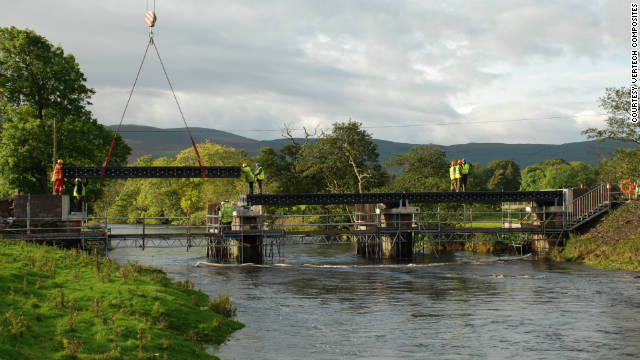
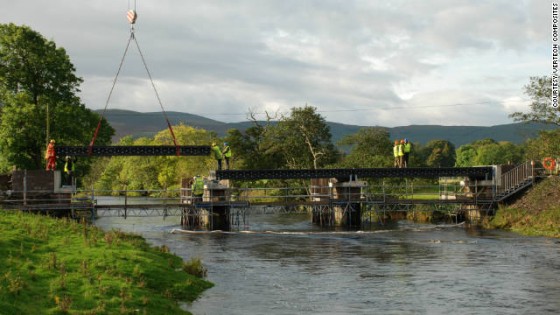
recycled plastic bridgeA bridge like this of recycled plastic could also work in the Middle East
A bridge from recycled plastic, and strong enough to support a car or truck’s weight? This may seem hard to believe; but after covering art from recycled socks, chairs from recycled newspapers, and even a large Christmas tree from recycled plastic drink bottles, this idea my not be very far fetched.

 A recent story in CNN’s Eco Solutions environmental covered 30 meter long bridge being put across the  waters of the River Tweed in Peeblesshire, Scotland. The bridge, reputed to be the longest such bridge in the world, was built on a private estate in order to not have to abide by existing traffic laws, which have not yet approved a bridge made form such material for use on a public road. Engineers who built the bridge, however, claim that the material used, constructed entirely out or recycled plastic, can support weights of up to 44 tons.

Ugly Plastic Window Shutters Become Chic, Minimalist Furniture Pieces

0

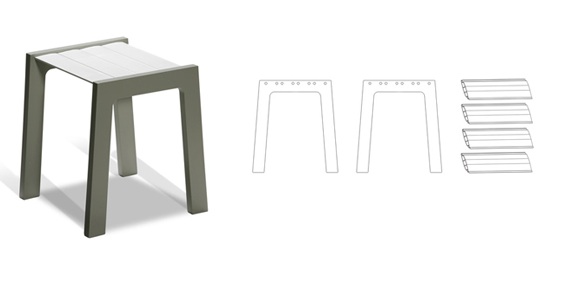
"plastic shutter stool"These plastic window shutters by Kulla Industrial Design can still be used to sit on.

Finding new uses for old wooden window shutters has been a standard upcycling move among sustainable designers for years (check out the wooden shutter chairs made by Tel Aviv’s Junktion Studio).  Wooden shutters have been turned into tables, doors, and even works of art in their own right.  But plastic window shutters – the kind that adorn way too many windows in Israel – have been relatively untouched.  Since these shutters had untapped potential, the duo over at Kulla Industrial Design (the sustainable design team that makes sawdust and plastic bag lamps) decided to find new ways to use them.

Called the ‘Tris Collection’ (tris means “shutter” in Hebrew), Kulla’s window shutter upcycling has produced a stool, chair, divider curtain, and wall mount for storing CDs.

Finally – A Team of Experts to Evaluate Impact of Massive Ethiopian Dam

40

Grand Renaissance Dam, Ethiopia, Nile River, Nile River Basin, environmental impact, environmental destruction, hydroelectricityThe future of the Nile River still hangs in the balance, but at least a team of experts are committed to evaluating the potential impact of Ethiopia’s Grand Renaissance Dam.

The politics surrounding Ethiopia’s Grand Millennium Renaissance Dam changes only slightly more frequently than the project’s name, and we are excited to bring you one of the most positive updates since the saga began. Ethiopia has being posturing against Egypt’s historical monopoly of the Nile river’s waters for months, even though the country lacks the funds to see a potentially environmentally destructive 5,250MW dam to completion without help.

World’s Largest Solar-Powered Boat Docks at Qatar

2

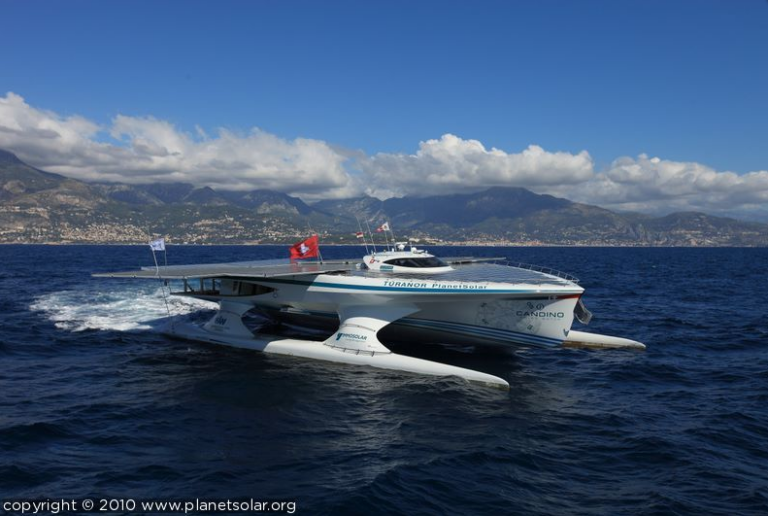
photovoltaics, solar power, marine, marine transportation, solar-powered boats, 2022 world cup, PlanetSolarThis amazing zero energy vessels features 537 square meters of photovoltaic cells and uses absolutely zero fuel. It is currently docked in Qatar as part of a round-the-world tour.

With its solar-powered 2022 world cup stadiums and numerous other developments, Qatar is striving hard to raise its portfolio as a leader in solar technology, so the MS Turanor Planet Solar’s presence at the Pearl pier in the country’s capital city Doha is no coincidence at all. But it is exciting.

The world’s largest zero emissions solar-powered vessel conceived by Swiss Engineer Raphael Domjan in 2004 and built in Germany boasts 537 square meters of photovoltaic cells that capture the sun’s energy to power its showers, lights, and refrigeration. It uses absolutely no fuel, and has been traveling the world since September last year, according to Gulf News.

The MS Turanor’s name means “The Power of the Sun” and was inspired by the Lord of the Rings fantasy novels, the paper reports, and features front and wear “wings” that expand and contract as needed to capture more or less of the sun’s rays. Sensors located on the rear wing can also track the sun, maximizing the amount of sunlight harvested.

With a capacity of 40 people, this incredible boat arrived in Qatar just before Christmas, and will remain there for as long as 3 weeks.

If you happen to be in the region, pop on down and take a look at the future of maritime transportation, and then send us your pics!

:: Gulf News

Read more on solar Qatar:
Qatari Man Invents Solar Generator
Qatar Accused of Bribing Their Way to Solar-Powered World Cup 2022
SLIDESHOW: Entries for Qatar’s 2022 Stadiums
World Cup 2022: Is Qatar Too Hot To Bid?

PIP Breast Implant Warnings Hit Middle East

13

ruptured pip breast implant france
Defunct French company PIP has sold leaky, industry grade silicon implants now being recalled. image via Globalpost

Thousands of faulty breast implants have been recalled by the French government for fears of leaks that could lead to cancer. A call to women has been issued in the Middle East to women from Israel all the way to Abu Dhabi. The defunct French company Poly Implant Prothese (PIP) has had its implant linked to cancer and other ill health effects. Some 30,000 women in France have been told to remove the implants.

Solar Water Heating – what you need to know

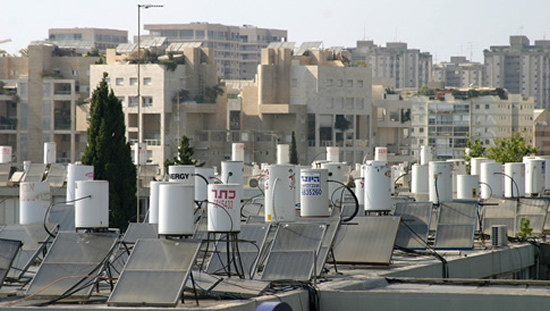
solar hot water heaters israelFree hot water from the sun. Cyprus now leads the way.

Although China leads the world in the number of solar water heaters in use, and Israel was the pioneer and chief country-wide user of solar water heaters for 25 years, today the Republic of Cyprus has the distinction of being the world leader of solar water heater users per capita.

Heating water by black solar collector plates on roof tops was originally invented in Israel during the early 1950s, and that country was the first to instigate a national policy in regards to their use by the general public. Neighboring Egypt is also widening the use of solar water heaters, and even poorer sectors of the country are using their ingenuity to build home made versions of solar water heaters.

Israel boasts that its population uses solar energy to heat water at a rate of 0.56 square maters of solar water heating collectors per person. But Cyprus has an even greater percentage with 0.79 square meters per person.

North America,  on the other hand lags far behind, with the USA ranking 36th in installed capacity relative to its population, with just 0.01 square meters installed per person according to same article. China is much more involved in solar water heating with more than 1.8 billion square feet (1,676,134 sq.m) of solar water heating.

Even European countries like Germany are jumping onto the solar water heating bandwagon, with 2 million Germans already heating water in this manner. In Austria, 15% of the population use solar water heating; while Spain has a law requiring that all new or renovated buildings have solar heating installed.

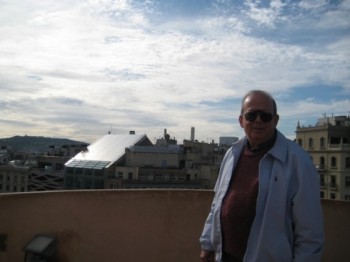
solar hot water heatersMany Spanish cities like Barcelona now use the sun to heat water

Compared to many other types of water heating systems solar water heaters only require the heat of the sun to provide hot water on sunny days.

The systems can pay for themselves over a short period of time, and in the developing world a home made solar heating system using plastic bottles, can even purify drinking water. The sun is free, abundant and using it for light and heating clearly is a no-brainer for saving greenhouse gas emissions.

Whether it involves passing laws, like Spain did; or simply a desire to utilize a cleaner and cheaper energy source, solar water heating is definitely on the rise all over the planet. We’d like to see its use more widespread in Arabian countries.

More on on solar water heating:
The Sodis Makes light, and water, of plastic bottles
Poor Egyptians Find Innovative Ways to Build Solar Water Heating
Israeli Solar Collectors Heading to North America
Israel Pioneering Use of Bottled Solar Energy Has Others Following Suit

Saffron Spice Fights Liver Cancer

0

saffron flower, stamen anti-cancer, cancerResearchers in Al Ain find that saffron can protect your liver from cancer.

Great news just in time for Christmas: Arab scientists from the United Arab Emirates have located anti-cancer compounds in the much loved and expensive spice saffron. Known for centuries as a home remedy, the research project led by Professor Amr Amin from the United Arab Emirates University, Al Ain, found that saffron is able to suppress a large variety of cancer compounds. This news reported in the journal Hepatology, puts saffron in the ranks of cancer fighter along with another much-loved Asian spice, turmeric.

Hunting for Fossil Rock in the Arabian Desert

3

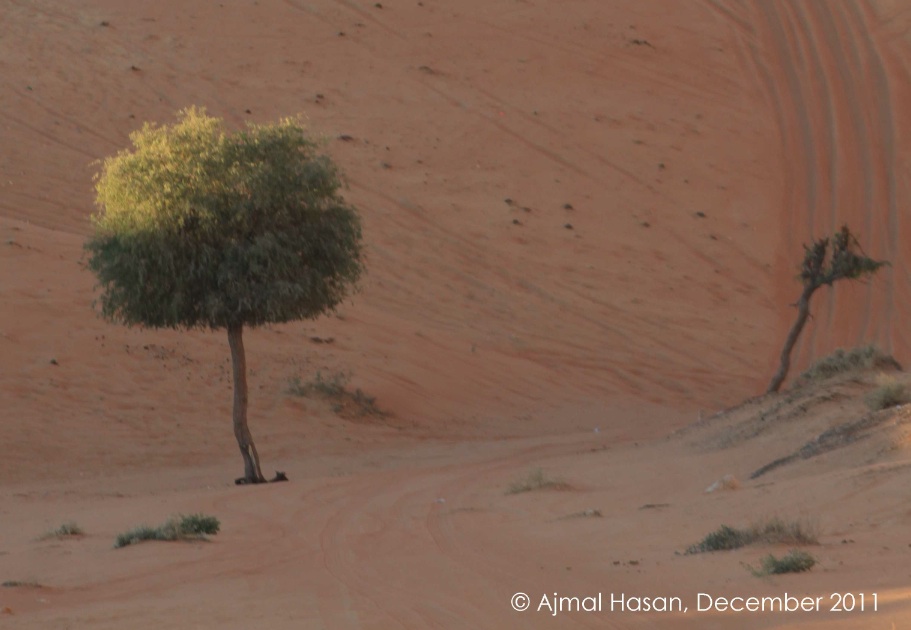
fossil rock arabian desertAjmal spends his weekends scouting for animals and life in the desert. Here is his trip to Fossil Rock.

I’ve always known that much of the Arabian peninsular mountains, especially those in the United Arab Emirates and Oman were at one point in time, millions of years ago, under the ocean. The Tethys sea to be precise. But when I recently heard there could be fossils of ancient sea creatures in the middle of the desert in Sharjah, this sounded almost unbelievable.

So I set out last Saturday to explore a small rocky limestone outcrop aptly called ‘Fossil Rock’ on the outskirts of Sharjah.