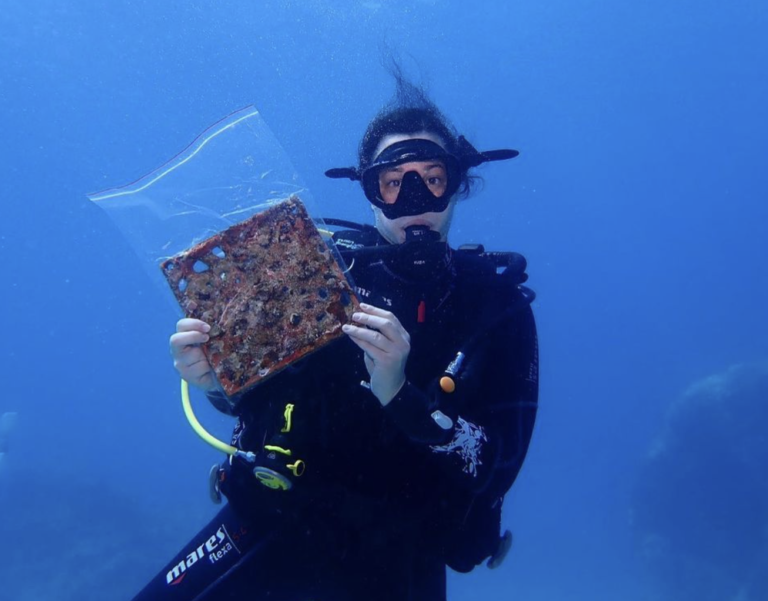
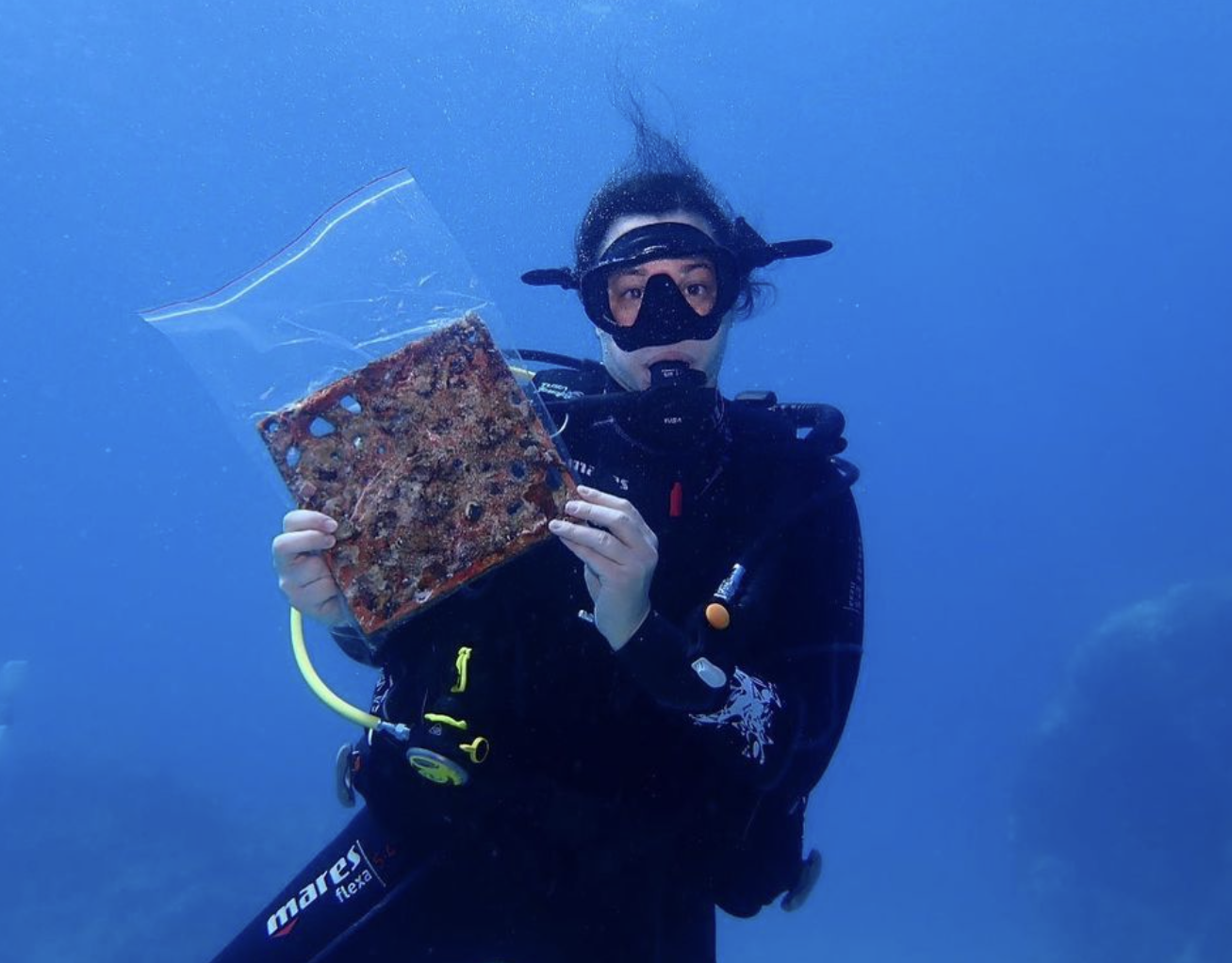
Natalie Levy works with artificial, terracotta reefs to restore life in the Red Sea
Can AI be sustainable?
Over 100 partners, including 37 tech companies, 11 countries and 5 international organizations, have joined forces with the UN under the Coalition for Environmentally Sustainable Artificial Intelligence, aiming to ramp up global momentum to place AI on a more environmentally sustainable path.
Spearheaded by France, the UN Environment Programme (UNEP) and the International Telecommunication Union (ITU), the new AI Coalition brings together “stakeholders across the AI value chain for dialogue and ambitious collaborative initiatives,” according their press material.
193 countries have adopted a series of non-binding recommendations on the ethical use of AI, but a few of these are troubling because among the 193, some of them are considered the “most dangerous countries in the world” by the International Security Journal; they include countries that face severe human rights violations including Afghanistan (run by the Taliban), Syria (run by an ex-Al Qaeda leader), Yemen (controlled by the Houthis). Will they have an equal say in how AI is built or unbuilt with human biases and ambitions that may not be shared as a value across the board?
“We know that AI can be a force for climate action and energy efficiency,” says the UN Secretary-General António Guterres. “But we also know AI power-intensive systems are already placing an unsustainable strain on our planet,” “So it is crucial to design AI algorithms and infrastructures that consume less energy and integrate AI into smart grids to optimize power use.”
The Coalition was announced at the Artificial Intelligence (AI) Action Summit in Paris, where Heads of State and Government, leaders of international organizations, CEOs, academics, artists, and members of civil society gathered to discuss support for AI innovation, adequate regulation, and respect for rights to ensure development of these technologies in the interests of all, including developing countries.
This humanoid e-skin feels pain, University of Glasgow. Maybe this can be applied to pollution in nature? Maybe we can program her to think like Greta
According to their marketing material, the Coalition will encourage AI initiatives for the planet, including its role in decarbonizing economies, reducing pollution, preserving biodiversity, protecting the oceans, and ensuring humanity operates within planetary boundaries.
“It will use a collaborative approach – bringing together governments, academia, civil society, and the private sector – to focus on standardized methods and metrics for measuring AI’s environmental impacts, comprehensive life cycle analysis frameworks for reporting and disclosure, and prioritization of research on sustainable AI.”
What is sustainable AI? What is an environmental impact? Who chooses who enters the pact?
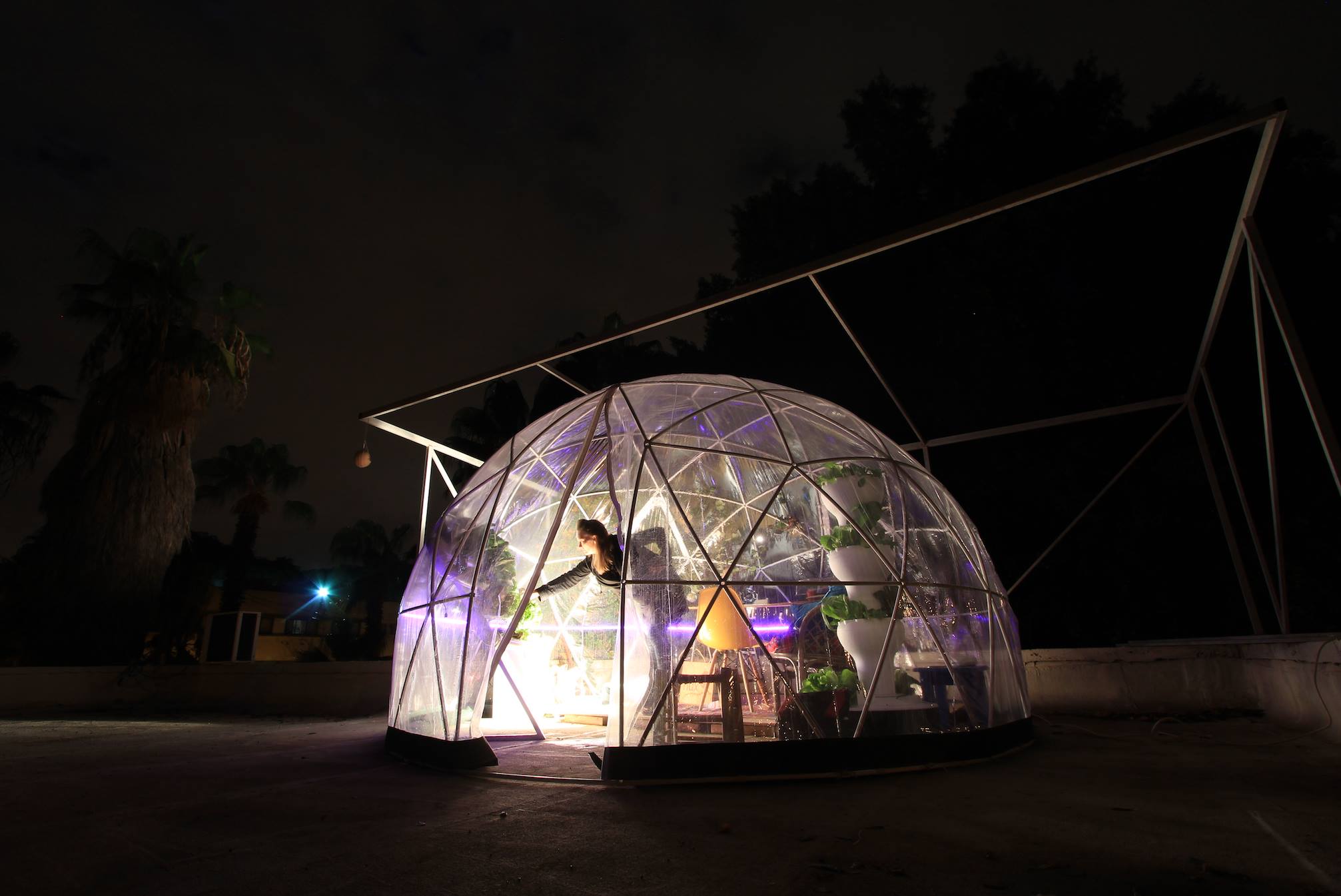
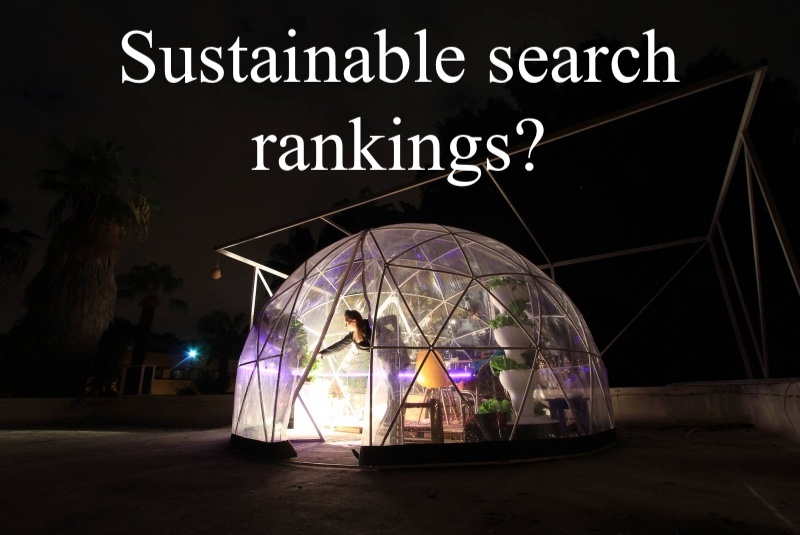
Artificial Intelligence is used in this biodome to grow bio-organic food (Karin Kloosterman).
The new EU coalition argues that the the EU itself has tried and the United States of America have introduced legislation to temper the environmental impact of AI. “However, the policy landscape remains sparse.” The EU group believes that they can “inform investors, development banks and local authorities on the objective elements defining an energy-efficient data centre.”
“The power of AI to solve complex global challenges is becoming ever clearer, but so too are its environmental impacts and the need for environmental guardrails to ensure the field grows sustainably,” said Golestan (Sally) Radwan, Chief Digital Officer for UNEP, from Egypt. “The new Coalition brings together critical stakeholders who have the power to work together and build systems that ensure the net effect of AI on the planet is positive as the technology continues to deploy rapidly.”
In today’s farming, using agrochemicals and fertilizers wisely is essential for cost savings and protecting the environment. Space technology is changing how farmers handle their resources by providing data that helps them use inputs more effectively and save money. With satellite images and remote sensing, agronomists can check soil health, evaluate crop condition, and identify nutrient shortages with great precision.
This up-to-date information allows for precise application of agrochemicals and fertilizers, making sure plants get the right care at the right time and location. Consequently, waste is reduced, crop yields increase, and farming becomes more eco-friendly. Satellite technology is more than just a tool for better efficiency and tracking crop growth; it leads to smarter and more sustainable agri practices. Let’s take a look at a case where a cutting-edge satellite crop monitoring technology company assisted in enhancing fertilizer application efficiency.
Case Study: Optimizing NPK Fertilizer Application with EOSDA’s Satellite Monitoring Technology
In Central and Eastern Europe, traditional crop cultivation practices have long relied on NPK fertilizers to enhance soil productivity and maximize yields. However, conventional application methods often achieve only 40-60% nutrient efficiency, with severe drought conditions further reducing this figure. Overuse of these fertilizers not only strains farmers’ budgets but also imposes heavy environmental costs, including nutrient runoff and water contamination. To address these challenges, innovative practices are emerging that enable growers to achieve higher yields with reduced chemical inputs.
A prime example is the collaboration between Agrinova Group and EOSDA Crop Monitoring. Since 2021, Agrinova Group, a consulting firm established in 2014 with a strong presence across Poland, Slovakia, and Ukraine, has integrated EOSDA’s satellite-based platform into its advisory services. Leveraging high-resolution space imagery, artificial intelligence, and machine learning, EOSDA Crop Monitoring provides near real-time insights into vegetation health and vegetation dynamics. This technology enables the creation of precise VRA maps for variable rate application of fertilizers and seeds, tailored to the specific needs of each field.
A productivity map is useful for applying potassium and phosphorus.
By replacing traditional, labor-intensive soil testing with remote sensing, Agrinova Group has significantly reduced fertilizer inputs — optimizing nitrogen use by 50–130 kg/ha. This shift not only cuts chemical costs but also minimizes ecological impact. Moreover, remote management capabilities have slashed operational travel expenses by 80%, enhancing overall service efficiency. The successful implementation of EOSDA’s platform has reinforced Agrinova Group’s reputation as a leader in sustainable, tech-driven agricultural consultancy, driving both business growth and improved environmental stewardship. Let’s explore how agronomists can make the most of satellite data to improve their crop management strategies.
Using Satellite Data for Better Crop Management with Precision Fertilization
Satellite crop monitoring is revolutionizing fertilizer application by offering farmers a detailed, data-driven understanding of their fields. Utilizing vegetation indices like NDVI and MSAVI, space imagery provides critical insights into plant vigor and health. These indices reveal variations in plant biomass and chlorophyll content, allowing agronomists to identify areas that require more intensive fertilization versus those that need less.
In addition to vegetation indices, satellite data captures soil moisture levels, which play a vital role in nutrient uptake. By understanding moisture distribution, growers can fine-tune fertilizer applications to coincide with optimal soil conditions, thereby increasing the efficiency of nutrient absorption. Furthermore, nutrient distribution maps derived from space imagery highlight spatial variability within fields, enabling the creation of precise prescription maps for fertilizer application.
One of the most impactful innovations arising from this technology is Variable Rate Application (VRA). VRA empowers farm owners to adjust fertilizer doses on a granular level rather than applying even rates across entire fields. This targeted approach not only reduces the overall quantity of fertilizers used but also ensures that each section of a field receives the appropriate amount to maximize crop yield. The resulting efficiency not only cuts costs but also minimizes the environmental impact by reducing chemical runoff and preserving soil health.
In essence, the integration of satellite data into fertilizer management transforms conventional practices. It offers a robust toolset that enhances decision-making, drives cost savings, and sustains high yields. By embracing this technology, modern agriculture moves towards a more precise, sustainable, and economically viable future, demonstrating the powerful synergy between cutting-edge remote sensing and traditional farming techniques. Let’s take a closer look at how satellite-guided fertilization can benefit both the economy and the environment.
The Economic and Environmental Benefits of Satellite-Guided Fertilization
Precision fertilization with satellite crop monitoring” title=”Using satellite data for targeted fertilizer application
Space-guided fertilization and crop monitoring systems are reshaping modern agriculture by offering a dual advantage: boosting farm productivity while reducing ecological harm. By precisely targeting fertilizer applications, farmers can significantly cut input costs. Detailed satellite data — encompassing vegetation indices, soil moisture levels, and nutrient maps — allows for pinpoint accuracy in fertilizer delivery, ensuring that each portion of the field receives just what it needs. This precision minimizes the excessive use of agrochemicals, curtailing unnecessary expenses and reducing the risk of nutrient runoff that can pollute water bodies and harm local ecosystems.
The economic benefits are multifaceted. Reduced fertilizer usage reduces production costs, while optimized nutrient management enhances vegetation vigor and yield. This leads to a healthier bottom line for farm owners and contributes to a more competitive agricultural sector. Moreover, the ecological benefits are equally compelling. Over-fertilization is a primary cause of soil degradation and water contamination. By adopting satellite crop monitoring software, farmers mitigate these issues, preserving soil fertility and promoting biodiversity.
The integration of AI-driven satellite analytics, predictive modeling, and modern farm management tools is revolutionizing agrochemical use by boosting yields, cutting waste, and reducing ecological impact. This innovative approach supports sustainable farming practices, aligning economic growth with environmental stewardship and paving the way for a resilient, eco-friendly future in agriculture.
Forest bathing can help mental health in stressful times such as job insecurity.
At the end of last week, more than 1,000 employees at the U.S. Environmental Protection Agency (EPA) received distressing news: they could be dismissed immediately. Workers with less than one year of service were notified via email that they had been identified as “probationary/trial period” employees and were at risk of immediate termination.
According to the email, “As a probationary/trial period employee, the agency has the right to immediately terminate you.” The unsettling message has left many EPA employees uncertain about their futures and has sparked widespread fear across the agency.
Marie Owens Powell, president of the American Federation of Government Employees Council 238, which represents approximately 8,500 EPA staffers, confirmed that about 1,100 employees received this notification. While no probationary employees have been let go yet, Powell emphasized that the email had caused significant anxiety among staff. “It was scary for people to receive the message, as you can imagine,” she said. “The agency obviously can dismiss probationary employees, but it has to be for cause.”
The decision to send out these termination notices comes as part of a broader push by the Trump administration to downsize the federal government.
In line with President Trump’s “energy dominance” policy agenda, the EPA is undergoing a reorganization aimed at reducing regulations and realigning resources to focus on energy production and deregulation efforts. This includes a reevaluation of agency functions and staffing, with a particular focus on programs that do not align with the administration’s priorities.
In addition to the layoffs, nearly 200 employees involved in environmental justice and diversity, equity, and inclusion initiatives have been placed on administrative leave. These programs, which focus on supporting communities disproportionately impacted by pollution, have been sidelined in the new direction of the EPA, raising concerns about the future of environmental justice within the agency.
EPA Administrator Lee Zeldin, who was confirmed last week, has been tasked with leading the agency’s efforts to roll back regulations enacted under the previous administration, including those aimed at reducing carbon emissions and promoting environmental equity. The restructuring and layoffs are expected to further weaken the EPA’s capacity to address climate change, pollution, and public health issues, particularly for vulnerable populations who rely on the agency’s protective regulations.
The atmosphere within the EPA has become one of fear and uncertainty, as employees are left unsure of their job security and the future of the agency’s work. With critical programs in jeopardy and a shift in focus away from key environmental issues, many are questioning how the agency will continue to fulfill its mission of safeguarding public health and the environment. As these changes unfold, the long-term impact on U.S. environmental policy remains uncertain, and the ripple effects could be felt across the country and beyond.
Discover the innovative palliative care center designed by BIG in Denmark, combining sustainable architecture with nature to create a peaceful and dignified environment for end-of-life care.
Palliative care is more than just medical attention for those with serious or terminal illnesses. It is about offering comfort, respect, and a space that fosters emotional, spiritual, and physical well-being in the final stages of life. The best place for one to die is probably at a safe space at home and in nature with your loved ones around. If the person you love does not feel safe in this configuration, as what happened in my family, the best is when you can find an institution that offers the next best thing.
A recent design unveiled by BIG (Bjarke Ingels Group) for a palliative care center and hospice in Denmark highlights how sustainable architecture can harmonize with nature and spirituality to offer an enriched and dignified end-of-life experience.
Bjarke Ingels Group has won the competition to design the new Sankt Lukas Hospice and Lukashuset, a 8,500 m² palliative care center envisioned as a village nestled within nature. Building on the legacy of the Sankt Lukas Foundation, established in the 1930s, this project will significantly expand Denmark’s palliative care capacity, tripling its current facilities to serve approximately 2,100 patients each year.
The architecture and design of palliative care spaces are crucial to creating an environment that promotes peace, dignity, and connection.
Sustainability in Palliative Care: A Healing Environment
The importance of sustainability in palliative care is not merely about protecting the environment; it’s about creating spaces that promote long-term healing, peace, and connection to the earth. The palliative care center designed by BIG uses natural, reclaimed materials like wood and brick, which not only reduce the environmental footprint of the building but also bring an inherent sense of history and permanence to the space.
Sustainable architecture, in its essence, recognizes that our well-being is intertwined with the health of the planet. For patients nearing the end of their journey, a space built with care for the earth can provide a profound sense of harmony. The use of natural materials, such as reclaimed bricks and sustainably sourced wood, evokes a sense of warmth and familiarity—creating a comforting, homely atmosphere rather than the cold, sterile feel of a traditional hospital.
This simple yet profound connection to nature and sustainability encourages a sense of groundedness for patients as they reflect on their lives and their place in the larger cycle of existence.
Nature as a Source of Healing and Spiritual Connection
There is an undeniable connection between nature and the human spirit. Throughout history, nature has been seen as a source of comfort and renewal, a place where individuals can find peace and clarity.
In palliative care, a place where people essentially go to die, connecting to the natural world can provide immense emotional and spiritual benefits for patients and their families. Nature acts as a mirror, reflecting the ongoing cycle of life and offering solace in times of uncertainty.
The Danish palliative care center is designed to embrace this connection. The space integrates abundant natural light, views of lush green landscapes, and access to gardens that invite patients and their families to spend time outdoors.
For those facing terminal illness, these natural elements offer moments of reflection, serenity, and spiritual renewal. Whether it’s watching the seasons change through a window, sitting in a garden surrounded by the hum of life, or simply breathing in the fresh air, the experience of nature in a palliative care setting can soothe the soul. This is important for the soul of the sick but also the loved ones that need to traverse the world in a new reality without the one that they know the way they once were.
The Red Sea Project, an ambitious tourism initiative in Saudi Arabia, aims to transform a 10,000 square mile area along the Red Sea coast into a luxury destination comprising 50 hotels, over 1,000 residential properties, and various leisure facilities by 2030. Central to this development are five key destinations: Shura Island, Ummahat Islands, Sheybarah (Shebara) Island, Southern Dunes, and Desert Rock.
While the project promises unparalleled luxury and unique experiences, it also emphasizes sustainability, though not without facing criticisms.
Shura Island: The Coral Bloom Initiative
Shura Island by Foster + Partners
Serving as the hub of The Red Sea Project, Shura Island is home to the Coral Bloom concept, designed by Foster + Partners. This development includes 11 hotels from renowned brands such as Hyatt, Fairmont, and InterContinental. A notable feature is Shura Links, Saudi Arabia’s first 18-hole golf course, expected to open in 2025. The island is connected to the mainland by a mile long water bridge, the country’s longest, designed by Archirodon.
Gerard Evenden, Head of Studio at Foster + Partners, said: “Our vision for Shurah Island is inspired by the island’s natural state, with the hotels designed to give the impression that they have washed up on the beaches and nestled among the dunes almost like driftwood. The materials we use are low impact and ensure that the pristine environment is protected, while the additions we make to the island serve to enhance what is already there – hence the name, Coral Bloom.
Biodiversity considerations take centre stage, with the plan designed to avoid disruption of the island’s mangroves and other habitats, a natural defence from erosion while new habitats are created through landscaping to enhance the island’s natural state.
Sustainability is a core focus on Shura Island. The Coral Bloom design aims to harmonize with the natural environment, incorporating landscaping that fosters new habitats to enhance biodiversity. However, the construction of extensive infrastructure, such as the water bridge and multiple hotels, has raised concerns about potential disruptions to local ecosystems and marine life.
Ummahat Islands: Luxury Meets Ecology
The Ummahat Islands host the St. Regis Red Sea Resort and Nujuma, a Ritz-Carlton Reserve. The St. Regis, which began welcoming guests in January 2024, offers 90 villas designed by Kengo Kuma. Nujuma, opened in May 2024, features 63 luxury villas, each with a private pool, and is noted as one of the most expensive hotels in the Middle East.
Both resorts are committed to sustainability, being LEED Platinum-certified and powered entirely by solar energy. Efforts to protect the surrounding ecosystem include installing nets during construction to prevent debris from contaminating the sea, especially during the building of overwater villas. Additionally, Red Sea Global has initiated the planting of over a million mangroves to preserve shorelines, an endeavor guests can participate in. Despite these measures, the introduction of high-end resorts in previously undeveloped areas has sparked debates about the long-term environmental impact and the balance between luxury tourism and ecological preservation.
The Ummahat Islands host two of the most luxurious resorts in the Red Sea Project—the St. Regis Red Sea Resort and Nujuma, a Ritz-Carlton Reserve. While these destinations promise sustainability, their exclusivity and high prices raise questions about accessibility and their true environmental impact.
Sustainability Efforts in Question
The developers of the Ummahat Islands claim a strong commitment to eco-conscious tourism, with several key initiatives in place:
100% Renewable Energy: Both resorts operate entirely on solar power, supported by one of the world’s largest off-grid renewable energy systems.
Water Conservation: Freshwater comes from a solar-powered desalination plant, reducing dependence on fossil-fuel-based water purification.
Eco-Friendly Materials: The St. Regis resort, designed by Japanese architect Kengo Kuma, incorporates locally sourced, sustainable materials.
Coral Reef Protection: Construction was carried out under strict environmental monitoring to prevent damage to the coral ecosystem. Red Sea Global has also committed to planting over one million mangroves to help restore marine biodiversity.
Waste Management: The islands have zero-waste-to-landfill policies, ensuring that waste is either recycled, composted, or repurposed.
Despite these sustainability claims, critics argue that ultra-luxury tourism inherently contradicts ecological preservation efforts. The carbon footprint of wealthy travelers, who arrive via private jets or seaplanes, adds to concerns about the project’s long-term environmental impact.
These resorts are positioned at the high end of the luxury market:
St. Regis Red Sea Resort: Nightly rates start at approximately $1,697 USD for a Dune Villa.
Nujuma, a Ritz-Carlton Reserve: Rates begin around $2,492 USD per night for a Sunset Beach Villa.
Shebara Island: Futuristic Design with Environmental Considerations
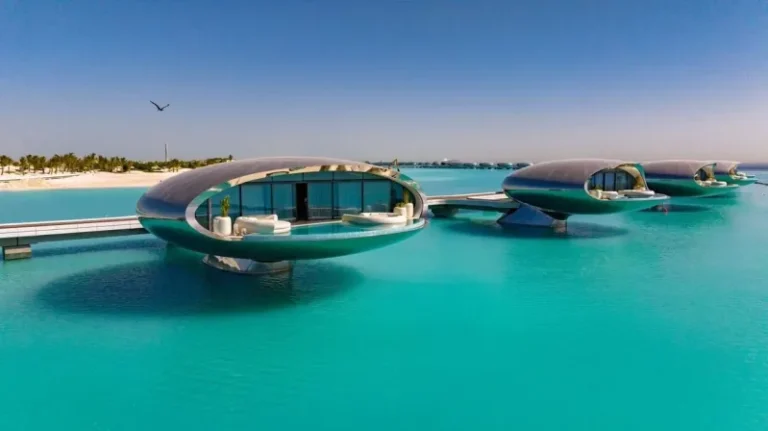
Red Sea pod hotel
Shebara Island features the Shebara Resort, comprising 73 overwater villas with reflective stainless steel orbs designed by Killa Design. These 150-ton villas were prefabricated in Sharjah and installed on-site by Mammoet, with the resort opening in November 2024.
The resort operates entirely on solar power, with freshwater supplied by a solar-powered desalination plant. Waste recycling is conducted on the island to minimize material transport. While these initiatives demonstrate a strong commitment to sustainability, the construction of overwater structures and the associated human activity pose potential risks to the delicate marine ecosystems, including coral reefs and seagrass beds.
Inland Escapes: Southern Dunes and Desert Rock
Southern Dunes, located approximately 100 km northeast of Umluj, is home to the Six Senses Southern Dunes Resort. Opened in November 2023, the resort offers 40 villas and a 36-room hotel complex, all designed by Foster + Partners.
Desert Rock, a 60-key luxury resort built into the granite mountains, began accepting bookings in December 2024. Designed by Oppenheim Architecture, the resort aims to blend seamlessly with the natural landscape, offering guests an immersive experience.
Experience the stunning Desert Rock Resort, a luxury eco-retreat built into the granite mountains of Saudi Arabia’s Red Sea Project. Designed for sustainable tourism, this unique resort blends natural beauty with cutting-edge architecture. Learn more about pricing, amenities, and eco-friendly features.
Both inland resorts emphasize minimal environmental impact by integrating architecture with the natural terrain and utilizing sustainable practices. However, the development in these pristine desert areas has raised questions about the potential disruption of local wildlife habitats and the preservation of the natural landscape.
Balancing Luxury Tourism and Sustainability
The Red Sea Project positions itself as a model for sustainable luxury tourism, implementing renewable energy solutions, habitat restoration, and eco-friendly construction practices. Despite these efforts, the scale of development in previously untouched natural areas has led to criticisms regarding the potential environmental impact. Balancing the demands of high-end tourism with the need to protect and preserve delicate ecosystems remains a complex challenge.
As the project progresses, continuous assessment and adaptation of sustainability strategies will be crucial to ensure that the natural beauty and biodiversity of the Red Sea region are maintained for future generations.
Saudi Arabia sells the projects as regenerative tourism but what are they actually doing in research and rehab? They hire foreign architects to build these so-called eco dreams but how are they being monitored? If you make it to any of these destinations, ask some hard questions.
Saudi Arabia is redefining luxury travel, offering an unparalleled blend of exclusivity, sustainability, and innovation. At the heart of this transformation is Shebara Resort, a futuristic getaway in the Red Sea that rivals destinations like the Maldives—without the long-haul flight. Plus the Maldives jailed their environment minister, accusing her of witchcraft. With cutting-edge design, a commitment to sustainability, and stunning marine biodiversity, Shebara is the perfect luxury escape for eco-conscious travelers.
With 73 overwater and beachfront villas powered by sunlight, this resort is where nature and sustainability come together at The Red Sea
Imagine waking up to panoramic ocean views in a sleek, mirrored pod floating above the turquoise waters of the Red Sea. Each villa at Shebara Resort is designed to reflect the sea and sky, creating a seamless connection between architecture and nature. The futuristic pods are made of stainless steel, blending into the surroundings while offering luxurious interiors, including floor-to-ceiling windows, plush bedding, and private decks with direct water access.
By day, you can relax in your private infinity pool, gaze at the marine life below, or step straight from your villa into the warm, crystal-clear waters of the Red Sea. The resort is completely off-grid, powered by renewable energy, meaning you can enjoy modern luxuries with a clear conscience.
Swimming and Marine Life in the Red Sea
Shebara Report, Saudi Arabia
The Red Sea is one of the world’s most breathtaking underwater paradises, offering exceptional diving and snorkeling opportunities. Unlike the Maldives, which faces rising coral bleaching due to climate change, the Red Sea’s reefs are naturally resilient to higher temperatures, making them some of the most vibrant and well-preserved coral ecosystems in the world.
Schools of tropical fish, from clownfish to angelfish
Graceful sea turtles gliding through the water
Majestic manta rays and dolphins
Are There Sharks in the Red Sea?
Yes, but they’re not a threat to humans. The Red Sea is home to reef sharks, whale sharks, and hammerheads, but attacks on swimmers or divers are extremely rare. Reef sharks are shy and typically avoid humans, while the gentle giant whale shark (the world’s largest fish) is a highlight for divers and snorkelers. Every couple of years there is a shark attack in the Red Sea in Egypt. But attacks are rare.
Why Shebara is Better Than the Maldives
Closer to Europe → Lower Emissions
A shorter flight means less environmental impact compared to the Maldives.
Direct flights to Saudi Arabia are easier and faster from Europe and the Middle East.
Sustainability
100% solar-powered resort
Minimal environmental footprint with floating villas that preserve marine ecosystems
Undiscovered Paradise
Unlike the Maldives, which can feel overcrowded, Shebara offers exclusivity in a relatively untouched environment.
A Key Part of Saudi Vision 2030
A prime example of Saudi Arabia’s commitment to sustainable tourism and economic diversification.
Shebara Resort offers a next-level luxury experience that combines futuristic design, unspoiled nature, and sustainable tourism. For those looking for an exclusive getaway without the long-haul travel to the Maldives, this Red Sea gem is the perfect choice. After your island getaway jump on a slow train around Saudi Arabia.
Would you stay in a futuristic floating pod in Saudi Arabia? ?✨ Scroll down for photos.
Eggplant seems an unlikely soup ingredient. But blended with vegetable stock, herbs, and cream, the shiny purple vegetable makes a creamy soup full of Middle-Eastern flavors.
Now is when eggplant is coming into season in the Middle East. In any market there’s a table piled high with long purple-black eggplants, round eggplants, ridged eggplants, purple and white-striped eggplants, even all-white ones. And they’re cheap.
Plump eggplant baladi
Good cooks in the Middle East and Mediterranean have always known how to make the most of this meaty vegetable, but you don’t often see eggplant soup. Once you’ve tasted this soup, with its robust flavor and creamy texture, you’ll make it again and again.
It’s worth simmering up a quick vegetable stock to use as the base liquid, but in a pinch you can use mushrooms for that added dimension.
Eggplant Soup serves 6
Ingredients
2 medium eggplants
Olive oil
2 medium onions, sliced
4 garlic cloves, chopped
8 cups – 2 liters vegetable stock or 8 cups water plus 1 cup chopped fresh mushrooms
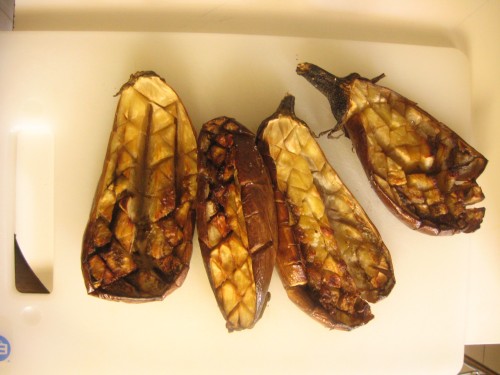
Method: 1. Stand each eggplant on its side and cut it in half. 2. Cut a cross-hatch pattern into the flesh, deeply. 3. Drizzle a little olive oil over the cut eggplant halves. 4. Grill in the oven for 20 minutes or until the eggplant is brown, soft, and separating into cubes.
5. With a spoon, scrape the flesh off the skin. Chop the flesh coarsely and put it aside. 6. Heat 3 Tblsp. olive oil in a large pot, over medium heat. Saute the onions and garlic in it for 8 minutes. (If using fresh mushrooms, add them now too. If you wish, keep 1/4 cup of mushroom slivers to add to the soup about 5 minutes before serving.) 7. When the onions are golden (and the mushrooms, if using) are starting to release juice, add the stock (or water) and eggplant. Bring everything up to a boil. 8. Reduce the heat, cover, and simmer the soup for 10 minutes. 9. Add basil, thyme, salt and pepper. Cook another 2 minutes. 10. With a slotted spoon or mesh spatula, lift the solids out of the pot. Keep the hot soup aside. 11. Blend the solids in a food processor or blender till smooth. 12. Return the puree to the hot liquid and reheat to a simmer. Now the soup is ready. 13. Put 1 Tblsp. sour cream or yogurt into each bowl, or drizzle a little whipping cream in.
Top with 1/2 Tblsp. pesto each.
Serve the soup with cornbread or bruschetta and follow it with a salad.
Ikaria islanders live longer eating wild greens and drinking tea
You might have heard about the so-called “blue zones” — five areas in the world that longevity expert Dan Buettner has identified as having residents who routinely live to be over 100. They are Okinawa, Japan; Sardinia, Italy; Nicoya, Costa Rica; Loma Linda, California, and Ikaria, Greece. A new secret about the Ikaria diet is revealed.
A breathtaking drone view of Ikaria, Greece, showcases its pristine sandy beaches and crystal-clear waters. This picturesque island is one of the world’s five “Blue Zones,” as identified by longevity expert Dan Buettner—places where people live significantly longer, healthier lives.
“[People from] Ikaria, Greece, live about eight years longer than the average American, largely without dementia—no discernible dementia,” Buettner revealed.
In contrast, the US faces a growing dementia crisis. An estimated 6.7 million Americans are living with Alzheimer’s today, a number projected to rise to 13.8 million by 2060, according to the NIH. Meanwhile, in Ikaria, researchers found only three mild cases of dementia among all residents over 65.
The Ikarian Diet: A Mediterranean Marvel
What’s their secret? According to Buettner, diet plays a key role. On his Blue Zones blog, he explained that Ikarians follow the strictest version of the Mediterranean diet, relying on:
Fresh fruits and vegetables
Whole grains, beans, and legumes
Olive oil
Moderate amounts of red wine
However, unlike other Mediterranean regions, Ikarians consume far less fish and meat, instead focusing on an impressive variety of wild and garden greens. “They regularly eat a hundred or so foraged wild greens like mustard, chicory, and fennel—plants we’d weed-whack in the U.S.,” Buettner noted. These greens are packed with antioxidants, boasting 10 times the artery-cleansing power of red wine.
Herbal Teas and Coffee: Longevity in a Cup
Nettles make a great rinse for the hair and are replenishing in tea. Pick them before they flower like this.
Another key to Ikarian longevity? Their love for herbal teas and coffee.
“Ikarians drink herbal teas every day, made from plants grown around their homes and in the wild,” Buettner said. Popular choices include oregano, dandelion, sage, and rosemary—herbs with powerful anti-inflammatory properties. A 2023 study found that drinking tea (both green and black) was linked to a 29% lower risk of dementia.
Ikarians also drink copious amounts of coffee. A 2010 study found that consuming 3 to 5 cups of coffee daily during midlife reduced the risk of dementia and Alzheimer’s by 65%. Another study in 2021 revealed that people who drank a mix of 2 to 3 cups of coffee and tea daily had a 30% lower risk of stroke and dementia.
The Lifestyle Factor: Movement & Social Bonds
Beyond diet, Ikarians benefit from a naturally active lifestyle and strong social ties. Unlike Americans, who often sit for long hours and rely on short, intense gym sessions, Ikarians engage in consistent, low-intensity movement throughout the day. Since the island is mountainous, even a simple trip to the store involves uphill walking.
Additionally, social isolation is rare in Ikaria. “Ikarians are much less likely to suffer loneliness and depression than Americans,” Buettner wrote. “And depression increases dementia risk by 50%.”
Lessons from Ikaria
To embrace the Ikarian way of life:
Eat a plant-heavy, antioxidant-rich diet with plenty of wild greens.
Swap sugary drinks for herbal tea and coffee.
Stay socially connected and engaged.
Move naturally throughout the day, rather than relying solely on structured workouts.
In Ikaria, longevity isn’t just about adding years to life—it’s about adding life to years.
As the world continues its shift toward more sustainable modes of transportation, the electric vehicle (EV) market is growing, with new models for 2025 setting new standards in performance, technology, and eco-friendliness. Whether you’re a seasoned EV enthusiast or a newcomer to the electric car world, 2025 promises to bring exciting options for every driver. Some cars may be sold as 2026 models.
Here’s a look at some of the best electric cars of 2025 that combine cutting-edge tech, impressive range, and stunning design.
1. Tesla Cybertruck
Price: Starting at $79,900 Range: Up to 500 miles Top Speed: 130 mph 0-60 mph: 2.9 seconds
Tesla’s Cybertruck has been eagerly awaited, and it’s finally set to hit the roads in 2025. With its striking, futuristic design, this all-electric pickup promises to revolutionize the utility vehicle market. The Cybertruck’s impressive range, fast acceleration, and rugged build make it ideal for adventurous drivers. Its utility-focused features, like an armored body and spacious cargo, add to its appeal as both a workhorse and a high-performance EV.
2. Chevrolet Equinox EV
Chevrolet Equinox EV
Price: Starting at $34,995 Range: 300 miles Top Speed: 120 mph 0-60 mph: 6.5 seconds
Chevrolet’s Equinox EV will make its official debut in 2025, bringing an affordable, compact SUV option to the electric vehicle market. With a range of 300 miles, it offers practicality for everyday commuting and family trips. Its spacious interior and advanced tech features, including driver-assistance systems, make it a great choice for eco-conscious buyers looking for a well-rounded electric SUV at a reasonable price.
3. Ford F-150 Lightning (2025 update)
Ford F-150 Lightning (2025 update)
Price: Starting at $49,875 Range: 320 miles Top Speed: 110 mph 0-60 mph: 4.5 seconds
While the F-150 Lightning debuted in 2022, Ford has announced significant updates and new trims for the 2025 model year. It’s our favorite truck to drive. The 2025 F-150 Lightning is expected to offer enhanced features, including improved towing capacity, better battery performance, and upgraded tech for a seamless driving experience. It’s a great choice for those who need a versatile and sustainable electric truck for both work and play.
4. BMW i7
Price: Starting at $106,875 Range: 320 miles Top Speed: 155 mph 0-60 mph: 4.5 seconds
BMW’s flagship electric sedan, the i7, will continue to receive updates in 2025, further establishing itself as a luxury EV option. Combining electric performance with a premium interior, the i7 offers a refined experience, boasting impressive range and high-end features like advanced driver-assistance systems, an immersive infotainment suite, and sustainable materials. The 2025 update will see even more tech integrations, positioning the i7 as one of the top luxury EV sedans.
5. Hyundai Ioniq 7
Price: Starting at $62,000 Range: 350 miles Top Speed: 130 mph 0-60 mph: 5.0 seconds
Hyundai’s Ioniq series has quickly become one of the most popular lines of electric vehicles, and the upcoming Ioniq 7 is expected to be a standout in the electric SUV market. With its futuristic design, expansive cabin, and sustainable manufacturing, the Ioniq 7 will cater to families and eco-conscious buyers looking for a versatile, long-range electric vehicle. Expect it to have cutting-edge autonomous driving technology and smart features like augmented reality displays and eco-friendly materials.
6. Mercedes-Benz EQS SUV
Price: Starting at $105,000 Range: 350 miles Top Speed: 130 mph 0-60 mph: 4.1 seconds
The 2025 Mercedes-Benz EQS SUV will combine luxury, sustainability, and technology into one stunning electric vehicle. With a high-tech cabin that incorporates innovative user interfaces, advanced driver-assistance systems, and a long-range battery, the EQS SUV is perfect for those looking for a high-end, environmentally responsible vehicle. The EQS SUV continues the EQ lineup’s emphasis on providing a premium, sustainable experience in a full-size SUV package.
7. Toyota bZ5X
Price: Starting at $50,000 Range: 300 miles Top Speed: 115 mph 0-60 mph: 6.0 seconds
Toyota’s bZ5X, part of their growing bZ (Beyond Zero) series, will launch in 2025 as an affordable, all-electric SUV. The bZ5X will be Toyota’s answer to the electric SUV market, competing with other mid-range electric vehicles. With a focus on sustainability, the bZ5X will incorporate eco-friendly materials, smart tech, and a comfortable driving experience. With Toyota’s reputation for reliability and its commitment to carbon-neutral production, the bZ5X is shaping up to be a solid contender in the EV space.
Cheryl Crow sells her Tesla car to protest Elon Musk and DOGE. Is she going to buy a more polluting non-electric?
How Brake Dust Could Be More Harmful Than Car Exhaust—and Why Electric Cars Could Be the Answer
When we think about car pollution, we often focus on the visible exhaust—clouds of smoke that puff from tailpipes, blackening the air. But what if the real culprit isn’t so easy to see? What if the pollution caused by cars is a quieter, more insidious threat that’s hiding in plain sight? Research from 2015 and picked up again at Yale Environment 360 suggests that brake dust—tiny particles that are kicked up from the wear and tear of brake pads—may actually cause more harm to our lungs than exhaust fumes.
Brake Dust vs. Diesel Exhaust: A Hidden Threat
The 2015 study published in Particle and Fibre Toxicology brings this issue into sharper focus. Researchers exposed human lung cells to two sources of pollution: brake dust and diesel exhaust. To their surprise, the brake dust caused more harm to the cells than the exhaust did. The reason? Brake dust contains harmful chemicals, especially copper, which has been shown to aggravate respiratory issues like asthma and other lung diseases.
What’s even more startling is that newer brake pads—made to replace asbestos-containing pads—were found to be even more toxic. While asbestos is a well-known carcinogen, the copper in modern pads is no less dangerous, especially when it’s released into the air as dust. And while some states like California and Washington have passed laws to reduce the amount of copper in brake pads, this type of pollution remains largely unregulated.
Electric Vehicles: A Cleaner, Healthier Future
Traditional cars create toxic brake dust. EVs do not.
Now, here’s where electric vehicles (EVs) come into play. Unlike their gas-powered counterparts, most electric cars—Teslas included—use regenerative braking. This process allows the car’s motor to harness energy as the vehicle slows, which reduces the need for traditional friction-based brake pads. As a result, EVs generate significantly less brake dust, making them a cleaner option for both the environment and public health.
Beyond the obvious benefits of reducing tailpipe emissions, electric vehicles represent a deeper shift toward sustainability. Regenerative braking not only improves energy efficiency but also helps keep dangerous particles out of the air we breathe. And while the environmental benefits of EVs are often touted for their role in reducing CO2 emissions, it’s important to recognize that they also help mitigate the less visible but equally harmful effects of brake dust.
The Bigger Picture: Why Electric Cars Matter Beyond the CEO of Tesla
In a world that seems increasingly divided, it’s easy to become caught up in personal grievances—whether it’s about corporate leadership of Elon Musk and DOGE, political agendas, or social issues. For some, the decision to buy or keep a Tesla might be influenced by frustration with Elon Musk or other factors. But here’s the thing: our personal feelings about a brand or a CEO shouldn’t overshadow the very real, collective impact electric cars have on the planet.
By choosing an electric car, you’re not just supporting a brand or a CEO. You’re making a statement about the future you want to create. A future with cleaner air, healthier communities, and less pollution. You’re helping reduce harmful brake dust, which poses a hidden health risk to millions of people. And you’re reducing the demand for fossil fuels, contributing to a broader movement toward renewable energy and environmental sustainability.
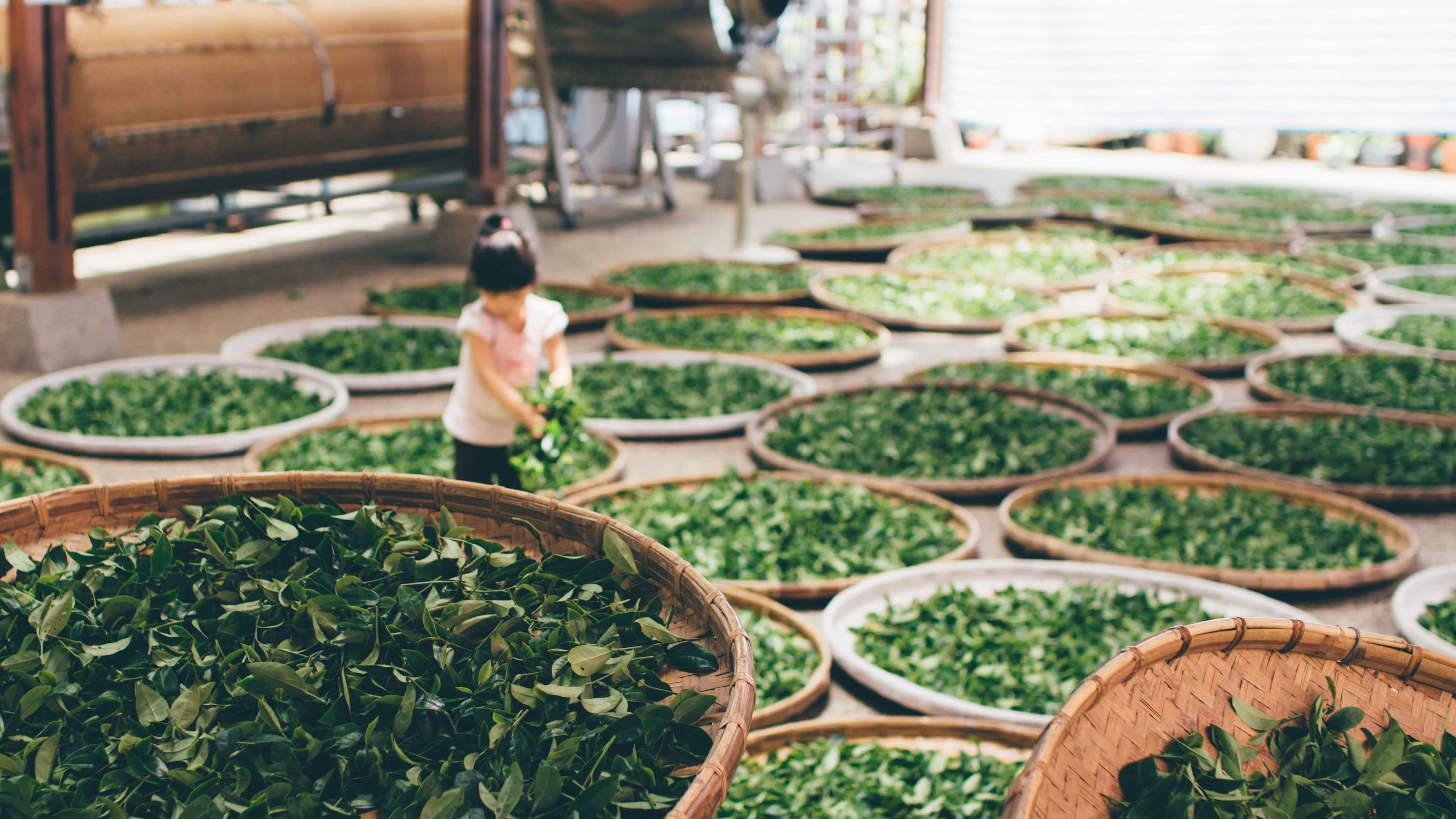
Companion crops of tea and legumes are good for the plants and good for the planet
Tea cultivation, beloved globally, thrives in fertile, acidic soils. However, the overuse of chemical fertilizers has led to soil degradation, negatively affecting both the yield and quality of tea. Intercropping—growing multiple crops together—has emerged as a potential solution to enhance soil health and mitigate environmental damage. This is also known as permaculture.
This practice has gained attention for its ability to restore soil fertility, but there remains a need for detailed research into its long-term benefits, especially when applied to tea plantations.
A collaborative study by Nanjing Agricultural University and Wilfrid Laurier University, published in Horticulture Research in 2024, explores how intercropping leguminous plants with tea influences soil health, microbial diversity, and tea quality. The study uncovers critical insights into sustainable tea cultivation practices, offering a viable path forward for the future of the industry.
The research specifically examined the effects of intercropping tea with leguminous crops such as soybean and Chinese milkvetch. The results were striking: during the flowering periods of these leguminous plants, soil nutrients saw remarkable increases—nitrate nitrogen rose by 77.84%, and available nitrogen by 48.90%. The soil fertility index improved by as much as 86.46% compared to monoculture tea plantations. These gains were attributed to increased soil enzyme activities and a more diverse microbial community.
The study highlighted significant improvements in tea quality. Amino acids and soluble sugars, both critical for the flavor and health benefits of tea, increased by up to 9.11% and 54.58%, respectively. The intercropping practice also fostered a richer microbial ecosystem, with higher bacterial and fungal diversity, further enhancing soil health. These findings suggest that intercropping can significantly boost both soil vitality and tea quality, making it a viable, sustainable agricultural strategy. Add in some regenerative agriculture practices like animal husbandry, and you are getting close to a perfect system.
Masseira agriculture north in Apulia, northwestern Portugal. Seaweed is collected for sand enrichment. The plot and berm are utilized by irrigation from well into 1 m deep groundwater. Today a wide range of local family-farm produce is sold at stands.
Xujun Zhu, a lead researcher from Nanjing Agricultural University, stated, “Our study clearly shows that intercropping leguminous plants with tea not only enriches the soil but also enhances tea quality. This practice offers a sustainable alternative to chemical fertilizers, fostering ecological balance and delivering economic benefits to growers.”
The findings of this study hold transformative potential for the tea industry.
By adopting intercropping practices, tea growers can reduce dependency on chemical fertilizers, improve soil health, and enhance tea quality. This sustainable strategy promises to reshape the future of tea plantations, offering long-term benefits for both the environment and the economy. Regenerative agriculture at its best. Woody Harrelson would approve.
Aerosol cans are never recyclable. Think twice before you buy a can of spray paint. They are cheap but linger forever,
We’ve all had that moment of feeling good about recycling—disposing of that coffee cup or takeout container thinking we’re doing our part. And we learn that most recycling never actually gets recycled. But, as with all good intentions, our optimism can sometimes be misguided. Some items we toss in the recycling bin, thinking we’re helping the environment, may in fact be hindering the process.
The reality is that not everything can be recycled, depending on where you are. Certain papers, glass, and plastics simply don’t make the cut. It’s essential to check with your local service provider for specifics, but here are some general offenders—and suggestions on what you can do instead.
Aerosol Cans They may be made of metal, but the chemicals and propellants inside make these cans hazardous, so most recycling centers treat them as such.
Batteries Batteries are another item best kept separate from regular trash and curbside recycling. Find a designated drop-off for proper disposal.
Brightly Dyed Paper The intense dyes in colored papers behave just like that red sock in your white laundry—rendering the whole batch un-recyclable.
Ceramics and Pottery Items like coffee mugs, while sturdy, are not recyclable. Try reusing them in the garden, where they can have a second life.
Diapers It’s simply not cost-effective to recycle disposable diapers, which are a mix of paper and plastic. In some communities like in Canada, diapers are collected as compost and are shredded into a kind of compost. But just think of all the microplastics going back into the system. Buy reusable, cloth diapers instead.
Hazardous Waste This includes things like household chemicals, motor oil, and antifreeze. Motor oil is recyclable, but be sure to handle it separately—your community likely has specific guidelines for hazardous waste.
Household Glass While food containers like bottles and jars are recyclable, items like mirrors, light bulbs, and window panes aren’t suitable for the recycling bin. Compact fluorescent light bulbs (CFLs) can be recycled but should be disposed of carefully due to their mercury content.
Juice Boxes & Coated Cardboard Containers Some newer models are recyclable, marked specifically for reprocessing, but many aren’t—especially those disposable coffee cups from your favorite café. They might look like paper cups but they are lined with plastic.
Medical Waste Items like syringes and tubing fall into the biohazard category and should be disposed of through special channels.
Napkins & Paper Towels These have absorbed too much residue to be recyclable, but you can compost them instead.
Pizza Boxes The grease in pizza boxes makes them unsuitable for recycling. Some composting experts accept them, though others advise against it. Either way, it’s either the compost or trash.
Plastic Bags & Plastic Wrap These are notorious for clogging recycling machinery, but they can often be reused or returned to your grocery store for proper recycling. Look for bioplastics made from algae or sugarcane.
Plastic-Coated Boxes & Non-recyclable Plastics Plastic-coated containers and certain plastics without recycling marks can’t be processed by most systems. Dispose of them properly.
Plastic Screw-On Tops Though your plastic bottle might be recyclable, small plastic caps aren’t—dispose of these separately, and remember, they can be a choking hazard.
Shredded Paper Shredded paper is tough to recycle, as it’s hard for facilities to identify the type of paper. Compost it, or use it in your garden as mulch.
Styrofoam Check if your community has a special facility for Styrofoam recycling—otherwise, it’s trash.
Takeout Containers Plastic containers can be recycled if properly cleaned. Oily residue left behind makes them unrecyclable, so rinse them thoroughly before tossing them in the bin.
Tires Tires require separate disposal, often with a fee collected at the point of sale.
Tyvek Shipping Envelopes These are often made of non-recyclable material. Find alternative ways to reuse or dispose of them properly.
Wet Paper Waterlogged paper is a no-go in most recycling systems. The fibers become damaged, leading to contamination risks.
Wire Hangers Most recycling centers don’t handle wire. Take them back to your dry cleaner, who will likely be happy to reuse them.
Yogurt Cups Plastics with recycling numbers three through seven are often not accepted by most systems, including those yogurt cups and other food containers.
Every community’s recycling system has its own set of guidelines, and some may be stricter than others. It’s always worth checking in with your local service provider for clarity, and many municipal programs are happy to provide written instructions. If you find that your local system doesn’t handle an item reach out to your local eco NGOs to get something started – maybe a new business opportunity, like ReNuble.
Recycling may seem simple, but it’s a process that demands our care. When in doubt, don’t just recycle—reuse, repurpose, and give the earth a second chance to breathe.
We know that lidless toilets spread poop droplets and it’s worse than you think. More research is in: bioaerosol emissions (the spray that comes from the toilet) during toilet flushing are an often-overlooked source of potential health risks in shared public facilities.
A new study published in the journal Risk Analysis found that bioaerosol concentrations of two bacteria — Escherichia coli (E. coli) and Staphylococcus aureus (S. aureus) — exceeded acceptable levels established by the Centers for Disease Control (CDC) after toilet flushing. Inhaling these biological particles can produce symptoms like abdominal cramps, nausea, diarrhea, and vomiting.
The research was conducted in two restrooms located in an office building in China. One contained a squat toilet and the other a bidet toilet. Scientists measured the emissions of bioaerosols containing S. aureus and E. coli under various flushing conditions and ventilation scenarios in both restrooms.
An analysis of the results showed that, compared to bidet toilets, squat toilets generated 42 to 62 percent higher concentrations of S. aureus bioaerosols and 16 to 27 percent higher concentrations of E. coli bioaerosols.
In addition, bioaerosol concentrations were 25 to 43 percent staph and 16 to 27 percent E. coli lower after the first flush of an empty toilet compared to those observed after a second flush (when feces were present).
Importantly, the researchers found that active ventilation with an exhaust fan reduced the risk by 10 times.
The lidless toilet setup in the lab. A green laser catches droplets of toilet matter as it flies in the air
“Our findings underscore the substantial health risks posed by bioaerosol exposure in public washrooms,” says lead author Wajid Ali, a PhD student in environmental studies at China University of Geosciences. “Enhancing ventilation systems by optimizing exhaust fan efficiency and air exchange rates can effectively reduce bioaerosol concentrations and exposure risks for the public.”
He adds that the findings for squat toilets (common in the Middle East and Asia) apply for seated toilets as well. For public health policymakers, the results of the study provide evidence-based recommendations to define safe bioaerosol exposure limits and promote hygiene practices in public washrooms, ensuring healthier and safer indoor environments. The take home message? Keep the air well ventilated in the rest room for public health and safety and when you can, put down the lid before you flush –– especially #2.
In recent years, Google has placed increasing importance on sustainability-related content like what we feature here on Green Prophet. From eco-friendly practices to carbon footprint reduction, search engines, according to some information we found on the internet, are evolving to prioritize businesses and websites that advocate for green technology and environmental responsibility.
As a result, companies that embrace sustainability aren’t just doing the right thing for the planet—they’re also improving their visibility in search rankings, ultimately helping them connect with more customers. While Google never shows what it uses to rank websites in the search engines, here are some clues that we gathered, leading to the conclusion that truly green, not greenwashed, websites and products may outrank their non-sustainable counterpart.
Google’s Focus on Sustainability
Google’s algorithms are continually becoming more sophisticated and the engineers at SEO companies like Linkhouse try to stay one step ahead. While search rankings have traditionally been driven by factors like keywords, backlinks, and content quality, sustainability is now an important component of a site’s ranking potential. Google’s commitment to prioritizing relevant, helpful, and socially responsible content is a part of their ongoing push to enhance user experience.
In fact, Google has been working to integrate sustainability across its products and services. For example, the company announced a goal to achieve net-zero carbon emissions by 2030, which includes their data centers and cloud services. As part of this mission, Google has also partnered with organizations and businesses to help them develop sustainable practices and improve energy efficiency (Google Sustainability).
The Role of AI and Search Algorithms
Artificial Intelligence (AI) has played a significant role in this shift. As AI systems evolve, they are better equipped to identify and prioritize content that supports sustainability efforts. In particular, Google’s BERT (Bidirectional Encoder Representations from Transformers) algorithm, which helps understand the nuances of human language, is able to assess the broader context of a website. Websites that speak to the collective responsibility for environmental health are now more likely to be rewarded with higher visibility on the search engine. So time for you to start caring about people and planet!
Additionally, AI is used to enhance sustainability efforts within cities, such as reducing emissions and improving urban energy efficiency, through various projects like Google’s partnership with cities to support sustainable practices (Google AI for Sustainable Cities).
Sustainability as a Ranking Factor: Why It Matters
So, what does this mean for businesses? First and foremost, adopting sustainable practices and communicating them clearly on your website has become more important than ever. But it’s not just about feeling good or checking off a box with a certain kind of language — being eco has a direct impact on your site’s SEO rankings.
Here’s how sustainability can affect your business’s online visibility:
Relevancy to modern consumers: Today’s consumers are increasingly concerned about the environment. They’re looking for brands that align with their values. If your business practices and content resonate with sustainability efforts, you’ll attract a wider, more engaged audience.
Search engine visibility: As Google rewards sustainability-related content, your website can achieve higher search rankings. This means more organic traffic to your site and greater opportunities for conversions, all while positioning your brand as a thought leader in the eco-conscious space.
Better content engagement: Content that educates or inspires others to adopt eco-friendly practices tends to be shared more widely, increasing backlinks and engagement metrics, which are both key ranking factors for SEO.
Implementing Sustainability in Your Content Strategy
If you want to benefit from the search engine benefits of sustainability, here are a few steps you can take:
Update your website’s content: Add blog posts, case studies, and articles that highlight your company’s green initiatives, sustainability practices, and environmental goals. Be transparent and authentic about your efforts.
Use keywords that align with sustainability: Incorporate eco-friendly terms like “sustainable business,” “carbon footprint reduction,” and “green technology” in your content. These terms resonate with both search engines and consumers looking for environmentally responsible businesses. But only use them if they are true. Customers are smarter than you think. Don’t claim something that isn’t true.
Showcase your efforts: If your business uses green energy, reduces waste, or participates in eco-friendly projects, be sure to prominently feature these efforts on your website. Case studies, testimonials, and product descriptions can help illustrate the real-world impact of your sustainability. Have you joined B Corp? Are you part of a rainforest alliance? Do you donate money to support a local kid’s soccer team? All these things count.
Optimize for user experience: Ensure that your website is easy to navigate, mobile-friendly, and loads quickly. These factors contribute to a positive user experience and can further boost your search rankings. So basically don’t throw in words, images or testimonies that don’t fit.
The Bottom Line: Sustainable Practices Boost Both Your Brand and Search Rankings
She has time for SEO and forest bathing.
As sustainability continues to take center stage in the digital world, businesses that adopt eco-friendly practices will not only help the planet but also gain a competitive edge in search rankings. Google’s increasing focus on sustainability signals reflects growing consumer demand for businesses that prioritize the environment. By embracing sustainability in both your practices and your online presence, your brand can achieve greater visibility, engagement, and long-term success.
In conclusion, sustainability isn’t just a buzzword—it’s a key driver of SEO success in today’s digital landscape. By aligning your business practices with eco-conscious efforts, you’re doing more than contributing to a better world; you’re positioning your brand for SEO success.
In an era where sustainability is no longer just a buzzword but a business imperative, neobanks—digital-only banks—are emerging as an eco-friendly alternative to traditional banking institutions. With their paperless operations, reduced carbon footprints, and commitment to ethical investing, neobanks are redefining the financial industry by aligning with the values of environmentally-conscious consumers.
The Environmental Toll of Traditional Banking
Brick-and-mortar banks have long been part of the global financial landscape, and there is comfort meeting with bank tellers here and there especially if you are about to sign on for a 25-year mortgage, but their environmental impact is significant. And you don’t need one most of the time. From energy-intensive office buildings to paper-heavy processes, traditional banks leave a substantial carbon footprint.
According to estimates, the global banking sector contributes significantly to emissions due to:
Branch Operations: Large physical branches require energy for lighting, heating, and cooling, adding to carbon emissions.
Paper Usage: Traditional banks still rely on paper for contracts, statements, and application forms, leading to deforestation.
Fossil Fuel Investments: Many large banks finance industries with high carbon emissions, including oil, gas, and mining.
Neobanks: A Digital-First, Eco-Friendly Alternative
Unlike conventional banks, neobanks operate entirely online or via mobile apps. This shift eliminates the need for physical branches, reducing energy consumption and real estate-related emissions. Here’s how they contribute to sustainability:
Paperless Banking
Neobanks replace paper-based processes with digital documentation. Account opening, statements, and transactions occur within apps, reducing paper waste and cutting down on deforestation.
Lower Energy Consumption
Since neobanks lack physical locations, they do not require office buildings, ATMs, or large-scale data centers. Instead, they rely on cloud computing, which, when optimized, is significantly more energy-efficient than maintaining bank branches across multiple cities.
Ethical and Green Investing
Many neobanks differentiate themselves by offering ethical banking options, refusing to fund fossil fuel projects, and investing in sustainable industries. For example, banks like Aspiration and Tomorrow Bank pledge to fund renewable energy projects and plant trees based on user transactions.
Carbon Footprint Transparency
Some neobanks go beyond being neutral and actively encourage customers to make eco-friendly financial choices. Apps like Bunq and Revolut provide carbon footprint tracking for purchases, enabling users to see how their spending habits impact the planet.
Incentivizing Sustainable Purchases
Neobanks often partner with green businesses to offer rewards for eco-friendly spending. Cashback incentives for shopping at sustainable brands or donations to environmental causes with every transaction make green choices more appealing.
The Future of Green Banking
As consumers grow increasingly concerned about sustainability, the banking sector is shifting toward greener banking alternatives. Neobanks are leading this charge by leveraging technology, reducing waste, and aligning their investments with environmentally responsible initiatives. Their success signals a broader movement where financial institutions are expected to be as conscious of their impact on the planet as they are about their bottom line.
By choosing a neobank, consumers are not only simplifying their financial lives but also making a direct contribution to a more sustainable future. The next era of banking isn’t just digital—it’s green.
Neobanks may be useful for some people at some periods of their lives but as children happen and investing becomes part of a household, regular brick and mortar banks have their place. Perhaps some hybrid of both forms will form the future of banking.
Some successful neobanks in the U.S. include:
Chime – One of the most popular neobanks, known for its no-fee banking, early paycheck access, and automatic savings features.
Varo Bank – The first U.S. neobank to receive a national bank charter, offering high-yield savings and no overdraft fees.
Aspiration – A sustainability-focused neobank that funds reforestation projects and avoids fossil fuel investments.
Current – Focuses on faster direct deposits, cashback rewards, and budgeting tools.
SoFi – Originally a student loan refinancing company, SoFi now offers banking services with high-yield savings and investment options.