Neom, a bombastic collection of futuristic cities and resorts, has flopped as Saudi oil prices roll back reality. The Saudi plan of hosting the 2029 Asian games to be held at Trojena, a ski report in the desert, has been cancelled.
A large sperm whale has washed ashore on Zikim Beach in southern Israel, marking only the eighth documented case of its kind along the country’s Mediterranean coast since monitoring began.
For millennia, the Middle East's water crisis seemed an immutable fact of geography — a region defined as much by what it lacked as by what lay beneath its sands. Today, a convergence of plummeting solar costs, advancing membrane technology, and hard-won engineering expertise is rewriting that story.
Neom, a bombastic collection of futuristic cities and resorts, has flopped as Saudi oil prices roll back reality. The Saudi plan of hosting the 2029 Asian games to be held at Trojena, a ski report in the desert, has been cancelled.
A large sperm whale has washed ashore on Zikim Beach in southern Israel, marking only the eighth documented case of its kind along the country’s Mediterranean coast since monitoring began.
For millennia, the Middle East's water crisis seemed an immutable fact of geography — a region defined as much by what it lacked as by what lay beneath its sands. Today, a convergence of plummeting solar costs, advancing membrane technology, and hard-won engineering expertise is rewriting that story.
Neom, a bombastic collection of futuristic cities and resorts, has flopped as Saudi oil prices roll back reality. The Saudi plan of hosting the 2029 Asian games to be held at Trojena, a ski report in the desert, has been cancelled.
A large sperm whale has washed ashore on Zikim Beach in southern Israel, marking only the eighth documented case of its kind along the country’s Mediterranean coast since monitoring began.
For millennia, the Middle East's water crisis seemed an immutable fact of geography — a region defined as much by what it lacked as by what lay beneath its sands. Today, a convergence of plummeting solar costs, advancing membrane technology, and hard-won engineering expertise is rewriting that story.
Neom, a bombastic collection of futuristic cities and resorts, has flopped as Saudi oil prices roll back reality. The Saudi plan of hosting the 2029 Asian games to be held at Trojena, a ski report in the desert, has been cancelled.
A large sperm whale has washed ashore on Zikim Beach in southern Israel, marking only the eighth documented case of its kind along the country’s Mediterranean coast since monitoring began.
For millennia, the Middle East's water crisis seemed an immutable fact of geography — a region defined as much by what it lacked as by what lay beneath its sands. Today, a convergence of plummeting solar costs, advancing membrane technology, and hard-won engineering expertise is rewriting that story.
Neom, a bombastic collection of futuristic cities and resorts, has flopped as Saudi oil prices roll back reality. The Saudi plan of hosting the 2029 Asian games to be held at Trojena, a ski report in the desert, has been cancelled.
A large sperm whale has washed ashore on Zikim Beach in southern Israel, marking only the eighth documented case of its kind along the country’s Mediterranean coast since monitoring began.
For millennia, the Middle East's water crisis seemed an immutable fact of geography — a region defined as much by what it lacked as by what lay beneath its sands. Today, a convergence of plummeting solar costs, advancing membrane technology, and hard-won engineering expertise is rewriting that story.
Neom, a bombastic collection of futuristic cities and resorts, has flopped as Saudi oil prices roll back reality. The Saudi plan of hosting the 2029 Asian games to be held at Trojena, a ski report in the desert, has been cancelled.
A large sperm whale has washed ashore on Zikim Beach in southern Israel, marking only the eighth documented case of its kind along the country’s Mediterranean coast since monitoring began.
For millennia, the Middle East's water crisis seemed an immutable fact of geography — a region defined as much by what it lacked as by what lay beneath its sands. Today, a convergence of plummeting solar costs, advancing membrane technology, and hard-won engineering expertise is rewriting that story.
Neom, a bombastic collection of futuristic cities and resorts, has flopped as Saudi oil prices roll back reality. The Saudi plan of hosting the 2029 Asian games to be held at Trojena, a ski report in the desert, has been cancelled.
A large sperm whale has washed ashore on Zikim Beach in southern Israel, marking only the eighth documented case of its kind along the country’s Mediterranean coast since monitoring began.
For millennia, the Middle East's water crisis seemed an immutable fact of geography — a region defined as much by what it lacked as by what lay beneath its sands. Today, a convergence of plummeting solar costs, advancing membrane technology, and hard-won engineering expertise is rewriting that story.
Neom, a bombastic collection of futuristic cities and resorts, has flopped as Saudi oil prices roll back reality. The Saudi plan of hosting the 2029 Asian games to be held at Trojena, a ski report in the desert, has been cancelled.
A large sperm whale has washed ashore on Zikim Beach in southern Israel, marking only the eighth documented case of its kind along the country’s Mediterranean coast since monitoring began.
For millennia, the Middle East's water crisis seemed an immutable fact of geography — a region defined as much by what it lacked as by what lay beneath its sands. Today, a convergence of plummeting solar costs, advancing membrane technology, and hard-won engineering expertise is rewriting that story.
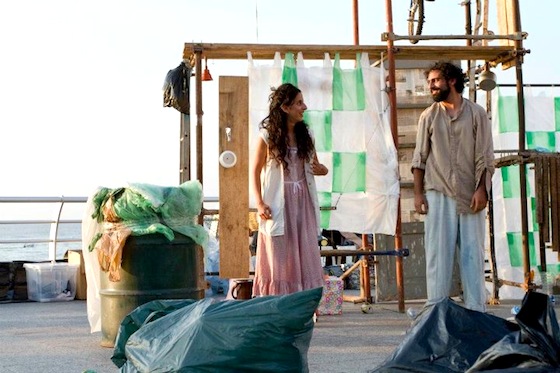
We’ve often wondered: do people in the Middle East just not see the trash that has taken over their lives? 10453: A Story About Life in 1 km2 of Trash answers that question with a roaring yes. they. do.
Written & directed by Camille Brunel Aoun and produced by The (B)IM Project or Books in Motion, this public comedy portrays life among trash. We didn’t get to see it as it was staged in three locations throughout Lebanon, including Tyre, Saida and Beirut, but we do have a few pictures from their Facebook page and a link to a short video teaser after the jump.
See two green pioneers from the Middle East featured on CNN this weekend.
Yosef Abramowitz, from the Israel-based Arava Power Company, was chosen as a leading environmental figure by the CNN television network from among a global pool of candidates. Over multiple broadcasts in July, Green Pioneers will air on CNN with a focus on six diverse individuals who are guiding significant environmental projects in their respective countries. Other Green Pioneers include a princess from Oman, Princess Sayyida Tania Bint Shabib Al Said who is leading efforts to preserve Oman’s nature reserves and turtle populations.
“It is an honor to represent Israel as a Green Pioneer, said Abramowitz. “The choice of an Israeli for a program focused on environmental issues is proof that world looks to us as an example for environmental technology and innovation. With the help of the government of Israel and its support for solar energy, we will continue to be a renewable light unto the nations.”
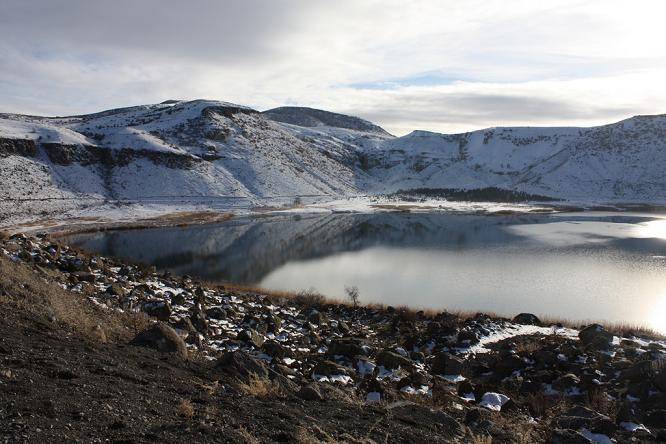
Lake Nar is in central Turkey, which was the epicenter of a disease that ravaged the Byzantine population 15 centuries ago. Climate change may have been a factor.
The Justinian Plague swept through the Eastern Mediterranean from 541 BCE to 750 BCE, killing approximately one quarter of the region’s inhabitants. Samples of sediment from the bottom of Lake Nar have shown that the outbreak occurred simultaneously with a shift in climate that could have tipped the disease into a full-blown pandemic.
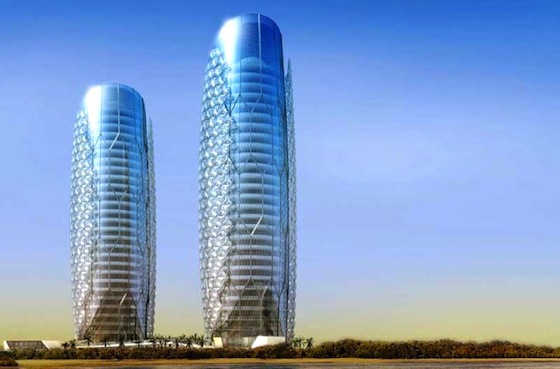
Few elements are more distinctive to Middle Eastern design than the ancient Mashrabiya screens used to keep homes cool, and now recent strides in technology have completely revolutionized how the concept is used.
Commissioned to design the 25-story Al Bahar Towers on Abu Dhabi’s eastern flank, Aedas Architecture worked with Arup Engineering to create a computer-controlled mashrabiya that wraps around the Abu Dhabi Investment Council’s (ADIC) new headquarters. They move in accordance with the sun’s position in the sky, reducing solar gain by a whopping 50%!
Let’s face it, eco-friendly clothing is hard to come by in the Middle East. Desire to own the top brand names at whatever financial cost often trumps planetary-consciousness, so there’s little incentive for designers to go green. But for those who still want to look their best without hurting the earth, there is light at the end of the tunnel.
Whether you prefer lightly-used clothing that won’t bust your budget or want to invest in a one-of-a-kind outfit that meets the most stringent ethical standards, options are beginning to emerge throughout the Middle East. Here are five of them.
Ramadan period expected to add to weighty population
Eat less, and go to the gym more. Alas, easier said than done in some Gulf states, especially during Ramadan. Kuwait, Qatar, the United Arab Emirates and Bahrain are among the world’s top ten overweight nations, a new report by BMC Public Health has found. The extra weight has severe individual health consequences as well as a broader ecological impact.
Perhaps not surprisingly, the United States, home of the Big Mac and supersize fries, is the heaviest country in the world. What is surprising is that it is closely followed by Kuwait. The average person in Kuwait weighs 77.5 kilograms, which is 15.5 kilograms heavier than the average around the world.
Kuwait is followed by Qatar, with the UAE in fifth place. Rounding out the top ten heaviest nations is Bahrain.
Was it the leap-second bug that pushed America’s power plants beyond their capacity?
A 61 second minute was added to clocks around the world on June 30, 2012 at 23:59:60 UTC in order to compensate for slight variations in earth’s rotation speed. This triggered a number of software bugs one of which caused a spike in data center electrical power consumption.
We won’t have to worry about a replay of Y2k until the year 10,000 but leap-year bugs reappear like clockwork every four and four hundred years. Programmers periodically reinvent leap-year mistakes while re-implementing an algorithm first perfected by Pope Gregory XIII in 1582. Leap second bugs are less predictable. Leap seconds are necessary because the Earth’s rotation speeds up and slows down in
Half a century ago, Chubby Checker (ironically) popularized the waist-whittling dance, “The Twist”. Twenty years on, Jennifer Beals’ Flashdance foot-stomping fueled record-breaking sales of leg warmers: required apparatus for burning off surplus 1980’s calories. Micro-shorted Richard Simmons challenged TV audiences to “Sweat to the Oldies”. Suburban strip malls spawned Jazzercise classes.
Americans were not the only ones dancing their way to fitness: Middle Eastern belly-dance and Colombian Zumba hopped onto the scene. The Indian dance sequence that wraps Slumdog Millionaire hatched a zillion imitators on YouTube from tween-age sleepovers to formal wedding parties: the music is infectious and near-impossible to endure without some nerdy head nodding or shoulder popping. A good tune can be more motivating than medical data to get us moving.
Now aspiring dancers in Dubai can log off YouTube and learn fancy footwork straight from a master Bollywood dancer. This summer, Hindi film star Meghna Naidu is establishing a Bollywood dance academy in the United Arab Emirates.
Have you received an email saying your car’s air con could kill you? The jury is still out until more scientific evidence comes in.
Car and home air conditioning units provide a cooler internal environment, and may also be a possible source of drinking water in emergency situations . But there is another side to air conditioning, especially car AC units, if turned on immediately after the car has been parked for a period of time on a hot summer’s day. This is especially worrying in Middle East countries where it’s hot almost year round. Consider the following scenario:
You’ve left your car in the parking lot of a shopping mall on a scorching July or August day; and now after returning to it, and with an inside temperature is more than 70 degrees Celsius (158 degrees Fahrenheit) and you immediately turn on the car’s AC unit. Turning on the AC Unit without first opening the car windows for a few moments can result in your body receiving dangerous benzene fumes from plastic and other synthetic materials in the car’s dashboard, linings, and upholstery.
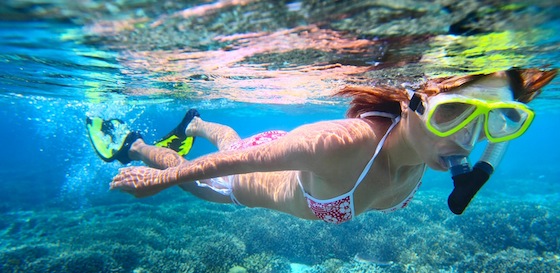
Rising acid levels in the world’s oceans now threatens everything from coral reefs to global food security, Jane Lubchenco, the head of America’s National Oceanic and Atmospheric Administration said on Monday. The level of acid in oceans now rivals climate change as its “equally evil twin,” she told AP.
“We’ve got sort of the perfect storm of stressors from multiple places really hammering reefs around the world.”
This was announced at the International Coral Reef Symposium in the northeast city of Cairns, near the Great Barrier Reef: “It’s a very serious situation,” she added.
As humans pump excessive carbon dioxide into the atmosphere from industry, travel, consumption of meat, and heating and cooling their homes, the oceans absorb it, leading to an increased acidity in the water. This acidity literally melts the bodies of animals made from shells, and it prevents coral from laying down new exoskeleton.
Rising acidity has also found to impair the sense of smell of some fish, like in salmon and clown fish. It’s not known what will happen to the ecology of the sea should reefs die-off altogether.
While there is no quick fix to removing carbon dioxide gas from the seas and oceans, we can do our part by finding ways to reduce atmospheric carbon dioxide pollution, Lubchenco noted.
The news is depressing and if you are not a politician you can fight in other ways by supporting Greenpeace or by starting or joining a sustainable sea circus.
During a recent trip to Iran, EuroNews correspondent Ali Sheikholeslami found that many Iranians are becoming unwitting vegetarians as they can no longer afford to buy meat. Following international sanctions against the country’s nuclear ambitions, inflation has soared, the Rial has crashed to about half its former value against western currencies, and locals are feeling the pinch.
Nichoas Kristof from the New York Times saw a different Iran filled with one night stands and thrill-seekers, but the newest round of sanctions will be felt by those who are already living on the margins.
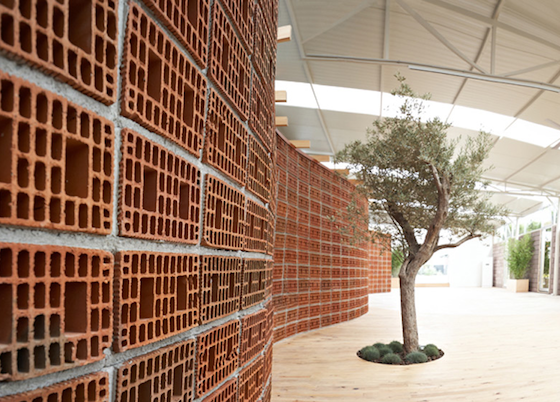
When commissioned to transform Izmir’s Orfi furniture store into an inspiring and atmospheric new space, Turkish designer Nail Egemen Yerce was presented with three concepts that needed to be incorporated: the garden, the plaza and the street.
The existing office was endowed with an incredible excess of daylight, which needed to be diffused without shutting out the potential for connection between the interior and exterior, so the studio installed a striking curvilinear wall laid with perforated bricks. This unusual interior addition not only partitions space but also diffuses natural light that pours into the building.
Let down by world leaders (again) at Rio+20, green Arab researcher Mohamed Abdel Raouf says it’s time for a less top-down approach to solutions
It’s been over a fortnight since the Rio+20 summit which was supposed to look at sustainable development (and in later years ‘sustained growth’ – something which is very different) whimpered to an end. The was so little progress at the climate summit that I feel sorry for those journalists who attended and were asked to write up some ‘news’. Nobody thought it was going to be as ground-breaking as the initial summit twenty years ago which saw world leaders sign up to protect biodiversity and champion sustainability but the outcome was more depressing than many hoped.
It seems climate change has fallen spectacularly off the world agenda and, with it, our chances of an international agreement with the grit to steer the planet back onto the right track. I caught up with Mohamed Abdel Raouf, a green researcher based in the Middle East after a busy and frustrating time at the Rio+20 conference to get his take on events.
There’s just one week left to win a beautiful organic cotton dress from MuMu Organic and help Green Prophet get to 6,000 likes on Facebook. We have a ways to go, so we definitely need your help. Here are three easy steps you need to take to stand a chance to win the dress of your choice from Greece’s first organic clothing line.
i. First, tell us in the comment section at the end of this post why you think that buying organic clothing made in accordance with fair-trade principles is so important.
ii. “Like” us here on Facebook and help us get to 6,000 likes by July 15th. (If you already like us, be sure to comment and share this post with friends.)
We will announce the winner of the dress on July 20th. And the first five people who commented on our first post will be notified at the same time how to claim their 50% discount on MuMu Organic’s e-store. Don’t delay, the competition ends on July 15th.
Rich spices and heavy wintertime comfort food: this is what often springs to mind when people think of recipes from the Middle East and North Africa. But with temperatures in parts of the region rising to 50 degrees Celsius in the shade, who wants to eat rich dishes that end in a food coma? Not to worry, regardless of what the mercury dials in, people here like to eat, so there are numerous healthy and heartwarming summer dishes to try as well. If you want to expand your culinary horizons beyond such staples as baba ghanoush, hummus, and tehina, check out these five less well-known recipes made with signature Middle Eastern flavors.

 See two green pioneers from the Middle East featured on CNN this weekend.