Health insurance is a regulated financial product. Insurers operate under binding contracts, overseen by state insurance commissioners, that legally obligate them to pay claims meeting policy terms. Policyholders who believe a covered claim was wrongfully denied have legal recourse through state regulatory channels.
The New Zealand Merino Company, now rebranded as Zentera, has quietly removed the phrase “world’s leading ethical wool brand” from its website, a notable change that comes after a disturbing investigation by PETA Asia-Pacific into the company’s ZQ-certified wool supply chain, PETA reports to Green Prophet.
Somehow vegetables with short seasons excite the imagination and appetite more sharply than produce that’s available all year around. Good Middle Eastern cooks have many recipes for delicate fava beans, and this turmeric-fragrant soup is one.
Health insurance is a regulated financial product. Insurers operate under binding contracts, overseen by state insurance commissioners, that legally obligate them to pay claims meeting policy terms. Policyholders who believe a covered claim was wrongfully denied have legal recourse through state regulatory channels.
The New Zealand Merino Company, now rebranded as Zentera, has quietly removed the phrase “world’s leading ethical wool brand” from its website, a notable change that comes after a disturbing investigation by PETA Asia-Pacific into the company’s ZQ-certified wool supply chain, PETA reports to Green Prophet.
Somehow vegetables with short seasons excite the imagination and appetite more sharply than produce that’s available all year around. Good Middle Eastern cooks have many recipes for delicate fava beans, and this turmeric-fragrant soup is one.
Health insurance is a regulated financial product. Insurers operate under binding contracts, overseen by state insurance commissioners, that legally obligate them to pay claims meeting policy terms. Policyholders who believe a covered claim was wrongfully denied have legal recourse through state regulatory channels.
The New Zealand Merino Company, now rebranded as Zentera, has quietly removed the phrase “world’s leading ethical wool brand” from its website, a notable change that comes after a disturbing investigation by PETA Asia-Pacific into the company’s ZQ-certified wool supply chain, PETA reports to Green Prophet.
Somehow vegetables with short seasons excite the imagination and appetite more sharply than produce that’s available all year around. Good Middle Eastern cooks have many recipes for delicate fava beans, and this turmeric-fragrant soup is one.
Health insurance is a regulated financial product. Insurers operate under binding contracts, overseen by state insurance commissioners, that legally obligate them to pay claims meeting policy terms. Policyholders who believe a covered claim was wrongfully denied have legal recourse through state regulatory channels.
The New Zealand Merino Company, now rebranded as Zentera, has quietly removed the phrase “world’s leading ethical wool brand” from its website, a notable change that comes after a disturbing investigation by PETA Asia-Pacific into the company’s ZQ-certified wool supply chain, PETA reports to Green Prophet.
Somehow vegetables with short seasons excite the imagination and appetite more sharply than produce that’s available all year around. Good Middle Eastern cooks have many recipes for delicate fava beans, and this turmeric-fragrant soup is one.
Health insurance is a regulated financial product. Insurers operate under binding contracts, overseen by state insurance commissioners, that legally obligate them to pay claims meeting policy terms. Policyholders who believe a covered claim was wrongfully denied have legal recourse through state regulatory channels.
The New Zealand Merino Company, now rebranded as Zentera, has quietly removed the phrase “world’s leading ethical wool brand” from its website, a notable change that comes after a disturbing investigation by PETA Asia-Pacific into the company’s ZQ-certified wool supply chain, PETA reports to Green Prophet.
Somehow vegetables with short seasons excite the imagination and appetite more sharply than produce that’s available all year around. Good Middle Eastern cooks have many recipes for delicate fava beans, and this turmeric-fragrant soup is one.
Health insurance is a regulated financial product. Insurers operate under binding contracts, overseen by state insurance commissioners, that legally obligate them to pay claims meeting policy terms. Policyholders who believe a covered claim was wrongfully denied have legal recourse through state regulatory channels.
The New Zealand Merino Company, now rebranded as Zentera, has quietly removed the phrase “world’s leading ethical wool brand” from its website, a notable change that comes after a disturbing investigation by PETA Asia-Pacific into the company’s ZQ-certified wool supply chain, PETA reports to Green Prophet.
Somehow vegetables with short seasons excite the imagination and appetite more sharply than produce that’s available all year around. Good Middle Eastern cooks have many recipes for delicate fava beans, and this turmeric-fragrant soup is one.
Health insurance is a regulated financial product. Insurers operate under binding contracts, overseen by state insurance commissioners, that legally obligate them to pay claims meeting policy terms. Policyholders who believe a covered claim was wrongfully denied have legal recourse through state regulatory channels.
The New Zealand Merino Company, now rebranded as Zentera, has quietly removed the phrase “world’s leading ethical wool brand” from its website, a notable change that comes after a disturbing investigation by PETA Asia-Pacific into the company’s ZQ-certified wool supply chain, PETA reports to Green Prophet.
Somehow vegetables with short seasons excite the imagination and appetite more sharply than produce that’s available all year around. Good Middle Eastern cooks have many recipes for delicate fava beans, and this turmeric-fragrant soup is one.
Health insurance is a regulated financial product. Insurers operate under binding contracts, overseen by state insurance commissioners, that legally obligate them to pay claims meeting policy terms. Policyholders who believe a covered claim was wrongfully denied have legal recourse through state regulatory channels.
The New Zealand Merino Company, now rebranded as Zentera, has quietly removed the phrase “world’s leading ethical wool brand” from its website, a notable change that comes after a disturbing investigation by PETA Asia-Pacific into the company’s ZQ-certified wool supply chain, PETA reports to Green Prophet.
Somehow vegetables with short seasons excite the imagination and appetite more sharply than produce that’s available all year around. Good Middle Eastern cooks have many recipes for delicate fava beans, and this turmeric-fragrant soup is one.
Sucked dry by an unforgiving sun, my travel companion and I were badly in need of hydration and nourishment yesterday afternoon. Frankly, I had resigned myself to a day full of headaches and delirium, but then we stumbled across an improbable oasis located miles from nowhere in Israel’s Arava desert.
Once no more than a ramshackle caravan, a pitstop between the developed north and the country’s dry southern expanse, Pundak Neot Semadar has since evolved into a charming all-organic restaurant that also sells jam, soap, dates and other goods produced at the nearby kibbutz.
In 1946 Hassan Fathy, Egypt’s Green architect, built a model village near Luxor called ‘New Gourna’ out of mud. But what happened to this stunning village?
Hassan Fathy, author of Earth & Utopia is the Middle East’s father of sustainable architecture. Before it was fashionable or even fathomable, he was championing earth architecture in the hopes of bringing decent housing to Egypt’s impoverished masses. Using mud and other natural resources, he wanted to liberate Egyptians from the ‘concrete matchboxes’ that they lived in the crowded and bustling cities and give them spacious, earthen homes they could be proud of. He came from a wealthy family but wanted more for Egyptian society.
Fathy also brought a new found respect to age-old (and sustainable) architectural techniques that were still in use by Egypt’s poorest to build homes. His world-famous book ‘Architecture for the Poor‘ extolled the virtues of vernacular architecture and the skills and knowledge that the poor possessed. But what happened to his model village ‘New Gourna’ that was built in the forties?
Well, years later the model village is falling into serious disrepair. Buildings are crumbling and others have disappeared completely or have been changed beyond all recognition. But for all its fault those will live there are proud of their village and are desperate to see it repaired. In 2010, the World Monument Fund visited the village to survey the damage. As well as producing a stunning little video they documented all the repairs that would be needed to restore the village to its former glory.
Passive energy water cooling jugs. Part of Hathy’s design.
What’s happened since then isn’t so clear. I got in touch with the WMF to find what the future holds for New Gourna. Erica Avrami, who is director of Research and Education at WMF explained: “We would very much like to follow-up on this work, and UNESCO – who is our institutional partner for New Gourna efforts and the lead organization in its preservation – has been working with the government bodies in Egypt to get approval for the project’s continuation.”
World Monument Fund – “I Wish I Had Better News To Convey…”
“Unfortunately, due to the political situation and the many changes in ministry leadership that have occurred over the past year, this has proven difficult. At present, we are in limbo as we await these permissions. I do wish that I had better news to convey with regard to our work at New Gourna.”
It’s a shame that the project hasn’t lead to more concrete action so far. Yes the instability of the region is a huge and understandable stumbling block but New Gourna represents so much of what is creative, innovative and great about Egypt that I hope it remains a priority to see it restored. As the seasons pass and erode away at the earthen walls of Hassan Fathy’s model village, I also hope that the restoration happens before it’s too late.
“Hassan Fathy is Egypt’s best-known 20th-century architect. He was also a man of contradictions. He came from a wealthy background and had a western-style training. Yet he embraced traditional, vernacular forms, techniques, and materials and throughout his career promoted their use as part of a campaign to improve the conditions of Egypt’s rural poor.
“Earth & Utopia chronicles this lifelong commitment through personal interviews conducted by the author, photographs, and drawings from the Hassan Fathy archives, and Fathy’s own writings on the subject, many of which are published for the first time. This beautiful, fascinating, and scholarly book will be essential reading for students, academics, and general readers interested in Fathy, and the development of Arab and vernacular architecture, earth construction, architecture for the poor, and sustainability.”
Called polo in Syria, try this refreshing Middle East mint lemonade to beat the heat.
Like our cooling vegan cold almond milk and Turkish aryan yogurt drink, this herbal lemonade cools the body and soothes heated spirits.And it’s not only good, it’s good for you.
Mint is packed with vitamin C, which helps you withstand summer’s spiking temperatures. Cold, wet, tasty, and healthy. Can’t beat that.
This recipe comes from the Syrian Foodie in London blog. The author cautions us to remove the mint leaves from their stalks carefully, so as not to have bits of stems in the drink. He adds that this mint and lemon drink is commonly called “Polo” in Syria.
Syrian Mint Lemonade
Ingredients:
1 liter – 4 cups water
Juice of 5 lemons
70 grams – 6 tablespoons sugar
50 grams – 1.5 cups fresh mint leaves, rinsed and drained
1 tsp. orange blossom water, optional
Blend all ingredients in a blender until smooth.
Pour over ice, sip, and enjoy!
More delicious Middle Eastern potables on Green Prophet:
Made from fly ash, SmartPaint is a new environmentally-friendly paint that alert owners of building faults. This is one of three space-age eco paints that Laurie explores.
Green Prophet’s brought you some of the technical advances that permit paint to act as a solar collector. Now in the news, it seems some super-paints can also sense structural degradation and filter pollution: promising potentiality exposed by new research. Meet SmartPaint: it acts as a large-scale and seamless sensor of changes occurring on the surfaces it coats, which could include everything from bridges to buildings, tunnels to wind turbines. Developed by researchers at Glasgow’s University of Strathclyde, the paint contains an integral network of carbon nanotubes capable of detecting microscopic surface flaws that precede major structural faults.
Environmental campaign to rehabilitate litterbugs kicks off in Amman.
Plastic bags and cigarette butts are part of the natural landscape in contemporary Jordan. Bottles roll like tumbleweed across Amman’s early morning streets. Residents say the city’s sanitation services are deteriorating, according to The Jordan Times, but towering trash and burst garbage bags, overloaded waste bins and erratic municipal collection tell the story in more sensual way – the city stinks.
The problem doesn’t discriminate, residents in east and west Amman alike tell of smelly, rotting trash attracting flies, rats and feral cats, despite citizen’s paying regular sanitation fees as part of their monthly water bills.
Nearly seven percent of adolescent Iraqis have smoked shisha, and more than three percent have smoked tobacco, raising concerns among health officials about future diseases that could arise as a result. This was one of the findings of the Global Youth Tobacco Survey carried out recently by Iraq’s Ministry of Health.
Shisha, also known as a water pipe or hookah pipe, has gained immense popularity in the Middle East. The fact that it is so popular among Iraq youth is a red light for health officials in Iraq and is prompting officials to launch campaigns warning against the hazards of this practice and to prepare for future diseases that could occur among the adult population.
He asks hundreds of thousands of people around the world to strip for his cause, but when naked activist photographer Spencer Tunick returns to Israel to help “save the Dead Sea” he’ll be floating clothed. The award-winning photographer from the US travels the world, and asks volunteers to strip as naked subjects in his art happenings which he photographs. He was in Israel last fall to take pictures of nudes floating in the Dead Sea, in the hopes to draw more attention to this natural wonder that is flailing due to human intervention.
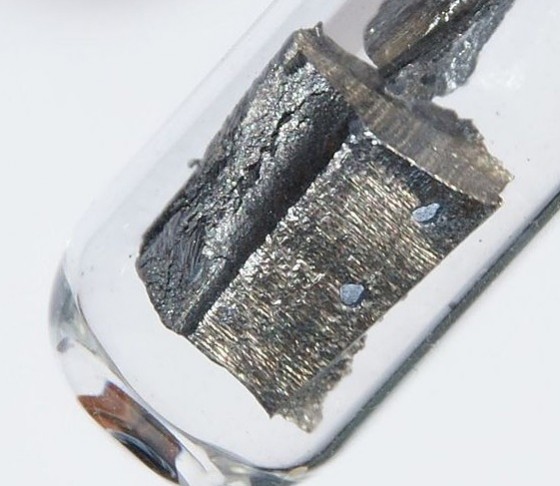
If you think renewable energies will become an increasingly cheaper alternative to petrol – think again now that there’s peak minerals.
As the world moves toward greater use of zero- carbon energy sources, the supply of certain key metals needed for such clean-energy technologies may dry up, inflating per unit costs and driving the renewable energy market out of business. We’ve talked about peak phosphorus for food; now consider that rare earth metals like neodymium which are used in magnets to help drive wind energy turbines, and dysprosium needed for electric car performance are becoming less available on the planet.
Hey’Ya: Arab Women in Sport: Sisters Brigitte and Marian Lacombe celebrate Arab female athletes at London’s Sotheby’s Gallery.
Last December, Qatar Museums Authority commissioned Brigitte Lacombe, a French photographer known mainly for her work with the film industry, to snap over 70 sportswomen from 20 Arab countries – some with Olympic potential. The project was the brainchild of Sheika Mayassa Al Thani, chair of the Qatar Museums Authority (QMA), and also the 29-year-old daughter of the emir of Qatar. It’s a great way to encourage more Arab women to turn to sport, and to help draw light on Muslim societies that require headscarves in sport.
The series, Hey’Ya: Arab Women in Sport, uses videography by Marian Lacombe and portraiture by Brigitte to depict the powerful feelings provoked by sport. It’s a limited showing from July 25 to August 11, but will undergo continued continued development. Admission is free.
With more than $20 billion worth of renewable energy projects currently being developed in the Middle East and North Africa (MENA), the upcoming Mena Renewable Energy conference in Dubai will look at boosting investment in this sector.
In addition to issues affecting Muslim athletes, there were also ones involving Jewish athletes being able to compete on the first two days of the 17 day competition, due to those days being the Sabbath and the fast day of the Ninth of Av. which occurred on Sunday, July 29, commemorates some of the darkest moments in Jewish history.
But these types of issues have always been around and have affected athletes in other types of sporting competitions as well. With the International Olympic Committee making great strides to emphasize the meaning of the games within the framework of global community and pure athletic competition, we might take some time to dwell on the games themselves within the framework of whether gigantic sporting events like the Olympiad are contributing anything towards helping make the world environment a better for humanity.
Jordanians can pick each other out by sight and last-name analysis, as accurate as DNA testing.
Six million “Jordanians” are a quilt sewn from disparate ethnicities and cultures, co-existing in peace while retaining the essence of their origins. This tiny nation divides itself up into groups and sub-groups and tribes and families. Jordan hosts one of the largest (by percentage of total population) immigrant communities in the world: more than 40 percent of its residents were born in other countries. Its Arab population consists mostly of Jordanians, Iraqis and Palestinians. Regional instability brings a steady flow of Egyptians, Libyans, Lebanese and Syrians.
Non-Arabs pour in too. There are Turkmans, Chechens, Circassians and Romanis. Half a million Assyrian Christians rolled in during the Iraq War. And then there are migrant workers, Southeast Asians who saturate the local domestic and construction workforce.
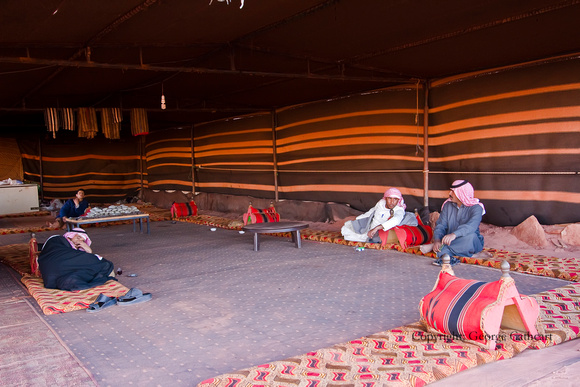
But these are the easy lines of division. It’s the heightened attentiveness of “true” Jordanians to the micro-populations within their own society that I find fascinating. How to explain this uber-sensitivity to “tribe” in modern, internationally-savvy Amman? I’ll make an unscientific stab at answering my own question: the best camo tent?
I think it comes from the Bedouin.
Let’s say that “true” Jordanians are the people actually born here. With parents and grandparents and great-grandparents who were also Jordan-hatched. They self-categorize as Palestinian Jordanians, and Gulf Jordanians, and Bedouin Jordanians, to name three.
These distinctions are mostly lost on me. I can’t see the subtle changes in dress or food; I’m deaf to accents since I don’t speak Arabic. The only sub-sect that stands out to me is the Bedouin, and only those still embracing a semi-nomadic life.
Their tents line the hills ringing Amman; they graze their animals in the damndest places. Local friends test me to see if I can tell a gypsy compound from Bedouin: I’m “right” half the time, but I don’t think they’re too sure themselves (although most boast Bedouin heritage, I think it’s the Middle East version of America’s “I’m part Cherokee”.).
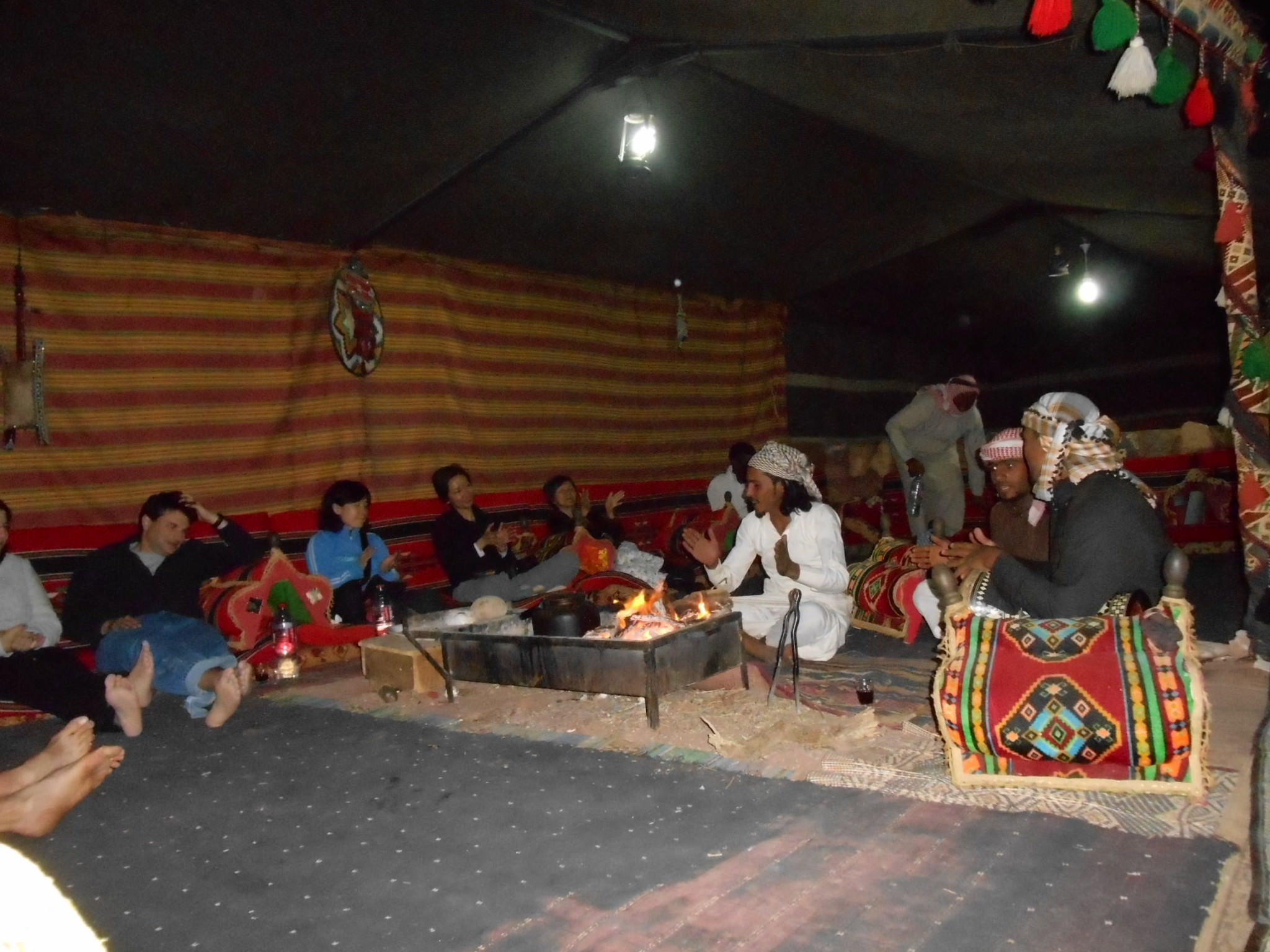
On my fifth run to Petra, I outed myself as a tourist and bought a copy of Married to a Bedouin, by Marguerite van Geldermalsen, a New Zealander who met and married a Bedouin souvenir-seller from Petra in 1978. They made their home in a 2,000-year-old cave. She converted to Islam, learned Arabic, and gave birth to three children. She was living the Bedouin dream, and I hoped her book would let me see inside her tent. I wasn’t disappointed.
Poking around to learn more about these remarkable people, I came across a short documentary film featuring Bedouin children living in Bekaa, Lebanon. As the kids share their daily routines, their play and work, their hopes and dreams, a tiny flap in the tent is lifted. It’s an amazing piece.
Passing daily by the Bedouin tent camps, making occasional roadside stops to buy tomatoes and strawberries, I never really thought about their lifestyle. It opened my eyes and motivated me to learn more.
The Bedouin defer to a hierarchy of allegiance based on kinship
Loyalty to nuclear family, or bayt, is primary, with a family typically consisting of a married couple, their children, and perhaps adult siblings or grandparents.
Extended family comes next (Cousin Ahmed, Uncle Ali), and this grouping spans generations. Then there’s the tribe (the Al Howaitat is one of Jordan’s largest) led by a Sheik, who mediates between tribe and outsiders. There’s power in tribe: Bedouin in Mafraq effectively blocked Jordan’s nuclear ambitions in that province; another tribe is causing headaches to the Disi Waterline project.
Groups can also be connected by their herd type. Although family is key, tribes are fluid, absorbing new members as they roam.
This framework delineates how the Bedouin settle disputes, maintain justice, and cooperate on common interests. They are fiercely independent and obey strong codes of honor, underpinned by traditional justice systems.
In the mid-nineteenth century, large numbers of Bedouin across Midwest Asia started to leave their traditional, nomadic life to settle into cities. Aspects of climate change, like severe drought, forced many to abandon herding. Rapid urbanization throughout the Middle East offers an increased standard of living that could be supported with conventional, and available, jobs.
There’s a lot of information out there about the Bedouin. Join me in learning more about them before these remarkable people are completely absorbed into the global soup.
A hybrid energy source comprised of solar energy and magnets fuel this futuristic car.
Fuel-guzzling, monochromatic sedans will be a thing of the past if Mohammad Ghezel can sell his latest concept. About the only aspect of the future we dare to think deeply about given climate change, population growth and shrinking natural resources, BioThink vehicles mimic the movement and structure of certain insects.
Looking ahead to over-populated mega-cities in a world of higher temperatures and mandatory carbon cuts, the Iranian designer conceived two different kinds of narrow, self-sufficient 2-seaters that use up less space than conventional vehicles and produce zero carbon emissions.
Last Saturday, ten chefs from Jordan cooked up the world’s largest falafel.
Jordan joined the Guinness Book of World Records this week for the world’s biggest falafel. The super culinary feat was witnessed by a Guinness official who confirmed the falafel as “the world’s largest”. Fame was fleeting for the phenomenal falafel, weighing in at 74.75kg, which was later eaten as an appetizer by some of the 600 people attending a special iftar banquet.
8th annual Health, Safety and Environment Forum in Energy happens in Doha from October 8 -10
Accidents associated with oil and gas operations endanger human life, damage adjacent communities and threaten the environment. The shockwaves of these accidents affect the business involved and its workers, and extend far beyond. Millions of dollars are spent annually on restoration.
Most of these incidents can be chalked up to complacence. Many could be avoided by changing industry practices and applying stringent regulations. But repetitive tragedies demonstrate that the energy sector hasn’t fully absorbed past lessons. A summit in Qatar aims to mitigate these risks for oil-producing nations.

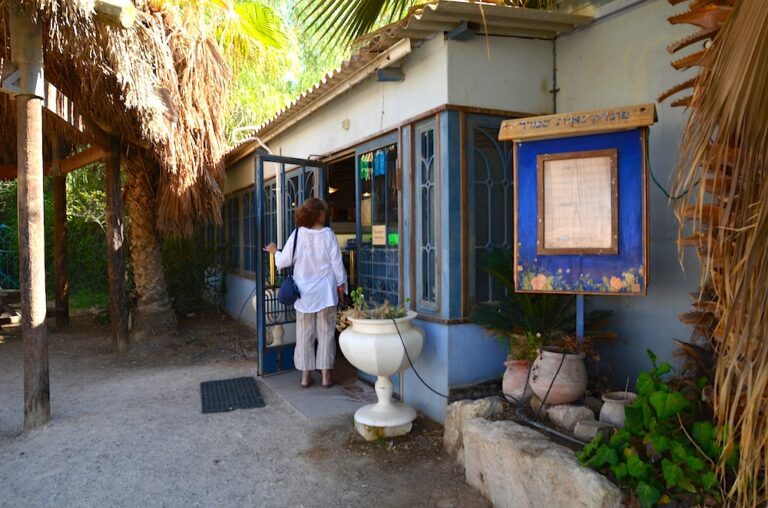
 Sucked dry by an unforgiving sun, my travel companion and I were badly in need of hydration and nourishment yesterday afternoon. Frankly, I had resigned myself to a day full of headaches and delirium, but then we stumbled across an improbable oasis located miles from nowhere in Israel’s Arava desert.


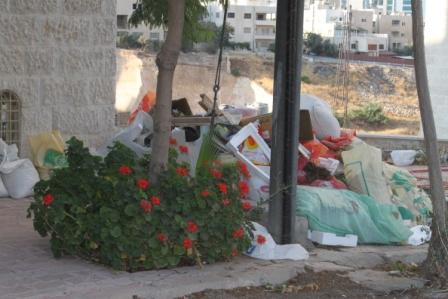
 Environmental campaign to rehabilitate litterbugs kicks off in Amman.



 Hey’Ya: Arab Women in Sport: Sisters Brigitte and Marian Lacombe celebrate Arab female athletes at London’s Sotheby’s Gallery.