A vast and largely untapped lithium reserve may be hiding beneath one of North America’s oldest landscapes, the Appalachian Mountains, offering a surprising twist in the global race for clean energy materials. According to new findings from the U.S. Geological Survey (USGS), as much as 2.5 million tons of lithium could be buried across the region, stretching from the Carolinas up through New England.
Energy equities are responding unevenly to the evolving landscape. Companies with direct exposure to UAE production growth and infrastructure are benefiting from increased activity expectations, while global oil majors face a more mixed outlook.
All air conditioners release water. That's Physics. Cities like Los Angeles pour billions of water down the drain every year. And while home owners who are savvy to water reuse are finding ways to use AC water in the garden (here are 5 ways to use air con water at home), or in art studios (it's basically free distilled water), cities could save water in meaningful ways by using creative ideas. These are solutions you can send to urban planners and those running smart city accelerator programs. Pick one of them and you might win the grant!
As tensions rise in one of the world’s most critical maritime chokepoints, the ripple effects go far beyond oil—touching food systems, climate pressures, and regional stability
Current goals are to treat neurological disease like Parkinson’s and restore autonomy to people with severe physical limitations by controlling exoskeletons and prosthetics. There’s also huge potential to improve cognitive abilities such as memory, attention, and languages.
A vast and largely untapped lithium reserve may be hiding beneath one of North America’s oldest landscapes, the Appalachian Mountains, offering a surprising twist in the global race for clean energy materials. According to new findings from the U.S. Geological Survey (USGS), as much as 2.5 million tons of lithium could be buried across the region, stretching from the Carolinas up through New England.
Energy equities are responding unevenly to the evolving landscape. Companies with direct exposure to UAE production growth and infrastructure are benefiting from increased activity expectations, while global oil majors face a more mixed outlook.
All air conditioners release water. That's Physics. Cities like Los Angeles pour billions of water down the drain every year. And while home owners who are savvy to water reuse are finding ways to use AC water in the garden (here are 5 ways to use air con water at home), or in art studios (it's basically free distilled water), cities could save water in meaningful ways by using creative ideas. These are solutions you can send to urban planners and those running smart city accelerator programs. Pick one of them and you might win the grant!
As tensions rise in one of the world’s most critical maritime chokepoints, the ripple effects go far beyond oil—touching food systems, climate pressures, and regional stability
Current goals are to treat neurological disease like Parkinson’s and restore autonomy to people with severe physical limitations by controlling exoskeletons and prosthetics. There’s also huge potential to improve cognitive abilities such as memory, attention, and languages.
A vast and largely untapped lithium reserve may be hiding beneath one of North America’s oldest landscapes, the Appalachian Mountains, offering a surprising twist in the global race for clean energy materials. According to new findings from the U.S. Geological Survey (USGS), as much as 2.5 million tons of lithium could be buried across the region, stretching from the Carolinas up through New England.
Energy equities are responding unevenly to the evolving landscape. Companies with direct exposure to UAE production growth and infrastructure are benefiting from increased activity expectations, while global oil majors face a more mixed outlook.
All air conditioners release water. That's Physics. Cities like Los Angeles pour billions of water down the drain every year. And while home owners who are savvy to water reuse are finding ways to use AC water in the garden (here are 5 ways to use air con water at home), or in art studios (it's basically free distilled water), cities could save water in meaningful ways by using creative ideas. These are solutions you can send to urban planners and those running smart city accelerator programs. Pick one of them and you might win the grant!
As tensions rise in one of the world’s most critical maritime chokepoints, the ripple effects go far beyond oil—touching food systems, climate pressures, and regional stability
Current goals are to treat neurological disease like Parkinson’s and restore autonomy to people with severe physical limitations by controlling exoskeletons and prosthetics. There’s also huge potential to improve cognitive abilities such as memory, attention, and languages.
A vast and largely untapped lithium reserve may be hiding beneath one of North America’s oldest landscapes, the Appalachian Mountains, offering a surprising twist in the global race for clean energy materials. According to new findings from the U.S. Geological Survey (USGS), as much as 2.5 million tons of lithium could be buried across the region, stretching from the Carolinas up through New England.
Energy equities are responding unevenly to the evolving landscape. Companies with direct exposure to UAE production growth and infrastructure are benefiting from increased activity expectations, while global oil majors face a more mixed outlook.
All air conditioners release water. That's Physics. Cities like Los Angeles pour billions of water down the drain every year. And while home owners who are savvy to water reuse are finding ways to use AC water in the garden (here are 5 ways to use air con water at home), or in art studios (it's basically free distilled water), cities could save water in meaningful ways by using creative ideas. These are solutions you can send to urban planners and those running smart city accelerator programs. Pick one of them and you might win the grant!
As tensions rise in one of the world’s most critical maritime chokepoints, the ripple effects go far beyond oil—touching food systems, climate pressures, and regional stability
Current goals are to treat neurological disease like Parkinson’s and restore autonomy to people with severe physical limitations by controlling exoskeletons and prosthetics. There’s also huge potential to improve cognitive abilities such as memory, attention, and languages.
A vast and largely untapped lithium reserve may be hiding beneath one of North America’s oldest landscapes, the Appalachian Mountains, offering a surprising twist in the global race for clean energy materials. According to new findings from the U.S. Geological Survey (USGS), as much as 2.5 million tons of lithium could be buried across the region, stretching from the Carolinas up through New England.
Energy equities are responding unevenly to the evolving landscape. Companies with direct exposure to UAE production growth and infrastructure are benefiting from increased activity expectations, while global oil majors face a more mixed outlook.
All air conditioners release water. That's Physics. Cities like Los Angeles pour billions of water down the drain every year. And while home owners who are savvy to water reuse are finding ways to use AC water in the garden (here are 5 ways to use air con water at home), or in art studios (it's basically free distilled water), cities could save water in meaningful ways by using creative ideas. These are solutions you can send to urban planners and those running smart city accelerator programs. Pick one of them and you might win the grant!
As tensions rise in one of the world’s most critical maritime chokepoints, the ripple effects go far beyond oil—touching food systems, climate pressures, and regional stability
Current goals are to treat neurological disease like Parkinson’s and restore autonomy to people with severe physical limitations by controlling exoskeletons and prosthetics. There’s also huge potential to improve cognitive abilities such as memory, attention, and languages.
A vast and largely untapped lithium reserve may be hiding beneath one of North America’s oldest landscapes, the Appalachian Mountains, offering a surprising twist in the global race for clean energy materials. According to new findings from the U.S. Geological Survey (USGS), as much as 2.5 million tons of lithium could be buried across the region, stretching from the Carolinas up through New England.
Energy equities are responding unevenly to the evolving landscape. Companies with direct exposure to UAE production growth and infrastructure are benefiting from increased activity expectations, while global oil majors face a more mixed outlook.
All air conditioners release water. That's Physics. Cities like Los Angeles pour billions of water down the drain every year. And while home owners who are savvy to water reuse are finding ways to use AC water in the garden (here are 5 ways to use air con water at home), or in art studios (it's basically free distilled water), cities could save water in meaningful ways by using creative ideas. These are solutions you can send to urban planners and those running smart city accelerator programs. Pick one of them and you might win the grant!
As tensions rise in one of the world’s most critical maritime chokepoints, the ripple effects go far beyond oil—touching food systems, climate pressures, and regional stability
Current goals are to treat neurological disease like Parkinson’s and restore autonomy to people with severe physical limitations by controlling exoskeletons and prosthetics. There’s also huge potential to improve cognitive abilities such as memory, attention, and languages.
A vast and largely untapped lithium reserve may be hiding beneath one of North America’s oldest landscapes, the Appalachian Mountains, offering a surprising twist in the global race for clean energy materials. According to new findings from the U.S. Geological Survey (USGS), as much as 2.5 million tons of lithium could be buried across the region, stretching from the Carolinas up through New England.
Energy equities are responding unevenly to the evolving landscape. Companies with direct exposure to UAE production growth and infrastructure are benefiting from increased activity expectations, while global oil majors face a more mixed outlook.
All air conditioners release water. That's Physics. Cities like Los Angeles pour billions of water down the drain every year. And while home owners who are savvy to water reuse are finding ways to use AC water in the garden (here are 5 ways to use air con water at home), or in art studios (it's basically free distilled water), cities could save water in meaningful ways by using creative ideas. These are solutions you can send to urban planners and those running smart city accelerator programs. Pick one of them and you might win the grant!
As tensions rise in one of the world’s most critical maritime chokepoints, the ripple effects go far beyond oil—touching food systems, climate pressures, and regional stability
Current goals are to treat neurological disease like Parkinson’s and restore autonomy to people with severe physical limitations by controlling exoskeletons and prosthetics. There’s also huge potential to improve cognitive abilities such as memory, attention, and languages.
A vast and largely untapped lithium reserve may be hiding beneath one of North America’s oldest landscapes, the Appalachian Mountains, offering a surprising twist in the global race for clean energy materials. According to new findings from the U.S. Geological Survey (USGS), as much as 2.5 million tons of lithium could be buried across the region, stretching from the Carolinas up through New England.
Energy equities are responding unevenly to the evolving landscape. Companies with direct exposure to UAE production growth and infrastructure are benefiting from increased activity expectations, while global oil majors face a more mixed outlook.
All air conditioners release water. That's Physics. Cities like Los Angeles pour billions of water down the drain every year. And while home owners who are savvy to water reuse are finding ways to use AC water in the garden (here are 5 ways to use air con water at home), or in art studios (it's basically free distilled water), cities could save water in meaningful ways by using creative ideas. These are solutions you can send to urban planners and those running smart city accelerator programs. Pick one of them and you might win the grant!
As tensions rise in one of the world’s most critical maritime chokepoints, the ripple effects go far beyond oil—touching food systems, climate pressures, and regional stability
Current goals are to treat neurological disease like Parkinson’s and restore autonomy to people with severe physical limitations by controlling exoskeletons and prosthetics. There’s also huge potential to improve cognitive abilities such as memory, attention, and languages.
According to the latest findings by global risk-analyser Maplecroft, Arab Spring countries are at greater risk of rising food prices in the coming year
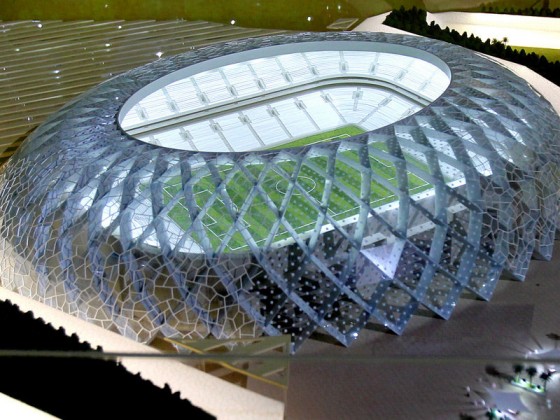
The tender for the first solar-powered World Cup 2022 stadium has been issued and the winners will be announced in November or December, the Qatar 2022 Supreme Committee has said. Construction should follow soon thereafter and if all goes according to plan, Al Wakrah stadium will be complete as soon as 2015.
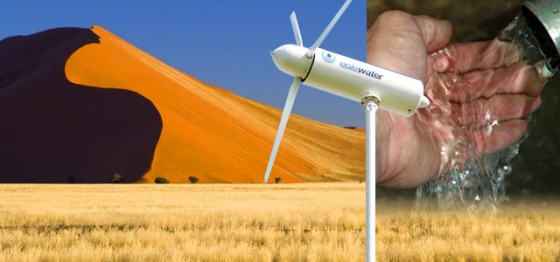
Meeting three needs with as many blades, the turbine generates 30kW of energy and up to 1,200 liters of water each day without producing any kind of carbon emissions. While it is still uncertain where or how the firm will manufacture their turbines when testing is complete, several nations on the Arabian peninsula have already expressed a keen interest in the product.
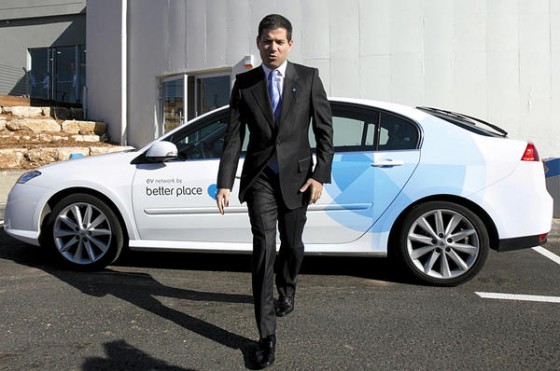
A few days after we praised the new Better Place electric car pricing model in Israel (a lease plus charge plus 1000 km for $510), the company’s founder and visionary CEO Shai Agassi stepped down, or was ousted as some newer sources would rather say. While company press releases attempt to break the news as a natural transition for a company that goes from start-up stage to business stage, apparently something else was brewing.
A bridge over troubled waters still being planned for Saudi Arabia and Sinai. About 20 dive sites will be lost, activists tell Green Prophet.
A grassroots environmental group of activists are continuing to put pressure on the Egyptian government to end its plans to develop and erect a bridge linking the Sinai Peninsula with Saudi Arabia. Praised by the government as a means of boosting trade, business and easing travel between the two countries, environmental activists are crying foul over where the bridge aims to be built: right on the Ras Mohamed National Park – one of Egypt’s natural wonders home to coral reefs, dive sites and endangered species. “If they build this bridge, coral reefs, endangered species and at least 22 dive sites will all be gone,” Ibrahim Mohamed, an activist with the anti-bridge group IBRedSea told Green Prophet.
Editor Update 2024. This was first published in 2010. In 2018 a synagogue in Tunisia was bombed with a Molotov cocktail. Molotov cocktails have been used to set fires to synagogues in Jaffa, Israel. And also to synagogues in Berlin. The kids who were raised with this kind of propaganda are now 12 years older, in their 20s. Imagine how this has impacted their worldview.
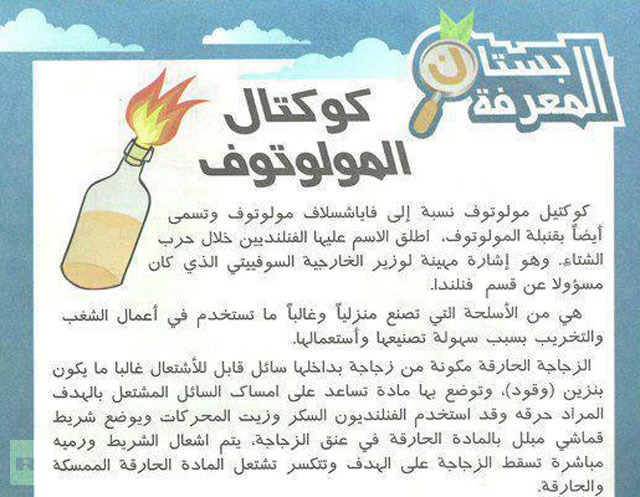
Publishing a detailed recipe of how to make and then activate molotov cocktails is more suited to a militant underground leaflet than a publication intended for children, but that didn’t occur to the editors of a magazine in Tunisia.
Either desperate for readers or keen to ingratiate themselves with the hardliners emerging in post-revolution Tunisia, the kid magazine Kaws Kouzah not only listed all the necessary ingredients in their explosive recipe, but they also advised children exactly how to throw the cocktail to optimize its destructive outcome.
“Molotov cocktail – is a home-made incendiary weapon which consists of a glass bottle and a folded cloth dipped in a flammable liquid – oil, alcohol, petrol,” read the recipe.
“…the unit should be ignited and thrown at the enemy. After the initial contact, the bottle breaks and penetrates the target.”
And just to be sure that Tunisia’s children are completely sold on the legitimacy of this fun new game, which was published under the magazine’s knowledge section, a brief history was included in the brief.
“The name was coined by Finnish soldiers in World War II in honor of Vyacheslav Molotov, Minister of Foreign Affairs of the Soviet Union during the Winter War, also known as the Soviet-Finnish war of 1939-1940.”
Fortunately the Ministry for Women and Family affairs discovered the unfortunate recipe and sued the magazine both for endangering children’s lives and inciting terrorism and vandalism.
We had hoped it was fairly obvious, but perhaps we ought to be more clear: don’t do this. Molotov cocktails are dumb. Instead, publish something a little more useful, like a DIY guide to building space rockets powered by trash maybe?
Award-winning filmmaker Saeed Taji Farouky is looking for support on Kickstarter to fund an eco-documentary on the Arctic
Unless you have been hiding under a rock these last couple of months, the record loss of Arctic sea ice this summer will not have escaped your attention. According to the scientists, the Arctic ice melt broke all previous records (and not a small margin but by an an area larger than the state of Texas) and represents the clearest sign yet of global warming. So, what can we do? Well, lots but one interesting question that award-winning documentary filmmaker and photographer Saeed Taji Farouky want us to ask is ‘can art save the Arctic?’
Around a year ago, Farouky was invited to join an artists residency on a tall ship sailing around Norway’s Svalbard Archipelago for two weeks. During that trip he shot …Even That Void, a surreal, semi-fictional, sci-fi ecological documentary. Farouky now wants support to fund a full length documentary which will not only explore the loss of this last great wilderness but will turn the ecological documentary genre on its head.
The United Arab Emirates (UAE) economic capital, Dubai, has reaffirmed its committment to sustainable energy and the environment as it pushes forward on massive growth projects. Dubai’s ruler and UAE’s Vice-President and Prime Minister Mohamed bin Rashid al-Maktoum said that as the city continues to develop, the environment and clean energy prospects remain at the top of the city’s agenda. In the preface to “The Business Year: Dubai 2012” al-Maktoum again confirmed his desire to see economic growth be in line with sustainable environmental practices and the promotion of clean energy.
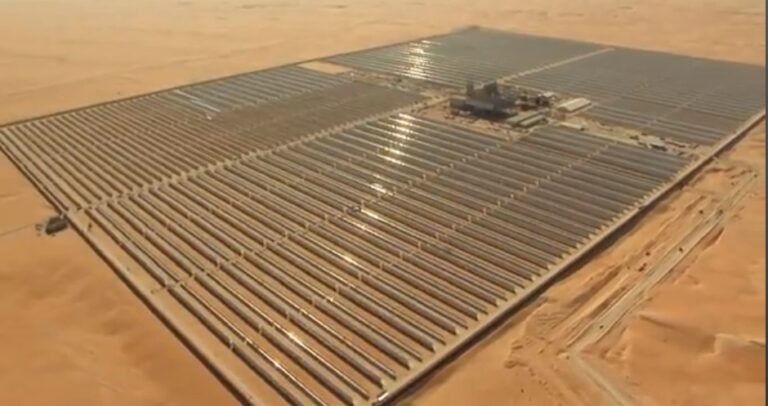
Shams 1 will displace 175,000 tons of CO2 per year and its power output will be enough to power 20,000 homes.
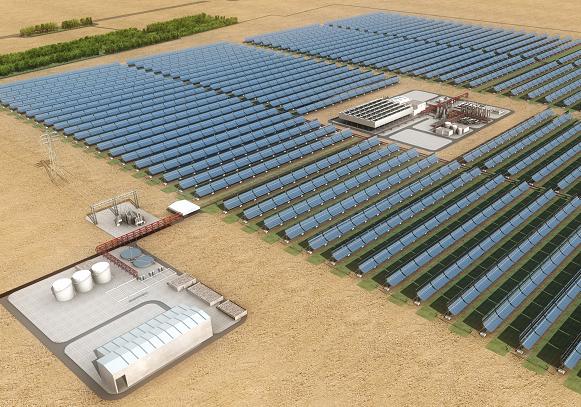
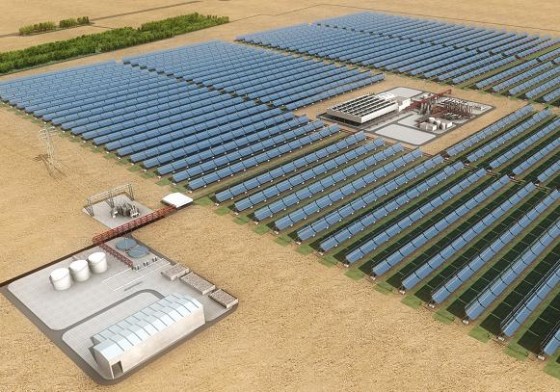
Abu Dhabi’s push into clean energy is to get a massive boost by the end of the year with the Shams 1 Concentrated Solar Power plant going live in the emirate and will begin supplying solar power to residents in the city. Commissioned by MASDAR, Spain’s Abengoa Solar and France’s Total S.A.the $500 million USD plant will have a capacity of 100 megawatts of electricity, which the company said in announcing the plant’s functionality this past week, should be enough power to run 20,000 homes. Using solar parabolic trough technology is the largest such plant in the world and first of its kind solar power plant in the Middle East North Africa region.
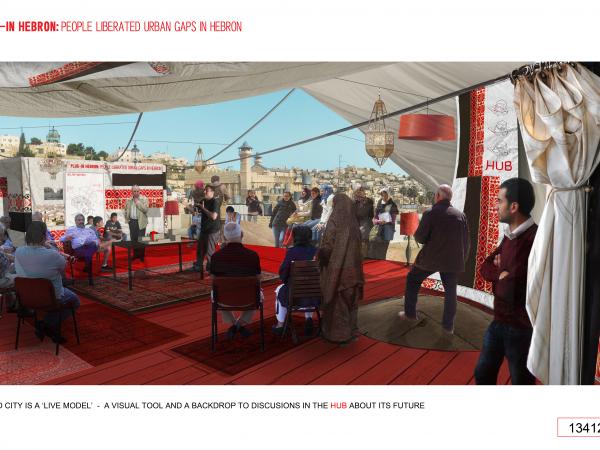
PLUG-In Hebron is a dynamic new urban renewal project for the conflict-shorn West Bank city. Following years of what the designers call “reciprocal violence,” the Israeli military split Hebron into two separate zones. The latter, H2, which is under Israeli jurisdiction, contains the old city. Which means that the Palestinians have been isolated from an important aspect of their urban identity.
Building Sumud’s local partner has worked to reinvigorate residential and sacred spaces, but now they propose to renovate a traditional Mamluk building in the old city into a three-level civic and social center. It will be solar-powered and built with local, renewable materials, although great care will be taken to protect the vernacular architecture. And it will include a modular rooftop hub draped in patterned Hebronite fabric.
We speak to Egyptian campaigner Sarah Rifaat about the environmental movement and why bureaucracy and corruption are still the biggest barriers to change in Egypt
Sarah Rifaat, like many people in Egypt, suffered from childhood asthma caused by the high levels of pollution in her city. What Sarah did differently when she grew up however, is refuse to accept this as the norm. Sarah’s asthma was her first lesson in the importance of a healthy and sustainable lifestyle which led her down the path of environmental campaigning. Today, she works with 350.org as the Arab world co-ordinator and is also part of a new Arab Youth Climate Movement. I caught up with Sarah to find out more about her work and what she would change if she was Egyptian president for a day.
Illegal logging is not only killing the planet – it is supporting organised crime too
Back in 2010 we reported on the case of Moroccan activist Mohammed Attaoui who was facing imprisonment for his stance against illegal logging. Living in the Moroccan Atlas Mountains, Attaoui insisted that ‘mafia-style’ corruption was behind illegal logging which threatened the protected cedar of Morocco. Weeks after publishing his expose Attaoui was arrested on trumped-up charges and given a two year sentence. Now, a new report by the UN states that around 90% of all illegal logging in tropical countries in the Amazon basin, Central Africa and South East Asia may be supporting organised crime.
The recently renovated Rabat Zoo in Morocco claims to have bred three new Barbary lion cubs in captivity. The larger cousin of southern Africa’s plains lions, Barbary lions were slaughtered en masse in fights with gladiators in order to demonstrate the superiority of humans over nature and finally the last wild individual was shot by a French hunter in 1922.
However, Moroccan Sultan Mohammed V, grandfather to the current king, had a private collection of lions that were gifts of allegiance from nobles and peasant hunters. Using ex-situ breeding methods, the zoo reportedly used the genetic material from these animals to build up a captive population of 30 individuals, including Layth, Rose and Rosa, who were born in December, 2011.
Eco Future is an engaging interactive exhibit on Al Saadiyat Island that teaches children the ABCs of going green in Abu Dhabi. Partially modeled after the Emirate’s own long term sustainability plans, the exhibit features a series of games that promote virtual decision-making about real-world issues such as green building, healthy living, and moderate water and energy consumption.
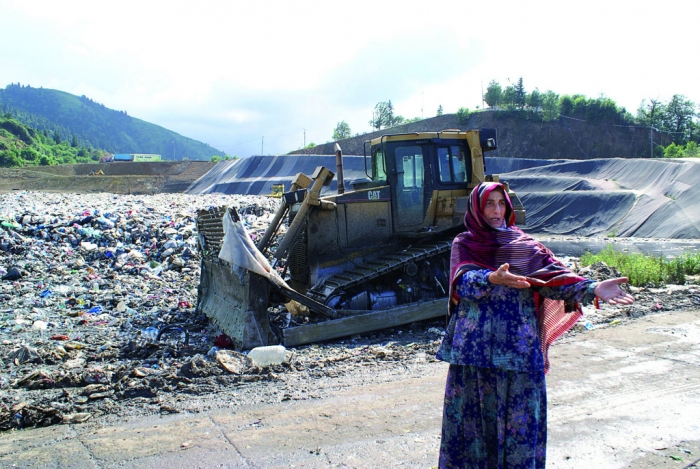
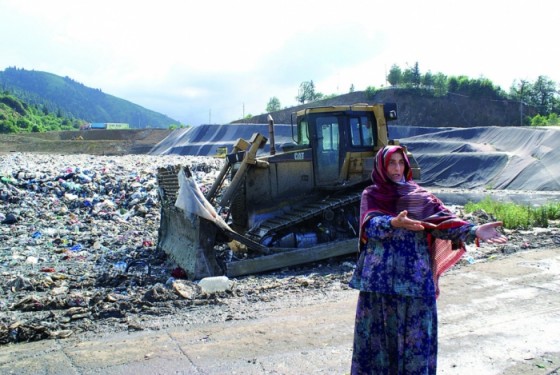
Polluting Paradise,the latest film by Turkish-German director Fatih Akin, documents the disgusting damage caused by a garbage dump near the Black Sea village of Çamburnu.
Ten years ago, Turkish government authorities decided to transform an abandoned copper mine in northeastern Turkey into the biggest landfill in the eastern Black Sea region. Despite promises that the waste would be carefully contained, it began leaching into the surrounding soil, water, and air almost immediately. From the beginning, the nearby fishing and tea-cultivating village of Çamburnu has mounted a strong opposition to the development.
Since it began to be filled, pervading the air with a terrible stench and turning local streams brown and foamy, the locals have grown more desperate.
At stake is not only their pristine environment — the pure air, verdant forests, and bountiful rivers of the lush Black Sea mountains — but the very livelihood of the town. Çamburnu’s economy is based on exporting tea and fish to the rest of the country. Spoil those resources, and the village’s 1,7000 residents are out of work.
While the village’s mayor and lawyers filed suits against the dump, locals argued with the dump overseer, blocked bulldozers’ access to it, and tried to bring the situation to the attention of their detached provincial governor. They pointed out that the canvas lining was clearly leaking, that the region’s torrential rains periodically overflowed the dump, and that a wall supposed to hold in the rubbish had fallen down.
Most scenes in the film feature spirited villagers squaring off against government officials or dump workers. In one scene, a spunky older woman confronts an uncomfortable official about the dump, shouting, “I don’t pray for forgiveness from my sins anymore, I just pray that Allah saves us from the garbage!”
Polluting Paradise is more than just an environmental documentary. Several segments of the film draw away from the depressing effects of the dump to snapshot everyday life in the Turkish Black Sea region.
One fascinating sequence shows the process of manufacturing tea, from its harvesting in the field to the Rube-Goldberg-like apparatus that cleans, shreds, dries and packages it. Another scene follows a farmer as he pauses from his work in the fields, runs down to the mosque, and sings the call to prayer through a microphone plugged into the wall.
Less bucolic aspects of life in Çamburnu are also explored. Like most small Turkish towns, the village’s population is dwindling as more young people move to bigger cities for education and work. Akin traces this thread through interviews with several teenage residents of the village. And a hint of the patriarchal system that still dominates rural Turkish culture comes through when the women laughingly explain that they do most of the harvesting work because their men “claim a right to be lazy.”
The film’s biggest weakness is its over-reliance on dramatic scenes and effects — panning shots of the landfill as sinister music swells in the background, shouting matches between villagers and officials — and its patchy explanation of the legal battle against the dump.
It isn’t clear which office in Turkey’s central government authorized the dump in the first place, or who has the power to close it now. The film ends with the mayor’s abrupt declaration that they have lost all the lawsuits they filed. In a country with as many local environmental movements as Turkey, the finer points of Çamburnu’s deserve to be hammered out.
Some scenes, particularly those involving children, also feel a bit staged — as though the kids are parroting lines or retorts about the plant that they have been taught.
A personal connection
Akin’s father’s family is from Çamburnu, but he first came to the region in 2007 while shooting Edge of Heaven.
The story Akin stumbled upon is just one of many environmentally disastrous developments occurring around Turkey, promoted by private corporations and central government but opposed by locals who actually have to live with the consequences.
Despite its flaws, Polluting Paradise is a welcome contribution to Turkey’s sparse history of environmental documentaries. Hopefully it will inspire other filmmakers to return to their hometowns and check in on the welfare of the local environment. It may be more threatened than they think.
Read more about local environmental movements in Turkey:

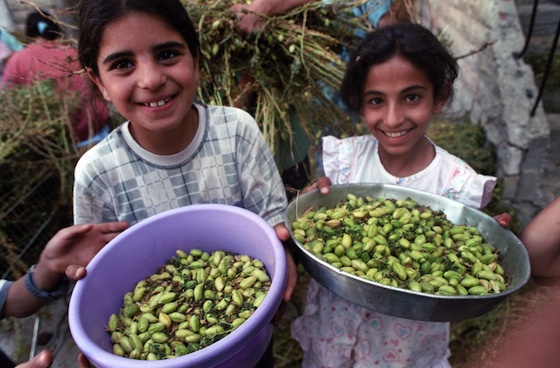 According to the latest findings by global risk-analyser Maplecroft, Arab Spring countries are at greater risk of rising food prices in the coming year