Home Blog Page 389

A look at Islam’s Eid al-Adha 2012 Across the Middle East

0

Mecca, Holiday, Muslim, Eid, Middle East, Environment, War, FeastThis time of year marks one of Islam’s most sacred holidays, Eid al-Adha. The four-day holiday corresponds with the height of the Hajj, the pilgrimage to Mecca in Saudi Arabia, which draws two million Muslim pilgrims a year.

Eid began Friday and will end Monday, the last day of the Hajj. When traveling in Palestinian cities, I have always marveled at the street art communities make to welcome pilgrims home.

Eid al-Adha is also known as the Holiday of Sacrifice, the Feast of the Sacrifice, the Major Festival, the Greater Eid and Bakrid.

Fires, ritual animal slaughter (and sharing that meat with the poor), and feasts are among the cherished celebratory customs.

There has been much debate about the role of meat in the celebration. In 2011, Jordanian Princess Alia spoke about the importance of humane animal slaughter when celebrating Eid al-Adha.

Heart-wrenching Video of Two Hyenas Rescued from Lebanon

1

Lebanon, Striped Hyena, animal rights, wildlife conservation, animal rescue, animal crueltyAnimals Lebanon rescued two striped hyenas that had been captured as pups in the wild and they are now safe in their new home in southern France. Five year old Rita was living in the Ansar Zoo, which was bombed in 2006 and left to ruin. Sara, just two, spent her entire life in a cage the same size as her in a private garden. Her brother, who lived in a cage below her, died not long after he was captured. His bones and skin were left in the cage.

For one year, the animal conservation group worked with the Agricultural and Environmental Ministries to emigrate the two animals, which are badly stigmatized in the Middle East. Some critics said they should have been released back into the wild, but there aren’t sufficient resources in Lebanon to rehabilitate the animals and they almost certainly would not have survived.

Camel Milk Chocolate and Mideast Dates Permeate Global Markets

13

camel milk chocolate, camel milk middle east

Camel milk and dates are now bona fide links in the international gourmet food chain. And while this bodes well for Middle East economics, is the associated environmental news happy too? I questioned this last summer in Malahide, a tiny Irish seaside village where I used to live.  I was staying with friends and their child offered me some camel-milk chocolate (“It’s just lovely”, she said).  I went to wash my hands, and noticed all of their bathroom soaps contained Dead Sea minerals.

German Giant Siemens is Selling Off Solel and its Solar Assets

0

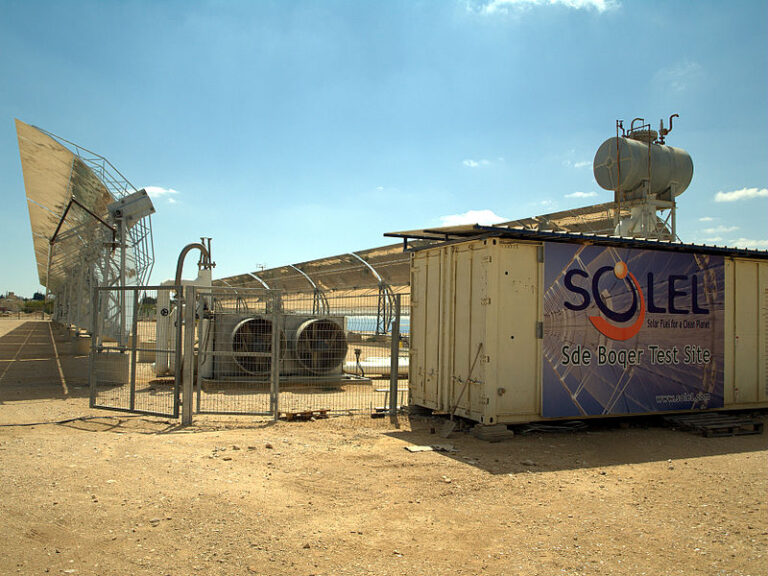
Siemens, solar, solel, solar trough, photovoltaics, solar thermal, cleantech, This is big news in the solar world: German giant Siemens, which recently unveiled photographs of its new headquarters in Masdar City, has recently announced that it’s selling off all of its solar assets, including Solel, an Israeli solar builder that the firm only acquired within the last few years for $418 million.

“Due to the changed framework conditions, lower growth and strong price pressure in the solar markets, the company’s expectations for its solar energy activities have not been met,” Siemens said in a statement, according to Bloomberg.

Bosnian Walks 3,600 Miles to Mekkah

0

hadzic bosnia walk hajjSenad Hadzic walked for 314 days and crossed six countries from his village in Bosnia to get to Mekkah in time for Hajj

Last year we covered the amazing story of two South African Muslims who had cycled all the way to Mekkah. Not much more you could do to top that we thought at the time, but we were wrong. A 47-year old man from Bosnia has walked all the way from his village to the holy city of Mekkah. With only €200 in his pocket, he said he couldn’t afford to make the sacred pilgrimage any other way. Wakling between 12 to 20 miles a day, Senad Hadzic crossed six countries and entered Saudi Arabia last week in time for Hajj and the upcoming Eid celebrations. Now that’s what I call a green pilgrimage!

We Interview Better Place Car Owners in Israel

2

better place battery switchInside a Better Place battery switching station. Maurice interviews two Better Place electric car buyers who defend their decision to buy electric, and support the company which is flailing financially.

Better Place international CEO Shai Agassi has been fired from the company he founded ; and in the wake of his departure, the company may also be laying off large numbers of staff, according to media rumors. But despite these recent revelations, owners of the Renault Fluence ZE cars that were redesigned to be total electric are still upbeat regarding the future of the company which introduced its battery switching network into Israel and other countries as well; including Australia and Denmark

Jordan Terminates Uranium Mining License with French Firm AREVA

0

jordan uranium areva nuclearFollowing a dispute over the details of their joint contract, the Jordanian government has parted ways with the french company AREVA

Back in 2010, the Jordanian government granted exclusive uranium extraction rights for nuclear energy to the French company AREVA. It has now been announced that the mining license has been cancelled following a dispute over whether the license covered prospecting or both exploration and mining. Given the exclusive nature of the contract, Greenpeace are now calling on the government to clarify whether this “announcement means the end of all urnanium mining plans.” And if there is no uranium to supply their nuclear power plants, is there still a future for Jordan’s nuclear ambitions?

Hijab Moves From Sports, to a News Room, to a Green Debate

Fatma Nabil headscarf, egypt tv, arab spring, hijab

Last month, a woman wearing a Muslim hijab headscarf presented the headlines on an Egyptian television news program, becoming headline news herself. So why the alarm when anchor Fatma Nabil appeared on Channel 1 (one of several state-run TV stations) wearing an off-white hijab that covered her hair and neck? And why is this issue connected to the environment?

There’s a Burj Qatar by Jean Nouvel and it’s the World’s ‘Best’ Tall Building

2

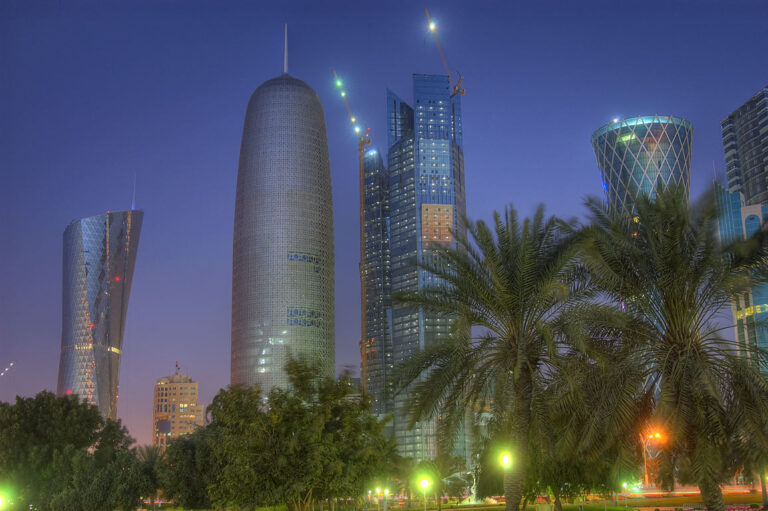
World's Best New Tall Building, Burj Qatar, Doha Tower, Qatar, Mashrabiya, Arabian Gulf, ArchitectureChicago’s Council on Tall Buildings and Urban Habitat recently named the Burj Qatar the world’s best new tall building, which is curious to us for several reasons. First of all, famed French architect Jean Nouvel designed the building but we can’t find it on his website. Is he not proud of his towering child?

Second, there’s a council of tall buildings? Who thought that would be a good idea? Third, there’s another giant Burj building in the Arabian Gulf, as if one of those wasn’t enough. (Granted, Burj means Tower in Arabic, so it really shouldn’t come as a surprise that there is more than one.) And lastly, is there really any such thing as a best tall building? 

Keret House: The World’s Thinnest, Most Insane House is Now Open

2

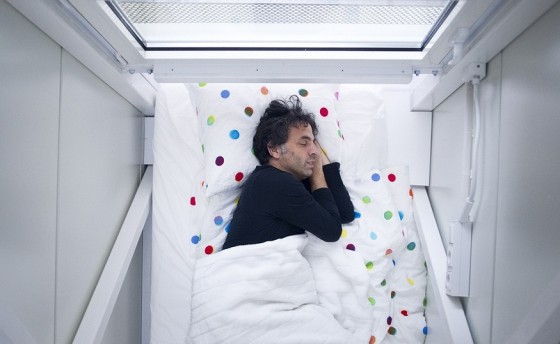
etgar keret house bed

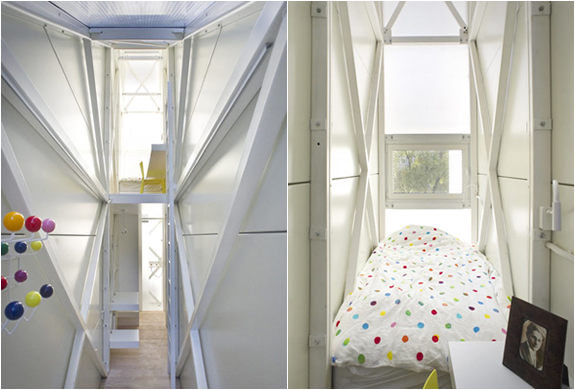
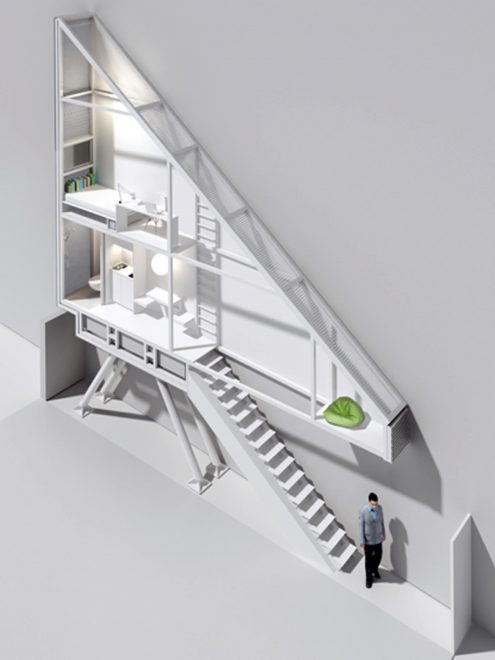
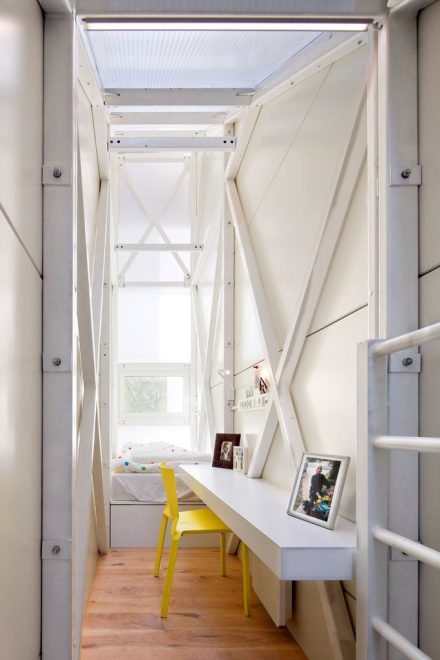
Keret House, also known as the world’s thinnest home, was designed for Israeli writer Etgar Keret. The art installation which has filled the void of 1.3 m between two houses in the Warsaw district of Wola was designed by Polish architect Jakub Szczęsny from the Centrala collective.

Online and print news sources around the world are calling the Keret House the thinnest in the world and it is finally open. Renowned Israeli writer Etgar Keret commissioned Jakub Szczensy of Centrala to design the tiny ‘crack-house’ as a tribute to his Polish family who were killed during the World War II holocaust.

world's thinnest house, poland, warsaw, centrala, etgar keret, keret house, jakub szczesny, israeli writer's houseBoth art and architecture, but hardly a leisurely space for lounging, the little dwelling is squeezed between two buildings on 22 Chłodna St. and 74 Żelazna St and measures a mere 133 centimeters in the widest interior spot.


The idea was to design a unique rendezvous spot for creative movers and shakers to explore new ideas without eating up either space or resources. And, well, they won’t be doing much of that. Check out our earlier post for more details on the parasitic house, 3 foot narrow at its narrowest and 5 feet at its widest:

Super-green Masdar Headquarters Design Awarded to Brookfield Multiplex

1

Masdar, Brookfield, Abu Dhabi, IRENA, Gulf, renewable energy, green building, sustainable building, rooftop photovoltaic powerThe award to design Masdar‘s new super-green headquarters in Abu Dhabi has been given to Brookfield Multiplex, the group announced recently. The Australian firm was awarded the contract to design and construct the seven story building in the Gulf nation, which will feature a whopping 344,445 square feet of interior space and a massive rooftop photovoltaic system that will make oil fields weep.

New And Improved AORA Solar Tulips Turns To Global Market

9

aora solar energy israel heliostats, tulip interview on green prophet

AORA Solar CEO Zev Rosenzweig says he is more ready than ever to take on the world. His company’s hybrid solar thermal technology, which was launched in prototype test form in both Kibbutz Samar, Israel and Spain, has been revised and reconfigured based on a series of tests and is now ready for the global market. In an interview with Green Prophet, Rosenzweig said the company fully retrofitted about a dozen features of its 100 kW thermal solar tower system, including aspects of both the heliostats that collect thermal energy from the sun and the tulip-shared tower at the center that collects the heat and contains the system’s generator.

Bio-Powered Green Bus Fitted With Recycled Materials Cruises Dubai

0

Dubai, RTA, SS Lootah, Bio Fuel, Green Transportation, Recycled Materials, United Arab EmiratesIt’s easy to poke fun at Dubai for all of its insane excesses, but because we’re big-hearted greenies, we also want to give the Emirate a giant high-five when it does something worthwhile. And the Green Bus is certainly that.

Although the merits of bio-fuel are still debatable (depending on the source), this pilot bus, which provides a feeder route between the Burj Khalifa and the Dubai Mall metro, is powered with bio-diesel, fitted with solar-powered, energy-efficient LED lights, and features some recycled materials in the floor and seats, as well as recycled tires.

Embryonic Canopy is a Giant Floating Seed Bomb

0

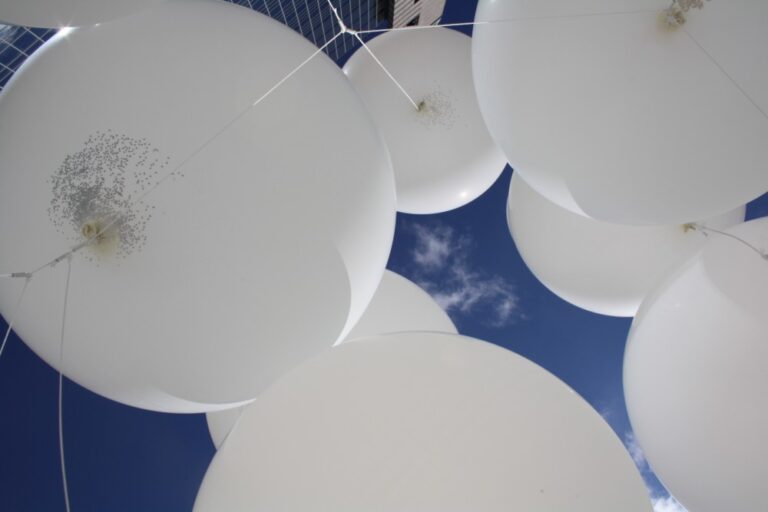
Embryonic Canopy, seed bomb, biodegradable balloon, Sukkah, Jewish Holidays, Architecture, Agriculture, Green Design, Urban DesignCraig Deebank and Gina Gallaugher were selected as finalists in the Sukkahville design competition held in Toronto recently with their extraordinary Embryonic Canopy – a giant floating seed bomb (and a contemporary Sukkah.) Comprised of a CNC-cut central platform that resembles real trees along with several biodegradable balloons, the design is a whole new take on an ancient Jewish tradition, and they have a fascinating urban agricultural component as well.

Make Tej, Ethiopian Honey Beer

6

t'ej beer, tej beer, injera ethiopian honey beer

The authentic flavor of Tej or t’ej beer made according to a centuries-old process. It’s sweet, funky, perfect with injera.

An Ethiopian friend supervised my making Tej at home. It’s a time-consuming and labor-intensive process. It requires Gesho, a dried leaf used instead of hops (Rhamnus prinoides, a relative of buckthorn).  But it’s as authentic a recipe as ever you’ll find, for  my friend’s mother and grandmother, first amazed, and then tickled to help this non-Ethiopian, made sure that every step we took was accurate.

There are no modern ingredients in this recipe. The one concession is equipment. You will need a coffee grinder or similar device, a plastic bucket, a sieve, a siphon and a carboy.

Autumn and winter are good times to make Tej, Mrs. Makonen told me, because in the heat of Middle Eastern  or African summer,  the brew might spoil before it’s finished.  Nowadays, it’s mostly elders who brew the Tej for weddings and other celebrations. Younger folk just buy bottled beer. Still, most of the ingredients are easily available, with the exception of Gesho, which you can find online here or in spice stores where Ethiopians shop.

I give you the recipe just as I received it from Mrs. Makonen (and her mother, and her grandmother).

Ethiopian Tej, Honey-flavored Beer Recipe

Ingredients for Tej:

1/2 kg – raw, unhusked barley grains

1 level disposable plastic cup full of Gesho leaves

1 – 1/2 kg. semolina flour

500 grams whole wheat kernels

Water

2 to 4 cups honey

Tej begins with unhusked, sprouted barley, which is dried and ground. The Ethiopian name for this is Bikil.

1. Prepare the Bikil: sprout 1/2 kg. barley in its husk. If you don’t have sprouted barley, take half a kilo or a pound, soak in water overnight. Drain water, then let sit for about 12 to 25 hours, cleaning them with water every six hours or so. Or when you see them This may take a week or more, or only 2 days, depending on the season and the ambient temperature. Take care that the sprouts don’t go moldy. That would spoil the Tej and possibly make it toxic.

Then grind up the sprouted barley in a coffee grinder or strong blender. Air-dry it and put aside.

2. Mix Gesho with 1 liter- 1 quart room temperature water. Allow to steep, tightly covered, 2 days.

3. On the third day,  mix semolina with enough water to make a loose dough. Semolina soaks up a lot of water; make sure that the dough is quite loose and sticky, not like conventional bread dough. Cover with cling film or put the bowl into a plastic bag, tie, and leave out overnight.

4. Next morning (fourth day), dry-fry or bake cakes from the semolina dough. Take a large frying pan and drop in enough dough to cover the bottom. The dough will be sloppy and flexible, more like pizza dough than bread dough. This will make 5 large, heavy semolina cakes. Cook each cake on both sides till covered in dark brown spots and the cake seems cooked through. Set aside and allow to cool thoroughly. Cooling off will take hours, as the cakes are very thick and will continue cooking the dough while hot. Plan on doing the next steps in the evening.

Note: allow each cake plenty of time to cook. Each side takes about 20 minutes on a medium flame. Mrs. Makonen would not turn them over or remove them from the frying pan till they were very, very brown and well baked.

5. Put Gesho water into a clean bucket. Add 1 1/2 liters water to the Gesho in the bucket.

6. Break the cooled semolina cakes up into pieces about 2 inches big, and add them to the Gesho water  Note: figure on about 1/2 hour to do this. The cakes are heavy and hard to rip up. Or take a  big knife and chop it all up.

7. Add about 3/4 of the Bikel. Stir with something strong, like a rolling pin, and allow all to dissolve and ferment for 2 1/2 days. The semolina cakes should be mostly disintegrated by that time. Cover the bucket well; the odor of the fermenting Gesho and semolina cakes will quickly become strong.

8. Cover the bucket and stir once daily for 2 days.

9. On the third day, you will have a something resembling spinach soup with coarse cornmeal floating around in it. This is as it should be; do not be put off. Strain out the big pieces of un-dissolved semolina cake  with a seive.

By this time, you will see fermentation and get a head full of alcoholic odor from the dark green, grainy brew. I tasted the brew at this point; it is reminiscent of beer. Not unpleasant, but somewhat thin.

10. Wash the wheat grains. According to my friend, the wheat makes the drink more alcoholic. Dry-fry the wheat, still moist, till dark brown. You need to stand over the grain in the frying pan, stirring constantly. As it dries and toasts, it turns quite dark and a smell something like popcorn rises from the pan.

11. Grind the toasted wheat coarsely – a coffee grinder works well. Add the ground wheat to the Gesho water, plus remaining Bikil.

12. Stir and cover the bucket tightly. Allow to ferment another 2-3 days.

13. Two or three days later, add 3 liters water to the contents of the bucket. The ladies directing me say to add the same amount of water as the contents of the bucket. I think that in Ethiopian kitchens this is done almost intuitively and that it won’t make a major difference if there is 1/2 liter or so difference. Leave 1 1/2 days.

14. At this point, what you have is “Tallah”, the beer upon which Tej is based. The honey is for added fermentation and for flavor. The drink isn’t called Tej till the honey is added and fermented. There will be plenty of sediment at the bottom of the bucket. It will look unappealing, like a thick pea soup.

15. Now strain the Tallah; use as fine a sieve as you have. This is a long and tedious process because of the great quantity of fine and coarse sediment. Allow the Tallah to settle for the rest of the day.

16. Siphon off the clear liquid and put into a clean bucket. You can drink the Tallah now if you wish, leaving some with which to make Tej.

17. Add honey to taste: I added 3 cups and it was on the sour side, although not unpleasantly so. Mrs. Makonen was concerned that I use good quality honey; her mother uses honey with the honeycomb still in it, as they did in Ethiopia. She says that some people prefer their Tej much sweeter.

18. Cover the bucket again, or put the Tej into a demijohn with an airlock. Either way, leave it 2-3 days.

The Tej is finally ready to drink.

tej honey beer, mead ethiopian honey wine, ethiopia, recipe

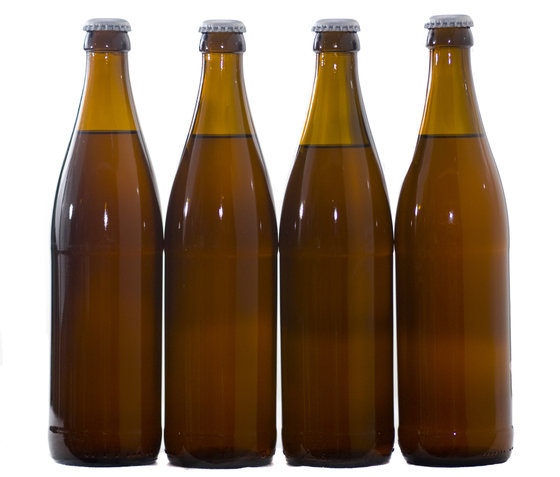
Its taste is unique, somewhat like Western beer but more sour, with the Gesho and semolina cake tastes coming through. The color is a cloudy yellow, like pineapple juice. My vinometer says that it has 16% ABV; I can say that Tej packs a nice little punch

Note: if kept more than a day in the fridge, the Tej will turn green. Ethiopian grandmothers make Tej to be drunk young and not stored for the future.

Serve chilled, and after all that hard work, enjoy!

Lift a mug while reading more about beer: