Home Blog Page 380

COP18 Host Could Be Swallowed Up by Rising Seas

0

UNFCCC, COP 18, Qatar, Rising Seas, Doha, Climate Change, A sea level rise of 100 inches or eight feet in Ar Ru’ays, a city at the northern tip of Qatar, would render 100 percent of the population homeless. Considered one of the top ten developing nations that is most vulnerable to rising seas, the host of the 18th Conference of the Parties to the UNFCCC has good reason to push for a successful meeting.

17,000 delegates from around the world have gathered in Doha and so much is at stake. This year the existing Kyoto Protocol expires and Canada, Russia, Japan and New Zealand have said they won’t sign on for another round. Those nations that have committed to an amendment must agree on the terms and expiry date, while the battle between developing and developed countries, and who should bear responsibility, desperately needs to be resolved.

Egypt’s Inspiring Youth Launch New Environmental Coalition

2

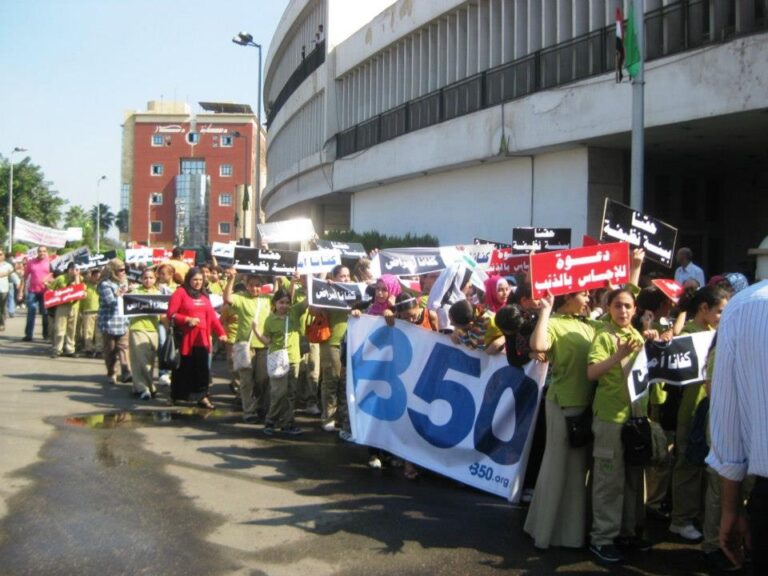
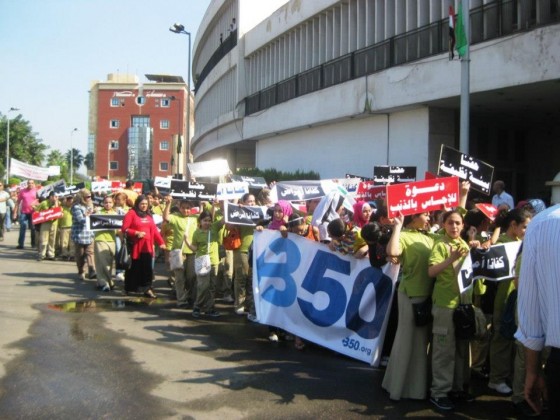
350.org, climate change, Egypt, environmental activism, climate change coalition, COP 18Egypt’s youth are an inspiring bunch. They have taken down a dictator, and withstood the subsequent uncertainty, but their hardest battle may come in convincing the country that the natural surroundings are worth saving. But they are not being deterred. A few dedicated environmentalists in the country gathered this month to continue to build the country’s first National Coalition on Climate Change, which will look at a range of issues from recycling and trash to global rises in temperatures and how Egyptians can help the battle.

Water Portraits – Making A Splash For Water Conservation (PHOTOS)

0

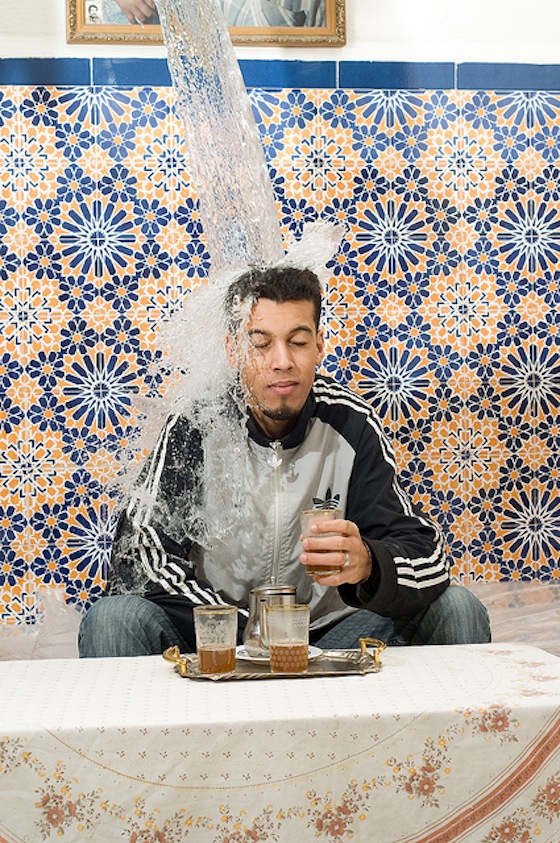
water portrait, middle east, north africa, scarcity, conservationIn a bid to highlight our water use and waste, photographer Peter Holmes has created a series of memorable portraits of water use in different countries. 

“Statistics about water consumption are difficult to comprehend and are un-relatable to everyday life – this project attempts to make water consumption visible in a meaningful way.” Well, that’s one way to justify dumping water over people doing something innocent like reading or drinking a cup of tea from places as far afield as Canada and Morocco. It took photographer Peter Holmes over two years to complete the portraits which “bridge the gap between statistics and significance of water use” in a bid to make it more ‘visible’. The stunning results are featured below.

Israel Strengthens Environmental Ties to 44 African Nations

0

Water, Sudan, Africa, Agriculture, Israel, International Relations, Forest, Food, Food Security, EnvironmentIsrael now has relations with 44 African nations, more than at any time in the country’s history. “This is the dawning of a new era in relations between Israel and African states,” according to Lynn Schler, director of the Africa Centre at Ben-Gurion University. During summer 2012, a vast array of high-profile African leaders visited Israel, and Israeli leaders visited partners in Africa, in the hopes of fostering closer economic and agricultural ties. And in May, the first-ever Nigerian delegation of high-profile businessmen attended Agritech Israel 2012, an international agricultural technology exhibition.

ZARA Fast Fashion Retailer Under Fire for Polluting China’s Waterways

0

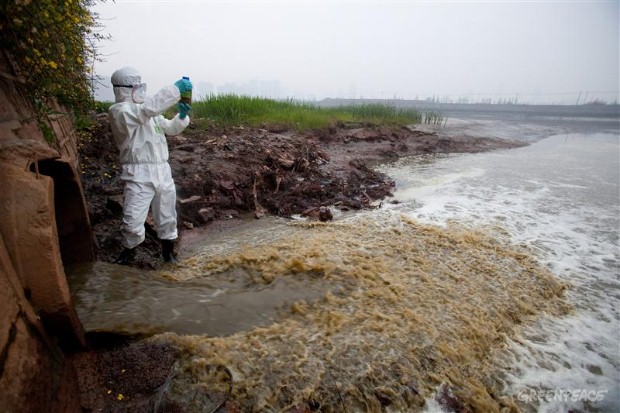
environmental activism, Greenpeace, Dirty Laundry, Zara, Fast Fashion, pollution, ChinaSpanish fast fashion company Zara has come under intense fire recently for failing to address a Greenpeace report released last year outlining the textile industry’s deleterious impact on China’s waterways. Called Dirty Laundry, the report unveiled that persistent and bio-accumulative hazardous chemicals with hormone-disrupting properties are released into the same water that residents rely on for their livelihoods.

Several other clothing manufacturers rose to the environmental advocacy group’s challenge to clean up their act. Zara’s failure to do the same has resulted in a massive global campaign to besmirch the firm and pressure its leadership to re-evaluate their environmental policies.

Israel Eases Distance Limit for Gaza Fishermen: But Need for Fish Farming is Evident

4

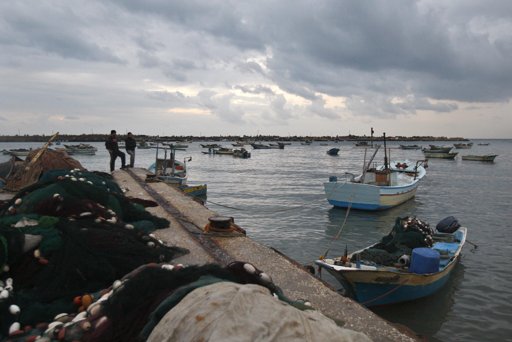
Gaza fishermen are now able to sail further out to fish but commercial fish farming  may be a better option

Environmental and economic issues facing Palestinians living in Gaza have gone from bad to worse since the previous Cast Lead conflict between Gaza and Israel in 2008 – 2009. This is especially true following the most recent conflict, Pillar of Defense, just now put on hold with an Egyptian-brokered cease fire. Water problems, especially involving flooding by waste water, and a dire shortage of fresh water, may make the strip unlivable by 2020 and its water undrinkable by 2016.

Iraqi Stuffed Grape Leaves RECIPE

2

Iraqui stuffed grape leaves

In the Middle East, recipes for stuffed vegetables and leaves evolved from a simple, thrifty way with meat to a culinary passion.

Careful housewives have long known that a little ground meat goes a long way when artfully seasoned and combined with rice.

But it took imagination and care to develop the recipes of stuffed leaves and vegetables in sauce that so entrance the Middle Eastern palate, like our stuffed zucchinis, stuffed potatoes, and stuffed artichoke hearts.

For this recipe, there’s no need to wait for grape vines to put out fresh leaves in spring. Grape leaves that you buy in jars make fine wrappings for the delicately spicy filling below. I find the simple manual process of stuffing and rolling the grape leaves enjoyable and meditative. Mostly, though, I enjoy the compliments when family and guests take “just one more” till the platter is empty.

SARS-like Disease Claims Another Life in Saudi Arabia

0

SARS, health, WHO, respiratory illness, Saudi Arabia, Qatar

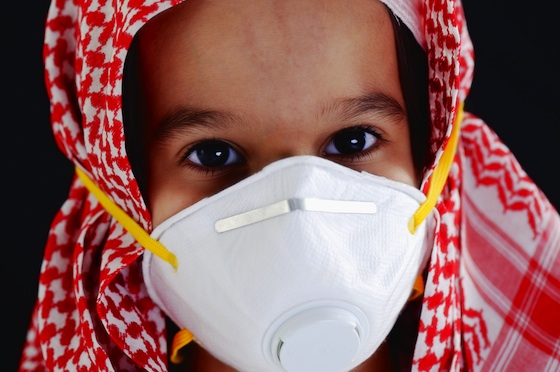
A SARS-like respiratory illness has claimed the life of a second person from Saudi Arabia, the World Health Organization (WHO) recently announced. The coronavirus sparked worldwide attention in September when an initial alert was sounded, but now a total of six cases have been reported, two of which have been fatal.

Leaf-Shaped Market Square Filters Rainwater and Trash in Morocco

0

casablanca, morocco, sustainable market square, TomDavid Architecten, souq, green design, rainwater harvesting, waste managementA new marketplace for Casablanca – complete with rainwater harvesting and a clever trash chute?

While the souq or market is integral to Moroccan culture, they are frequently crowded and polluted as population density expands throughout the North African country. TomDavid Architecten from The Netherlands submitted a proposal as part of an international design competition for a more sustainable market square that captures and recycles rainwater and surreptitiously directs trash to underground bins.

This clever design, which features an elevated platform shaded by a leaf-shaped canopy and underground shopping, promotes greater ventilation and human circulation and fosters a more sustainable market ethos.

COP18 and Four Degrees: Have We Passed The Point Of No Return?

1

four-degrees-heatwaves-cop18-unepMore and more studies highlight the truly drastic action we need to take at Doha to avoid four degree warming – but is it too late?

According to a new report, heat waves in the Middle East with temperatures consistently above 40 degrees could seem like ‘a pleasant prospect in a few decades’ if we don’t take drastic action to stop climate change. The report by the Potsdam Institute for Climate Impact Research and German NGO Climate Analytics for the World Bank has been released in the lead up to COP18 and is designed to shock us into action. It states that even if the current carbon pledges were met, “there is roughly a 20 percent likelihood of exceeding 4°C by 2100, and a 10 percent chance of 4°C being exceeded as early as the 2070.” An increase of 6°C or more in average summer months was predicted for the Middle East by the report.

Omani Man Turns Palm Leaf Waste into Paper

6

Oman, innovation, palm leaf, waste to paper, green design, clean tech, sustainable materialsLacking the necessary raw materials has been a major barrier to any kind of paper industry in Oman, but that could change if a young inventor commercializes his patented palm leaf waste to paper technology. A recent graduate of Sultan Qaboos University, Mustafa Salim Abdullah Barami first learned how to use the palm leaf waste as pulp for paper while he was working on his Chemistry and Petrochemicals degree.

Barami has since gone on to win a host of accolades for the patented – and carefully-guarded – process. Now he is working on developing his entrepreneurial skills so that he will be well-poised to take the next step towards scaled production.

Zalul’s App “Tests” the Swimming Water in Israel

0

maya jacobs zalul, pollution water israel, waze app
Thanks to a network of Israeli divers, and the Health Ministry, Israeli non-profit environmental association Zalul is now keeping the public up to date on the condition of the country’s waterways. By commissioning road-navigation app developer Waze to add a water-pollution application to its popular smart phone service, the founders of Zalul (which means clear in Hebrew) hope to promote safer swimming in addition to pressure on polluters.

While Israel is primarily an arid country, it boasts an arterial network of rivers, lakes and streams. Major rivers such as the Alexander, Yarkon, Yarmuk and Kishon are unfit for swimming, says Maya Jacobs, executive director of Zalul.

She partnered with Waze to bring attention to the gravity of the problem during Sukkot, an autumn Jewish holiday that originally was a harvest and pilgrimage festival. Today the Israeli public celebrates much of the weeklong holiday by hiking, swimming and camping. Jacobs (pictured above) saw it as a perfect time to launch Zalul’s pollution-alert feature.

“I was driving with a friend of mine using Waze when all these pop-ups starting coming up. And I thought: Why don’t we use them to show people where the rivers are polluted?” she tells me in the story I wrote for ISRAEL21c.

When a logged-in user comes within about 12 miles of a waterway, the application will identify it, inform the user of its health status and identify polluters by way of a pop-up alert. During Sukkot, the organization sent users 120,000 alerts – including one warning of a sewage overflow in Tel Aviv that flooded a popular beach following the season’s first rain. See image of the sewage on the popular beach below.
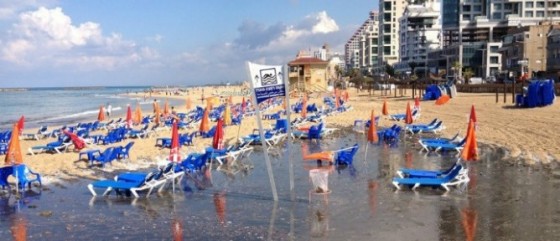
tel aviv, israel beach 2012 sewage zalul, water app from waze

Until now, the Israeli public has relied on news reports or signs posted on public beaches. A real-time alert system would not only be good for public health and safety, Jacobs reasoned; it would also force polluters to face the consequences of growing public awareness.

Certainly other regions, like Florida’s popular Gulf Coast, could use such an application as well, especially after the 2010 oil spill.

As far as she knows, there is no other public service like Zalul anywhere in the world, and Jacobs very much hopes to continue updating it along with Waze or as a standalone application, if interested parties can help support the cause. For now, Zalul must pay to remain part of Waze.

At the same time, Jacobs has a development team working on a social application for surfers, sailors, swimmers, port authorities, fishermen — everyone who cares about the Mediterranean Sea and Israel’s water resources.

Zalul will use this interested public to be the “eyes and ears outside,” taking the collected information to the local authorities in the hope of influencing regional water policy. “We call it a Forum for Defenders of the Sea. In the first stage it will be in Hebrew and then in English,” says Jacobs.

Zalul’s three main targets are mitigating harm from oil and gas drilling off the Mediterranean Coast; preventing Tel Aviv’s raw sewage from going straight to the sea; and putting pressure on polluters.

Jacobs wants the government to step up to the plate to avert a future catastrophe. Unlike other parts of the Med, Israel’s strip of sea is not fed by an active body of flowing water. If there were an oil spill, Israel would have to live with the consequences for a very long time, she tells ISRAEL21c.

But not all the water news from Israel is bad. Parts of the major rivers, including the Alexander and the Kishon, are being rehabilitated. And while Israel’s Lower Jordan River is reduced to a trickle and is not safe for swimmers, the Upper Jordan is fine for swimming, says Jacobs. Happily, the majority of Israel’s streams in the north remain clean, fed by fresh mountain-water runoff.

Who’s Got the Wind Power in the Middle East?

0

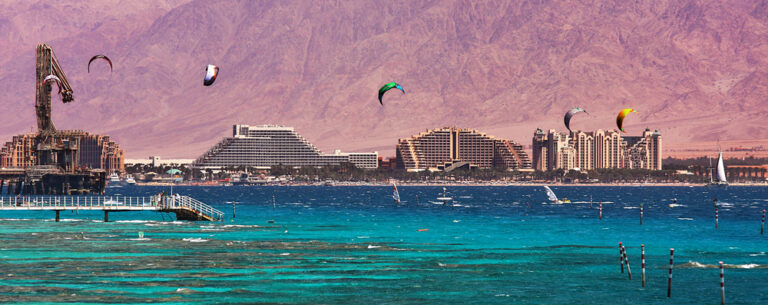
kite surfing red sea, Eilat, IsraelWho’s got the wind in the Middle East? Morocco and Egypt have the biggest wind power plants, but don’t discount Iraq, Qatar, Saudi Arabia and the United Arab Emirates.

Wind power has taken a backseat to solar power across the Middle East and North Africa, but there are still some ambitious projects in wind power being undertaken across the region. Leading that charge is Egypt and Morocco, who have continued to push forward on alternative energy despite facing political turmoil in their respective countries. But don’t count out Iraq, Qatar, Saudi Arabia and the United Arab Emirates, who are all currently looking to develop wind energy.

Adapting a sophisticated climate model, researchers show that there is plenty of wind available to supply half to several times the world’s total energy needs within the next two decades. If the world is to shift to clean energy, electricity generated by the wind will play a major role, and there is more than enough wind for that, according to research from Stanford and the University of Delaware.

The Middle East North Africa region has been instrumental in the push for solar power, but wind projects are finally beginning to take form, or in development across what we call the MENA region. Two of the largest wind farms in the world are in the region, in Morocco and Egypt.

Storing Solar Energy in Rust, From Israel

3

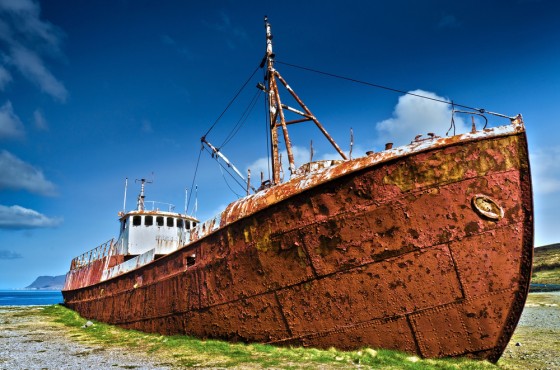
rusty hull of a ship for solar power

Scientists at Technion, Israel’s institute of technology recently found a new way to store solar energy. Their method utilizes a substance that some of us are all too familiar with, iron oxide– otherwise known as rust. This research entitled Resonant light trapping in ultrathin films for water was published in the November 11, 2012 issue of Nature Materials and may help solve the problem of solar energy storage by enabling a more efficient and direct conversion between solar energy and hydrogen.

I grew up in a region that was once known as the rust belt. Iron foundries, heavy industry and heavy cars were plentiful in the upper Midwestern US. Winters were icy so governments used salt to help make the roads safer. Unfortunately this also made automobiles rustier.

Comedian Dave Barry once joked that American cars were made out of compressed rust. Salt-encrusted lumps of grey slush clung to the bottoms of cars and performed the alchemy of converting iron and gleaming steel into crumbling heaps of orange-red rust.

Actually it wasn’t alchemy, it was ordinary chemistry which is a little too complicated to explain here, but parts of the reaction can be simplified to something like this:

2Fe(s) + 2H2O(l) + O2(g) → 2Fe2+(aq) + 4OH-(aq)  {a bit more magic} → Fe2O3 .nH2O

Iron, water and oxygen combine to make a solution which dries to become rust.

All about rust

Rust crumbles in your hand and stains your skin, your clothes and concrete structures.

Grocery stores once sold a chemical which was supposed to remove rust stains but it was also powerful enough to eat through metal, skin and glass. Since then using a rust remover has become much less dangerous while still removing rust.

A form of rust was used in audio cassette tapes, 8-tracks, floppy disks and the hard drive which is storing this article. In 1976 NASA’s Viking lander arrived on Mars and found– rust.

The 1976 Buick I drove to prom had lost the bottom half of its passenger doors to rust. I once connected a voltmeter to some bolts straddling the rusted-out floor of my father’s car and found that the electrochemical process which gradually turned his 1969 AMC Rambler into a heap of rust also generated about 1/2 volt of electricity. I never patented this corrosion-powered “battery car” as a form of planned-obsolescence Detroit would have loved but I’m beginning to wish I’d saved some of that rust. Will it soon become as valuable as platinum was during the cold fusion fiasco? Might the rust belt prosper from this abundant resource just as Saudi Arabia did from oil and the Canadian Yukon did from gold?

Maybe not. Photovoltaic cells are made out of silicon which is found in desert sand but the price of sand hasn’t gone up very much even as the photovoltaic market grows. It turns out that just as it is for photovoltaic silicon, carbon nanotubes, diamonds and coal; the secret is not in the ingredients it is in the preparation. The Technion researchers discovered how to turn something ordinary into something useful by applying materials science.

The paper’s abstract offers a clue:

Semiconductor photoelectrodes for solar hydrogen production by water photoelectrolysis must employ stable, non-toxic, abundant and inexpensive visible-light absorbers. Iron oxide (α-Fe2O3) is one of few materials meeting these requirements, but its poor transport properties present challenges for efficient charge-carrier generation, separation, collection and injection. Here we show that these challenges can be addressed by means of resonant light trapping in ultrathin films designed as optical cavities.

Interference between forward- and backward-propagating waves enhances the light absorption in quarter-wave or, in some cases, deeper subwavelength films, amplifying the intensity close to the surface wherein photogenerated minority charge carriers (holes) can reach the surface and oxidize water before recombination takes place.

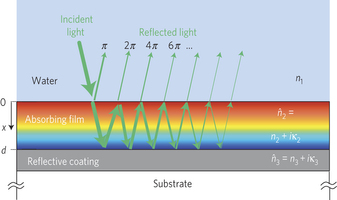
The researchers are making use of rust’s light absorbing properties which make those stains so visible on a T-shirt. They’re making use of its stability. Water and oxygen can turn a car into rust, but even a large dose of rust remover won’t turn that rust back into a car. They’re also making use of thin-film optical interference. rust reaction refractionLook at a pair of anti-reflection eyeglasses, the lens of a camera or binoculars, a soap bubble or a thin oil slick floating on a puddle and you’ll see one of the effects these scientists were taking advantage of.

When light comes across a thin semi-transparent film, some of the light is reflected off the bottom of the film, some is reflected off the top. If the film is just the right thickness, light of a certain wavelength can be made to constructively interfere with its reflection, making that color brighter or destructively interfere making that color dimmer.

In this case the scientists have found a way to enhance the light intensity exactly where it is needed to help separate the water’s hydrogen from its oxygen. The hydrogen can then be stored and used to generate energy when the sun isn’t shining. It’s a pretty neat trick for a lump of rust. Kudos to Hen Dotan, Ofer Kfir, Elad Sharlin, Oshri Blank, Moran Gross, Irina Dumchin, Guy Ankonina and Avner Rothschild for their research.

Photo of rusty shipwreck via Shutterstock
Image of thin film light absorption from  Resonant light trapping in ultrathin films for water in the November 11, 2012 issue of Nature Materials


Hydroelectric Dam Threatens “Ecological Massacre” in Turkey

0

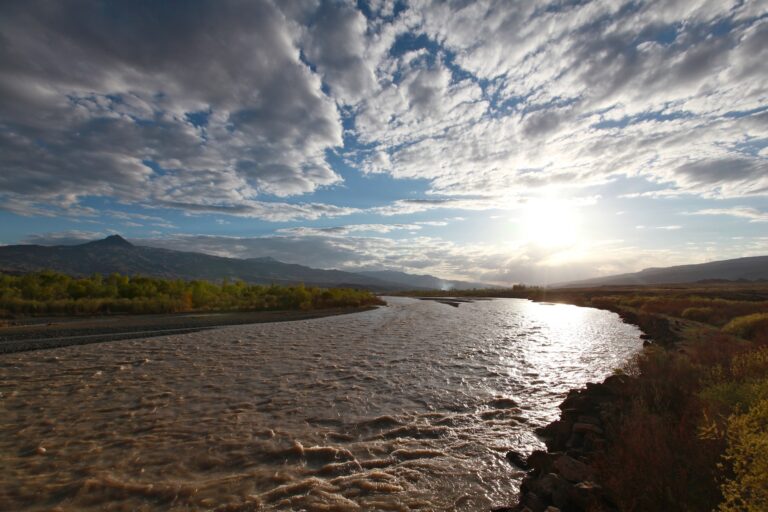
aras river, Turkey in AnatoliaThe Aras River basin is home to more than half of Turkey’s bird species, but a planned hydroelectric dam would alter the river’s marshy ecosystem, driving away the birds.

That’s the fear of Çağan Şekercioğlu, president and founder of Turkey’s KuzeyDoğa wildlife preservation NGO. Green Prophet has written about Şekercioğlu’s groundbreaking research, teaching, and conservation work before. Now, he is trying to prevent a dam from destroying one of the richest habitats in Eastern Anatolia, according to the Turkish environmental website Yeşil Gazete (in Turkish).