A vast and largely untapped lithium reserve may be hiding beneath one of North America’s oldest landscapes, the Appalachian Mountains, offering a surprising twist in the global race for clean energy materials. According to new findings from the U.S. Geological Survey (USGS), as much as 2.5 million tons of lithium could be buried across the region, stretching from the Carolinas up through New England.
Energy equities are responding unevenly to the evolving landscape. Companies with direct exposure to UAE production growth and infrastructure are benefiting from increased activity expectations, while global oil majors face a more mixed outlook.
All air conditioners release water. That's Physics. Cities like Los Angeles pour billions of water down the drain every year. And while home owners who are savvy to water reuse are finding ways to use AC water in the garden (here are 5 ways to use air con water at home), or in art studios (it's basically free distilled water), cities could save water in meaningful ways by using creative ideas. These are solutions you can send to urban planners and those running smart city accelerator programs. Pick one of them and you might win the grant!
As tensions rise in one of the world’s most critical maritime chokepoints, the ripple effects go far beyond oil—touching food systems, climate pressures, and regional stability
Current goals are to treat neurological disease like Parkinson’s and restore autonomy to people with severe physical limitations by controlling exoskeletons and prosthetics. There’s also huge potential to improve cognitive abilities such as memory, attention, and languages.
A vast and largely untapped lithium reserve may be hiding beneath one of North America’s oldest landscapes, the Appalachian Mountains, offering a surprising twist in the global race for clean energy materials. According to new findings from the U.S. Geological Survey (USGS), as much as 2.5 million tons of lithium could be buried across the region, stretching from the Carolinas up through New England.
Energy equities are responding unevenly to the evolving landscape. Companies with direct exposure to UAE production growth and infrastructure are benefiting from increased activity expectations, while global oil majors face a more mixed outlook.
All air conditioners release water. That's Physics. Cities like Los Angeles pour billions of water down the drain every year. And while home owners who are savvy to water reuse are finding ways to use AC water in the garden (here are 5 ways to use air con water at home), or in art studios (it's basically free distilled water), cities could save water in meaningful ways by using creative ideas. These are solutions you can send to urban planners and those running smart city accelerator programs. Pick one of them and you might win the grant!
As tensions rise in one of the world’s most critical maritime chokepoints, the ripple effects go far beyond oil—touching food systems, climate pressures, and regional stability
Current goals are to treat neurological disease like Parkinson’s and restore autonomy to people with severe physical limitations by controlling exoskeletons and prosthetics. There’s also huge potential to improve cognitive abilities such as memory, attention, and languages.
A vast and largely untapped lithium reserve may be hiding beneath one of North America’s oldest landscapes, the Appalachian Mountains, offering a surprising twist in the global race for clean energy materials. According to new findings from the U.S. Geological Survey (USGS), as much as 2.5 million tons of lithium could be buried across the region, stretching from the Carolinas up through New England.
Energy equities are responding unevenly to the evolving landscape. Companies with direct exposure to UAE production growth and infrastructure are benefiting from increased activity expectations, while global oil majors face a more mixed outlook.
All air conditioners release water. That's Physics. Cities like Los Angeles pour billions of water down the drain every year. And while home owners who are savvy to water reuse are finding ways to use AC water in the garden (here are 5 ways to use air con water at home), or in art studios (it's basically free distilled water), cities could save water in meaningful ways by using creative ideas. These are solutions you can send to urban planners and those running smart city accelerator programs. Pick one of them and you might win the grant!
As tensions rise in one of the world’s most critical maritime chokepoints, the ripple effects go far beyond oil—touching food systems, climate pressures, and regional stability
Current goals are to treat neurological disease like Parkinson’s and restore autonomy to people with severe physical limitations by controlling exoskeletons and prosthetics. There’s also huge potential to improve cognitive abilities such as memory, attention, and languages.
A vast and largely untapped lithium reserve may be hiding beneath one of North America’s oldest landscapes, the Appalachian Mountains, offering a surprising twist in the global race for clean energy materials. According to new findings from the U.S. Geological Survey (USGS), as much as 2.5 million tons of lithium could be buried across the region, stretching from the Carolinas up through New England.
Energy equities are responding unevenly to the evolving landscape. Companies with direct exposure to UAE production growth and infrastructure are benefiting from increased activity expectations, while global oil majors face a more mixed outlook.
All air conditioners release water. That's Physics. Cities like Los Angeles pour billions of water down the drain every year. And while home owners who are savvy to water reuse are finding ways to use AC water in the garden (here are 5 ways to use air con water at home), or in art studios (it's basically free distilled water), cities could save water in meaningful ways by using creative ideas. These are solutions you can send to urban planners and those running smart city accelerator programs. Pick one of them and you might win the grant!
As tensions rise in one of the world’s most critical maritime chokepoints, the ripple effects go far beyond oil—touching food systems, climate pressures, and regional stability
Current goals are to treat neurological disease like Parkinson’s and restore autonomy to people with severe physical limitations by controlling exoskeletons and prosthetics. There’s also huge potential to improve cognitive abilities such as memory, attention, and languages.
A vast and largely untapped lithium reserve may be hiding beneath one of North America’s oldest landscapes, the Appalachian Mountains, offering a surprising twist in the global race for clean energy materials. According to new findings from the U.S. Geological Survey (USGS), as much as 2.5 million tons of lithium could be buried across the region, stretching from the Carolinas up through New England.
Energy equities are responding unevenly to the evolving landscape. Companies with direct exposure to UAE production growth and infrastructure are benefiting from increased activity expectations, while global oil majors face a more mixed outlook.
All air conditioners release water. That's Physics. Cities like Los Angeles pour billions of water down the drain every year. And while home owners who are savvy to water reuse are finding ways to use AC water in the garden (here are 5 ways to use air con water at home), or in art studios (it's basically free distilled water), cities could save water in meaningful ways by using creative ideas. These are solutions you can send to urban planners and those running smart city accelerator programs. Pick one of them and you might win the grant!
As tensions rise in one of the world’s most critical maritime chokepoints, the ripple effects go far beyond oil—touching food systems, climate pressures, and regional stability
Current goals are to treat neurological disease like Parkinson’s and restore autonomy to people with severe physical limitations by controlling exoskeletons and prosthetics. There’s also huge potential to improve cognitive abilities such as memory, attention, and languages.
A vast and largely untapped lithium reserve may be hiding beneath one of North America’s oldest landscapes, the Appalachian Mountains, offering a surprising twist in the global race for clean energy materials. According to new findings from the U.S. Geological Survey (USGS), as much as 2.5 million tons of lithium could be buried across the region, stretching from the Carolinas up through New England.
Energy equities are responding unevenly to the evolving landscape. Companies with direct exposure to UAE production growth and infrastructure are benefiting from increased activity expectations, while global oil majors face a more mixed outlook.
All air conditioners release water. That's Physics. Cities like Los Angeles pour billions of water down the drain every year. And while home owners who are savvy to water reuse are finding ways to use AC water in the garden (here are 5 ways to use air con water at home), or in art studios (it's basically free distilled water), cities could save water in meaningful ways by using creative ideas. These are solutions you can send to urban planners and those running smart city accelerator programs. Pick one of them and you might win the grant!
As tensions rise in one of the world’s most critical maritime chokepoints, the ripple effects go far beyond oil—touching food systems, climate pressures, and regional stability
Current goals are to treat neurological disease like Parkinson’s and restore autonomy to people with severe physical limitations by controlling exoskeletons and prosthetics. There’s also huge potential to improve cognitive abilities such as memory, attention, and languages.
A vast and largely untapped lithium reserve may be hiding beneath one of North America’s oldest landscapes, the Appalachian Mountains, offering a surprising twist in the global race for clean energy materials. According to new findings from the U.S. Geological Survey (USGS), as much as 2.5 million tons of lithium could be buried across the region, stretching from the Carolinas up through New England.
Energy equities are responding unevenly to the evolving landscape. Companies with direct exposure to UAE production growth and infrastructure are benefiting from increased activity expectations, while global oil majors face a more mixed outlook.
All air conditioners release water. That's Physics. Cities like Los Angeles pour billions of water down the drain every year. And while home owners who are savvy to water reuse are finding ways to use AC water in the garden (here are 5 ways to use air con water at home), or in art studios (it's basically free distilled water), cities could save water in meaningful ways by using creative ideas. These are solutions you can send to urban planners and those running smart city accelerator programs. Pick one of them and you might win the grant!
As tensions rise in one of the world’s most critical maritime chokepoints, the ripple effects go far beyond oil—touching food systems, climate pressures, and regional stability
Current goals are to treat neurological disease like Parkinson’s and restore autonomy to people with severe physical limitations by controlling exoskeletons and prosthetics. There’s also huge potential to improve cognitive abilities such as memory, attention, and languages.
A vast and largely untapped lithium reserve may be hiding beneath one of North America’s oldest landscapes, the Appalachian Mountains, offering a surprising twist in the global race for clean energy materials. According to new findings from the U.S. Geological Survey (USGS), as much as 2.5 million tons of lithium could be buried across the region, stretching from the Carolinas up through New England.
Energy equities are responding unevenly to the evolving landscape. Companies with direct exposure to UAE production growth and infrastructure are benefiting from increased activity expectations, while global oil majors face a more mixed outlook.
All air conditioners release water. That's Physics. Cities like Los Angeles pour billions of water down the drain every year. And while home owners who are savvy to water reuse are finding ways to use AC water in the garden (here are 5 ways to use air con water at home), or in art studios (it's basically free distilled water), cities could save water in meaningful ways by using creative ideas. These are solutions you can send to urban planners and those running smart city accelerator programs. Pick one of them and you might win the grant!
As tensions rise in one of the world’s most critical maritime chokepoints, the ripple effects go far beyond oil—touching food systems, climate pressures, and regional stability
Current goals are to treat neurological disease like Parkinson’s and restore autonomy to people with severe physical limitations by controlling exoskeletons and prosthetics. There’s also huge potential to improve cognitive abilities such as memory, attention, and languages.
Despite the many stereotypes about residents of Gulf countries, many people prefer creative, sustainable boutiques to shopping in big glitzy malls, though their options are typically fairly limited. Which might explain why Bahrain’s Market 338 has become such a popular destination.
Inaugurated by Al Riwaq Art Space, the temporary souq in Manama’s Adliya district started with just a handful artists showcasing their contemporary recycled designs. Three years later, the hub attracts roughly 40 designers from across the globe.
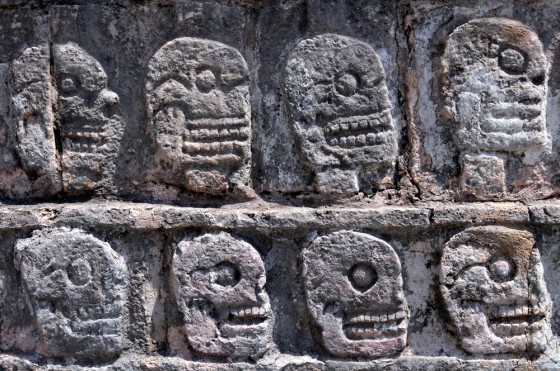
NASA issued a video “told-you-so” in advance of the much-hyped Mayan calendar “end of the world” prediction.
There are plenty of Jordanians who think the Mayans and their 21, 12 end of days prediction may be on to something. No manic preparations can be seen, no one blasting Prince’s “1999”, but I’ve heard more than a few folks say in Jordan where I am living, “It may happen, insha’allah it won’t, but there’s nothing we can do.”
America’s National Aeronautics and Space Administration (NASA) uploaded a new video on their website debunking this week’s anticipated wrap-up of all earthly experience. A bit of scientific showing off? (I bet NASA already sent out all their Christmas cards and have finished their holiday shopping too.) Check out debunking video below.
There’s not much restraint on voicing personal opinions here in Jordan. I’m talking on a social level: at parties, on the job, among friends. In the past year, I’ve met three people who maintain the Holocaust is fiction.
Two others believe there are no gays in this kingdom. I’ve been told Canadians are the only North Americans who hold passports. No Jews died in the World Trade Center collapse. Dogs are dirty devils. And no one landed on the moon. Of course, these beliefs are not the norm. These are exceptional opinions in every possible sense.
After years in Manhattan, where the buffet of cultures and religions and political viewpoints mandates that you watch your tongue (at a minimum, to win friends and influence people…at the other end, to avoid a punch in the kisser), I was initially stunned by these provocative statements, delivered uncensored and with absolute confidence. And it’s not only local Ammanians who make loose with the viewpoints: foreigners living here quickly shed inhibitions. Lately I just marvel at the limitless range of human beliefs.
The Tower of Babel is where God is said to have confounded language: but there’s no geographical constraint when it comes to confounding ideas.
So back to the world’s end. The NASA video may leave the Mayan crying. And it wouldn’t be the first time people were sucked into believing a doomsday scenario. In fact, you can gauge your maturity but the number of kill-the-world bluffs you’ve endured. This one is my daughter’s first bout with rumors of global annihilation: it’s about my twelfth. If you want to know some advice about navigating the future you might as well as well ask Yoda.
List-making website Ranker has a fine, uh.., list of the “Top 12 Greatest End of The World Prophecy FAILS”. NASA takes a more proactive tack, with a web advisory telling exactly why you’ll wake to see December 22. So it seems we’ll live to see another day. An opportunity for us to share more of our wacky ideas with one another. Sir Winston Churchill once said, “A fanatic is a person who can’t change his mind and won’t change the subject. ”
Bring on December 22nd, and throw some light on the next nutty idea.
Warning: do not watch the clip on the eve of the predicted apocalypse. It’s narrated by a gentle-voiced guy who is so comforting that if NASA proves wrong, you may fall asleep and snooze through humanity’s grand finale.
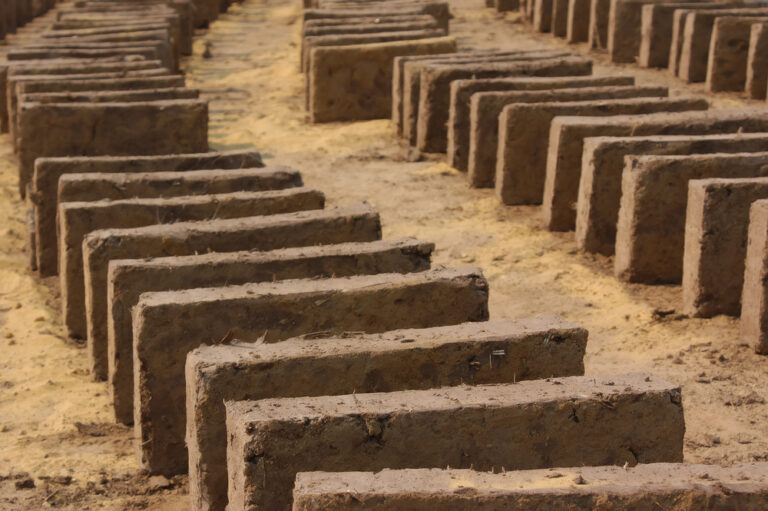
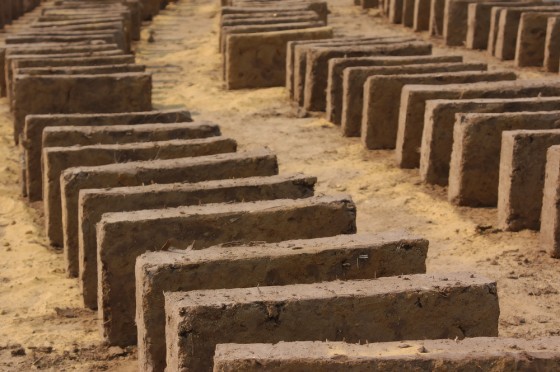
Turn to the ancients for a green building technique that lets you play like a child. Mesopotamian mud bricks still do the job, for free.
Mesopotamia was the ancient collective of settlements tracing the Tigris–Euphrates river basin. It spanned modern Iraq, northeastern Syria, southeastern Turkey and smaller parts of Iran. Modern school kids learn this was “the Cradle of Civilization” and part of that education usually involves making Mesopotamian mud bricks. Clay was Mesopotamia’s most important raw material: most of their structures were made of clay bricks, clay cities which were encircled with massive fortifications made of more earthen bricks. Here’s a short guide on making your own. A great way to build your own compost bin.
Whether your sandy reminiscences are wet or dry, two artists have devised ways to make your memories tangible.
My brain inextricably links sand to sea thanks to 25 summers spent on a New Jersey barrier island.
Middle East experiences have me now connecting the grainy stuff to locations and memories largely devoid of water, such as Wadi Rum’s white desert, the crumbled limestone skirting Jerash’s ruins, and Petra’s pulverized sandstone – a powderlike coppery red.
Dune Jewelry Design combines sterling silver with sand from your favorite beach, desert, golf course or ancient ruin to create one-of-a-kind jewelry that links to specific memories. The designs are simple, modern, and clean.
Self-taught jewelry designer Holly Daniels Christensen stocks sand from over 700 locations world-wide, or send her your own sand for a fully customized piece. A drop-down menu on her website lets you scan her granular library: she’s got samples from Morocco, Bahrain, Kuwait, and the United Arab Emirates.
Christensen is a native Cape Codder and direct descendant of the Cape’s Nauset (Wampanoag) Indian tribe. Deeply rooted in that Massachusetts beachline, she was struck by the observation that many of us have a powerful emotional connection with a specific patch of sand: special memories or adventures that took place on sandy spots spanning the globe. Her company credo is “Live for the moment, then take it with you.”
With free water and electricity, and the world’s largest carbon footprint, is Qatar’s new stance on solar a bona fide shift towards fossil fuel alternatives or are they simply catching the latest fashion?
Qatar aims to raise the share of solar power in state electricity generation to 16% by 2018, an official told The Jordan Times, “We are working on a project to develop 1,800 megawatts of solar power,” said Fahad Bin Mohammed Al Attiya. “That will be 16% of our total electricity output,” he then told Reuters. That project is planned to be operational by 2018.
Qatar’s carbon emissions per capita are the highest in the world and three times as high as the United States. According to the Living Planet Report, produced by the World Wildlife Fund and the Global Footprint Network, if everyone lived like the average Qatari, Earth’s resources would need to increase fivefold. Global Footprint’s data show that human consumption of resources is outpacing the planet’s biocapacity to support. Presently, we use the equivalent of 1.5 planets per year, a pattern expected to increase to 2 planets per year by 2030. Will this small uptick in Qatari renewable production have a noticeable impact?
Even a non-food plant substance like algae may not be that efficient forfuel says Nobel Laureate
We like to report on about various ways to produce biofuels from plant and other organic substances. These substances have ranged from using “turd timber” to produce biofuel from human and animal excrement to growing algae on large hydroponic farms to create biofuels that will power anything from glitzy high priced gold sports cars. Biofuels have also been lauded for use in fuel for fleets of commercial airlines in the Unite Arab Emirates and beyond.
Palm tree seeds Adjamé Market, Abidjan, Ivory Coast
What can graphic design do to help tackle environmental degradation? Well, these Iranian designers think a lot.
Exploring the nexus where art and nature meet, Iranian designers look at the environmental problems riddling their cities and the innovative ways they can resolve them. Whether it’s reducing the use of cars, discussing the place of graphic art in urban design or highlighted the seriousness of climate change, these graphic designers really have something to say (or is that draw?). The stunning graphic designs which follow were all finalists in the FeliCity design competition and were displayed at an art gallery in Tehran this September.
Are Israelis eating a mouthful of pesticides for breakfast?
If there’s one food group that Israelis love, it’s vegetables. In fact, all over the Middle East, vegetables are treated with love and presented at table in infinite artful ways. And people are picky about their produce, carefully inspecting each tomato and cucumber before consenting to buy.
But health hazards lurk on the well-loved produce. According to Haaretz, 11% of produce tested by the Israel Health Ministry showed unacceptably high levels of pesticide residues. Of over 5000 samples taken from 108 kinds of foods, 56% had traces of different pesticides.
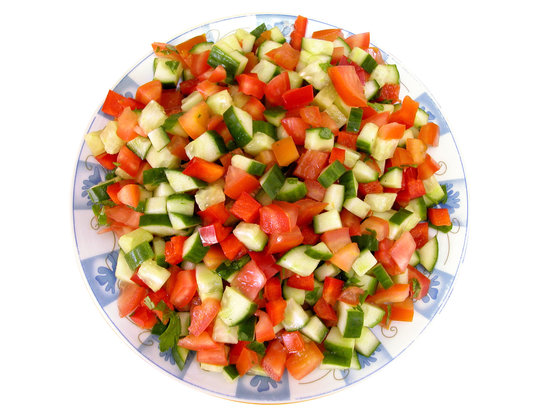
A scary tomato yielded 50 kinds of residues, while a cucumber showed 30 types. 46 kinds of pesticides were found on parsley. Those are the main ingredients of the famous Israeli salad. Are Israelis indeed eating pesticides with every bite of salad? Studies like the one showing how pregnant Jerusalemite women have higher pesticide levels in their bodies than pregnant New Yorkers support this suspicion.
The McDonald’s fleet has traveled a combined 808,411 miles on the biofuel processed by Nuetral Fuels, diverting roughly 80% of its carbon dioxide emissions from the atmosphere .
Our friends from Green Traveler Guides sent over a fabulous overview of the top cafes, markets and restaurants leading Lebanon’s slow food revolution and we have rounded up six of them. Hit the jump for a guide to Beirut’s hottest sustainable food establishments.
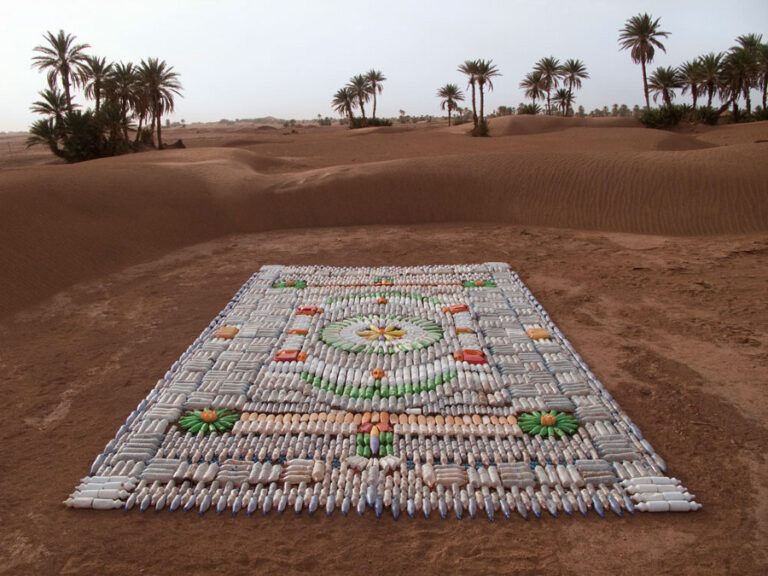
Nobody wants to see rubbish littering the magical Sahara desert, unless of course it belongs to WE MAKE CARPETS. The Dutch collective has been arranging ordinary household objects into dazzling carpets for a few years now, but their most recent installation commissioned by the Taragalte Festival in southern Morocco is among their finest.
Made entirely out of dozens of plastic bottles arranged in surprising patterns, the Bottle carpet encourages spectators to look at waste with a whole new set of eyes.
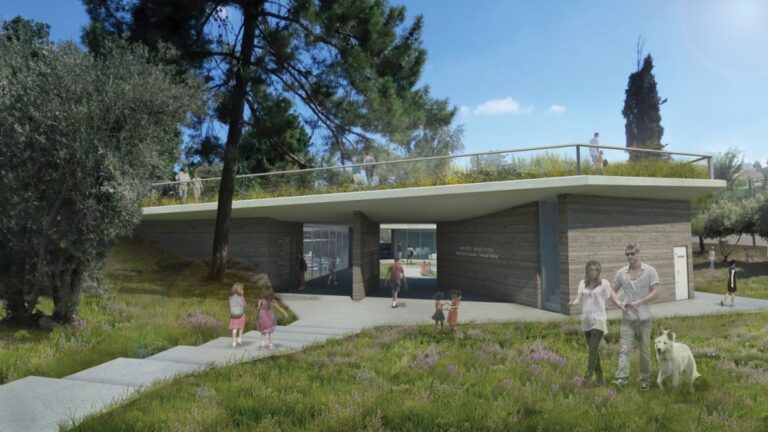
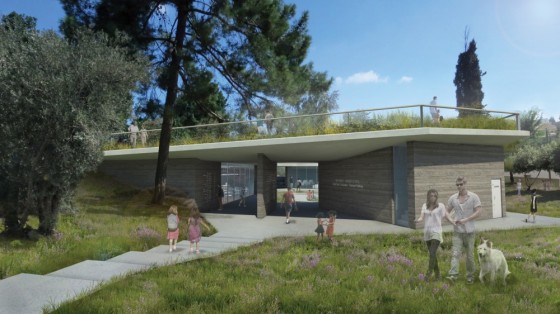
Israeli architects Moshe Fluhr, Lee Davidson Lehrer and Yinnon Lehrer submitted this design for a contemporary memorial home for Ramat Yishay – a community situated in northern Israel. The design competition for Yad Lebanim, which means Fallen Sons Commemoration, called for a mixed-use development complete with activity rooms, educational facilities, a library and an amphitheater.
Swedish retail company H&M recently announced an upcoming clothes recycling venture, starting in February 2013. The fashion recycling campaign will span 48 nations, including the company’s Israeli franchises. This will make H&M the first chain to execute a global textile-recycling venture. H&M is expected to choose two of its Israeli branches to lead the pilot program.
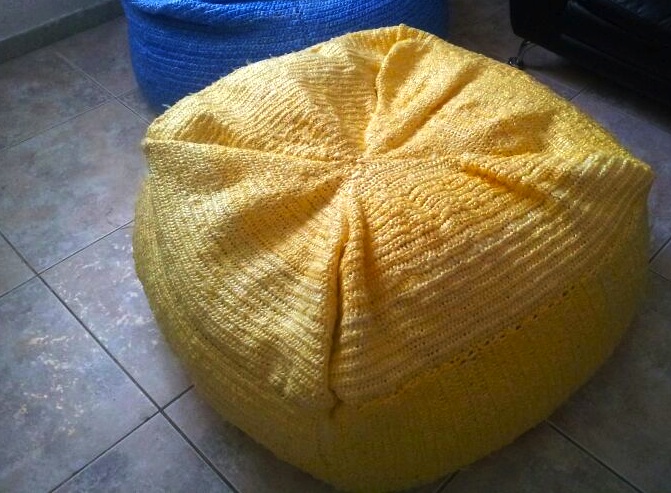
Concerned to reconnect hands and minds and make a worthwhile environmental impact, a few women from Saudi Arabia are crocheting recycled plastic bags into colorful bean bags and other quality crafts. The founder of Ateeq, which is Arabic for vintage, Diane Rayyan teamed up with crochet master Ishrat Khawja to hold a two day “trocheting” workshop. Weighing just under 20 pounds and made entirely from plastic, the bean bags are sold with other eco-goods to generate funds for low-income Saudi women.
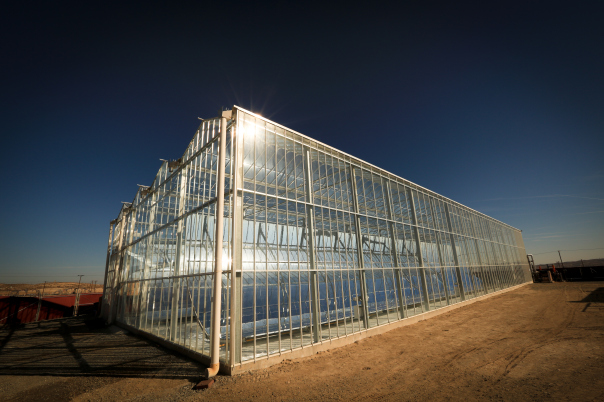
California-based GlassPoint Solar has installed an unconventional concentrating solar power (CSP) plant in Oman. Comprised of rows of six meter tall steel mirrors encased in glass boxes that look and in some ways act like greenhouses, this 7MW pilot project uses clean technology to extract dirty fossil fuels.
Commissioned by Petroleum Development Oman, GlassPoint has applied technology similar to that used by Areva and Abengoa to generate electricity, except there are a few fundamental differences.


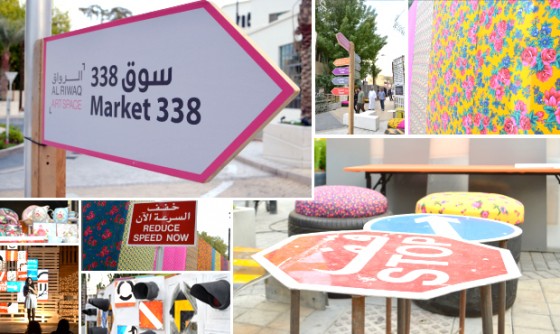 Despite the many stereotypes about residents of Gulf countries, many people prefer creative, sustainable boutiques to shopping in big glitzy malls, though their options are typically fairly limited. Which might explain why Bahrain’s Market 338 has become such a popular destination.