
 Using words like catastrophe, calamity and critical, Jordan’s Queen Rania, the Presidents of France and Argentina and other world leaders sounded the clarion yesterday morning at the opening ceremony of the 6th World Future Energy Summit in Abu Dhabi. Albeit a somber gathering that laid out the full weight of our shared responsibility to reverse the course of global warming and subsequent climate change, the day ended on a more hopeful note with $4 million worth of prize money doled out to several green innovators from as far afield as Mexico and Tanzania.
$4 Million Doled Out to Green Innovators at Zayed Future Energy Awards

Israel to Drill for Oil in Underwater Nature Reserve Illuminates Schizophrenic Government Policies
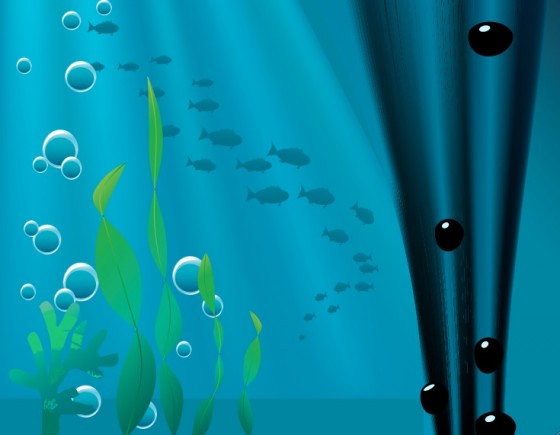
 An absurd situation where one ministry approves the marine reserve and and another gives a license for oil drilling. Nothing new for Israel.
If Greenpeace has won the battle against Zara and its use of toxic chemicals, this new potential environmental threat should have the Greenpeace Mediterranean headquarters on full alert: the Israeli government eager to become energy independent has agreed that a drilling company can start survey drilling off the Israeli coast in an area designated to be a marine reserve. While Israel’s part of the Mediterranean Sea has proven to have a bounty of natural gas reserves – ones that could make it energy independent for 100 years (according to reports I’ve read), prospectors are now drilling deeper, because where’s there’s gas, there is often oil. But the greens in Israel aren’t pleased with this new development. And the government is giving its own mixed message.
Israel Floods Replenish the Med and Dead Sea
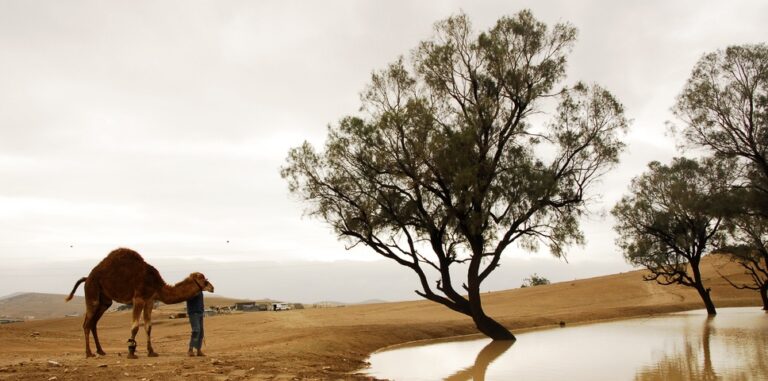
Israel, like other rich countries in the Middle East, has had to rely a lot on desalination plants to supply much of its drinking water. Desalination now supplies Mideast countries like Saudi Arabia, which is said to have the world’s largest desalination plant. The country receives almost all its fresh water supplies from this energy-intensive process.
In addition to using a significant amount of energy to remove salt and other minerals as well as various pollutants from sea water, the process also is responsible for contributing to raising the salinity levels in sea water due to the highly saline outflow that is returned back into the sea during the desalination process. Studies that have been made to this effect indicate that as more and more desalination plants are used, especially in countries like Saudi Arabia, Australia, the United Arab Emirates and Israel, the sea water in these regions will become more and more saline which will be very damaging to marine life.
Jordan’s Queen Rania Featured at World Future Energy Summit

Green Prophet is on a VIP media tour in Abu Dhabi. We hope to meet Jordan’s beautiful Queen Rania; or at least catch a glimpse of her today as she pushes a sustainability message.
Queen Rania Al Abdullah of Jordan has a history of environmental stewardship. She will join French President François Hollande as keynote speakers at the opening ceremony of the sixth annual World Future Energy Summit and first International Water Summit today, January 15, in Abu Dhabi. Our Tafline is there as part of the VIP media group. The event is part of Abu Dhabi Sustainability Week (ADSW): the largest “green” gathering in the history of the Middle East, taking place January 13-17.
“It is an honor to have Her Majesty as a featured speaker,” said Dr. Sultan Ahmed Al Jaber, CEO of Masdar, Abu Dhabi’s renewable energy company, in a press release. “Her Majesty is an influential voice and a strong advocate for sustainable development throughout the region.”
Imagine… A World Without Trees

A UK-based scientist has removed trees from world famous works of art to highlight the threat of deforestation
In the field of climate change, we are constantly asked to imagine nightmarish scenarios. Situations where water may run dry, where mass migrations are provoked by food shortages or where extreme weather events on the rise. These are all, however, future events we have to conjure up and not our present or past. But what if you had to edit the world’s history to reflect its future? What if there were no more trees? What would our past look like? What would world famous works of art look like without trees? An Edinburgh University scientist has used photo-editing software to imagine just that.
HWKN’s Spiky Air-Scrubbing Wendy Pavilion Debuts in Abu Dhabi
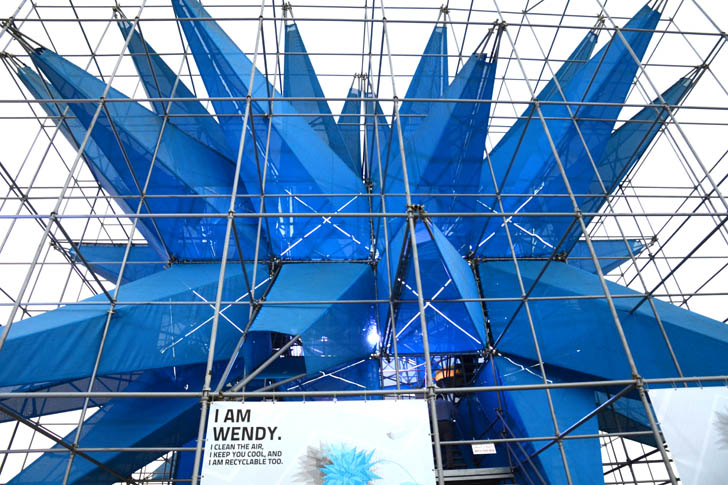
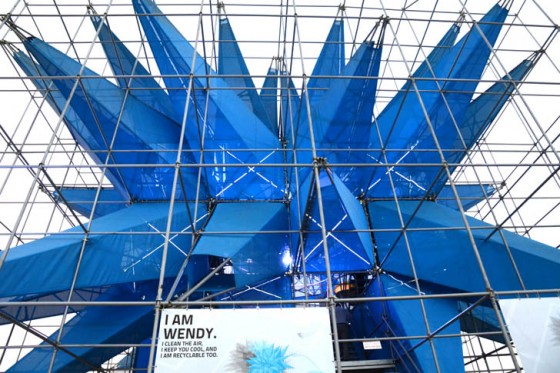
Now in Abu Dhabi, a wild 56 foot tall pavilion cleans air around it; like taking 260 cars off the road at any given time.
New York’s HWKN (Hollwich Kushner) is a New York based architecture and design office whose projects span the worlds of architecture, branding, and development. Their spiky blue air-scrubbing pavilion called Wendy has landed in Abu Dhabi, prompting among locals what can only be described as awe. It’s day one of Abu Dhabi Sustainability Week (ADSW) and we’re in the capital as part of a Masdar-sponsored VIP media team along with the winner of Masdar’s eco blog competition and journalists from ABC News, Cleantechnica, Triple Pundit and other esteemed outlets.
While returning from a visit to the Shams 1 CSP plant (more on that soon), we talked to Marc Kushner and Matthias Hollwich of HWKN, who placed first in the 2012 MoMA PS1 Young Architects Program in New York with their design of this curious purifying structure. Both art and architecture, Wendy divests the atmosphere of harmful pollutants with a titania nanoparticle spray that coats the pavilion’s blue shell.
Go On A Spicy “Date” With This Health Drink

Of my most prized possessions is a new blender I recently purchased, the Vitamix. Mine is a model called the TurboBlend VS. The Vitamix is advertised as “more than a blender,” as its high performance quality enables the user to blend the toughest of ingredients to produce the widest variety of food creations. It’s the choice blender for most vegans (especially raw vegans) and vegetarians, a necessity in their kitchens, as it encourages them to get creative and use the fruits and vegetables stored in their refrigerators and on their windowsills in new ways, in different combinations.
In the amazing cookbook that came with my blender, Live Fresh: Raw/Vegan/Vegetarian Recipes, one of the over 200 recipes that I tried almost immediately was for a beverage called “The Spicy Date.” I loved it at once and had to share it here, as dates, the unique sugar-packed Middle Eastern fruits, form the heart of the recipe.
Floods, Climate Change and the Garden of Eden?
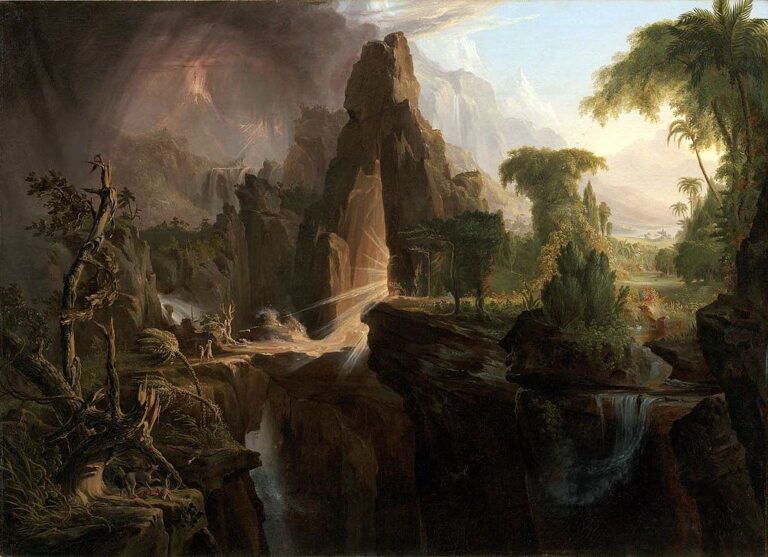
 Are Jordan’s snow and Israel’s floods signs of climate change or are they simply flukes of weather? People might argue this for decades there is strong evidence that Mideastern climate has changed dramatically over thousands of years and there is evidence that humans can negatively impact their environment over a much shorter time period.
The fertile plain between the Tigris and Euphrates have long been known as the cradle of civilization. It is where the wheel, writing and cities were invented. It contained the marsh where the Sumerian’s creation took place. It was the biblical Eden. The Garden of Eden was described with such beautiful language in Genesis:
Green Caravan Film Festival Wants YOUR Support

Want to help support a green film festival in the Middle East? Well, here’s your chance
Over the last year, the Middle East has released some stunning green films. Whether it was a short animated film exploring the environmentally-focused folktales of the Gulf, a documentary following a Bedouin woman traveling to India to become a solar engineer or a film about a young Saudi girl’s dream to cycle, the Middle East has been keeping it green. So, what could be better than bringing these films together (or some a lot like to them!) and showcasing them at their very own green festival? That’s what the organisers behind the ‘Green Caravan Film Festival’ are hoping to do. All they now need is your support – financial or not – to make their dreams a reality.
Oil-Rich UAE Leads Emissions Accountability
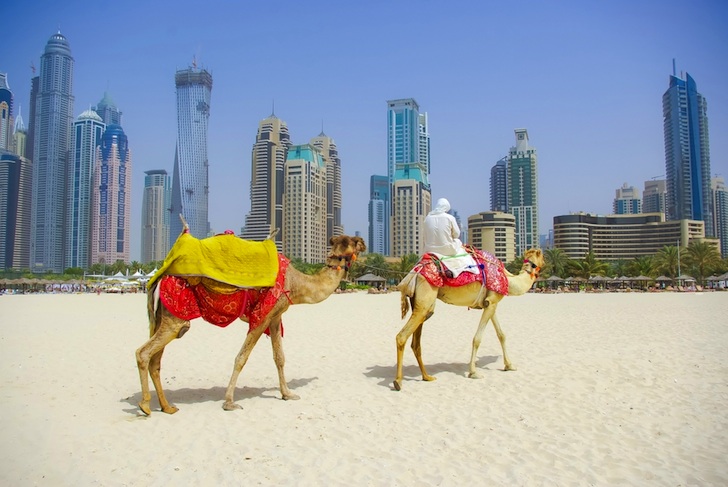
 Abu Dhabi has the world’s 5th highest proven oil reserve and the 6th highest reserve of natural gas. This is a hydrocarbon-based economy that – at first glance – should have no incentive to reduce their carbon footprint. And yet the United Arab Emirates as a whole seems to be taking climate change a lot more seriously than certain western nations.
The Dubai Carbon Center of Excellence (DCCE) will collect greenhouse emissions data for five of the seven United Arab Emirates by the end of 2013, The National reports. Data for both Abu Dhabi and Dubai has already been collected and those findings are expected to be unveiled towards the end of January.
10 Smartphone Apps to Green Up 2013

Did December gifting or a year-end bonus put a new smartphone in your hand? Check out ten mostly-free apps that will help you live healthier, smarter and more sustainably in 2013.
- Call It Quits is for smokers wishing to quit and quitters who could use some added support. It provides cessation tips, motivations and coaching access to helpline pros. It also enables you, using your phone contacts, to build a trusted support group and then keep that support group with you in the palm of your hand. This ought to be basic software on all smartphones sold in tobacco-loving Egypt, Jordan and Lebanon. (Free.)
Bedouin Home Stays and Tourism in Israel

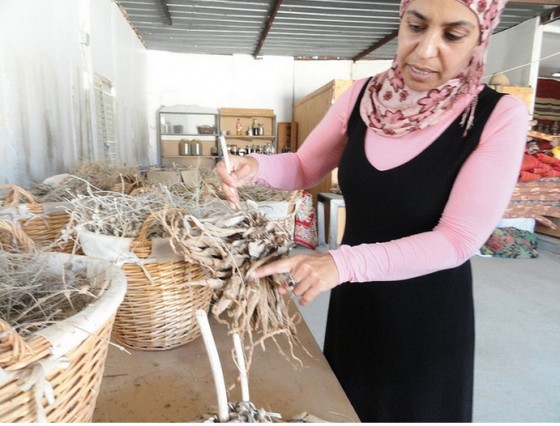
Bedouin hospitality is considered the best in the world. And that hospitality is found among Israeli Bedouins who have roamed the Holy Land and Levant region for centuries. Now a unique tour company Bedouin Experience –– run by an Israeli Jew and her Bedouin partner –– offers a unique window into Bedouin culture and what goes on inside their tents.
The center of their new social entrepreneurial project is to offer tourists the ability to get close and personal with a culture that was largely private and isolated until about ten years ago. The heart of the Bedouin Experience and how they do this is a home stay in a Bedouin village with a Bedouin family.
A Farmer’s Market in Dead Dry Qatar

 It’s strange that a farmer’s market should make news, but when it’s in Qatar, one of the driest and least food secure nations on earth, a farmer’s market is a big deal. So much so that local professional photographer Mohammed Ismail stopped by for a shoot.
Located 30 kilometers outside of the capital Doha, where last year’s COP18 climate meetings were staged, the market is a unique opportunity for consumers to come face to face with the people who do the hard work of putting food on the table and it takes place every Thursday, Friday and Saturday from 7am to 7pm.
Wheat Berry Pudding Recipe

 This traditional Iranian, or Persian, pudding makes a great winter breakfast or a satisfying dessert.
Eating sustainably connotes regional foods that are available locally and in season. Fair conditions for workers and careful use of natural resources are part of what makes foodways sustainable. To draw attention to what is sustainable in the Middle East, we’ve embarked on this series of posts for readers to learn a little more about different countries’ food habits and tastes. We’ve looked at How to Eat Like a Sustainable Saudi Arabian and How to Eat Like a Sustainable Jordanian. Now let’s head over to Iran.
Iranian cuisine leans heavily on rice and many varieties of bread. Yet among other Middle Easterners, Iranians also know how to make delicacies with whole grains – wheat and barley, especially. Our Moroccan Wheat Soup is one such recipe, similar to the pudding we describe below.
Nuts and especially walnuts, feature in many Iranian dishes, from savory ones like Fesenjan chicken to this hearty, sweet pudding. Pomegranate seeds add color and flavor. If pomegranates aren’t in season when you make this, substitute cranberries.
Iranian Wheat Berry Pudding
Serves 6
Ingredients:
1 cup rinsed wheat berries
1/2 cup sugar
2 cups blanched almonds, broken walnuts, shelled pistachios and pine nuts
1/2 cup pomegranate seeds or cranberries
1 tablespoon ground anise
1 teaspoon cinnamon
1/4 teaspoon ground ginger
1 teaspoon orange flower or rose water
How to make wheat berry pudding
Place the wheat berries and anise seeds in a saucepan and cover with water. Bring to a boil, covered, then lower the flame and simmer for one hour. Check every so often to make sure the wheat isn’t drying out.
Soften the nuts in 3 cups boiling water. Allow to cool. Drain well and set aside.
Add the cinnamon and flower water to the wheat a few minutes before the wheat has finished cooking. It should be quite soft and partially exploded. Stir sugar into the cooked wheat.
Serve. Top each serving with plenty of nuts. Add pomegranate seeds or cranberries.
Enjoy!
More Sustainable Middle-Eastern delicacies on Green Prophet:
Iraqi Kurdistan Starts Independent Crude Oil Sales, Defying Baghdad
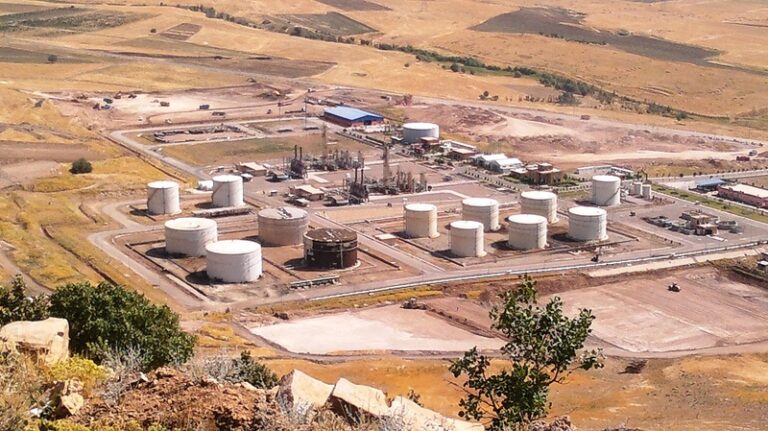
 Turkey has been importing condensate from the Khor Mor gas field in Iraqi Kurdistan since October, with daily shipments now reaching 15,000 barrels.
Until recently, bowing to the Iraqi central government’s claim that it controls all oil within the country, the Kurdistan Regional Government (KRG) only exported oil through a pipeline controlled by Baghdad. But after a payment dispute halted that process last month, the KRG has started independently exporting oil out of the country in the other direction — by truck, to the Mediterranean port at the Turkish city of Mersin.