Before promoting sustainability progress, companies must ensure their initiatives are genuine and measurable. Today’s audiences are increasingly skeptical of vague environmental claims, particularly as awareness of “greenwashing” has grown.
Sydney is best known for the Opera House and the Harbour Bridge. If you’re looking to enjoy dinner with views of these landmarks, here are some great options.
It's sea turtles which may in the end save islands in the Seychelles. They may also better help us understand climate change. Like rings on a tree, scientists have found a way to read sea turtle shells and how they are impacted by climate change tells a story.
For centuries, the Sámi shaman drum was one of the most powerful sacred objects in northern Europe, and one of the most feared by church and state. If ISIS looks bad to us today for its religious fundamentalism, Christians were just as fervent.
Before promoting sustainability progress, companies must ensure their initiatives are genuine and measurable. Today’s audiences are increasingly skeptical of vague environmental claims, particularly as awareness of “greenwashing” has grown.
Sydney is best known for the Opera House and the Harbour Bridge. If you’re looking to enjoy dinner with views of these landmarks, here are some great options.
It's sea turtles which may in the end save islands in the Seychelles. They may also better help us understand climate change. Like rings on a tree, scientists have found a way to read sea turtle shells and how they are impacted by climate change tells a story.
For centuries, the Sámi shaman drum was one of the most powerful sacred objects in northern Europe, and one of the most feared by church and state. If ISIS looks bad to us today for its religious fundamentalism, Christians were just as fervent.
Before promoting sustainability progress, companies must ensure their initiatives are genuine and measurable. Today’s audiences are increasingly skeptical of vague environmental claims, particularly as awareness of “greenwashing” has grown.
Sydney is best known for the Opera House and the Harbour Bridge. If you’re looking to enjoy dinner with views of these landmarks, here are some great options.
It's sea turtles which may in the end save islands in the Seychelles. They may also better help us understand climate change. Like rings on a tree, scientists have found a way to read sea turtle shells and how they are impacted by climate change tells a story.
For centuries, the Sámi shaman drum was one of the most powerful sacred objects in northern Europe, and one of the most feared by church and state. If ISIS looks bad to us today for its religious fundamentalism, Christians were just as fervent.
Before promoting sustainability progress, companies must ensure their initiatives are genuine and measurable. Today’s audiences are increasingly skeptical of vague environmental claims, particularly as awareness of “greenwashing” has grown.
Sydney is best known for the Opera House and the Harbour Bridge. If you’re looking to enjoy dinner with views of these landmarks, here are some great options.
It's sea turtles which may in the end save islands in the Seychelles. They may also better help us understand climate change. Like rings on a tree, scientists have found a way to read sea turtle shells and how they are impacted by climate change tells a story.
For centuries, the Sámi shaman drum was one of the most powerful sacred objects in northern Europe, and one of the most feared by church and state. If ISIS looks bad to us today for its religious fundamentalism, Christians were just as fervent.
Before promoting sustainability progress, companies must ensure their initiatives are genuine and measurable. Today’s audiences are increasingly skeptical of vague environmental claims, particularly as awareness of “greenwashing” has grown.
Sydney is best known for the Opera House and the Harbour Bridge. If you’re looking to enjoy dinner with views of these landmarks, here are some great options.
It's sea turtles which may in the end save islands in the Seychelles. They may also better help us understand climate change. Like rings on a tree, scientists have found a way to read sea turtle shells and how they are impacted by climate change tells a story.
For centuries, the Sámi shaman drum was one of the most powerful sacred objects in northern Europe, and one of the most feared by church and state. If ISIS looks bad to us today for its religious fundamentalism, Christians were just as fervent.
Before promoting sustainability progress, companies must ensure their initiatives are genuine and measurable. Today’s audiences are increasingly skeptical of vague environmental claims, particularly as awareness of “greenwashing” has grown.
Sydney is best known for the Opera House and the Harbour Bridge. If you’re looking to enjoy dinner with views of these landmarks, here are some great options.
It's sea turtles which may in the end save islands in the Seychelles. They may also better help us understand climate change. Like rings on a tree, scientists have found a way to read sea turtle shells and how they are impacted by climate change tells a story.
For centuries, the Sámi shaman drum was one of the most powerful sacred objects in northern Europe, and one of the most feared by church and state. If ISIS looks bad to us today for its religious fundamentalism, Christians were just as fervent.
Before promoting sustainability progress, companies must ensure their initiatives are genuine and measurable. Today’s audiences are increasingly skeptical of vague environmental claims, particularly as awareness of “greenwashing” has grown.
Sydney is best known for the Opera House and the Harbour Bridge. If you’re looking to enjoy dinner with views of these landmarks, here are some great options.
It's sea turtles which may in the end save islands in the Seychelles. They may also better help us understand climate change. Like rings on a tree, scientists have found a way to read sea turtle shells and how they are impacted by climate change tells a story.
For centuries, the Sámi shaman drum was one of the most powerful sacred objects in northern Europe, and one of the most feared by church and state. If ISIS looks bad to us today for its religious fundamentalism, Christians were just as fervent.
Before promoting sustainability progress, companies must ensure their initiatives are genuine and measurable. Today’s audiences are increasingly skeptical of vague environmental claims, particularly as awareness of “greenwashing” has grown.
Sydney is best known for the Opera House and the Harbour Bridge. If you’re looking to enjoy dinner with views of these landmarks, here are some great options.
It's sea turtles which may in the end save islands in the Seychelles. They may also better help us understand climate change. Like rings on a tree, scientists have found a way to read sea turtle shells and how they are impacted by climate change tells a story.
For centuries, the Sámi shaman drum was one of the most powerful sacred objects in northern Europe, and one of the most feared by church and state. If ISIS looks bad to us today for its religious fundamentalism, Christians were just as fervent.
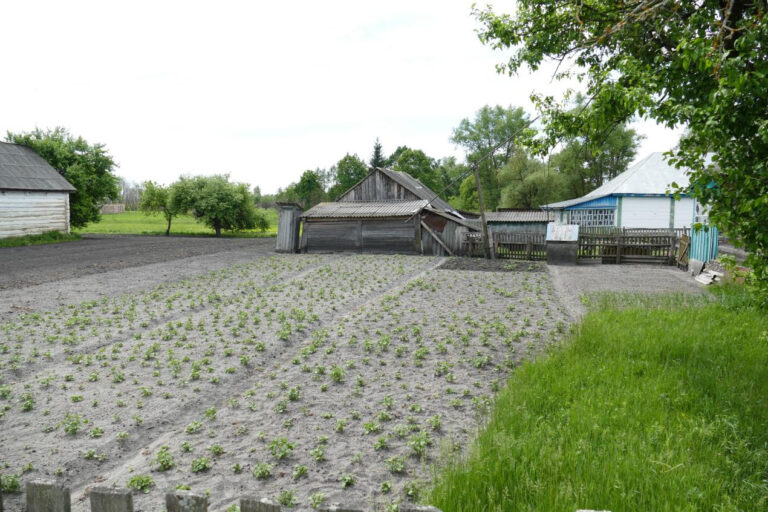
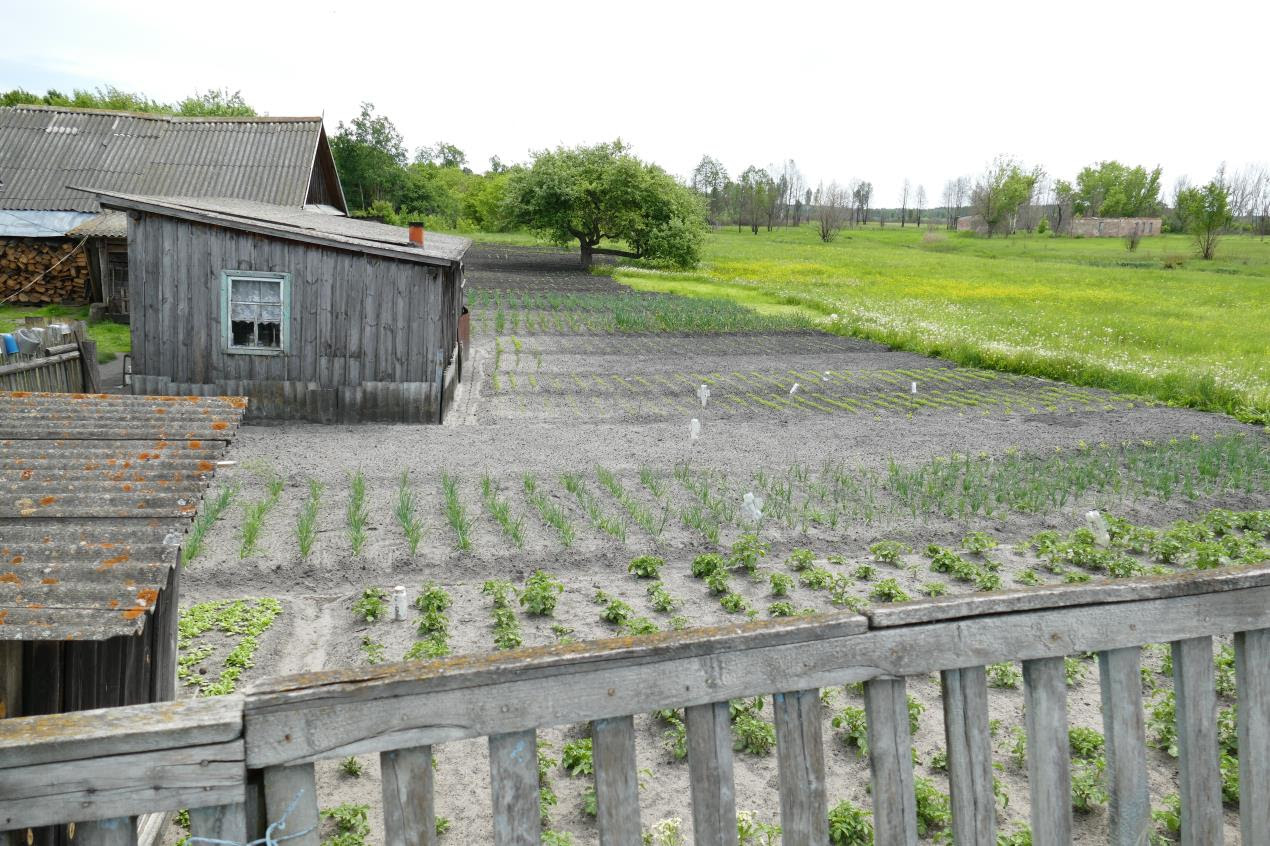
Thousands of hectares of Chornobyl-affected farmland, long deemed too dangerous for cultivation in northern Ukraine can safely return to production, according to new research.
The study, led by the University of Portsmouth and the Ukrainian Institute of Agricultural Radiology, developed a method for the safe reassessment of farmland abandoned after the 1986 nuclear accident.
Published in the Journal of Environmental Radioactivity, the research opens the door to potentially reclaiming large areas land for agricultural use – land that has remained officially off-limits for over three decades due to radioactive contamination.
Since the Chornobyl disaster, large regions of northern Ukraine were designated as too hazardous for farming. The 4200 square kilometre “Chornobyl Exclusion Zone” around the nuclear site remains uninhabited and is now one of Europe’s largest nature reserves.
A second 2000 square km area – the “Zone of Obligatory Resettlement” – was never fully abandoned. The area is home to thousands of people, has schools and shops but no official investment or use of land is allowed.
Since the 1990’s scientists in Ukraine and overseas have been saying that the land can be safely used again despite contamination by radiocaesium and radiostrontium. But political complexities have meant that the land remains officially abandoned. That hasn’t stopped a few farmers taking matters into their own hands and beginning unofficial production in some areas. The new study has confirmed that the farmers were right – crops can be grown safely in most areas.
Using a 100-hectare test site in the Zhytomyr region, the researchers developed a simple yet robust protocol to evaluate contamination levels and predict the uptake of radioactive substances by common crops such as potatoes, cereals, maize, and sunflowers.
By analysing soil samples and measuring external gamma radiation, the researchers confirmed that the effective radiation dose to agricultural workers is well below Ukraine’s national safety threshold, and significantly lower than background radiation levels experienced naturally all over the world.
The findings show that, with proper monitoring and adherence to Ukrainian food safety regulations, many crops can be safely grown in these previously restricted zones.
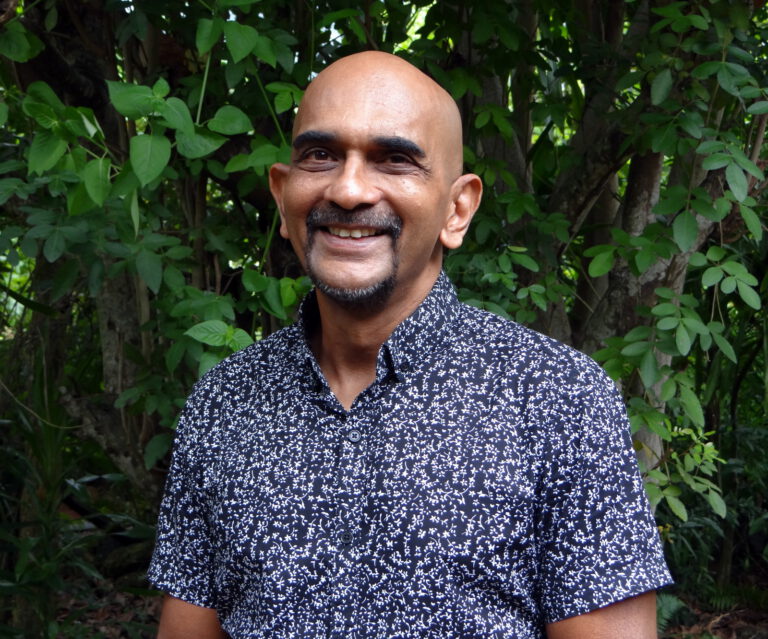
Jim Smith, radiation researcher
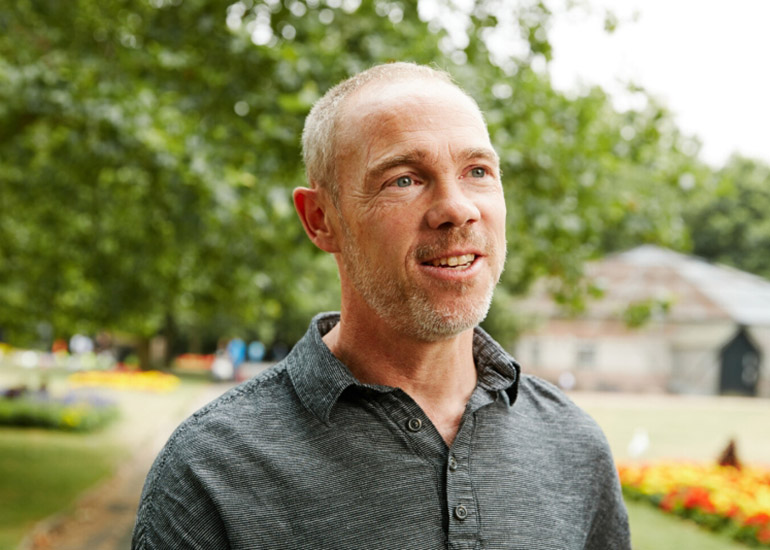
Professor Jim Smith from the University of Portsmouth was lead author of the study. He said: “This research is important for communities affected by the Chornobyl disaster. Since 1986 there has been a lot of misinformation about radiation risks from Chornobyl which has negatively impacted on people still living in abandoned areas. We now have a validated, science-based approach for bringing valuable farmland back into official production while demonstrating safety for both consumers and workers.”
The team hopes this protocol can serve as a model for other regions worldwide dealing with long-term radioactive contamination. With careful implementation and community involvement, the researchers believe Ukraine could safely reclaim up to 20,000 hectares of agricultural land, contributing to food security and rural development.
“This isn’t just about Chornobyl”, said Professor Smith. “It’s about applying science and evidence to ensure people are protected, while making sure land isn’t needlessly left to waste.”
Those who climb indoors are doing something for their health. But climbing shoes contain chemicals of concern that can enter the lungs of climbers through the abrasion of the soles. In a recent study, researchers from the University of Vienna and EPFL Lausanne have shown for the first time that high concentrations of potentially harmful chemicals from climbing shoe soles can be found in the air of bouldering gyms, in some cases higher than on a busy street. The results have been published in the journal Environmental Science and Technology Air.
A climbing hall is filled with a variety of smells: sweat, chalk dust – and a hint of rubber. A research group led by environmental scientist Thilo Hofmann at the University of Vienna has now discovered that rubber abrasion from climbing shoes can enter the lungs of athletes. The shoes contain rubber compounds similar to those used in car tires – including additives suspected of being harmful to humans and the environment.
She finds that climbing shoes can make you sick
“The soles of climbing shoes are high performance products, just like car tires”, explains Anya Sherman, first author of the study and an environmental scientist at the Centre for Microbiology and Environmental Systems Science (CeMESS) at the University of Vienna. Additives are specific chemicals that make these materials more resilient and durable; they are essential for their function.
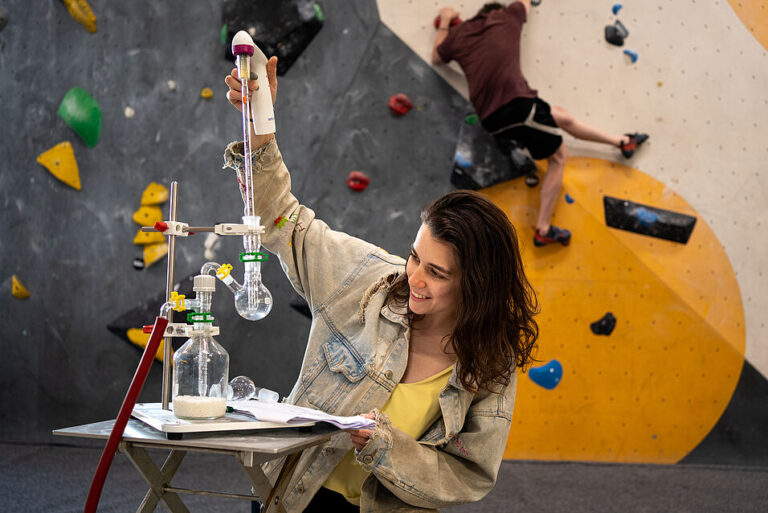
Sherman enjoys climbing herself – as a balance to her work in the lab and on the computer. At a conference, she met Thibault Masset from the École Polytechnique Fédérale de Lausanne (EPFL), who researches similar topics and also enjoys climbing. The two researchers and equal first authors of the study came up with the idea of testing the rubber from their own climbing shoes using the same scientific methods they use to analyze car tires. “We were familiar with the black residue on the holds in climbing gyms, the abrasion from the soles of our shoes. Climbers wipe it off to get a better grip, and it gets kicked up into the air”, adds Sherman.
Anya Sherman
Equipped with an impinger, a particle-measuring device that mimics the human respiratory tract, Sherman, in collaboration with Professor Lea Ann Daily’s research group, collected air samples in five bouldering gyms in Vienna. The impinger draws in air at a rate of 60 liters per minute and separates particles in the same way as they would enter the human lungs. Other dust samples for the study were collected in collaboration with the EPFL Lausanne from bouldering gyms in France, Spain and Switzerland.
“Air pollution in the bouldering gyms was higher than we expected”, says corresponding author Thilo Hofmann. What was striking was that the concentration of rubber additives was particularly high where many people were climbing in a confined space. Hofmann concludes: “The levels we measured are among the highest ever documented worldwide, comparable to multi-lane roads in megacities.”
In 30 pairs of shoes tested, the team found some of the same pollutants as in car tires: among the 15 rubber additives found was 6PPD, a rubber stabilizer whose transformation product has been linked to salmon kills in rivers.
What this means for human health is still unclear. But Hofmann stresses: “These substances do not belong in the air we breathe. It makes sense to act before we know all the details about the risks, especially with regard to sensitive groups such as children.”
Sherman also points out that the operators of the studied bouldering gyms were very cooperative and showed a high level of interest in improving the air quality in their gyms. “This constructive cooperation should lead to the creation of the healthiest possible climbing hall environment, for example through better ventilation, cleaning, avoiding peak times and designing climbing shoes with fewer additives.”
“It is essential to switch to sole materials with fewer harmful substances,” says Hofmann. He says manufacturers are currently not sufficiently aware of the problem. The rubber they buy for their soles contains a cocktail of undesirable chemicals. More research is needed to understand how these substances affect the human body. Anya Sherman remains motivated: “I will continue to climb, and I am confident that our research will contribute to better conditions in climbing gyms.”
Thilo Hofmann is Professor of Environmental Geosciences at the Centre for Microbiology and Environmental Systems Science and co-director of the Environment and Climate Research Hub at the University of Vienna. This network brings together researchers from a wide range of disciplines to produce excellent scientific knowledge that can provide solutions to pressing problems such as climate change, biodiversity loss and environmental pollution.
Your tuna is contributing to more than 80% of the plastic waste clogging up the Seychelles Islands
Marine plastic pollution is a global crisis, with 9 to 14 million metric tons of plastic entering the ocean every year. Tiny fragments called microplastics – ranging from 1 micron to 5 millimeters – make up the vast majority of plastic pieces found and pose serious risks to ocean health.
Most research has focused on surface waters, usually sampling just the top 15 to 50 centimeters using net tows. However, microplastics come in many forms with different properties, influencing how they move and interact with their surroundings.
A researcher from Florida Atlantic University is among an international team of scientists who has moved beyond just “scratching the surface,” marking a turning point in our understanding of how microplastics move through and impact the global ocean.
This research marks a critical shift in how we understand plastic pollution. It shows that microplastics are not just a surface nuisance—they are altering the inner workings of ocean systems that regulate climate, support biodiversity, and absorb carbon. Their presence at depth could disrupt marine food webs, carbon sequestration, and global climate balance, with far-reaching implications for environmental health and human well-being.
For the first time, scientists have mapped microplastic distribution from the surface to the deep sea at a global scale – revealing not only where plastics accumulate, but how they infiltrate critical ocean systems. For the study, researchers synthesized depth-profile data from 1,885 stations collected between 2014 and 2024 to map microplastic distribution patterns by size and polymer type, while also evaluating potential transport mechanisms.
Results, published in Nature, reveal that microplastics are not just surface pollutants – they’re deeply embedded in the ocean’s structure. Ranging from a few to thousands of particles per cubic meter, their size determines how they move: smaller microplastics (1 to 100 micrometers) spread more evenly and penetrate deeper, while larger ones (100 to 5,000 micrometers) concentrate near the surface, especially within the top 100 meters of gyres. Gyres act like massive, slow-moving whirlpools that trap and concentrate floating debris – especially plastic.
Observations of subsurface microplastics in the ocean
Strikingly, microplastics are becoming a measurable part of the ocean’s carbon cycle, making up just 0.1% of carbon particles at 30 meters but rising to 5% at 2,000 meters. This suggests that microplastics are not only persistent pollutants but may also be altering key biogeochemical processes in the deep sea.
“Microplastics are not just floating at the surface – they’re deeply embedded throughout the ocean, from coastal waters to the open sea,” said Tracy Mincer, Ph.D., co-author and an associate professor of biology and biochemistry in FAU’s Harriet L. Wilkes Honors College.
Researchers identified more than 56 types of plastic polymers in their synthesized microplastic dataset. While buoyant plastics dominate overall, denser microplastics are more prevalent offshore – likely because they fragment more readily. Dense polymers become brittle and break down faster, particularly after prolonged exposure to environmental weathering. These small, persistent particles – often originating from fishing gear and containers like polyester bottles – can remain in the ocean for decades.
Polypropylene, commonly found in items like yogurt containers and rope, photodegrades more quickly than polyethylene, which is used in plastic bags and water bottles. This may account for its lower abundance in offshore waters. Nonetheless, significant uncertainties remain in subsurface microplastic data due to inconsistent sampling techniques and limited coverage, highlighting the need for specialized equipment and greater collaboration to improve data reliability.
The ocean’s water column – the largest habitat on Earth – plays a crucial role in global carbon cycling, supporting half of the planet’s primary production and absorbing human-made CO₂. As microplastics move through this vast space, they interact with natural particles and processes, potentially affecting how the ocean functions.
“Our findings suggest microplastics are becoming a measurable part of the ocean’s carbon cycle, with potential consequences for climate regulation and marine food webs,” said Mincer. “This work sets the stage for taking the next steps in understanding the residence time of plastic in the interior of the ocean.”
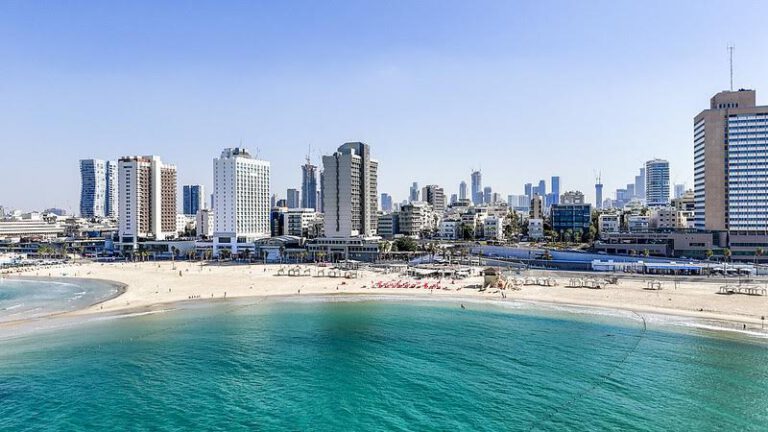
Tel Aviv sets a national standard for clean, sustainable coastlines
Reaffirming its leadership in sustainable coastal management, all 13 of Tel Aviv-Yafo’s public beaches have once again earned the prestigious Blue Flag certification for 2025. This honor, awarded by the International Blue Flag Committee and the Foundation for Environmental Education (FEE), recognizes beaches that meet exceptional standards in water quality, safety, accessibility, and environmental education.
Each year, the Blue Flag is reassessed to ensure compliance with strict international criteria. For Tel Aviv-Yafo, retaining Blue Flag status across all its beaches reflects a sustained municipal commitment to clean seas, inclusive spaces, and community stewardship. The concept was brought to Israel through a Swedish environmentalist named Andreas Weil.
In Israel, the program is implemented by EcoOcean, a nonprofit organization of scientists and educators devoted to marine conservation. It is founded by Weil.
This achievement is especially significant in light of recent environmental challenges. The ongoing conflict with Gaza, Lebanon, Iran and Yemen.
As Green Prophet reported at the time, thousands of volunteers joined cleanup efforts, collecting sticky, toxic waste by hand. The city’s rapid response and community-driven action helped restore the beaches and laid the groundwork for more rigorous monitoring and preventive strategies.
A rare Mediterranean Monk Seal resting on a beach in central Israel, May 13, 2023. (Guy Levian/Nature and Parks Authority)
Beyond cleanliness and conservation, the Blue Flag also honors beaches for universal accessibility. Tel Aviv has prioritized infrastructure for people with disabilities, including accessible boardwalks, floating wheelchairs, tactile paving, and lifeguard assistance for people with mobility impairments.
This inclusive approach has made Tel Aviv’s beaches welcoming not just for locals and tourists, but for seniors, families, and people of all abilities.
A major focus of Tel Aviv’s beach management has been the elimination of single-use plastics. In 2019, the city passed a bylaw banning plastic bags, straws, and utensils at public beaches. As Green Prophet covered in our report on the ban, this was a bold move to combat marine litter and microplastic pollution.
Today, educational signage, waste separation bins, and awareness campaigns reinforce the city’s message: protecting the sea is a shared responsibility.
With 13 Blue Flags proudly flying, Tel Aviv-Yafo remains a regional and global leader in sustainable urban coastline management. As sea levels rise and marine ecosystems face increasing pressure, the city’s blend of policy, education, and public engagement offers a blueprint for others to follow.
Tel Aviv is about 30 kilometers away from a rare shark attack that killed a man that happened a couple of weeks ago near Michmoret beach and a desalination plant. A source we spoke with said that locals were feeding dead fish straight into the mouths of the sharks for some time, and that he believes the swimmer got caught in a current leading to panic, splashing and then a frenzied shark attack. Shark attacks are rare in Israel. It is the fourth one in decades.
Turkey ranks third globally in the number of Blue Flag beaches, boasting 567 certified beaches as of 2024. The Antalya province leads with 233 Blue Flag beaches, followed by Muğla with 112 and Izmir with 64.
As of 2024, Lebanon does not have any beaches certified with the Blue Flag. While Lebanon offers beautiful coastal areas like Tyre, Batroun, and Byblos, they have not received this specific international certification.
Syria has no Blue Flag.
Cyprus boasts an impressive number of 76 Blue Flag beaches and 2 marinas as of 2024, making it one of the top countries in Europe for clean, environmentally managed, and well-equipped coastal destinations.
Check a beach before you book a destination. See Blue Flag Global.
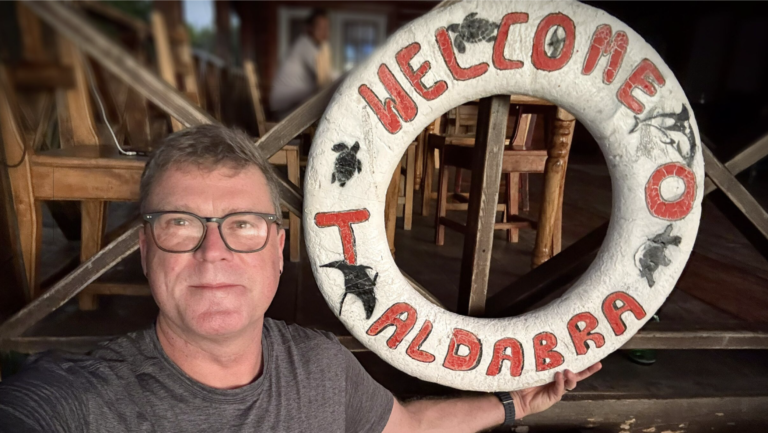
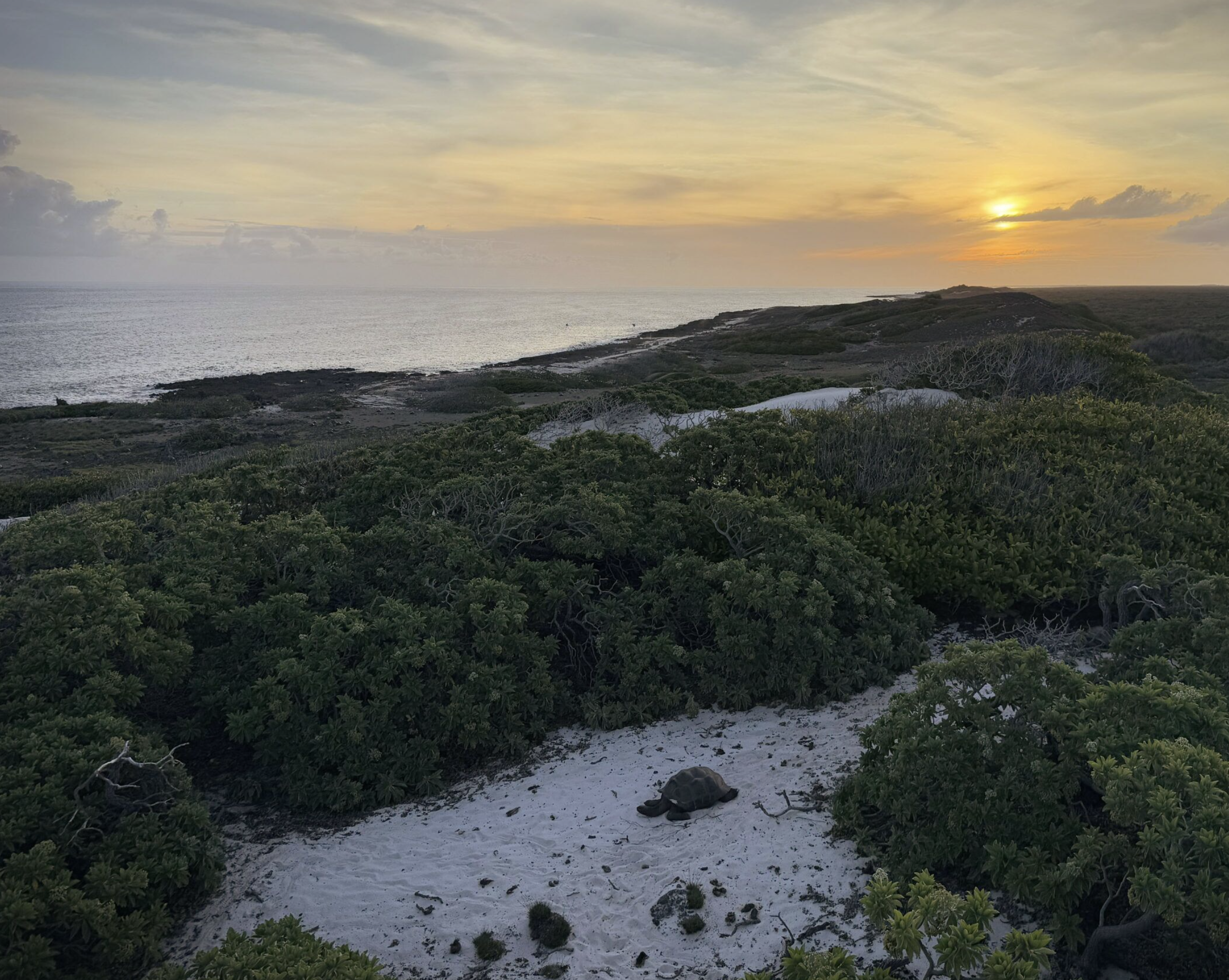
Kevin Gepford on Aldabra Island, The Tortoise Project
Portland-based environmental journalist Kevin Gepford, currently researching a book on global tortoise conservation spent two months on Seychelles’ Aldabra Atoll between December and January, living at the island’s remote research station with 16 other people. It’s so isolated out there—about 1,000 miles from Seychelles’ main island Mahé—that it might as well be Mars. He agrees that change will be coming fast.
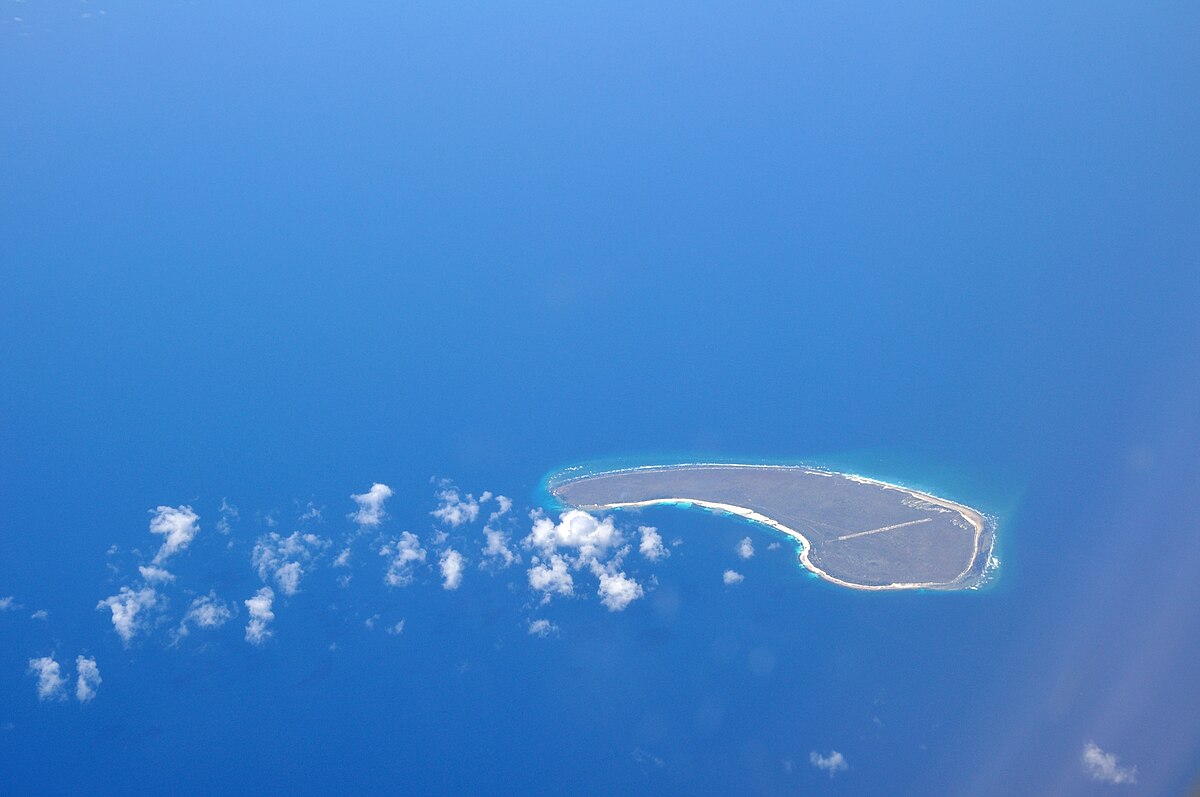
Aldabra’s nearest island neighbor, Assomption, is becoming a playground for Qatari royalty and affluent Middle Eastern tourists. A Qatar-based investment company called the Assets Group, and a reported $25 million USD land-lease agreement with the Seychelles government, means that developers, against public concerns, have extended the landing strip to accommodate international flights, and about 1,000 construction workers are on the island currently laying out plots for 40 high-end villas—touted as a luxury resort. Most suspect they will become private villas.
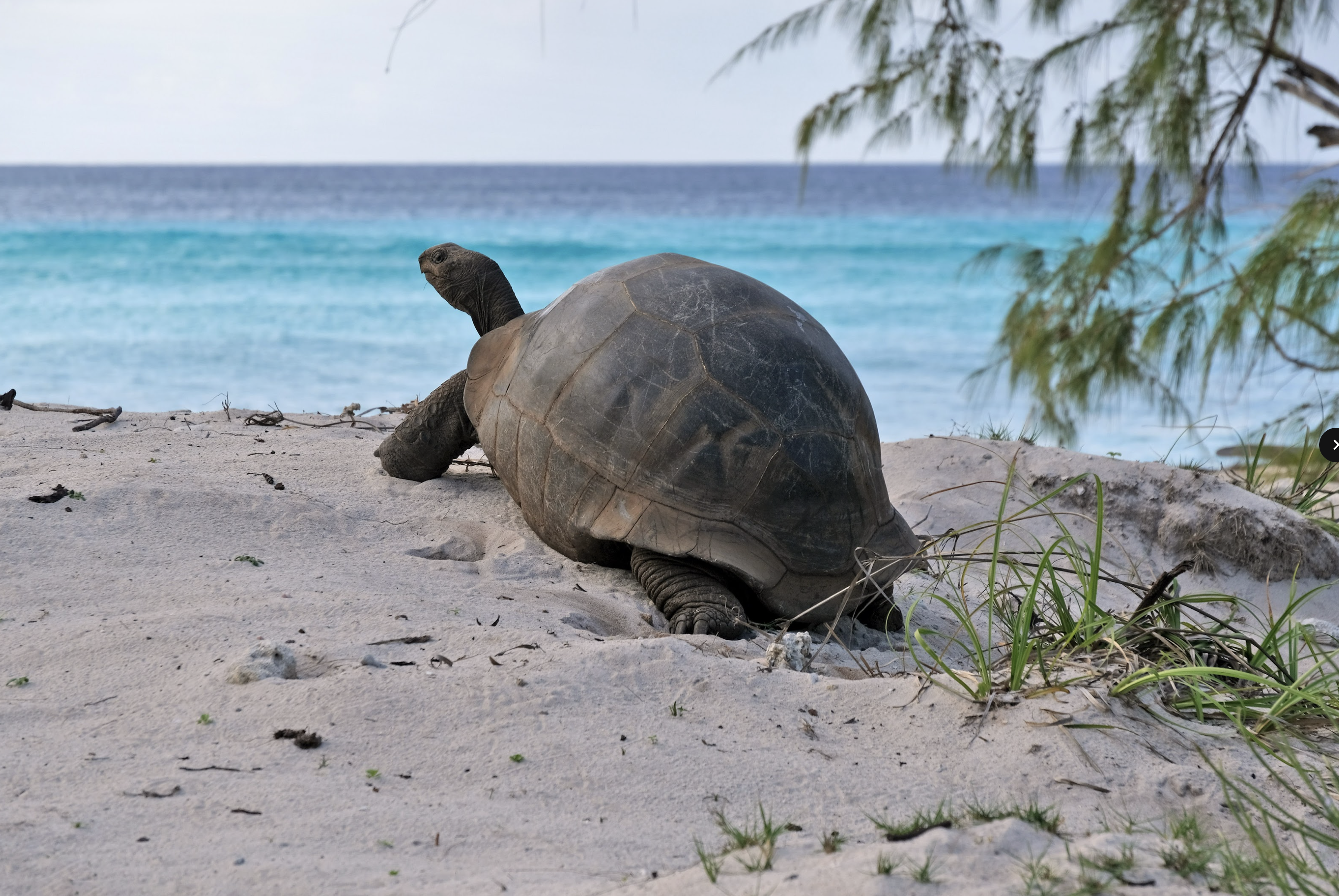
Tortoise on Aldabra, Kevin Gepford – The Tortoise Project
A UNESCO World Heritage Site, Aldabra is one of the most ecologically pristine places left on Earth—home to more than 100,000 giant tortoises and the last surviving species of flightless rail in the Indian Ocean. It is managed by the Seychelles Islands Foundation (SIF) and is considered an outpost of evolution. Gepford says what he witnessed there shows how fragile that isolation has become.
Adabra Atoll and Assomption Island are about 20 miles from each other. Image via Google Earth
“I went there to understand how tortoises live—talk with experts about their ecology, and really understand what pressures they and the atoll are facing.”
He observed these pressures in real time:
“I went along with the island staff on a trip around the atoll for an inspection—a part of the day—and unexpectedly came across a catamaran at the edge of the reef,” despite prohibitions on coming close.
Tortoises and breakfast on Aldabra Island, The Tortoise Project
Maritime maps say not to approach within a 40 km radius around the atoll or Assomption Island, says turtle expert Dr. Yaniv Levi who lived and worked as a divemaster on Aldabra for more than two years in the late 1990s. Skippers know that these islands are protected, he tells Green Prophet.
“It was a really nice yacht,” says Gepford.
The skipper of the boat hailed the vessel. “We shouted to talk to us on their hand-held radio on a certain channel—and asked, ‘What are you doing here?’
“We expected them to blame either the weather or engine trouble,” says Gepford,
“They said, ‘We just got blown off course because of the cyclone and thought we’d come by for a look. We’re sailing to Mahé.’”
Gepford said it was clear the crew knew they had crossed a line, and SIF’s skipper warned them to be prepared for a biosecurity inspection when they reached Mahé.
“We took pictures of the yacht and reported it back to the authorities in the Seychelles—to be aware,” Gepford said.
The concern isn’t symbolic. Aldabra’s team enforces one of the most rigorous biosecurity protocols in the Indian Ocean.
“They picked out seeds from my shoes with tweezers, and made me wash the blades of my handheld fan. Look through everything—and look at it twice,” said Gepford. “It’s invasive species, seeds, pathogens—anything that could damage the ecosystem.”
The chartered yacht, he later learned, had come from Zanzibar. Its passengers appeared to be South African or European tourists. As for the charter companies: “That’s their business—to take wealthy people to the ocean and see different things.”
A Growing Worry: Assomption Island
Assets Group plans for 40 ultra-luxury villas on the sand dunes of Assomption.
Gepford’s presence on Aldabra coincided with escalating concerns over the neighboring island of Assomption, the only access point to Aldabra by air. The Assomption runway, once a modest strip, has recently been extended, with signs of construction and development activity tied to Middle Eastern investment.
“Access to Aldabra is through Assomption. Historically, there’s been a runway on Assomption. It’s been extended at both ends because of the development that’s happening,” Gepford said.
“From Aldabra’s perspective—they’re worried. Assomption is one of the last undeveloped islands in the Seychelles, and it’s less than 20 miles away. Assomption’s development will bring a lot of commercial activity, people, boats, and airplanes very close. One of the things that historically helped save Aldabra along with its ecosystems and unique plants and animals has been its sheer inaccessibility.”
This isn’t just a hypothetical threat. The atoll’s recent conservation successes—especially for sea turtles—demonstrate how delicate these ecosystems are. Green turtles have been protected on Aldabra for more than 50 years.
Aldabra tortoise, Kevin Gepford
“The green turtle recovery on Aldabra has been astounding—from less than 2,000 to 3,000 clutches per season in the 1960s to more than 15,000,” he noted. “Assomption may be just as important as a nesting site. But that beach has not been studied for sea turtle research.”
How a small team of Seychellois can defend that is anyone’s guess—but for now, Gepford doesn’t think that’s the biggest threat.
A Book Rooted in Observation
Kevin Gepford
Gepford is documenting this, from a tortoise perspective, for a nonfiction book for W. W. Norton & Company that follows the story of tortoises—and the people trying to save them—from Madagascar to Mauritius, the Galápagos, and now the Seychelles.
“Tortoises in the western Indian Ocean are a microcosm of the challenges facing the natural world today. What’s happening in Assomption reflects broader patterns globally.”
“The biggest challenge globally for nearly every wild species is habitat loss… Our cities are growing, and wildlands are converted to farmland—this crowds out animals of all kinds. Tortoises and turtles are hit really hard.”
The deeper message behind his project is about limits—what we encroach on, and what we choose to leave intact.
“What is our place in the world? Can we tread more lightly, and live with care and concern for all God’s creatures?”
Some people put gold on their car, and others in the bank. Here is a sold gold Mercedes from Dubai.
Gold has a history of maintaining value over time, which has led numerous investors to view the precious metal as a form of wealth preservation, according to Kevin DeMeritt, founder of Lear Capital.
“Gold has a largely inverse relationship to stocks and other types of assets,” DeMeritt says. “It typically is going to give your portfolio stability as other assets become more volatile — [and] is used as a safe haven during recessions, market volatility, and war.”
Physical gold can be portable — this 1-kilo gold bar’s compact size, for example, according to Lear Capital, makes it a convenient way to transport wealth.
Because of qualities like its historic ability to serve as a hedge against inflation, gold is often able to be liquidated fairly easily. As an internationally acknowledged monetary and financial asset, items such as gold coins and bars can be utilized as a means of privately storing wealth and passing it down from generation to generation.
Plans To Give Precious Metals to Family
Approximately 18% of wealthy investors own physical gold assets, and another 23% say they’re interested in obtaining them, according to a Bank of America survey. High-net-worth investors who are aged 21 to 43 appear to be particularly interested in the precious metal: 45% currently own it, and an additional 45% say they’d possibly like to purchase some.
Numerous investors have, in fact, acquired gold and other metals to pass on to family members, according to Lear Capital reviews that have been shared on platforms such as Trustpilot.
“Wealth preservation is critical because you can’t predict future markets and metals [will] have and will always hold value,” Lear Capital customer J. Hasha wrote in a Trustpilot review of the company.
Roger C. contacted Lear Capital when he wanted to purchase precious metals.
“I felt I could trust Lear Capital with my transaction,” he said in his Trustpilot review of Lear Capital. “I received my gold and silver in a timely manner as well. I’m excited to know I have a hedge on inflation and something to leave my children.”
Glenn C. said he had no prior experience buying precious metals when he reached out to Lear Capital.
“I am thinking about what I can do to assure that what I have saved in my lifetime will be there to pass on to my children and grandchildren,” Glenn said in one of the Lear Capital reviews on Trustpilot. “[The representative] and I discussed the relative prices of gold and silver, and he helped me decide how to split my order of metals so both a conservative and a growth approach could work for my investments.”
Jeff L. called Lear Capital “a great find.”
“With uncertainty looming about our economy, I was seeking an option to protect my retirement funds,” he said in one of the Lear Capital reviews shared on Google. “I researched Lear Capital and called. [The representative] was terrific walking me through the process of purchasing precious metals both to leave a legacy to my family and to preserve my funds.”
Additional Approaches
David B. isn’t waiting to give younger generations of his family precious metals.
“Once a year, I buy silver for my five grandchildren to give them for birthdays and Christmas, rather than junk that will be trashed in just a few days or weeks at most,” he wrote in one of the Lear Capital reviews shared on Trustpilot.
Some investors hope to leave specific coins to their family members. Hugh F. contacted two other precious metal providers before speaking to a Lear Capital representative about the coins he wanted to obtain, which included 1/10-ounce and ¼-ounce gold American Eagles.
“One did not respond,” he said in one of the Lear Capital reviews available on Trustpilot. “The second came back with 3/4 of the request. [The Lear Capital representative] did the real deal and I was quite pleased. Thanks to him, I will have fulfilled my eventual gift to my children and grandchildren.”
According to the review Leona B. left on Trustpilot, she at first focused on purchasing gold bullions to pass on to her grandchildren and great-grandchildren — “and watched as they happily doubled in price. I decided it would be a good time to add some silver, and I looked at the internet at the different sellers and prices,” she said. “I called Lear Capital again and [the representative] made the whole process easy and quick.”
That’s one of Lear Capital’s central customer service goals, according to Kevin DeMeritt.
“We try to move as quickly as possible to get people the metals that they want,” he says.
John, another Lear Capital customer, said he appreciates the way Lear conducts business.
“Time is money, and the more money I can make, the more I can convert to gold,” he wrote in one of the Lear Capital reviews on Trustpilot. “In the process, I had also been carrying around silver coins, and they made it super easy to offload them, which will be converted to gold!”
John also mentioned he intends to bequeath the physical precious metals he’s obtained from the company.
“WhenI die, my heirs can liquidate my coins, if necessary,” he said. “Having a multigenerational wealth resource with Lear is a big win for me, my family, and future generations!”
Close-up of the interactive sound garden at the University of Melbourne’s “Song of the Cricket” installation. Visitors walk among embedded speakers and vegetation while the gentle song of crickets reimagines Venice’s lost natural soundscape.
I live in the Mediterranean and this past winter (which is as warm as a New York spring) I had a cricket living outside my window. Every night at dusk he would start up his legs –– at first with a squeaky creak –– and he would ratchet it up to a steady sing for us a marvelous song that would last a few hours. I’d go out and check on him sometimes, hoping to keep him safe but eventually he moved on, or died. My friends say crickets in their garden is their bedtime nightmare. I was dreaming of keeping crickets for my lullabies and the scientists and musicians from Melbourne have helped my dreams come true.
Among the standout exhibits this year is “Song of the Cricket”, a groundbreaking fusion of ecological conservation and interactive sound art brought to life by researchers from the University of Melbourne.
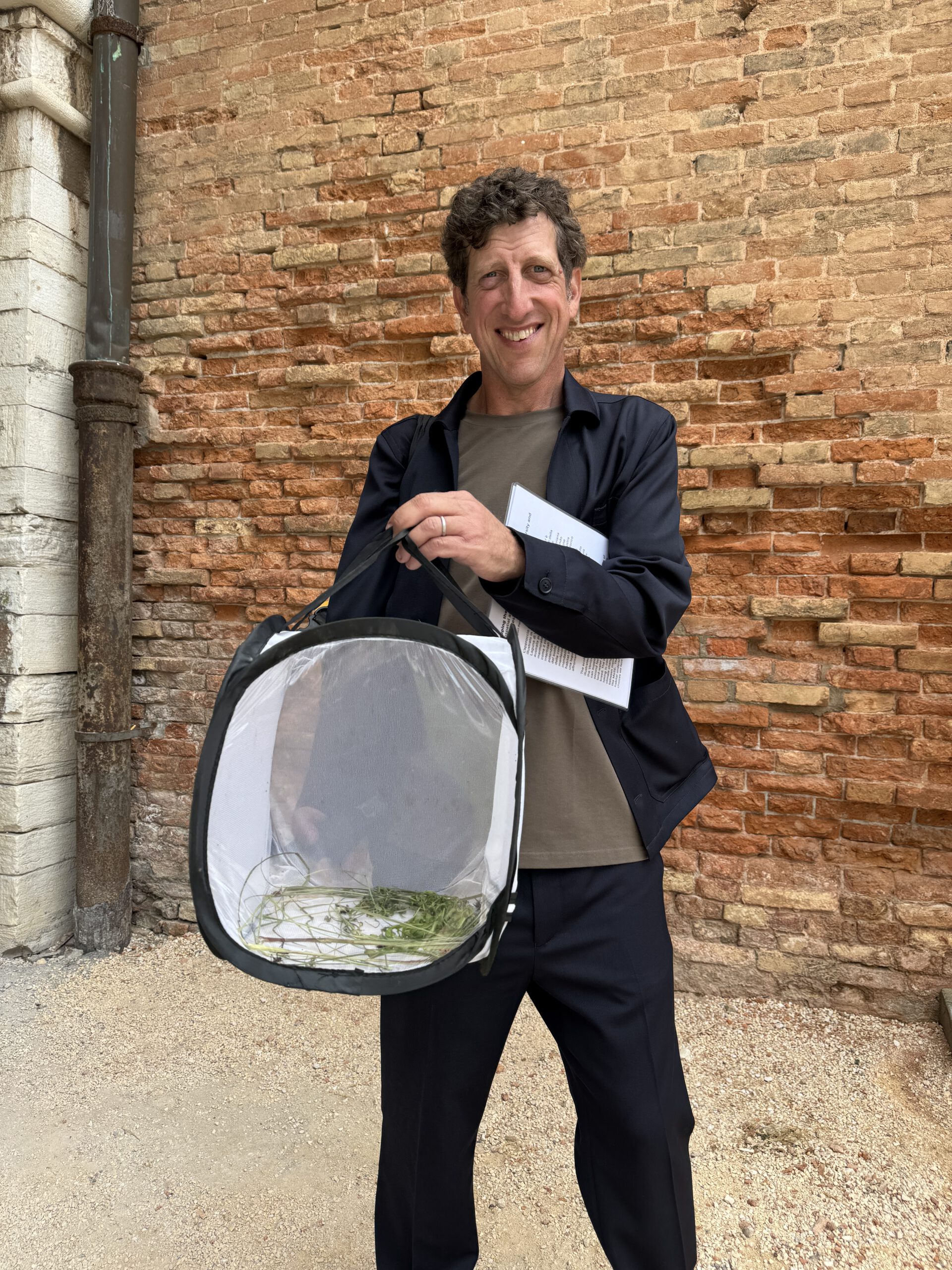
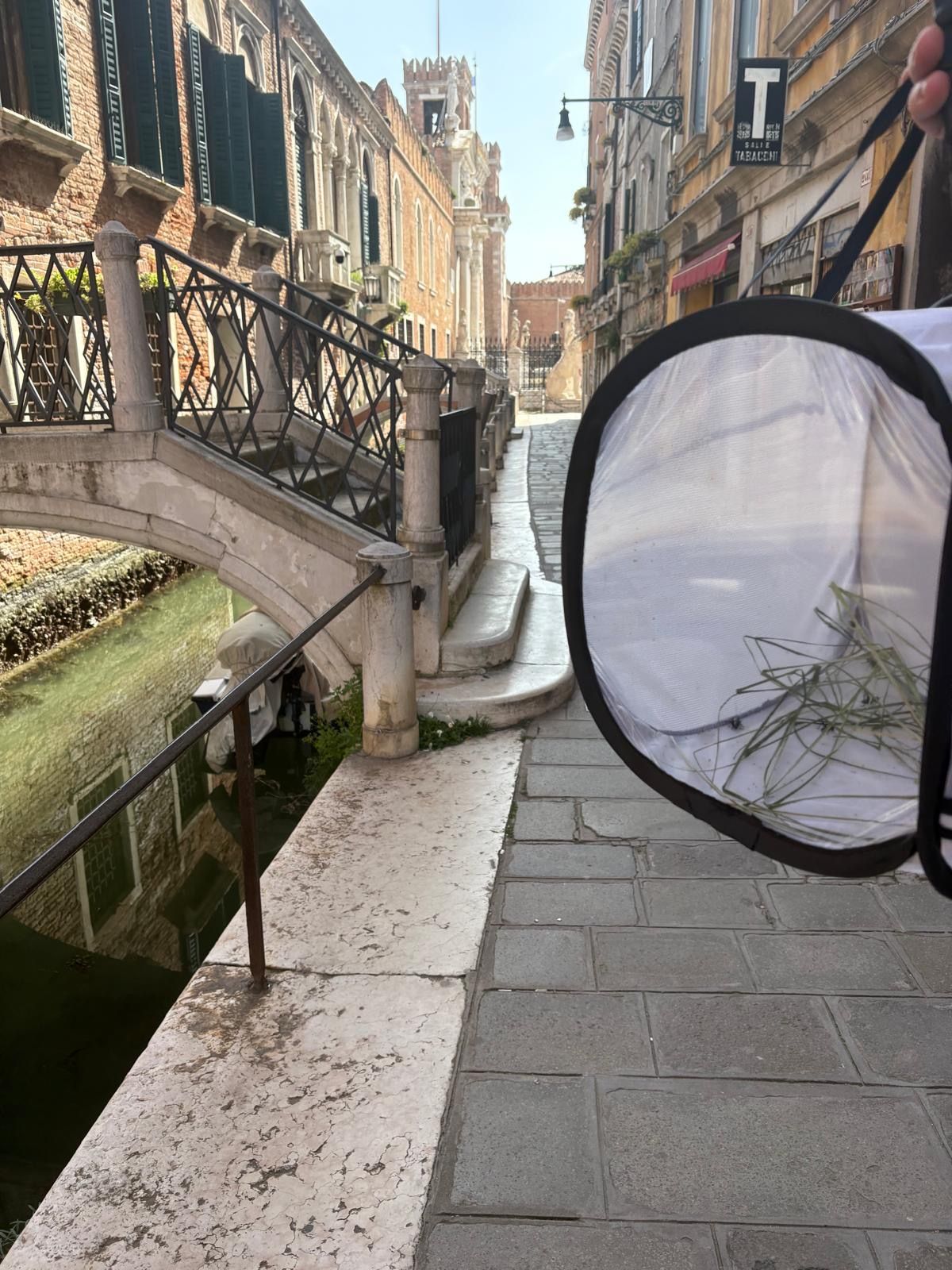
Alex Felson carrying crickets around Venice
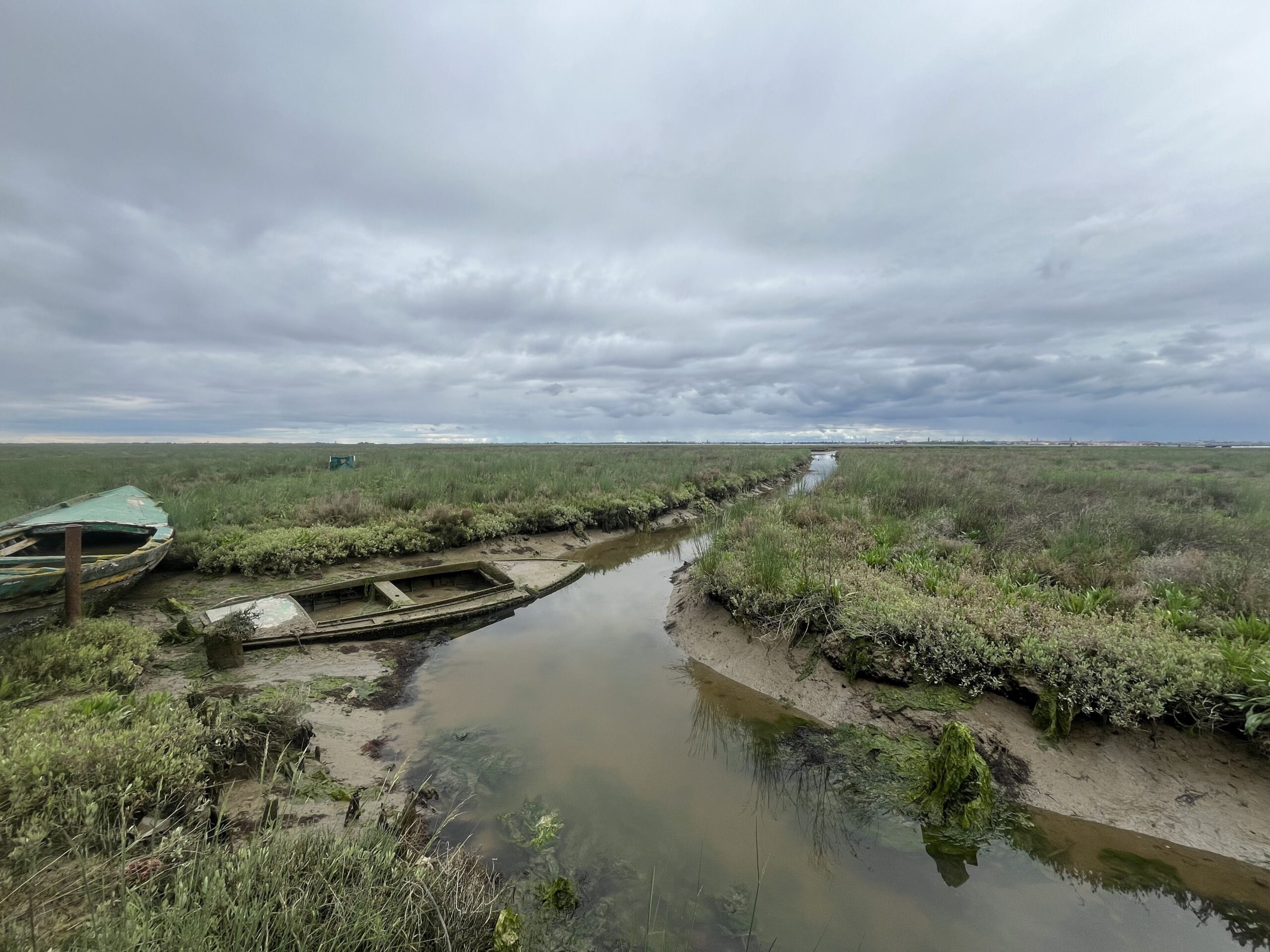
Set in the heart of the Venice lagoon, the installation highlights the precarious status of the Adriatic Marbled Bush-Cricket, a once-common singing insect whose habitat has been reduced to a mere 0.57 square kilometers. Fewer than 5,000 adults are estimated to remain. But this project aims to change that.
Taking the crickets through Venice
Led by Professor Alex Felson and the Urban Ecology and Design Lab at Melbourne, the team will collect, breed, and relocate these critically endangered crickets in an effort to reintroduce them into the Venice lagoon. At the same time, they will explore adaptive land-use strategies and smarter conservation approaches to help safeguard the species against future climate shifts.
“This is not just a temporary installation – it’s a step toward reconstructing vital cricket populations in the Venice lagoon,” said Professor Felson.
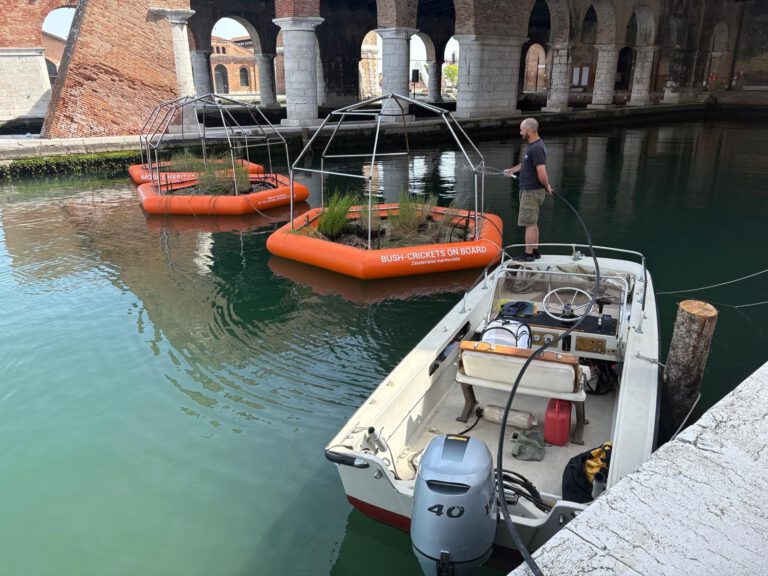
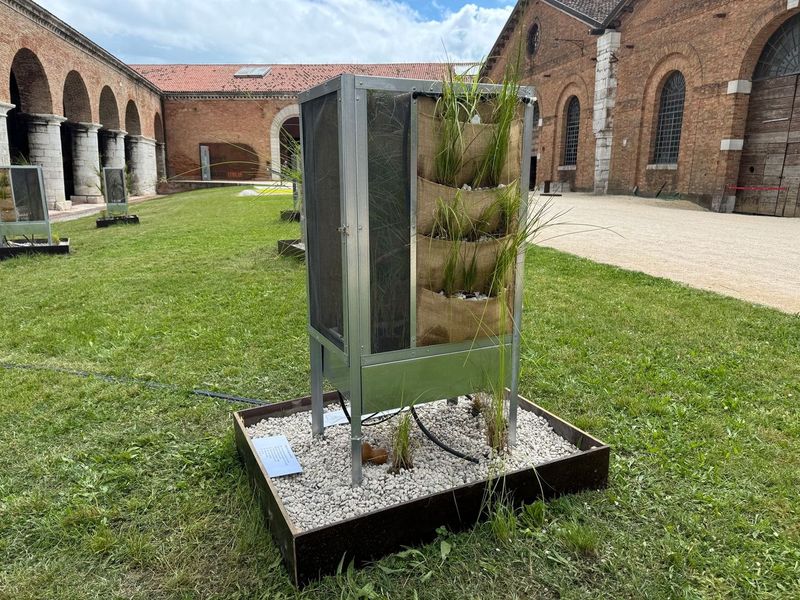
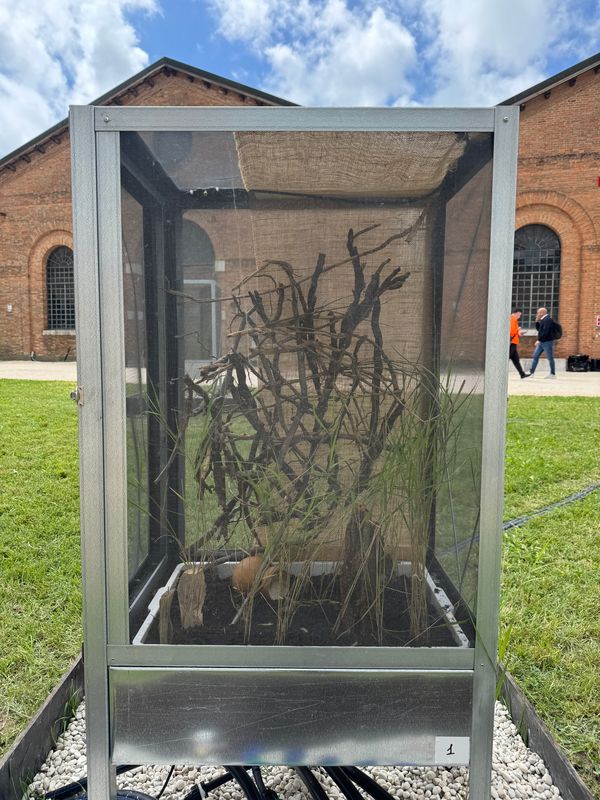
The exhibit features floating, mobile habitats that serve both as conservation tools and interactive sculpture. Each structure is designed to house the crickets while also offering an immersive audio experience for visitors. Blending science and sound art, the project creates a multisensory call to action for ecological stewardship.
Professor Julie Willis, Dean of the Faculty of Architecture, Building and Planning, praised the initiative as a vivid example of university-led innovation.
The cricket habitat
“‘Song of the Cricket’ showcases world-leading research from across the University. Combining art and science, the exhibit helps people to reimagine this iconic place as a living, responsive, and biodiverse city,” she said.
Miriama Young
One of the installation’s most unique features is the interactive sound garden and cricket choir, designed by Associate Professor Miriama Young. Set against the backdrop of a 16th-century Venetian shipyard, the soundscape reawakens the natural chorus that once filled the city’s wetlands.
“Antonio Vivaldi’s Venice was once alive with the sounds of nature. This project re-imagines a healthy bioacoustic environment and develops synergies in ecological art practice through architectures of sound and sustainability,” said Young.
This exhibit joins other sustainability-focused pavilions at the Biennale, such as Australia’s “HOME,” which explores Indigenous environmental knowledge, and Seoul’s call for coexistence with nature in urban planning.
“HOME,” is showcasing Indigenous knowledge systems and their relationship with environmental stewardship. The exhibition invites visitors to engage with Australia’s natural environment through Indigenous perspectives, emphasizing the importance of sustainability and cultural heritage.
HOME pavillion
Together, these works underscore a larger truth: that architecture and design are no longer just about buildings, but about reviving the ecosystems and cultural soundscapes that make cities truly alive.
Sustainability Takes Center Stage at the 2025 Venice Biennale
The 2025 Venice Biennale is placing sustainability at the forefront, with several national pavilions and exhibitions highlighting environmental themes and practices.
Image via WikipediaA new wave of foot-and-mouth disease (FMD) is spreading through Europe and the Near East, and experts at the Food and Agriculture Organization (FAO) are urging countries to take urgent steps to stop it. The recent detection of an unfamiliar strain of the virus in Iraq and Bahrain has raised alarms, especially since this version, known as SAT1, is not normally found in this region. It likely arrived from East Africa and could easily spread to nearby countries that are unprepared to handle it. It was recently found in Kuwait.
Slow Food and regenerative farming may be an answer.
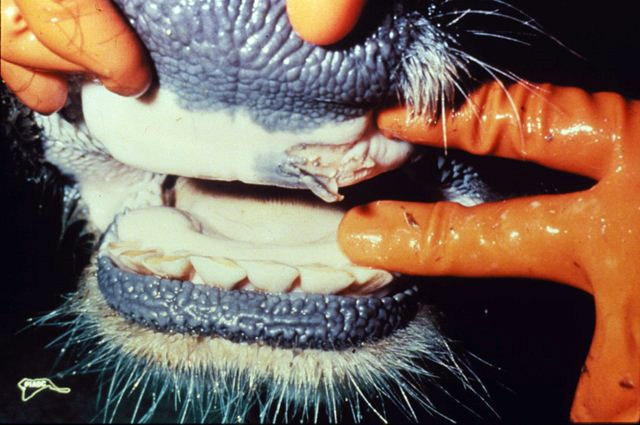
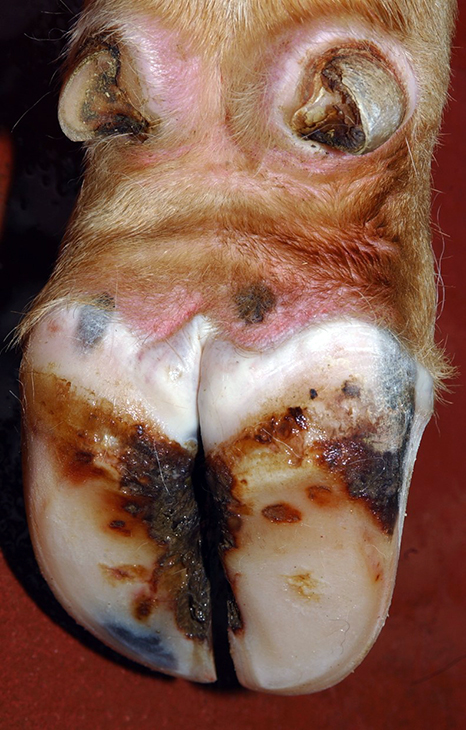
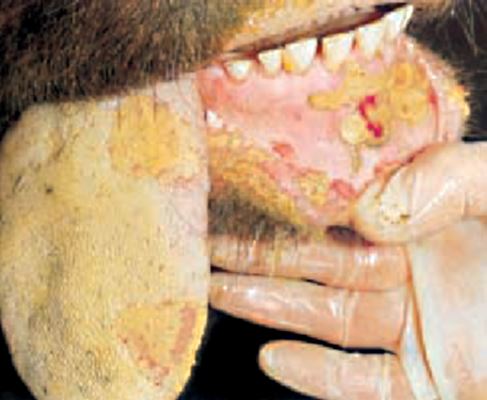
FMD doesn’t infect humans, but the damage it causes to livestock—and to farmers’ livelihoods—is severe. The virus spreads quickly among animals like cattle, sheep, pigs, and goats. It causes fever and painful blisters on the mouth and feet, leading to lameness, less milk and meat production, and in some cases, sudden death in younger animals.
Europe, which is usually free of FMD, is now facing its worst outbreak since 2001. Germany detected a case in January 2025 and managed to contain it, but since then the disease has spread to Hungary and Slovakia, and is proving harder to stop. As a result, the UK has banned meat and dairy imports from affected countries, including Austria due to its proximity to Hungary.
Foot and Mouth Disease on hoof, University of Oklahoma
The economic fallout from FMD is enormous. Even in countries where the disease is common, it causes an estimated $21 billion in losses every year—mostly from reduced productivity and the cost of vaccines. But when trade bans, culling, and market disruptions are included, the true financial impact is far greater. For small-scale farmers and rural communities, a single outbreak can be devastating.
In response, FAO is calling on all countries to strengthen their prevention and response efforts. This includes increasing public awareness, especially among farmers and market workers; improving on-farm biosecurity by keeping sick animals isolated and stopping the spread of contaminated equipment or people; and making sure that vaccines, where used, are carefully matched to the circulating virus strain.
Foot and mouth disease, CABI Bioscience
Vaccination can be very effective, but it needs to be part of a larger strategy that includes active surveillance, testing, and fast action when new outbreaks are detected. Countries should also review their contingency plans to ensure they can respond quickly to new outbreaks. This includes having clear procedures for isolating infected areas, investigating the source, and carrying out targeted vaccinations.
FMD may not pose a health threat to people, but its impact on food systems is real. It affects what we eat, how much it costs, and the stability of trade between countries. The recent outbreaks are a reminder that animal diseases don’t respect borders—and that early detection, clear communication, and coordinated action are the best tools we have to protect both animals and livelihoods.
As the FAO warns, staying alert now could prevent much greater harm later.
Imagine an RV painted with SolarPaint — for power at night.
As of 2025, the US solar industry is attracting tens of billions of dollars in private investment. That kind of capital signals more than just market growth—it signals disruption. And nothing screams disruption quite like solar paint: a substance that can generate electricity, just like a solar panel, but goes on like regular paint.
Imagine turning any building—home, school, warehouse, or factory—into a clean energy generator just by painting it. That’s the promise of solar paint. And companies like Israel’s Solarpaint are pushing this vision toward reality, with cutting-edge flexible photovoltaic (PV) solutions that challenge everything we know about how solar energy is captured and used.
What Is Solar Paint?
A solar powered floating home
Solar paint is not one singular product, but rather a set of emerging technologies that can convert sunlight into electricity when applied like regular paint or spray. Instead of needing heavy, rigid panels, solar paint could theoretically be rolled onto any surface—curved, uneven, vertical, or mobile—and generate power.
Three types of solar paint are currently being researched and prototyped:
Hydrogen-Extracting Solar Paint
Professors from the research team at RMIT University who have developed the hydrogen-extracting solar paint. Image source: RMIT
Developed by researchers at RMIT University in Australia, this paint absorbs moisture from the air and uses sunlight to split water molecules into hydrogen and oxygen. The hydrogen can then be stored and used as a clean fuel source.
The key component is synthetic molybdenum-sulfide, which acts similarly to moisture-absorbing silica gel, and is combined with titanium dioxide (already found in conventional paints). The result is a paint that could work in humid regions to produce hydrogen fuel directly from the air.
“Any place that has water vapor in the air… can produce fuel,” says Dr. Torben Daeneke, lead researcher at RMIT.
Quantum Dot Solar Paint (Photovoltaic Paint)
At the University of Toronto, scientists have developed colloidal quantum dots—tiny semiconductors that convert sunlight into electricity. These can be applied like ink or paint to various surfaces.
What’s exciting here is both cost and customizability: quantum dots are inexpensive to produce, and their light-absorbing properties can be tuned simply by changing their size. Researchers believe they can ultimately surpass the efficiency of traditional panels by more than 10%.
Perovskite Spray-On Solar Cells
NREL scientist David Moore paints a perovskite solution onto glass. Image source: nrel.gov
Perovskites are a class of materials that have revolutionized solar science in the past decade. Researchers at the University of Sheffield were the first to develop spray-on perovskite solar cells, which can be applied to glass, plastic, or metal—ideal for windows, facades, or irregular surfaces.
This approach is still being refined for weather resistance and durability but shows huge promise for turning entire structures into solar harvesting systems.
Solarpaint (Israel): Leading the Civilian Leap Forward
SolarPaint and RV awnings
Israeli company Solarpaint is one of the most promising startups in the flexible solar space. Unlike conventional panels that require heavy support structures and extensive installation, Solarpaint offers thin, lightweight photovoltaic films and bendable coatings that can be applied to a wide variety of surfaces—including rooftops, awnings, and walls.
Its goal? To democratize solar power by making it easier, more aesthetic, and more affordable to generate electricity from the surfaces we already use.
SolarPaint has partnered with Lippert Components, an Indiana-based manufacturer of recreational vehicles (RVs) and related products.Together, they are developing a fully flexible and rollable solar awning suitable for RVs, residential balconies, and marine vehicles.This project is part of a broader initiative funded by BIRD Energy, a joint program between the US Department of Energy and Israel’s Ministry of Energy, which supports collaborative clean energy projects.
Applications Already in Sight:
Urban Rooftops: Even rooftops that can’t support traditional panels could be coated with solar-reactive material.
Smart Architecture: Facades and curved surfaces become energy-generating without disrupting the building’s design.
Off-Grid Homes and Cabins: Remote properties could gain reliable power without massive infrastructure.
Mobile Solar: Vehicles, tiny homes, or even boats could one day use solar coatings to charge onboard systems.
Greenhouses and Farms: Surfaces of farm structures could generate energy for irrigation, sensors, or refrigeration.
Second generation Seychellois conservation leader speaks candidly about the Qatar deal on Assomption Island, environmental secrecy, and the rising tide of neo-colonialism in the Indian Ocean
As controversy brews over a Qatari-backed development on Seychelles’ remote Assomption Island, questions are being raised about environmental transparency, geopolitical influence, and the future of conservation. I reached out to Dr. Nirmal Jivan Shah, CEO of Nature Seychelles, for his unfiltered perspective. A second-generation Seychellois conservationist, Shah has led the rescue of endangered birds, worked with luxury hotels on reef restoration, and witnessed firsthand the transformation of his country’s ecological and political landscape.
Nirmal has talked extensively about the problems of managing 155 islands with a small population of 100,000 people. Some of the islands have been isolated for millions of years, but when settlers came 250 years ago they disrupted and devastated ecosystems for hardwood, and to plant coconuts and cinnamon. He is working to restore island ecosystems through his not-for-profit organization.
Karin Kloosterman: You’ve worked with private island owners for decades in Seychelles. How does this current deal on Assomption compare?
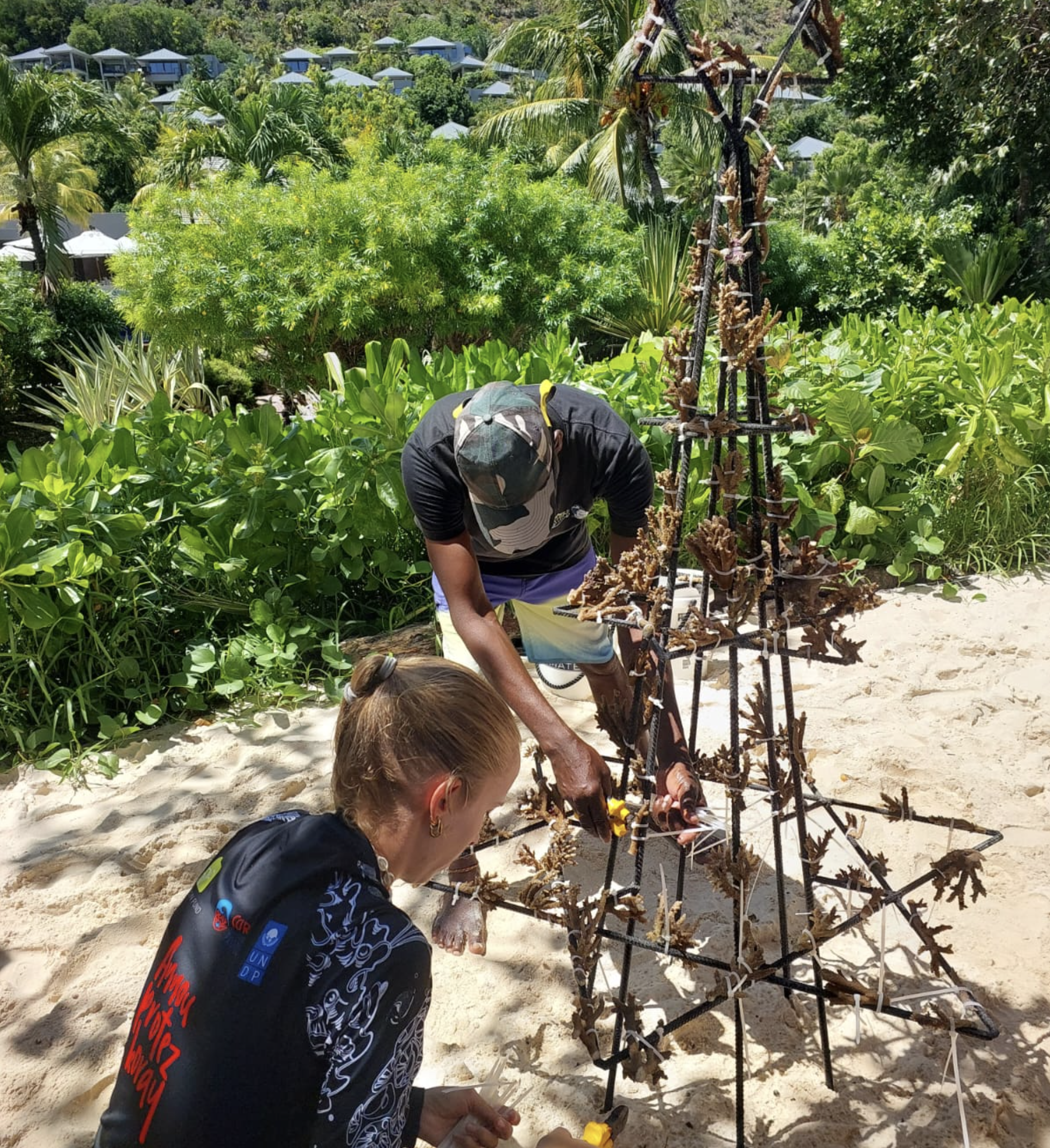
Nirmal Jivan Shah: I’ve led some of the most successful island restoration and endemic bird rescue projects in Africa and Indian Ocean with 5 star properties on private islands in Seychelles over a period of more than 15 years. If it wasn’t the alliance we forged with these private owners, frankly birds that were on the brink of extinction such as the Seychelles Magpie Robin would have vanished by now. We’ve also been working with internationally branded hotels to restore coral reefs around Praslin island.
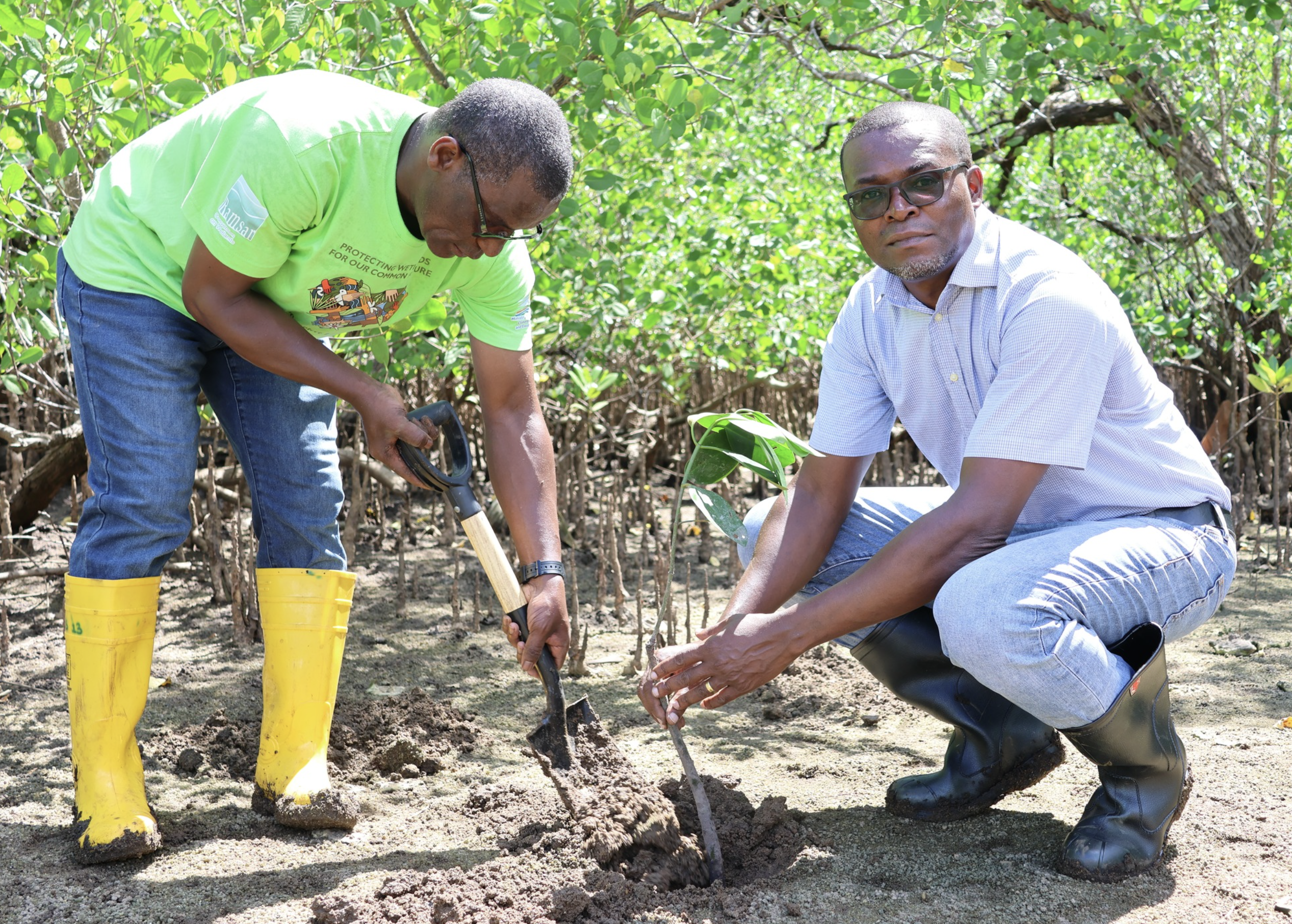
Now we are partnering with 5 star establishments on Mahe island and the Ministry responsible for Environment to restore and co-manage wetlands including mangroves. These are amazing examples of corporate responsibility and private investment in the environment.
However, developments wrapped in mystery and secrecy are not the way to go.
Mangrove tree planting via Nature Seychelles
The high drama around the Assumption project would not have happened if there was transparency and independent conservation organisations like Nature Seychelles would have been involved from day one.
I was not comfortable that the NGO Island Conservation Society which works very closely with the Island Development Co, a State Owned Enterprise leading the push for the Assumption project along with its allied company Green Island Construction, undertook the EIA.
I think the ICS should have been the independent, objective party to assess the EIA and monitor the development. As NGOs, I believe we should be watchdogs and honest-brokers.
Assomption Island
Karin: Some argue Assomption Island was bound to be developed. Do you agree?
Nirmal: Assumption island itself was ecologically ruined with guano mining during colonial times and development there was inevitable at some point. The sensitivity of it though that is that it is the “gateway” to Aldabra. However, no international conservation organisation had expressed interest in it and the Seychelles Government doesn’t have the resources to maintain and monitor Assumption nor all the other far flung islands of the Seychelles.
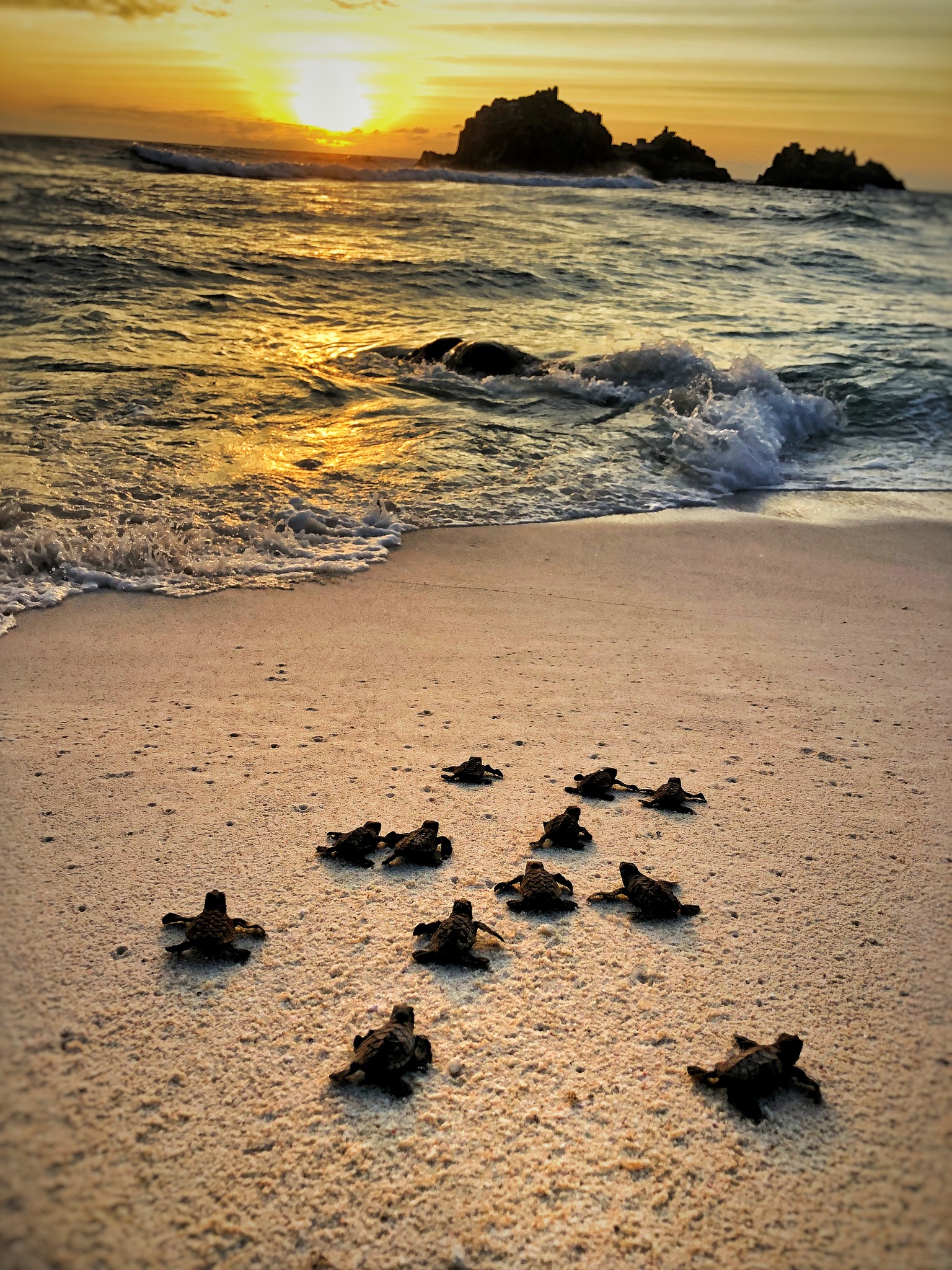
Cousin Island, Hawksbill Turtles, via Nature Seychelles
Karin: The Seychelles Islands Foundation has raised concerns. Could they help restore oversight?
Nirmal: The Seychelles Islands Foundation (SIF) responsible for Aldabra has said it was inadequately informed and consulted. If the SIF gains responsibility for biosecurity and monitoring over the operations, I would be more comfortable.
Coral reef restoration via Nature Seychelles
Karin: What about the broader trend of development in Seychelles?
Nirmal: In general in Seychelles it is obvious there is now overdevelopment of hotels on Mahe in particular but other islands as well. There has been resistance from environmental activists and members of the public which have been well covered by the local media. I believe that after so many years of quite good planning and environmental controls Seychelles has succumbed to big money development across the board.
Karin: You told me everything was approved through proper government channels?
Nirmal: As I understand it, the project was legally approved, by the Cabinet of Ministers, then an EIA was made and approved, and finally approval by the Planning Authority. This is the crux of the problem.
Karin: Your father, Kantilal Jivan Shah, was a legendary conservationist. What might he think?
Kanti Shah via family Facebook group
Nirmal: My father was one of a handful of Seychellois who fought to prevent the British from building a naval base on Aldabra, and who was instrumental in getting the owner of Cousin Island to sell it to BirdLife International to save the Seychelles warbler. But I’m not sure what he would think about development on Assomption. His company supplied and bought copra from the outer islands, including as far away as Diego García, so the development of islands was normal to them to run the plantation-based economy.
The Adabra atoll is known as an outpost for evolution. Via Google Earth
Karin: You also revealed a surprising connection between Assomption and sand extraction?
Nirmal: Hundreds and hundreds of tonnes of sand have been taken from Assumption where aeolian dunes build up. In modern times this was done to, reportedly, build the beach at Sun City in South Africa, at the International Airport to welcome the Miss World contestants, and now apparently for the FIFA beach soccer competition this year.
Karin: What are your thoughts on the Qatar connection? Some critics say this feels like neo-colonialism.
Nirmal: There are still neo-colonial forces dominating Seychelles. The EU tuna fisheries is an example that I personally have publicly contested. The difference today is that Seychellois are by and large well-off and successful and not slaves being worked to death or impoverished workers with no future. Which is why it’s difficult to get many people worked up about what’s going on in the far-flung outer islands where 95% of the population have never been. My conversations with people also reveal that quite a few Seychellois feel that a tiny country with few resources has to make trade-offs to remain actually viable in a hugely complex and increasingly difficult-to-navigate world.
Karin: You’ve said the country faces income inequality and a drug crisis. Can you elaborate?
Nirmal: It’s not to say that 100% of the population have been able to take advantage of economic opportunities and income inequality is a growing problem (as in all high income countries). As is a huge heroin addiction problem (but that also takes money to buy. Where are they getting the money?) Seychelles is the only High Income country in Africa and reports say it is also in a sort of narco-corridor in the Western Indian Ocean with Madagascar and Mauritius forming a nexus of drug trafficking and corruption.
Karin: Do you believe anyone—such as Maarco Francis or a new president—could reverse the Assomption deal?
Nirmal: My take is it would be difficult to halt it at this point. I’ve been told all the proper steps were taken, as per the laws, as I said before. Cabinet of Ministers approved it, EIA was submitted and approved, Planning Authority approved the plans.
Karin: Thank you, Nirmal, for being so candid. It’s clear the story of Assomption is not just about one island, but about how a nation balances sovereignty, ecology, and power.
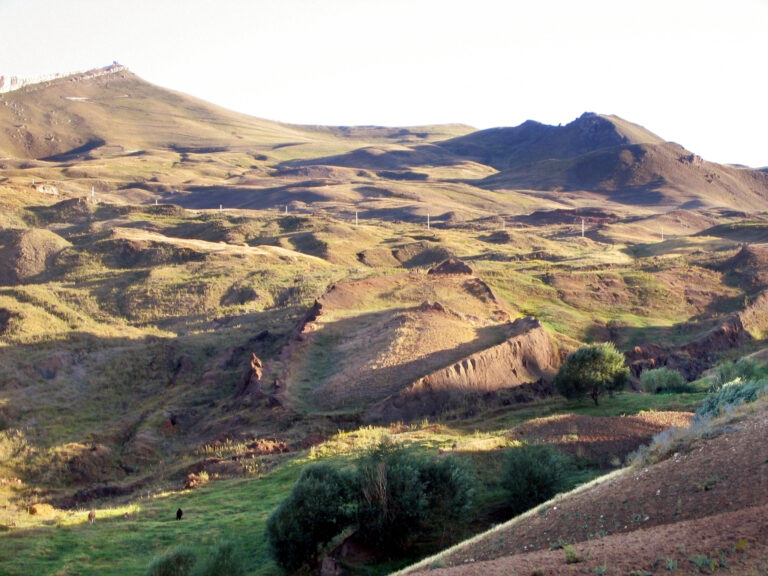
Durupınar Site via Wikipedia. Is there an ancient ark below?
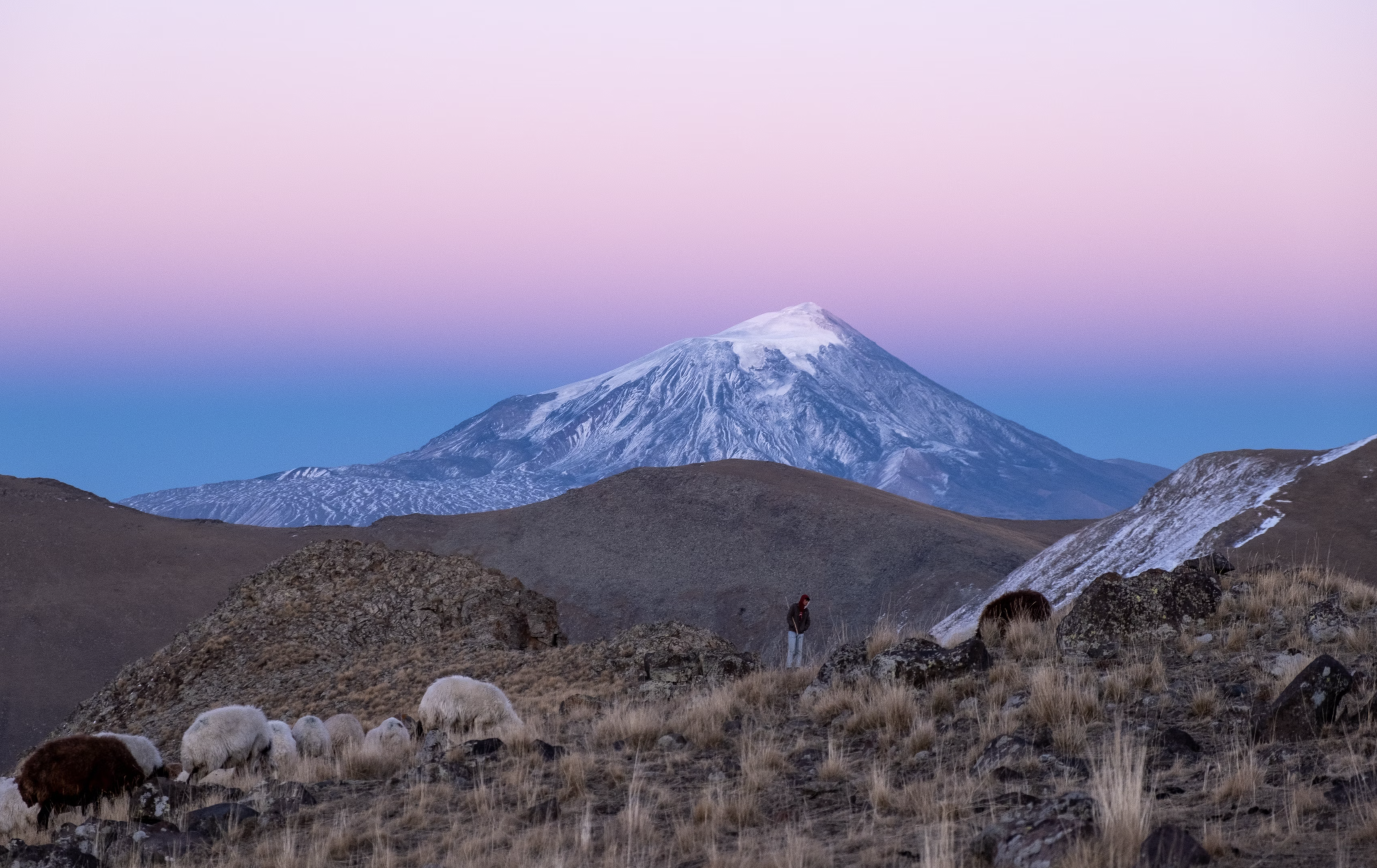
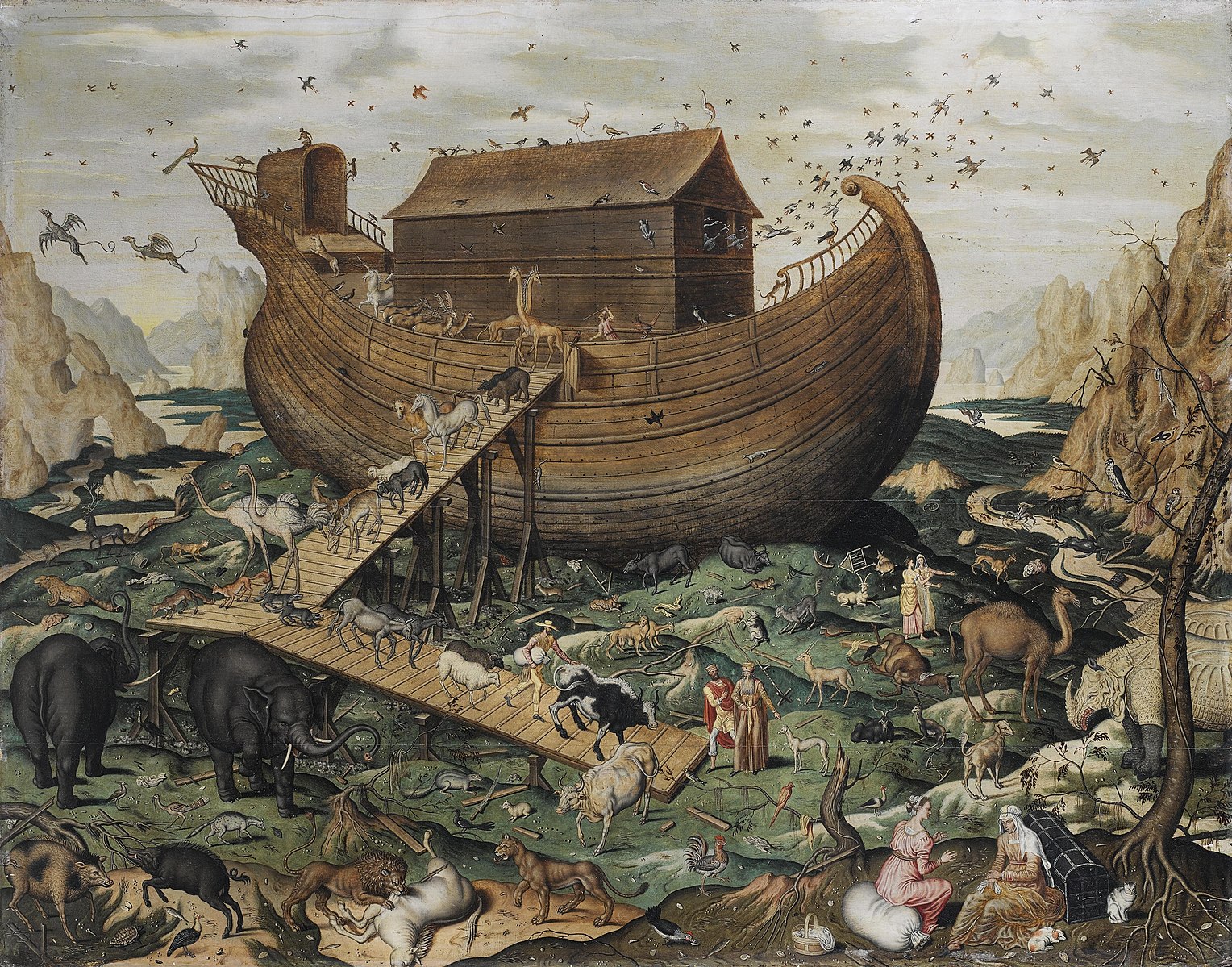
Could the biblical flood actually have happened and is Noah’s Ark still at the site where it rested on Mount Ararat? The legend of Noah’s Ark is one of the oldest and most enduring flood myths in human history. It appears in the Bible, the Quran, and earlier Mesopotamian texts, suggesting deep cultural and symbolic roots across civilizations.
In the Hebrew Bible (Old Testament), God sees that humanity has become wicked and corrupt, and decides to cleanse the Earth with a great flood. But one man, Noah, is found righteous:
“Make yourself an ark of cypress wood… This is how you are to make it: The length of the ark shall be three hundred cubits, its width fifty cubits, and its height thirty cubits.” – Genesis 6:14–15
Researchers from California are investigating the mystery in the rugged terrain of eastern Turkey, a formation long shrouded in mystery is once again capturing global attention. The Durupınar site, a 160-meter-long, boat-shaped geological structure buried near Mount Ararat, is at the heart of renewed investigations by the California-based research group, Noah’s Ark Scans.
Their mission: to determine whether this enigmatic formation could be the remnants of the biblical Noah’s Ark.
The Durupınar formation’s dimensions strikingly mirror the biblical description of Noah’s Ark, as detailed in Genesis 6:15. Ground-penetrating radar (GPR) surveys have revealed internal features, including rectangular shapes and what appears to be a central chamber, located approximately 22 feet beneath the surface. These findings suggest the possibility of man-made structures within the formation.
Soil analyses have further intrigued researchers. Samples from within the formation exhibit lower pH levels and higher concentrations of organic matter and potassium compared to surrounding areas. Such characteristics are consistent with the decomposition of wooden materials, potentially indicating the presence of ancient timber.
Discovered in 1959 by Turkish Army Captain İlhan Durupınar, the site has been a focal point for both scientific inquiry and speculative theories. While some early studies dismissed the formation as a natural geological occurrence, others have posited that it could be the fossilized remains of Noah’s Ark.
Noah’s Ark on Mount Ararat by Simon de Myle
The current research endeavors aim to apply modern scientific techniques to this age-old question. Sometimes archeologists wait until scientific tools can catch up with the questions –– to make sure they don’t harm what should be preserved.
Noah’s Ark Scans is proceeding with caution. “Excavations at the ‘boat site’ haven’t started yet because we first need more geophysical surveys, core drilling, and careful planning,” the team stated. “The location lies in an active earth flow with harsh winters, so protecting the area is our top priority”.
Collaborations with Turkish universities are underway to ensure that any future excavations are conducted responsibly and with respect for the site’s integrity.
Beyond its potential archaeological significance, the Durupınar site resonates deeply with themes of survival and renewal found in the story of Noah’s Ark. As researchers delve deeper into the formation’s secrets, they not only seek answers to a historical enigma but also engage with a narrative that as inspired countless generations.
These days it’s about your gut microbiome and what you eat: In a breakthrough study published April 30 in Nature Immunology, researchers have uncovered how certain “good” gut microbes can trigger immune cell transformations that contribute to rheumatoid arthritis—and possibly other autoimmune diseases.
The study, led by scientists at The Ohio State University, traces the journey of an unusual immune cell known as a T follicular helper 17 (TFH17) cell. These hybrid cells originate in the gut but go on to drive inflammation and autoimmunity throughout the body.
Having a strong microbiome science research overview takes into account the complex interactions between microbial populations and cellular behavior throughout the body. Detailed microbiome science research provides a foundation for developing targeted therapies that address systemic health issues at their biological source. These advancements allow for a more precise understanding of how microscopic changes influence overall physical well-being.
“This is really the first time it’s been shown that T cell plasticity, which typically occurs in the gut, can have this dramatic impact outside the gut with systemic impact on autoimmune disease,” said senior study author Hsin-Jung Joyce Wu, professor of internal medicine in the Division of Rheumatology and Immunology.
Back in 2016, Wu and her team first discovered that commensal bacteria—harmless microbes that usually benefit human health—could provoke the immune system into producing aggressive T cells that promote autoimmune responses. Since then, they’ve been unraveling how this process unfolds.
In the new study, the researchers show that gut-resident T helper 17 (TH17) cells can transform—or “reprogram”—into TFH cells within Peyer’s patches, a type of lymphoid tissue in the small intestine. The twist: these new TFH cells retain key inflammatory traits from their TH17 origin, making them more dangerous.
“These reprogrammed T helper cells adopt characteristics of a new T helper cell type while preserving some of their original traits, making them ‘super powerful and potent’—and if you are dealing with autoimmune disease, that’s bad news,” Wu said.
The team used fate-mapping mouse models to trace how the transformation unfolds. They found that segmented filamentous bacteria—a known gut microbe—accelerated this cell reprogramming. Fluorescent tagging techniques then revealed the cells’ migration from the gut into other parts of the body.
“That’s how we knew they were really traveling,” Wu said. Unlike conventional TFH cells, which typically stay in B cell follicles, these TFH17 cells move around and retain the ability to produce inflammatory proteins like IL-17. They’re also more effective at helping B cells, another immune cell central to rheumatoid arthritis.
“That’s what makes them ultra-pathogenic TFH cells in RA, a systemic disease, because they are very mobile and can potently help B cells,” Wu explained.
To test their pathogenic power, researchers introduced a mix of conventional TFH cells and just 20% TFH17 cells into mice genetically predisposed to develop arthritis. Mice that received the mixed group developed nearly five times more severe joint inflammation than those given only conventional TFH cells.
The implications extend beyond mice. Gene sequencing revealed that the aberrant TFH cells in these models shared significant similarities with TFH cells circulating in the blood of humans with rheumatoid arthritis—including the same gut-derived signature.
“That, to me, was exciting, to find this cross-species signature, which suggests the translational potential of this research,” said Wu.
An estimated 18 million people globally suffer from rheumatoid arthritis, a chronic autoimmune disorder marked by painful inflammation in the joints. While its causes are not fully understood, both genetics and environmental factors—including microbial imbalances in the gut—have been linked to disease risk.
Wu believes the findings may have wider relevance: “We are hoping to improve patients’ health and life. For the future, as TFH17 cells can be found in other types of autoimmune patients, such as lupus patients, if we can determine that these abnormal TFH cells are a potential target not just for RA, but across autoimmune diseases, that would be very useful.”
People who consume more ultra-processed foods—such as packaged snacks, sugary cereals, and hot dogs—may be more likely to show early warning signs of Parkinson’s disease, according to a new study published May 7, 2025, in Neurology, the journal of the American Academy of Neurology.
The research doesn’t prove that ultra-processed foods cause Parkinson’s, but it does suggest a strong association.
Researchers focused on prodromal Parkinson’s disease—the earliest phase of the condition, when neurodegeneration has begun but hallmark symptoms like tremors or slowed movement haven’t yet appeared. These subtle warning signs can develop years or even decades before a formal diagnosis.
“Eating a healthy diet is crucial as it has been associated with a lower risk of neurodegenerative diseases, and the dietary choices we make today can significantly influence our brain health in the future,” said lead author Xiang Gao, MD, PhD, of the Institute of Nutrition at Fudan University in Shanghai, China.
“There’s growing evidence that diet might influence the development of Parkinson’s disease. Our research shows that eating too much processed food, like sugary sodas and packaged snacks, might be speeding up early signs of Parkinson’s disease.”
The study followed 42,853 people with an average age of 48 for up to 26 years. None had Parkinson’s disease at the start. Over time, participants underwent medical exams and completed detailed health questionnaires. Researchers assessed for early signs of Parkinson’s, such as rapid eye movement sleep behavior disorder, loss of smell, depression, daytime sleepiness, and impaired color vision.
Participants also kept food diaries every two to four years, noting their consumption of ultra-processed foods. These included items like soda, chips, condiments, packaged desserts, and processed meats. One serving equaled a standard portion, such as one soda can or one hot dog.
After adjusting for lifestyle factors like age, smoking, and exercise, researchers found that people who ate 11 or more servings of ultra-processed food per day were 2.5 times more likely to show at least three early signs of Parkinson’s, compared to those who consumed fewer than three servings daily.
The trend held across most individual symptoms—except constipation. “Choosing to eat fewer processed foods and more whole, nutritious foods could be a good strategy for maintaining brain health,” said Gao. “More studies are needed to confirm our finding that eating less processed food may slow down the earliest signs of Parkinson’s disease.”
Kefir is a type of fermented milk that may help manage blood sugar, lower cholesterol, and boost digestive health, among other benefits. However, more evidence is needed to back some of these claims. The name kefir comes from the Turkish word “keyif,” which refers to the “good feeling” a person gets after drinking it.
Fermentation expert Sandor Katz who has helped maintain his health and living with HIV using fermented foods says there is no silver bullet solution: While fermented foods can help, that’s only part of the solution: “I share your perspective that people would be healthier if they moved away from ultra-processed foods. I also believe that fermented foods can improve digestion, immune function, and even mental health. However, it is misleading to suggest that fermented foods cure HIV, Parkinsons, cancer, or any other particular disease,” he warns.
One limitation: participants self-reported their dietary habits, which may have introduced inaccuracies in measuring how much processed food they truly ate.
Why are more young people under 50 being diagnosed with colorectal cancer? That’s the question researchers across the world are racing to answer. Now, a major international study published in Nature offers a new lead: a DNA-damaging toxin called colibactin, produced by certain gut bacteria, may play a key role — and our diets could be fueling it.
Colorectal cancer is historically a disease of aging. But in recent decades, cases have been rising sharply in people under 50 — even in their 30s or younger. The Nature study, led by researchers at UC San Diego and the University of Cambridge, analyzed the DNA of 981 colorectal tumors from patients across 11 countries. They found a distinctive fingerprint of damage left by colibactin, a toxin produced by certain strains of E. coli and related bacteria.
Crucially, the study showed that patients under 40 were 3.3 times more likely to have tumors with this colibactin-associated mutation signature than those over 70.
“This mutational footprint is like a historical record — it tells us these patients were exposed to colibactin, likely early in life,” said Professor Ludmil Alexandrov, senior author of the study and researcher at UC San Diego. “This could be the smoking gun behind the rise in early-onset colorectal cancer.”
Alexandrov believes many of these mutations were acquired during childhood. “The development of colorectal cancer in individuals with colibactin-associated tumors may begin as early as age 10,” he said in a press release, “and manifest as cancer by the time the individual is in their 40s.”
What Role Does Diet Play?
Kefir is a type of fermented milk that may help manage blood sugar, lower cholesterol, and boost digestive health, among other benefits. However, more evidence is needed to back some of these claims. The name kefir comes from the Turkish word “keyif,” which refers to the “good feeling” a person gets after drinking it.
While the study didn’t examine diet directly, scientists widely agree that food plays a critical role in shaping the gut microbiome — the community of trillions of bacteria in our digestive tract. Some of these bacteria are protective. Others, like colibactin-producing E. coli, can be harmful.
According to Dr. David Scott, Director of Cancer Grand Challenges at Cancer Research UK, “It’s unclear how the exposure originates, but we suspect that a combination of factors — including diet — may intersect during a crucial phase in the development of the gut microbiome.”
A Western-style diet, high in saturated fats, processed foods, and red meat, and low in fiber, has been shown to promote inflammation and support the growth of harmful bacteria — while displacing beneficial species. Fiber, by contrast, helps fuel microbes that produce short-chain fatty acids, which protect the colon lining and reduce cancer risk.
In a 2015 study comparing diets in rural Africa and the U.S., researchers led by Dr. Stephen O’Keefe found that a high-fiber, plant-based diet drastically reduced cancer biomarkers — within just two weeks. The rural African diet shifted the microbiome in ways that suppressed inflammation and DNA damage.
Colibactin and the “Unseen Exposure” in Childhood
What makes colibactin so dangerous is that it doesn’t just irritate the gut — it directly alters DNA. This is significant because it means the carcinogenic process may begin decades before diagnosis.
“We’ve identified that a subset of early-onset colorectal cancer patients have had their cancer caused, at least in part, by past exposure to bacteria that produce colibactin,” said Professor Serena Nik-Zainal, co-lead author from the University of Cambridge.
Importantly, these colibactin mutations were more common in countries with higher rates of early-onset colorectal cancer — including the U.S. and U.K. — than in nations with more traditional diets.
The findings raise the possibility of new screening tools — including stool tests to detect high-risk bacterial strains, or even microbial risk profiling in children and adolescents. But prevention may start with something more accessible: what we feed ourselves, and our children.
“In the future, we might be able to identify children carrying colibactin-producing bacteria and take steps early to reduce their cancer risk,” Alexandrov said.
Until then, experts suggest a return to the basics: more plants, less processed meat, and nurturing a diverse, healthy gut microbiome. In an age where chronic disease often begins unseen, diet remains one of our most powerful — and modifiable — tools.
Simplifying everything, even the food you eat will make you healthier: Sandor Katz who cured himself from the effects of HIV with fermented foods.
Are you doing the #vanlife? But want financial stability, be an environmentalist and own a real home? Take a path to financial security and afford a new couch.
Turning 30 can feel like a major moment. It’s not just another birthday — for many people, it’s a time when life starts to get a little more serious. Maybe you’re thinking about buying a house, traveling more, or planning for your future family. Whatever your plans look like, having a few key financial milestones in place can make everything feel a lot easier.
The good news is that you don’t have to be rich or perfect with money to make real progress. You just need to build smart habits early and stick with them. Hitting a few important financial goals before 30 can put you years ahead later. Let’s break down some simple goals you can start working toward today.
Build a Starter Emergency Fund
Solar panels are great for blackouts, but you need an emergency fund for unexpected trips or necessities.
One of the first financial goals to tackle is building a small emergency fund. Life is unpredictable, and having a financial safety net can give you peace of mind when unexpected expenses pop up. Whether it’s a car repair, a surprise medical bill, or even losing your job, an emergency fund means you’re not reaching for a credit card every time something happens.
You don’t need to build a huge emergency fund right away. Begin by aiming to save $1,000 as your first step. After that, focus on gradually setting aside enough to cover three to six months of your living costs. It’s better to build it slowly than not at all.
If you want to get a clear picture of how your savings could grow month by month, you can use a monthly compounding interest calculator. This tool shows how even small amounts saved in a high-yield account can grow over time just from earning interest. Watching your savings grow can keep you motivated to stay consistent.
Pay Off High-Interest Debt
College was great. Pay off student loans ASAP or they will follow you through life.
Debt can be a big hurdle if you’re trying to build a strong financial future. If you have credit cards or personal loans with high interest rates, it’s important to make paying them off a priority. The longer you carry a balance, the more money you’ll end up paying — money that could have gone toward your goals.
Focus on knocking out high-interest debts first. Make a list of what you owe, the interest rates, and minimum payments. Then, put extra money toward the debt with the highest rate while keeping up with minimum payments on the others. Clearing this kind of debt frees up your income for more productive things like saving, investing, or traveling.
Start Saving for Retirement
It’s never too early to think about retirement. In fact, the earlier you start, the better. Time is your biggest advantage because of how compounding has worked over the years.
Even if you can only afford to put a little bit away each month, it’s still worth it. If your job offers a 401(k) plan, contribute enough to get the full employer match if possible. That’s free money you don’t want to leave behind. If you don’t have access to a workplace plan, opening an IRA is a good next step.
The key is to start now and stay consistent. Small amounts add up to big results when you give them enough time.
Build Good Credit
Your credit score plays a bigger role in your financial life than you might think. A strong score can help you get approved for loans, rent apartments, and qualify for lower interest rates when you borrow money.
Start by paying all your bills on time, every time. Late payments can seriously hurt your score. Keep your credit card balances low — ideally, using less than 30% of your available limit. It’s also smart to check your credit reports regularly to make sure there are no mistakes hurting your score.
Good credit doesn’t happen by accident. Building it takes a little effort but pays off in huge ways later on.
Create a Budget and Actually Stick to It
A homemade cold water plunge bath. You can enjoy yourself and spend safe.
Budgeting isn’t about making your life harder. It’s about knowing where your money goes so you can make better choices with it.
The best budget is the one you’ll actually use. Some people like using apps that track spending automatically. Others prefer simple spreadsheets. The tool doesn’t matter as much as being honest about what you earn and spend.
Once you set a budget, review it once a month. Adjust when things change. Keeping track of your money helps you stay focused on your goals instead of wondering where your paycheck disappeared.
Set Short- and Long-Term Financial Goals
Money without a plan tends to disappear. That’s why setting clear goals is so important.
Think about what you want in the next few years. Maybe you want to save for a vacation, buy a car, or move into a better apartment. Those are short-term goals. At the same time, think bigger: buying a home, traveling the world, retiring early. Those are long-term goals.
Write them down somewhere you’ll see them. Check in on your progress at least once a year. Having a roadmap for your money gives you a reason to save, invest, and make smarter choices every day.
Start Investing Even If It’s a Small Amount
Investing can sound complicated if you’ve never done it before, but it doesn’t have to be. The truth is, you don’t need a lot of money to start.
Even putting $50 or $100 a month into a basic investment account can add up over time. Index funds, ETFs, and robo-advisors are all simple ways to get started without feeling overwhelmed.
The key is to get your money working for you early. Saving is important, but investing is what helps your money grow faster than inflation. If you wait until everything feels perfect, you might miss out on years of growth.
You don’t need to hit every financial milestone perfectly by the time you turn 30. Life happens, and everyone’s path looks different. But working toward these simple goals can set you up for a stronger, more secure future.
Start where you are, even if it feels small. Celebrate your progress along the way. The important thing is building habits now that will continue to help you for decades to come. Every smart step you take today makes your life easier tomorrow — and that’s something definitely worth aiming for.