
Home Blog Page 34

Recipe: Lettuce Soup

0

recipe lettuce soup

Faced with too much of one vegetable, my go-to strategy is to make soup. It’s a matter of peering inside the vegetable crisper and thinking, Oops, those carrots are getting old – or, Why did I buy all those expensive mushrooms? The answer to this veg dilemma is: make soup.

I had a head of lettuce that had been languishing in the fridge, and no desire to chop it into salad. It was attractive to look at; the leaves small, varicolored red and green, with frilly tops. But the ribs were oddly tough, rather than crisp, and the flavor somehow too strong.

So I stood contemplating it. The outer leaves had gotten brown and slimy, but after I stripped all that away, I saw that the heart of the lettuce was sound. Waste not, want not, I thought. How about soup?

Of all my cookbooks, only one had a recipe for lettuce soup – a French chiffonade served cold. But the Internet yielded a number of recipes. People’s enthusiastic comments pushed me farther in as I realized how easy the recipe is, and how adaptable. Substitute a cup of chopped, mixed salad greens, arugula, or spinach for part of the lettuce to get a deeper green color. Some throw in a handful of peas, or a quarter-cup diced cooked potatoes, or cook in a tablespoon of rice for more body.

One comment struck a note with me: don’t make it too fancy if you want the delicate lettuce flavor to come through, or in the end you’ll have just a vegetable soup. I decided to keep it simple, as I was curious. And was surprised and pleased at how tasty and soothing lettuce soup really is.

Note: you can choose to go vegan with this soup: omit the dairy and substitute olive oil.

Lettuce Soup

Surprisingly delicious lettuce soup

  • 2 tablespoons unsalted butter
  • 1 medium onion (chopped)
  • 2 medium cloves garlic (chopped)
  • 3 cups water
  • 8 cups lettuce leaves (clean and coarsely chopped)
  • 1 small handful parsley or celery leaves (coarsely chopped)
  • 1 teaspoon kosher salt
  • Optional but recommended: 2 tablespoons fresh or sour cream
  • Fresh lemon juice to taste
  • Choose one or more optional garnishes to float on the soup: thin slices of fresh radish (halved cherry tomatoes, a little finely chopped cilantro or dill, a drizzle of olive oil, toasted sliced almonds, croutons.)
  1. Melt the butter over medium heat. Don’t let it brown.
  2. Add onion and garlic and cook, stirring, until softened, about 3 minutes.
  3. Add water, bring to a simmer, and cook, covered, until vegetables are very tender, about 8 minutes.
  4. Add lettuce and parsley and cook until wilted and softened, 2-4 minutes.
  5. Blend the soup until very smooth. I used a stick blender right in the pot, having first removed it from the heat and allowed the soup to cool somewhat before blending.
  6. Add the fresh or sour cream; blend again.
  7. Taste for seasoning and adjust if needed. Here’s where you add lemon juice for bright flavor – from a quarter to half a medium lemon. Taste and judge, but don’t let the lemon overwhelm the soup.
  8. Eat it hot, tepid or cold. It’s good hot, but I like it best tepid, drizzled with olive oil and drunk out of a cup. It would also be pleasant served cold on a summer evening, with crusty bread or crackers.

    Enjoy!
Soup
Easy, Recipe, soup

He’s swimming in shark territory to show us Jaws isn’t that scary

0
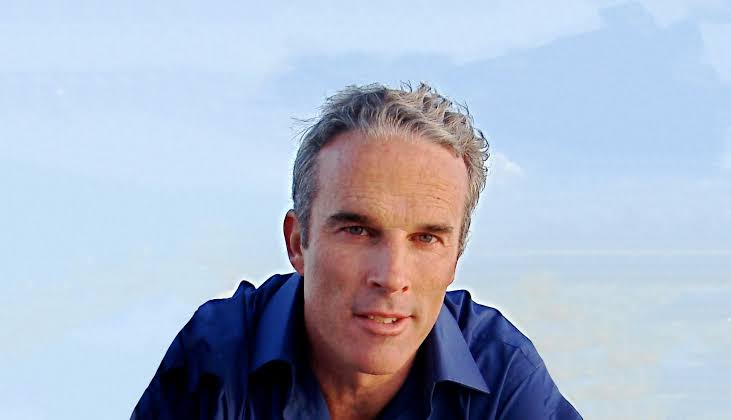
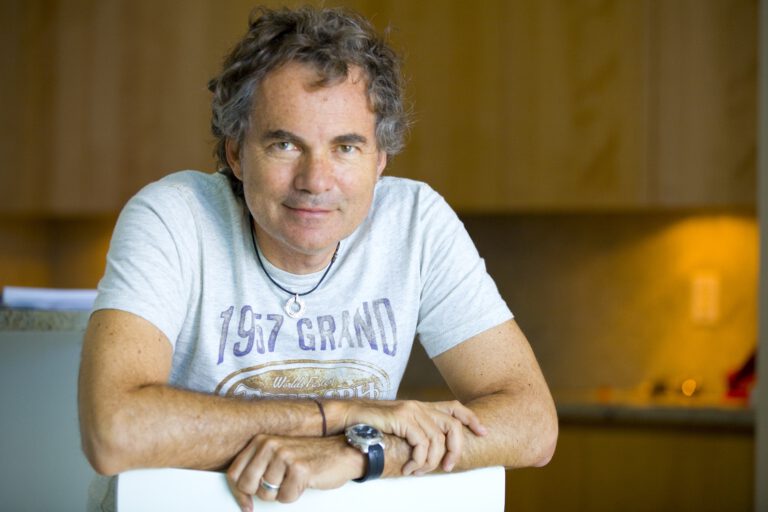
Lewis Pugh was the first person to complete a long-distance swim in every ocean of the world. He pioneers swims in the most vulnerable ecosystems on Earth to campaign for their protection. In 2007 he became the first person to swim across the North Pole and in 2018 the first person to swim the entire 328-mile (528km) length of the English Channel. He is also the only person to have swum the 217-mile (350km) length of the River Thames (in 2006), and the only person to have swum down a river underneath the Antarctic Ice Sheet (in 2020). In 2013, Mr. Pugh was appointed United Nations Environment Programme Patron of the Oceans. In 2016, he played a pivotal role in creating the largest Marine Protected Area in the world in the Ross Sea off Antarctica. The Lewis Pugh Foundation has helped protect 3.5 million km2 of ocean, an area larger than Western Europe. Mr. Pugh is from Plymouth, UK. He worked as a maritime lawyer in London before becoming a full-time ocean advocate.
Lewis Pugh

Fifty years after the blockbuster film “Jaws” turned sharks into the world’s most feared underwater villains, celebrated endurance swimmer Lewis Pugh will seek to rewrite the narrative on sharks for a new generation.

From May 15–26, 2025, Pugh will swim the 60-mile (96 km) circumference of Martha’s Vineyard — the same waters that terrified millions — to raise awareness about the slaughter of sharks worldwide and its effect on ocean ecosystems.

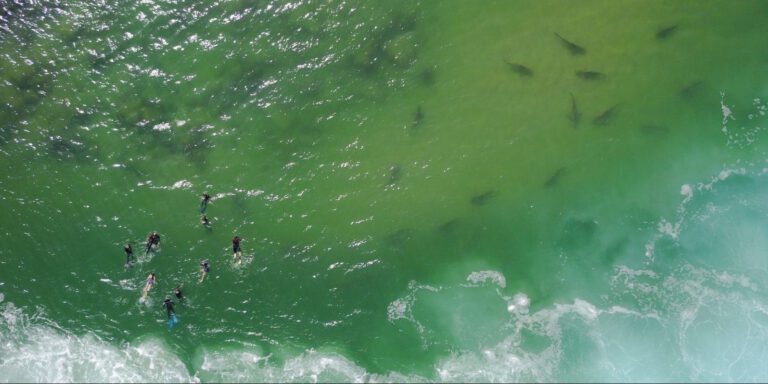
A shark attack recently killed an Israeli in area where sharks were known to congregate. Feeding the sharks, which was warned against, is believed to be the cause of the tragic accident.

A man was killed from a shark attack last month in this area
A man was killed from a shark attack last month in this area off the Hadera coast

Although ocean swimming carries inherent risks, Pugh’s team will take precautions to reduce encounters with sharks.

“I’m frightened of sharks,” Pugh readily admits. “But I’m more terrified of a world without them, and that’s what we’re looking at if we don’t act now. Without sharks to keep them in balance, marine ecosystems are unraveling at frightening speed. We need a new narrative about these magnificent animals because the one we’ve been hearing for the past 50 years threatens our oceans.”

Since 1970, shark populations have plummeted by approximately 70% worldwide through overfishing and habitat destruction, the Lewis Pugh Foundation noted. Each year, an estimated 100 million sharks are killed — that’s 274,000 every single day — for their fins, meat, oil, and sport. The result isn’t just species loss; it’s ecological collapse, with devastating consequences for ocean health and global food security.

“Sharks are integral to ocean health, and ocean health is integral to human survival,” says Pugh. “This is not just about future generations. We must learn to respect and protect sharks today, and this will be my key message.”

Over the past few decades Great White Shark numbers have recovered around Martha’s Vineyard thanks to conservation efforts.  In addition, Pugh says, Massachusetts, to its credit, has recently taken efforts to protect white sharks from on-shore fishing. But this is not the case worldwide, where Great White Sharks are under increased threat.

As an endurance swimmer Pugh is unparalleled. He has pioneered swims in some of the most vulnerable ecosystems on earth to campaign for their protection. Most recently, in 2023, he swam the 315-mile (507km) Hudson River to praise its clean-up and highlight how rivers affect ocean health. The SHARK SWIM launches a three-year campaign by the Lewis Pugh Foundation to engage over one billion people with science, education, and acts of advocacy. It’s a central thrust of LPF’s 30×30 initiative: to fully protect 30% of our oceans by 2030.

“When we damage the environment, we create conditions that are ripe for conflict,” Pugh says. “But when we protect the environment, we foster peace. For centuries we have not only been fighting over the environment, we have been fighting against it. We must learn to make peace with nature for the sake of future generations.”

You can follow his swim here.

The Future of Color is Green (and Blue): Algae as a Natural Dye for a Planet in Transition

0
Algaeing makes a clean, natural dye that looks like midnight and it's based on algae
Algaeing makes a clean, natural dye that looks like midnight and it’s based on algae

In an age when consumers crave authenticity, sustainability, and connection to nature, the world of color is undergoing a quiet revolution. The synthetic pigments once championed for their vibrancy and reliability are now being questioned for their environmental cost. These synthetics dyes have polluted planet and people. In their place, a new palette is emerging—one shaped by tide, stone, sea, and the spark of shifting light.

At its center: algae, the ocean’s quiet alchemist.

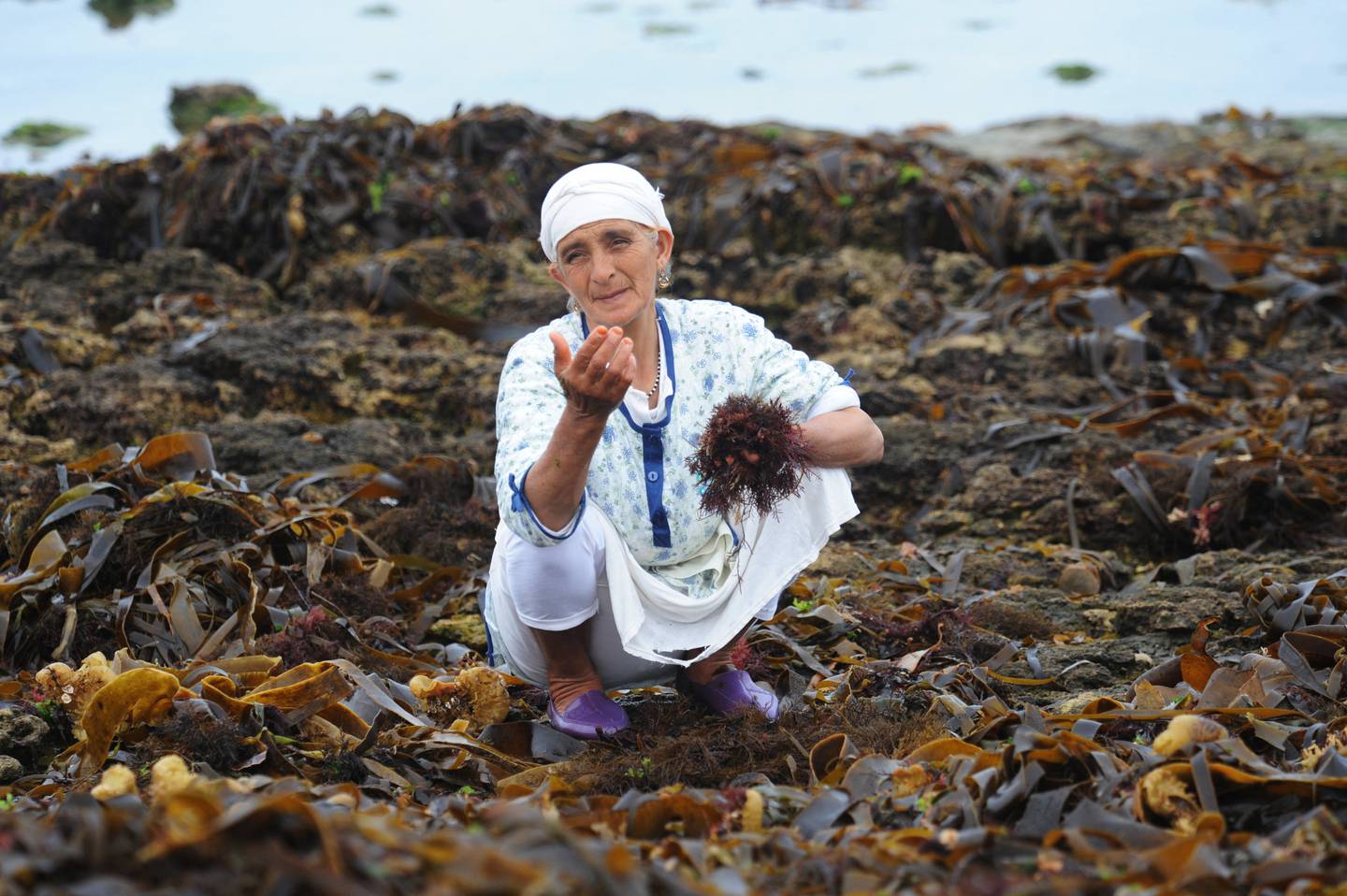
Moroccan laborer harvests red gold algae
Seasonal harvesters of red gold algae are underpaid and exploited.

Algae, one of the oldest life forms on Earth, is being rediscovered not only for its food and fuel potential, but also for its ability to create natural pigments that are safe, sustainable, and steeped in the rhythm of the Earth. These aquatic organisms—ranging from spirulina to red seaweed—offer a spectrum of hues: verdant greens, deep blues, rust reds, and dusky purples.

Unlike synthetic dyes, which often contain petroleum derivatives and heavy metals, algae-based pigments are biodegradable, non-toxic, and renewable. As algae are cultivated in controlled aquatic systems or harvested from sustainable wild sources, their environmental impact is significantly lower than land-based crops used in textile dyeing, which consume vast quantities of water and pesticides.

This new color story is about more than just appearance. It’s about feeling grounded and alive. Inspired by the quiet beauty of dusk and the celestial shimmer of moonlight on waves, designers and artists are turning to algae pigments to evoke a palette that feels intimate, lived-in, and elemental. These are tones shaped not by factories but by sunlight, salt, and the slow dance of tide and time.

Algaeing natural hues

In fashion, we see algae-based dyes used in capsule collections like the seaweed-dyed silks from Algaeing and Living Ink, who previously turned algae into bio-based inks.

In interiors, algae pigments are finding their way into ceramic glazes, wall treatments, and ethical home goods. In cosmetics, spirulina’s vibrant green is used in eyeliners and shadows, offering beauty that heals rather than harms. Spirulina is also a superfood.

At Green Prophet, we’ve long followed algae’s transformative potential—from algae solar panels and bioplastics to its use in wastewater treatment and as a vegan protein source. Now, as color becomes another frontier of ecological consciousness, we see a full-circle return to Earth’s original pigments.

Read more: The rise of algae into sustainable businesses

How to grow an olive tree in a container

8

olive trees in potsDon’t have a garden? You can still own a fruiting olive tree, grown in a container. A sunny balcony and the right climate are the essential things; that, and time.

Italians have grown fruit trees in containers for centuries, keeping them protected in special sheds during the winter.

Come spring, the trees are wheeled out to the sunshine again. While we can dream of owning an olive grove like the one we visited in the Galilee, olive trees successfully grow in pots too.

Assuming your climate suits the olive, you should acquire a sapling from a nursery or buy one online. Olive trees grown from pits revert to the original wild olive, and if they produce fruit at all, it will be wizened and not very good to eat. So don’t do it. Consult the nursery manager and choose the variety you’d like best. To maximize fruiting potential, you should actually have two of the same variety in the area. This may be impractical where there’s limited space, of course.

When to plant an olive tree in a pot?

olive tree pot
Read this guide for growing an olive tree in a pot

Spring is the best time to re-pot the sapling into its permanent container. Tender saplings suffer under frost or harsh winter weather, so it’s best to transplant after all danger of frost has passed. When the temperature threatens to dip under 50°F/10ºC, the tree should be brought indoors. It may be taken out to enjoy the sunshine on warmer days. A trolley, on which the container stands permanently, is useful there.

olive tree balcony

Choose a spot that gets plenty of full sun and only partial shade. Have a clay pot about  2 feet/61 centimeters deep and the same width at the ready. No need for pebbles or other drainage device at the bottom. Pour enough soil in to cover the bottom thickly.  Knock the sapling out of its original container and place in the new pot. Fill the pot with soil  around the tree and make sure it stands stable. Water thoroughly.

Soil and watering olives trees in a container

Ordinary potting soil; no special fertilizers or compost at first. Wait until there are signs of growth in the following spring to add compost or concentrated fertilizer to the soil. Keep the soil lightly moist, but not over-watered. A mature tree can withstand drought, but until a sapling is established and thriving in its new environment, it needs light moisture.

Care of the tree

We recommend pruning with caution for the first four years: remove branches under 3 feet/91.5 centimeters as well as suckers. Others recommend watching for flowering and then pruning off the tips of the branches, above a pair of leaves, as well.

Plant hygiene

Watch out for scale infestation. Buy a natural insecticide product from the plant nursery. Traditional Mediterranean farmers whitewash the bottom half of the trunk to keep ants away. Weed out any wind-born seedlings the minute you notice them.

The next step is to enjoy the lovely sight of the  tree’s silvery-green foliage moving while the breeze rustles through it. Because it may take up to five years before it produces any fruit for you. You’ll need to discuss when you can expect fruit with the gardener at the nursery. But by then you and the tree will have become good friends, and the fruit will be a nice bonus.

If you can’t find local, search online for olive tree sapling delivery to your home. Once you get one growing you can grow clones from the original using patience or a rooting hormone.

What kind of olive tree to plant in a container?

olive marinade
Make your own tasty marinade, no matter what olives you have at home.

Barnea, suri, kalamata? Your supermarket or farmer’s market usually offers a good variety of olives. Juicy green, black, brown or purple olives glistening in their own oil. Olives seasoned with chilies, lemons and herbs; olives pitted and left empty; olives stuffed with red pimentos; olives in brine or in wine marinade – enough olives to make your senses reel.

And like grape varieties for wine, there are more kinds of olives in the world than you’ll ever know. Every region where olives are grown yields a particular variety, each with its unique shape, size, and flavor. Get the low down on olive varieties here. Having problems? Check out the olive tree guide to longer-term

More about olive trees and olives:

The unseen tech behind eco villages

0
Submersible pump tech in eco-villages

If you picture an eco-village, you might imagine a simple dwelling with permaculture gardens and a very slow, rural pace of life. While often true, this rustic image undermines the technology that is increasingly being used to achieve their sustainability – technology that we shouldn’t be frightened of or avoid, but use to harness a greener way of life.

Energy solutions

Energy independence is a big part of eco villages. While solar panels are the visible, sung heros here, the real magic lies in integrated systems underpinning them. Smart microgrids are used to manage locally generated power from diverse mix of sources like solar, micro-hydro, or even wind. They balance loads and incorporate battery banks for storage, which reduces the reliance on external grids. 

Advanced solar integration can be expressed through Building-Integrated Photovoltaics (BIPV), in which the solar cells become part of the building fabric itself. The real MVPs, though, are the energy efficiency monitoring systems, such as smart meters and community dashboards, which can track both generation and consumption. Through finding patterns, or possibly using machine learning, it’s possible to better align the two so there’s no waste (this is even more important when many dwellings share energy).

Intelligent water management systems

rain catchment
In the city you can collect water form your air conditioner. Off grid, you’d better try the rain

Water is life, and eco-villages treat it as such through age-old conservation and reuse techniques. Rainwater harvesting isn’t just barrels, it means having integrated roof catchments feeding into systems with first-flush diverters that automatically discard the initial, most contaminated runoff. Water then passes through staged filtration, like sediment traps, then by sand or gravel, before collection in large cisterns. Again, IoT sensors are often used to help determine and notify of capacity and cleanliness levels.

For accessing this water, particularly for irrigation, choose a submersible pump for its efficiency – this can quickly transfer water in a reliable way. Further along the cycle might be constructed wetlands, which are carefully designed shallow beds. They’re planted with aquatic vegetation and use natural microbial processes within their gravel and sand substrates to purify greywater (sometimes even pre-treated blackwater), making it safe for irrigation with minimal energy input.

Waste not, want not

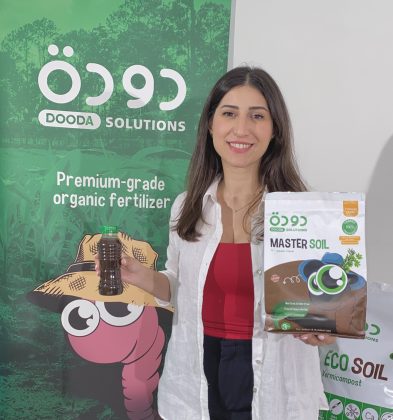
Dooda is a Lebanese vermiculture compost business.

“Waste” is a resource that’s awaiting transformation. Composting techniques like vermicomposting (using worms) or Bokashi (fermentation) help process organic matter into rich soil amendments. Of course, these are old techniques that don’t require much technology.

However, investing in some innovative technology can open more doors to transformation, as not all transformation can be naturally captured. Some communities employ anaerobic biogas digesters, which are sealed tanks that break down food scraps and animal manure in an oxygen-free environment. This produces methane gas for cooking or heating as well as a nutrient-rich liquid fertilizer. IoT sensors, again, can track microbial activity to help boost gas yields.

Technology as the invisible foundation

rotterzswam
Rotterzswam

Energy, water, and waste are the three flows that need to be managed by intelligent technologies. This infrastructure is frequently “unseen” because it’s designed to be integrated and harmonious with natural systems, rather than intrusive (it’s not consumption-led). Harmony between dwellings can be difficult, and this is where integrated systems can communicate. It goes to show that such communities are not anti-technology, but instead are simply selective about only using technology that benefits them and aligns with their values. 

Palau: The place, the pledge, the legends

Image via Getty Images/Pew Charitable Trusts.

It had been hundreds of years since a non-motorized vessel had traveled such a distance, guided only by the stars. Last weekend, a historic 18-day double-hulled canoe voyage was completed from the archipelago of Palau to Orchid Island, a remote feature in southeastern Taiwan.

The GPS-free team of eleven was led by Sesario Sewralur, who inherited the love of sailing from his father, legendary navigator Mau Piailug. The journey was co-sponsored by the Taitung County Government and the Micronesian Voyaging Society, as a cross-cultural exchange to honor shared regional conservation values and seafaring techniques.

Image retrieved from Taipei Times.

In Palau, living in harmony with the environment is at society’s core. The customary practice of bul empowers the Council of Chiefs, Palau’s highest-ranking group of traditional leaders, to place and maintain moratoriums on the harvest of natural resources to prevent overconsumption. Local fishing is generally prohibited based on these measures.

The island nation established the world’s first shark sanctuary in 2009. In 2015, it designated 80 percent of its waters as a national marine sanctuary. Earth Day is expanded to the entire month of April.

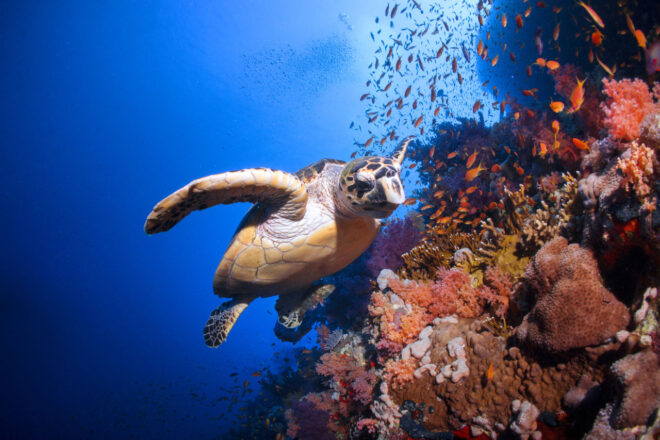
While Palau is known for its lush land and seascapes, impressive biodiversity lies in particular within marine ecosystems. A paradise for snorkelers and divers, Palau is home to some of the Indo-Pacific’s most thriving reefs, which constitute one of the “seven underwater wonders of the world.” Now say that five times fast.

Image retrieved from Great Barrier Reef Foundation.

Palau is a prime tropical destination—but it’s just about in the middle of nowhere. Widespread sustainability efforts aim to offset the carbon footprint intensified by tourism. Many eco-tourism experiences involve nature excursions and one-of-a-kind experiences drawing on traditional knowledge and practices in such realms as culinary arts or handicrafts.

For visitors to Palau looking to gamify their stay in-country, Ol’au Palau is an app rewarding environmental stewardship with special access to local heritage sites. Though the transaction happens on a screen, it promotes on-site engagement for fuller meaning-making.

As of 2017, Palau also requires visitors to sign the Palau Pledge, a code of conduct stamped into their passports at international arrivals. Entry into the country hinges on signing on the line, promising to the Children of Palau to exercise awareness and shared responsibility for Palau’s ecological and cultural preservation.

Image retrieved from Palau Pledge website.

The Palau Pledge goes like this:

“Children of Palau, I take this pledge, as your guest,

To preserve and protect your beautiful and unique island home.

I vow to treat lightly, act kindly and explore mindfully.

I shall not take what is not given.

I shall not harm what does not harm me.

The only footprints I shall leave are those that will wash away.”

According to Palauan legend, a two-headed eel grew with one head on either side of a rock, each unaware of the other. The snakes starved as they pulled each other to go after prey, before realizing they were linked. Only then did they put their heads together, working together to thrive.

We are already aware we are linked. Palau may be one of the most isolated countries on earth, but we are all connected by the waters which lap at its shores.

The Palau Pledge is a refreshingly humanitarian immigration policy, inspiring us to respect and protect our surroundings both near and far. Should other countries follow Palau’s lead?

E-trike powered by solar power does heavy lifting quietly in off-grid forest

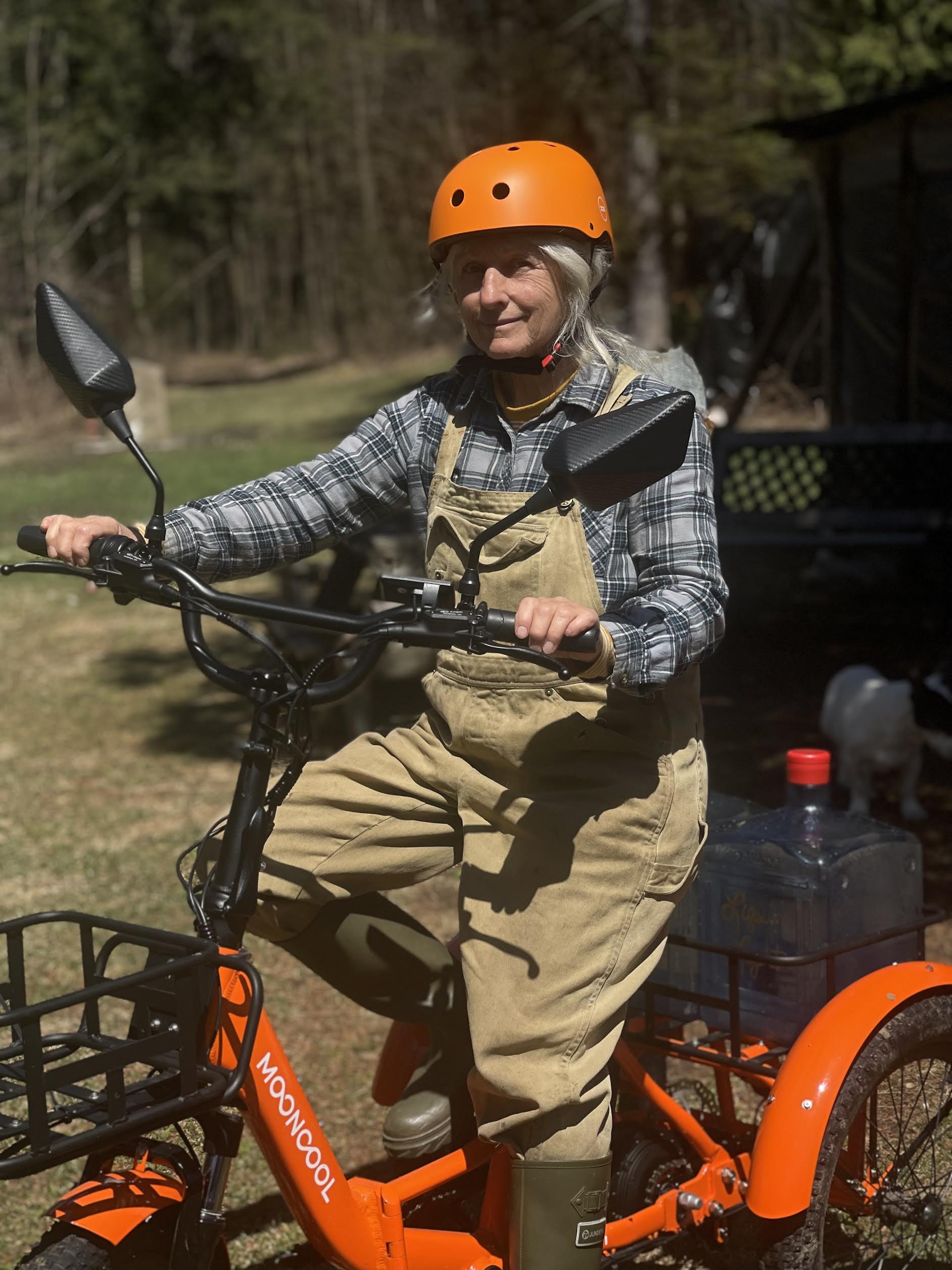
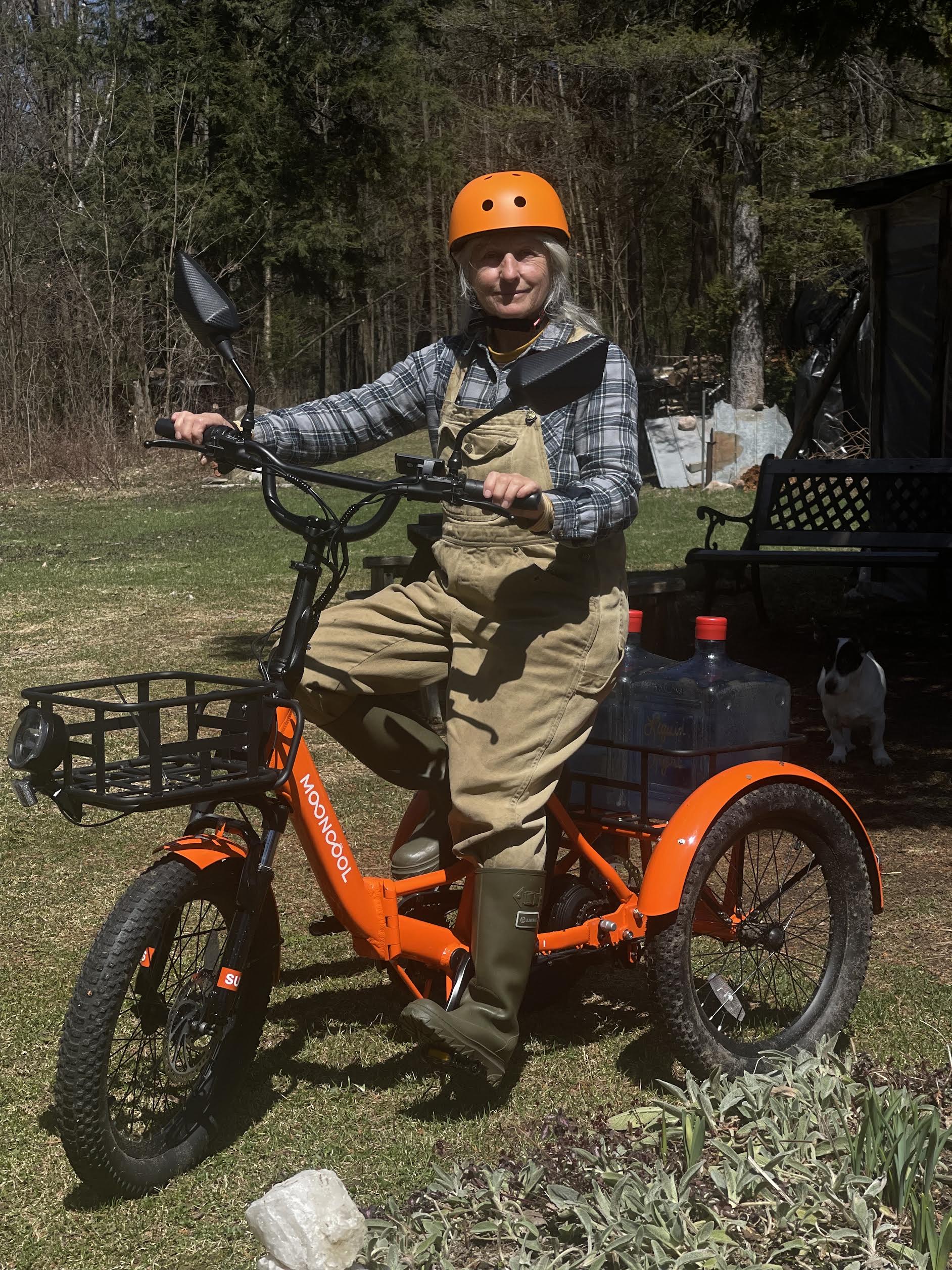
Raven reviews the e-trike from Mooncool in her off-grid forest

I was contemplating how to ready myself for old age, using the body wisely, and still attending to daily routines. Such was the state of inner asking when grace responded with the arrival of MoonCool, an e-trike. Silence is what I did not wish to disturb for me, the forest, and its creatures.

As mentioned in the first article, it arrived the day prior to snow arriving in northern Ontario, Canada. Testing was postponed till April. The main reason for this e-trike is to fetch Spring water in 3-gallon jugs from the Source. Riding on uneven ground thru forest.
I started with two jugs in the back carrier and one in the front carrier. I quickly forego the front one. It made the front wheel decide on its own accord which path to take. Not good.
Next was going further on the forest paths thru mud puddles and rocky terrain with cordless chainsaw. You definitely got to give it your full attention but the e-trike had plenty of power to tackle the terrain.

E-mobility trike, electric scooter, off-grid, solar power

While learning the how-to’s I’ve had to email MoonCool Support a few times. What I liked was their visual response that came the next day. Even though the mistakes I made taught me, with the help of friends, whom could verify voltage in battery and in the process teach me the e-trike’s capabilities, I see these as hands-on ways to learning.
More like rewiring the brain.
What I thought were issues, was due to having touched all the buttons prior to knowing what I was doing.
Now I’ve added mirrors and a helmet to ride on dirt road primarily. This road has two major hills. Applying the back brakes puts power back in the battery. Yeah! There’s plenty of power just using the throttle to go up. Using the peddles is also an option and is definitely not tiring as the e-trike anticipates when to give a helping foot.
The only issue I’d love to master is backing up out of its shelter. Must be an easier way than my own strength to turn it around!

Wild Chimpanzees Drum Like Musicians—and Each Group Has Its Own Rhythm

Chimps can drum
Did chimps teach us humans how to drum?

Did chimps teach us how to drum?

In the remote forests of West and East Africa, a form of communication echoes across the trees—low, percussive thuds made not by humans, but by chimpanzees. Scientists have long known that our closest relatives use calls, facial expressions, and gestures to interact. But a new study reveals something more astonishing: chimpanzees drum.

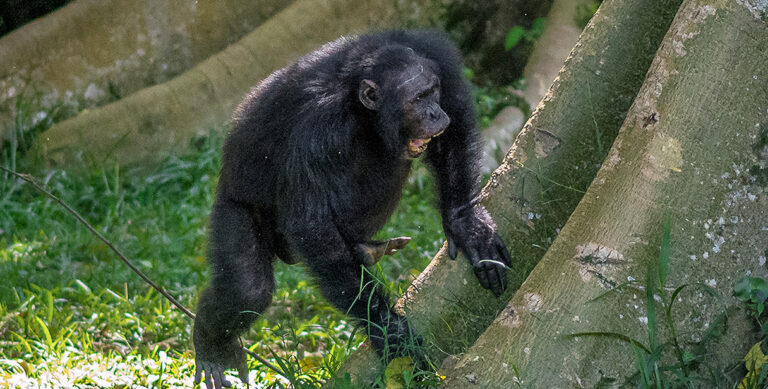
Not randomly, and not just for fun. These wild chimpanzees use tree roots as percussion instruments, and they drum in culturally distinct patterns depending on where they live.

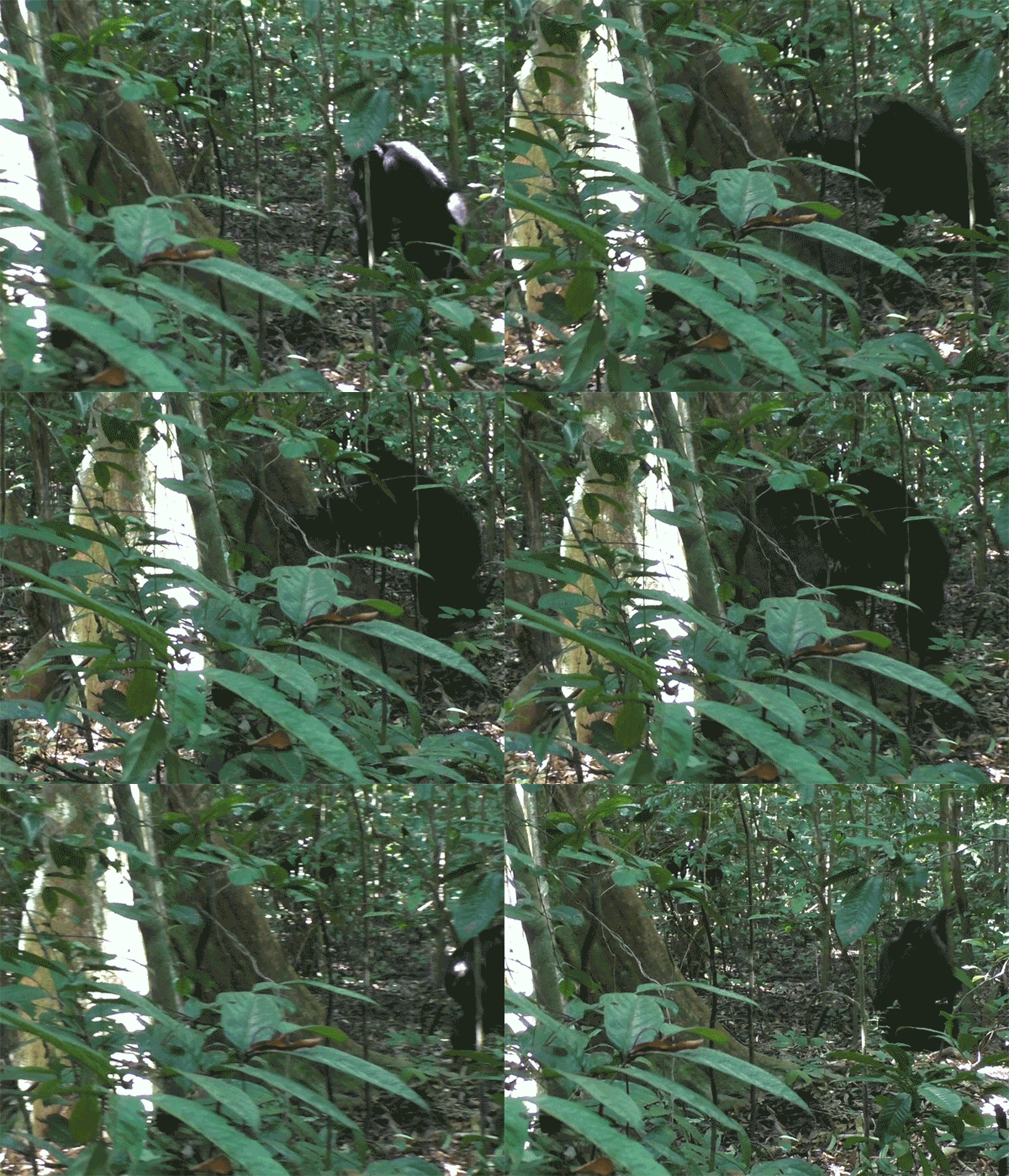
Researchers observed that Pan troglodytes verus, the western subspecies found in Côte d’Ivoire, drum in steady, evenly spaced beats. Their eastern cousins, Pan troglodytes schweinfurthii, living in Uganda, perform a more complex rhythm with alternating long and short pauses, reminiscent of a natural Morse code. The sound travels across long distances—allowing chimps to signal location, hierarchy, or perhaps even mood.

In another related study, researchers found western chimps also drum by hurling stones at tree trunks, suggesting that different groups have distinct “instruments” and playing styles. The implications? These rhythmic behaviours may hint at the evolutionary roots of music, revealing that musicality may not be uniquely human.

The scientists analyzed more than 370 drumming bouts across 11 communities in six populations of these chimps—recordings that span almost 25 years, making it the biggest data set of chimpanzee drumming that exists out there in the world.

The team found that chimpanzees consistently produce rhythmic drumming patterns—and that these vary across populations. Western chimps drum with evenly spaced beats, “like the ticking of a clock,” says Vesta Eleuteri, a behavioral biologist at the University of Vienna who led the study, published today in Current Biology. In contrast, eastern chimps alternate between short and long silences after each hit (see video, below).


Are chimpanzees the world’s first percussionists? Image via Vesta Eleuteri

These findings also raise big questions about animal cultures and how environment and social structure influence the evolution of communication.

Other Stories Where Animals Inspire Awe and Awareness:

Tortoises of Aldabra Face Threats From Luxury Developers

On a remote atoll in the Indian Ocean, ancient giant tortoises—the oldest reptiles on Earth—are now in the crosshairs of Qatari-backed resort projects. Conservationists fear that habitat destruction on nearby Assomption Island could spell extinction for some of the last wild populations.


Solar Ark and Twende powers up Ethiopian school

0
Twende
Twende

A visit to Ethiopia and you feel the power of the sun and the beauty of the people. But the people outside the cities are often living in mud huts in locations without access to regular power. The country that is Africa’s only remaining sovereign nation has lots to boast about beyond its culture, nature and a rumored Ark from the The Holy Temple in Jerusalem Ethiopian students are getting a little help from some American friends:

In the Twende Solar and The Community Project: Ethiopia, the American solar energy systems manufacturer Sol-Ark has helped power a brighter future for students and families in Debre Birhan, Ethiopia, providing them with solar inverter systems for the country’s first public K-12 STEM academy.

Twende solar in Ethiopia

Situated at over 9,000 feet in the highlands of Ethiopia, and about a 3 hour drive from Addis, Wogagen School, meaning “The First Light of the Day” now runs on clean, reliable solar energy. For the first time, 280 students and their teachers have access to consistent power to operate projectors, computers, lab equipment, and vocational tools.

Related: Green Prophet visited this eco-paradise in Ethiopia

With capacity to grow to over 1,000 students, Wogagen is lighting the path toward educational equity. The benefits go beyond the classroom. Evening power allows the school to host after-hours programs for the surrounding Chole Village, serving over 4,000 residents.

Debre Birham in Ethiopia
Debre Birham in Ethiopia/Wikipedia

In a region challenged by civil conflict which can erupt day by day, and energy insecurity, the new solar infrastructure offers stability, security, and hope.

Twende Solar in Ethiopia
Twende solar, Ethiopia

As part of a Training of Trainers program led by Ethiopian engineer Gizaw Tilaye, 16 instructors from regional polytechnic colleges are learning hands-on solar installation and maintenance on-site using Sol-Ark inverters and Rolls Battery systems. These educators will return to their regions equipped to train the next generation of solar technicians.

The initiative was designed with direct input from village elders, the mayor, and the Ministry of Education, ensuring long-term viability and community ownership. Other partners including Rolls Battery Engineering and Heliene, joined Sol-Ark in donating equipment and resources.

The Wogagen campus also includes compost toilets, a bamboo nursery (learn here about building with bamboo), a community farm, and a brick-making facility – all powered by the solar system that replaced a diesel generator and freed the community from the burden of fuel dependency. Diesel is expensive, noisy and polluting.

::SolarArk

Real life Snoopy sniffs out cancer for this medical startup

Dogs help detect cancer in the lab

SpotitEarly and Snoopy helps labs detect small lung, breast, prostate, and colorectal cancers

They say dogs are a man’s best friend and now a new startup is hoping dogs will help sniff out cancer at early stages when it’s treatable. SpotitEarly has created a unique, patented method capable of detecting four types of cancer—lung, breast, prostate, and colorectal—which together represent approximately 50% of all new cancer cases.

In the future, the company intends to expand its capabilities to include additional types of cancer. To date, over $8 million has been invested in the company, including funds from the Menomadin Foundation and Hanko Ventures.

The technology of using dogs to sniff out cancer which we reported on in 2013 is being tested out in a hospital and combines advanced artificial intelligence (AI) technology with the highly developed olfactory capabilities of specially trained dogs, achieving remarkable accuracy.

The test demonstrated high early-stage sensitivity across all tested cancer types:

  • Breast cancer: 94%
  • Lung cancer: 97%
  • Prostate cancer: 97%
  • Colorectal cancer: 86%

The test has also shown efficacy in identifying other cancers as well.

Spotitearly
Spotitearly

How it works: Patients breathe into a specially designed face mask for three minutes. The mask is then sent to the company’s laboratory, where trained beagles “analyze” the sample under the supervision of an AI system. Each sample undergoes 3 to 5 examinations to ensure high accuracy.

To date, more than 1,400 participants—primarily aged 40 to 70—have taken the test, which has demonstrated an impressive accuracy rate of 94%.

Human breath contains over 1,000 Volatile Organic Compounds or VOCs. Science has shown that VOCs represent rich sources of biomarkers associated with metabolic processes and diseases in the body, each identified
by a significant odor signature, including cancer. SpotitEarly harnesses the science of scent to detect cancerous VOCs in exhaled breath samples.

Partners include the University of Pennsylvania.


The Joy of Everyday Movement: Making Activity a Lifestyle

0

Women working out in the sand

Movement doesn’t always mean going to the gym or following a strict workout plan. Many Canadians are looking for ways to stay active that feel natural and easy to maintain. And the good news is, that’s entirely possible. Daily activity can happen while you go about your regular schedule. From walking to the store to stretching in the kitchen, movement can be woven into your life without needing to set aside extra time.

This article focuses on how to enjoy movement in ways that are manageable and uplifting. We’ll explore how everyday tasks, routines, and hobbies can offer opportunities to stay active. The goal is to help you see activity as part of life—not something separate from it.

Start Your Day with Gentle Activity

The way you begin your day can shape how the rest of it feels. Adding light movement in the morning—like stretching, a short walk, or a few minutes of deep breathing—can help your body ease into its natural rhythm.

This quiet part of the day is also a good time to think about how you’re fuelling yourself. Many people choose to support their daily routines with both a balanced breakfast and mindful wellness habits. For some, that includes health-friendly supplements that offer nutrients such as omega-3 fatty acids, which are known to play a role in supporting overall well-being when part of a nutritious diet.

Brands like USANA Health Sciences offer options that include ingredients to complement healthy living. These supplements are not a replacement for real food but can work alongside thoughtful eating choices to help maintain nutritional balance—especially on days when meals might not cover everything.

Together, movement and mindful nourishment can help you feel steady and focused as the day begins.

Turn Short Breaks into Movement Opportunities

Whether you’re at home or at work, breaks are a natural part of the day. You might use that time to check your phone or grab a snack. But you can also use it for light movement.

Standing up, walking around your space, or doing simple stretches are great ways to keep your body active. These quick activities can refresh your mind too. You don’t need to follow a plan—just listen to your body and move in a way that feels good. Making use of small pockets of time adds up and supports consistent movement throughout the day.

Let Chores Count Toward Activity

Many people overlook how much activity happens during regular household tasks. Vacuuming, sweeping, gardening, and even tidying up are all forms of movement. If you’re doing them regularly, you’re already staying active more than you might think.

These activities can be done mindfully to make the most of them. Try focusing on your posture or turning on music to make them more enjoyable. When you view chores as part of your movement routine, it takes away the need to find time elsewhere in your day.

Be Social While Staying Active

Movement can be more fun when it’s shared. Spending time with friends or family doesn’t have to mean sitting still. Going for a walk in the neighbourhood, exploring a local trail, or joining a casual dance or fitness class are all great ways to stay connected and active at the same time.

These shared moments support both social and physical well-being. There’s no need to focus on performance—just enjoy moving together. Making activity part of your social time makes it easier to include in your lifestyle without extra planning.

Create Space at Home for Simple Movement

You don’t need a gym to move your body. A small corner of your home can work well for light activity. Whether it’s a space for stretching, yoga, or light home workouts, having a dedicated area makes movement easier to return to each day.

You can keep a mat rolled up in the living room or use a quiet bedroom for a few daily minutes of gentle activity. Keep it simple—just enough room to move freely without interruption. This helps build a habit without feeling like you need to do something extra or out of your routine.

Try Seasonal Outdoor Activities Across Canada


Snowshoeing in Canada

In Canada, each season brings something new to try. You can hike in the fall, snowshoe in the winter, bike in the spring, and paddle in the summer. These outdoor activities offer a chance to enjoy nature while staying active.

You don’t need to commit to large outings. Even short neighbourhood walks, visits to local parks, or time in the backyard can provide movement. Many cities have seasonal programs and trails that are open to the public, making it easy to find something that fits your interests.

Celebrate Every Small Win You Notice

It’s easy to overlook the value of small progress. But choosing to walk instead of driving, standing more often, or adding a five-minute stretch at the end of your day all make a difference. These changes don’t need to be big to be meaningful.

Taking time to recognize your efforts can help you stay motivated. You might jot down what you did at the end of the day or share your movement moments with a friend. When you celebrate these steps, you build a stronger connection to your goals and enjoy the process more.

Movement doesn’t have to be intense, structured, or time-consuming. It can be as simple as how you walk, sit, or stretch throughout the day. Canadians can find plenty of ways to stay active that match their lifestyle, interests, and environment.

By rethinking how movement fits into your life, it becomes easier to maintain. You don’t need a detailed fitness plan to benefit from regular activity. With a few mindful choices and a positive approach, movement can be a part of how you live—not something extra you have to do.

Enjoying movement in your daily life is not about achieving something specific. It’s about staying connected to your body and finding ways to stay active that feel right for you.

How the Mobility Industry is Advancing Towards a Sustainable Future

Escooters can also be great for seniors or anyone with mobility concerns

As we continue our global efforts to combat climate change, industries across the world are reevaluating their environmental footprints. The mobility scooter industry is no exception. This industry is undergoing a transformative shift towards sustainability, embracing innovations and practices that promise a greater, greener future.

Electrification

Mobility scooters are electric and produce no tailpipe emissions. Moreover, recent advancements are enhancing their eco-friendliness further. The transition from traditional lead-acid batteries to lithium-ion variants offers numerous benefits, such as improved energy efficiency, longer lifespans, and reduced waste. These batteries not only extend the range of scooters but also decrease the need for replacements, thereby minimising environmental impact.

Sustainable Manufacturing

Manufacturers are also prioritising sustainable materials and processes. The incorporation of recyclable plastics and metals reduces the demand for virgin resources. Many companies are integrating recycled materials into their e-scooters, meaning significant reductions in carbon emissions during production. In addition, energy-efficient manufacturing techniques, such as lean production and the use of renewable energy sources, are becoming standard practices, further reducing the industry’s carbon footprint.

Lifecycle Considerations

The industry extends beyond manufacturing, with the adoption of a holistic approach to the product lifecycle. This includes initiatives for battery recycling and the refurbishment of used scooters. These efforts not only conserve resources but also reduce the environmental impact associated with producing new units.

Renewable Energy Integration

Innovations are also emerging in the realm of energy sourcing. Some mobility scooters are now equipped with solar charging capabilities, allowing users to tap into renewable energy for themselves. Additionally, partnerships between manufacturers and green energy providers are facilitating the development of eco-friendly charging infrastructures, meaning that the electricity powering these scooters is as clean as can be.

Policy and Consumer Influence

Government policies and consumer preferences are key in steering the industry towards sustainability. In the UK, governmental incentives support the development and adoption of low-emission technologies, which benefits the mobility scooter industry. At the same time, a growing consumer demand for environmentally responsible products is compelling manufacturers to innovate and prioritise carbon reduction.

Urban Integration

The integration of mobility scooters into urban planning is essential for maximising their environmental benefits. Investments in infrastructure, such as dedicated lanes and charging stations, not only promote the use of electric mobility solutions but also contribute to the reduction of urban carbon emissions. These developments align with broader smart city initiatives aimed at creating sustainable and accessible urban environments.

The mobility scooter industry is making significant strides towards sustainability, driven by technological advancements, responsible manufacturing, and supportive policies. By embracing a comprehensive approach that considers the entire product lifecycle, the industry is not only meeting the mobility needs of its users but also contributing to global environmental goals.

Browse the mobility scooters range from Wheel Freedom today.

The Future of Energy: Nuclear Realism vs. Solar Idealism

Martin Varsavsky
Martin Varsavsky says he was wrong after peddling solar and millions. Nuclear is the way to go.

Martin Varsavsky, a seasoned entrepreneur behind billion-dollar clean energy exits, says he’s lost faith in the renewable energy paradigm. Moshe Luz, director at Ivanpah, the world’s largest solar thermal power tower project in California’s Mojave Desert, believes just the opposite.

This is more than a disagreement between two experts. It is a flashpoint in a global conversation about how we transition to a clean energy future—whether through sweeping centralized infrastructures or distributed, ecological innovations.

Varsavsky is a Spanish-Argentine entrepreneur known for founding several successful technology and infrastructure ventures, including in the renewable energy sector. He co-founded Eolia Renovables, a large-scale wind and solar power company in Spain, which was sold for €1.1 billion. After Eolia, he went on to co-found Barter Energy, which focused on solar energy communities and rooftop solar installations. Barter Energy was also successfully exited, with the sale announced in May 2025.

From the heights of Spain’s energy revolution, Varsavsky watched solar and wind power go from vision to reality—only to become, in his view, a cautionary tale. In his May 9th post on X, Varsavsky (after cashing out billions, no less) criticized the high environmental cost of large-scale renewables: olive groves uprooted, landscapes marred, ecosystems disrupted. He condemned the dependence on government subsidies, the inefficiency of intermittent sources, and the fragility of Europe’s energy grid.

To Varsavsky, rooftop solar paired with battery storage is the only renewable worth keeping. His newfound allegiance? New nuclear—compact, clean, and capable of delivering baseload power without scarring the Earth. Environmentalists know that nuclear is a dangerous path forward because the local and environmental risks are too great. The Fukushima disaster in Japan was only just in 2011!

He also blasts what he calls “climate alarmism”, suggesting that exaggerated doomsday predictions of the early 2000s justified energy policies that have “impoverished” Europeans while failing to significantly reduce emissions. Germany’s green push, he argues, has become an industrial suicide note. The same alarmism also caused suicide. 

David Anthony, founder of 21Ventures, was a pioneering American investor in Israeli solar energy startups during the late 2000s, partnering with groups like the Quercus Trust to fund early-stage cleantech. He played a key role in shaping Israel’s solar innovation scene but tragically died by suicide in 2012 after what was reported as personal family trauma. His death came at a time when optimism around solar peaked—before global investment slowed and many early-stage companies struggled to scale amid policy uncertainty and falling technology costs. We interviewed David on Green Prophet and he gave us some great tips on how to find innovation to invest in before the rest step in.

But at Ivanpah, Moshe Luz sees a different story unfolding than Varsavsky.

In our recent Green Prophet interview, engineer Moshe Luz emphasized solar thermal’s promise not only for emissions reduction, but for empowering local resilience and economic opportunity. Luz doesn’t pretend Ivanpah is perfect—it has faced challenges, from initial bird mortality to integration issues—but he sees it as a living laboratory, showing how we can move toward decarbonization without waiting decades for nuclear fusion or succumbing to fossil fallback plans.

Where Varsavsky sees environmental destruction, Luz points to carefully managed desert ecosystems, job creation in rural areas, and the profound symbolism of powering millions of homes with focused beams of sunlight. He emphasizes hybrid systems, storage innovation, and smarter grid planning—not abandoning renewables, but evolving them. And government roles in supporting this evolution is important.

Varsavsky’s critique of large-scale renewables as land-hungry and subsidy-dependent is not new. Nor is his appeal to nuclear energy as a clean, scalable alternative. What’s striking is that someone who once built these systems is now disavowing them, adding weight to long-standing criticisms from environmentalists concerned about industrial-scale “green” projects that harm more than they help.

But to lump Ivanpah, or the global community solar movement, into the same basket as Spain’s bulldozed olive groves misses nuance. Ivanpah did not destroy forests. It sits in the Mojave, a place Luz argues is uniquely suited for solar concentration. Its storage and dispatch capabilities, evolving since launch, challenge the very “intermittency” Varsavsky condemns.

And while new nuclear has promise, it remains years away from scale, with unresolved issues around waste, cost, and political will. Even the smallest modular reactors are deeply controversial and the human and environmental cost can be catastrophic when systems fail.

Rather than pit nuclear against solar, or rooftop against grid-scale, what if we designed an energy ecosystem with layers?

Rooftop solar like Powerwall’s home backup reduce grid stress and democratize energy.

Large-scale renewables, thoughtfully deployed, can replace coal and gas at scale.

Next-generation nuclear, if and when it arrives, can fill in the baseload gaps.

The real danger isn’t solar or nuclear—it’s polarization, where each camp is so convinced of its own truth that collaboration becomes impossible.

Varsavsky ends his piece by urging a shift from fear-based policymaking to pragmatic energy design. It’s a sentiment Luz would likely echo. But where Varsavsky sees solar as the problem, Luz sees it as part of the solution. Both are right. Both are wrong. The future will likely need the sun, the atom, the battery, and the commonsense human decision-making.

Think Eat Cook Sustainably is a philosophy book in sustainable food, in edible form

Think Eat Cook Sustainably book cover by Rachel Khanna – sustainable cookbook featuring eco-friendly recipes, seasonal plant-based cooking, and zero-waste kitchen tips.
Eco-chic cover of “Think. Eat. Cook. Sustainably.” by Rachel Khanna — the ultimate guide to intuitive, seasonal, and sustainable cooking. Her philosophy carries through to cooking shows like With Love, Meaghan

It’s like finding a map back to your grandmother’s pantry, but with the tools of a climate-conscious chef.

Written with a deep reverence for local ingredients and a mindful kitchen, the book Think Eat Cook Sustainably teaches readers how to cook from intuition, not instruction. The philosophy behind the book is the method that surely grandmother’s knew once: and can now be passed in eco-conscious circles and permaculture kitchens. And it may be influenced from the authors experiences growing up in France. Everyone there knows that a soup stock needs celery, carrot and an onion.

Rachel Khanna
Rachel Khanna

The book by Rachel Khanna offers formulas—not rigid recipes—so that you can cook anything, from anywhere, with whatever the Earth gives you.

Are you drowning in recipes, influencer chefs videos, and master chefs showing you hot to cook with ingredients that are hard to find, or too expensive –– or simply not local to you? Do you find you get confused and can’t keep up with the latest Ottolenghis recipe?

Rachel Khanna offers something far more liberating: a formula for freedom in your kitchen. Her book Think Eat Cook Sustainably is not about following recipes to the letter. It’s about understanding the language of cooking—so you can improvise with what you have, honor what’s local, and reduce waste, all while creating deeply nourishing meals. She is a mother of four girls so no doubt earned her chops as a cook and it follows from her second book, Live Eat Cook Healthy. She understood the message of eating more vegetables and buying organic food was not enough to help people feed themselves more sustainably. She went for a “macro philosophy” in this book.

We were sent this book in 2020 and lost in the COVID madness, we just opened it recently and to our surprise, it’s a book that gives cooking tips along with a tour around the world to some of the most loved foods, which include meat, yes meat, and poke bowls and falafel and fish. It shows you in a handy guide on how you can choose a protein or a base for a recipe you want to cook and additional food items and seasonings to make a first class dish. It’s a guide on how to cook everywhere and anywhere, no matter what the pantry offers.

We have so many friends who have become global nomads and are now with kids living in rental homes in Thailand, in cheaper European countries like Portugal. This kind of book can also help you adapt to the palettes of children, working with local ingredients that may be unfamiliar at first.

Grain Bowls
Build a grain bowl with this formula

Khanna, a former corporate strategist turned public servant and wellness advocate, writes with the clarity of someone who has lived many lives—and decided to root herself in the soil of sustainability.

With degrees from Columbia and a background in public policy and nutrition, she’s as comfortable discussing the US Farm Bill as she is fermenting vegetables in a glass jar. She served as a Connecticut state representative, advocating for food system reform, and brings this practical, community-grounded insight to her food philosophy.

Khanna worked for Morgan Stanley and Euromonitor International before entering politics. In 2007, Khanna started an organic meal delivery service Tiffin based in Banksville and serving Greenwich and Stamford and has now published two cookbooks.

With Love, Meaghan is your destination for sustainable living, holistic wellness, and intentional self-care. Discover eco-friendly lifestyle tips, plant-based recipes, and handmade wellness products crafted with love and purpose.
With Love, Meaghan, a Netflix series featuring Meaghan Sussex.

Whether Rachel Khanna originated this movement of common-sense food philosophy or simply tapped into its rising current, I’m not expert enough in the culinary world to say. What I do know is this: in a time when food media often glorifies complexity, I found something refreshing in her approach.

I was especially taken by a recent and charming episode of With Love, Meaghan on Netflix, where a member of the royal family Meaghan Markle Sussex takes us into her life in California where she chooses to live with intention and simplicity—teaching others to do the same through the lens of food. The idea of returning to basic, adaptable formulas in the kitchen isn’t just empowering; it’s practical.

It nurtures community, teaches resilience to kids, and gently reminds us that sustainable living often starts right where we are—with what we already have. She also shows us, at least on camera, that preparing food and experiences for your children can be deeply satisfying as a parent and as a woman. The world needs more of that.

Some mouth-watering recipes on Green Prophet:

EcoPeace gets peacebuilding award

0
The EcoPeace team

The Environmental Peacebuilding Association gave its recent award –– the 2025 Al-Moumin Award and Distinguished Lecture on Environmental Peacebuilding –– to EcoPeace leaders Nada Majdalani, Yana Abu Taleb, Gidon Bromberg, and Tareq Abu Hamed. The award honors their work in addressing complex environmental challenges through trust-building, dialogue, cooperation, and joint action among communities in Palestine, Jordan, and Israel.

Read our latest article on EcoPeace here.

The Al-Moumin Award and Lecture are named after Dr. Mishkat Al-Moumin, Iraq’s first Minister of Environment, a human rights and environmental lawyer, and an advocate for women’s rights. The award recognizes leading thinkers who are shaping the field of environmental peacebuilding.

For decades, the honorees have made remarkable contributions to environmental peacebuilding through their visionary leadership and groundbreaking initiatives. They have demonstrated exceptional commitment to fostering regional cooperation on issues critical to the region in the face of environmental and political challenges, including water security, renewable energy production, biodiversity conservation, and climate resilience.

At EcoPeace, Nada, Yana, and Gidon’s efforts have advanced environmental diplomacy; built bridges between communities in Palestine, Israel, and Jordan; and achieved sustainable cross-border solutions that ensure a better future for the inhabitants of all three countries.

This work, including the Good Water Neighbors program, the Green Blue Deal, Project Prosperity, and their advocacy for improved water and energy security across the region, are complemented by on-the-ground projects that bring these principles into practical local action. All are often rightly cited as prototypical examples of environmental peacebuilding.

EcoPeace’s continued operation during the Hamas-Israel war as the only Palestinian-Israeli-Jordanian organization in any field was thanks to the tireless efforts of the directors

who ensured that EcoPeace’s staff, participants, and constituents stayed focused on the overriding need to maintain cross-border environmental cooperation and a vision for a shared future. Throughout the war, EcoPeace has secured funding and mobilized resources to address urgent water and sanitation needs, with the three directors demonstrating their commitment to environmental resilience, cross-border cooperation, and humanitarian aid, ensuring that human life, health, and environmental wellbeing are seen as interlocked priorities in this region.

Similarly, Tareq has spent a lifetime working to build trust and foster cooperation between neighbors, using science to build relationships across the Middle East, particularly between Israelis, Palestinians, and Jordanians to ensure that they can work together to address mutual environmental concerns. He established Arava Institute’s Center for Renewable Energy and Energy Conservation upon joining the Institute in 2008. He is a member of President Isaac Herzog’s Forum on Climate Change, and as part of this role, Tareq co-chairs the Regional Cooperation and Security Task Force, which promotes regional and international collaboration on climate change. He has also led the Transboundary Renewable Energy Working Group, bringing together experts from Israel, the West Bank, Gaza, and Jordan to work on socially impactful renewable technology projects.

While Tareq has been a leader in the Arava Institute’s growth over the past 17 years, he left briefly to join Israel’s Ministry of Science, becoming the deputy chief scientist, becoming the highest-ranking Palestinian working in the Israeli government, before being named acting Chief Scientist of Israel’s Ministry of Science, Technology and Space in 2015 and 2016.