Piñatex was among the earliest widely publicized plant-based leather alternatives and played a significant role in raising awareness of agricultural waste valorization within fashion supply chains.
Morocco’s proposed 1,000 MW offshore wind project near Essaouira promises climate leadership and renewable energy for this Magreb country, but along this stretch of Atlantic coast, wind is more than energy. The coastline is culture, economy, and identity.
Mediterranean-wide platform for gender equality, resilience, and rural justice. Hosted under the institutional umbrellas of CIHEAM and the Union for the Mediterranean, the agenda appears technocratic and inclusive on paper: welcome remarks, keynote evidence on gender gaps, and a panel discussion on justice pathways in rural and agrifood contexts.
Atmospheric water generators (AWGs) sound like magic: machines that can pull drinking water out of air. The idea is mentioned in the Bible, where the elders would pray for water collected as dew on plants and the catch on turning this into a machine is in the physics. To turn invisible vapor into liquid, you must remove heat, especially the latent heat of condensation.
The first years of life may represent a critical window when environmental exposures: dust, mold, indoor allergens, pollutants, microplastics, all shape immune trajectories in lasting ways. If scientists can find safe ways to calm this early-life immune pathway, it may be possible to prevent allergic disease before it spreads from the skin to the lungs or gut.
Piñatex was among the earliest widely publicized plant-based leather alternatives and played a significant role in raising awareness of agricultural waste valorization within fashion supply chains.
Morocco’s proposed 1,000 MW offshore wind project near Essaouira promises climate leadership and renewable energy for this Magreb country, but along this stretch of Atlantic coast, wind is more than energy. The coastline is culture, economy, and identity.
Mediterranean-wide platform for gender equality, resilience, and rural justice. Hosted under the institutional umbrellas of CIHEAM and the Union for the Mediterranean, the agenda appears technocratic and inclusive on paper: welcome remarks, keynote evidence on gender gaps, and a panel discussion on justice pathways in rural and agrifood contexts.
Atmospheric water generators (AWGs) sound like magic: machines that can pull drinking water out of air. The idea is mentioned in the Bible, where the elders would pray for water collected as dew on plants and the catch on turning this into a machine is in the physics. To turn invisible vapor into liquid, you must remove heat, especially the latent heat of condensation.
The first years of life may represent a critical window when environmental exposures: dust, mold, indoor allergens, pollutants, microplastics, all shape immune trajectories in lasting ways. If scientists can find safe ways to calm this early-life immune pathway, it may be possible to prevent allergic disease before it spreads from the skin to the lungs or gut.
Piñatex was among the earliest widely publicized plant-based leather alternatives and played a significant role in raising awareness of agricultural waste valorization within fashion supply chains.
Morocco’s proposed 1,000 MW offshore wind project near Essaouira promises climate leadership and renewable energy for this Magreb country, but along this stretch of Atlantic coast, wind is more than energy. The coastline is culture, economy, and identity.
Mediterranean-wide platform for gender equality, resilience, and rural justice. Hosted under the institutional umbrellas of CIHEAM and the Union for the Mediterranean, the agenda appears technocratic and inclusive on paper: welcome remarks, keynote evidence on gender gaps, and a panel discussion on justice pathways in rural and agrifood contexts.
Atmospheric water generators (AWGs) sound like magic: machines that can pull drinking water out of air. The idea is mentioned in the Bible, where the elders would pray for water collected as dew on plants and the catch on turning this into a machine is in the physics. To turn invisible vapor into liquid, you must remove heat, especially the latent heat of condensation.
The first years of life may represent a critical window when environmental exposures: dust, mold, indoor allergens, pollutants, microplastics, all shape immune trajectories in lasting ways. If scientists can find safe ways to calm this early-life immune pathway, it may be possible to prevent allergic disease before it spreads from the skin to the lungs or gut.
Piñatex was among the earliest widely publicized plant-based leather alternatives and played a significant role in raising awareness of agricultural waste valorization within fashion supply chains.
Morocco’s proposed 1,000 MW offshore wind project near Essaouira promises climate leadership and renewable energy for this Magreb country, but along this stretch of Atlantic coast, wind is more than energy. The coastline is culture, economy, and identity.
Mediterranean-wide platform for gender equality, resilience, and rural justice. Hosted under the institutional umbrellas of CIHEAM and the Union for the Mediterranean, the agenda appears technocratic and inclusive on paper: welcome remarks, keynote evidence on gender gaps, and a panel discussion on justice pathways in rural and agrifood contexts.
Atmospheric water generators (AWGs) sound like magic: machines that can pull drinking water out of air. The idea is mentioned in the Bible, where the elders would pray for water collected as dew on plants and the catch on turning this into a machine is in the physics. To turn invisible vapor into liquid, you must remove heat, especially the latent heat of condensation.
The first years of life may represent a critical window when environmental exposures: dust, mold, indoor allergens, pollutants, microplastics, all shape immune trajectories in lasting ways. If scientists can find safe ways to calm this early-life immune pathway, it may be possible to prevent allergic disease before it spreads from the skin to the lungs or gut.
Piñatex was among the earliest widely publicized plant-based leather alternatives and played a significant role in raising awareness of agricultural waste valorization within fashion supply chains.
Morocco’s proposed 1,000 MW offshore wind project near Essaouira promises climate leadership and renewable energy for this Magreb country, but along this stretch of Atlantic coast, wind is more than energy. The coastline is culture, economy, and identity.
Mediterranean-wide platform for gender equality, resilience, and rural justice. Hosted under the institutional umbrellas of CIHEAM and the Union for the Mediterranean, the agenda appears technocratic and inclusive on paper: welcome remarks, keynote evidence on gender gaps, and a panel discussion on justice pathways in rural and agrifood contexts.
Atmospheric water generators (AWGs) sound like magic: machines that can pull drinking water out of air. The idea is mentioned in the Bible, where the elders would pray for water collected as dew on plants and the catch on turning this into a machine is in the physics. To turn invisible vapor into liquid, you must remove heat, especially the latent heat of condensation.
The first years of life may represent a critical window when environmental exposures: dust, mold, indoor allergens, pollutants, microplastics, all shape immune trajectories in lasting ways. If scientists can find safe ways to calm this early-life immune pathway, it may be possible to prevent allergic disease before it spreads from the skin to the lungs or gut.
Piñatex was among the earliest widely publicized plant-based leather alternatives and played a significant role in raising awareness of agricultural waste valorization within fashion supply chains.
Morocco’s proposed 1,000 MW offshore wind project near Essaouira promises climate leadership and renewable energy for this Magreb country, but along this stretch of Atlantic coast, wind is more than energy. The coastline is culture, economy, and identity.
Mediterranean-wide platform for gender equality, resilience, and rural justice. Hosted under the institutional umbrellas of CIHEAM and the Union for the Mediterranean, the agenda appears technocratic and inclusive on paper: welcome remarks, keynote evidence on gender gaps, and a panel discussion on justice pathways in rural and agrifood contexts.
Atmospheric water generators (AWGs) sound like magic: machines that can pull drinking water out of air. The idea is mentioned in the Bible, where the elders would pray for water collected as dew on plants and the catch on turning this into a machine is in the physics. To turn invisible vapor into liquid, you must remove heat, especially the latent heat of condensation.
The first years of life may represent a critical window when environmental exposures: dust, mold, indoor allergens, pollutants, microplastics, all shape immune trajectories in lasting ways. If scientists can find safe ways to calm this early-life immune pathway, it may be possible to prevent allergic disease before it spreads from the skin to the lungs or gut.
Piñatex was among the earliest widely publicized plant-based leather alternatives and played a significant role in raising awareness of agricultural waste valorization within fashion supply chains.
Morocco’s proposed 1,000 MW offshore wind project near Essaouira promises climate leadership and renewable energy for this Magreb country, but along this stretch of Atlantic coast, wind is more than energy. The coastline is culture, economy, and identity.
Mediterranean-wide platform for gender equality, resilience, and rural justice. Hosted under the institutional umbrellas of CIHEAM and the Union for the Mediterranean, the agenda appears technocratic and inclusive on paper: welcome remarks, keynote evidence on gender gaps, and a panel discussion on justice pathways in rural and agrifood contexts.
Atmospheric water generators (AWGs) sound like magic: machines that can pull drinking water out of air. The idea is mentioned in the Bible, where the elders would pray for water collected as dew on plants and the catch on turning this into a machine is in the physics. To turn invisible vapor into liquid, you must remove heat, especially the latent heat of condensation.
The first years of life may represent a critical window when environmental exposures: dust, mold, indoor allergens, pollutants, microplastics, all shape immune trajectories in lasting ways. If scientists can find safe ways to calm this early-life immune pathway, it may be possible to prevent allergic disease before it spreads from the skin to the lungs or gut.
Piñatex was among the earliest widely publicized plant-based leather alternatives and played a significant role in raising awareness of agricultural waste valorization within fashion supply chains.
Morocco’s proposed 1,000 MW offshore wind project near Essaouira promises climate leadership and renewable energy for this Magreb country, but along this stretch of Atlantic coast, wind is more than energy. The coastline is culture, economy, and identity.
Mediterranean-wide platform for gender equality, resilience, and rural justice. Hosted under the institutional umbrellas of CIHEAM and the Union for the Mediterranean, the agenda appears technocratic and inclusive on paper: welcome remarks, keynote evidence on gender gaps, and a panel discussion on justice pathways in rural and agrifood contexts.
Atmospheric water generators (AWGs) sound like magic: machines that can pull drinking water out of air. The idea is mentioned in the Bible, where the elders would pray for water collected as dew on plants and the catch on turning this into a machine is in the physics. To turn invisible vapor into liquid, you must remove heat, especially the latent heat of condensation.
The first years of life may represent a critical window when environmental exposures: dust, mold, indoor allergens, pollutants, microplastics, all shape immune trajectories in lasting ways. If scientists can find safe ways to calm this early-life immune pathway, it may be possible to prevent allergic disease before it spreads from the skin to the lungs or gut.
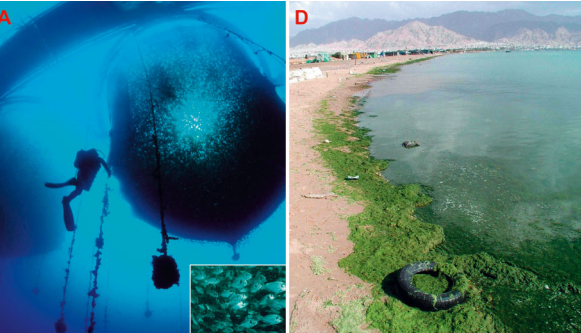
Aquaculture, or fish farming at sea and in land based ponds, has been practiced successfully by Israelis for many years. While most fish farming produces freshwater fish like carp, tilapia and trout in fresh water ponds, salt water aquaculture has also been “successfully” practiced in the Mediterranean Sea.
Daydreams can catalyze real change. Look to the far-reaching influence of designers who choose to work in the hypothetical, where unrestricted creativity is unfettered by cost, resources, and environmental impact. If only most of the Middle East’s fantastical architecture stayed imaginary.
If Jesus had a selfie stick would this reflect his image?
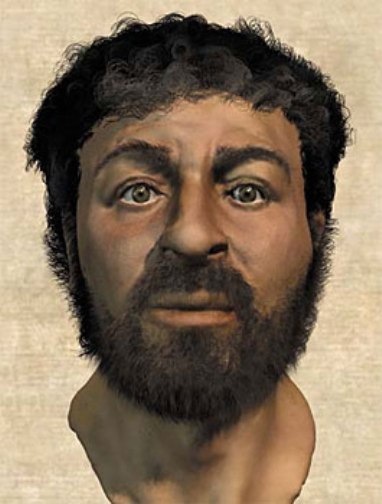
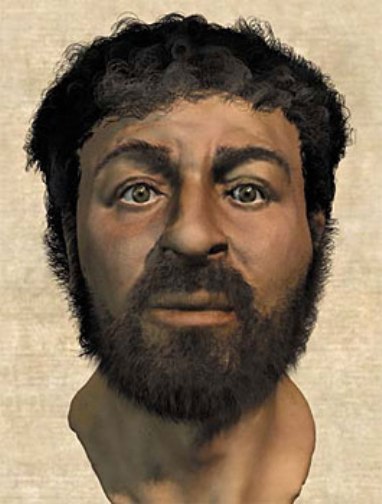
If Jesus had a Facebook account, this could be his profile picture. So says Richard Neave, a medical artist famed for reconstructing legendary faces from antiquity. (See the reconstructed face of Ramses II here). With a team of Israeli archeologists and British scientists, he recreated what they claim is the most accurate image of Jesus.
For Christ’s sake, is this for real? Short, black, kinky hair wrapped around thick features? A swarthy man looking awfully well fed?
Western culture paints a far different picture of a tall, slim man with flowing locks threaded with golden highlights. He has light-colored eyes set in a pale face that sprouts wispy facial hair. It’s a look rocked by 1970’s musicians, think Neil Young, George Harrison, even Frank Zappa.
And he’s scrawny like Russell Brand, not brawny like Russell Crowe.
That’s not only an industrial-age Western view – the mosaic portrait below is from Istanbul’s Hagia Sophia.
“The fact that he probably looked a great deal more like a darker-skinned Semite than westerners are used to seeing him pictured is a reminder of his universality,” Charles D. Hackett, director of Episcopal studies at the Candler School of Theology in Atlanta, told Popular Mechanics, “And [it is] a reminder of our tendency to sinfully appropriate him in the service of our cultural values.”
The New Testament doesn’t describe Christ’s appearance, no contemporary drawings of him have ever been found. But there are clues.
Recall the Gospel of Matthew: when Jesus was arrested in the garden of Gethsemane, Judas Iscariot had to point him out because the soldiers couldn’t tell him from his disciples. It’s logical that he would have looked like the Galilean Semites of his era, and not a white-boy rock and roller.
Neave and his research team started with Semite skulls from near Jerusalem, where Jesus lived and preached. Tapping into forensic anthropology – the same scientific toolkit used to solve crimes – Neave used special software to determine the thickness of soft tissue at key areas of the face, making it possible to re-create the muscles and skin overlying a representative Semite skull.
Results, verified against anthropological data, were used to digitally reconstruct the face. Next, researchers cast a skull, applying layers of clay matching computer-specified facial tissue, topped with simulated skin. The nose, lips and eyelids were modeled in accordance with underlying muscles.
Neave’s team turned to drawings found at archeological sites dated to the first century to determine Christ’s hair and coloration. Clues indicated that Jesus had dark eyes and hair, and that, in line with Jewish tradition, he was bearded.
Analyzing skeletal remains, archeologists established that Christ’s contemporaries averaged a smidge taller than 5 feet and weighed about 110 pounds. They theorize that after years of outdoor work, this most famous carpenter would have been muscular with a weather-beaten face.
Neave emphasizes that his re-creation is simply that of an adult man who lived in the same place and at the same time as Jesus. Alison Galloway, professor of anthropology at the University of California in Santa Cruz, told Popular Mechanics, “This is probably a lot closer to the truth than the work of many great masters.”
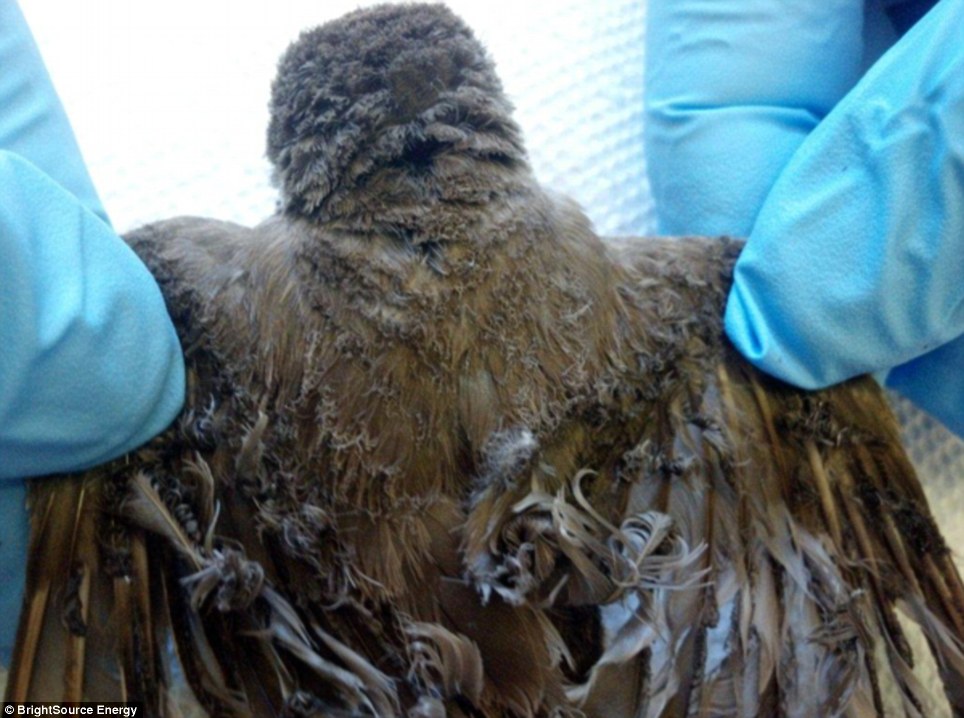
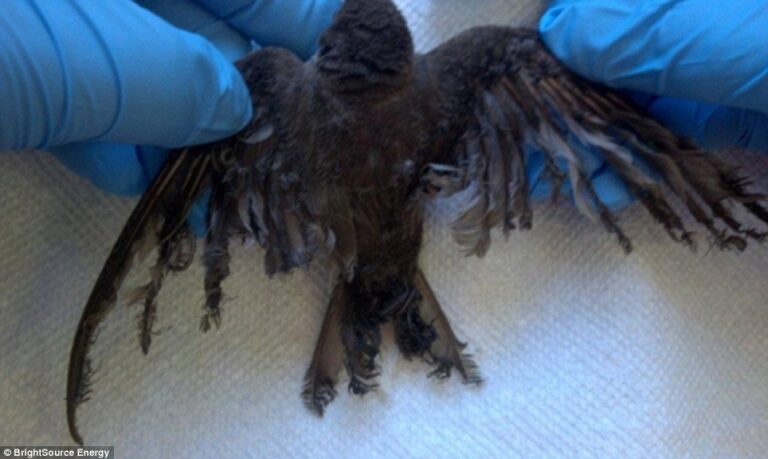
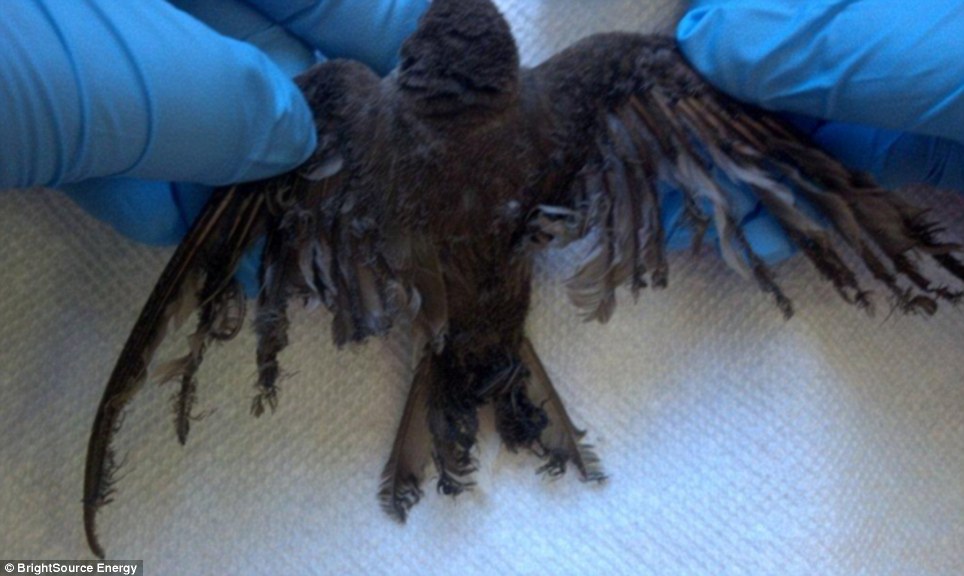
The switch was flipped this week as California’s Ivanpah solar thermal power plant went live. The 392 megawatt concentrating solar plant (CSP) is now delivering renewables to power the equivalent of 140,000 homes in California. After a long journey lasting decades of development, fighting regulations, manoeuvring around turtle conservationists, burning birds may be the latest problem.
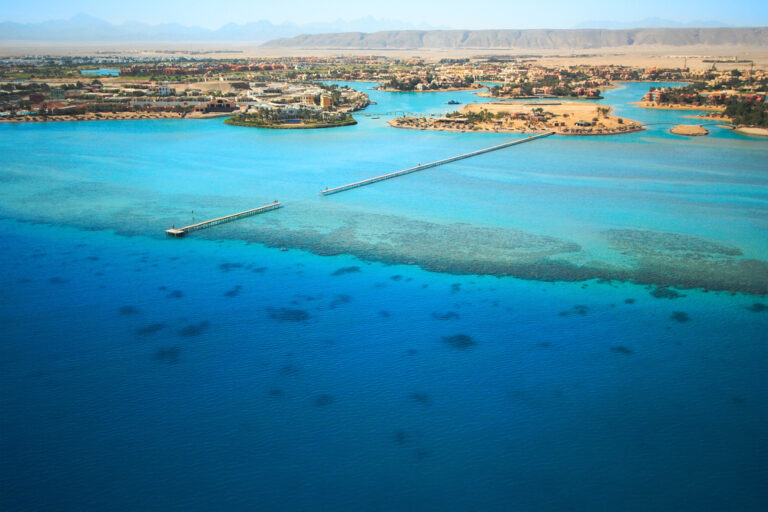
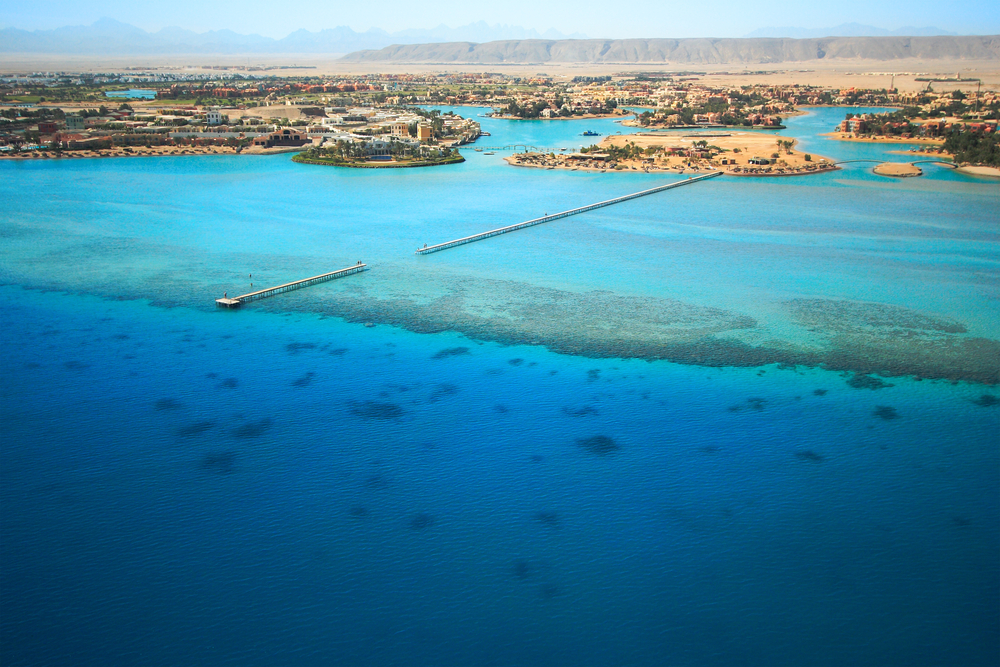
El Gouna, a resort city on Egypt’s Red Sea Riviera, is set to become the first carbon-neutral city in that nation, in Africa, and likely the entire Middle East North Africa (MENA) region. Masdar City, in continuing development in Abu Dhabi, initially targeted zero-carbon status, but has yet to hit that goal.
It has been a long, controversial and expensive road for BrightSource Energy, but their 392 megawatt concentrating solar plant is now finally delivering renewable energy to the California grid and it is the largest plant of its kind in the world.
Residents of the world’s tallest building in Dubai are being punished over unpaid maintenance fees – some of them unjustly. In order to pressure property owners who have defaulted on their annual payments, developers Emaar warned residents that air-conditioning and elevator service would be cut until they receive their money.
Considering all of the technological advances made in bicycles, cars and trains; the humble wheelchair hasn’t advanced very much since the first one was invented for King Philip II of Spain in 1595. An Israeli startup SoftWheel is about to change that with a bike and wheelchair wheel that is more comfortable and more efficient.
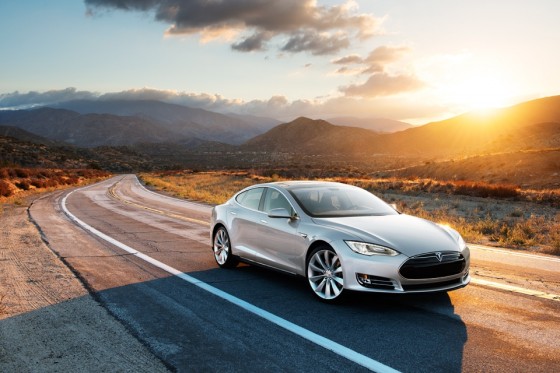
A decade from now, Tesla is expected to have a suite of driverless vehicles on the road – a feat that wouldn’t be possible without collision avoidance technology. Which means its reported partnership with Jerusalem-based Mobileye is pretty much a no brainer.
There’s a huge new movement in Israel. Not politics. Food. Specifically, veganism. Of a country totalling eight million people, an estimated 200,000 are now declared vegans (see Karin’s post about the growing movement here). That’s roughly 2.5 percent of the population.
Influential American animal-rights activist Gary Yourofsky’s recent visits to Israel, and his videos, tipped the balance towards veganism for many. Another factor is cruelty to animals in slaughterhouses and poultry farms, exposed on the consumer-awareness Kolbotek program in 2012 (link to the animal abuse video in Israel here).
Following widespread public protests and threatened boycotts, the slaughterhouse manager and workers involved were fired, and cameras installed at the location for ongoing inspection.But for many Israelis, the damage was done. Stimulated by Yourofsky’s fiery brand of activism, thousands of vegan-curious and hesitant Israelis have committed to a totally animal-product-free diet in the past two years.
Vegan groups like Vegan Friendly have levered the new vegan popularity into menu choices at restaurants. The Greg chain of cafes now proudly features a vegan-friendly menu, and the Domino’s pizza chain has a pizza with soy cheese. Here’s the Israeli Vegan Dining Guide from the website of Ori Shavit. Vegan Friendly also certifies vegan-friendly eateries with a sticker to place on their windows as a signal to passing hungry vegans. The demand for vegan products is even manifesting in supermarkets, where soy and grain-based milks are on the shelves and tofu cheese sits comfortably next to milk cheeses.
“I’m alive.” I’ve made that call, maybe you have too. That surreal statement instantly erases panic in whomever’s on the other end of the line. It reconstructs a momentarily unglued world.
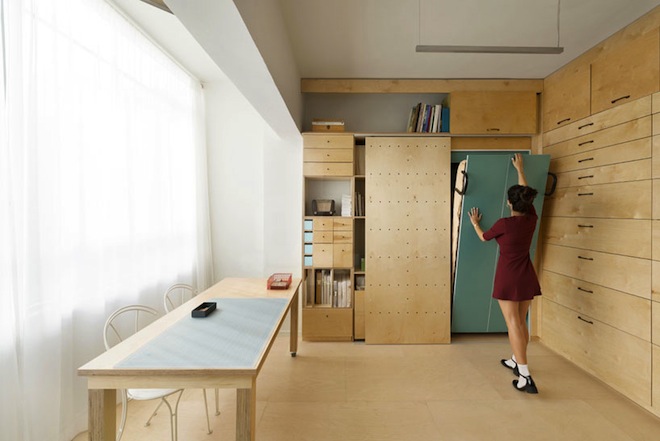
Square footage comes at a premium in Tel Aviv, as it does in New York and many other global cities, so designers Raanan Stern and Shany Tal are particularly well adept at making the most of what they have. But the team have turned space management into an art form with this this tiny artist studio in the heart of the city.
One of the most pressing problems of modern society is how to convert and store energy. Lithium ion batteries have been the main energy storage medium for mobile applications for the past 20 years. But there are significant drawbacks for using lithium ion batteries.
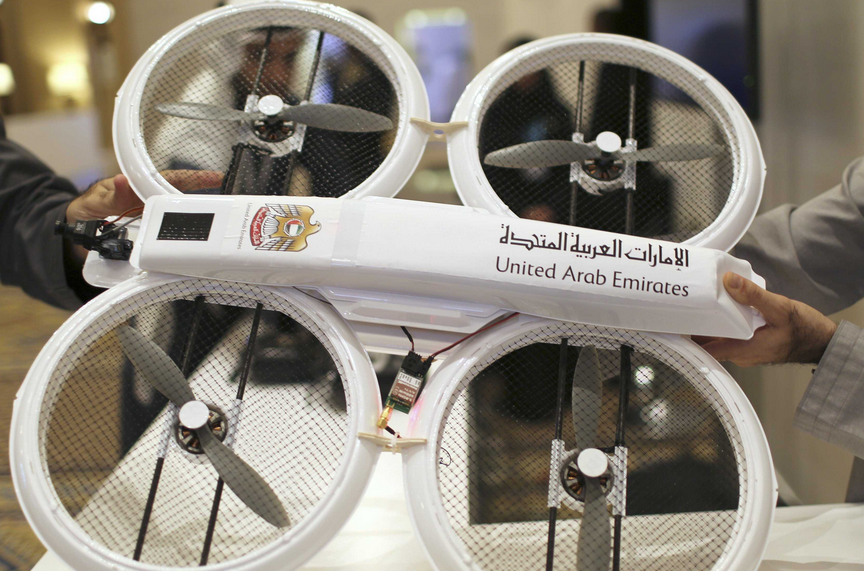
Some countries like Canada are trying to say goodbye to human-delivered postal mail forever. But a new initiative from the United Arab Emirates puts a little 21st Century technology into the old mail carrier.



 With a team of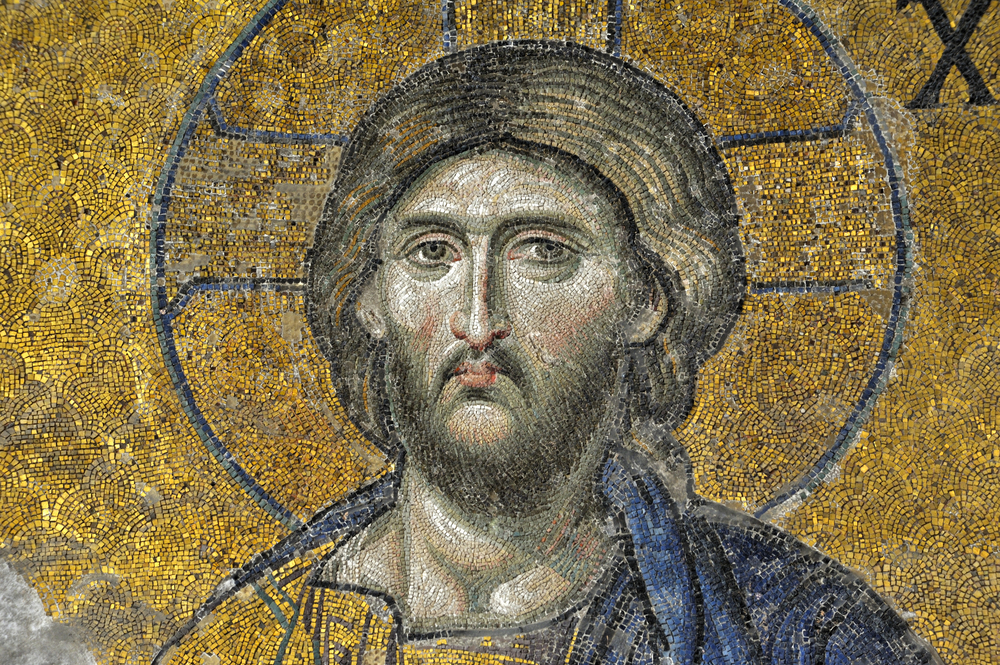




![Softwheel uses inner suspension arms to re-invent the wheel for bikes and chairs [video]](https://www.greenprophet.com/wp-content/uploads/softwheel-suspension-bike.png "Softwheel uses inner suspension arms to re-invent the wheel for bikes and chairs [video]")






![The mailman is a drone in this Middle East country [video]](https://www.greenprophet.com/wp-content/uploads/drone-mail-united-arab-emirates-660x4361.png "The mailman is a drone in this Middle East country [video]")