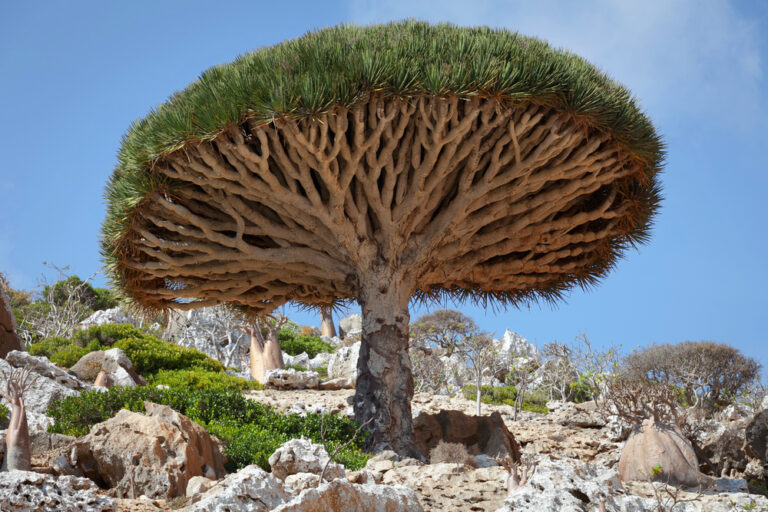

If I were in charge of promoting tourism in Yemen, I’d be using the native dragon tree, or Socotra tree, as my mascot. Native to the Socotra Island these unusual trees have evolved in isolation over millions of years.

The Latin name of the endangered Socotra dragon tree or dragon blood tree is Dracaena cinnabari and it is native to the Socotra archipelago of islands in Yemen in the Indian Ocean. It is called a dragon tree due to the red sap that the trees produce.
“If you prick us, will we not bleed?”
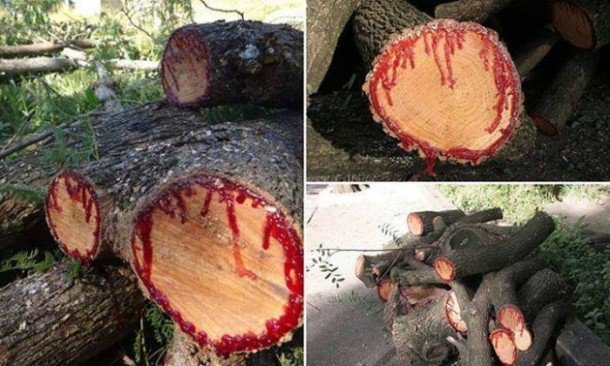
What is Dragon’s Blood Resin?
The sap is believed to have medicinal purposes: The Socotra tree, also called the Dragon’s Blood tree, holds significant medicinal value, and various parts of the tree have been used in traditional medicine for centuries.
One of the primary medicinal uses of the Socotra tree is from its resin, known as Dragon’s Blood. This resin has been prized for its therapeutic properties and is extracted by making incisions in the bark of the tree. Dragon’s Blood has been traditionally used as a healing agent for various skin conditions as it is believed to possess antiviral, antibacterial, and antifungal properties, making it effective in treating wounds, cuts, and skin infections.
The resin is often applied topically to promote wound healing, reduce inflammation, and prevent infection.
Dragon’s Blood from the Socotra tree has been employed for its anti-inflammatory properties to help alleviate joint pain and arthritis symptoms.
In addition to its external applications, the Socotra tree has been explored for its potential internal medicinal uses. Some studies suggest that compounds found in the tree may have antioxidant properties, offering protection against oxidative stress and contributing to overall health. Scientists say that more research is needed.
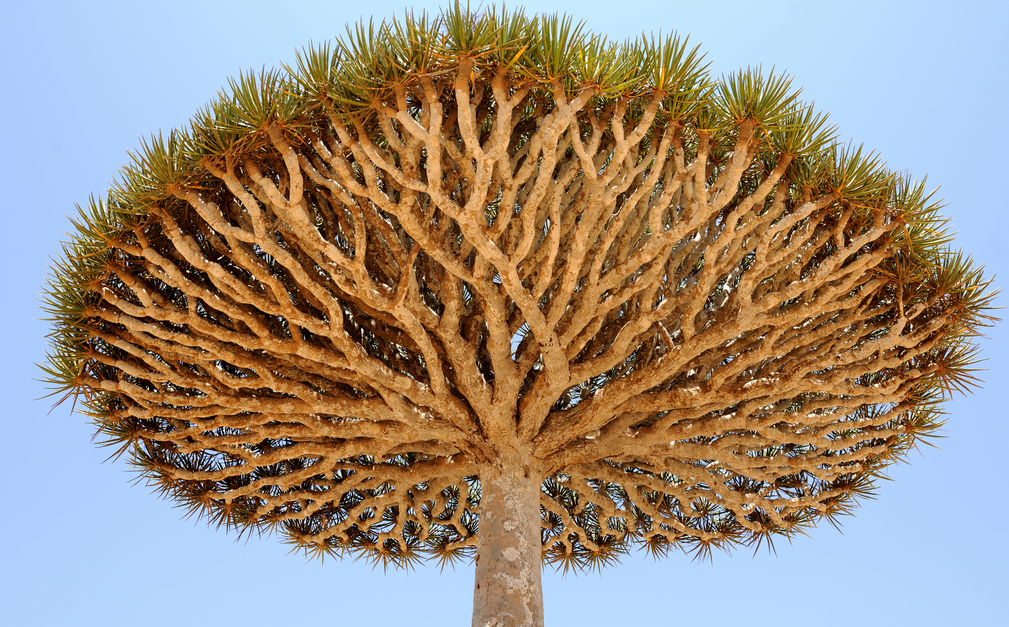
The largest island of Yemen is also called Socotra and it comprises about 95% of the landmass of the archipelago.
Due to its isolation one third of its plant life is found nowhere else in the world. It has been described as “the most alien-looking place on Earth”.
Travelling to Yemen is currently not advised due to the attacks by the houthis on American and allied forces. Do book it down for one of your future bucket list things to do. In good days it not easy getting to Socotra.

This is what the dragon tree looks like when it is completely dried out.
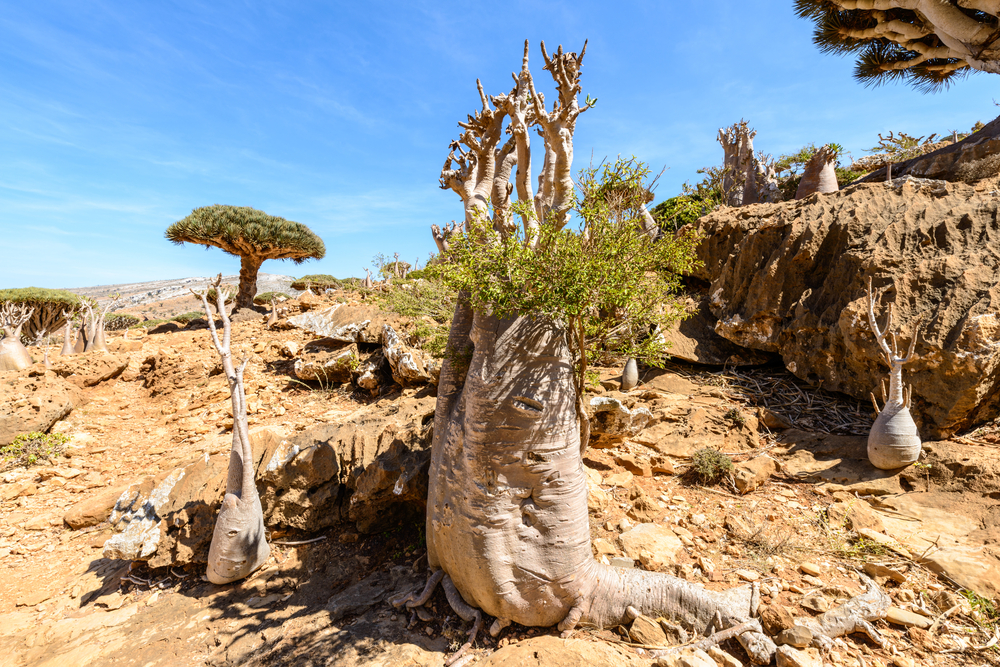
If these dragon trees from Yemen don’t make you want to get out and do something to protect our earth, we don’t know what will.