
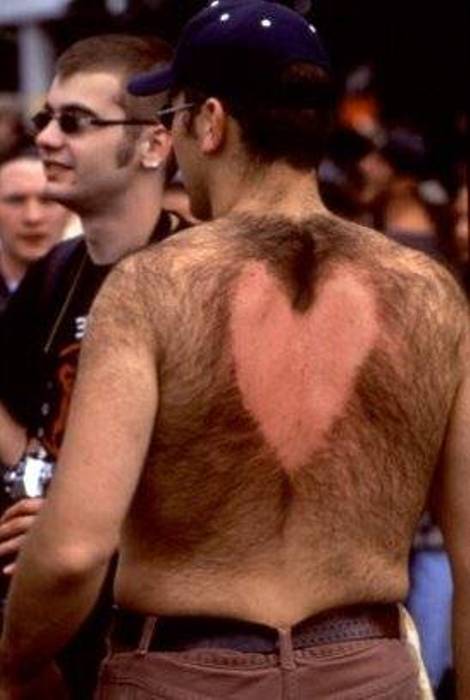
 So you forgot that it’s Valentine’s Day – again? Solve the problem in your morning shower (like this clever Romeo), or scan Green Prophet’s last-minute ideas from seven stellar and sustainable gift programs. Use your laptop or smart phone to make a fast online donation or buy in the name of your beloved. Save the planet and your relationship in one grand gesture.
Forgot Valentine’s? Green gifts save the day.
Insect farms to meet feed demand for animals, and us?
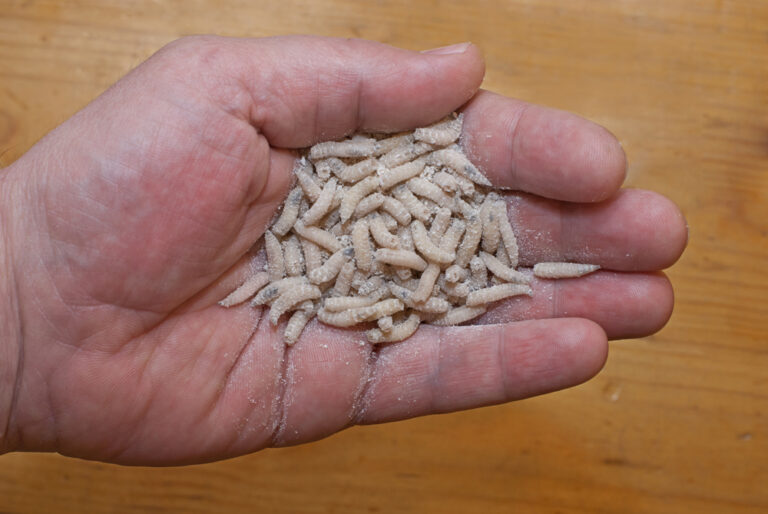
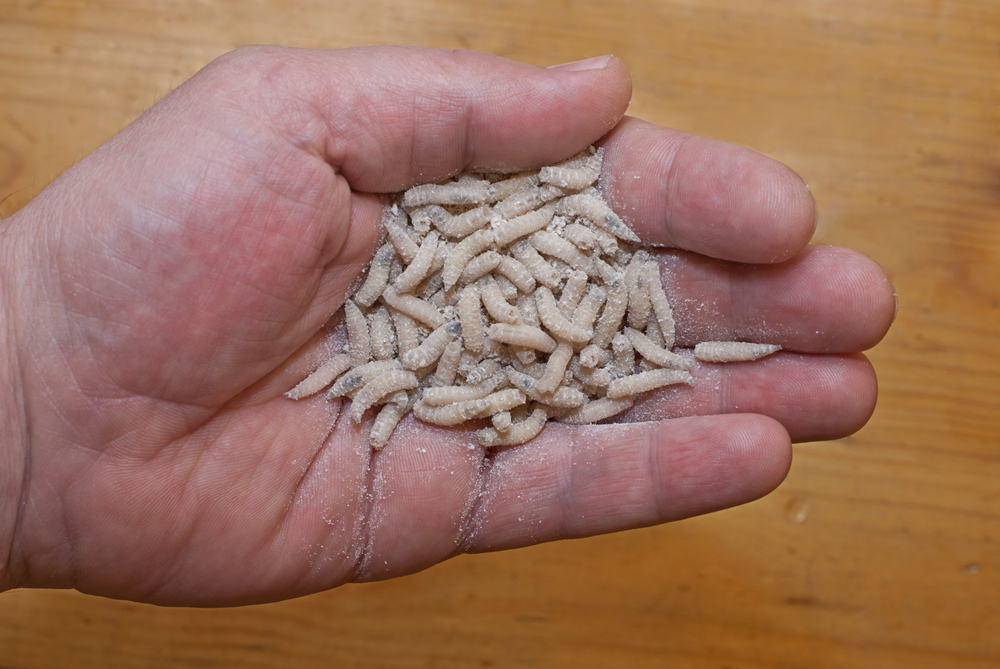 World population is projected to reach 9 billion by 2050. Rising incomes in emerging economies lead to greater demand for meat-rich diets. As the world grows hungrier for animal protein, insects could be the new way to feed livestock, and us. Using insects to feed the animals providing tomorrow’s meat – does anything about this bug you?
Cairo is growing green with living walls on the up!

Egypt isn’t exactly renowned for its vast green spaces and pioneering environmental policies. Its capital is the biggest city in the Middle East and it’s also one of the most densely populated in the world. Cairo is famous for being full of people, buildings and traffic – not plants or trees. But recently projects aiming to green the city have been sprouting up all over the urban metropolis.
Living walls are just one effort to turn Cairo into a better urban environment – both aesthetically and ecologically. We’ve covered them before in Lebanon and Kuwait, and now it’s Egypt’s turn.
The walls – also referred to as vertical gardens, green walls and vertical vegetation – use a system that can be attached to either free-standing structures or walls. They utilize space by turning walls into green spaces.The plants are cultivated both vertically and hydroponically, meaning the vegetation is planted in an environment without soil.
Green Studios is a landscape technology and design firm that has taken living wall projects across the MENA region. One of its recent projects was the HS residence in Cairo. Lacking outdoor space, planting vertically was the only viable option left to green the exterior of the private dwelling. The idea was to have the main characteristics of a garden – without having an actual garden. And it looks fantastic!
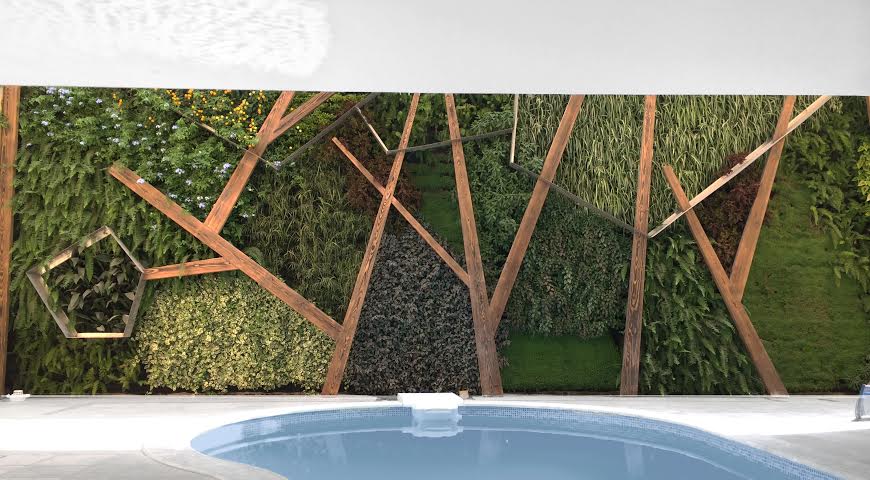
Wanting to keep it creative and unique, but still garden-like, abstract shapes of trees and shrubs were used on the 120 square meter wall. These were outlined by stainless steel frames held by wooden branches acting as trunks. These trunks diffuse indirect lighting through the entire canvas providing the necessary mood at night. “It portrays how design and hydroponic technology, combined together can create remarkable additions to a space,” Pamela Haydamous, a landscape designer at Green Studios said.
But although the walls are easy to create, issues can crop up. The challenges for living walls usually vary with every site. The main challenge is the fact that the plants are planted in a soilless medium and need a way to adapt to their surroundings.
The technology the company uses allows the plant roots to spread and grow in a healthy environment, and adapt to new system of nutrition, irrigation , drainage and light exposure. In this way even shrubs and trees can grow normally. The Green studios ‘skin, patented in Lebanon and US patent pending, is tested for extreme weather conditions and temperature variations, and also forms an isolation layer to protect the plant roots. It also has a high water retention capacity, is flexible, strong and UV resistant .
 And it’s not only private properties in Cairo greening their spaces. The Green Wall in Cairo’s Galleria mall is injecting some well-needed green into public space. The 12 meters high by 100 meters long wall features a vertical garden and waterfall.
The idea was to have a living wall interlocked with modules of grey and beige tiles. This wall is on the main indoor façade of the mall , containing a water feature and is the main area where most of the restaurants are located. It means you can enjoy your coffee in a garden-like environment without even having to venture outdoors!
And the benefits? Apart from looking good, they’re said to improve air quality by removing harmful toxins from the air, are sustainable and can even reduce stress!
According to Indjy Shawket, a lecturer from the Architecture Department at Cairo University, “Urban greening can help dealing with the environmental challenges arising from climate change, such as global warming. Living walls can be a part of this.”
So it seems that living walls are becoming a bit of a phenomenon across the Middle East. Let’s hope they continue to do so!
Palestinians cultivate the West Bank’s first organic mushrooms!
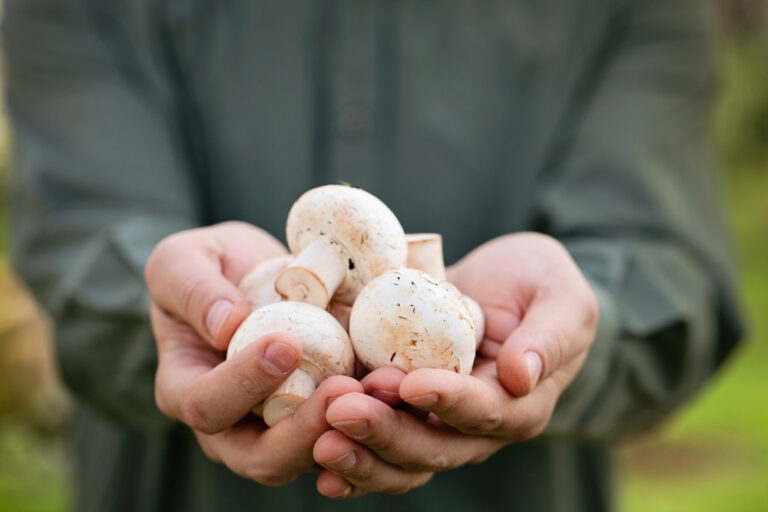
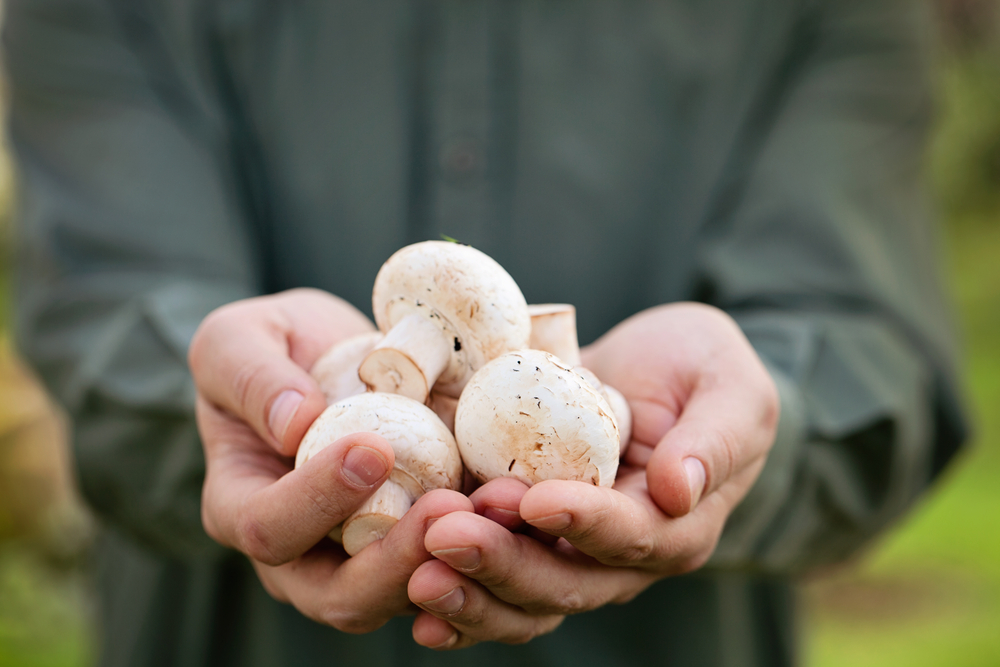 It’s been weeks since a Palestinian vegetable vendor from the West Bank town of Jericho last imported mushrooms, selling instead homegrown organic ‘shrooms grown for the first time in the West Bank. Amoro Mushroom Farm in Jericho – the first farm in the West Bank and Gaza Strip to commercially produce white mushrooms – is emerging as a popular alternative for grocers and restaurants. Mushrooms are a popular veggie in Palestinian recipes.
Australian bankers turn to make agtech sustainable in business and practice
There is a new precedent being set in Australia where the National Bank, the country’s biggest agribusiness lender, is changing policies to encourage more farmers to adopt sustainable practices. It’s not only private and public companies that face pressure to go green; banks now face greater pressures to include sustainability as part of their lending policies.
Farmers that participate in the natural capital model will likely score higher credit ratings in the future, one banker in the new report stated.
Climate change is creating huge uncertainties in the ag tech and farming business. Sustainable lending and recognition of those working for the planet will have a knock on effect to mitigating risks.
Just as we saw in the unsustainable real estate market several years ago in Dubai, the UAE and even in the US, unsustainable lending weakens an economy to the point of collapse. The economy is just a small part of our global planetary ecosystem. We are happy that banks now recognize this.
For those that want to see how the crisis happened follow the infographic below.

Infographic via: Tampa Foreclosure Defense Lawyers
5 ways to increase your self-branding as an eco-entrepeneur
Being an eco-entrepreneur allows you an opportunity to wear many hats. This can be both a blessing and a curse. Being in complete control of your work life means taking it by the reins and really going for it. One important element of being self-employed is to make sure you are capitalizing on every branding opportunity.
There are ways to accomplish self-branding without overwhelming your audience or making them feel like they’re always being sold on something, even if you are pushing a green agenda. Sales is different than branding and should be approached separately as well.
When you brand yourself, it’s a way to educate an audience about who you are and what you’re about without the direct pressure of purchasing anything. Self-branding is a long-term goal and solution that will pay off with both business and personal rewards, if it’s done well. When it comes to self-branding: Learn it. Live it. Love it.
Tip #1: Make social media your best friend. Social media is essentially free promotion. Yes, different versions and ad campaigns cost money, but building up a social media network organically can help in terms of your long-term reach and impact on your target audience. Schedule a social media posting calendar and utilize tools such as Buffer or Hootsuite to schedule content to be posted on your channels throughout the whole day, every day.
Tip #2: Create marketing materials. Arm yourself with the right tools to help potential clients or customer get in touch with you and learn more about your business. Have professional business cards with you at all times and take extras to any networking or conference events you attend. Think about designing simple brochures or marketing one-sheets (on recyclable paper!) to promote your services or products. You can also create your own sign for self-branding either to have when you’re asked to speak at an event, in your office space, or even on your car. These materials can be easily ordered through companies like eSigns.com which tailors to each person’s specifications and marketing needs.
Tip #3: Update your LinkedIn. This online business network has increased in popularity over the past few years and is an essential tool to increase your brand recognition. It not only connects you to people that you already know, but to anyone on LinkedIn that might be of value in your industry. Make sure your profile is updated with your most current work history and upload a professional headshot for your profile picture. Be active by commenting on peoples’ posts, sharing updates, and requesting to connect with others.
#4: Network. Attend as many relevant networking events you can and know your elevator pitch. Be ready for people to ask what you do and why you do it over and over again. Stand behind your service or product. When you deliver your message with confidence, people are more likely to buy into it than if you’re unsure of yourself. The more you network, the easier it becomes and you can create valuable business relationships for years to come.
#5: Send emails. Emails or e-newsletters are a good way to keep connected with people and let them know what current specials you’re offering. You can also share business tips, news, and events. Want to take it one step further? Invite a person in your field to lunch to discuss your different positions and how you might help each other. Or, host a workshop where you offer a preview of your services.
The life of an eco entrepreneur means being able to adapt to change and rise to the challenges set before you. Self-branding makes you step up and put your best foot forward.
Drones show how pigs get a raw deal in factory farms
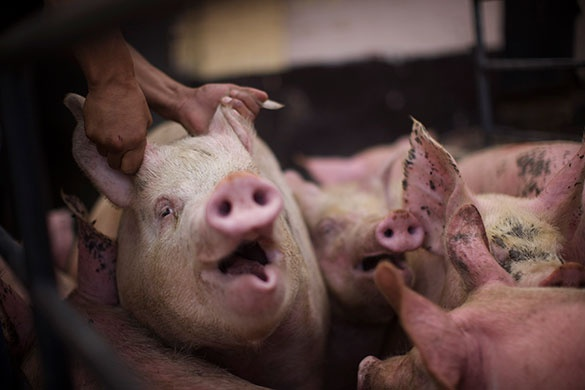
Animal abuse in the meat processing industry can be particularly disturbing. Whether this involves severe animal abuse in a kosher poultry slaughterhouse; or cruelty to larger hoofed animals being prodded and shocked with electric devices while being led to their fate, the issue of animal abuse in the commercial meat industry often becomes something not less than shocking, to say the least.
When it involves pigs, which have a similar anatomical structure to human beings (so similar that pig organs have sometimes been used in temporary organ transplants to humans), the issue of animal abuse can be more than just shocking.
One of the most graphic and shocking examples of severe pig abuse was captivated recently on film at a large pork factory farm in the American state of North Carolina as graphically shown on the video below.
[youtube]https://www.youtube.com/watch?v=ayGJ1YSfDXs[/youtube]
The video, taken by the aid of a small pilotless drone device, shows first what appears to be a large square pond of muddy water. This “pond” in reality is a large sewage lagoon containing discharges of pig feces and urine. The excrement is pumped into the lagoon from a large number of long enclosed sheds where thousands of swine are kept in steel enclosures so small the animal cannot even turn around.
When the lagoon becomes too full of its foul smelling mixture, the contents are disposed of in the surrounding countryside by high pressure hoses that turn the feces-urine mixture into a fine spray. The spray results in all kinds of health problems to people living nearby. Some of these health problems include causing children and adults to suffer from severe asthma and other forms of respiratory diseases. It is said that there are as many as 2,000 of these “farms” located in the U.S. state of North Carolina alone.
Despite some efforts made to ease a pig’s suffering during the slaughtering process, there is no really humane method.
Even “stunning” a pig by using an electric shock device or using a hammer to hit it on the head prior to being slaughtered causes great pain and suffering to the animal. This YouTube clip shows men “humanely” slaughtering a pig. From the looks on their faces, they seem to be enjoying what they are doing.
[youtube]https://www.youtube.com/watch?v=A7uJvjbN968[/youtube]
Although the Middle East does not have such a serious problem concerning pork production, due mainly to Jewish and Muslim dietary laws, there are enough examples there of animal abuse, including severe abuse of swine at a pig farm in Israel, a country where eating pork is forbidden by the observant Jewish and Muslim populations.
Pigs are also severely abused and were even slaughtered by the thousands in Egypt during the Swine Flu epidemic a few years back. Swine are kept in large numbers in Egypt by “Zabaleen”, members of Egypt’s minority Christian population, who not only consume them as food, but use them to help keep the country’s high amounts of organic garbage under control.
One might expect examples of severe animal abuse to not be occurring in sophisticated Western countries like the USA, but it surely is happening. Most people who purchase the sanitarily packaged pork products being produced at such factory farms are most likely not even be aware of what occurs in these places. Or perhaps people care less about what happens there.
Read more on animal abuse of swine and other animals as a result of the meat processing industry:
Pig Abuse Rampant in Kosher Israel
See Severe Animal Abuse at Israel’s Largest Kosher Poultry Slaughterhouse – Video
Israel’s Cruel Meat Industry Exposed by Watchdog TV Show
Swine Flu harms people and the environment in Egypt
Photo: selecting a pig for slaughtering; The Guardian
Storm mappers chase after patterns for climate change
The Doomsday Clock, which measures the likelihood of global catastrophe, last month ticked a minute closer to “midnight” — the apocalypse. The symbolic clock was set to 11:57 by a board of atomic scientists featuring 17 Nobel Laureates, who warned that the planet, beset by climate change and nuclear proliferation, faced extraordinary and undeniable threats to its continued existence. Let’s not forget that 2014 was the hottest year on planetary record.
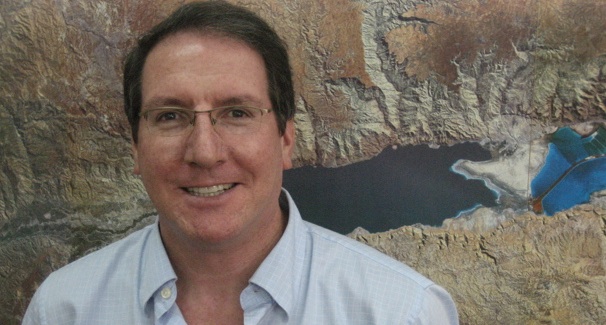
New research by Prof. Colin Price from Tel Aviv University published in Environmental Research Letters will likely be crucial to measuring the impact of climate change on thunderstorms — one of the weather occurrences most problematic for human life on the planet. The varying frequency and intensity of thunderstorms have direct repercussions for the public, agriculture, and industry.
“To date, satellites have only provided snapshots of thunderstorm incidence,” said Prof. Price, whose new map of thunderstorms around the world is the first of its kind. “We want to use our algorithm to determine how climate change will affect the frequency and intensity of thunderstorms. According to climate change predictions, every one percent rise in global temperature will lead to a 10 percent increase in thunderstorm activity. This means that we could see 25 percent more lightning by the end of the century.”
Keeping track of lightning
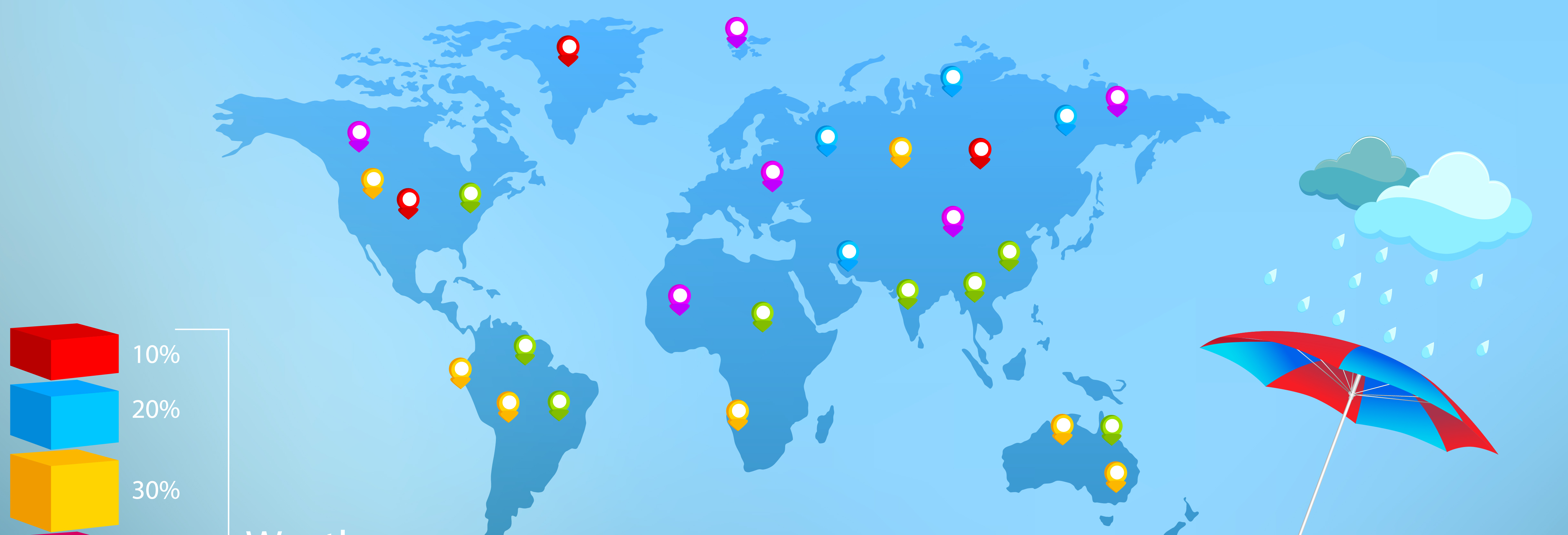
To draft a global thunderstorm map, Prof. Price and TAU graduate student Keren Mezuman used a vast global lightning network of 70 weather stations capable of detecting radio waves produced by lightning — the main feature of a thunderstorm — from thousands of miles away. The World Wide Lightning Location Network (http://wwlln.net) is run by atmospheric scientists at universities and research institutes around the world. The TAU team harnessed this ground-based system to cluster individual lightning flashes into “thunderstorm cells.”
Every hour the exact GPS time of every detected lightning pulse was registered. Prof. Price and his colleagues then calculated the difference in arrival times of signals, using data from four to five different stations to locate individual lightning strokes anywhere on the globe. Finally, the researchers grouped the detected flashes into clusters of thunderstorm cells.
The WWLLN station in Israel has the ability to detect lightning as far away as central Africa.
Climate change and thunderstorms
“When we clustered the lighting strikes into storm cells, we found that there were around 1,000 thunderstorms active at any time somewhere on the globe,” said Prof. Price.
The researchers, pooling seven years of data analysis, found that every day lightning activity on earth peaked at 1900 GMT, with low activity at 0300 GMT every day. While previous studies had estimated that 90 percent of lightning flashes occurred over land areas, the TAU team found that only 50 percent of the thunderstorms cells existed over land areas, implying that land storms have much more lightning than ocean storms.
“How lightning will be distributed in storms, and how the number and intensity of storms will change in the future, are questions we are working on answering,” Prof. Price said.
Weather map photo from Shutterstock
Wadi Drone for conservation flies through Emirati national park and scoops top prize
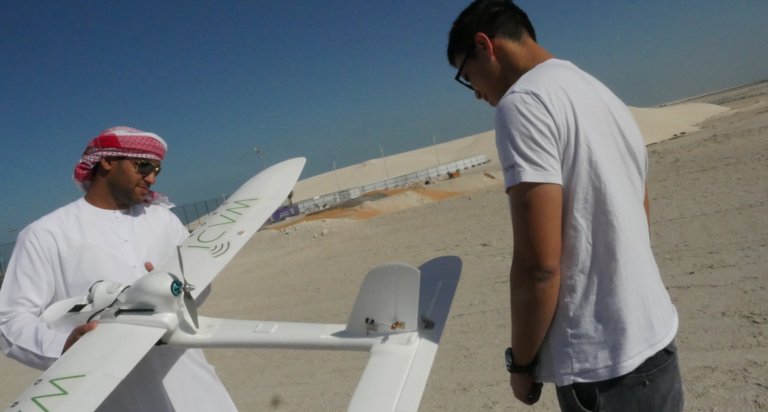
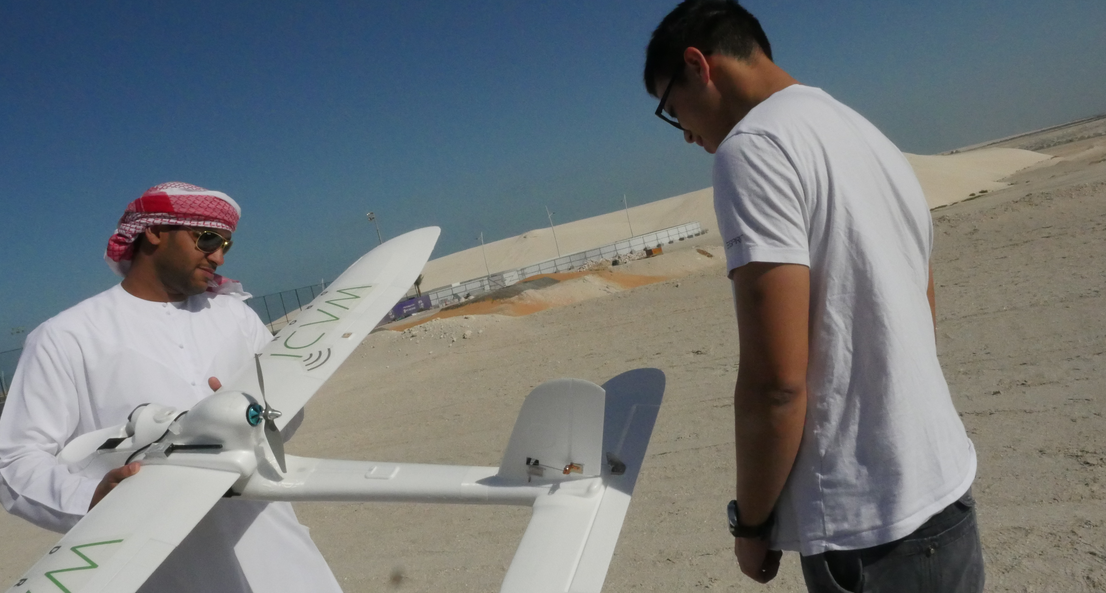
It flies over mountains and through valleys, taking in the vast landscapes and diverse wildlife beneath it. Only this isn’t a bird, it’s a drone.
They’ve had some bad press and the public has been slow to embrace them but after the final of what’s been dubbed “The World Cup of Drones,” things might be about to change. The aim of the year-long Drones for Good contest was to find positive technological solutions to fight modern day issues.
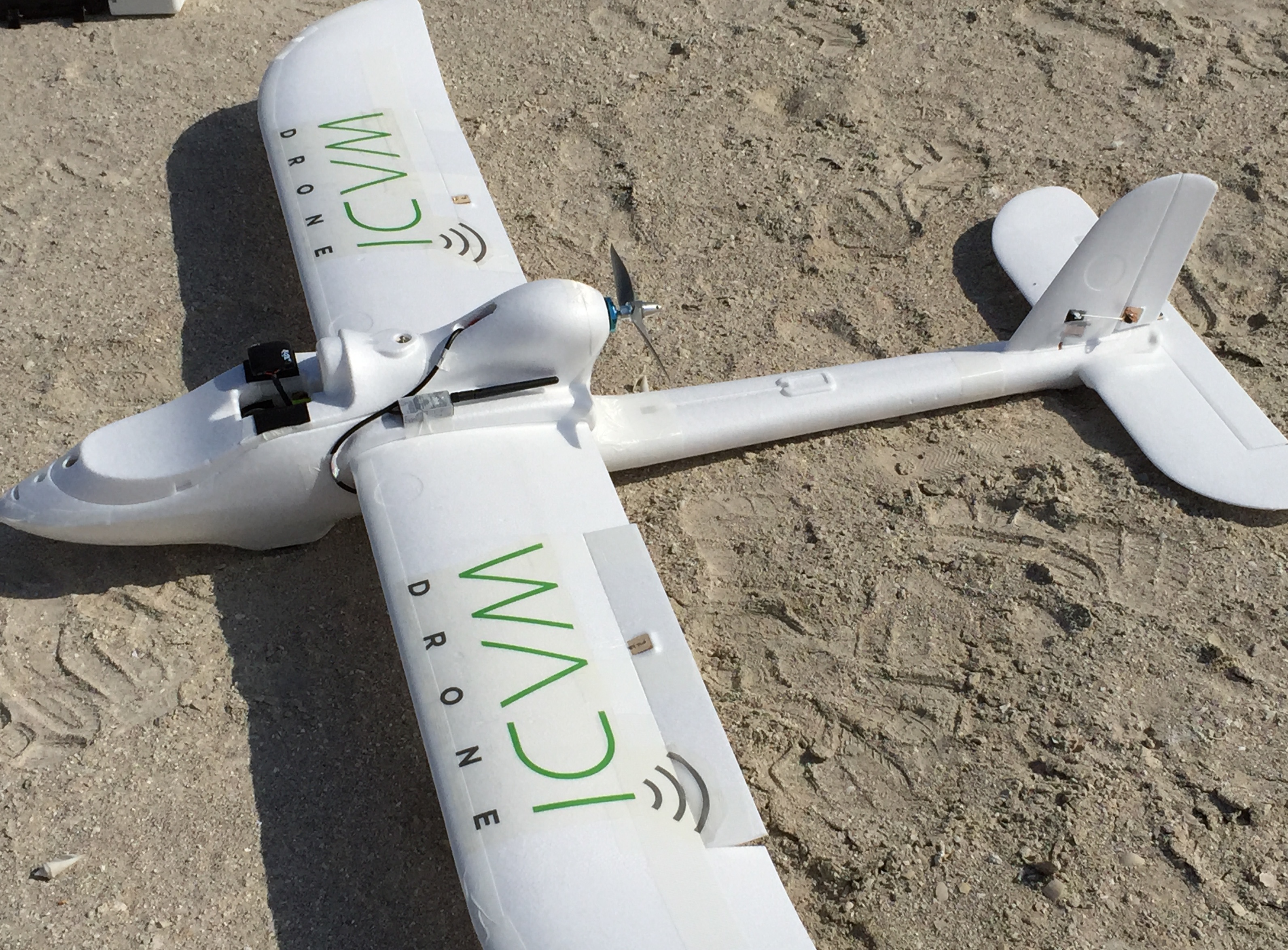
A group of UAE students won the national category for coming up with a practical idea for a drone to improve government services in the Emirates. Their entry, the Wadi Drone, was designed to help local authorities track the country’s diverse flora and fauna in remote desert and mountain areas, where sending a person to do it could harm the natural environment or even be a risk to the person’s safety. Wadi means ‘valley’ in Arabic.
Already – the Wadi Drone is making the work of conservationists easier. It’s being used in the UAE’s Fujairah’s Wadi Wurayah National Park and there are plans to expand it to other areas throughout the country.
Catching wild animals on film
Using commercial drone technology and proprietary software, it flies for up 40 km at a time over the UAE’s mountainous park, wirelessly downloading photographs from 120 camera traps on the ground that capture images of wild animals at the park as they pass in front of a motion sensor. It’s already snapped images of Blandford fox, Gordon’s wildcat, hedgehogs, Caracal lynx and goats.
Related: drones that catch the flamboyances of flamingos
Previously the data was collected twice a year, but with the introduction of the Wadi drone, data can be collected once a month. The drone will also make monitoring easier in summer months, as previously a helicopter had to be deployed when it was too hot to trek.
The Wadi Drone winning team is comprised of four NYU Abu Dhabi students: Martin Slosarik, Ting-Che Lin, Vasily Rudchenko, Kai-erik Jensen, advised by visiting instructor and research associate, Matt Karau. In developing the drone, the team joined forces with the Emirates Wildlife Society and the Wadi Wurayah National Park.
Related: The mailman is a drone in this Arab country
Martin Slosarik, studying electrical engineering at NYUAD, told Green Prophet: “We developed the idea for this project in careful consideration of where drones can and should exist to do good for the benefit of society. It is a great honor to win the national UAE Drones for Good Award,” he said.
The team plan to use the AED 1million ($273,000) prize to fully implement the Wadi Drone project in Wadi Wurayah National Park and they hope to expand it regionally and internationally.
Martin added that the greatest outcome of the competition was not the handful of winning ideas but “the fact that dozens of individuals committed months to develop innovative solutions that envision a world in which drones and humans harmoniously co-exist.”
Yezidis get winter aid from Israelis
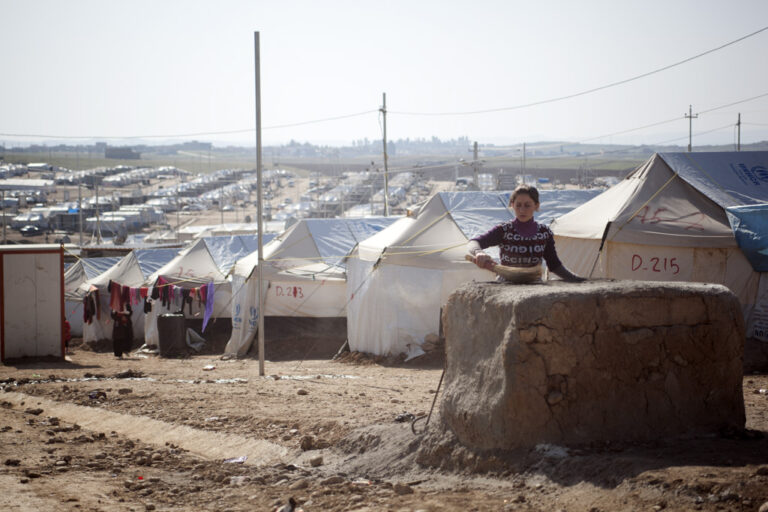
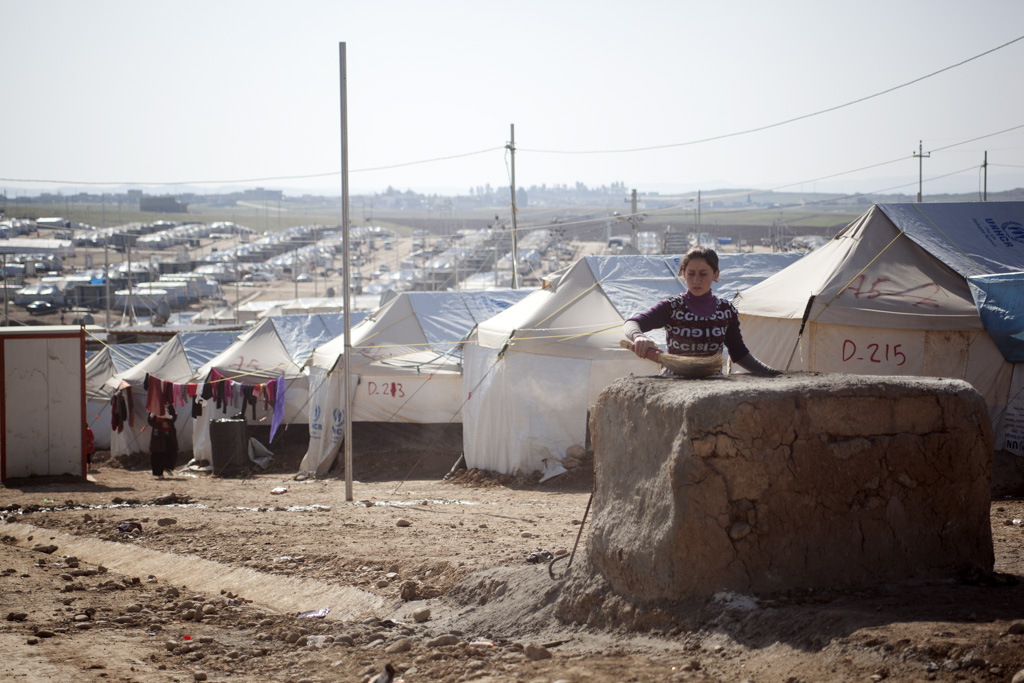
Green Prophet’s own Laurie Balbo has spearheaded relief efforts to warm Syrian refugees in Northern Jordan. She and her partner Virginia Nitz (wife of Green Prophet’s Brian) have single-handedly collected tens of thousands of hand-made hats and winter items to warm the bones and souls of displaced Syrians. In times of trouble, Israelis too are reaching out to the Yazidis – Christians from Iraq who have been displaced and slaughtered for their religious beliefs. In the above photo, the Israeli organization ISRAID shows its on the ground support to provide relief efforts this winter to warm and support the Yezidi people. The organization has sent mattresses, blankets and warm, non-food items to help keep the Yazidis safe.
Loans for rooftop solar are heating up in Egypt
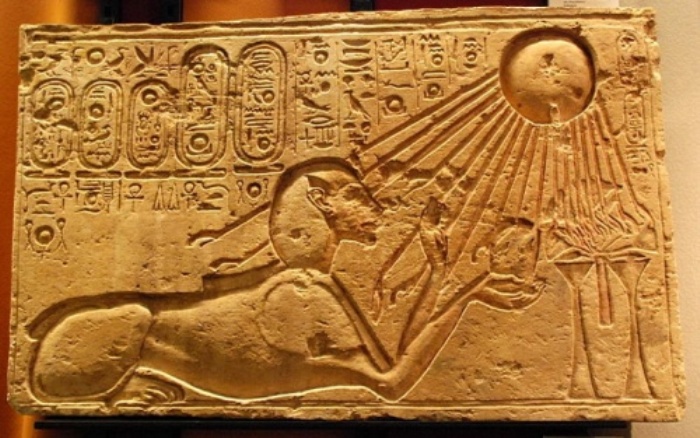
Two Egyptian banks are moving into green lending with an initiative to finance rooftop solar power systems for residential consumers. National Bank of Egypt and Banque Misr are offering loans within specific areas of Cairo, with plans to expand into Egypt’s other governorates. How will that work in a mostly Muslim country, where interest payments are forbidden by Islamic law?
Holy sh*t! Mummies float in Egyptian sewage!
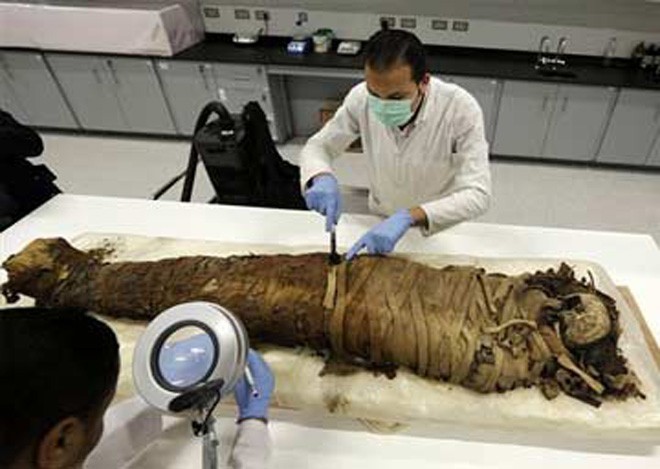
Egypt’s Ministry of Antiquities reported a new discovery of several Greco-Roman era mummies near Minya in northeastern Egypt, 250 kilometers south of Cairo. The new discoveries occurred when police found two wooden sarcophagi floating along a village waterway in a pool of raw sewage.
Polluted water is a persistent problem for the country’s archaeological treasures. But it’s a more serious challenge for millions of Egyptians, alive and long dead.
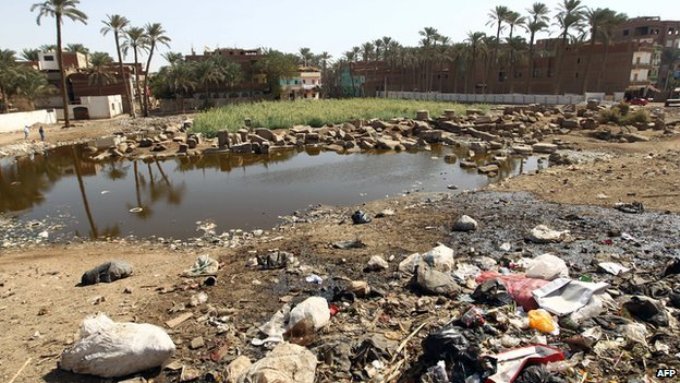 Youssef Khalifa, the head of the Antiquities Sector, told CairoScene magazine that it’s likely the mummies were unearthed by villagers engaged in illegal excavations, then discarded in the cesspool (image above) to cover their tracks. Egypt imposes tight restrictions on excavations; in October 2014 authorities arrested seven people after an illegal dig in Giza uncovered the remains of an ancient temple. Neither risk of arrest nor filthy muck deterred these thieves.
Thick layers of linen swaddled the mummies, whose conditions were radically deteriorated by the surrounding waste. Only a few human remains could be identified, according to the ministry’s report.
Two sarcophagi colorfully painted with the images of women’s faces date back to around 332 BC to 395 AD, but the Ministry of Antiquities says little is left of the bodies. “Although the coffins were decorated with colorful designs, they were missing any ancient Egyptian inscriptions or hieroglyphics,” the ministry said in a statement. A third, empty sarcophagus was also found.
Restoration has been only mildly successful, according to Egypt’s Daily News. Eventually the mummies and sarcophagi will be displayed at Minya’s Hermopolis Museum.
Mummies are commonly found across Egypt. We recently reported on archaeologists from Utah’s Brigham Young University now digging in a cemetery estimated to hold over a million ancient Egyptians. It’s disturbing that villagers would drop these latest finds into a cesspool, despite understanding their historical significance. But urban Egypt’s plastic pollution and open sewage pools are perhaps more unsettling.
How cannabis will feed the world

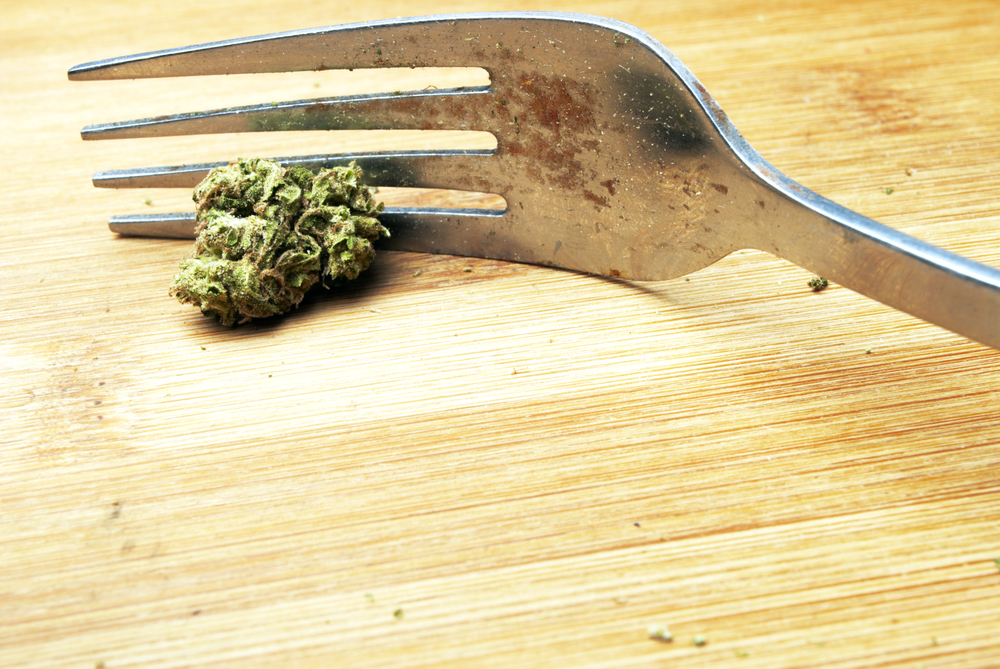 I didn’t mean to go to pot. But after of researching urban food movements in a bid to save the world from hunger, cannabis clearly emerged as the answer. Cannabis and what’s happening now in Canada, the United States, and Israel will be the answer to global food shortages.
Mark my words: Marijuana will feed Africa, it will save China, and it will give Americans everywhere a better quality of life. You are scratching your head, right?
Let me connect the dots.
We’ll start with a few points you can’t ignore: The world is growing beyond capacity. More people live in cities than the country. Fewer people want to be traditional farmers, and global warming and our dependence on fossil fuel is killing our planet. Add to the muck land shortages, over-fertilization, pesticides… conventional agriculture as it is, I’ve summed up, cannot be the answer.
Meanwhile activists are crying out against Monsanto and the large monopolies that put much in the hands of very few. A day doesn’t go by when you don’t read a new study about the dangers of modern pesticides. Or greenhouse gas emissions putting our planet in peril. Oh, and just last week –– why biofuels have been a big disaster in the end. Now there is not enough land to grow corn. Oops.
But if you really think about it, you know that there is something terribly wrong with growing potatoes in Canada, chopping them up in China, and then selling them as chips in America.
We need to look somewhere else to make sense of our food production madness. We need to look to the people. Don’t blame the system. Blame yourself.
Americans did it before and they will likely do it again given recent urban food trends in cities like New York.
During the Second World War, Eleanor Roosevelt compelled Americans to plant Victory Gardens, and in so doing they produced 40 percent of their fresh foods and vegetables! Isn’t that about the same number economists say that we will need from urban farmers of the future to sustain our planet? These were urban gardens in backyards, schools, patios and between high rise buildings.
While the war is long over there is a new breed of Americans, Canadians and Europeans who are planting food anywhere they can grow it: on rooftops, on patios, in skyscrapers, in basements and even inside restaurants. This food is hyper local, hyper nutritious because it’s fresh and without much pesticides, and growing it gives people a sense of meaning, connection to nature, and, in a way, a better quality of life.
So why don’t more people do it now?
Since most of us live in cities access to land isn’t simple. And this is where I circle back to pot: 15 years ago cannabis growers in the United States and Canada (when it was completely illegal) discovered a better way to grow pot. Well mainly at first it was to avoid being busted by the cops. This novel hydroponic method which used 90% less water and no heavy bags of soil, made it easier to hide underground operations in basements and closets, or in Gran’s shed, and over time a whole industry emerged from it: it’s called hydroponics and it means water farming, without soil.
If this is a world that you’re oblivious to Google “Hydro Shop + your hometown” to understand just how many pot growers are cultivating in your neighborhood. The point here is not to pay lip service to the pot industry, and I am certainly not supporting illegal activities, but to extract from my research that pot growers grow their crops like mad scientists.
Those who do it on water have developed their own tricks of the trade: seed hybrids with crazy names like Dutch Crunch, autoflower seeds for quicker flowering times, nutrient ratios and formulas that will make your head spin, and light cycles that will impress. They know how to detect disease and pests with the slight change of leaf color. They’ve hacked together technologies to automate and optimize their plants; and they work alone but somehow as a collective, in an unstructured, but supportive way to help each other grow the best plants possible.
Take out the word cannabis and change it to tomatoes, cucumbers, or strawberries and you’ve got a new kind of food production system perfect for cities.
Understanding the scope of this wisdom that cannabis growers are developing is part of the mission in my startup flux. I am developing a tool that takes the pain and hardships out of water farming, making it accessible, fun and communal.
Marijuana growers today, whether they are running small grow ops in the basement, or are running $10 million grow ops in Canada are building the wisdom that will feed our planet more sustainably from the ground, or rather, from the “water” up. Some are eager to share this wisdom.
I’ve spent more than a decade as a media entrepreneur studying and covering the urban food movement globally. I know that going to pot to feed the world sounds nuts. It’s not the typical story that traditional investors want to hear. But the winds are changing over here in Israel where I am growing my new startup.
Government funds now seem to be okay supporting technologies in the cannabis field, and people managing these funds are listening to me with very open minds. As we speak traditional agriculture companies from Israel all seem to be digging into the US and Canadian cannabis markets. This is what I am hearing at conferences. They too want a stake in what could be the next gold rush.
From my research cannabis is either a $150 billion legal and grey market combined, or a $2.6 billion legal market this year in the US depending on whether you are looking at police records or cannabis sales from legalized states.
With legislation changing quickly in the US, the numbers are bound to rise. But I am still sticking to my plan to feed the world. In the meantime I’ll ride the tailwind of cannabis to develop the best tools for the job. Want to join me?
Saudi prince loves poaching

Last year, Green Prophet broadcast the alarming news of a Saudi prince who poached thousands of protected birds during a 21-day hunting safari in Pakistan.
Nearly a year on, the Sindh High Court has revoked a federal notification that allowed issuance of permits to Arab dignitaries for hunting endangered species – (including the houbara bustard, pictured above) – in the country. It’s a significant victory for the birds and the villagers who land they nest on.
Every year, Arab monarchs, princes and sheikhs arrange for special licenses that allow them to hunt the endangered houbara bustard in Pakistan for ten days with a 100-birds-per-bag limit. Last year, 16 licences were granted, but the hunting party of Prince Fahd bin Sultan bin Abdul Aziz Al Saud reportedly slaughtered 2,100 bird, more than the total number of licensed kills for the year.
The houbara bustard, locally known as Tiloor, was declared an endangered species in 1912, and Pakistan imposed a permanent ban on hunting the bird in 1972. The Sindh High Court had struck down the temporary licences for Arab royals in 1992, but the practice continued unabated.
The new ruling responded to a petition filed by villagers charging that the foreign affairs ministry had allocated different districts of Sindh, Punjab and Balochistan to dignitaries of the UAE, Bahrain and Qatar for hunting protected animals. They alleged that a private department of Sheikh Nahyan bin Zayed Al Nahyan that organizes hunting on private property, working with local officials, illegally took over thousands of acres of land for the purposes of hunting protected animals such as the bustard, ibex, markhor, crocodile, and blanfordi sheep.
Their counsel also alleged that illegal acts had been carried out in national parks, wildlife sanctuaries and protected areas. The petition asserted that local officials were heavily compensated by Arab dignitaries.
The federal attorney argued that the government could declare any area as a game reserve with hunting allowed via special permits specifying the maximum number of animals that could be killed or captured. The federal government, he added, could issue special permits to heads of Gulf countries and members of royal families. The hunters use falcons to kill the birds; special hunting permits also allow temporary import and re-export of the falcons.
This ruling – if enforced – is good news for wildlife conservation, but it was incited by self-preservation of a largely impoverished people. The villagers claimed they were prohibited from farming their lands and grazing their cattle from November 2014 to February 2015 to allow the Gulf royals to set up hunting posts and patrol the area in their vehicles.
The International Union for Conservation of Nature and Natural Resources estimates the houbara bustards’ global population to be at 100,000, declining 20% annually due to hunting and habitat degradation. They are globally protected under the Convention on International Trade in Endangered Species.
Image of slaughtered birds from Pakistan Defense
Tesla teases with insanity: get shocked by this electric car!

 Tesla CEO and Founder Elon Musk is shocking his fan base with a special feature more likely to appeal to drag racers and Middle East “drifting” aficionados than the usual suspects attracted to his stylish and environmentally excellent electric cars. Press the “Insane Button” and his all-wheel-drive Model S P85D rockets from 0-60 miles per hour (mph) in just over 3 seconds. It’s the world’s fastest electric car, now with roller-coaster thrills built-in.