What are the worst things we do to the environment without realizing we are causing harm?
Epic winter storms have gold linings
A diving club struck gold on a recent expedition off the Mediterranean city of Caesarea, finding a priceless trove of coins dating back more than 1,000 years. The stash was discovered on the seabed that was once home to ancient Roman-era port city Caesarea, considered one of the flagship archaeological sites of Israel.
Harsh winter storms have pounded the coastline, churning up the ocean floor and sweeping back layers of sediment to expose the ancient treasure.
The extraordinary find happened by chance. Divers were exploring the ancient harbor when they noticed the gold, thinking at first it was a toy or modern game piece. Once they realized it was a metal coin, they collected several more and quickly surfaced to tell their dive club director. Experts from the Antiquities Authority (IAA) came to the site, where they uncovered almost 2,000 gold coins in different denominations issued by the Fatimid Caliphate, which ruled much of the Middle East and North Africa from 909 to 1171.
The IAA issued a statement calling the nearly 20lb haul “the largest treasure of gold coins discovered in Israel”. IAA spokeswoman Yoli Schwartz told AFP the find was “so valuable that its priceless,” adding the coins were now the property of the state, and that there was no finder’s fee.
Kobi Sharvit, director of the IAA marine archaeology unit, said further excavations would be conducted to shed more light on the origin of the treasure. “There is probably a shipwreck there of an official treasury boat which was on its way to the central government in Egypt with taxes that had been collected,” said Sharvit, “Perhaps the treasure of coins was meant to pay the salaries of the Fatimid military garrison which was stationed in Caesarea and protected the city.” Another theory is that the treasure belonged to a large merchant ship that traded between Mediterranean ports.
IAA said the coins did not need any special handling, as that they had been “naturally cleaned” by the sea.
Global warming makes for fierce winter storms that will ultimately destroy vulnerable coastal developments. Watching incremental changes to local weather is the meteorological equivalent of movie previews. While Mother Nature tosses us some teasers, we can presage the blockbuster feature film.
Work to live a more sustainable lifestyle. Act to realize change on a larger scale. But ’til then enjoy the silver linings. In this case, archaeological “digs” caused by intense wave action that unearth a literal pot of gold.
Will the next Bill Gates be from Ras Al Khaimah?
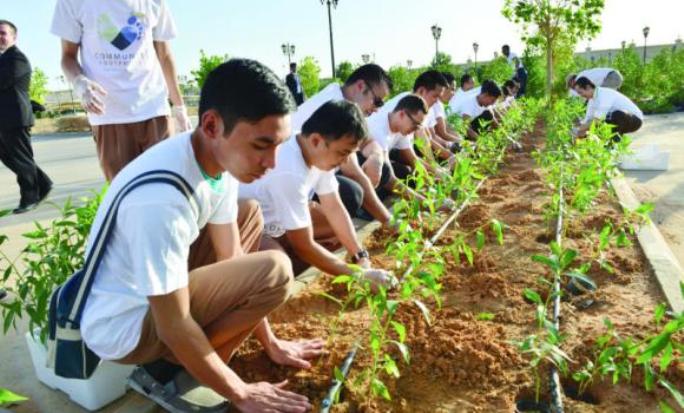
In a bid to make the future of the United Arab Emirates more sustainable Google has recently sponsored a local community project called Innovation Hub.
While the UAE is far from being a Startup Nation like its Middle East neighbour Israel, the new UAE hub will train young people and teachers in the region in the fields of science, technology, engineering and math.
Google’s involvement in the Ras Al Khaimah was due to a lack of locals trained in those fields. Projects like this one aims to turn the UAE into a sustainable nation, especially when fossil fuels run out.
The project initiated by Al Bayt Mitwahid Association will offer classes in 3D printing, robotics, green energy and programming.
While the location is at the UAE Teachers’ Association building in Ras Al Khaimah, and far from the skyscrapers of Dubai, this modest space might give birth to a new sustainable path for the UAE. In shalla.
Documentary on Iran’s first surfer makes waves for women!
There’s been a revolution in Iran, and we’re not talking about the one that resulted in overthrowing the Shah in 1979! The latest one involves an Irish environmentalist and surfing champion, and her mission to bring the sport to Iran, and its women.
When a young boy stood on the beach in a fishing village in one of Iran’s least known areas, and saw three women catching waves, it was the first time he had seen females surfing. Actually, it was the first time he’d seen anyone surfing! One of them was Easky Britton. We featured her first visit to Iran before, but now there is a documentary about her incredible mission to introduce surfing to Iran.
A passionate environmentalist, Easkey started surfing when she was just four years old. She first came to Iran in 2010, her curiosity and attraction to the unknown taking her to a remote and dangerous part of the country that even many Iranians don’t travel to: Balochistan. Marion Poizeau, a French film maker came with her, and created a short video about Easkey being the first woman in Iran to surf. It quickly drew media attention.
In 2013, after hearing lots of positive of feedback from Iranians about this new sport, the pair returned to make a documentary. With Marion’s passion for film-making and Easkey’s thirst for surf, the two were an inspiring combination. Into the Sea follows the journey of Easkey, Iranian snowboarder Mona and Iranian diver Shalha, who are introducing surfing to Iran. The film was a project based around an objective of sharing a passion for surfing in the country, and at the same time making it accessible to everyone, including women.
“Scariest little corner of the world”
Iran has a lot to offer, but it’s never really been a country renowned for its beaches or its surf. Many people haven’t even heard of Balochistan. It’s rarely mentioned in guidebooks. Poor life expectancy, high poverty levels and low rates of adult literacy; the picture hasn’t been a rosy one for this remote area that borders Afghanistan and Pakistan. In fact The New York Times branded Baluchistan as “The scariest little corner of the world.” But with vast stretches of empty, crowd-free beaches, for Easkey it meant a “guaranteed adventure in a little-understood country.”
Making waves in the local community
Easky and Marion ended up in the city of Chabahar, and the the small village of Ramin just to the east of the city. From her first visit Easkey wore a hijab and full-length wetsuit in the water. She wanted to challenge perceptions about women and sport, but was also careful to respect the local culture and Islamic religion.
https://www.youtube.com/watch?v=zD6VV2HDjB0
Marion who was filming the experiences said that the support they received touched her deeply: “We had a sit-down with the elders and the tribesmen. We drank tea for about three hours with them. They spelled out the rules: women surfers must cover their hair and separate surfing lessons would be given for men and women. After that, we were under their protection.”
The enthusiasm of the Balochi people was overwhelming, but it was apparent there was a long way to go. Easkey at times has struggled to accept how much local women were kept in the background; how invisible they seemed. In Chabahar, despite the positive reaction by the local community, Shalha expressed her uncertainty about whether the local women would be allowed to surf or swim in the future. When she and Mona asked local women if they wanted to go surfing, they declined. Shalha explained that “It looked like they wanted to go, but they weren’t allowed.”
But surfing has empowered the women of Balochistan in some way. For Easkey, introducing surfing to them has meant that Balochi women and girls no longer on the sidelines. “What’s most inspiring, is the enthusiasm and vision of the young people here, with young women making an important, change making role, leading the way in a new frontier sport,” she said.
Surfing into the future
Into the Sea, screened in Tehran and London, has been critically acclaimed. Marion said: “This film is a message of tolerance and shows that by following our passion we can create nice stories even in unexpected places like Balochistan. It’s a great perspective of a beautiful story that is still ongoing.”
In September 2014, Easkey, Mona, Shalha and Marion went back to Balochistan and put on more surf classes. They created the group “We surf in Iran” where Iranians – both male and female – from all around the country went to participate in classes. Next the women hope to establish an Iranian national federation of surf and be able to organize international events and encourage foreigners to experience the region, one that the Easkey and Marion now consider a second home.
For more information on where to watch the film visit: http://www.x-tremevideo.com/films/into-the-sea/
Street art mocks enviro-celebrities who eclipse their cause
Posters mocking actor Ed Begley Jr. and radio-host Robert Kennedy Jr. were plastered all over Hermosa Beach, California and nearby neighborhoods ahead of the pair’s recent appearance at the simplistically titled, “Environmental Forum with Bobby Kennedy Jr. & Ed Begley Jr.” at the Hermosa Beach Community Theater. Tuck this in the ballooning file labeled “When celebrities eclipse the causes they champion“.
Jordan’s eco park helps the country go green!
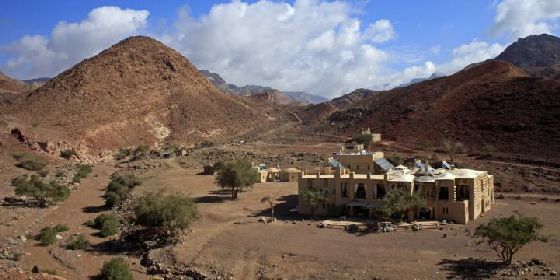
It might not have the archaeological marvels of Petra or the adventure of Wadi Rum, but a two-hour drive from Amman’s dusty streets, you’ll find something special that you won’t find elsewhere in Jordan. Nestled in the hills and landscape of north-western Jordan, lies a green oasis with an eco-minded philosophy: Sharhabil Bin Hassneh EcoPark (SHE.)
It took six years to transform a vast, barren space into a tree-filled, ecological habitat. Before 2004 there was nothing but dry, neglected land. The EcoPark has come a long way since we first reported its opening.
Visitor numbers are continually on the up, reaching 20,000 last year. On weekends in spring it’s not unusual for the park to see 2,000 visitors, ranging from families, to school groups and nature lovers all wanting to make the most out of the open green space, and enjoy the flora and diverse ecological habitats.
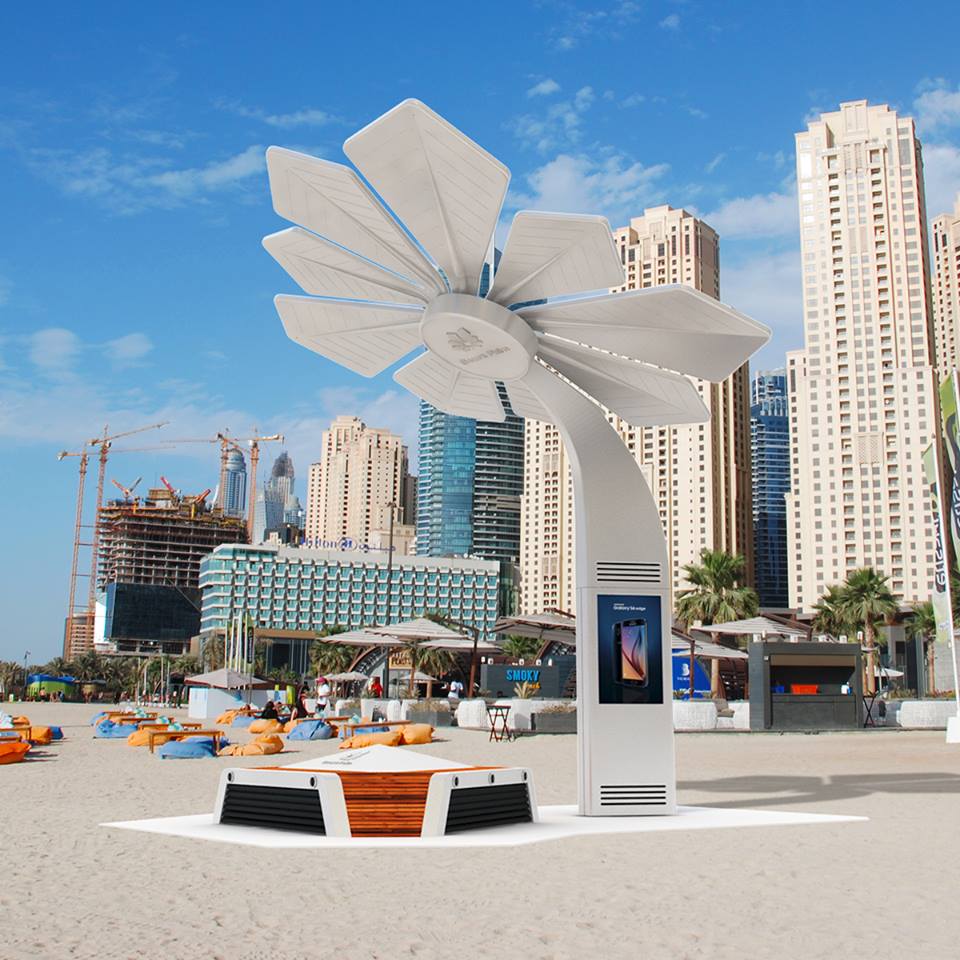
With its growing popularity (it’s even hosting the annual Jordan Valley Triathlon and Duathlon next month!) and to cope with the increasing visitor numbers, the EcoPark is upgrading its facilities. It’s recently installed new 26-kilowatt solar smart panels moving with the sun to catch its light and providing power to the information center and cabins.
Work is ongoing also on a new kitchen, toilets and seating area that will be ready in spring, and cabins with private bathroom facilities are planned for the future.
The EcoPark already has a giant swing in place to delight and challenge visitors, but it’s planning more adventure games for summer, including two new zip lines, one sweeping across Jordan’s first dam – the Ziglab dam – which was built in 1964. In keeping with its eco-friendly ethos, the new kitchen and toilets will be housed in recycled containers and private bathroom facilities will be provided with fresh spring water from the dam.
The story of Sharhabil EcoPark
Jordan is one of the driest countries in the world, and its problem of water shortages has long been documented. After seeing the destruction and the deterioration of the Ziglab dam and the land surrounding it, a group of environmentalists from EcoPeace Middle East decided that they needed to do something. They rented 100 dunam of land from the Jordan Valley Authority, began to plant trees and monitor environmental threats.
The pilot project was so successful that they were given more land and grants, fenced off the area to prevent overgrazing. The park opened to the public in 2008. It now has 56 species of birds, walking trails and wooden cabins for visitors to stay in.
Educational initiatives
Part of the SHE EcoPark’s mission has always been to increase public awareness about the environment and to preserve ecological habitats in the Jordan River Valley. Recycling and sustainability haven’t been a priority in Jordan and green governmental policies are greatly lacking in Jordan. But the park aims to change this.
One way SHE EcoPark does this is by organizing events and projects for children from schools and community organizations around Jordan. With Jordan’s water shortage issues and having poor recycling infrastructure, educating the future generation about water conservation and recycling is paramount.
Recently a group of orphans from Amman that came to spend the day enjoying the fresh air, the grassy trails and games. After having breakfast cooked by two local women, they set off on a two-hour hike around the park, passing a bird-watching hut hide made from 2000 recycled plastic bottles filled with sand, learning that litter can be reused again for something useful.
The EcoPark’s manager Othman Al-Tawalbeh said that there are many ways that we can benefit from recycling and he wants to get this point across to visitors. “We want to teach people how they can benefit from plastic by using easy-to-teach practices,” he said when describing a second use the park has for discarded plastic bottles – mosquito traps!
The geodesic dome – a structure made from metal – was another huge hit with the children. Apart from learning about alternative ecological building techniques, they saw how an open air theater worked. The dome is used as a stop off point along one of the trails and provides a very apt space for environmental discussions, teaching visitors about the regional water conflict.
Mr Tawalbeh explained that although children have spend a fantastic time at the park, it takes time and management to teach kids to care for the environment. “80% of the children leave the park with rich knowledge about caring for the environment, but there are still challenges of course in getting all children to understand the importance of sustainability and caring for the environment,” he added.
Working with the local community
As well as working with the general public to improve sustainability, the park also works with the local community. There have been problems in the past with cattle overgrazing, but the park and local Bedouins work together to reduce the effects. The Ziglab dam pumps water to the Bedouins for their own use and in return they conserve the main water reserves of the dam.
The SHE EcoPark park also relies on locally grown and made produce, such as pomegranates, olives, oranges and lemons. Local Bedouins come and attend to bee hives in the park and sell the honey in the small visitors’ shop. Groups coming to learn more about nature and the environment also have the chance to drink and eat with a local Bedouin family.
Walking trails, bikes and a shady picnic areas are just some of the many ways to enjoy this calm eco-haven with rolling hills and magnificent views. The visiting children enjoyed it greatly. On returning from the two-hour walk tired, but animated, and full of new information one child commented: “This is already the best day I’ve had in ages.”
Moroccan marathon is world’s toughest footrace
The toughest foot race on Earth kicks off on April 6th. It’s a gruelling multi-stage adventure through formidable landscape in one of the world’s most inhospitable climates – the Sahara desert in southern Morocco. The annual Marathon des Sables, better known as MdS, is now in its 30th consecutive year. Ready to lace up?
Solar project brings affordable energy to Palestinian homes
We don’t often hear good news coming from Palestine, but solar energy advances for Palestinian households are something to celebrate. The Dead Sea Photovoltaic Generating Plant offers drastically reduced prices for Palestinians struggling to pay their energy bills and its first phase is now open and underway.
Traditionally Palestinians have had to rely on Israel for their electricity. They do import some electricity from Jordan and Egypt, but it’s done little to reduce their dependence on Israeli energy suppliers. It’s estimated that around 80 percent of Palestinian electricity is imported.
The electricity tariff in the Palestinian authorities is also about 15 percent higher than in Israel, even though the GDP for Palestine is much lower. Palestine is a territory poor in wealth, but also in natural energy resources such as natural gas and fossil fuels which can be generated into electricity. Energy security is a controversial topic.
The opening of the 710 kW first phase of the planned 1.5 MW Dead Sea Photovoltaic Generating Plant has gone some way in improving the situation, offering drastically lowered energy prices for Palestinian homes in East Jerusalem. The plant uses solar cells, also known as photovoltaic cells, and turns sunlight into electricity and is the biggest photovoltaic (PV) installation producing electricity in Palestine. It’s based near Jericho and is 258 meters (846 ft) below sea level.
The organization, Future for Palestine, is funding the $1 million solar project. It’s headed by Salam Fayyad, the former prime minister of the Palestinian National Authority. Future for Palestine has already been subsidizing electricity bills for 5,000 families suffering from poverty in East Jerusalem which amounts to $14 per family and reduces their bills by an average of 25%. To ensure this support for Palestinian families would be sustainable in the future, the organization decided to fund the new solar project.
Msader for Energy systems, the Palestinian company who built the plant, wanted to build and design and a solar energy system that would give long-term, reliable energy output in desert climate conditions with very hot and dry weather. Abelnaser Dwaikat, the managing director of the firm told Green Prophet that there was a need to promote and develop a resilient and sustainable energy supply for Palestinians. He said: “ It is crucial to focus on reducing dependence on energy imports and increasing the utilization of renewable energy sources available in Palestine.”
Given the high number of sunny days in Palestine, increased reliance on solar energy is very feasible. Yet Abdelnasser noted that there were challenges with the introduction of this type of green energy. “Solar PV and photovoltaic systems are yet to fully take off in Palestinian areas due to high initial costs associated with such systems,” he said.
Yet he believes that in the future these systems will be a leading source of clean and independent energy for the Palestinian people. “It’s a very potential market for solar energy as already the Palestinians are using 80% of solar thermal heating and the photovoltaic system should be the same percentage in the coming year, Mr Dwaikat said.”
The second phase of the Dead Sea Photovoltaic Generating plant will start in mid-2015 and should be delivered by end of this year.
Forgot Valentine’s? Green gifts save the day.
So you forgot that it’s Valentine’s Day – again? Solve the problem in your morning shower (like this clever Romeo), or scan Green Prophet’s last-minute ideas from seven stellar and sustainable gift programs. Use your laptop or smart phone to make a fast online donation or buy in the name of your beloved. Save the planet and your relationship in one grand gesture.
Insect farms to meet feed demand for animals, and us?
World population is projected to reach 9 billion by 2050. Rising incomes in emerging economies lead to greater demand for meat-rich diets. As the world grows hungrier for animal protein, insects could be the new way to feed livestock, and us. Using insects to feed the animals providing tomorrow’s meat – does anything about this bug you?
Cairo is growing green with living walls on the up!
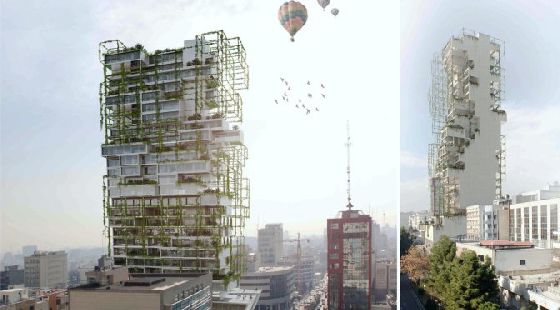
Egypt isn’t exactly renowned for its vast green spaces and pioneering environmental policies. Its capital is the biggest city in the Middle East and it’s also one of the most densely populated in the world. Cairo is famous for being full of people, buildings and traffic – not plants or trees. But recently projects aiming to green the city have been sprouting up all over the urban metropolis.
Living walls are just one effort to turn Cairo into a better urban environment – both aesthetically and ecologically. We’ve covered them before in Lebanon and Kuwait, and now it’s Egypt’s turn.
The walls – also referred to as vertical gardens, green walls and vertical vegetation – use a system that can be attached to either free-standing structures or walls. They utilize space by turning walls into green spaces.The plants are cultivated both vertically and hydroponically, meaning the vegetation is planted in an environment without soil.
Green Studios is a landscape technology and design firm that has taken living wall projects across the MENA region. One of its recent projects was the HS residence in Cairo. Lacking outdoor space, planting vertically was the only viable option left to green the exterior of the private dwelling. The idea was to have the main characteristics of a garden – without having an actual garden. And it looks fantastic!
Wanting to keep it creative and unique, but still garden-like, abstract shapes of trees and shrubs were used on the 120 square meter wall. These were outlined by stainless steel frames held by wooden branches acting as trunks. These trunks diffuse indirect lighting through the entire canvas providing the necessary mood at night. “It portrays how design and hydroponic technology, combined together can create remarkable additions to a space,” Pamela Haydamous, a landscape designer at Green Studios said.
But although the walls are easy to create, issues can crop up. The challenges for living walls usually vary with every site. The main challenge is the fact that the plants are planted in a soilless medium and need a way to adapt to their surroundings.
The technology the company uses allows the plant roots to spread and grow in a healthy environment, and adapt to new system of nutrition, irrigation , drainage and light exposure. In this way even shrubs and trees can grow normally. The Green studios ‘skin, patented in Lebanon and US patent pending, is tested for extreme weather conditions and temperature variations, and also forms an isolation layer to protect the plant roots. It also has a high water retention capacity, is flexible, strong and UV resistant .
And it’s not only private properties in Cairo greening their spaces. The Green Wall in Cairo’s Galleria mall is injecting some well-needed green into public space. The 12 meters high by 100 meters long wall features a vertical garden and waterfall.
The idea was to have a living wall interlocked with modules of grey and beige tiles. This wall is on the main indoor façade of the mall , containing a water feature and is the main area where most of the restaurants are located. It means you can enjoy your coffee in a garden-like environment without even having to venture outdoors!
And the benefits? Apart from looking good, they’re said to improve air quality by removing harmful toxins from the air, are sustainable and can even reduce stress!
According to Indjy Shawket, a lecturer from the Architecture Department at Cairo University, “Urban greening can help dealing with the environmental challenges arising from climate change, such as global warming. Living walls can be a part of this.”
So it seems that living walls are becoming a bit of a phenomenon across the Middle East. Let’s hope they continue to do so!
Australian bankers turn to make agtech sustainable in business and practice
There is a new precedent being set in Australia where the National Bank, the country’s biggest agribusiness lender, is changing policies to encourage more farmers to adopt sustainable practices. It’s not only private and public companies that face pressure to go green; banks now face greater pressures to include sustainability as part of their lending policies.
Farmers that participate in the natural capital model will likely score higher credit ratings in the future, one banker in the new report stated.
Climate change is creating huge uncertainties in the ag tech and farming business. Sustainable lending and recognition of those working for the planet will have a knock on effect to mitigating risks.
Just as we saw in the unsustainable real estate market several years ago in Dubai, the UAE and even in the US, unsustainable lending weakens an economy to the point of collapse. The economy is just a small part of our global planetary ecosystem. We are happy that banks now recognize this.
For those that want to see how the crisis happened follow the infographic below.

Infographic via: Tampa Foreclosure Defense Lawyers
5 ways to increase your self-branding as an eco-entrepeneur
Being an eco-entrepreneur allows you an opportunity to wear many hats. This can be both a blessing and a curse. Being in complete control of your work life means taking it by the reins and really going for it. One important element of being self-employed is to make sure you are capitalizing on every branding opportunity.
There are ways to accomplish self-branding without overwhelming your audience or making them feel like they’re always being sold on something, even if you are pushing a green agenda. Sales is different than branding and should be approached separately as well.
When you brand yourself, it’s a way to educate an audience about who you are and what you’re about without the direct pressure of purchasing anything. Self-branding is a long-term goal and solution that will pay off with both business and personal rewards, if it’s done well. When it comes to self-branding: Learn it. Live it. Love it.
Tip #1: Make social media your best friend. Social media is essentially free promotion. Yes, different versions and ad campaigns cost money, but building up a social media network organically can help in terms of your long-term reach and impact on your target audience. Schedule a social media posting calendar and utilize tools such as Buffer or Hootsuite to schedule content to be posted on your channels throughout the whole day, every day.
Tip #2: Create marketing materials. Arm yourself with the right tools to help potential clients or customer get in touch with you and learn more about your business. Have professional business cards with you at all times and take extras to any networking or conference events you attend. Think about designing simple brochures or marketing one-sheets (on recyclable paper!) to promote your services or products. You can also create your own sign for self-branding either to have when you’re asked to speak at an event, in your office space, or even on your car. These materials can be easily ordered through companies like eSigns.com which tailors to each person’s specifications and marketing needs.
Tip #3: Update your LinkedIn. This online business network has increased in popularity over the past few years and is an essential tool to increase your brand recognition. It not only connects you to people that you already know, but to anyone on LinkedIn that might be of value in your industry. Make sure your profile is updated with your most current work history and upload a professional headshot for your profile picture. Be active by commenting on peoples’ posts, sharing updates, and requesting to connect with others.
#4: Network. Attend as many relevant networking events you can and know your elevator pitch. Be ready for people to ask what you do and why you do it over and over again. Stand behind your service or product. When you deliver your message with confidence, people are more likely to buy into it than if you’re unsure of yourself. The more you network, the easier it becomes and you can create valuable business relationships for years to come.
#5: Send emails. Emails or e-newsletters are a good way to keep connected with people and let them know what current specials you’re offering. You can also share business tips, news, and events. Want to take it one step further? Invite a person in your field to lunch to discuss your different positions and how you might help each other. Or, host a workshop where you offer a preview of your services.
The life of an eco entrepreneur means being able to adapt to change and rise to the challenges set before you. Self-branding makes you step up and put your best foot forward.
Drones show how pigs get a raw deal in factory farms
Animal abuse in the meat processing industry can be particularly disturbing. Whether this involves severe animal abuse in a kosher poultry slaughterhouse; or cruelty to larger hoofed animals being prodded and shocked with electric devices while being led to their fate, the issue of animal abuse in the commercial meat industry often becomes something not less than shocking, to say the least.
When it involves pigs, which have a similar anatomical structure to human beings (so similar that pig organs have sometimes been used in temporary organ transplants to humans), the issue of animal abuse can be more than just shocking.
One of the most graphic and shocking examples of severe pig abuse was captivated recently on film at a large pork factory farm in the American state of North Carolina as graphically shown on the video below.
[youtube]https://www.youtube.com/watch?v=ayGJ1YSfDXs[/youtube]
The video, taken by the aid of a small pilotless drone device, shows first what appears to be a large square pond of muddy water. This “pond” in reality is a large sewage lagoon containing discharges of pig feces and urine. The excrement is pumped into the lagoon from a large number of long enclosed sheds where thousands of swine are kept in steel enclosures so small the animal cannot even turn around.
When the lagoon becomes too full of its foul smelling mixture, the contents are disposed of in the surrounding countryside by high pressure hoses that turn the feces-urine mixture into a fine spray. The spray results in all kinds of health problems to people living nearby. Some of these health problems include causing children and adults to suffer from severe asthma and other forms of respiratory diseases. It is said that there are as many as 2,000 of these “farms” located in the U.S. state of North Carolina alone.
Despite some efforts made to ease a pig’s suffering during the slaughtering process, there is no really humane method.
Even “stunning” a pig by using an electric shock device or using a hammer to hit it on the head prior to being slaughtered causes great pain and suffering to the animal. This YouTube clip shows men “humanely” slaughtering a pig. From the looks on their faces, they seem to be enjoying what they are doing.
[youtube]https://www.youtube.com/watch?v=A7uJvjbN968[/youtube]
Although the Middle East does not have such a serious problem concerning pork production, due mainly to Jewish and Muslim dietary laws, there are enough examples there of animal abuse, including severe abuse of swine at a pig farm in Israel, a country where eating pork is forbidden by the observant Jewish and Muslim populations.
Pigs are also severely abused and were even slaughtered by the thousands in Egypt during the Swine Flu epidemic a few years back. Swine are kept in large numbers in Egypt by “Zabaleen”, members of Egypt’s minority Christian population, who not only consume them as food, but use them to help keep the country’s high amounts of organic garbage under control.
One might expect examples of severe animal abuse to not be occurring in sophisticated Western countries like the USA, but it surely is happening. Most people who purchase the sanitarily packaged pork products being produced at such factory farms are most likely not even be aware of what occurs in these places. Or perhaps people care less about what happens there.
Read more on animal abuse of swine and other animals as a result of the meat processing industry:
Pig Abuse Rampant in Kosher Israel
See Severe Animal Abuse at Israel’s Largest Kosher Poultry Slaughterhouse – Video
Israel’s Cruel Meat Industry Exposed by Watchdog TV Show
Swine Flu harms people and the environment in Egypt
Photo: selecting a pig for slaughtering; The Guardian