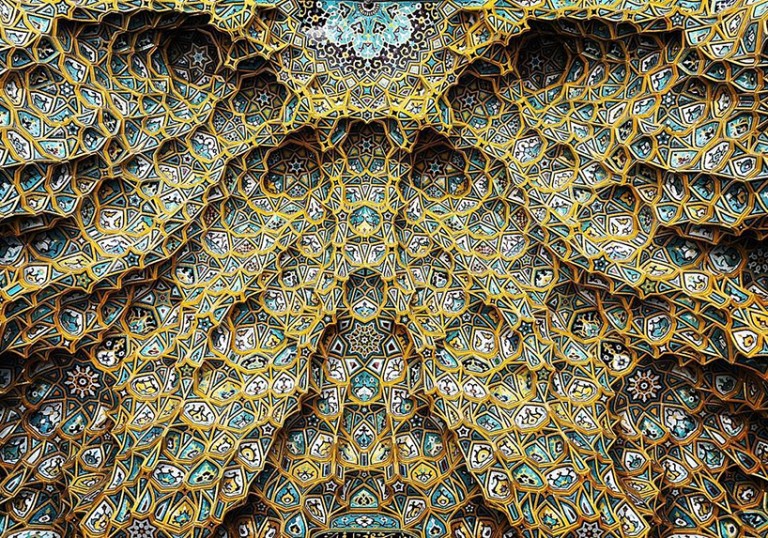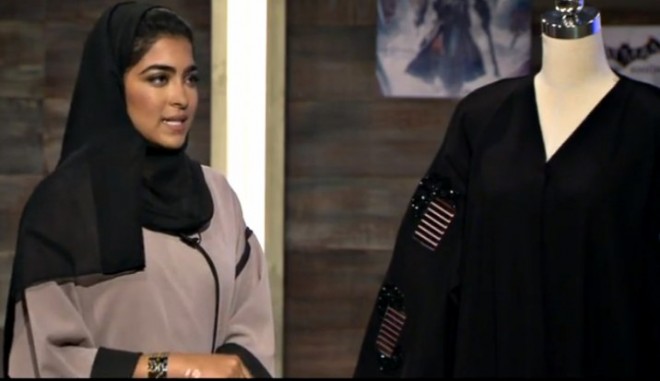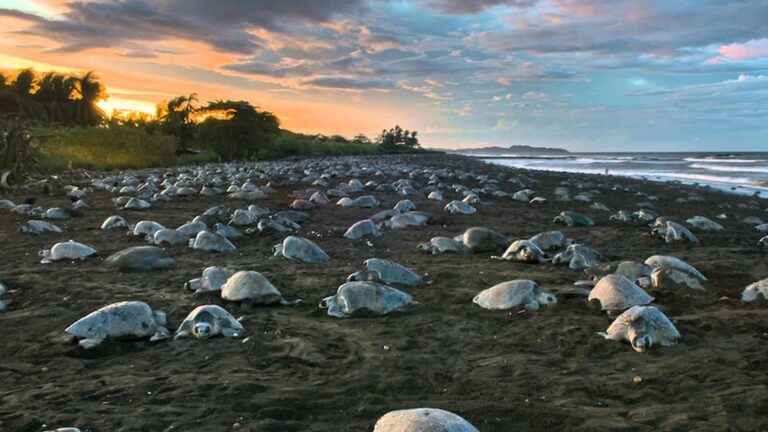
Dubai developers reach a new zenith in outrageous investment with just-announced plans to build a tropical rainforest on the desert outskirts of the city. The forest will exist within a climate-controlled dome as a key feature of a new luxury housing development. But the real news within this news is that local environmentalists are complaining, finally.
Middle East’s first rainforest coming to Dubai
Tel Aviv is “Fertile Ground” for modern art and Bauhaus architecture
Looking for a novel way to celebrate Purim in Tel Aviv next weekend? Wander over to 26 Gordon Street for a pop-up art show wrapped inside architecture that’s worth a visit on its own. Radical renovations are planned for a 1930’s building that will transform the Bauhaus beauty into the city’s first “green” retrofit of a protected structure. Before construction begins, the building will host a contemporary art and fashion exhibit using the same name as the architectural project, “Fertile Ground”.
Let’s bounce! on tires upcycled into rubber-soled shoes
The tire industry is one of the largest users of virgin rubber, blending it with sulfur and heating the mix to create ‘vulcanized rubber’. It’s a highly durable material that is notoriously difficult to recycle. Design schools, small rural start-ups, and major clothing manufacturers are all working to develop ecologically sound disposal options for spent tires. Some of our favorites turn old products that moved vehicles into new ones that move people – tires that become shoes.
Israel and Jordan sign deal to save the Dead Sea
Israel and Jordan have signed a historic deal to press ahead with a plan to save the Dead Sea.
The ‘Red-Dead’ project will build a plant near the Jordanian tourist resort of Aqaba that will desalinate water to be shared by Israelis and Palestinians. The brine left over from the desalination process will be channeled from the Red Sea to the Dead Sea by a 112 mile (180 km) pipeline.
The agreement was signed In Jordan by the Israeli National Infrastructure, Energy, and Water Minister Silvan Shalom and Jordan’s, Water and Irrigation Minister Hazim el-Naser.
Nasser said that if the agreement is implemented correctly it would secure 30 million cubic metres (mcm) of freshwater for Palestine to cover its water deficit.
The plan is also crucial to providing a source of fresh water to Jordan, which faces a severe shortage of water, and to rescuing the shrinking Dead Sea. In return for its share of the desalinated water, Israel will double its sales of fresh water to Jordan from the Sea of Galilee.
Shalom said the project would provide water for farmers in southern Israel and drinking water for the north of the country.
“This is the most important and significant agreement since the peace treaty was signed with Jordan,” Shalom said, referring to a peace agreement between Israel and Jordan in 1994.
Eventually the Red-Dead project envisages transferring up to 2 billion cubic metres of water from the Red Sea to the Dead Sea annually.
The agreement is the result of a memorandum of understanding signed by Israeli, Jordanian and Palestinian officials in December 2013. It is being sponsored by the World Bank.
The project will cost around $900 million. It will take nearly three years to complete.
100% edible coffee cups; tasty, eco-friendly, and straight to your hips
Who says you can’t have your cup and eat it too? The maker of those chicken-like products sworn to be “finger-lickin’ good” is testing a range of 100% edible containers for takeaway coffee. Fast food giant KFC will be testing its new coffee cups in Britain this summer. Called “Scoff-ee” (a wordplay meaning “to eat quickly”), the cups are a hybrid cookie/candy, a sure bet to trend big in the Middle East, where coffee is king and fast food consumption, colossal.
Solar Impulse 2 mission control center to launch Abu Dhabi flight in March
Mission Control for the Solar Impulse 2 is open for business, ready to guide the solar plane’s first flight around the world. Located in Monaco, the Mission Control Center (MCC) serves as project nerve-center, where a team of analysts and engineers will collect satellite-transmitted flight information to calculate and adjust the plane’s flight path. The plane will take off from Abu Dhabi in early March. See it soar over the Sheikh Zayed Grand Mosque in our lead image.
Jordan’s special refugees: giving back to others
Collateral Repair Project (CRP) is a scrappy nonprofit in Amman, Jordan that brings critical help to people commonly referred to as “collateral damage” – urban refugees, victims of war and conflict, and those on the lowest rung of the local economic ladder. Read on to learn how a group of Amman’s most marginalized women are giving back to an issue affecting women around the world.
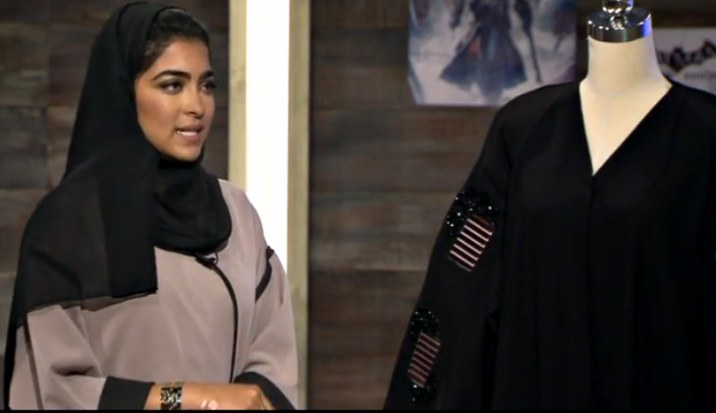
Along with the amazing Shaza (that’s her mugging it up in the lead image), I help run CRP’s Hope Workshop, a craft cooperative composed of about two dozen women who meet weekly to learn new skills using mostly donated materials. It’s a raucous few hours swapping stories that thread through women’s groups everywhere.
We talk about our kids, joke about our weight, complain when we drop a stitch, and help each other master new techniques. They test me with their English, I try my faulty Arabic. The Iraqis say I sound Syrian, and the Syrians say I sound Egyptian. Shaza’s translating makes it all work.
The group has a more serious mission. It serves as safe haven to relax and create. We are always on the lookout for new projects to work on (often using recycled, re-purposed and donated materials) which we can sell to buy supplies for more challenging projects. This is where an astonishing opportunity from Texas comes in.

Enter Beverly Hill, founder and president of Gendap, the Dallas-based Gendercide Awareness Project, which focuses on what she calls the global epidemic of female murder. Says Hill, “Gendercide proceeds from the belief that female life is disposable. Gendercide devastates the hopes of women everywhere. It is unworthy of us as human beings. It is time to end this silent slaughter.”
The United Nations Population Fund, which tracks this problem, has estimated that 117 million women are “missing” in the world due to due to sex-selective abortion, female infanticide, female child neglect, unnecessary maternal death, and (for older women and widows) unequal access to food and shelter.
Gendap is raising awareness to the issue through a variety of activities, including an ambitious art installation to show the sheer scale of gendercide.
The installation features a long corridor lined with 11,700 pairs of baby booties, each pair representing 10,000 missing women. When it opens in 2015, the show will urge support for education, paid labor and women’s health care to bring about change.
Hill discovered CRP’s Hope Workshop on the Dining for Women website. She told me, “It’s hard to find women’s sewing and knitting coops in developing countries, as they often don’t come up in web searches. I found that foundations such as Dining for Women or the larger Global Fund for Women have sometimes given grants to such groups, so I scan their sites looking for coops in particular countries or regions that are not yet represented in our art exhibit. I found a number of coops this way.”
The video below offers a fly-through simulation of the ambitious exhibit.
[youtube]http://youtu.be/w4s7nrX8ISI[/youtube]
She emailed CRP director Amanda Lane to introduce the project (Gendap pays $3USD per pair to cover material costs and shipping to Texas) and invite Hope Workshop to make 200 pairs of booties. The women tucked in. Some shoes were delicately hand sewn, others knit from traditional yarn, and more crocheted from shredded plastic bags. Upcycled plastic food packaging was cut into soles. About 25 per cent of the booties are red, black, green and white – the shared colors of the Iraqi, Syrian and Jordanian national flags.
The women of Hope Workshop bear deep wounds of war, displacement, and immeasurable personal loss. They could easily retreat into a belief that the world has forgotten them. Instead, they chose to give freely to a project that insists women not be forgotten.
Founded in 2006 with a mission to support Iraqi refugees entering Jordan, CRP now runs an emergency help program that provides food and household items to the most destitute refugees from Iraq, Syria, as well as Jordanian poor – all of whom lack other assistance. CRP’s Community and Family Resource Center offers many activities and learning opportunities that allow refugees to begin to rebuild a sense of community in the Hashemi al Shamali neighborhood they now call home. Support CRP via their website (link here).
The Gendercide Awareness Project presents basic facts about gendercide, its consequences for society, and practical measures to end it. Support them via their website (link here).
Or chose to get involved with Dining for Women (link here), a giving circle headquartered in Greenville, South Carolina which raises monthly for international charities that support women and girls facing extreme challenges in developing countries.
Each will turn a small private donation into powerful positive change.
Huge eco-friendly luxury living project coming to Cairo
Luxury usually comes at a high price, not only financially but environmentally too. But plans for a new building in the heart of Cairo hope to change this high cost to the environment, combining luxury living with eco-friendly technology.
Real estate company, Abraj Misr, has just announced plans to invest 4.5 billion Egyptian pounds (US$589.7 million) in the multi-purpose development known as The Gate. It will consist of residential, commercial and retail spaces, a shopping mall and even a 5 star hotel.
The design by renowned architecture company Vincent Callebaut Architectures (VCA) incorporates green features with high-end services such as luxurious limousines, gymnasiums, a pet care facility and a beauty center to attract potential residents.
The architecture firm’s idea was to metamorphose the city into a vertical, green, dense and hyper-connected ecosystem and “to raise awareness of green sustainable architecture to fight against global warming in order to maintain an eco-friendly earth for our next generation.”
Solar energy, living walls, wind turbines and even roof food gardens will give this luxury development an eco-friendly helping hand to do this.
The Gate is designed around a central boulevard, which is the heart of the complex. The apartments are housed in rectangular buildings attached to this central street. At both ends, there are facades inspired by fish gills that will act as sunshades.
The project is intended to balance the efficient distribution of 1000 apartments and a contemporary and sustainable identity. The smart building will ensure a 50 percent energy saving and a significant reduction in carbon footprint.
It is eco-designed according to bioclimatic rules (solar cycle, prevailing wind directions, endemic plant species etc), and by incorporating renewable energies (wind turbines, thermal solar energy, photovoltaic solar energy, geothermal energy, biomass etc).
Green architectural features punctuate the large building to combine an eco-friendly vision with community-based needs, without sacrificing aestheticism.
Megatrees as windcatchers
Nine ‘megatrees’ will act as windcatchers. Windcatchers have a long history in the country, used in architecture in Ancient Egypt. They are known in Arabic as “Malqaf” and work by redirecting airflow to provide a natural cooling system. They will naturally ventilate the basement spaces and refresh the patios and boulevard.
A garden in the sky
The development hopes to not only be beneficial for the environment, but for residents too. A community garden will provide a social and sustainable space for the building’s occupants. The project proposes to use the roof space as a ‘garden in the sky’ with playgrounds, sports area, food gardens, infinity swimming pools and orchards. The green roof is also a measure to compensate for the high density of the construction and will be an insulation coat above the residences to reduce the urban warming.
Solar photovoltaic cells
The building will use state-of-the-art solar cell technology to generate power. Instead of using conventional solar cells that use visible and infrared light, these innovative new solar cells also use ultraviolet radiation. The solar roof will be covered by walkable solar panels that will shadows above the patios and the boulevard to generate a big part of the electricity necessary for the building.
Green living walls
Living walls have become popular recently, allowing for greenery even when space is lacking. They will allow for the overall reduction in building temperature of The Gate. Heat build-up in cities is largely due to solar radiation being absorbed by roads and buildings that is then stored in the building material. The designers hope that the walls may also be used as a method for water reuse by purifying polluted water and absorbing the dissolved nutrients.
The building will also contain ‘smart homes’ with multi-sensors able to control the different zones, rooms, temperature and ventilation. Solar water heating systems will deliver hot water to all of the bathrooms and kitchens for most of the year. Water is collected in glass-metal tubes on the roof that are exposed to the sunlight and help to warm the water.
Construction of The Gate is due to start in April and be completed in 2018.
Images courtesy of Vincent Callebaut Archictectures.
UN Climate Panel Chief Rajendra Pachauri resigns over sex scandal
Rajendra Pachauri, director of think-tank The Energy and Resources Institute (TERI) and chairman of the Intergovernmental Panel on Climate Change (IPCC), has resigned as chief of the United Nations (UN) panel of climate scientists today after allegations of sexual harassment, which he has denied. He was to lead 2015 Climate Change Conference (COP21), the high-stakes global warming summit to be held in Paris in December, making this news especially “hot”.
Green Globe Certifies Dubai’s Wild Wadi Waterpark (UPDATE)
You read that right. An outdoor water park in shadow of the Burj Al Arab*, featuring a heated/cooled wave pool, multiple water slides and two artificial surfing machines, has just been recognized for sustainable performance by one of the world’s most respected green certification programs for organizations within the travel and tourism industry. Following a recent sustainability audit, Wild Wadi is the first waterpark to be Green Globe certified.
Israeli solar power plant to generate electricity day and night
Solar energy is a pretty hot topic right now. It’s cheaper, cleaner and more sustainable than traditional energy sources.
But the problem has remained of how to use solar energy without any sun – when it gets dark! An Israeli company thinks it might have found the answer.
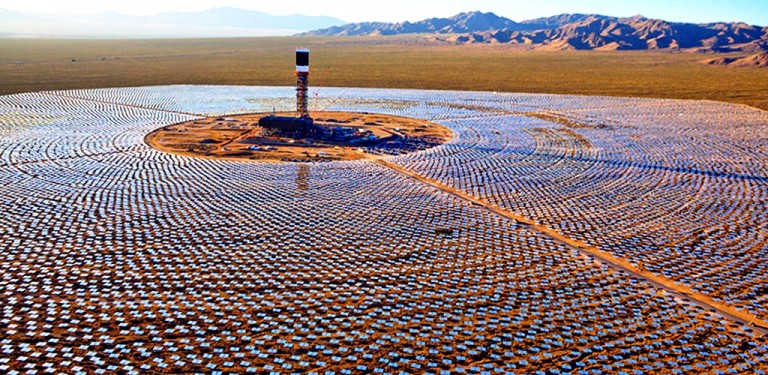
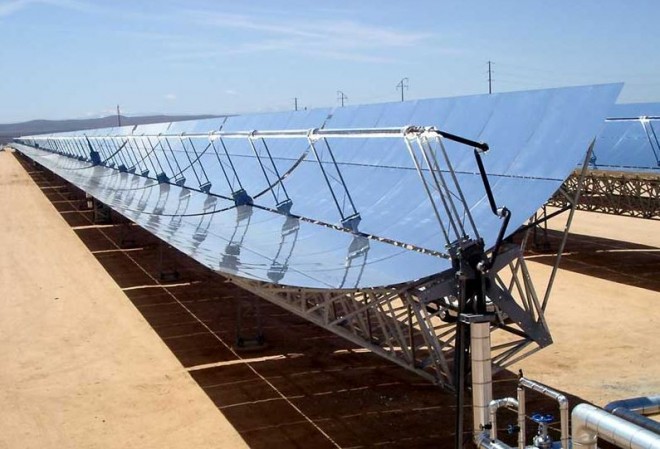
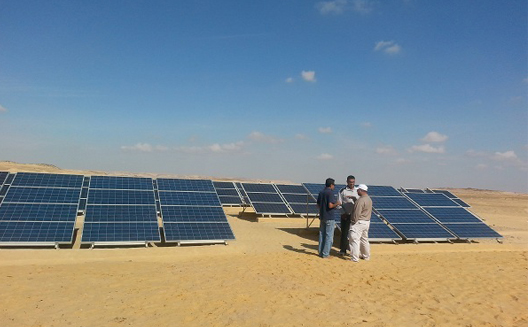
Brenmiller Energy, an alternative energy company, has announced that it will build a 10-megawatt solar field in the town of Dimona in southern Israel. The facility will be able to generate electricity for around 20 hours a day – so even when the sun has gone down!
The project is the first of its kind and will be based on an innovative storage technology that the company has developed, combining existing solar thermal energy with an underground system that stores heat to use at night.
The technology comprises of a of a solar field and an energy center. The system allows the heat from the solar field to be stored and then releases it as steam directly into a turbine inlet.
This one-way process, means that the energy center can act as a “buffer” between the solar field and the power block, and dispatch the power of the sun’s heat when it is needed.
The facility will be backed up by biomass to produce power during the four hours of the day that solar energy can’t be utilized.
“Solar power stations integrating storage and backed up by biomass are the best solution for producing electricity in Israel,” Brenmiller Energy CEO Avi Brenmiller said.
“Biomass alone cannot meet electricity demand but combining it with solar energy and storage represents the cheapest and cleanest alternative.”
Brenmiller Energy expects that the project will be completed in early 2017.
Fresh food: United Arab Emirate’s unsustainable obsession
Why did the carrot slap the lettuce? Because it was too fresh.
A joke that gains huge laughs in the single-digit age group gets a bit more foreboding when applied to grown-up concepts like world hunger and food security. An unprecedented amount of perishable food items are wasted every day in first-world cities. Now a new study by the Dubai Municipality Food Control Department shows that the modern Middle East is picking up those same bad habits, with most consumers in the United Arab Emirates (UAE) so obsessed about food freshness that they won’t buy products approaching their sell-by date.
Could test-tube meat be the future of food?
Getting meat without killing animals is a concept that’s fast approaching reality. Lab-grown, or ‘cultured’, meat could resolve many of the environmental and ethical problems of the modern food industry. As unpalatable as it sounds –pioneering research is underway with at least 30 laboratories around the world involved in ‘in vitro’ meat research, including Tel Aviv University. But is there a market for ‘franken-meat’?
10 Food Tech startups worth putting on your plate

Food Tech, on the surface of things, sounds like something you might not want to bite into, especially if you practice permaculture and organic gardening. But dig deeper as guests from Israel and France learned last week in Jaffa during the So French, So Food week, which hosted 20 top French chefs visiting Israel.
They came looking for mouth watering startups and the Israelis did not disappoint. The FoodTech Pitch TLV pitch night, ‘Where Gastronomy Meets Technology’ – was a highlight of the week-long event. The premise of the FoodTech event was to show how startup nation technology answers the need for food and organizer Yossi Dan did an excellent job.
Beyond the wine and cheese, the event featured interesting technologies that produce, store, deliver, share and help us eat our food. Israel has come far since its early days when it innovated foods like ptitim or Israeli couscous, actually just round beads of pasta, to fulfil the food desires of its North African new immigrants. But food innovation and Israel as a predominantly Jewish nation collecting Jewish food traditions from far and wide makes sense. The latest frontier from Israel is vertical farming where companies like flux are transforming the way we grow food using hydroponics. The Dallas based company has started piloting its technology and expects to start sales by the end of 2016.
I am not sold on all the sustainability credentials of the startups I saw at the event. But the it proved that creativity has its place in food technologies, and that the term Food Tech can be stretched far.
10 food tech startups from Israel
The event collected 10 startups featured below (plus I added in mine so you can know more about flux), but there were others in the audience who’d come to check out this new buzzword and industry forming in Israel. And it’s not just a West Coast trend: something is brewing in Israel – from the new Alpha Strauss food tech incubator to the forming Food Lab Capital that plans to invest in food technologies.
1. BitBite
BitBite has developed a small device that sits in your ear and monitors the way you crunch your food. According to the CEO there is a lot to be learned from the way you chew your food – was Mom always right? The device can eventually learn what you are eating (organic chicken salad, Doritos?) and can help guide you through more “sound” ways to chew (masticating abundantly is better for your health apparently) and even offer ways in which you can improve your diet.
Guess you’ll be pulling this sound plug out when sneak eating chocolate at night. Not sure about this idea providing real value but judging by how many people diet in this world, it just might. BitBite website
2. Valiber
Valiber’s CEO has developed a device (with his father who sat beside me, who built the prototype, see below) of a stick that monitors sweetness in food. Based on some sensor that measures electric conductivity Valiber can tell how sweet a liquid is from a scale that the company has invented.
Eventually the company also wants to be the taste tester for bitterness and sour and other qualities that we’re only able to describe subjectivity. They’ve developed a new scale to measure sweetness and believe that people will care beyond calorie count to just how sweet that juice or cola really is. I think it could work. Valiber website
3. Woosh
Woosh is creating filtered and chilled water stations in cities. They are banking on the fact that people who are buying bottles of water feel incredibly guilty for doing it. So instead these same people are going to carry around a refillable water bottle and buy their water for a fraction of the cost of buying bottled water. The best scenario where I see this working is in cities where it’s really impossible to drink tap water, in countries like Thailand or Brazil. Organizations like Unicef could subsidize the costs and locals and tourists can get a good cold drink.
My main problem with this company which I have covered more positivity in the past is that clean water really should be a basic right for all people everywhere. Charging a fee for it to end users sounds problematic. But then again who hasn’t bought bottled water for $5 from Evian or fizzy water from San Pelegrino? I am guilty and I bet you are too. Woosh, can you add little bubbles? Woosh website
4. EatWith
EatWith makes me smile. See our previous feature on EatWith. I love the idea of connecting people through food. It’s an app and website that lets hosts offer meals in any kind of scenario (The Cook, the Thief, His Wife and Her Lover?) so that people from any kind of scenario can share it.
The company has a rigorous scanning process which tends to keep the riffraff out and the value-adders in. If I were on the jury, I would have chosen EatWith. Eatwith website here
5. Yummi
While EatWith was the first to make me aware of the social economy on your table, Yummi is the next generation. It’s a younger company that will connect you to local food so that other people can prepare home cooked food for you. A marketplace of home cooked food, Yummi is a pretty good idea but not in its innovativeness but in its need. When I was pregnant I was dying to buy home-cooked food but the process required me to make too many phone calls and to have more personal connections to the food cookers than I was willing or able to have. Easier just to cook myself.
Yummi might be the better broker. Or there may be good reason why home cooked food, made with love, is staying in the realm of the rare. Yummi website
6. Pimi Agro
Pimi Agro has developed a post-harvest chemical solution to nasty fungicides. The process is based on hydrogen peroxide which the company claims is relatively inert and which coats fresh food to prolong its shelf life.
I have taken an MBA class on developing solutions for the developing world and have learned the stark truth: most of the food produced in developing countries (about 70% of it) spoils before it reaches anyone’s table. Pimi Agro to the rescue? PIMI AGRO website
7. IntoEat
Intoeat is a young company developing an app to connect people to discount food sources. Also for those into food porn.
Want some home cooking or a discount supper at the nearby pub?
This app lets restaurants offer deals and pictures of what’s being served so you can connect to it and eat it now.
Available on the app store.
8. Innobev
Innobev is developing a drink to help you can the caffeine addiction. Is too much caffeine a bad thing when you want to wake up in the afternoon? The company has developed a drink, without the caffeinated high, based on proven research and herbs to help you wake up from the afternoon slump more healthfully. The company is installing itself in workplace hangouts like the lunchroom. For a brief period in my life when it was inappropriate to take a nap at work I wished I’d had something like this. Or do like the Chinese: roll out a little mat and take a few winks when the need arises, with an Innobev by your side. InnoBev website
9. Protyplus
Protyplus is developing a way to turn meat protein into a melt in your mouth snack. Most Green Prophet’s will gag at the thought of melt in your mouth meat but let’s keep an open mind: there is a need and market for freeze packaged products especially for long-distance hikers or people in emergency situations.
The jury down below seemed to get excited over the samples the company was offering so maybe ProtyPlus is onto something. It looks like it based on novel academic research.
10. GreenOnyx
GreenOnyx was the jury’s favourite. The company is a husband and wife team who are taking a small Asian water-based plant, putting its seeds into a coffee-like pod, and building a machine around it so people can grow up to two pounds of the plants per day at home. That’s for the home unit. The small plant, a type of edible duckweed, is being touted as the next superfood and is called Khai-Nam or water eggs. It’s also known as Wolffia globosa or water meal and is packed with more protein than soy. It is a staple diet in Asian countries like Thailand where it is scooped off water after the rains. The stuff just grows like a weed but it can be toxic if not farmed correctly. Presumably GreenOryx has the problem solved.
The company has an FDA seal of approval to sell its product in the US, but the plant is an invasive species so I hope that the US Department of Agriculture is also consulted. A quick look online and I see that this edible duckweed is already found in California, Illinois, Kentucky, Tennessee and Florida. But this blogger warns about checking your state first before growing it.
All in all I love the idea as a novelty (we are all about fresh food, made locally and sustainably after all – and on water!) but again the whole pods concept needs to be solved so they are not throw away. One challenge in growing duckweed outdoors is bacterial contamination which the couple seems to have solved by providing a tool to cultivate it hydroponically indoors. There is a restaurant and industrial version being planned. Website here GreenOnyx.
Olive Oil Without Borders has a recipe for Middle East peace
The olive branch as a symbol of peace is rooted in ancient Greek culture, but the link between the fruit tree and conflict resolution continues today; especially clear in a beautiful little project called Olive Oil without Borders (OOWB) just re-launched in its second edition at a conference held last month in Kufr Rai, in the West Bank.